Fiji’s military could take on a stronger frontline role in national security operations under a proposed “hybrid” model being considered by Government.
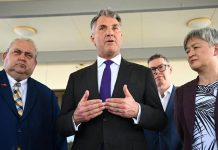
Minister for Defence and Veteran affairs Pio Tikoduadua revealed the idea during an interview at Queen Elizabeth Barracks in Nabua.
Tikoduadua said the concept was being discussed as Fiji looked at ways to strengthen its response to growing security concerns, particularly the fight against drugs and transnational crime.
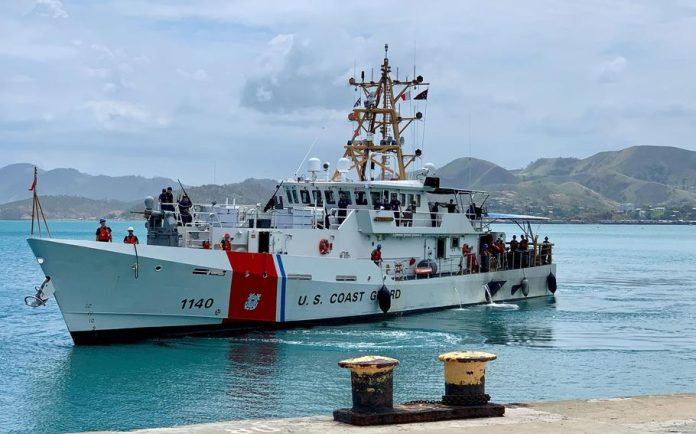
He said under current laws the Republic of Fiji Military Forces mainly operates in a supporting role to civilian authorities such as the Police, except in naval operations where it already carries out maritime patrols.
However, the proposed hybrid approach would allow the military to deploy alongside law enforcement agencies in a more direct capacity when needed.
“The idea of a hybrid came about as a response to the call for the military to respond to the drug situation,” Tikoduadua said.
He said changes to legal frameworks would be needed to enable the military to operate more effectively in such roles without overstepping existing boundaries.
The aim, he said, was to create legislation that would allow the military to support Police, Customs and other enforcement agencies in a practical way while maintaining clear safeguards.
Tikoduadua said several countries already operated under similar models where defence forces could carry out frontline security tasks when required.
He cited the example of northern defence forces in Australia, which work to protect the country’s northern regions while supporting civilian authorities.
Tikoduadua said Fiji was still considering the approach and that any move toward a hybrid model would require proper legal structures to ensure the Republic of Fiji Military Forces could operate effectively and responsibly.
He said the proposal formed part of broader discussions on how Fiji’s security institutions should evolve to address emerging threats and strengthen national security.
Pacific leaders continue to view climate change as the region’s most serious security challenge, Desna Solofa, Deputy Secretary General of the Pacific Islands Forum Secretariat, said at the Regional Climate Security Dialogue in Brisbane on Monday.
“Pacific Leaders have been clear for many years that climate change is the single greatest threat to their livelihoods, security and wellbeing of the peoples of the Pacific.”
Opening the Regional Dialogue on Climate Security in the Pacific in Australia, DSG Solofa said Pacific leaders established the region’s approach to climate security through the Boe Declaration on Regional Security adopted in 2018.
“The Boe Declaration recognised that security in the Pacific must be understood comprehensively, encompassing human security, environmental security and the resilience of our communities and ecosystems.”
She said the declaration was followed by the Boe Declaration Action Plan endorsed in 2019 to guide implementation across the region.
Solofa said the region has since strengthened its response to climate-related security risks.
“This includes the Pacific Islands Forum Leaders’ Declaration on Sea Level Rise and Statehood, reflecting the region’s determination to safeguard sovereignty, identity and rights in the face of existential climate threats.”
She also cited the development of national security policies recognising climate change as a national security risk, the Pacific Regional Framework on Climate Mobility, and the Pacific Regional Guide on Climate Security Assessment.
Solofa also highlighted the Kainaki II Declaration, adopted by Forum leaders in 2019.
“The Kainaki II Declaration, a landmark commitment by Pacific Islands Forum Leaders in 2019, declaring a climate crisis and demanding urgent global action to limit global warming to 1.5 degrees. It is the strongest climate statement by the Forum, calling for increased emissions cuts and climate finance.”
Despite regional action, Solofa said the climate threat has intensified.
“While our understanding and response has deepened, the threat that our Leaders collectively identified in 2018 has not diminished. In fact, it is now more acute than ever.”
She warned that global emissions continue to rise and the world is not on track to limit warming to 1.5 degrees.
“For the Pacific, climate change is not only an environmental issue. It is a defining peace and security challenge for our region.”
Solofa said climate change affects coastal communities, food systems, water resources and national development.
She also stressed that climate impacts affect communities differently.
“These impacts are not experienced equally – women, youth, persons with disabilities, and marginalised groups often face heightened risks.”
“Ensuring Gender Equality and Social Inclusion are central to our climate security dialogue, strengthens resilience and promotes peace across all communities.”
Solofa said the region’s approach to peace and security is reflected in the Blue Pacific as an Ocean of Peace Declaration.
“The Blue Pacific as an Ocean of Peace Declaration endorsed by Forum Leaders last year reflects a distinctly Pacific understanding of peace and security.”
“It is one that emphasises cooperation over competition, prevention over reaction and collective stewardship of our shared ocean and environment.”
Addressing climate security is critical to sustaining peace in the region, said Solofa.
“In this context, addressing climate security is not only about managing risks. It is about protecting the conditions that allow peace, stability and prosperity to endure across the Blue Pacific.”
“Climate, peace and security must therefore be understood as a core pillar of sustaining our Ocean of Peace.”
Solofa said upcoming global climate negotiations will be an opportunity for Pacific countries to strengthen their advocacy.
Later this year the international community will gather for pre-COP31, which will be hosted in Fiji, supported by under the COP31 partnership framework.”
“For the Pacific, COP31 represents an important opportunity to continue elevating the region’s voice on issues that are central to our future.
These priorities include protecting the 1.5°C temperature limit, increasing climate finance, addressing loss and damage, and supporting communities threatened by sea level rise.
“The work undertaken through this Dialogue will help strengthen the regional evidence base on the peace and security implications of climate change and will support Pacific leadership in these global discussions.”
Solofa said Forum members are currently developing a Regional Peace and Security Action Plan under the 2050 Strategy for the Blue Pacific Continent.
“One of the proposed strategic focus areas in the consultation draft is Climate, Peace and Security, and this dialogue provides an opportunity to draw on the experience of Forum Members and partners to help shape how this priority is reflected in the Action Plan.”
She encouraged participants to engage actively in the discussions. That is the task before us.”
“Over the coming days, I encourage participants to engage openly in this discussion. To share lessons from national experiences. To explore where the gaps remain, and to identify practical ways that the region can continue strengthening its approach to anticipating and responding to the peace and security implications of climate change.”
Solofa said regional cooperation will remain critical.
“By working together, we can continue advancing a Pacific-led approach that protects our communities, strengthens resilience, and supports the vision of a peaceful and secure Blue Pacific Continent.”
She thanked Australia for hosting the meeting in Brisbane and acknowledged support from the United Kingdom.
Samoa’s prime minister condemned major powers “bullying” on Monday, a thinly-veiled swipe at the United States and China as he hosted New Zealand’s leader for a rare state visit to the Pacific nation.
New Zealand prime minister Christopher Luxon’s trip is the first to Samoa by a leader since La’aulialemalietoa Leuatea Schmidt took office last year.
Luxon has framed his trip as part of a push to deepen economic and security ties in the Pacific.
Both the United States and China have been vying for influence in the strategic region, with both nations seeking to secure lucrative deals for resources and minerals that can be mined from the sea floor.
Speaking after a cabinet meeting which included Luxon, Schmidt said “you see the change nowadays in the world, big country’s bullying””.
“Start to change things dynamically, tariffs, pushing things, petroleum, taking over, all of that,” he said.
“Samoa’s focus is to ensure we look after ourselves, by ourselves, and controlling ourselves.”
Luxon reaffirmed New Zealand’s commitment to Samoa and stated the two countries were “not friends, we are family”.
At a lavish ceremony in the capital of Apia, Luxon was granted a chiefly title of Tuisinavemaulumoto’otua.
Samoa has been pushing for free movement of its people to New Zealand.
Luxon in turn has said New Zealand would further review immigration settings for its Pacific partner.
Governments should support a draft United Nations resolution led by Vanuatu that calls for stronger action on climate change following a landmark ruling by the International Court of Justice, according to Human Rights Watch.
The rights group said the world’s highest court has already made clear that governments have legal duties to address climate change.
“The world’s highest court has spoken tackling climate change is not a choice: it’s a legal obligation.”
Human Rights Watch said the responsibility now lies with the United Nations General Assembly and its 193 member states to act.
“Now it’s up to the United Nations General Assembly to speak up and urge its 193 member countries to take action.”
The statement said millions of people worldwide are already suffering the impacts of climate change.
“Millions of people around the world have already lost their homes, livelihoods, and lives, due to climate change. It is vital states take action.”
In July 2025, the International Court of Justice issued a unanimous advisory opinion outlining states’ legal obligations under international law to address climate change.
The court ruled that governments must protect the climate system, prevent cross-border environmental harm, and regulate activities driving greenhouse gas emissions. It also said failure to act on climate change can violate human rights including the rights to life, health, food, water, housing and culture.
Human Rights Watch said its research has shown that fossil fuel production harms communities around the world, particularly those living near extraction and energy infrastructure.
The group said the court’s advisory opinion confirms that governments already have legal duties to address those harms.
Vanuatu, working with a cross-regional group of countries, has circulated a draft resolution at the United Nations General Assembly aimed at turning the court’s findings into action.
The draft resolution calls on countries to strengthen national climate plans, phase out fossil fuels, and better protect communities displaced by climate change. It also proposes mechanisms to document and track climate-related losses faced by vulnerable communities.
The statement said the General Assembly has previously translated advisory opinions from the International Court of Justice into resolutions urging governments to act.
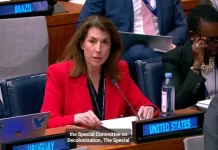
However, the United States, backed by some oil-producing states in the Gulf, has called on Vanuatu to withdraw the resolution.
But the Pacific island country, which faces threats from rising sea levels, has refused.
Human Rights Watch said Vanuatu and its partners have worked to address concerns raised by different countries, including from the European Union which has argued for a narrower interpretation of the court’s advisory opinion.
Human Rights Watch and partner organisations are now urging governments to support the resolution.
“It’s imperative they resist efforts to water down its core elements, especially those protecting human rights, international law, and advancing international cooperation on climate change, said Human Rights Watch.
Solomon Islands Prime Minister Jeremiah Manele has welcomed Mary Daniella Zae Garu, Member of Parliament for West Guadalcanal, and Freda Tuki Soriocomua, Member of Parliament for Temotu Vatud, who were officially sworn in Monday by the Governor-General.
Mary Garu was sworn in as the Minister for Traditional Governance, Peace and Ecclesiastical Affairs, succeeding Stephen Kumi.
Freda Tuki Soriocomua was sworn in as the Minister for Justice and Legal Affairs, succeeding Clezy Rore.
Prime Minister Manele congratulated both Ministers on their appointments, noting that their presence ensures the Cabinet remains functional and focused on its objectives.
“These appointments are a vital step in ensuring we remain on track to complete the work of the 12th Parliament. I have every confidence in the Ministers’ commitment to seeing through our remaining legislative priorities and delivering on the Government’s 2026 national goals for the people of Solomon Islands,” the Prime Minister said.
Further ministerial swearing-in ceremonies are expected to take place over the coming days as the Government for National Unity and Transformation (GNUT) continues the process of filling ministerial portfolios.
Meanwhile, two Cabinet Ministers have reportedly left the government following the resignation of ten ministers on Sunday night.
They are Minister of Foreign Affairs and External Trade Peter Shanel and Minister of Infrastructure Development (MID) Ricky Fuo’o.
Majority of the Members of Parliament (MP) are part of the Peoples First Party (PFP).
The Party stated it decided to move out due to growing mistrust amongst GNUT coalition which had resulted in the mass walkout.
The Party said, there are issues to be resolved which they want to resolve.
And the best option is to leave the coalition.
The Governor-General on Monday confirmed the resignations of Deputy Prime Minister and Minister for Civil Aviation and Communications Fredrick Kologeto; Minister for Health and Medical Services Paul Bosawai; Minister for Justice and Legal Affairs Clezy Rore; Minister for Commerce, Industry, Labour and Immigration Harry Kuma; Minister for Mines, Energy and Rural Electrification Derick Manuari; Minister for Environment, Climate Change, Disaster Management and Meteorology Wayne Ghemu; Minister for Public Service Francis Sade; Minister for Rural Development Daniel Waneoroa; Minister for National Unity, Reconciliation and Peace Stephen Kumi; and Minister for Agriculture and Livestock Franklyn Wasi.
Backbenchers who have reportedly resigned are; Chachabule Rebi Amoi, Polycarp Paea, John Tuhaika Jnr, Oliver Salopuka, Morris Toiraena, Lazarus Alfred Rimah and James Bonunga
Its understood, PFP, the Opposition and Independent Group are in discussion of a likely coalition with conditions attached to a new formation.
GNUT was formed in May 2024 following the 12th general election.
Efforts to address gender-based violence in the Pacific overlook how boys are shaped by the very norms driving harm
By Priyam Singh-Maharaj
Across the Pacific, concerns about gender-based violence and gender inequality have become a defining development challenge – drawning sustained attention from regional governments and international partners. Australia, New Zealand, and multilateral agencies have invested heavily in prevention and response initiatives. Most recently the Australian government committed an additional $25 million (US$17.69 million) over five years to strengthen frontline services across the region. These efforts reflect a broader global recognition that gender-based violence undermines social stability, economic participation, and long‑term development outcomes.
Yet despite this momentum, current approaches rarely consider how boys and men are socialised into the very norms that fuel these problems, leaving a critical gap in the region’s gender policy architecture.
Boys are an overlooked part of the gender story in the Pacific, yet their experiences help explain how gender norms are formed and how they might change. The expectations of masculinity placed on boys from an early age influence how they manage conflict, express vulnerability and understand responsibility as adults. Without addressing this foundation, efforts to reduce violence and strengthen community wellbeing risk treating symptoms rather than the conditions that allow them to persist.
Many of the boys I worked with in Fijian schools recounted exposure to domestic violence. They spoke of complicated family dynamics, early alcohol use and spending long hours out at night to avoid going home. In schools, bullying often takes the form of gender policing, where boys are labelled “soft” and told to “suck it up and keep moving” because expressing emotion is seen as feminine and “no one cares” about their feelings. Collectively, these accounts illustrate how gender norms operate early in boys’ lives and how these norms limit the forms of vulnerability they feel able to express.
The near-exclusive work with women and girls has created a structural blind spot.
My earlier research work with Fijian fathers showed how these pressures continue across the life course. Fathers often wanted closer relationships with their children but felt unprepared to show affection, having inherited models of parenting built on silence, discipline and emotional distance. Their reflections revealed how the emotional restrictions placed on boys do not disappear with age. Instead, they impact men’s relationships, their sense of responsibility, and their ability to support the next generation.
These findings matter for reasons that go far beyond school dynamics or household relationships. Pacific gender policy frameworks, including those guiding major development partners, have rightly focused on the urgent challenges facing women and girls. These efforts are essential and must continue. However, the near-exclusive work with women and girls has created a structural blind spot. Masculine norms – and the everyday cultures that shape the behaviour of boys and men – receive far less attention.
Efforts to include men and boys in gender programming often position them as allies. When they are discussed, it is often through the narrow lens of violence prevention, with terms such as toxic masculinity used as catchphrases. These framings rarely lead to meaningful change because they rely on concepts developed in Western contexts rather than on locally grounded, cultural understandings of how boys and men come to understand, negotiate, and embody masculinity in Pacific communities. Development agencies need to support Pacific‑led approaches grounded in the cultural, religious and moral frameworks that shape their daily lives.
In Fiji, there have been public debates about establishing a men’s department to address issues such as drug abuse and domestic violence. Feminist organisations opposed the proposal, but many in the wider public backed the idea of providing some form of support for men. This tension reflects a broader regional challenge. Communities recognise that boys and men need support, yet there is limited research to guide what that support should look like. Without evidence drawn from boys’ and men’s own experiences, gender programming risks misdiagnosis and overlooking the social realities that inform behaviour. The norms that harm women and girls are often the same norms that restrict boys’ emotional expression, frame their ideas of masculinity and gender roles, influence men’s parenting practices, and ultimately affect the well-being of families.
Working with boys and men is not a diversion from gender equality. It is essential for building the kinds of relationships and communities needed for long-term social and development outcomes. Expanding research and development work in this area is crucial, not only to support boys and men themselves but to build a fuller and more honest foundation for gender equality in the region. The two approaches are not mutually exclusive. Women and girls continue to face systemic inequality and gender-based violence, and men and boys need targeted support, not because they are oppressed, but because they are socialised into a model of masculinity that is harming them and others.
Sāmoa has made history at the World Boxing Future Cup Championships 2026 in Thailand, winning its first-ever gold medal at the tournament thanks to Kealey Perez.
Perez, 15, secured the gold in the women’s 80kg division after defeating Tuvalu’s Francis Taafaki in an all-Oceania final on Saturday.
Her victory was backed by a bronze medal from team-mate Anthony Pati in the men’s 90kg division.
Fellow Sāmoan fighter Johnsal Semi narrowly missed advancing after a split decision.
Team Sāmoa head coach Vitale Perez, Kealey’s father, said the results reflected months of hard work and strong team unity.
Speaking on Pacific Huddle ahead of the finals, Perez said he was grateful for the opportunity to lead the Sāmoan team at the international tournament.
“I’m pleased to have this opportunity. I’m really glad that I had a friend back in New Zealand reach out to see if I could help out.”
Peerz said the opportunity came through Sāmoa Boxing leadership.
“Mike, the president from Sāmoa, gifted me with this role and I’m just having a good time and trying to get the goal for our country.”
Perez previously coached in New Zealand and runs a boxing gym in the central North Island town of Taumarunui, where he has worked with young fighters for more than a decade.
He has also been involved with New Zealand boxing development programmes and travelled internationally with youth teams.
Perez said one highlight came two years ago when he travelled with the New Zealand Under-19 team to the world championships in Colorado.
“We came back with three bronze medals and that’s the best New Zealand’s ever done,” he said.
One of those medals was won by his daughter, Kealy, who would go on to create history for Sāmoa in Thailand.
Perez said he arrived at the tournament well prepared for the level of competition.
“I knew what we were coming up against. I’d done my study and I’ve been in this realm for quite a few years,” he said.
He said building a strong connection within the team before travelling to Thailand was important and praised the wider coaching and management staff supporting the fighters.
“The coaching and management we’ve got here is top-notch,” he said.
He highlighted support from team managers Benji Tupuola and Faigali Vaughn from Brisbane, assistant coach Junior Pati from New Zealand, and officials from Sāmoa Boxing.
“We’re all here for our kids and we’re all on the same level.”
Perez said his journey into coaching came from being a fighter and practising martial arts.
“Just having father figures in kickboxing, karate and boxing — people that cared for you,” he said. “I guess I’m just giving back. Those people kept me off the streets.”
He also credited several mentors who helped shape him as a coach, including Martin Stirling from Petone and Australian-based boxing coach Alani Moala.
Perez said international tournaments like the Future Cup are important for developing young fighters and proving Sāmoa can compete against stronger boxing nations.
“Our team can beat these people. They’ve just got to put their skills and ability together on the day.”
The historic gold marks a major milestone for Sāmoa boxing and adds to growing Pacific success in international combat sports.
Alex Johnston has given the strongest indication yet he could finish his career at the PNG Chiefs, with South Sydney unlikely to stand in the way of the record-breaking tryscorer.
Fresh off breaking Ken Irvine’s mark on Friday night, Johnston on Monday had a statue of him unveiled at Rabbitohs headquarters.
Made in Thailand three years ago with the financial backing of Souths supporter Danny Taibel, the life-sized monument has sat in storage ever since.
Johnston admitted on Monday breaking Irvine’s mark of 212 tries had been on his mind since the end of 2022, before an achilles injury in 2024 threatened his shot.
The 31-year-old gave the statue the tick of approval, while joking he would now become a victim of bird faeces outside Heffron Park.
“The majority of my footy career has been overwhelmingly positive, but along the way a few fans have shit on me,” Johnston quipped.
“There have been a few coaches who have shit on me, the media has shit on me – now the pigeons can shit on me.”
Johnston’s feat also attracted a letter from Papua New Guinea Prime Minister James Marape, along with celebrations across the country.
Of Torres Strait Islander and PNG descent, Johnston has played 12 Tests for the Kumuls since 2019.
The winger is off contract next year, and will likely be a priority target for the Chiefs when they enter in 2028.
“They just love rugby league so much over there, the Chiefs, every week they’ll get massive support,” Johnston said.
“It’s something I probably want to be a part of.
“Obviously, I’d love to stay at Souths. But the footy over there, I think everyone needs to experience it. I fall in love with the game of footy going over there.”
Asked how much he had to weigh up over the coming year, Johnston admitted there were emotional lures both ways.
“It’d be cool to be the first signature over there, but I bleed red and green. I’ve still got this year and next year at the club,” he said.
“If I’m still kicking and still got some miles on these legs, I’ll go from there and see where I end up.
“I love this club. I’ve always wanted to be a one-club player, and I’m in this position now. Things could go either way.”
Souths inserted a clause into Johnston’s current contract that allows him to join the Chiefs at any time and become their first signature.
CEO Blake Solly also confirmed on Monday the Rabbitohs would not make life hard and fight to keep Johnston if he wanted to leave.
“We understand how strong AJ’s connection is with Papua New Guinea,” Solly said.
“In many ways, it would be such a great moment for the game if he was their inaugural player signed.”
Solly, meanwhile, backed calls for the NRL’s leading tryscorer award to be renamed the Johnston-Irvine medal, as an evolution from the Ken Irvine Medal, which Johnston has won four times.
“The medal is named after Ken because he had the record and his contribution to the game. Now that AJ’s got the record it’s absolutely right that AJ’s there,” Solly said.
“We should never forget all of the great things Ken did for the game and it’s fitting that it will be named the Johnston-Irvine medal,” he said.
Solomon Islands Prime Minister Jeremiah Manele has confirmed that ten Cabinet Ministers have tendered their resignations.
In a statement issued by the Government, the Prime Minister said he received formal advice from the Governor-General confirming the resignations of Deputy Prime Minister and Minister for Civil Aviation and Communications. Fredrick Kologeto; Minister for Health and Medical Services Paul Bosawai; Minister for Justice and Legal Affairs Clezy Rore; Minister for Commerce, Industry, Labour and Immigration Harry Kuma; Minister for Mines, Energy and Rural Electrification Derick Manuari; Minister for Environment, Climate Change, Disaster Management and Meteorology Wayne Ghemu; Minister for Public Service Francis Sade; Minister for Rural Development Daniel Waneoroa; Minister for National Unity, Reconciliation and Peace Hon. Stephen Kumi; and Minister for Agriculture and Livestock. Franklyn Wasi.
Prime Minister Manele urged public servants across government ministries and agencies to remain focused on their duties and continue delivering essential services to the people of Solomon Islands.
He called on the nation to remain calm while political leaders work to address the current situation.
PM Manele emphasised the Solomon Islands’ Constitution provides clear democratic processes for addressing political developments, and these processes will be respected as Members of Parliament continue their discussions.
“For now, the priority is for the public service to continue its important work while political leaders engage to resolve the issues before us. It is too early to speculate on any outcome, and we will continue to keep the public informed as developments unfold,” Prime Minister Manele said.
Vanuatu is leading international efforts to secure a United Nations General Assembly (UNGA) resolution that would welcome and operationalise the landmark advisory opinion of the International Court of Justice (ICJ) on climate change, with negotiators aiming for adoption on 22 April.
Speaking during a recent webinar, Vanuatu’s Special Envoy for Climate Change, Lee-Anne Sackett, said the resolution comes at a critical moment as climate impacts intensify for vulnerable nations.
“As many of you are aware, Vanuatu and many other small island developing states and other climate-vulnerable states are already living the consequences of climate change,” Sackett said.
“Sea level rise is also a big issue, and loss of land, culture and livelihoods are everyday lived experiences now for most communities. So, it’s really not seen as a future risk for us at this point in time, it’s a present reality.”
The ICJ advisory opinion, delivered in July last year following a request led by Pacific Island nations and youth advocates, clarified states’ legal obligations regarding climate change under international law.
Sackett said the ruling confirmed that climate change is not simply a policy challenge but a matter of justice and legal responsibility.
“Climate change is really not just a matter of policy, it’s a matter of justice, and it’s a matter of international law,” she said.
The court recognised that multiple areas of international law apply to climate obligations, including human rights treaties, the law of the sea and customary international law.
“The court recognised that states’ obligations in relation to climate change are owed to the international community as a whole,” Sackett said.
“It also confirmed that the rules of state responsibility apply, meaning states responsible for internationally wrongful acts will face legal consequences.”
The advisory opinion is now being brought back to the UNGA, which originally requested the ruling, to seek political endorsement and guide its implementation.
Vanuatu’s Special Envoy for Climate Change, Lee-Anne Sackett. Photo: Screengrab from PISFCC webinar
According to Sackett, the proposed resolution has three core objectives.
“The first and most fundamental objective, and the one that can’t be compromised on, is a full and unequivocal welcome of the advisory opinion,” she said.
“It’s historic in so many ways… from the consensus resolution adopted by the General Assembly in 2023 requesting the opinion, to the record levels of participation before the court, to the unanimous opinion delivered by the court.”
She said protecting the integrity of the court and the advisory opinion was particularly important at a time when multilateral institutions face growing pressure.
“It’s a critical time to be protecting international law and the rules-based order that we all operate under in international relations,” Sackett said.
The second objective of the resolution is to strengthen climate action by aligning state conduct with the obligations outlined by the court.
“The court has provided clarification of legal obligations not just under the climate treaties, but also under other areas of international law,” she said.
“So, it’s critical that we think about how states can now ensure they are fulfilling those obligations.”
The third objective focuses on advancing climate justice, particularly by addressing climate harm and state responsibility.
Sackett said Vanuatu had initially proposed establishing a register for climate damages alongside a mechanism for climate reparations.
“In the current political context, it’s a really tough fight,” she said.
“But we saw this architecture as a great opportunity for UN membership to explore.”
Negotiators are now considering a process-focused approach that would request the UN Secretary-General to examine options for such mechanisms.
Language relating to fossil fuels is also included in the draft resolution, although negotiations remain sensitive.
“Yes, there’s explicit language on fossil fuel,” Sackett said.
“Initially, we hoped for fossil fuel phase-out, but as you can imagine that is particularly sensitive.”
Alternative wording referring to a transition away from fossil fuels in line with the COP28 UAE Consensus is currently being discussed.
For the resolution to carry significant weight, Sackett said it must secure broad support from UN member states.
“What broad support looks like is not a simple majority of states supporting the resolution,” she said.
“We’ve seen in previous resolutions around advisory opinions about 130 states or even 150 states voting in favour.”
Negotiations are ongoing, with a revised draft expected to be followed by further consultations.
“The new date that we are proposing is the 22nd of April for the adoption of the resolution, which happens to be Earth Day,” Sackett said.
“So, fingers crossed we make it to that.”
Legal experts say the ICJ ruling has already reshaped the international legal landscape around climate responsibility.
Joie Chowdhury, Senior Attorney at the Centre for International Environmental Law. Photo: Screengrab from PISFCC webinar
Joie Chowdhury, Senior Attorney at the Centre for International Environmental Law, described the advisory opinion as a turning point.
“At a moment when climate devastation is accelerating worldwide and climate-destructive conduct too often escapes accountability, we recognise the ICJ’s climate ruling as historic,” Chowdhury said.
“The opinion provides a sound foundation to move beyond vague promises and voluntary pledges and ground climate ambition in legal obligation.”
She said the court clarified that states have binding duties under multiple sources of international law and confirmed that obligations to protect the climate system are owed to the international community as a whole.
The ICJ also found that failure to take appropriate action on fossil fuels could amount to a breach of international law.
“The failure of a state to take appropriate action to protect the climate system, including through fossil fuel production, fossil fuel consumption, the granting of fossil fuel exploration licences, or the provision of fossil fuel subsidies, may constitute an internationally wrongful act,” Chowdhury said.
The court also recognised that climate change threatens a wide range of human rights.
“It affirmed that climate degradation impairs numerous human rights, including the rights to life, health, food, water, housing and family life,” she said.
Chowdhury said the upcoming UN resolution would be key to translating the court’s legal findings into action.
“General Assembly resolutions responding to advisory opinions do more than simply welcome them, they operationalise them.
“What remains now is the political will to act on the court’s ruling, for the sake of the people today and for the generations yet to come,” she said.