Home Blog Page 77

Cook Islands PM Brown reaffirms relationship with NZ

0

Prime Minister Mark Brown has reaffirmed that the Cook Islands’ relationship with Aotearoa New Zealand ‘remains enduring, grounded in shared history, values, and mutual benefit.’

Brown, who is currently in New Zealand, reiterated that the central purpose of his visit is to reconnect with Cook Islanders abroad and strengthen the enduring ‘relationship with New Zealand.

This is the Prime Minister’s first major visit with the government delegation, including the new secretary for Foreign Affairs, Elizabeth Wright-Koteka, since the diplomatic fallout between the two countries.

Speaking in Wellington on Tuesday, Brown said, “This is a relationship we value deeply. It is one we have freely chosen, and one we remain committed to strengthening.”

He acknowledged that, like any long-standing relationship, there are moments that require reflection, and stressed that current engagements focus on ensuring the relationship continues to evolve in a way that reflects the maturity and aspirations of both countries.

Looking ahead, the Prime Minister outlined a forward-focused agenda centred on economic resilience, diversification, and responsible development.

Details on whether PM Brown would meet with New Zealand Prime Minister Christopher Luxon and/or Foreign Affairs Minister Winston Peters during the visit are unclear.

In a previous article, the Office of the Prime Minister (OPM) stated, “The Cook Islands has consistently sought constructive engagement with New Zealand at all levels. Officials remain in regular contact, and we welcome opportunities for dialogue. As with all partners, discussions often take place privately.”

NZ PM Luxon was in Samoa this week and indicated he ‘won’t be’ meeting PM Brown.

“Obviously, I am travelling, but we’ve got ongoing conversations with the Cook Islands, and we’re hoping we can get those results at some point,” Luxon had said.

Diplomatic tensions began in late 2024 and became public after the Cook Islands signed a comprehensive strategic partnership and other agreements with China in February last year.

New Zealand cited a lack of consultation regarding the deals with China and subsequently suspended NZ$29.8 million (US$17.55 million) in funding.

Meanwhile, in Wellington, speaking to key stakeholders, partners, and members of the Cook Islands community in Aotearoa New Zealand, Prime Minister Brown said, “This moment is about reflecting on how far we have come, and being clear about where we are going.”

The OPM, in a statement, said, anchored in the national theme Kua kite au i toku turanga, e Avaiki toku, the Prime Minister’s address focused on identity, unity, and the shared responsibility of shaping the country’s future.

He emphasised that culture and faith remain the foundation of Cook Islands leadership and development, guiding decision-making and strengthening resilience in a changing global environment.

“Our culture is not something we leave behind. It is what carries us forward,” Brown said.

A key focus of the address was the role of the Cook Islands diaspora, particularly the more than 90,000 Cook Islanders living in New Zealand.

The Prime Minister highlighted their contribution to both countries and reinforced their place at the centre of the nation’s future.

“When our people move abroad, our nation does not diminish. It grows,” he said.

He also spoke about the Cook Islands’ journey since 1965, from a small island state to a large oceanic state with an increasing global presence, underpinned by strong governance, international partnerships, and sustained economic progress.

He pointed to major national milestones, including the establishment of maritime boundaries, leadership in ocean stewardship, and the country’s graduation to high-income status in 2020, as evidence of a nation that has taken control of its own path.

He outlined a forward-focused agenda centred on economic resilience, diversification, and responsible development.

Brown has called for continued unity across the global Cook Islands community, encouraging all Cook Islanders to remain connected and engaged as the country moves into its next phase.

“The next chapter of our story will be written by all of us, at home and abroad,” he said.

“Let us go forward together with confidence, grounded in who we are, and clear in where we are heading,” he said.

Meanwhile, Cook Islands PM Mark Brown and New Zealand Foreign Minister Winston Peters held an informal discussion at Peters’ private residence in Auckland on Friday.

Winston Peters has met “informally” with Cook Islands Prime Minister Mark Brown at Peters’ home in Auckland.

In a joint statement, they said they discussed “fundamental challenges facing the New Zealand-Cook Islands relationship over the past 18 months” though there appeared to be no resolutions.

“Political dialogue between the two countries will continue in the coming weeks in order to determine whether these challenges can be resolved in the present circumstances,” it stated.

“In the meantime, the Governments of the Cook Islands and New Zealand will not be providing further comment.”

Deep-sea mining target area moves closer to Guam

0

Guam leaders vowed to continue fighting the U.S federal government’s plans to lease 69 million acres of seabed near Guam for mining of rare earth minerals.

Governor Lou Leon Guerrero and Lieutenant Governor Joshua Tenorio reiterated their opposition to deep-sea mining following the Bureau of Ocean Energy Management’s (BOEM) release of its analysis of public comments and recommendations regarding the potential lease sale of the ocean surrounding Guam and the CNMI.

The bureau recommended doubling the potential lease area to include the seabed west of the archipelago.

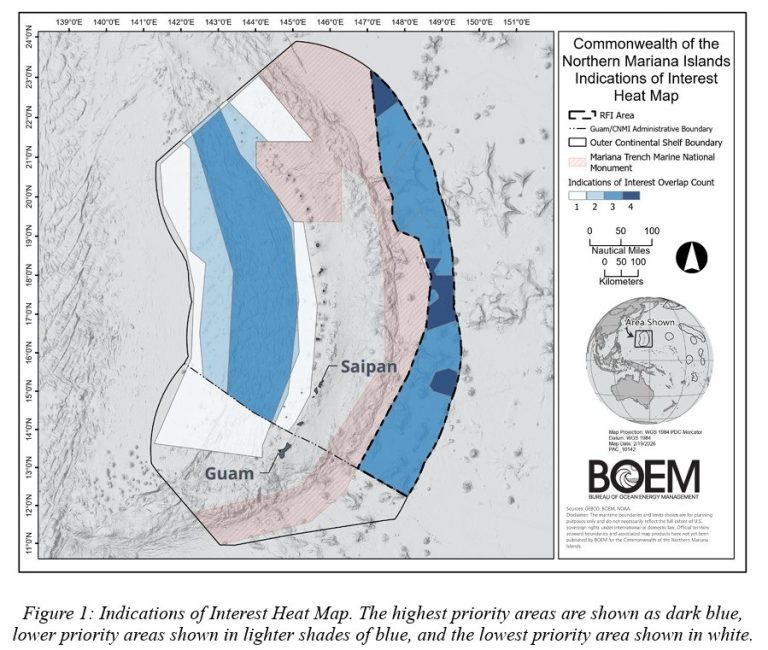
The recommended area includes two geographically distinct areas, one east and one west of the CNMI. The area east of the CNMI is 35.5 million acres or 6,502 whole or partial blocks and is 128 mi from Saipan and 127 mi from Guam at its closest point.

The area west of the CNMI is 33.6 million acres, or 6,248 whole or partial blocks, and is 57 mi from Saipan and 46 mi from Guam at its closest point.

“The recommended area located east of the CNMI, and the Mariana Trench National Marine Monument is consistent with indications of interest and prospective seabed mineral regions identified by the U.S Geological Survey in and around the RFI area for ferromanganese crusts and polymetallic nodules,” BOEM said.

“The Trump administration recognizes that an overreliance on foreign critical minerals and their derivative products could jeopardise U.S defence capabilities, infrastructure development and technological innovation.” Douglas Boren, BOEM regional director, stated in a 13 March memo.

BOEM said the area expansion was driven by indications of interest from several companies responded to the request for information issued last year.

“Indications of interest identified areas of interest in the RFI area and several included additional areas west of the CNMI,” the bureau said. “Indications of interest and comments identified polymetallic nodules in the RFI area to the east.”

In addition to interest in the RFI area, BOEM said there were multiple expressions of interest in polymetallic sulphides to the west of the CNMI.

“In both areas, the primary minerals for commercial development include potential commercially viable quantities of cobalt, nickel, copper, manganese, zinc, rare earth elements, along with other minerals that may prove economically viable to extract and process in the future,” BOEM said.

Leon Guerrero said the expansion was “driven by industry interest, not the overwhelming concern about impacts on the environment, biodiversity, fisheries, tourism, public health, national security and regional relations that have been raised by local stakeholders and literally tens of thousands of people around the world.”

The commenting period for the bureau’s solicitation of interests and information gathered 65,585 submissions, both opposing and supporting deep-sea mining.

The governor’s office said it will continue to explore every avenue to ensure that island voices are at the table making decisions, including engaging other jurisdictions affected by BOEM’s rapid actions and pushing to establish a Joint State/Federal Task Force.

“We are disappointed that, in all our attempts to engage with BOEM throughout this process, they have not considered and have ignored the very people who are most affected by their actions. We will show up on every front to make sure that our concerns are heard and that our oceans are protected,” Leon Guerrero said.

“BOEM’s moving ahead with doubling the lease area despite public objections and concerns only demonstrates how much of a flawed process this is. The total disregard for our traditions, livelihoods, and resources is deeply troubling,” Tenorio said.

“BOEM has now doubled down on a course the people of the Marianas have already rejected,” Senator William Parkinson said. “This is yet another example of federal agencies treating our region like a sacrifice zone, despite clear and unified opposition from Guam, the CNMI, marine scientists, and local communities.”

“The most offensive part of this process is not just the environmental risk, though that risk is profound. It is the absence of meaningful consent.

“The people of Guam and the CNMI did not ask for this. We did not invite this. We have spoken against this, and yet the federal government continues to move it forward anyway,” Parkinson said.

IMF warns deficits, global risks could slow Solomon Islands growth

The International Monetary Fund (IMF) says the Solomon Islands economy grew in 2025 but faces slower growth and rising risks linked to global tensions and domestic fiscal pressures.

An IMF team led by Masafumi Yabara visited the country from 09 to 20 March for the 2026 Article IV Consultation.

Staff estimates that the economy grew by 3.5 percent in 2025, driven by agriculture and gold production.

The IMF said growth is expected to slow in 2026, with inflation rising.

“The conflict in the Middle East is projected to slow growth to 2.7 percent in 2026 and raise inflation to 4.8 percent on average.”

It warned that continued global instability could further weaken the outlook.

“A prolonged conflict in the Middle East could significantly dampen economic activity and raise inflation.”

The IMF said fiscal challenges remain a key concern, with deficits expected to stay high.

“Reducing fiscal deficits and rebuilding liquidity buffers remain critical.”

It said the 2026 budget shows some progress, but stronger fiscal discipline is needed.

“Realistic and fully financed budgeting, aided by simple, top-down guidelines, is needed to avoid disruptive budget freezes and rebuild buffers.”

The IMF also advised that any government measures to ease the impact of global shocks should be limited.

“Should the government introduce measures to help mitigate the impact of the Middle East conflict, they should be targeted to the most vulnerable, strictly temporary, and closely coordinated with donors.”
The report highlighted ongoing governance and accountability issues.

“Persistent delays in fiscal reporting, audits of government financial statements, and the completion of the Pacific Games audit continue to weaken accountability.”

On monetary policy, the IMF said the central bank should remain cautious and avoid sudden policy shifts.

“Staff advises against ad-hoc exchange rate adjustments to address inflation, as strict adherence to the fixed exchange rate regime anchored to the currency basket is imperative to ensure policy credibility and foster market development.”

The IMF said the financial sector remains stable, but reforms are needed to strengthen regulation and combat financial crime.

It also highlighted climate change as a long-term risk to the country’s economic outlook.

“Climate change is expected to have incremental but meaningful cumulative effects on the debt trajectory over the long term.”

The IMF stressed the need for stronger data and institutions to support economic management.

“The quality of key statistics, including national accounts and government finance statistics, needs to be improved.

Interview: Pacific islands walk a ‘delicate tightrope’ as China influence rises

0

The Australian National University’s Graeme Smith reflects on the changing political landscape in the Pacific.

By Eugene Whong

As Beijing has been ramping up influence in the Pacific, island nations in the region have increasingly had to strike a balance existing economic and security relationships with Western countries like Australia and the United States, and new opportunities with China, according to Graeme Smith of the Australian National University.

Smith, who leads research teams at ANU that focus on Chinese investment, migration, military engagement, and aid in the Pacific region, told RFA’s Eugene Whong in an interview that Pacific countries must walk a “delicate tightrope” in the midst of the competing interests of Beijing and its rivals.

But he also said that at times, the tug-of-war geopolitics that permeate regional diplomatic forums can seem like a distraction when these countries are faced with more local “bread and butter issues.” The interview has been edited for length and clarity.

RFA: Let’s start off with the Solomon Islands where China has normalised a police presence in Honiara following the passage of a security pact in 2022. Do you think it could be said that the Solomons are China’s most important strategic partner in the Pacific right now?

Smith: I think they’re getting a lot of payoffs for not an awful lot of investment in Solomons. Certainly, they’re really getting bang for buck. Even their police presence — it’s only a dozen or so policemen — but in terms of the propaganda value, it’s immense. To be fair, the police there have been pretty well received because they focus on community policing rather than sort of the traditional policing you might see in somewhere like Australia. So, in some ways, their approach works a bit better with the local conditions.

RFA: So, you would classify that police presence as propaganda?

Smith: Obviously, these days China’s all about selling models and the model of policing that they’re selling is of concern, but in terms of the number of boots on the ground that they’ve got there, it really is a very token presence. Tellingly though, all of the people there are kind of ex-peacekeepers, so they’re not really police. They’re more people on the internal security side of things.

RFA: Beijing has been putting pressure on the Pacific countries to stop recognising Taipei in favour of Beijing, which the Solomons have done. How important is the status of Taiwan vis-a-vis Beijing’s One China Principle in the Pacific region?

Smith: Well, it’s a pretty big part of what drives China’s behavior in the region. They still are very, very focused on limiting Taiwan’s diplomatic space. So even if a country recognizes Beijing, they’ll then be pressured to take extra steps to limit any Taiwanese presence in the country. So even commercial offices, they’ll be pressured to close those down. It still remains a big focus of China in the region, and Taiwan has gone from being a very significant presence in the Pacific to having just three allies. Interestingly though, one of them will be hosting the Pacific Islands Forum this year, so that’ll be Palau, and that could make for some very interesting theatrics.

RFA: Let’s move on then to Fiji, which appears to be in a situation where it must balance a defence partnership with Australia while also receiving investment from China.

Smith: It’s been interesting because with the previous prime minister, Frank Bainimarama, they had a very loyal ally and someone who was quite dependent on Chinese diaspora funding to stay in power. With current Prime Minister Rabuka, initially he took some steps to increase Taiwan’s voice in the country. He changed the name of their representative office there in Suva, but he’s sort of slowly backtracked a little bit. And I think in many ways just had to address the reality of, you know, China is a much bigger trading partner than Taiwan with Fiji. And that’s the reality throughout the region.

RFA: Then, how difficult is it for countries in this situation to maintain the balance between China and Western countries as they compete for influence in the region?

Smith: Fiji carries that balance a bit better than most countries, and partly because it’s not as dependent on China for trade as other countries are. Its major trading partner unusually is not China, it’s the United States, and China often comes in at number three or even number four as its most significant trading partners. So that allows it to be somewhat immune to the sort of economic coercion or economic threats that other Pacific Islands are vulnerable to—the most extreme case being Solomon Islands, which has, usually, two-thirds of its exports going to China.

RFA: Let’s move on, then, to Papua New Guinea, which similarly maintains security ties with the U.S and Australia, but recently entered into an economic partnership with China in November of 2025 to boost exports of agricultural products and fisheries.

Smith: PNGs got an election year on the horizon, so that does change the equation there. It means that the politicians are going to look for propaganda victories. PNG’s been interesting in that they, in terms of their defensive cooperation, pushed for a treaty with Australia. So, this was an initiative that came from the PNG side, not from the Australian side, and got that across the line.

So, in terms of security partnerships, they’re much more integrated with Australia and the U.S. than any other Pacific country outside of the Northern Pacific. Meanwhile, in many ways, the trade deal was kind of, “Yeah, we’re sorry, we still want to trade with you.” And they do. They export a huge amount of Liquefied Natural Gas not just to China, but also to Taiwan. So, they have to walk a pretty delicate tightrope. And in an election year next year, Prime Minister Marape will be keen to get some infrastructure projects underway. So certainly, he’ll be looking to China to bankroll some of those before he goes to the next election.

RFA: So then is maintaining the balance between China and Taiwan just as difficult? Or is it just that money is so important that it makes these kinds of problems go away?

Smith: In terms of the formal diplomatic space, really, Taiwan doesn’t have a lot of wiggle room there, even less than what it has in Fiji, and that’s kind of the quid pro quo. On the other hand, if you look back to the Asia-Pacific Economic Cooperation (APEC) Forum that was held in Papua New Guinea in 2018, Taiwan was there.

As long as it’s just economics, I think Taiwan is still given a little bit of leeway. It’s when it comes into actual diplomacy that China is a little bit uneasy, because to be honest, a lot of China’s economic prosperity comes from Taiwan. The two countries economically are very tightly integrated, and this is something that China is not at all unhappy about. They like tight integration because it enhances their argument for unification much more strongly than anything else.

RFA: Let’s pivot to the countries that have entered into the Compact of Free Association with the U.S, which are Palau, the Marshall Islands, and the Federated States of Micronesia, which signed an economic framework agreement with China in late 2025.

Smith: FSM is the one of those that recognises Beijing, and they switched to Beijing some time ago. There was some noise from the outgoing president that he would like to switch to Taiwan, but that of course did not happen. In doing so, he sort of flagged a lot of interference that had been going on from China within FSM. But a lot of the drama has been around getting the compact negotiated. That seems to have largely gone through. Aid cuts that have affected a lot of the Pacific haven’t really hit the compact states because a lot of their money comes through the U.S Department of the Interior, not through the State Department. So, they’ve been largely unaffected.

But the leadership of all countries is quite different. In Palau President Surangel Whipps Jr., you have a very pro-, almost Trumpian type figure. He quotes Ronald Reagan in his speeches, but his term is up after this electoral term. So, what happens after that will be of interest and concern to the U.S. In the Marshall Islands, it’s always a little bit unstable, but certainly they’re still very much in the U.S.-Taiwan camp. And the FSM, yeah, they’re always interesting to watch because you have these independence movements within the FSM, and you’re never sure when they’re going to bubble to the surface.

RFA: The 2026 Pacific Islands Forum will be in Palau, and we’re about five and a half months out from that. Should we expect that China and U.S. competition will be a major theme of the event? And if not, what other key issues would you say would dominate the discussions at this forum?

Smith: Most of the Pacific Island Forum members are kind of a bit annoyed by the distraction of geopolitics. They want to talk about the bread-and-butter issues of poverty, of climate change, of things that actually affect their daily lives. So, this Punch and Judy act over who sits where and who gets recognized really ticks them off. The Solomon’s ended up inviting neither China nor Taiwan to the last one, or America for that matter.

It’s unlikely Palau will follow suit. They’ll definitely want to have Taiwan in the room in some form. How China reacts to that will be really interesting to watch. But from the point of view of the member countries, this is just an annoying distraction to them because they’re facing existential threats. They’re looking in many cases to migrate in the face of current climate change or the prospect of future climate change. So, they’ve got some pretty big issues to discuss, and Taiwan-China is from their perspective not one of them.

RFA: So, these issues would be more important than worrying about which power you’re aligned with militarily or economically, correct?

Smith: It varies among the member states. Obviously, if you’re sitting in the Northern Pacific, it’s more of an existential question to you than if you’re sitting in Solomon Islands, well away from any prospective fighting over Taiwan. Certainly, for Guam and countries like this that aren’t full PIF members, if you have a missile called the “Guam Killer,” obviously it focuses your mind on a way that it doesn’t for Tonga or Samoa or these other places that are well out of the firing line. So, there is division within the PIF over how much they care about this. But by and large, the South Pacific nations see it as a somewhat annoying distraction.

RFA: Why is competing influence in the Pacific so important in a global sense?

Smith: The geopolitics matter in the sense that if there is a conflict over Taiwan it is quite an important region. The U.S. Navy would have to sail through that region to retake Taiwan should they choose to do so, which I have to say doesn’t look terribly likely under the current administration.

And it is important in the sense that in these countries, the extreme case in the Pacific would be Kiribati where China’s influence actually starts to corrode the polity … where you have a government that has been adopting very restrictive measures, often at the encouragement and certainly at the inspiration of China.

You can’t take a photo in front of the government building in Kiribati without someone coming up to you and saying “Hey, don’t do that.” And that certainly would never have happened 10-15 years ago. So, it can have a corrosive effect. Solomon Islands would be another example where you’d see it having a slightly corrosive effect on politics. Politics has never been terribly clean in Solomon’s anyway, to be frank, but it certainly hasn’t had a terribly positive impact there either.
Pacific pushes for urgent Climate action as Fiji sets pre-COP31 dates

0

As momentum gathers toward Pre-COP 31 and COP31, the Pacific stands united and resolute in its call for urgent, ambitious, and just climate action.

The Climate Change Ministers Talanoa convened Thursday in Brisbane for its third meeting, co-chaired by Palau’s Minister for Agriculture, Fisheries and the Environment, representing the Pacific Islands Forum (PIF) Troika as incoming Chair, Steven Victor, and Australia’s Minister for Climate Change and Energy, Chris Bowen.

The Talanoa was also attended by the President of Kiribati, Taneti Maamau, and the Prime Minister of Niue, Dalton Tagelagi.

The Talanoa opened with a traditional smoking ceremony, offering a warm welcome to Leaders and Ministers and grounding the Talanoa in a spirit of respect, connection, and shared commitment as they gathered to advance the region’s climate priorities.

Fiji is set to host the COP31 Pre-COP from 05 to 08 October this year, signalling a pivotal milestone in the lead-up to next year’s negotiations

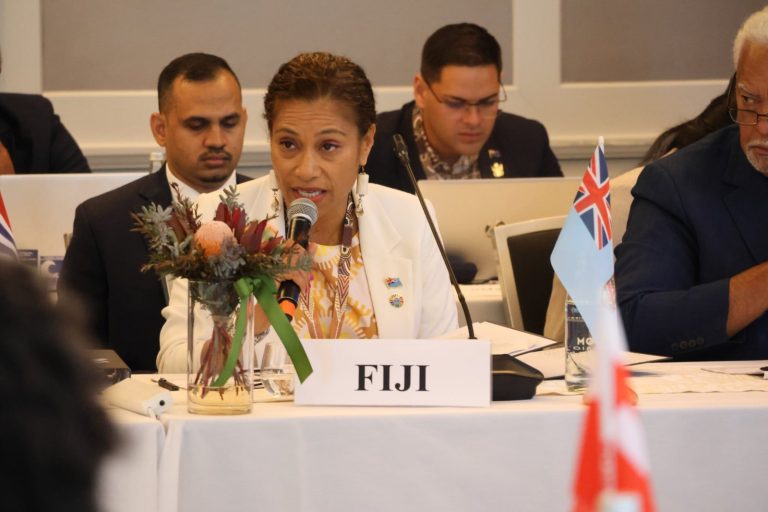
Minister for Environment and Climate Change Lynda Tabuya, on behalf of Fiji, in close consultation with Tuvalu, announced the proposed dates for the COP31 Pre-COP at the third Pacific Climate Change Ministers Meeting in Brisbane, Australia.

The Pre-Cop dates have been strategically sequenced following the 81st Session of the United Nations General Assembly and ahead of the World Bank Annual Meetings. This positioning is intended to maximise ministerial participation, strengthen political momentum, and align with the broader multilateral calendar.

In a deliberate move away from the traditional format, Fiji has proposed an extended three-and-a-half-day programme to the Ministerial Talanoa, reflecting both the urgency of the climate crisis and the Pacific’s commitment to delivering substantive, solutions-oriented outcomes.

At the heart of this design is a dedicated Leaders’ component spanning one and a half days, including a segment to be hosted in Tuvalu.

This approach highlights the region’s strategic intent to elevate political leadership and provide clear guidance at a critical juncture in the COP31 cycle.

Complementing this high-level engagement, the programme will incorporate structured technical discussions to enable deeper engagement on priority thematic areas requiring sustained attention and consensus-building. This integrated approach reflects the Pacific’s emphasis on aligning political ambition with technical rigor.

“We have also received strong interest from Indigenous Peoples, civil society organisations, and the private sector to engage meaningfully in this process. The proposed structure will therefore create space for inclusive participation, consistent with UNFCCC practice, while maintaining the integrity of Party-led discussions,” Tabuya stated.

Fiji looks forward to working in close partnership with all Parties and stakeholders to further refine the programme and ensure that Pre-COP 31 delivers concrete, forward-looking outcomes—commensurate with the urgency of the climate crisis and the shared global responsibility to act.

Cook Islands PM Mark Brown in New Zealand but no talks with Luxon

0

Cook Islands Prime Minister Mark Brown is in Aotearoa but will not be engaging with his Kiwi counterpart.

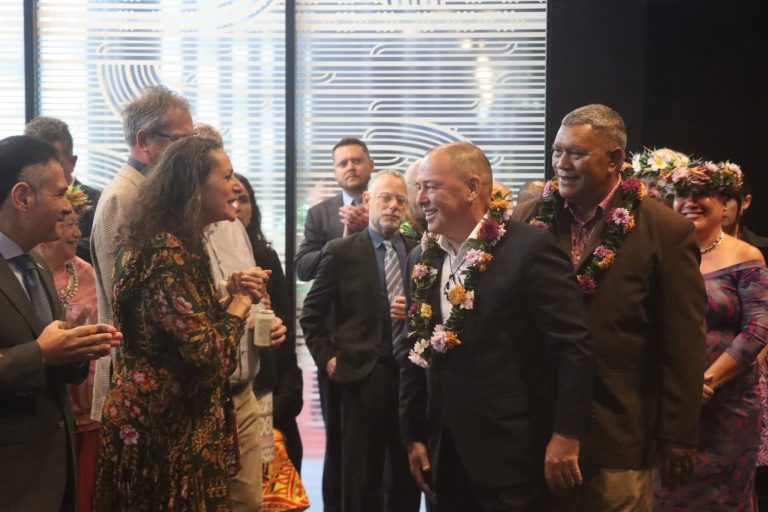
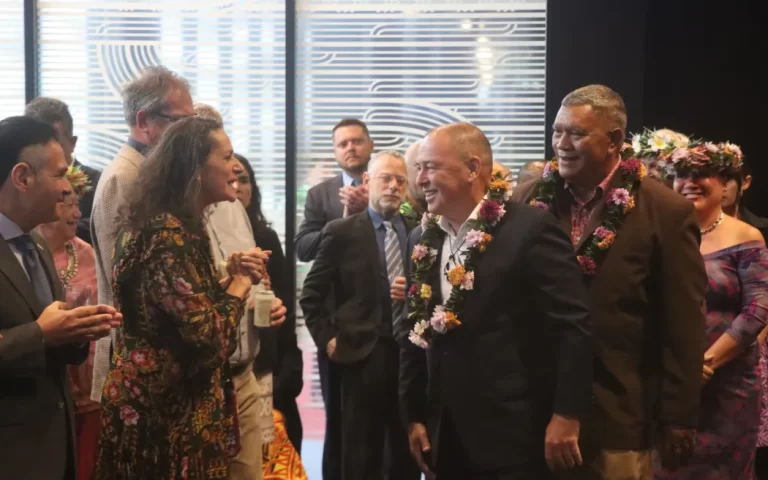
Brown spoke at a formal event at Takina Events Centre in Wellington on Wednesday, before travelling to Auckland to meet members of the Cook Islander diaspora.

Addressing a room of dignitaries, which included Labour deputy leader Carmel Sepuloni, Brown said his country was “growing in influence” globally on its “voyage of statehood”.

“Our desire to pursue our own policies and interests have been reflected in our growing participation on the international stage,” he said.

Noting the 60th anniversary of the NZ-Cook Islands free association compact, Brown said the nature of that relationship was due for a rethink.

“There are times when we must pause and consider whether the conventions and evolved understanding between our freely associated states remain aligned,” he said.

“We find ourselves in such a moment.”

However, he also spoke of the “family-like” relationship with affection, saying “maturity shouldn’t change our bond”.

His office had been coy with media in the runup to the visit, telling Cook Islands News that “officials remain in regular contact, and we welcome opportunities for dialogue” with NZ officials at all levels.

But RNZ Pacific understands Christopher Luxon and Mark Brown will not meet on this trip.

Winston Peters’ office confirmed on Monday that he had no planned engagements with the Cooks PM either. Asked why, Brown refused to comment.

Prime Minister Luxon returned to New Zealand on Wednesday after a four-day trip to Samoa and Tonga.

He told media at Parliament on Thursday that progress was being made – but it was best that officials handled it.

‘I’m confident we’ll get to a good place in the end, we’ve made some good progress recently, but I’m going to let our officials handle that progress,” he said.

“Mark and I have spoken in the past … about how we want to handle it going forward.”

The pair last met at the Pacific Islands Forum in Honiara last year, after Brown’s government was roundly criticised by NZ signing a deal with China without consultation, as per the free association agreement.

Further, it was revealed the Cook’s private shipping registry had been hosting sanctioned oil tankers linked to a “shadow fleet” servicing Russia and Iran, which MFAT said risked New Zealand’s international reputation.

It has all resulted in a “pause” in aid to the Cook Islands, something which Brown said at the time he wanted to resolve with Luxon or Peters directly.

RNZ reported last November that Brown “wanted to elevate these discussions to the Prime Minister’s level but was told “they wanted the discussions to be done between our officials.”

A spokesperson from the Ministry of Foreign Affairs and Trade (MFAT) told RNZ Pacific, “New Zealand and Cook Islands officials continue to engage regularly and will be meeting while the Cook Islands delegation is in New Zealand.’

However, written responses from ministry officials to Parliament’s foreign affairs select committee last week suggest there is still mistrust.

They said MFAT officials continue to engage with their Cook Islands counterparts regularly regarding a myriad of concerns.

These revolve around “concerns about a series of actions and statements by the Cook Islands, the nature of our free association relationship and the need to rebuild the trust that underpins it.

U.S seeks to expand seabed ‘diplomacy’ in the Pacific, eyes deal with Nauru

0

Washington has begun engaging with Nauru to explore a partnership on seabed mineral extraction, in a bid to expand its deep-sea mining diplomacy in the Pacific and tap into China’s network.

Nauru, with an area of 8.2 square miles and a population of 10,000, is on the front lines of a drive to jump-start seabed mining in international waters governed by the International Seabed Authority.

Deputy Secretary of State Christopher Landau this week spoke with Nauruan President David Adeang “about advancing shared interests in the Pacific,” said Tommy Pigott, principal deputy spokesperson for the State Department.

Besides deep seabed mining, Landau and Adeang also tackled the potential to work together to curb illegal activities in the region, increase investment opportunities, enhance air travel and cooperate on migration, Pigott said.

“Both leaders reaffirmed their commitment to a strong bilateral relationship and a peaceful, prosperous Pacific,” the spokesperson said.

Pigott said the dialogue was a follow-up to their earlier discussions at the recent Pacific Agenda Investment, Security and Shared Prosperity Summit in Honolulu.

Amid the Pacific island leaders’ growing call for a moratorium on deep-sea mining in the region, Nauru has defended its collaboration with The Metals Company to advance the initiative, which is considered an economic salvation for the tiny island.

“The greatest risk we face is not the potential environmental impacts of mineral recovery but the risk of inaction. There is a risk of failing to seize the opportunity to transform to renewable energy and decarbonise our planet,” Adeang said during the 79th session of the United Nations General Assembly in New York on 24 September 2024.

While no commercial mining has begun yet, ISA has issued several exploration contracts in the Clarion-Clipperton zone, most of them sponsored by Nauru and Tonga. The area is known to host the world’s largest polymetallic nodule deposits.

As the U.S and China race to the ocean floor, island nations are hedging their bets. The Cook Islands and Nauru previously signed separate deals with China.

Last month, the U.S built a partnership with Tonga to advance marine scientific research for “responsible exploration of seabed mineral resources.”

Federal officials said Tonga’s longstanding history of ocean stewardship and the United States’ expertise in ocean research and technology “uniquely position” them to collaborate in the industry, which stakeholders project will offer a US$20 trillion opportunity.

Before Tonga, Washington signed an agreement with the Cook Islands establishing critical mineral frameworks that would lay the groundwork to collaborate “on pricing challenges, spur development, create fair markets, close gaps in priority supply chains and expand access to financing.”

The Trump administration is seeking to accelerate plans to exploit mineral resources offshore Guam and the Northern Marianas, in line with President Trump’s executive orders to “unleash” America’s potential to explore and develop offshore mineral resources amid a growing call for a deep-sea mining moratorium in the region.

The U.S signed similar agreements with 10 other nations, expanding what it calls critical mineral diplomacy.

FFA Members review decade of Niue Treaty as Honiara meeting targets Illegal fishing

0

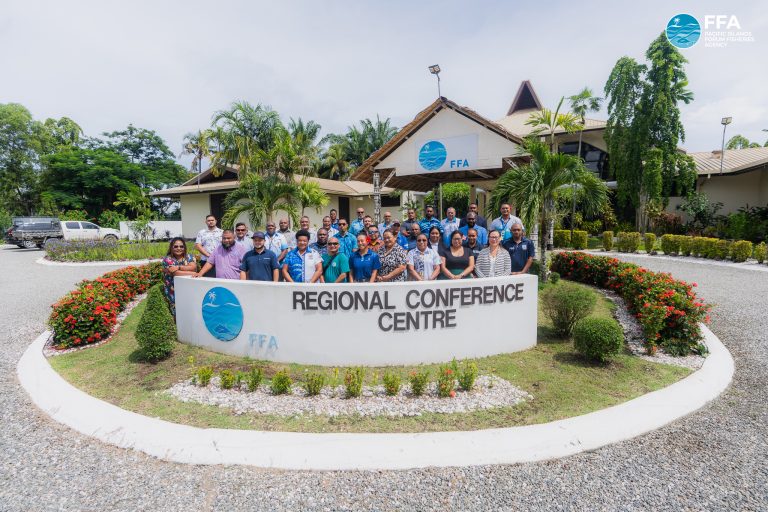
Members of the Pacific Islands Forum Fisheries Agency have begun pre-meeting discussions in Honiara with a workshop on the Niue Treaty Subsidiary Agreement, marking more than a decade since the agreement came into force.

The workshop, held ahead of the 29th Monitoring, Control and Surveillance Working Group (MCSWG29), saw Members reflect on progress, challenges and lessons from joint surveillance operations across the region.

Adopted in 2012 and operational since 2014, the Niue Treaty Subsidiary Agreement enables FFA Members to work together on fisheries monitoring, control and surveillance, including joint operations, intelligence sharing and coordinated enforcement across national borders.

The agreement has strengthened regional efforts to combat illegal, unreported and unregulated fishing, allowing Members to pool resources, exchange fisheries data and carry out cooperative surveillance activities.

To date, more than 50 joint operations and capability development activities have been delivered under the agreement, involving 13 Parties, highlighting continued regional commitment to protecting Pacific fisheries.

Discussions at the workshop focused on boosting cooperation, tackling illegal fishing and addressing emerging transnational maritime risks, while also reviewing implementation progress and identifying gaps requiring further support.

FFA Interim Deputy Director-General and Director of Fisheries Operations, Allan Rahari, said the agreement remains central to regional collaboration.

“Through the NTSA, our members are able to coordinate surveillance efforts, share information, and carry out joint operations across national boundaries. This cooperation is key to addressing illegal fishing and safeguarding our fisheries resources.”

The workshop builds on years of operational cooperation, reinforcing efforts to strengthen surveillance across the Pacific.

FFA Members are in Honiara for MCSWG29, running from 23 to 27 March 2026 at FFA Headquarters, bringing together fisheries, maritime and security officials to coordinate regional responses to illegal fishing and strengthen ocean governance.

The Solomon Islands version: Why there are no permanent friends or enemies in politics

0

By Ronald Toito’ona

The old maxim of statecraft – “In politics, there are no permanent enemies and no permanent friends; only permanent interests” – is often cited in textbooks, but in the Solomon Islands, it is a lived reality.

The dramatic events of March 2026 in Honiara have turned the “Government for National Unity and Transformation” (GNUT) into a textbook example of how quickly the political floor can liquefy.

For Prime Minister Jeremiah Manele, the past three days have been a brutal reminder that a signature on a coalition agreement is often written in disappearing ink.

The Sogavare Pivot: From Rival to Right-Hand Man

Perhaps the most jarring illustration of this rule is the return of Manasseh Sogavare.

In April 2025, Sogavare led a high-profile defection in a calculated attempt to oust Manele from the top job. Today, in a turn of events that would make a gymnast dizzy, Sogavare has been sworn in as Manele’s deputy.

The Interest: For Manele, it is survival; he needs a political heavyweight to anchor a sinking minority government.

* The Irony: The man who tried to end Manele’s prime ministership is now the man tasked with saving it. It proves that in Solomon Islands politics, a “bitter rival” is simply a “partner in waiting” if the price or the portfolio is right.

The Agovaka Paradox: Loyalty vs. Tenability

If Sogavare represents the “enemy turned friend,” former Foreign Affairs Minister Peter Shanel Agovaka represents the “friend turned predator.”

As a senior strategist for the OUR Party, Agovaka was long considered a pillar of the establishment.

Agovaka returned from overseas on16 March and, within hours, transitioned from the “inner circle” to the “spearhead of the opposition.”

This shift wasn’t driven by a change in ideology, but by a shift in interests.

When the “tenability” of the current leadership came into question, personal loyalty was discarded in favor of political survival.

Why the “Majority Assumption” Failed

Prime Minister Manele’s current crisis stems from a classic miscalculation: assuming that 2024 election numbers would hold firm in 2026.

As noted by his former Health minister, Dr Paul Bosawai, the “internal mistrust” within the GNUT highlights a critical flaw in coalition politics.

“A coalition is only as strong as its smallest member feels valued.”

By sacking two People First Party (PFP) members in February, Manele inadvertently triggered the mass exodus.

The PFP didn’t just leave; they leveraged Section 54 of the Political Parties Integrity Act (PPIA) to bypass the 30-day notice requirement and shatter the government from within.

As a Party, their “interest” wasn’t the government’s 2026 goals, it was about staying together as a government and setting the priorities right as per the coalition agreement that was signed when the GNUT was formed in 2024.

The Permanent Interest: Power and the Pendulum

In the Solomon Islands, power is a pendulum, not a throne. The current 28-MP opposition bloc is a “marriage of convenience” between groups that were bitter rivals just months ago:

*The PFP: The former junior government partner.
* The SIDP, United Party, and Independent MPs: The traditional voices of the opposition.

These groups haven’t suddenly found common ground on policy; they have found a shared adversary.

As the Registrar of Political Parties, Gilson Galo, noted, this new coalition was lodged almost immediately, proving that “enemies” become “partners” the moment a change in leadership becomes more profitable than the status quo.

The Reality of Realpolitik

The “March 15 Cabinet Exodus” serves as a warning to any leader or ordinary Solomon Islander who mistakes a temporary alliance for a permanent bond.

In Solomon Islands politics:

*Trust is a currency that devalues quickly.
*Loyalty is secondary to the “tenability” of the leader.
* The Law (like the PPIA) is often used as a tactical weapon rather than a moral guide.

Until political stability is prioritised over personal positioning, the Solomon Islands will likely remain caught in this cycle where today’s Deputy Prime Minister was yesterday’s greatest threat.

Queensland Reds flanker Seruu happy to be back home, excited for Drua clash

0

Queensland Reds flanker Seru Uru says they are expecting nothing short of a battle on Saturday when they take on the Swire Shipping Fijian Drua for their Shop N Save Super Rugby Pacific match-up.

The side touched down at the Nadi International Airport last night, and Uru is happy to be back home once again.

Uru has been watching the Drua closely this season, and he knows what to expect when he takes on his Fijian brothers.

“It’s good to be home, been looking forward to this game, and we really hope fans will come out in numbers to watch us play.”

He hopes fans will come out and fill the stands just like they did in Ba last weekend, and watch some exciting Super Rugby action.

Meanwhile, the Queensland Reds’ kicking game will be a key focus for the Swire Shipping Fijian Drua as they prepare to face the visitors this Saturday in Lautoka

Head coach Glen Jackson acknowledged the Reds’ strength in this area, noting that they currently lead the competition in kicks per game this season. He expects the visitors to use this tactic strategically to disrupt the Drua’s style of play.

Despite anticipating this approach, Jackson emphasized that his side will remain committed to their own brand of rugby, aiming to deliver an exciting performance for their home fans rather than being dictated by the opposition’s tactics.

“The big thing is that we don’t get bored they’re the kicking game, and our back field is really important, and also just play a lot of rugby. They are fantastic team, very well coached,” he said.

Stay connected

529FansLike
172FollowersFollow
156SubscribersSubscribe
- Advertisement -