Home Blog Page 76

PNG PM Marape queried over status of Bougainville

0

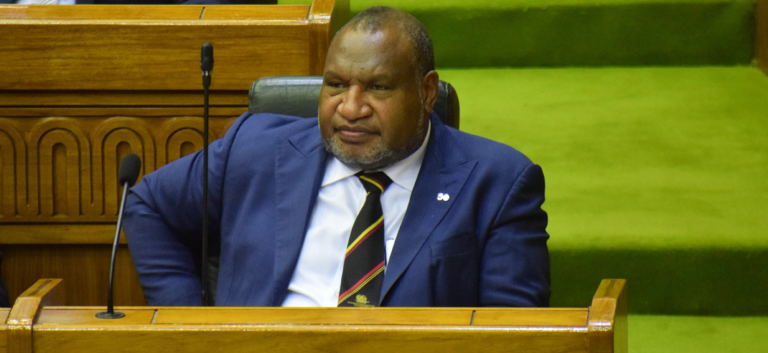
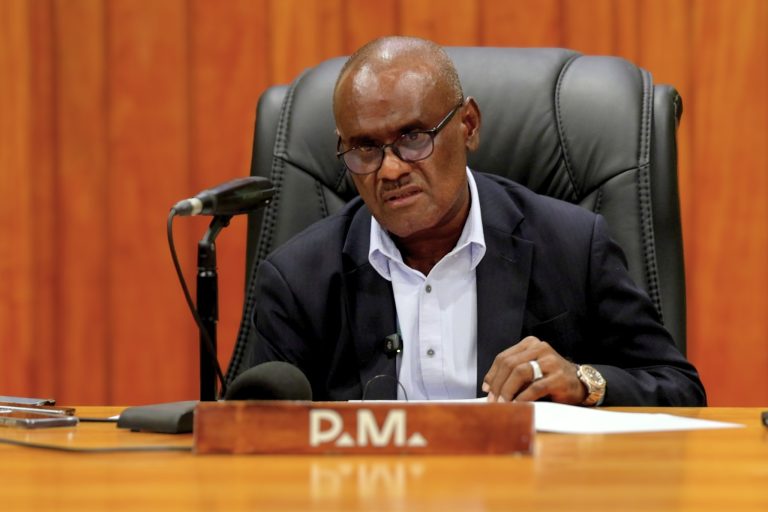
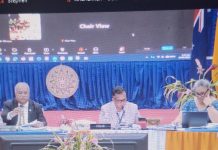
Papua New Guinea Prime Minister James Marape says there has been no report or clear study on Bougainville’s autonomous status to this day.

He said for the most part, Bougainville’s autonomous status had been shaded by the Bougainville crisis.

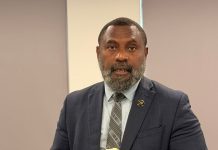
Marape was responding a series of questions put through by East Sepik governor Allan Bird on what set the Bougainville’s autonomous status apart to other provinces also seeking the same path.

Bird asked if the autonomy arrangement had worked or failed on Bougainville and if there were any audits conducted to be tabled in Parliament for MPs and public to view.

Marape said provinces operated under the Provincial and Local Level Government (1995) Organic Law while Bougainville operated under part 14 of the Constitution.

He said the Autonomous Region of Bougainville (Arob) was a direct creation of the Constitution through the amendment that took place in 2001 and their autonomy was clearly defined.

“Reporting has always been blurred simply at the backdrop knowing fully that they have a special case, they come from the crisis background,” Marape said of Bougainville’s circumstances.

“There is some element of sympathy from Waigani to them that has not compelled much of accountability and reporting back to Waigani.

“I would ask in the next meeting with Bougainville’s leaders for a study on what has happened so we can help them in their course on what is coming ahead and for us going into the future,” he said.

Marape said in other ways the full audit, or study, had taken place in respect to their power arrangement which had seen most transferred to Bougainville.

Most of Bougainville’s functions have been transferred in the 2010 Joint Supervisory Body (JSB) with education being the first function, followed by economic powers of fisheries, forestry and land ownership under the Autonomous Bougainville Government.

“Transfers of power have been somewhat slow, Buka is not anxious to draw down of powers and Waigani is also slow to transfer powers,” he said.

Marape said PNG had retained sovereignty on defence, currency and foreign affairs matters.

PNG Parliament passes Vagrancy Act

0

Papua New Guinea Parliament has passed the Vagrancy Act which provides that one can be declared a vagrant if they are found not “a fit and proper person” to live in an urban centre.

The bill was passed with an 80-1 vote, with Chuave MP and Opposition Leader James Nomane the only one to vote against it.

National Capital District Governor Powes Parkop, who tabled the Vagrancy Bill 2025, said it would only affect those who continuously engaged in criminal behaviour in urban centres.

“The idea is that if you commit a violent crime (repeatedly), that is unacceptable (and) you will be sent back to your home (district),” he said.

This means that anyone who breaks any laws in any cities or towns in the country will be arrested by police, charged, and taken to court.

Police can then apply for an exclusion order, and the court will determine how long the offender is to stay away.

Parkop said as an example, if there was an ongoing criminal case, or if someone was suspected of inciting ethnic conflict, alcohol-driven fight or other crime, police or town authorities could apply to the court for an exclusion order.

“If you are unemployed and don’t engage or commit crimes, then this law doesn’t apply to you,” Parkop explained.

“This law also applies to members of parliament, chief executive officer or anyone in a higher position involved in any crimes like buying, transporting, or selling guns and ammunitions.”

Parkop said “it’s our city (Port Moresby) and we must live together”.

“Whatever your issue is with tribal fights, leave it there (at your home district). Don’t bring it into the city,” he said.
This bill had been brought up before but was shelved because it was deemed unconstitutional by the Supreme Court.

Parkop described the bill as another tool available to the municipal authorities to use where and when necessary to complement their efforts to deal with crime in their municipalities.

He said while it would not solve all issues, it would help address some of the challenges.

“It will definitely not be a silver bullet to solve all the rural-urban migration issue or other related issues in the urban centres,” Parkop said.

“We have the Criminal Code Act and the Summary Offences Act that deal with minor offences.

“Our problem is enforcement. Police (resources) are stretched. And in the city, we are doing our best to support the police and ensure people live peacefully.

“But some people don’t have the understanding and respect for others who want to live peacefully.”

Parkop said the previous legislation had allowed police to declare a person a vagrant. But it was ruled unconstitutional.

Meanwhile, Opposition leader James Nomane has warned that the Vagrancy Act will create discrimination, erode national unity and will make citizens exiles in their own country.

Nomane, the only MP to vote against the Vagrancy Act bill in Parliament said: “The reason I say this is that, after 50 years, all members must be promoting national unity. I am of the view that the bill will create discrimination, erode national unity and it will make citizens exiles in their own country.

“I am very concerned about the arbitrary nature of this bill in labelling someone a vagrant and then having them prosecuted and sent back to their home province.”

Nomane said there were reasons why people moved to other parts of the country.

“Under the constitution, they have every right to movement and freedom of choice.

“On top of that, the constitution safeguards a person’s rights to move and to live anywhere in the country.”

He told the House: “The laws are already in place; the Criminal Code is already there. All we have to do is enforce the Criminal Code and make sure everybody adheres to the laws of the land.

“They’ll be no need for an additional bill or the vagrancy act to start labelling and discriminating people as vagrants and non-vagrants and telling them to go back their provinces.”

Nomane added that the bill would negate the concept of “our country”.

“What criteria are we applying to make these sorts of decisions? We are going to divide the country,” he said.

Weather Ready for All: GEDSI Strategy launched for inclusive disaster preparedness

0

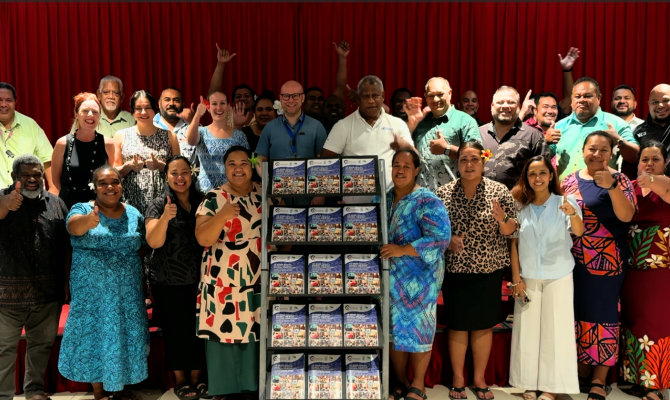
In a landmark moment for Pacific climate resilience, the Pacific Leaders Weather Ready Pacific (WRP) Programme being implemented by SPREP has launched its Gender Equality, Disability and Social Inclusion (GEDSI) Strategy 2025–2033.

The new strategy, launched on Friday 13 March 2026, is a comprehensive framework designed to ensure that early warning systems, weather forecasts, and disaster preparedness services reach every person across the Pacific, especially the most vulnerable.

At the heart of the WRP GEDSI Strategy is a simple but powerful truth: the people most at risk from extreme weather events are women, girls, persons with disabilities, youth, and other marginalised groups. They are also often those least reached by the services designed to protect them. The strategy is WRP’s formal commitment to changing that.

“Our commitment is to the vision of building a resilient and inclusive Pacific where everyone, and in particular Pacific women and girls in all their diversity, are empowered to anticipate, prepare for, respond to, and recover from all disasters and hazards,” said Salesa Nihmei, Director of the Climate Science and Information Programme at the Secretariat of the Pacific Regional Environment Programme (SPREP).

The strategy recognises that Pacific Island communities face escalating threats from tropical cyclones, tsunamis, droughts, storm surges, and flash floods, and that these events do not affect all people equally. Persons with disabilities, for example, are up to four times more likely to die in a disaster than those without disabilities. Women with disabilities face compounded disadvantages across education, employment, and health, and are more vulnerable to violence, particularly in the chaos immediately before or following a disaster.

The GEDSI Strategy directly shapes how WRP supports National Meteorological and Hydrological Services (NMHSs) across the Pacific region. While these services play a critical role in delivering life-saving forecasts and warnings, assessments already conducted across some of the Pacific Islands of Cook Islands, Niue, Palau, the Republic of the Marshall Islands, and Tuvalu have revealed a consistent pattern: gender and inclusion considerations remain poorly integrated into institutional operations, hindered by insufficient resources, male-dominated workforces, and a troubling tendency to offload responsibility for inclusive outreach onto community-level women’s groups rather than embedding it in institutional policy.

Under its Institutional Strengthening and Capacity Building priority area, WRP commits to providing mandatory, ongoing GEDSI training across all NMHS staff and partners; integrating GEDSI into core operational policies and strategic planning; and actively promoting gender balance, including in leadership and technical roles where women currently represent fewer than 20 percent of positions globally.

A dedicated programme to support Pacific Women in Weather and Water will foster professional development for Pacific women in meteorology, hydrology, and related sciences, both within formal NMHSs and through recognition of the vital informal roles played by community networks such as Fiji’s Women’s Weather Watch (WWW) and Vanuatu’s Women Weta Weta.

Crucially, the strategy outlines how WRP will also invests in the “last mile”, the hardest-to-reach communities where the gap between warning issued and warning received can mean the difference between life and death. WRP-funded satellite internet services in underserved areas will support information dissemination, while community leaders and traditional communication networks will be leveraged to ensure warnings are understood and acted upon by all.

During the launch, Pacific Met Services heard about the strategy’s “transformative twin-track approach”: simultaneously mainstreaming GEDSI across all WRP programming while delivering targeted interventions to address the specific barriers faced by marginalised groups.

The approach is built on the understanding that neither track alone is sufficient for lasting change.

Additionally, there are five Key Priority Areas that structure the approach: Inclusive Risk Understanding and Early Warning Systems for All; Gender Transformative Approaches; Holistic Disability Inclusion; Deepening Social Inclusion and Community Engagement; and Institutional Strengthening and Capacity Building. These are underpinned by dedicated monitoring and evaluation frameworks that collect disaggregated data, by gender, age, disability, location, and socioeconomic status, to track progress and continuously improve.

The WRP GEDSI Strategy 2025–2033 is more than a policy document, it is a transformation agenda for how Pacific meteorological and disaster preparedness institutions operate, who they serve, and who they employ. Its vision is clear: a resilient and inclusive Pacific where Pacific women and girls in all their diversity, persons with disabilities, and marginalised groups are empowered not merely to survive disasters, but to anticipate them, prepare for them, and recover from them with dignity.

Solomon Islands PM Manele reshuffles Cabinet, insists ‘no crisis’ as Government holds firm

0

Solomon Islands Prime Minister Jeremiah Manele, has announced a series of ministerial appointments to ensure continuity and stability in Government following recent changes within the coalition.

The appointments include Ministers, Acting Ministers, and Supervising Ministers to oversee key portfolios and maintain effective administration across all sectors.

●Manasseh Sogavare (MP for East Choiseul): Deputy Prime Minister; Minister for National Planning & Development Coordination; and Acting Minister for Commerce, Industries, Labour & Immigration.

●Trevor Manemahaga (MP for Gao/Bugotu): Minister for Environment, Climate Change & Disaster Management & Meteorology; and Acting Minister for Infrastructure Development.

● Alfred Tuasulia (MP for West Kwara’ae): Minister for Communication & Aviation.

● Nestor Giro (MP for Central Makira): Minister for Agriculture & Livestock Development.

● Mary Daniella Zae Garu (MP for West Guadalcanal): Minister for Traditional Governance, Peace & Ecclesiastical Affairs.

●Freda Tuki Soriocomua (MP for Temotu Vatud): Minister for Justice & Legal Affairs.

● Jimson Tanangada: Acting Minister for Mines, Energy, Rural Electrification.

● Rexson Ramofafia: Acting Minister for Rural Development.
● Bradley Tovosia: Supervising Minister for Health and Medical Services.

● Makario Tagini: Supervising Minister for Public Service.

●Prime Minister Jeremiah Manele: Supervising Minister for Foreign Affairs and External Trade.

“All Ministries are fully covered. Cabinet remains functional and continues to meet and take decisions necessary for the effective administration of Government,” Prime Minister Manele said.

The Prime Minister acknowledged the contributions of outgoing Ministers and reaffirmed that the Government for National Unity and Transformation (GNUT) remains focused on its mandate.

“The mandate of GNUT transcends any single individual. Our focus remains on delivering for the people of Solomon Islands,” he said.

He added that the adjustments ensure stability in governance and continuity in service delivery across all ministries.

Meanwhile, Prime Minister Manele has reassured the nation that the Government remains stable, fully functional, and continues to operate in accordance with the Constitution despite recent political developments.

Manele said recent resignations of several Ministers and Members of Parliament, as well as a petition for a Motion of No Confidence, are part of normal democratic processes.

“Let me be absolutely clear: this is not a constitutional crisis. It is a process provided for under our Constitution,” Prime Minister Manele said.

He emphasised that the Government continues to hold office with full legal authority unless and until Parliament determines otherwise through a formal vote.

“A photograph is only a snapshot in time. The constitutional determination of leadership is made on the floor of Parliament,” he said.
Manele reaffirmed that public services remain uninterrupted and Government operations continue as normal.

“Leadership may change within certain portfolios, but the machinery of Government does not falter. Our people will continue to receive services without disruption,” he added.

The Prime Minister also confirmed that Parliament will be convened in accordance with constitutional processes, with all actions guided by the rule of law.

At the same time Prime Minister Jeremiah Manele, MP, called on all Solomon Islanders to remain calm, united, and responsible as the country navigates ongoing political developments.

He urged leaders across all sectors—including provincial governments, churches, civil society, and the private sector—to promote stability and national unity.

“To our citizens, I ask you to be responsible in what you share. Please do not spread rumours and respect one another’s opinions,” he said.

The Prime Minister commended the Royal Solomon Islands Police Force for maintaining public order and professionalism.

Fiji and Australia launch major Climate adaptation initiative to strengthen flood resilience

0

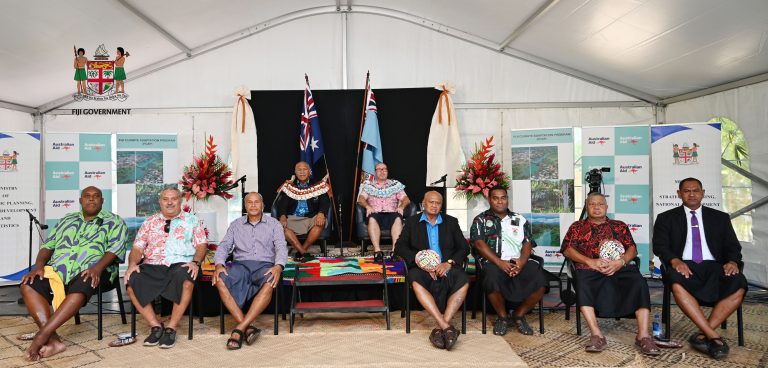
Fiji and Australia have launched a major new initiative to strengthen resilience to flooding across the country, marking a significant milestone in the two nations shared response to the escalating impacts of climate change.

The Fiji Climate Adaptation Programme (FCAP) represents a FJD$35 million (US$17.5 million) joint investment aimed at improving flood early warning systems, enhancing water management, and supporting community-led adaptation efforts across Fiji.

Prime Minister Sitiveni Rabuka, while officiating at the event in Nadi, highlighted that this initiative aligns closely with Fiji’s national climate priorities and reflects the strength of the Vuvale Partnership between Fiji and Australia.

“Under this programme, we will strengthen governance systems for water and flood management, improve early warning systems, and support communities to implement practical adaptation measures,” Prime Minister Rabuka said.

“Importantly, the programme will also support nature-based solutions and community-level resilience initiatives that empower local communities to respond effectively to climate risks.

“The initial focus in the Nadi River catchment will allow us to pilot innovative approaches that can later be expanded to other flood-prone areas across Fiji.”

Australian High Commissioner to Fiji, Peter Roberts, said Nadi’s vibrancy and economic success are closely tied to its natural environment, while also highlighting the challenges posed by climate change.

“It is great to be in Nadi which is such a vibrant community. A large part of that vibrancy and economic success is due to the river flowing through Nadi. But that also makes Nadi a significantly climate-exposed community,” Mr Roberts said.

“Here, when heavy rain falls and the river rises, it brings a stark reminder: climate change is not a distant concern, but a daily reality. As nations in the Pacific, we share this experience, and we have seen how flooding has impacted our communities.

“Losses from floods and cyclones alone average around FJD$500 million (US$250 million) each year—approximately five percent of Fiji’s GDP—while events like Tropical Cyclone Winston have caused impacts equivalent to 20 percent of GDP.

“Fiji and Australia already have a long history of working together to prepare for and respond to severe weather events. Most recently, through our partnership with the Ministry of Rural and Maritime Development and National Disaster Risk Management, Australian-provided emergency supplies were pre-positioned and distributed by the Fiji Government to communities that needed them most.

“That was great work, and we should all be proud of it. Now, our ambition is to go beyond responding to these events and work together to prevent and mitigate their impacts before they occur.”

The launch also highlights progress toward the proposed Nadi Flood Alleviation Project a long-term initiative aimed at addressing one of Fiji’s most persistent climate challenges.

Planning for the project began decades ago, underscoring the importance of identifying sustainable and effective solutions for the Nadi floodplain. In December 2024, the Coalition Government endorsed in Cabinet the pursuit of the project and agreed to explore feasible solutions from a range of options identified in previous studies.

Australia, through the Australian Infrastructure Financing Facility for the Pacific, has worked closely with Japan, through the Japan International Cooperation Agency, and Fiji to review options and identify key infrastructure solutions to reduce flood risks.

These proposed works include the construction of protective flood infrastructure to safeguard homes, businesses, infrastructure, and critical national assets — including Fiji’s international airport. They also include improvements to drainage systems and the development of a diversion channel designed to redirect excess water during major flood events.

As these infrastructure works continue to be designed, the Fiji Climate Adaptation Program will commence in the Nadi Basin, delivering strengthened environmental management, upstream revegetation, improved water governance, and enhanced early warning systems to help communities better prepare for and respond to flood events.

The initiative represents another important step toward securing a safer and more resilient future for Fiji — one where communities are better protected, more adaptive to climate risks, and supported through meaningful development partnerships.

Guam less than 1,000 miles away from Japan’s planned nuclear waste dump island Minamitorishima: Senator Parkinson

0

Guam Senator Will Parkinson is concerned about the potential fallout effects to Guam over reports that Japan plans to designate its distant island of Minamitorishima as a potential final disposal site for high-level radioactive waste.

Guam is less than 1,000 miles away from Minamitorishima, Parkinson said.

Concerned about the potential risks to Guam and the CNMI and having “many unanswered questions,” Parkinson wrote a letter to the Japan Consulate of Guam, seeking further clarification of waste inventory, disposal plan, and communication and transparency with local governments.

The Japan Consulate confirmed it had received the letter but has yet to provide an official comment.

Parkinson told the Pacific Daily News he also shared a copy of the letter with Governor Lou Leon Guerrero.

According to Nikkei Asia, Minamitorishima Island, about 1,900 kilometers southeast of central Tokyo, has no civilian population, with its only inhabitants being Japan Maritime Self-Defence Force members and government personnel.

Parkinson learned of the situation through “recent public reporting” in world and Japanese news media, where he read that Japan’s Ministry of Economy, Trade and Industry requested for Ogasawara Village to accept a literature survey concerning Minamitorishima as a possible site in the selection process of a final disposal site for high-level radioactive waste.

NHK World Japan reported that Mayor Shibuya Masaaki of Ogasawara Village, the municipality that administers the Ogasawara Islands, including Minamitorishima, received the literature survey on March 3.

The amount of radioactive waste to be disposed of or when the disposal would happen has not been specified.

However, NHK Japan reported that “roughly 2,500 canisters of vitrified high-level radioactive waste were being temporarily stored at Japan Nuclear Fuel’s plant in Aomori Prefecture and Japan Atomic Energy Agency’s facility in Ibaraki Prefecture” as of March 2025.

Parkinson’s letter said it is important for the public to understand what kind of material is at issue.

He wrote that according to technical materials published by the Japan Atomic Energy Agency, “Japan’s fuel cycle policy envisions spent nuclear fuel being reprocessed, after which the resulting high-level radioactive liquid waste is mixed with glass material, vitrified into a stable solid form, sealed in stainless steel containers, stored for approximately 30 to 50 years to cool, and then emplaced in a deep underground geological repository at a depth of at least 300 meters using a multi-barrier system that combines engineered barriers with natural geologic barriers.”

That description is significant, Parkinson said, because it clarifies the material is not ordinary low-level waste and explains why the hazard horizon is measured in millennia, not years or political terms.

Referencing U.S. Nuclear Regulatory Commission background materials, the senator also pointed out the risk of radionuclides from such waste entering groundwater or rivers and moving into food chains, especially when “some of the principal radionuclides associated with long-term hazard, such as plutonium-239, remain dangerous over extremely long time periods.”

“It concerns high-level radioactive waste requiring deep geologic isolation over extraordinary timescales…high-level wastes are dangerous because they can produce fatal radiation doses during short periods of direct exposure,” Parkinson wrote.

Parkinson said Minamitorishima may be remote from Japan’s main population centres, but it is not remote from the Mariana Islands in any meaningful Pacific sense.

“Minamitorishima is roughly 800 to 950 miles from Guam…and within comparable range of major population centres in the Northern Mariana Islands…the issue is not ordinary commerce or tourism, but the long-term handling, transport, storage, and possible burial of the most persistent and hazardous radioactive wastes created by human industry,” Parkinson wrote.

Depending on the Japan Consulate’s response, Parkinson said the matter may necessitate a substantive resolution voted on and duly adopted by the entire Guam Legislature “to express how the people of Guam feel once we have all the facts.”

Parkinson cautioned the radioactive waste dump plan as a repeat of unfavorable history in the Pacific region, how the Marshall Islands and French Polynesia were subjected to repeated nuclear testing.

Additionally, the National Academy of Science classified residents of Guam as “downwinders,” subject to the nuclear fallout from those tests in the form of dust particles carried 1,200 miles south to the island, Parkinson said.

The lingering contaminants continue to place Guam residents at high risk for serious illnesses, PDN archives show.

Parkinson said the Pacific has “too often been treated by great powers as a convenient place for what was too dangerous, too destructive, or too politically difficult” for domestic metropolitan centres.

He said the region continues to live with the legacy and looming threat of contamination and waste containment disputes.

“The broader Pacific remembers fallout, displacement, medical uncertainty, environmental harm, and the long afterlife of decisions made by distant governments that regarded oceanic islands as strategically useful but politically expendable. That memory is not ideological. It is historical fact,” Parkinson said.

Parkinson’s letter to the Japan Consulate included five specific requests for clarity, public accountability, diplomacy, transparency, and environmental responsibility.

The senator first requested formal clarification of what stage the Japanese government believes Minamitorishima has entered in its selection process for a disposal site, what a literature survey does and does not authorize, and what criteria would terminate the proposal at an early stage if serious concerns were identified.

Parkinson then requested a clear and public explanation of the potential waste inventory being contemplated for disposal, “including the expected waste form, radionuclide profile, estimated total volume, cooling assumptions, and whether the proposal concerns vitrified high-level waste alone or any related transuranic or associated materials.”

His third request was for a site-specific explanation of how a high-level radioactive waste disposal concept would function on a small coral island with low elevation, typhoon exposure, salt corrosion pressure, and limited land area, the geological conditions of Minamitorishima.

“This explanation should include surface infrastructure requirements, port and transport requirements, handling protocols, emergency planning, and the implications of climate and marine hazards over both operational and post-closure horizons,” Parkinson wrote.

The fourth request was that the government of Japan commit to consultation with the government of Guam and the Commonwealth of the Northern Mariana Islands, and other potentially affected Pacific stakeholders before any step beyond preliminary paper review is undertaken.

Parkinson said consultation should occur as early as possible and should include technical briefings by appropriate Japanese experts.

His final request was for a statement of how Japan intends to satisfy regional duties of transparency, notification, and cooperative engagement should any radiological accident, transport incident, or marine contamination scenario occur and how it would affect neighbouring Pacific jurisdictions.
Cook Islands to regain Auckland consul office & ease proof of identity woes – PM Brown

0

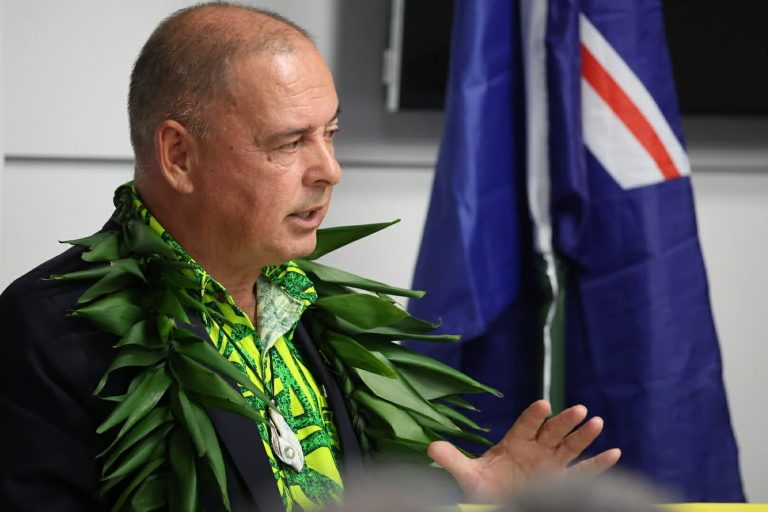
In meet-and-greet with Cook Islands community elders in Auckland on Friday, Cooks PM Mark Brown articulates his vision for his people in Aotearoa and the Ipukarea

Auckland-based Cook Islanders have been told the hunt is on for a new consular office in Auckland, with bureaucratic proof of identity processes also set for streamlining in 2026.

Cook Islands Prime Minister Mark Brown shared the news at a Friday community gathering at the Manukau Institute of Technology (MIT) Pasifika Community Centre in South Auckland.

The PM’s visit, which included a meeting last week in Wellington, focused on reconnecting with Cook Islanders living in Aotearoa while reinforcing the enduring Cook Islands-New Zealand relationship.

The Auckland event, from ceremonial welcome to closing prayer, was delivered in reo Māori and included a direct state-of-the-nation update from the leader.

Setting the pace, Brown addressed both the lack of a physical Auckland consular presence – closed in 2020 because of Covid-19 – and the cumbersome paperwork required for Cook Islands proof-of-identity for diaspora travellers.

The PM continued the 60-year anniversary threads from his Wellington session, speaking to identity, economic resilience, and the need to strengthen links between the pa enua, the capital, and the Cook Islands diaspora.

A key aspect of those links is the budget-breaking cost of travel by sea and air. The Cooks will soon welcome a new vessel for inter-island shipping, touted by Brown as a key update on travel costs, which continue to be a burden for those living in the most remote communities, or pa enua, of the 15-island nation.

Auckland-based Pa Enua Tokerau communities’ number in the tens of thousands, with many already saving for travel once the new vessel and Manihiki Airport upgrade become reflected in ticket prices.

From education to tourism, health, and workforce opportunities, there is much work to be done, and more diaspora hands needed, PM Brown and other speakers noted.

The call to Cook Islanders to make the most of opportunities in New Zealand, Australia, and beyond, while also looking homewards, was echoed by new Foreign Affairs and Immigration Secretary Elizabeth Wright-Koteka and the President of the House of Ariki, Te Kaumaiti Travel Tou Ariki. Te Kaumaiti especially welcomed the inclusion of Tereora College youth at the community event.

On NZ–Cook Islands relations, Brown said conversations with Wellington are continuing, with a brief, joint statement released on Friday following an informal meeting with NZ Foreign Minister Winston Peters earlier that day. The release noting no further statements would be made.

On seabed mining, Brown reiterated that it would be for Cook Islands legislation—not any government or other party—to decide. He stressed how legislation already embeds the values of resource protection, and that legal frameworks, including the precautionary principles in Cook Islands law safeguarding the nation’s ocean heritage, would continue to guide any decision on seabed activity beyond exploration.

Reciprocal visa confirmed ahead of the PNG Chiefs’ entry into NRL

0

The Papua New Guinea Government has announced a specialised visa product to streamline travel for fans, players, and officials ahead of the PNG Chiefs’ entry into the National Rugby League (NRL) in 2028.

Deputy Prime Minister and Minister for Lands and Immigration John Rosso has announced that the facility mirrors Australia’s landmark commitment to slash visa fees for Papua New Guineans travelling Down Under to support the Chiefs.

“In the spirit of reciprocity and rugby league diplomacy, Papua New Guinea will implement a matching visa arrangement to welcome Australian supporters and sporting professionals under simplified conditions. This is a win-win for both nations,” Rosso said.

The deputy prime minister met with Australian home affairs minister Tony Burke on Feb 18 to discuss immigration matters, including the NRL visa framework.

Rosso explained that the specialised permit will cost K75 (AUD$25), significantly lower than standard visitor visa rates, and will be valid for 12 months with multiple entries of up to 30 days each.

“This will allow fans to travel back and forth for home and away games throughout the NRL season, including pre-season and finals,” Rosso said.

“It is exclusively available to players, coaching staff, officials, accredited media, and bona fide NRL fans,” Rosso said.

He added that the arrangement will boost tourism and economic activity in both countries, driving demand for airline tickets, hotels, hire vehicles, restaurants, retail, and other services.

Rosso also reminded travellers that since Oct 1 last year, all visitors entering Papua New Guinea must complete the PNG Digital Arrival Card at least 72 hours before arrival to ensure smooth entry at the Jackson International Airport.

Fijian Drua and Blues to honour Joeli Vidiri with memorial trophy

0

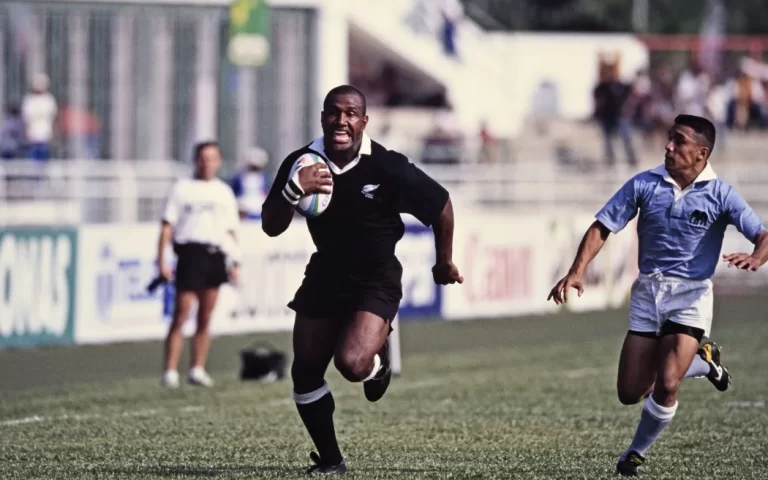
Former dual rugby international, the late Joeli Vidiri, will be honoured in a new memorial challenge between the Fijian Drua and the Auckland Blues.

The Blues have confirmed that they, in partnership with the Drua, have agreed to introduce the Joeli Vidiri Memorial Trophy, which will be up for grabs for the first time when the two franchise clubs meet at Eden Park on Saturday.

In a statement sent to RNZ Pacific, the Blues said the special memorial game will honour the late Vidiri, who played first for the Flying Fijians before becoming an All Black in the 90s.

He made his mark with the Blues between 1996 and 2001, playing 61 games and scoring 43 tries.

He left the team in 2011 following serious kidney illness and died in 2022.

“The Joeli Vidiri Memorial Trophy will be contested every time the Blues and Fijian Drua meet, as a tribute to one of rugby’s most electrifying and beloved figures, and a player whose impact transcended borders and united communities across the Pacific,” the club said.

“Vidiri, remembered for his powerful running, humility, and infectious joy, made an indelible mark during his time in Auckland while remaining deeply connected to his Fijian roots,” the franchise said.
“The new trophy recognises his unique role in bridging two proud rugby nations.

“The trophy itself has been thoughtfully designed to reflect this shared heritage, incorporating symbolic elements that pay tribute to both regions.

“As part of the inaugural presentation, the Vidiri family will play a central role in match-day proceedings, with a special on-field moment planned to award the trophy.”

Vidiri studied at Queen Victoria School in Fiji and was a champion sprinter in his senior years at the school.

He played for both the Fijian sevens team and the Flying Fijians, before arriving in New Zealand and teaming up with Counties Manukau, and played 71 matches for the side in the New Zealand Provincial Championship.

His rugby career was cut short when he was diagnosed with a kidney illness in 2001 and placed on dialysis treatment, like his fellow Auckland Blues winger Jonah Lomu.

PNG among 12 countries hit by new U.S visa bond rule

The United States State Department is expanding its visa bond programme to 50 countries, including Papua New Guinea, requiring some travelers to pay up to US$15,000 before receiving short-term visas.

The new measure will take effect on 02 April, applying to B1 and B2 visas for business and tourism.

“The State Department is expanding its visa bond programme to apply to a total of 50 countries on 02 April and will require foreign nationals from these countries to post a bond of up to US$15,000 before receiving B1 or B2 visas for business and tourism in the United States.”

Under the policy, the bond will be refunded if travelers comply with visa conditions and leave the country on time.

“The bond will be returned to visa recipients who return home in compliance with the terms of the visa and the bond or does not travel.”

The State Department said the programme is aimed at reducing visa overstays.

“Nearly 1,000 foreigners have been issued visas under the programme, and 97 percent of bonded travelers have returned home from the United States on time.”

Officials said overstays remain a concern, citing tens of thousands of cases in previous years.

“By contrast, in Biden’s last year in office, more than 44,000 visitors from the 50 current Visa Bonds countries overstayed.”

The expansion adds 12 new countries, including Papua New Guinea, bringing the total to 50 nations subject to the requirement.

“The State Department’s 02 April action will apply the visa bond policy to 12 additional nations.”

The programme allows consular officers to determine the bond amount, which can range from US$5,000 to US$15,000 depending on the applicant’s risk profile.

The State Department in a statement said the policy also reduces costs for U.S taxpayers.

“It costs the U.S taxpayer over US$18,000 on average to remove an alien illegally present in the United States.”

“The Department of State is saving U.S taxpayers up to US$800 million per year that would otherwise be required to remove these aliens who overstay.”

Officials say the list of countries could be expanded further.

“The Department may continue to place Visa Bonds on countries based on a range of immigration risk factors.”

Countries newly added to the programme include Cambodia, Ethiopia, Georgia, Grenada, Lesotho, Mauritius, Mongolia, Mozambique, Nicaragua, Papua New Guinea, Seychelles and Tunisia.

The visa bond system is part of broader U.S efforts to tighten immigration controls and improve compliance with visa conditions.

Stay connected

529FansLike
172FollowersFollow
156SubscribersSubscribe
- Advertisement -