Home Blog Page 74

ADB announces financial support package to help Asia and Pacific mitigate impacts from Middle East conflict

0

The Asian Development Bank (ADB) has announced a financial support package to help its developing member countries (DMCs) mitigate the economic and financial impacts resulting from the conflict in the Middle East.

“ADB will deliver rapid, flexible, and scalable assistance to help countries manage immediate pressures and strengthen long-term resilience, notably fast-disbursing budget support and trade and supply chain finance to secure the import of essential goods, now including oil,” said ADB President Masato Kanda.

“This builds on our strong track record of supporting Asia and the Pacific through periods of global uncertainty.”

ADB has ample resources to safeguard existing and planned operations, while expanding emergency support in line with DMC needs, including utilizing its countercyclical lending buffer.

The bank is closely monitoring global market developments and their potential implications for economies across Asia and the Pacific, particularly regarding energy price volatility, inflationary pressures, and external account balances.

The latest ADB analysis indicates that disruptions to shipping routes have already increased costs and delivery times, while supply risks extend beyond energy to key industrial inputs such as petrochemicals and fertilisers, with serious implications for agriculture and food production.

Tourism- and remittance-dependent economies face compounding vulnerabilities beyond these initial shocks. Furthermore, the conflict is increasing uncertainty and tightening financial conditions across the region, putting pressure on currencies and capital flows.

In response, ADB is ready to deploy timely financial and technical support to help DMCs manage risks, maintain macroeconomic stability, and protect vulnerable populations.

There are two main components to ADB’s intervention. The first is fast-disbursing budget support to help DMCs facing heightened fiscal pressures, notably the use of the bank’s Countercyclical Support Facility to help governments stabilise their economies and mitigate the impact of shocks on the lives and livelihoods of those most at risk.

The second is ADB’s Trade and Supply Chain Finance Programme (TSCFP), which supports the private sector to ensure critical imports, including energy and food, continue to flow.

The bank has decided to reactivate support for oil imports under the programme on an exceptional basis for this limited period. This decision acknowledges that economies and people across the region are being severely affected by the rapid surge in oil prices and supply chain disruptions.

ADB has begun discussions with all severely affected DMCs on possible immediate support and will continue to work closely with governments, development partners, and the private sector to ensure coordinated and effective responses to maintain economic stability and protect the poor and most vulnerable.

China’s growing influence in the Pacific is 5,000 meters deep

0

Deep-sea mining is its latest battlefield

By Kara Fox, Elizabeth Alberts, Lou Robinson and Byron Manley

CNN and environmental news outlet Mongabay tracked eight Chinese research vessels that have undertaken deep-sea mining exploratory missions over the past five years. During that period, the ships spent only around 6 percent of their total open water time in areas reserved for exploration by Chinese companies, according to an analysis of data from MarineTraffic, a ship tracking and maritime intelligence provider, and the platform Deep Sea Mining Watch.

These particular vessels, along with at least five other deep-sea vessels that have previously carried out work in deep-sea mining exploration areas, display a consistent pattern of activity that points beyond purely civilian use.

Some have also shown behaviors suggesting attempts to avoid detection, including hundreds of instances of “going dark” by disabling the mandatory Automatic Identification System (AIS), a vessel’s self-reporting system that broadcasts its identity and position.

The majority are tied to state-affiliated entities with links to the Chinese navy and regularly call at its military-connected ports.

They are among more than 40 vessels that make up China’s blue-water marine scientific research fleet, the world’s largest, according to the China Maritime Studies Institute.

While none of this activity proves a military role on its own, taken together it strongly suggests the vessels may serve strategic, dual-use purposes as well as scientific ones, according to more than a dozen naval, civil and academic experts that CNN and Mongabay spoke with for this story.

It’s a strategy that underlines China’s military-civilian fusion policy, which blurs the line between civilian and military development to advance Chinese leader Xi Jinping’s goal to make China a “maritime power.”

Deep-sea mining exploration areas are managed by the International Seabed Authority (ISA), a UN-backed regulatory body responsible for setting the rules for this nascent mineral source-related industry.

Although these rules are not yet finalised and commercial extraction has yet to begin, China has positioned itself as a global leader, holding five of the 31 exploration contracts issued by the ISA and serving as its largest financial donor.

The ISA operates under the United Nations Convention on the Law of the Sea (UNCLOS), which the United States has not ratified – meaning its deep-sea mining ambitions are being pursued outside of this international framework. The Trump administration is now unilaterally accelerating its push to secure critical mineral supply chains as part of its broader maritime strategy, a move which could augur future frictions.

Experts warn that any deep-sea mining is expected to have significant environmental costs.

The deep ocean, often referred to as the “final frontier,” is one of the planet’s largest habitats — and least known environments. Forty countries, as well as hundreds of scientists and environmentalists, have called for a moratorium on the emergent industry, warning that mining could cause irreparable damage to species and ecosystems that have evolved over millions of years and host an extraordinary kaleidoscope of life forms, including hundreds of new species identified in 2025 alone. A study published in December in the journal Nature Ecology and Evolution found that industrial-scale deep-sea mining tests caused a 37 percent reduction in animal abundance within the directly mined areas of the Clarion-Clipperton Zone (CCZ), a vast expanse — approximately half the size of the United States — located between Hawaii and Mexico in the central Pacific Ocean.

Where are the exploration areas?

The ISA manages these areas, which are beyond national jurisdictions, and signs contracts with countries or entities, giving them authorisation to explore.

Experts say Chinese research vessels may very well be prospecting for minerals beyond their assigned exploration zones: In December 2025 and January 2026, the Shi Yan 6, or “Experiment 6,” appeared to operate within India and Germany’s exploration area in the Indian Ocean; in November, the Chinese vessel Shen Hai Yi Hao, or “Deep Sea No. 1,” appeared to operate within South Korea’s exploration area, also in the Indian Ocean. Throughout 2024, it repeatedly seemed to be operating in other nations’ contracted areas too, including those of Poland, France and Russia.

The South Korean, Polish and French licensees told CNN and Mongabay that China had alerted them in advance to the visits and that research in such areas is permissible under UNCLOS. Germany said it was unaware of the Shi Yan 6’s visit and India and Russia declined to comment.

Experts say the pattern of Chinese activity could reflect a broader strategy to lead in deep-sea mining once commercial extraction begins.

“China is playing, as it does in many cases, with international law,” said Isaac Kardon, a senior fellow for China studies at the Carnegie Endowment for International Peace.

“China is the primary actor in and around new forms of high seas navigation concerning undersea resources… They’ll be the first mover, if they can,” he added.

Against this backdrop, civilian research and economic development increasingly appear to intersect with Beijing’s broader strategic ambitions, including driving China’s maritime reach.

“They want to know what’s going on at the bottom of the sea, where US submarines might go, where their submarines might go, where other submarines might go.”

“Mapping the seafloor in those places is going to be of intense interest to them,” said Raymond Powell, a retired U.S Air Force colonel and the director of SeaLight, a non-profit initiative that highlights China’s “grey zone” maritime activities in the Indo-Pacific.

The Chinese Ministry of Foreign Affairs did not address any of the specific allegations in this piece, or any of CNN and Mongabay’s specific questions. However, in a statement, it said: “Within the framework of the International Seabed Authority (ISA), China conducts activities in deep-sea exploration, scientific research, and environmental protection, assisting a host of developing countries in effectively strengthening their deep-sea capacity building. This is in accordance with the provisions of the United Nations Convention on the Law of the Sea.” It added that China “highly values deep-sea environmental protection.”

Multiple Chinese research vessels assigned to deep-sea mining operations have mapped areas around Guam and the Mariana Islands in the past year, before moving across the South China Sea — a strategic, resource-rich waterway through which more than 60 percent of China’s maritime trade transits.

Some of the vessels routinely travel through the South China Sea with their AIS off, according to data analysed by the monitoring organisation Starboard Maritime Intelligence.

Taiwan’s Ocean Affairs Council Minister said in January that 41 Chinese research vessels had been detected by the Taiwanese coast guard in waters around Taiwan over the past three years. “They have trampled on our waters and likely know the ins and outs of waters surrounding us,” Kuan Bi-ling said.

One of those, the research vessel Jia Geng in July came within 20 nautical miles of Taiwan’s coast, which is in its contiguous zone — the buffer surrounding its territorial waters — prompting a response from the coast guard.

“You just suspect that they’ve got some extra ears listening in for certain things that they’d like to know about,” said Powell of Sealight.

Chinese vessels have also conducted surveys or operated near critical undersea communication cables, Starboard Maritime Intelligence said, raising concerns about potential surveillance and sabotage.

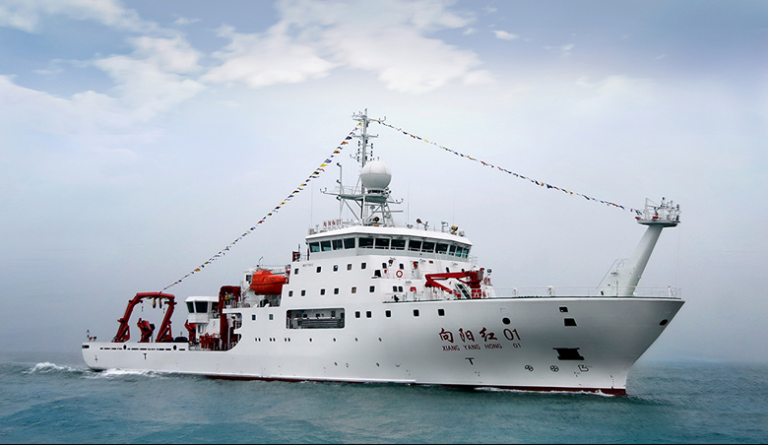
For example, in November 2023, the Xiang Yang Hong 03 (Facing the Red Sun 03) spent 48 hours doing survey work over a known trans-Pacific cable, covering around 400 square nautical miles — an area smaller than other surveys the vessel conducted, possibly indicating a more targeted investigation to pinpoint objects of interest.

The vessel “made a fairly direct line straight to one particular part of the ocean,” where undersea cables had been laid three years prior, said Mark Douglas, a Starboard analyst. It then continued to do what appeared to be “a very focused little bit of survey work over the course of a couple of days over (the) top of the cable,” before it left the area. Douglas called the vessel’s movements “a smoking gun,” that points to likely dual-use operations.

It comes as suspected sabotage of undersea cables continues to rise, with at least eight incidents reported in both the Baltic Sea and five around Taiwan in 2024 and 2025, according to a report from the US cyber security company Recorded Future. At least five out of the nine recent incidents involved vessels dragging their anchors, with four of those ships linked to Russia or China, it said. Russia has denied allegations of any involvement. A spokesperson for China’s Taiwan Affairs Office said earlier this year that damage to undersea cables is not unusual, describing such incidents as “common maritime accidents.”

China’s intensified undersea focus comes as Beijing begins construction on a permanent deep-sea hub roughly 2,000 meters (6,500 feet) beneath the South China Sea. The manned research station, due for completion in 2030, will focus on cold-seep ecosystems — critical for understanding energy resources including hydrocarbon and gas hydrate reservoirs — while also reinforcing Chinese reach in one of the world’s most contested maritime regions.

Its oceanographic vessels, meanwhile, are equipped with cutting-edge scientific instruments for collecting marine, atmospheric and seabed data.

What research methods do they use?

Seabed mapping

Knowing the shape and makeup of the ocean floor helps experts understand how sound moves underwater. This makes it easier for naval officers to spot enemy submarines, or for vessels to choose safe depths or find places to hide. Good seabed maps also let submarines know exactly where they are without GPS. These bathymetric surveys can aid conservation efforts by identifying and mapping vulnerable areas such as seamounts and deep-sea reefs that could be in need of protection.
Seismic surveillance

Very loud sound waves, generated by some kind of transducer, or in some cases, explosive charges, can also be used to generate feedback on what the seabed might look like. This type of mapping is often used in oil and gas exploration and can have substantial environmental impacts on a range of marine life from whales to zooplankton, experts say.

Autonomous underwater vehicles

Underwater drones quietly collect data on ocean currents, temperature and salinity. These factors directly affect how sound travels underwater, which in turn determines how effectively sonar can detect objects. Mapping this information helps to identify sonar blind spots and improve the tracking of submarines. China has heavily invested in developing autonomous vehicles for years.

China is not alone in the race to the bottom of the ocean.

In April 2025, U.S President Donald Trump signed an executive order bypassing international regulations to turbocharge deep-sea mining in national and international waters, framing access to the minerals as a matter of urgent national security, necessary to counter China’s supply chain dominance. Since then, it has sought to further link deep-ocean resources to this narrative, taking a series of steps to consolidate oversight of the deep-sea mining permitting process and investing billions of dollars in a project to strengthen US critical minerals supply chains, in a move that experts say could unilaterally jumpstart the commercial industry. Critics, meanwhile, warn that the marine environment could be the loser in this multinational race.

In its statement to CNN and Mongabay, the Chinese foreign ministry said Trump’s executive order placed “domestic law above international law, thereby undermining the common heritage of mankind and jeopardizing the international maritime order” and urged the US to “pull back” and “respect the international seabed system.”

The U.S State Department said it is “committed to the responsible development of seabed mineral resources” and that the UNCLOS “framework for deep seabed mining does not apply to non-parties like the United States, carries no weight under customary international law” and, it claimed, “has become a tool of malicious actors.”

The U.S Bureau of Ocean Energy Management (BOEM) has advanced efforts to assess and potentially lease areas for deep-sea mining in the Pacific (off American Samoa and the Mariana Islands) and in recent months, off the coasts of Virginia and Alaska, prompting some local and environmental opposition.

There is little evidence yet of significant friction between the U.S and China over deep-sea mining sites. But the two are increasingly engaged in competition in the Cook Islands, a strategically located Pacific nation with vast, cobalt-rich seabed resources — perhaps signalling how the industry could stoke future tensions.

The Cook Islands, which first considered deep-sea mining more than a decade ago, issued exploration licenses to multiple companies with U.S links seeking to court the Pacific nation in 2022 — although the Biden administration provided little direct backing at the time.

China’s entry in early 2025 — through agreements on deep-sea mining research — marked a turning point. In October, the U.S appeared to be further asserting its presence in the Cook Islands, with the U.S-funded E/V Nautilus expedition mapping the seafloor.

While some U.S National Oceanic and Atmospheric Administration (NOAA) ships have supported the US Navy and broader national security interests through data sharing, and collaborative research, it is unclear whether vessels involved in deep-sea mining track Chinese submarines or perform similar military work. Experts interviewed for this story found no evidence that U.S deep-sea mining ships conduct surveillance missions, and neither NOAA nor the Navy commented on the matter.

Still, for many Cook Islands residents, the moves have raised alarm about the country’s growing entanglement in a rivalry between the two superpowers.

“We are concerned that the Cook Islands is becoming a melting pot between two major states facing off against each other by equipping themselves with deep-ocean minerals that could be used to support their military defence,” said Alanna Matamaru Smith, director of Te Ipukarea Society, a local environmental organiation.

“These states don’t care about us or the long-term environmental impacts they may leave behind. They only care about protecting themselves,” said Matamaru.

Fijiana XVs prepare for Wallaroos showdown as Pacific rivalry returns

0

Fiji’s Fijiana are preparing for a major Pacific rugby clash as they get ready to face the Wallaroos in Canberra this week.

Friday’s Test match will open both teams’ 2026 international season and renew the growing rivalry between the two sides.

They will also compete for the Vuvale Bowl, a trophy that reflects the close family ties between Fiji and Australia.

The match is another opportunity for the Fijians to test themselves against one of the region’s top teams as women’s rugby continues to grow across the Pacific.

The last time the two teams met was in May 2025 when the Australians won 43-7 in Sydney.

Fiji Rugby has confirmed Mike Legge as interim head coach of the Fijiana XV for the upcoming March-April campaign.

The upcoming Test between the Wallaroos and Fijiana will again be played for the Vuvale Bowl, a trophy symbolising the close ties between Fiji and Australia. Photo/Facebook

Legge, who has previously coached the side at international level, will oversee the team’s preparations for the Wallaroos Test as well as the Oceania Women’s Series.

He will lead the programme, responsible for the team’s attacking structure, backs’ performance, and overall match preparation.

The 2026 Oceania Rugby Women’s XV Championship is scheduled for 17-25 April in Fiji, featuring Tonga and Sāmoa.

Naca Cawanibuka, Fiji Rugby’s High Performance Unit general manager, said Legge’s appointment would help maintain continuity as the team prepares for an important international window.

“His previous experience coaching the Fijiana at the international level will be invaluable as we build toward these crucial fixtures,” Cawanibuka said in a Fiji Rugby statement.

The coaching group also includes several experienced figures in Fijian rugby.

Former Flying Fijians representative Joshua Matavesi will oversee the team’s defensive systems and tactical kicking strategy, while Kele Leawere has been appointed forwards coach, focusing on scrum performance and forward play.

Tavaita Rowati joins as assistant backs and skills coach, supporting backline development, and Ifereimi Rawaqa will guide the team’s lineout structures.

The squad has been in a two-week national training camp in Fiji as they build towards Friday’s Test in Australia.

After the camp, the team moved into a short daily training phase before travelling to Canberra for final preparations ahead of the match.

After the Wallaroos Test, the Fijiana will return home for a recovery break before entering another national camp ahead of the Oceania Series at home.

Cawanibuka says the upcoming matches are part of Fiji Rugby’s long-term plans to strengthen the women’s programme and improve the team’s competitiveness on the international stage.

“The March-April window represents an opportunity to strengthen our depth and combinations while aligning the Fijiana XV programme with Fiji Rugby’s long-term goals,” he said.

The campaign is also aimed at helping the team improve its global standing and build towards future Rugby World Cup qualification.

Australia have named a new-look Wallaroos squad for Friday’s Test, with interim coach Sam Needs selecting 10 potential debutants as the team begins its own preparations for the international season.

“The squad selected has a great mix of youth and experience with 10 new faces who have been competing hard and could potentially make their debuts over the next month,” Needs said in a Rugby Australia statement.

The Wallaroos have assembled at the Australian Institute of Sport in Canberra ahead of the Pacific clash.

This week’s Test is also a build-up for the Wallaroos ahead of the 2026 Pacific Four Series, which includes New Zealand, Canada, and the United States.

The five-year-old tournament starts on 11 April and will be held across the US cities of Sacramento, Kansas, and Chicago. The Black Ferns are the defending champions.

For the Fijiana, the focus this week remains on building combinations and representing Fiji on the international stage as they prepare for one of their biggest Tests of the year.

Fijiana vs Wallaroos test match will be played on Friday 27 March at GIO Stadium, Canberra.

Samoa deputy PM loses seat after Court finds corrupt practices

0

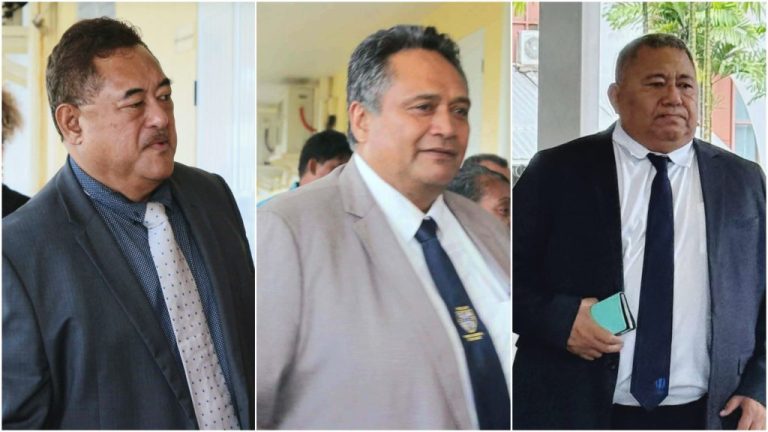
The Samoa Electoral Court has today ruled that deputy Prime Minister and Member of Parliament for Falealili I, Toelupe Maoiautele Pou Onesemo, is guilty of bribery over a claim that $150 tala (US$54) was given to a couple who could not be found to present their evidence in Court.

The decision that is expected to have significant political and legal implications for future election petitions, was handed down this morning by Chief Justice Satiu Simativa Perese and Justice Leiataualesa Daryl Clarke before a packed court room of supporters and media.

The ruling follows months of legal proceedings in which the Court went out of its way to consider evidence relating to allegations of electoral misconduct, after both parties had applied to withdraw their original petitions.

Central to the Court’s determination was its acceptance of sworn affidavits from two witnesses who, despite not being physically located during the proceedings, were deemed credible by the Court. The Court found the voters’ evidence through written affidavits was accepted, and stated that the candidate, through his lawyers, did not provide any evidence to challenge it.

In delivering its decision, the Electoral Court emphasised that the affidavits provided sufficient evidentiary weight to support the bribery finding. The absence of the witnesses did not, in the Court’s view, undermine the substance of their testimony.

The sworn affidavits did not point to Toelupe himself, but to a third party. The voter and his wife’s affidavits claimed that $150 tala (US$54) was given to them by a third party on the night before elections, to influence their vote. The Court then also ruled that the person who gave the money was acting for the candidate, holding Toelupe responsible.

“The Court is satisfied that the evidence relied up on credible and reliable.”

“The Respondent is therefore guilty of the corrupt practice of bribery.”

“Pursuant to Section 116 of the Electoral Act 2019, the Respondent’s election is declared void.”

The case also drew public attention due to a telephone recording submitted by HRPP Member of Parliament, Namulauulu Sami Leota, who recorded a conversation he had with Petitioner, Tuiloma Lance Lameko.

According to submissions presented in Court, the recording allegedly captures a conversation in which it is claimed that Tuiloma Lance was offered and received $100,000 (US$363) in exchange for withdrawing the original bribery complaint.

At the time, both Petitioner (Tuiloma) and Respondent (Toelupe) had filed to withdraw their election petitions.

Furthermore, witnesses for both parties did not turn up to Court.

Today’s ruling places significant implications in Samoa as Toelupe held the position of Deputy Prime Minister and also the Minister for Works, Transport and Infrastructure.

Member of the Falialili I constituency have raised questions about the immediate political consequences, including the loss of their elected Member of Parliament.

The decision is also expected to set an important and highly dangerous precedent regarding the acceptance of written affidavits evidence in electoral disputes, particularly in cases where witnesses are unavailable.

“What is to stop people from signing affidavits to ruin a winning candidate’s political career, when they don’t have to turn up to Court? And yet, their affidavits will be taken as evidence in Court?”

Decisions of the Electoral Court are not subject to appeal. However, it anticipated that the decision may be subject to appeal, with legal avenues still open to challenge the ruling based on the use of affidavits.

Western Pacific governments urged to speed up action to end TB in the region

0

The World Health Organisation (WHO) urged governments in the Western Pacific region to accelerate country-led action to transform tuberculosis care, decentralize services and scale up innovation to end one of the deadliest infectious killers in the region and around the world.

WHO issued the call on World Tuberculosis Day 2026, globally themed “Yes! We can End TB!”

Dr Saia Ma’u Piukala, WHO regional director for the Western Pacific, said ending TB is achievable if countries act with ever greater urgency.

“Bringing TB services closer to communities and rapidly expanding access to new diagnostic tools, in an environment free of stigma, are essential to reaching everyone in need,” he said.

Recent progress shows improvement is possible through expanded access to WHO-recommended rapid diagnostics, increased uptake of shorter all-oral regimens for drug-resistant TB and more people at high-risk receiving TB preventive treatment.

However, WHO noted that stagnant funding, competing health priorities and persistent risk factors such as smoking, undernutrition, alcohol use and diabetes threaten essential TB services.

Integrated TB services at the primary health-care level improve early detection, reduce delays in treatment and prevent transmission. Delivering stigma-free, people-centred care strengthens health systems and ensures vulnerable populations are not left behind.

WHO urges countries to accelerate the rollout of WHO-recommended near-point-of-care molecular tests, which detect TB – including drug-resistant TB – more quickly and accurately.

In 2024, an estimated 2.9 million people were affected by TB across the Western Pacific region, with Indonesia, the Philippines and China among the world’s top five high-burden countries.

Ending TB is a strategic political and economic decision. Evidence shows that every dollar invested in TB can generate up to US$43 in health and economic returns.

“The evidence is clear. We know what needs to be done,” said Dr Huong Tran, WHO director of Health Promotion, Disease Prevention and Control in the Western Pacific.

“WHO calls on governments, health workers, civil society and communities to sustain political commitment, empower health workers, combat stigma and ensure essential TB services remain accessible and resilient,” he added.

Commonwealth SG warns global debt crisis threatens ‘survival’ of Small States

The Secretary-General of the Commonwealth Shirley Botchwey has warned that rising global debt is threatening development, sovereignty and survival for many countries, particularly small and vulnerable states.

Opening the Commonwealth Forum on Sustainable Sovereign Debt at Marlborough House Monday, Botchwey said governments are being forced into difficult trade-offs that affect their people and future.

“Debt is not a question of balance sheets. For many countries, it is a question of choices; of social cohesion and of survival.”

“Between investing in people or servicing the past. Between resilience, and vulnerability. Between sovereignty, and the choices of creditors,” said Botchwey.

She said for many small states, the consequences are immediate and severe.

“For many of our Small States and vulnerable economies, it is quite literally the difference between a new school or a shuttered clinic — between recovery and retreat.”

The Secretary-General said the current global financial system is failing those most in need.

“Because we are not simply confronting high levels of global debt. We are confronting a global system that is no longer delivering as it should.”

“A system where risk is priced unevenly. Where access to finance is too slow, too costly, and too conditional.”

“And where those most exposed to shocks often face the greatest barriers to recovery. That is not just unsustainable. It is unjust.”

She said these challenges are also affecting global economic growth.

“And it hurts growth across our interconnected global economy.”

Botchwey stressed the need for coordinated global action.

“It is precisely why the Commonwealth must act — not only to support our members, but to help shape a more effective and equitable approach to sovereign debt globally.”

She said the issue is becoming more urgent as global debt reaches unprecedented levels.

“Now, we must build on that legacy — and adapt it to a far more complex and uncertain world. A world in which public debt has reached unprecedented levels.”

“A world where climate shocks, economic and geopolitical volatility as well as technological disruption are no longer peripheral risks — but central drivers of fiscal instability.”

She warned that decisions made now will have long-term consequences.

“And a world in which the decisions we take today will define the opportunities available to future generations.”

The Secretary-General also launched two new reports during the forum, highlighting the long-term impact of debt decisions.

“Together, they make one message unmistakably clear: Today’s debt decisions will shape tomorrow’s development outcomes.”

Botchwey said the issue is also about fairness between generations.

“In a Commonwealth where 60 percent of our people are under the age of 30, this is not only an economic issue. It is an intergenerational contract.”

“Every dollar spent on unsustainable debt is a dollar not invested in education, in jobs, in opportunity — and in the future our young people deserve,” she said.

The Secretary-General outlined three key priorities for reforming debt management across Commonwealth countries.

The first is modernising debt systems through technology.

“Through Meridian 2030, we are building the infrastructure for real-time, transparent, data-driven debt management.”

“By integrating artificial intelligence and advanced digital tools, we aim to equip governments with the information and foresight they need — not simply to manage debt, but to negotiate from a position of strength,” said Botchwey.

She said new tools will help countries better prepare for future risks.

“And through Horizon 2.0, we are advancing forward-looking analytical tools that help countries anticipate — rather than react to — emerging risks.”

The second priority is linking debt to climate resilience.

“In too many of our member states, climate shocks are now the single greatest driver of fiscal stress.”

“We must ensure that sovereign debt frameworks reflect this reality.”

“By leveraging blue and green assets, expanding access to resilience finance, and integrating climate risk into debt strategies, we can reduce vulnerability while protecting the natural capital on which so many of our economies depend.”

The third priority is turning ideas into action.

“For too long, innovative instruments have remained on the margins.”

“Debt swaps, resilience-linked financing, and other tools must become part of the mainstream.”

“Our new Handbook on Debt Swaps is designed to support precisely this transition — turning ideas into practical solutions that create fiscal space and unlock investment.”

SG Botchwey said the forum must deliver real outcomes, not just discussions.

“This week is not only about ideas. It is about implementation.”

“It is about building partnerships that can unlock concessional finance at scale.”

She also announced new initiatives to strengthen cooperation across member countries.

“That is why I am pleased to announce the Inaugural Commonwealth Public Debt Management Awards.”

“These awards recognise the professionalism, integrity and innovation of public debt offices across our membership.”

She said a new Commonwealth Debt Managers Network will also be established.

“This network will provide a permanent platform for collaboration, peer learning, and coordinated action.”

“It will strengthen our collective voice. And it will help ensure that the priorities of our member states are reflected more effectively in global financial discussions.”

The Secretary-General urged officials to act decisively, warning that incremental changes are no longer enough.

“To the Heads of Public Debt Management in this room: You are not only managers of debt. You are architects of economic resilience.”

“The decisions you shape this week will not remain in conference rooms. They will determine fiscal space, development pathways, and economic sovereignty for years — even decades — to come.”

She said bold action is now required.

“So let us be clear about the task before us. The time for incremental change has passed.”

“What is required now is coordination, innovation, and the courage to act differently.”

The Secretary-General said the Commonwealth has a key role to play in shaping the global response.

“If we succeed, the Commonwealth will not simply respond to the global debt challenge. We will help redefine how it is addressed.”

“And in doing so, we will ensure that our countries are not only more resilient — but more empowered, more equitable, and better prepared for the future,” Botchwey said.

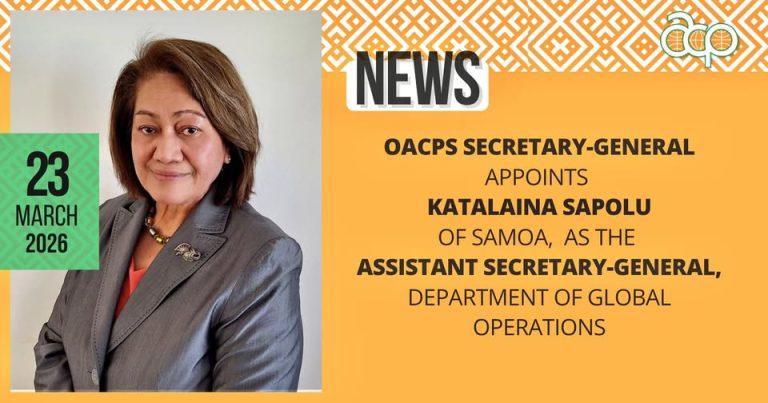
OACP SG appoints Katalaina Sapolu of Samoa as Assistant SG for global operations

0

The Secretary-General of the Organisation of African, Caribbean and Pacific States (OACPS) Moussa Batraki has announced the appointment of Katalaina Sapolu of Samoa, as Assistant Secretary-General for Global Operations.

Sapolu brings to the position more than 15 years of senior leadership experience at the international and national levels, with a strong record in operational oversight, institutional reform, financial governance and accountability.

Her experience spans finance, budgeting, human resources, procurement, information technology, conferences, protocol and facilities management, as well as senior-level engagement in complex multilateral environments.

She most recently served as Ombudsman and Head of the National Human Rights Institution of Samoa.

Prior to that, she held senior positions at the Commonwealth Secretariat in London, including as Senior Director, Governance and Peace Directorate, Officer-in-Charge for Operations, and Director, Rule of Law Division. Earlier, she served as Chief Legal Counsel of the African, Caribbean and Pacific Group of States in Brussels, where she advised on legal, institutional and governance matters, bringing to the role a strong legal background alongside her operational and managerial experience.

Sapolu practised law in Samoa and New Zealand before joining international service. She holds a Master of Laws in Public International Law from Queen Mary, University of London, a Bachelor of Laws from the University of Auckland, and a Bachelor of Arts from the University of Newcastle, Australia.

Pacific push for ocean protection as BBNJ PrepCom 3 opens in New York

0

The third and final session of the Preparatory Commission for the BBNJ Agreement under United Nations Convention on the Law of the Sea (UNCLOS) has begun in New York, bringing together global delegates to advance efforts to protect marine biodiversity beyond national jurisdiction.

Over the next two weeks, Pacific representatives will join negotiations on the landmark agreement aimed at strengthening governance of the high seas and safeguarding ocean resources.

Ahead of the session, Pacific Small Island Developing States met over the weekend to align their positions and reaffirm shared priorities for ocean protection.

The Office of the Pacific Ocean Commissioner (OPOC), alongside experts from regional CROP agencies, is providing technical support during the talks to ensure Pacific interests are represented.

Officials say the region is maintaining a unified approach as negotiations enter their final stage, with a focus on protecting marine biodiversity and strengthening international cooperation.

Pacific countries continue to push for strong outcomes from the process, reinforcing their role in global ocean governance and efforts to safeguard the high seas.

“Climate chaos is rewriting the rules of weather”: UN SG Guterres

0

“Climate chaos is rewriting the rules of weather,” UN Secretary-General António Guterres warned on World Meteorological Day, as new data confirmed accelerating global warming driven by record greenhouse gas levels.

Highlighting intensifying heat, prolonged droughts, rising seas and increasingly frequent extreme events, the UN chief stressed that “accurate, trusted science is our first line of defence,” underscoring the critical role of global observation systems and early warning services in saving lives.

His message comes as the World Meteorological Organisation (WMO) reported that concentrations of greenhouse gases in the atmosphere have reached all-time highs, continuing to drive record temperatures across land and ocean with long-lasting consequences for humanity.

Following the hottest decade on record, the UN’s weather agency said the planet’s climate is now “more out of balance than at any time in observed history.”

“Between 2015 and 2025, we experienced the hottest 11 years on record,” said Ko Barrett, WMO Deputy Executive Secretary.

Global temperatures in 2025 were around 1.43°C above the 1850–1900 baseline, she noted, alongside record-breaking ocean heat levels — a clear indication of the growing accumulation of energy within the Earth system.
Warming oceans, melting ice, rising seas

Presenting a stark overview of the state of the climate, Barrett warned that ongoing glacier retreat and ice loss are accelerating sea-level rise.

“The warming ocean and melting land-based ice are driving the long-term rise in global mean sea level,” she said.

She emphasised that the findings must spur stronger efforts to expand early warning systems and ensure that life-saving forecasts reach those most at risk, helping communities better withstand climate shocks.

WMO has issued annual climate assessments for more than 30 years, but recent record-breaking trends have become an increasing source of concern.

The agency also reported that concentrations of carbon dioxide, methane and nitrous oxide reached record levels in 2024 — the latest year with consolidated global data — marking the largest annual increase on record.

According to WMO scientific officer John Kennedy, preliminary observations show that levels continued to rise in 2025, further altering the planet’s energy balance.

In a stable climate system, incoming solar energy is balanced by outgoing radiation. But this equilibrium has been disrupted.

“With increased greenhouse gas concentrations, less energy escapes into space,” Kennedy explained. “More energy coming in than going out means that energy is accumulating in the Earth’s system.”

A new WMO indicator tracking Earth’s energy imbalance shows a marked acceleration in warming between 2001 and 2025.

Around 90 percent of the excess heat is absorbed by the oceans — a development with major implications, as more than three billion people depend on marine and coastal resources for their livelihoods. Nearly 11 percent of the global population lives in low-lying coastal areas directly exposed to climate-related hazards.

Under this year’s theme, “Observing Today, Protecting Tomorrow,” the Secretary-General called for urgent investment in climate monitoring and early warning infrastructure.

He urged governments, development banks and the private sector to scale up support for the global observing system — from ground stations to satellites — and to ensure open and equitable data sharing.

Guterres also stressed the need to accelerate the Early Warnings for All initiative so that, by 2027, every person on Earth is protected by life-saving alerts.

“By observing today, we can protect tomorrow — for people, for planet, for prosperity, and for generations to come,” he said.

China’s grip grows on fragile Solomon Islands’ media

0

Since the Solomon Islands established diplomatic relations with China in 2019, the Pacific archipelago has become a strategic arena for Beijing’s influence.

By capitalising on the economic fragility of the local media sector, China has stepped up conditional funding, editorial partnerships, and influence programmes to disseminate its narratives. Reporters Without Borders (RSF) calls on the Solomon Islands’ government to make the viability and independence of the media sector a priority.

One day in January 2024, Lloyd Loji, publisher of the Island Sun—one of the country’s leading dailies—reportedly received a call from a Chinese diplomat.

According to the investigative outlet In-depth Solomons, the diplomat expressed the embassy’s “concern” about an Op-ed published that same day on the election of the new president of Taiwan and its implications on relations between China and Western countries. At the end of the call, the Chinese diplomat explicitly asked the newspaper to relay articles he had sent, reflecting Beijing’s official position on regional affairs.

The Chinese diplomat did not stop at interfering in the editorial line of the Island Sun. In-depth Solomons reports that he also emailed the owners and editors of the country’s main media outlets, urging them to adopt the Chinese narrative on the Taiwanese elections and sharing two articles he asked them to publish.

The Solomon Star, another major daily of the Solomon Islands, duly published the articles supplied by the Chinese embassy. Both the Solomon Star and Island Sun depend on Chinese funding as the country’s media landscape is facing structural economic difficulties.

Economic precarity as Beijing’s gateway

With fewer than 700,000 inhabitants and a limited advertising market—which is increasingly dominated by social media companies—news organisations in this archipelagic state face structural economic hardship. These vulnerabilities deepened during the COVID-19 pandemic and the collapse of traditional press revenues, which mostly consist of advertising, making external funding essential to survival, whether from Australia, China, or the United States.

Unlike support from other foreign partners, Chinese assistance often comes with editorial conditions. After fifteen years as a journalist in the Solomon Islands, Priestley Habru—now a PhD candidate at the University of Adelaide—told RSF about the demands made by the Chinese embassy to Island Sun after he left the outlet. According to his network, after the diplomatic mission donated computers, the newsroom was instructed to “stop publishing articles on Taiwan’s President.”

An investigation by the Organised Crime and Corruption Reporting Project (OCCRP), an international investigative journalism network, also revealed that in 2022, the Solomon Star sought $SBD1.15 million (around USD$140,000) from China to modernise its infrastructure, pledging in return to promote Beijing’s image as the islands’ “most generous and trustworthy” partner.

Following revelations about attempts by Chinese diplomats to directly interfere with the Island Sun and the country’s leading media outlets in early 2024, Beijing appears to have adopted a more discreet approach. Ofani Eremae, president of the Media Association of Solomon Islands (MASI), explained to RSF that several local outlets have signed agreements with Chinese state media to use the state media’s content—which is fully controlled by the Chinese authorities—free of charge. In early 2026, CCTV+, China’s state-owned international video news service, also offered that MASI and In-depth Solomon’s use of its raw video footage and live broadcast signals free of charge, and invited them to sign cooperation agreements. Both In-depth Solomons and MASI have not yet responded to the proposal.

“The authorities of the Solomon Islands must take immediate, concrete action to safeguard the country’s media landscape from undue influence by China and to ensure the conditions necessary for genuine editorial independence. This includes establishing transparent and sustainable financial support mechanisms that fully respect press freedom – because only a media environment free from political or economic coercion can allow newsrooms to operate with integrity and independence,” said Aleksandra Bielakowska, Advocacy Manager, RSF Asia-Pacific.

All-expenses-paid trips to China

Since 2019, at least 30 of MASI’s 70-member journalists have been invited to China, sometimes more than once, according to Ofani Eremae. These visits, fully funded by Beijing, are designed to showcase the country’s economic achievements, the workings of its media system, and, ultimately, to encourage participants to adopt and relay official Chinese discourse.

“The authorities’ aim is to show how advanced China is—a great country that has developed enormously in recent years—and to explain how their media operate,” Eremae said. In June 2025, four journalists attended a two-week seminar in Beijing organised by the National Radio and Television Administration, a State body controlled by the Chinese Propaganda Department and responsible for ensuring that programmes align with the regime’s political line. Eremae says he has received similar invitations, but he turned them down due to work commitments. Chinese influence also extends to institutions: according to Eremae, nearly 90 percent of officials in the government unit responsible for communication and press relations have taken at least one official trip to China since 2019.

A grave decline in press freedom

This rapprochement between China and the Solomon Islands has been accompanied by a marked deterioration in the media climate, particularly during the fourth term of former Prime Minister Manasseh Sogavare (2019–2024), accused of fostering hostility towards the press.

“The very close relationship Sogavare maintained with China influenced the way he dealt with the media,” Eremae explained.

After signing a controversial security agreement with Beijing in 2022—which was never made public—journalists faced strict restrictions during an official Chinese visit.

Weeks later, the government threatened to bar foreign reporters from entering the country after Australia’s public broadcaster, ABC, aired an investigation on Chinese influence in the archipelago.

Manasseh Sogavare, who repeatedly praised Chinese governance, also appeared to draw inspiration from its policy of controlling information. This was evident in the reform of the status of the publicly owned media group Solomon Islands Broadcasting Corporation (SIBC)—the only shortwave radio broadcaster across the archipelago’s 900 islands—placing it under the direct authority of the Prime Minister’s Office. The restructuring was accompanied by disturbing instructions to censor content critical of the government.

China is the world’s biggest jailer of journalists, with 121 currently detained, and ranks 178th out of 180 countries and territories in the 2025 RSF World Press Freedom Index.

Stay connected

529FansLike
172FollowersFollow
156SubscribersSubscribe
- Advertisement -