
Home Blog Page 70

Hidden archaeological landscapes discovered in Fiji through Moana data service’s LiDAR technology

0

By Moana Data Services/Kahuto Pacific 

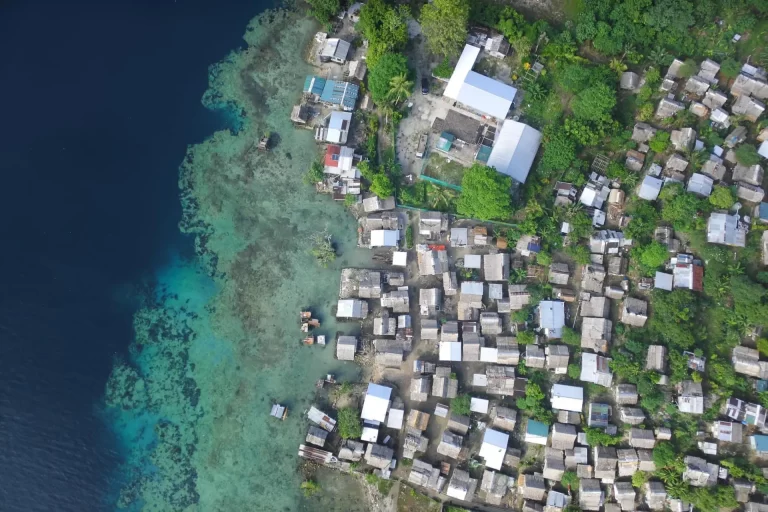
New high-resolution airborne LiDAR data from the Moana Data Service has revealed a previously hidden landscape of earthworks across parts of the Suva and Rewa region, offering new insights into how people may have lived, farmed, and organised the landscape in Fiji’s past.

The data, recently processed and released through the Moana platform, provides detailed elevation models that allow researchers to detect subtle ground features invisible beneath vegetation and modern development. Early analysis suggests the presence of extensive earthwork formations, including circular and interconnected structures that may represent historical land-use systems.

The patterns were first identified by Leo Vanualailai, a GIS officer with the Ministry of Environment, who was exploring the newly released dataset. They are now being examined in collaboration with international archaeologists, the Fiji Museum, and local research partners.

“Finds like these are remarkable archaeological discoveries that add to a growing Pacific-wide inventory of what LiDAR is revealing. They also provide direct evidence for how communities adapted and reshaped their environment over time, offering long term perspectives on some of the biggest challenges facing the Pacific today,” said Phillip Parton, Archeologist from the Australian National University.

Preliminary interpretations indicate that some of the larger circular earthworks are surrounded by large ditches and banks that resemble defensive structures seen elsewhere in the Pacific. Surrounding these structures are expansive networks of smaller earthworks that could represent earlier landscape modifications used for settlement or agriculture in low-lying areas.

“These datasets allow us to see patterns in the landscape that are almost impossible to identify on the ground,” said Christopher Saili of Kahuto Pacific.

“LiDAR technology can reveal subtle earthworks and landscape modifications that have been hidden by vegetation or development.’

Researchers have also observed extensive networks of interconnected pathways and features across floodplains and ridgelines, suggesting a complex and organised historical landscape. However, experts stress that further research and field verification will be required before definitive conclusions can be drawn about the age and function of these structures.

Kahuto Pacific is currently working closely with the Fiji Museum, local landowners, and international archaeological experts to review the findings and determine appropriate next steps for research and heritage protection.

“This is an early-stage discovery, but it highlights how powerful open geospatial data can be in supporting cultural heritage research and uncovering stories about Fiji’s past,” Saili added.

The LiDAR datasets for Suva and Nadi are available through the Moana Data Service, a web-based geospatial platform designed to make high-quality environmental and spatial data accessible to researchers, government agencies, and the public.

Fiji, Australia push Vuvale union to boost security and shape Pacific future

0

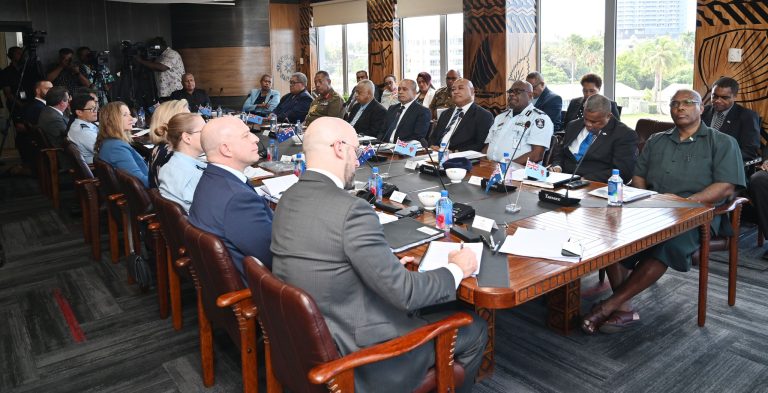
Fiji and Australia have reaffirmed their commitment to regional peace, security, and prosperity through the ongoing development of the Vuvale Union—a landmark initiative that strengthens bilateral cooperation across multiple sectors.

Speaking on the negotiations on the Fiji–Australia Security Treaty: The Vuvale Union meeting Tuesday, Prime Minister Sitiveni Rabuka said the Vuvale Union embodies the “Ocean of Peace” vision declared by Pacific Leaders in 2025, emphasising Pacific-led approaches and solutions to regional challenges.

The Prime Minister Sitiveni Rabuka said the partnership reflects the maturity and depth of Fiji–Australia relations, grounded in shared values, trust, and mutual respect.

“The Vuvale Union is a practical expression of this vision and marks a new chapter in the relationship between Fiji and Australia. First and foremost, it is a partnership that testifies to the strength and maturity of our ties,” he said.

Prime Minister Sitiveni Rabuka also acknowledged the strong relationship between the two nations, extending gratitude to Anthony Albanese for Australia’s continued friendship and trust.

“This treaty is unique and significant. It elevates and sets the direction and tone of Fiji–Australia relations for generations to come,” he added.

He noted that the relationship between Fiji and Australia has been built over decades through shared experiences, including joint participation in global conflicts and peacekeeping missions across the Middle East, Europe, Africa, and the Pacific.

Rabuka emphasised that the Vuvale Union stands on the legacy of past leaders and citizens, whose sacrifices have enabled present and future generations to determine their own paths.

“At the heart of this Union is the concept of Vuvale—family—built on trust, loyalty, respect, understanding, and responsibility,” he said.

The Prime Minister highlighted that the initiative is not only for Fiji and Australia but is also intended to contribute meaningfully to the wider Pacific region, serving as a blueprint for unity, regionalism, and collective progress.

He also pointed to the growing range of shared challenges facing the region, including transnational organised crime, health pressures, strategic competition, and climate change.

“At its core, the Vuvale Union strengthens our sovereignty and our ability to shape a shared future. It recognises that our interests are intertwined and that we must work together to address common challenges,” he said.

Rabuka added that the Union will deepen cooperation across key sectors, including security, economic development, trade, investment, and people-to-people linkages.

He also acknowledged the ongoing negotiations, commending both Fijian and Australian delegations for their work in advancing the agreement, particularly in the area of security cooperation.

Rabuka highlighted the importance of democracy as the foundation of the partnership.

“We must uphold, protect, and promote democracy. It is the cornerstone that allows our nations to realise their full potential and navigate the challenges ahead,” he said.

Rabuka described the Vuvale Union as a monumental step for Fiji and reaffirmed the country’s commitment to advancing the partnership alongside Australia.

Australia’s Chief Negotiator and Head of the Office of the Pacific, Elizabeth Peak, welcomed the progress of discussions, describing the Vuvale Union as a reflection of the deep and enduring partnership between the two countries.

“The Vuvale Union demonstrates the strength of the Fiji–Australia relationship and our shared commitment to advancing a stable, secure, and prosperous Pacific region,” Peak said.

She noted that negotiations have been constructive and forward-looking, with both sides working collaboratively to deliver meaningful outcomes.

“Our discussions are focused on building a modern partnership that enhances regional security, strengthens economic resilience, and expands opportunities for our people. Australia highly values its partnership with Fiji, and this Union marks an important step in deepening that engagement,” she added.

Solomon Islands Chief Justice fast-tracks landmark case against PM’s minority rule

0

Solomon Islands Chief Justice Sir Albert Palmer has underscored the significance and urgency of the case the new Coalition has filed to compel Prime Minister Jeremiah Manele to immediately convene parliament.

Palmer then directed lawyers for the new Coalition who appeared before him in the High Court to submit all claims and sworn statements by the close of business Tuesday.

“This court appreciates the significance of this case,” Palmer told a packed courtroom.

“I would therefore like to see counsels give priority to this matter,” he added.

The chief justice also issued directions for the Attorney General, John Muria Jnr. who represented the Government, to file responses to the Opposition’s claims by close of business tomorrow.

The court will resume Thursday to hear further directions regarding the landmark legal challenge, which was filed last week by the newly formed coalition of 28 MPs.

This came after 12 government ministers, and seven backbenchers left the Government for National Unity and Transformation (GNUT) and joined the Opposition.

The legal action, spearheaded by Opposition Leader Matthew Wale, People First Party (PFP) Wing Leader Fredrick Kologeto, and Independent Leader Manasseh Maelanga, came after Manele refused to call parliament despite leading a minority government.

The new coalition, representing a clear majority of the 50-seat Parliament, argues that Manele is “avoiding accountability” by failing to advise the Governor-General to summon a sitting.

This delay persists despite a formal Motion of No Confidence being lodged and the government’s numbers remain at just 22.

“This legal action is about upholding the rule of law,” the coalition stated.

The legal claim names the four highest offices of the state as defendants:

* The Governor-General: For his role in officially summoning Parliament.

* The Prime Minister: For his failure to advise the Governor General to summon parliament.

*The Speaker of Parliament: Included due to his institutional role in overseeing a sitting.

*The Attorney General: Joined as the legal representative of the Crown.

Prominent Honiara lawyer Gabriel Suri, as well as private lawyers John Taupongi and James Kaboke are representing the new Coalition.

Meanwhile, Prime Minister Manele has welcomed the court challenge.

He said the GNUT government recognises this action as part of the democratic process and the constitutional right of parties to seek judicial review on matters of public interest.

“The Government expresses full confidence in the independence, integrity, and impartiality of the High Court,” Manele said.

“It will adhere to all legal processes as the matter proceeds and will respect and abide by the Court’s final determination, including any further legal processes available under the law,” he added.

Manele called on all Solomon Islanders to remain calm and allow the judicial process to proceed without interference.

NZ ForeignMinister Winston Peters to visit Cook Islands

0

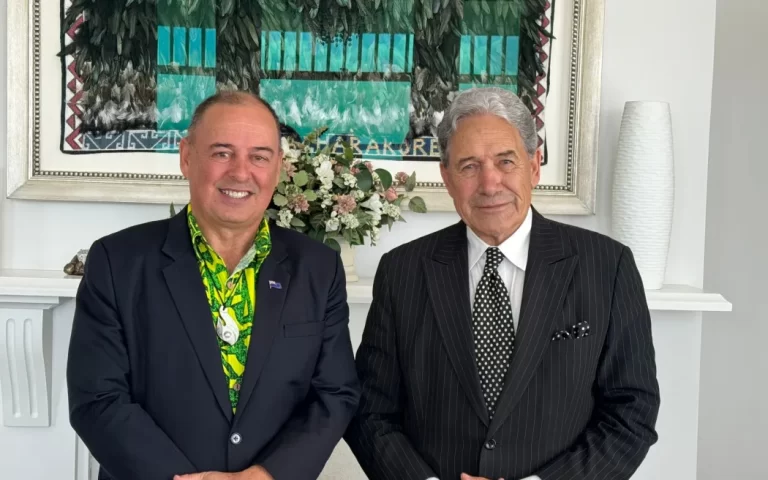
New Zealand Foreign Minister Winston Peters will visit the Cook Islands on Wednesday for talks with Prime Minister Mark Brown.

A statement from Peters’ office said the visit follows a private meeting between him and Brown in Auckland earlier this month.

The two leaders released a joint statement after their “informal” meeting, saying they had discussed “fundamental challenges facing the New Zealand-Cook Islands relationship over the past 18 months”.

“Political dialogue between the two countries will continue in the coming weeks in order to determine whether these challenges can be resolved in the present circumstances,” the statement said.

Peters’ last visit to the Cook Islands was in February 2024.

His return to Rarotonga suggests a softening of the diplomatic back-and-forth regarding the relationship between Cook Islands and Aotearoa.

He leaves for the Cook Islands on tomorrow and returns to New Zealand on Thursday.

Fijian Media Association elects new executive

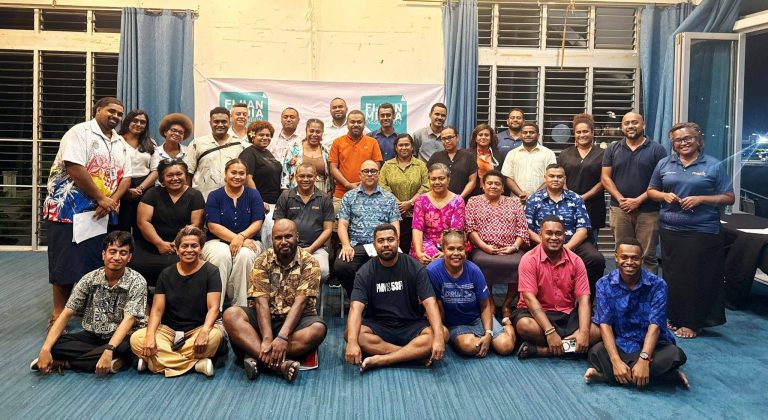
The Fijian Media Association (FMA) has elected a new executive unopposed and wrapped up its Annual General Meeting (AGM) with a review of a busy two-year period and plans for the year ahead.

Members gathered in Suva to assess progress and map out priorities, with a full executive team confirmed to lead the association for the next two years.

Re-elected were President Rosi Doviverata, Vice President Fred Wesley, General Secretary Stanley Simpson, Assistant General Secretary Felix Chaudhary, Treasurer Vijay Narayan, Assistant Treasurer Stella Taoi, and Executive Members Reginald Chandar and Makereta Komai.

General Secretary Stanley Simpson highlighted key achievements over the past year.

“Fijian Media Association AGM done. Look back to a busy 2025 where we successfully implemented the first-ever Women in Media annual conference with participants from seven countries, four first-ever Town Halls in Savusavu, Labasa, Tavua and Ba, and brought back the FAME Journalism Awards after 17 years. Plus, many other trainings and partnerships.

Looking forward to another year ahead,” said Simpson.

The AGM also discussed strategic plans as the association prepares to build on recent initiatives and expand its work with media professionals across Fiji

In September, the Fijian Media Association is hosting the Pacific region’s biennial media conference called the Pacific Media Summit. The media summit jointly organised with the Pacific Islands News Association is expected to host up to 200 media professionals from around the Pacific region in Savusavu from 21-25 September.

Tonga Media Association elects new leadership team

The Media Association of Tonga (MAT) has a new executive, with Katalina Uili Tohi elected President to lead the organisation.

The new team brings together media professionals from across Tonga’s broadcasting and media sector.

Katalina Uili Tohi of Broadcom Broadcasting Letio 87.5FM takes up the role of President, with Ramanlal Vallabh of 88.6 FM Radio Nuku’alofa as Vice President.

Viola Koloamatangi Ulakai of Tonga Broadcasting has been appointed Secretary, assisted by Milika Ulupano of Kele’a Voice.

Ofakilevuka Guttenbeil-Likiliki, a media consultant and Women in Media mentor, takes on the role of Treasurer, with Tapinga Lavemaau of 88.1FM as Assistant Treasurer.

The new executive is expected to guide the association’s work in strengthening media development and collaboration across Tonga.

Pacific energy crisis looms amid Middle East war

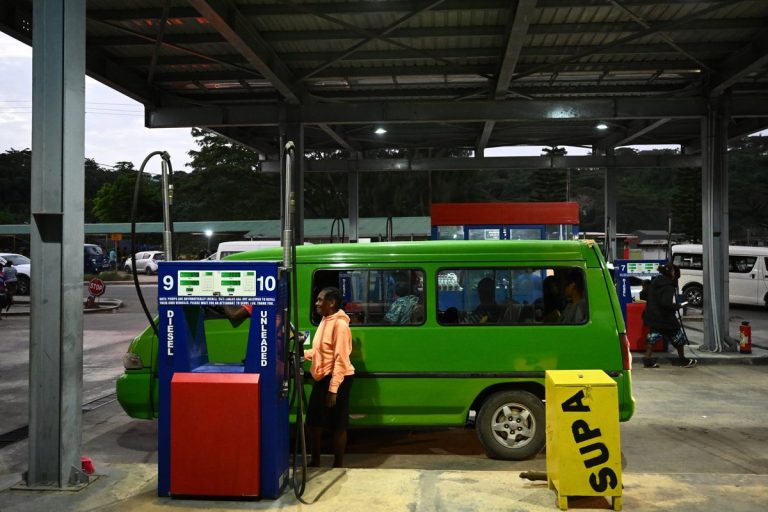
The war in the Middle East is threatening to derail diesel-dependent Pacific Island economies, with one country facing fuel import bills equal to three times its annual healthcare budget.

Fiji could be hit with a 115 percent increase on its annual imported fuel costs from 2025 levels, by about US$670 million (AUD$978 million), if oil holds at post-shock prices, analysis shows.

This massive spike represents almost three times Fiji’s annual healthcare budget, according to Zero Carbon Analytics.

The energy and climate researchers found Vanuatu’s refined petroleum import costs could surge US$120 million (AUD$175 million), amounting to about 11 percent of GDP.

Brent crude oil prices have surpassed US$100 ($UD$146) a barrel following the U.S-Israeli invasion of Iran and subsequent disruptions to shipping through the Strait of Hormuz.

The conflict is squeezing economies worldwide, but pressures are particularly acute for small island countries that rely heavily on diesel for power generation.

Skyrocketing fuel costs drain foreign exchange reserves and risk pushing countries into high levels of debt, leaving them vulnerable to future shocks and more reliant on foreign aid.

With 80 percent of regional energy currently dependent on imported oil, the crisis has accelerated the push for local clean energy generation.

While reducing emissions is a factor, for these nations responsible for just 0.03 percent of global conditions, the primary driver is energy security.

Permanent Secretary for Environment and Climate Change for the Republic of Fiji Sivendra Michael said clean energy would provide cheap and reliable power.

“When our energy comes from the sun, wind and other indigenous sources of energy, nobody can cut off our supply and our exposure to oil price volatility and the implications of a war happening on the other side of the world are minimised,” Dr Michael said.

“We need our partners to back our commitment to low-carbon transition.”

Australia, a major foreign aid and security partner of many Pacific nations, is investing $75 million (US$51 million) in renewable energy for rural and remote communities across the Pacific and Timor-Leste.

Australia and the Pacific are set to play key roles in the 2026 United Nations climate talks, with the larger nation running multilateral negotiations and pre-meeting leadership events in Fiji and Tuvalu.

Zero Carbon Analytics energy transition researcher Amy Kong said small economies were already spending huge proportions of GDP on fuel imports.

“The Iran oil crisis has exposed the vulnerabilities of small island states and their dependence on diesel,” she said.

“These are the countries that can least afford the volatility of the market,” said Kong.

World Rugby Nations Cup heads to the Americas in July for inaugural 2026 edition

0

World Rugby has unveiled the match schedule for the inaugural World Rugby Nations Cup, set to take place throughout July and November 2026, with the tournament first-ever fixture taking place in Montevideo on 4 July as Uruguay host Georgia.

Currently ranked 15th and 13th respectively in the World Rugby Men’s Rankings, the two nations promise a highly competitive and compelling opener to the first edition of the competition, setting the tone for a new global era of international rugby.

The competition sees the 12 unions who qualified for Men’s Rugby World Cup 2027 compete in a structured environment designed to accelerate competitiveness and create certainty of meaningful annual test fixtures with revenue opportunities. The exciting schedule balances geographic spread, player welfare, logistics cost and developmental opportunity, providing fans with clarity, teams with certainty, and unions with commercial opportunities.

These nations represent rugby’s most exciting growth markets, many of whom have made significant strides in recent years through dedicated pathways, increased investment, and record levels of supporter engagement. The Nations Cup gives them an annual platform to test themselves against comparable opposition, refine systems, and optimise experience ahead of Australia 2027.

A format mirroring the Nations Championship

The 12 participating unions will compete in two pools of six, reflecting the structure of the top division, the Nations Championship, and ensuring a consistent, meaningful calendar across the July and November international windows.

Pool A – Americas & Pacific pool – features Canada, Chile, Samoa, Tonga, Uruguay, and the USA, bringing together fast‑growing unions across both hemispheres.

Pool B – Europe, Asia & Africa pool – comprises Georgia, Hong Kong China, Portugal, Romania, Spain, and Zimbabwe, creating a competitive cross‑regional group with diverse playing styles and passionate supporter bases.

Each team will face every other team within the other pool in a full round‑robin format spanning both windows. Match points will combine into a single standings table, and at the end of November the top‑ranked union in each pool will be crowned the inaugural Nations Cup champions. This structure guarantees equal opportunity, competitive balance, and a compelling year‑long narrative for fans and unions alike.

18 matches split evenly across North and South America

Across a landmark month of July, fans will be treated to 18 test matches staged in some of the most passionate and fast developing rugby regions in the Americas. From major North American sports hubs to vibrant South American rugby cities, supporters can immerse themselves in compelling rivalries and back-to-back fixtures in Denver, Santiago, Montevideo, Edmonton, and Winnipeg, transforming each venue into a true rugby festival and delivering exceptional value for fans throughout the window.

Unprecedented global content in North America

North America will play a central role in the inaugural World Rugby Nations Cup, with the United States and Canada hosting a combined nine fixtures that showcase the breadth and diversity of emerging rugby nations. Denver, Charlotte, and Cary will host premium international action, including the global‑flavoured Tonga v Zimbabwe encounter, which not only highlights rugby’s expanding reach but will also be a Men’s Rugby World Cup 2027 Pool F fixture next year.

Canada’s schedule spans Edmonton and Winnipeg, where local supporters will enjoy elite men’s internationals featuring the national team and visiting sides across five compelling matchups. Together, these fixtures represent some of the most exciting content delivered to North America in a single July window, offering fans unprecedented access to global competition while creating vital momentum as the region builds toward hosting Men’s Rugby World Cup 2031 in the United States.

Bespoke support of Pacific Nations

To ensure equitable opportunity for Pacific unions, Tonga and Samoa will be proactively supported by World Rugby to accommodate for playing Nations Cup fixtures outside their home territories.

This approach is designed to deliver financial stability, support long-term development, and ensure that both unions benefit from the global exposure of the competition while maintaining sustainable structures for the future.

In parallel to the Nations Cup, World Rugby is providing tailored operational support to Fiji as they prepare for their July Nations Championship fixtures.

Ensuring strong alignment between competitions is critical to the success of the new global calendar, and targeted support will help Fiji make the most of the expanded competitive opportunities available in the UK where they will play fixtures in Wales, England and Scotland.

A new identity designed for global reach

The new logo introduced for the World Rugby Nations Cup 2026 celebrates the ambition, unity, and upward momentum of the game’s most promising nations as their journeys converge on the global stage.

The World Rugby shield embodies the competitive spirit of the 12 participating teams, each rising line representing a nation striving to elevate its performance, strengthen its identity, and earn the opportunity to be promoted into the Nations Championship. The mark reflects both tradition and transformation, capturing a tournament built on growth, opportunity, and the future of the sport.

World Rugby Chair Brett Robinson said: “The inaugural World Rugby Nations Cup is a major milestone for the global game. The competition is creating unprecedented opportunities for these promising teams to test themselves, build experience, inspire supporters home and away, and grow their commercial footprint. Staging the first half of the tournament across the Americas reflects the enormous potential of the region, from the deep passion of South American fans to the outstanding venues and growing interest in the North. This is a tournament built on growth, connection, and the belief that every union should have a clear pathway to compete and thrive at the highest level.”

The November schedule, forming the second half of the Nations Cup 2026 and played in Europe and Asia, will be announced in due course. This window will help complete a full year of competitive fixtures for emerging nations, providing them with the same consistency and intensity that Men’s Six Nations and Rugby Championship teams have historically enjoyed.

All matches will be available either through domestic broadcast partners or on RugbyPass TV, ensuring global accessibility for fans following their teams. This hybrid model maximises reach, supports commercial growth, and reinforces rugby’s commitment to providing free-to-air access in underserved markets.

Climate talks address Pacific’s growing security risks

0

Funding for fighting climate change across the Pacific is not keeping up pace with the urgency of the crisis amid complex systems, slow approvals and further risks that block access to its vital finance.

Climate Finance and Resilience Programme Adviser at the Pacific Islands Forum Secretariat – the principal political and policy organisation for the inter-governmental cooperative – Karlos Moresi said that strict requirements, a lengthy approval process and limited national representation frequently delays the flow of funds to the region.

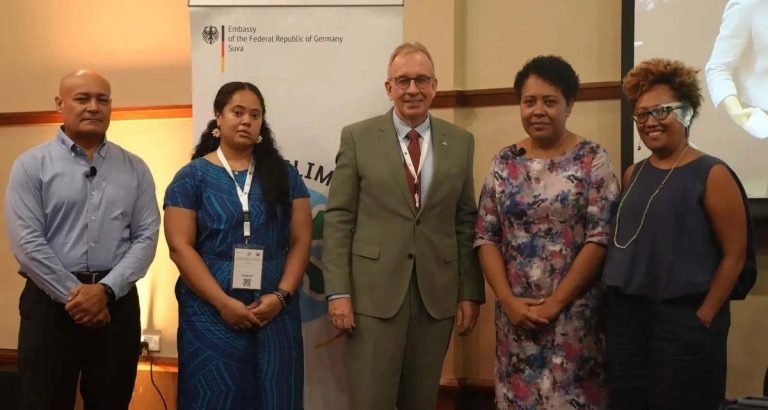
“Global climate finance systems are not designed with small-island developing states in mind, creating barriers that prevent timely and effective support for vulnerable (Pacific) nations,” he told the recent Climate Talk: Navigating Climate Risks Talanoa Dialogue conference in Suva.

Moresi stressed that Pacific Island nation-states were also making efforts to mobilise their own resources, including through individual national budgets, but international systems must better align with these efforts to maximise the positive impact for some of the communities most greatly affected by climate change.

“There really is a need to simplify processes to create dedicated funding windows for our Pacific countries,” he said.

Participants in the conference discussed the role of the Fiji Development Bank – the strongest of the financial institutions in the Pacific region – and the Green Climate Fund (GCF) in addressing what was termed “financial bottlenecks” by a noted delegate, according to Moresi.

For the fiscal backers to fund climate change measures, the risk of foreign exchange is commonly passed down the line to the Pasifika communities through various local organisations.

Minor currency fluctuations can add millions of dollars extra to project costs just from an expected five to 10 basis-point movement in foreign exchange, Moresi explained.

Moresi noted that the Pacific Islands Forum has been raising concerns in discussions with the Green Climate Fund (GCF), which addresses the issues of quicker and simpler fiscal access for developing nations.

“We are trying to push for solutions that reduce currency-related risks and make funding more accessible to the countries that need it most,” he said.

The challenges of translating regional decisions into implementing national actions for Pasifika communities was also key on the agenda.

He emphasised that climate change finance is not just about funding national projects, but also over building trust and ensuring international funds are channelled effectively through national systems.

“It is critical that resources reach local communities where they are most needed to strengthen resilience and support preparedness,” Moresi said.

Moresi highlighted the importance of engagement ahead of the 2026 United Nations Climate Change Conference (COP31) to be held in November, noting the important role of civil society organisations from the Pacific in shaping outcomes on the world stage in Turkey.

This had strong support from one of the world’s most powerful voices during the discussions in the Fijian capital. Germany’s Ambassador to Fiji and the Pacific, Dr Andreas Prothmann, said climate change is no longer solely an environmental concern, but also a growing threat to security, stability and development throughout the region.

Dr Prothmann said Pacific Island states are already experiencing the harshest realities of global warming with impacts being felt by communities, their livelihoods and the economy.

He emphasised the region has long recognised the seriousness of the crisis, pointing to the Pacific Islands Forum Boe Declaration on regional security, which first identified climate change as the single greatest threat to the well-being of Pasifika people.

“Across the Pacific, climate change is not a distant scenario – it is a lived reality,” Dr Prothmann said.

“In many ways, the Pacific has long understood what the international community is only now fully grasping – that climate risk is inseparable from economic resilience, social stability and long-term security.”

Dr Prothmann said Germany values its partnership with Fiji and other Pacific Island nation-states, noting that cooperation is grounded in “its mutual respect and shared priorities”.

He highlighted that addressing climate change is central not only to environmental protection, but also to sustainable development and human security.

The Climate Talk: Navigating Climate Risks Talanoa Dialogue conference was timely, which provided an important platform for governments, development partners and agencies, and civil society to deepen their understanding of the link between climate change, security and finance.

“Our goal is not only to exchange views, but to identify practical pathways forward,” Dr Prothmann said.

Pacific must defeat corruption to prosper

0

A regional academic has warned that the Pacific cannot achieve peace or prosperity unless it confronts corruption head-on, calling it a “tapeworm” quietly draining the region’s strength.

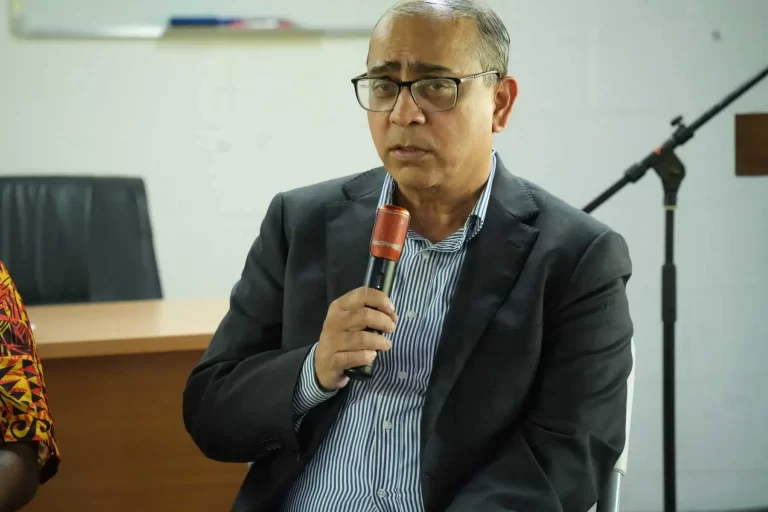
Dr Shailendra Singh—the Head of the Journalism Programme at the University of the South Pacific (USP)—said corruption made peace difficult to achieve.

“If you have corruption, you cannot have those things together. It is very simple,” he said.

“Where there is corruption, it is hard to achieve goals like an ocean of peace.”

Speaking at the Teieniwa Vision Anniversary Panel Discussion on Corruption, Singh commended the vision for explicitly linking anti-corruption efforts to peace, progress and prosperity, stressing that the connection is undeniable.

Singh posed two critical questions: How much impact has been made against corruption in the Pacific? And how much of an impediment does corruption remain to the region’s growth?

To address those questions, he pointed to the latest Corruption Perceptions Index released earlier this month by Transparency International, which states that corruption remains a persistent challenge across the Pacific and continues to undermine the region’s future, despite ongoing efforts.

According to the index, Papua New Guinea recorded the lowest score among Pacific Island countries, with 26 out of 100, 19 points lower than the Asia-Pacific average. Fiji scored 55 points, making it the best-performing Pacific Island country.

However, Singh noted that Fiji’s score had not improved over the past five years.

“At least according to this report, Fiji is stagnant,” he said.
“Corruption remains a thorn in Fiji, unfortunately.”

He likened corruption to a creature—a tapeworm feeding quietly from within, draining strength and slowing progress—warning that if left unchecked, it debilitates and ultimately destroys its host.

“It is no wonder Kofi Annan called corruption a cancer that spreads and ultimately undermines development,” Singh said.

Describing corruption as an old, stubborn foe in the Pacific, he said the Teieniwa Vision’s call for Pacific states to unite in the fight is well-placed.

“But on this anniversary, are we united in actual action or only in words?” he asked.

Singh said he arrived at that question after scrutinising the latest Transparency International report, which urges Pacific leaders to move beyond statements and prioritise meaningful action against corruption – a point he noted had also been raised by earlier speakers at the panel.

He highlighted that the Teieniwa Vision contains several pledges and commitments, including the right to information and whistleblower protection, both of which are strongly articulated within the document.

“The question then is, how many Pacific Island countries have passed right to information and whistleblower protection legislation? Do the words match the actions?”

He said, unfortunately, hardly any countries have passed these two critical pieces of legislation, with many bills still going through slow and painful parliamentary and administrative processes, even as corruption runs rampant in some countries.

The lack of implementation, he said, raises serious questions about commitment to the Vision being celebrated.

Singh stressed that the region is morally bound to do better, because corruption is predatory and parasitic by nature and disproportionately affects vulnerable populations – including women, persons with disabilities, youth and the elderly.

He pointed out that about 25 percent—or one in four people—in the Pacific live in poverty, and around 40 per cent of Pacific children are at risk of falling below the poverty line.

“These are kids. We should all be very concerned about this,” he said, describing the situation as an urgent call for meaningful action and actual outcomes.

While acknowledging that progress has been made in some areas, Singh admitted his presentation may have sounded negative, but the reality demanded honesty.

Like corruption, he said, poverty was also an old enemy of the Pacific and the two were closely linked.

“They are relatives,” he said.

“We cannot quite get rid of one without dealing with the other.”

If the region is serious about eliminating poverty, he argued, it must tackle corruption decisively. History, he said, indicates that both corruption and poverty will remain unwanted companions unless the Pacific changes the way it normally operates.

“Maybe some things need to change,” he added.

Singh said the onus, as emphasised in the vision itself, lay largely with leadership – those entrusted with and well compensated to govern.

He said leaders must commit to accountable governance, ensuring that all persons with authority, including Cabinet ministers, parliamentarians and public servants, adhere strictly to their codes of conduct.

“The question is, are our parliamentarians adhering to the vision statement, or are these just empty words?” he asked.

Echoing Transparency International, he said Pacific leaders must act with conviction to build a region founded on integrity and public trust.

“All anti-corruption actions are worth the effort,” he said, noting that the world’s most prosperous and progressive countries are also among the least corrupt.

He cited neighbouring countries Australia and New Zealand, which consistently rank highly on global corruption indices, as examples.

“The message for the Pacific is unambiguous,” Singh said.

“We have to drown corruption before we can dream of an ocean of peace and prosperity,” said Singh.

Stay connected

529FansLike
172FollowersFollow
156SubscribersSubscribe
- Advertisement -