Home Blog Page 66

Fijian Drua debut for Basiyalo

0

Former Fiji 7s rep, Sikeli Basiyalo, will make his Super Rugby Pacific debut for the Fijian Drua.

Head coach Glen Jackson has named the youngster on the right wing.

The former Cuvu College student from Volivoli village in Nadroga featured for the Fiji 7s team at the Hong Kong 7s last year.

Basiyalo and Ilaisa Droasese are the new wingers this week.

Tuidraki Samusamuvodre returns at outside center and Sikeli Rabitu starts at fullback.

Haereiti Hetet, Zuriel Togiatama and Mesake Doge leads the pack upfront with co-captain Isoa Nasilasila and Joseva Tamani as locks.

The loose forwards are Etonia Waqa, Motikiai Murray and Elia Canakaivata.

Issak Fines-Leleiwasa, Isaiah Armstrong-Ravula,and Iosefo Namoce completes the backline.

There’s some good news for fans after Simione Kuruvoli was named as one of two backs on the bench.

Mesulame Dolokoto ,Emosi Tuqiri, Samuela Tawake Mesake Vocevoce ,Kitione Salawa, Vilive Miramira and Manasa Mataele completes the match-day 23.

Fjian Drua’s back three are expected to be under a lot of pressure from the Western Force’s kicking game in their Super Rugby Pacific clash in Lautoka on Saturday.

The Force have an average of 25 kicks in play per game in the last seven rounds.

This is something, Drua head coach, Glen Jackson and his team will have to brace for.

Jackson says if they can get on top of the visitors kicking game then it can work to the home side’s advantage.

He said that the Force is expected to unleash former Kangaroos and New South Wales State of Origin rep Zac Lomax in Lautoka.

Jackson also says that it’s a difficult week for fans especially those in the western division but hopes they can turn up on Saturday to support the side.

The Drua hosts Western Force at 4:35pm in Lautoka on Saturday.

World held hostage by reliance on fossil fuels, Christiana Figueres warns – and climate health impacts are ‘mother of all injustices’

0

Countries are being “held hostage” by their reliance on fossil fuels, a former UN climate chief has warned, describing the health impacts of climate change as “the mother of all injustices”.

Christiana Figueres, an international climate negotiator who helped deliver the Paris agreement signed in 2016, made the comments as she was announced on Wednesday as co-chair of a Lancet Commission examining how sea-level rise is reshaping health, wellbeing and inequality.

Lancet Commissions are international collaborations that analyse major global health issues and influence policy. This commission will examine legal frameworks to hold countries accountable for the health harms of sea-level rise. It will report by September 2027.

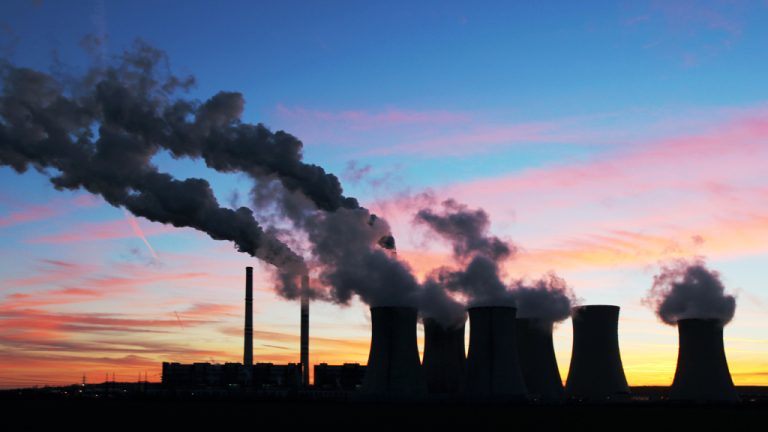
While the timing of the announcement – amid the U.S-Israel war on Iran – is coincidental, Figueres said the fuel crisis was “dramatic proof” of the global dependence on fossil fuels that is driving geopolitical instability and the health impacts the commission will examine.

The commission comes after Pacific island health ministers called for greater global focus on sea-level rise as a health and justice issue, as well as an environmental challenge.

Rising seas contaminate drinking water, damage food supplies and force entire communities from their homes.

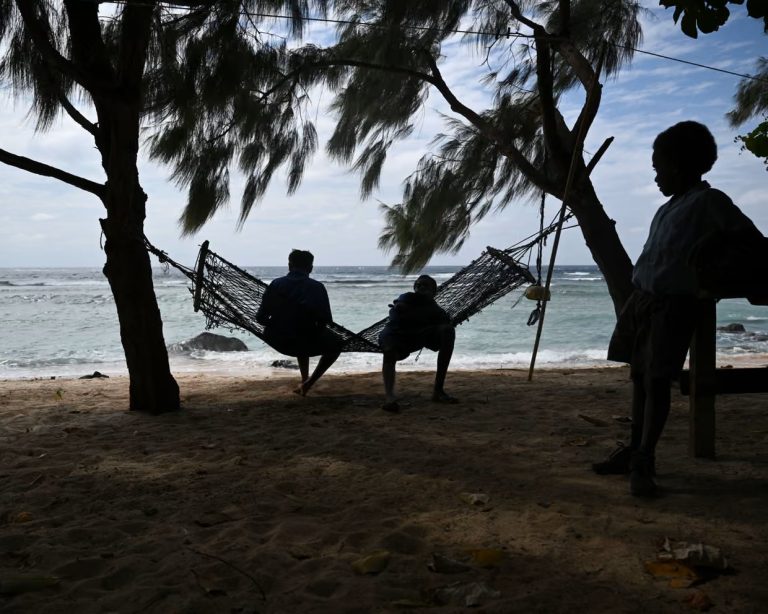
Sea-level rise is not uniform and is influenced by weather patterns, ocean currents and changes in gravity as ice sheets melt. The rise is larger in the oceans furthest from the ice sheets, and is higher than global averages in the Pacific. It means island nations including Tuvalu, Kiribati and Fiji may become uninhabitable within decades.

Many low-lying cities are also under threat, including New Orleans in the U.S, Cardiff and London in the UK, and Amsterdam in the Netherlands.

In March, research published in the international science journal Nature found that ocean levels had been underestimated due to inaccurate modelling. In some areas of the global south, including south-east Asia and the Indo-Pacific, they may be 100cm to 150cm higher than previously thought.

“We in the climate community are very guilty of explaining things in way too esoteric terms, as though climate change were something that is not happening now,” Figueres said.

“So framing these issues in terms of health, in terms of dignity, in terms of livelihoods, in terms of identity and cultural continuity … provides a much better context to the challenge of reducing emissions, because we then understand that this really is about the human experience on this planet …

“Just from a health perspective, it is now affecting drinking water, it’s affecting sanitation, it’s affecting food security because of the salinisation of all of these lands that are ocean front.

“It is happening now, it is a crisis of health and it is the mother of all injustices.”

Figueres said the commission would consider the intergenerational trauma and inequity caused by displacement.

“Can you imagine the pain of having to leave the bones of ancestors and being displaced in order to be able to protect the future of children?” she said.

“That is a pain that is already being experienced in the Pacific islands. That is a pain that we cannot put in economic terms. The grief is huge.”

She said young people were “growing up understanding that they are in a world that is already ravaged by climate change”.

“How many of them don’t even want to have children because they’re so concerned about the conditions under which those children might have to grow up and live?”

The commission will consider how to hold some of the biggest polluters to account for the irreversible harm being caused to countries contributing the least to climate change. It will assess existing legal instruments, identify gaps in protections and consider new ways to safeguard health and uphold justice for suffering communities.

A landmark advisory opinion published in 2025 by the international court of justice (ICJ) found that countries have a legal obligation prevent harm to the climate, and that failing to do so could result in them paying compensation and making other forms of restitution.

Though non-binding, Figueres said the finding would boost the number of climate litigation cases and lead to groundbreaking claims.

“Just the fact that the ICJ came out with an unequivocal opinion is already a crucial first step in terms of legal consequences,” she said.

Vanuatu will in May lead a UN general assembly resolution to uphold the ICJ opinion, which if passed would help shape how the findings were implemented globally.

But UN experts have warned of attempts by some states to block the resolution from even being considered, and of growing resistance to explicit references to fossil fuels and legal responsibility for climate harm.

Figueres said legally binding agreements were not enough to tackle the health harms of the climate crisis, recalling how Canada exited the Kyoto agreement just before facing billions in penalties for failing to meet its emissions targets.

“They simply sent me a letter and said, ‘Madam executive secretary, hereby, Canada removes itself from the Kyoto protocol.’ So having a legally binding agreement does not guarantee at all that any country would comply.”

She said she believed change was more likely to come from a combination of legal pressure, scientific evidence and what she described as appealing to the “enlightened self-interest” of governments and corporations.

“That is why it is important to to lay bare the consequences of inaction,” Figueres said, adding: “Companies should understand for their business continuation, they should reduce emissions. Governments should understand that in order for them to stabilise their economy, and protect their people, they should reduce emissions.

“I just think that enlightened self-interest based on scientific facts – which is what the commission is going to put forward – is a much more effective route to emission reductions than a legally binding agreement from which anybody can withdraw,” she said.

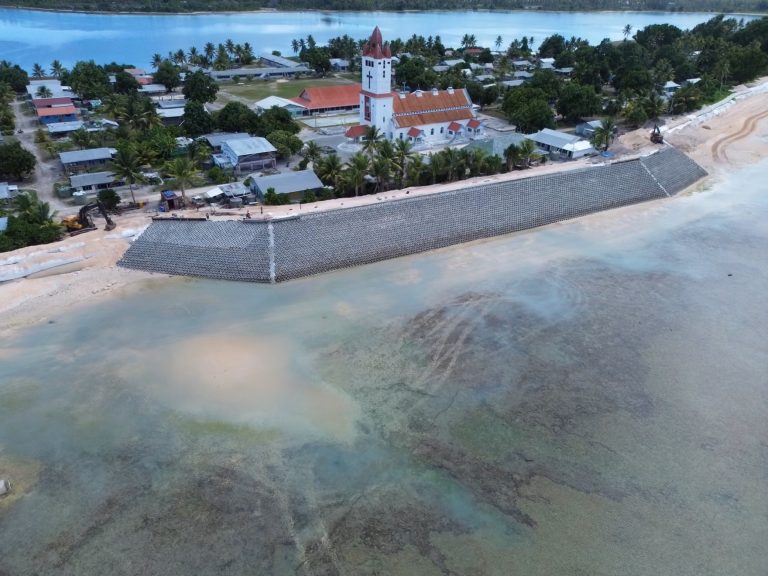
New Zealand asks U.S to send fuel tankers to Pacific to alleviate pressure caused by Iran war

0

New Zealand has called on the U.S to send fuel tankers to the Pacific to help alleviate some of the significant economic and fuel pressure caused by the war in the Middle East.

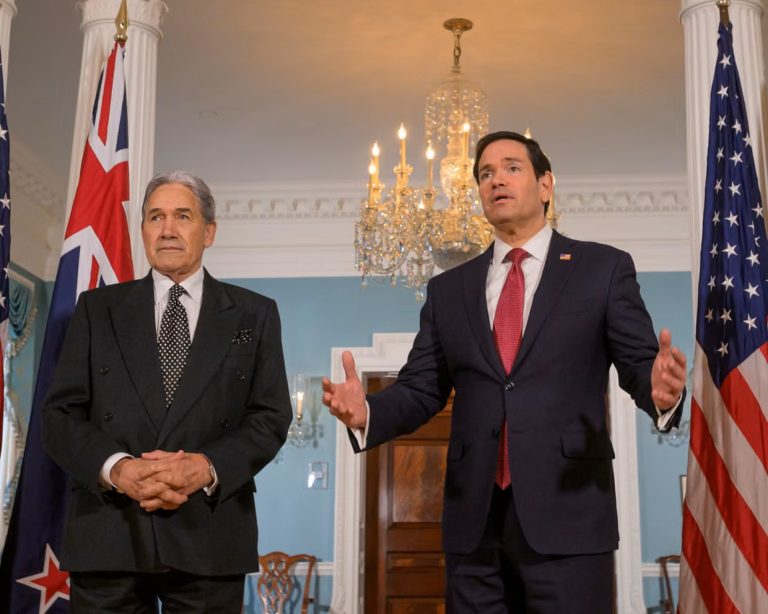
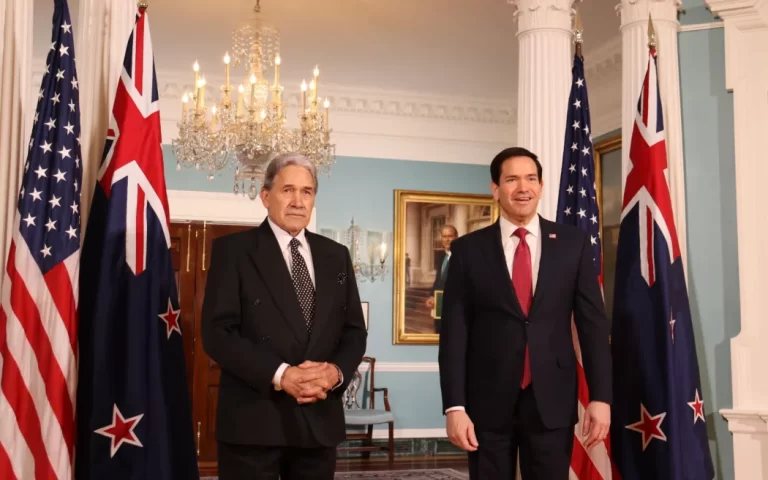
Winston Peters, New Zealand’s foreign minister, met the U.S secretary of state, Marco Rubio, in Washington on Tuesday, where they discussed bilateral relations, the war in Iran and the Pacific.

After the meeting, Peters said he had made sure the U.S understood the “significant economic impacts on New Zealand and Pacific arising from the war”.

“Not just the New Zealand economy, but to the Pacific economies that we have so much responsibility for,” Peters told the national broadcaster RNZ. “We left all that very clearly in their mind as concerns we had.”

They had had a “serious discussion” over how the U.S might help, Peters said, including asking the US to “get some ancillary tankers ready and get them to New Zealand to spread it around the Pacific as fast as we possibly can”.

He said: “We asked them: don’t leave it to when it happens, get ready just in case it’s going to happen. We had a very positive discussion on that basis.”

Pacific nations are especially vulnerable to fuel supply disruptions and rising costs due to their reliance on imported fuel.

In March, Pacific leaders appealed to foreign partners for help with oil supplies. The Samoan prime minister, La’aulialemalietoa Leuatea Schmidt, asked New Zealand if it was possible to divert fuel to the Island nation in case of crisis, while the Tongan prime minister, Lord Fakafanua, said New Zealand and Australia were sharing intelligence to help his country prepare for shortages.

Following Peters’ and Rubio’s meeting, the U.S and Iran agreed to a two-week ceasefire after a last-minute diplomatic intervention led by Pakistan, canceling an ultimatum from Donald Trump for Iran to surrender or face widespread destruction.

Peters refused to comment on the U.S president’s threat to annihilate the entirety of Iranian civilisation should Iran’s government ignore his deadline to reopen the strait of Hormuz. “I don’t make comments on what presidents and prime ministers say … It’s time for cool heads and not make a rush to judgment we will regret.”

New Zealand’s relationship with the U.S was “excellent”, Peters said, but when asked if the two nations were close friends, he laughed. “Respectful understandings amongst each other is more important, and we’ve got that.”

Winston Peters tells US secretary of state Marco Rubio of Iran war impact on NZ

0

New Zealand Foreign Minister Winston Peters says it’s time for “cool heads” as the US President escalates his rhetoric on attacking Iran.

Peters met U.S Secretary of State Marco Rubio on Wednesday morning in Washington DC, where he expressed New Zealand’s desire to see dialogue and de-escalation over Iran.

He told his counterpart about the significant negative economic impacts the conflict was having on New Zealand and its Pacific neighbours.

Rubio outlined U.S progress towards ending the war.

Peters told RNZ he was given details by the U.S Secretary of State about work being done and conditions required for peace to break out, but indicated it would be premature to jump to any conclusion about how soon the war might end.

He said the pair had a “serious discussion” on how the U.S might help the Pacific in regards to fuel supply.

On the closure of the Strait of Hormuz, they both stressed the importance countries around the world attached to international law in regards to freedom of navigation.

The meeting took place just hours after U.S President Donald Trump posted that” a whole civilisation will die” in Iran if the country does not heed his cutoff time to open the Strait of Hormuz, as Tehran reported U.S-Israeli attacks on its infrastructure were already under way.

Speaking to Morning Report after the meeting, Peters said it would be wise for New Zealand to wait out the “timeline that has yet to be met.”

In the meantime, he said, he was there to make sure the U.S understood the cost to New Zealand and the Pacific in terms of the economy and fuel supplies.

“We left all that very clearly in their mind as concerns we had,” Peters told RNZ. He said he came to ensure New Zealand’s long term and immediate interests were looked after.

“We had a serious discussion about how they might help, how it might get some ancillary tankers ready and get them to New Zealand to spread it around the Pacific as fast as we possibly can,” said Peters.

He said the U.S gave “a very positive indication” it could support Pacific nations with access to additional fuel supplies if necessary.

He would not be drawn on Trump’s comments “which are not part of the conversation I was in.”

“People say a lot of things, in time we’ll see whether these things are relevant or correct.”

Asked to reassure New Zealanders who might be alarmed at the U.S president’s remarks, Peters said people would continue to be alarmed if “people keep on heightening the effect of a comment like that.”

He said there had been numerous comments in the past that have “changed dramatically” within one or 24 hours.

“So it’s time to be experienced. It’s time for cool heads and to not make a rush to judgment that we will regret. That’s what’s important now.”

Peters said there were no discussions of potential involvement by New Zealand in a maritime fleet to keep the Strait of Hormuz open, and that it wasn’t for him to determine what New Zealand would do.

“But the illegality of what’s happening there can’t go on, that’s what we do accept.”

Before the trip, which came at Rubio’s invitiation, Peters said the current global context was the most challenging New Zealand had faced in the past 80 years.

Waikato University Professor Al Gillespie also told RNZ ahead of the meeting that Peters would be trying improve a relationship with the US that had been challenged in recent times, “because of the unpredictability” of the US President. But he also acknowledged the countries were good friends.

During the meeting, Rubio and Peters also discussed the longstanding relationship between the U.S and New Zealand, including on defence and security and trade and economic matters. They talked about the issue of tariffs and continued discussions on critical minerals cooperation.

Peters later said no final agreements was reached in regards to critical minerals, but he told Rubio New Zealand was a “critical minerals wealthy country” and that work was ongoing.

Peters pointed to the Pacific Islands Forum next year, which New Zealand’s is hosting, and invited Rubio to attend. He encouraged the US to continue playing a fulsome role in the region.

They discussed matters in the Pacific, including energy supply chain issues and transnational organised crime. They also discussed shared strategic interests of the two nations in the Indo-Pacific region.

Ahead of the meeting, Rubio was asked for a message to other nations like New Zealand impacted by the war.

He responded by saying the whole world had been impacted “unfortunately” because Iran was violating “every law known” by striking commercial vessels in the Straits of Hormuz, “and it’s a big problem for the world.”

Peters also met with Rubio early last year, ahead of the Liberation Day tariffs. After that meeting, Peters said the pair had made “serious arrangements” to keep dialogue going in a meaningful way.

On Wednesday, Peters described his relationship with Rubio, and Deputy Secretary of State Chris Landau, as “excellent.”

“It’s born of the fact that we’re dealing with serious issues where they’ve got a huge interest in it as well, and they happen to respect a country called New Zealand when it comes to the Pacific and our influence in it,” he said.

Sea-level rise is a health crisis and we must hold polluters accountable

0

Opinion by Christiana Figueres

There are moments in history when a crisis long treated as distant reveals itself to be intimate, immediate and profoundly human. Sea-level rise is one of those moments.

For years it has been discussed in the abstract language of centimetres, coastal infrastructure and future projections. This can make it seem like a technical challenge – something for engineers and planners to grapple with. But rising seas are already damaging bodies, minds, livelihoods and cultures. Sea-level rise is a present-day health crisis.

When saltwater intrudes into freshwater supplies, health suffers. When floods overwhelm sanitation systems, diseases spread. When farmland is inundated by king tides, nutrition deteriorates. And when people are forced to contemplate leaving the land of their ancestors, they face a painful mix of physical, financial, emotional, cultural and spiritual harm.

The effect of sea-level rise on property lines and insurance procurement is clear. But what is being lost goes far deeper – it’s safety, dignity, continuity and belonging. Across low-lying coastal regions and small island states, including throughout the Pacific, communities are living with this reality today. For Indigenous peoples especially, land is identity, memory, law, kinship, sustenance today and connection to a shared future.

Those facing the earliest and harshest consequences are, overwhelmingly, those who did the least to create them. Today sea levels are now rising rapidly in a world already shaped by inequality, colonialism and economic exclusion. We cannot allow those unjust legacies to deepen on our watch.

I’m encouraged therefore that we are beginning to name this crisis and its interconnections more clearly. The Lancet Commission on Sea-Level Rise, Health and Justice, newly announced, is bringing together expertise across disciplines and regions, and supported by the World Health Organisation Asia-Pacific Centre for Environment and Health, to show how health, justice and climate impacts are inseparable. The rigour in their planned research will help us see what has too often been ignored – and what governments, communities and institutions can do in response.

The commission’s focus reminds me of conversations I had in Vanuatu with the climate activist and youth leader Litiana Kalsrap. Coastal erosion and sea-level rise are a huge threat in Vanuatu. Despite funding cuts, Kalsrap remains determined to inform the community about what’s happening, and to lead mangrove- and grass-planting efforts to help stabilise the land.

I found her dedication and spirit in the face of this threat truly inspirational. I saw that through her efforts something that began as a rehabilitation project for a specific area had become much bigger: it was a source of personal resilience, community building and connection.

Others from Vanuatu took a different approach – going directly to the international court of justice, the highest court of the world. After their request, made together with 129 other nation states, last June the court handed down the most far-reaching legal statement ever made on the responsibility of states to protect the rights of current and future generations to a clean, healthy and sustainable environment.

That advisory opinion is the clearest legal affirmation to date that cooperation among states to address climate change – the main driver of sea-level rise – is a binding obligation. It was unanimous and stated clearly: expanding fossil fuels may constitute a wrongful act.

The seas may be rising in part because too many of our political and economic systems remain organised around extraction without accountability, but things are changing. The ICJ advisory opinion is one critical milestone towards that change. So is every single local community action taken. The extraordinary shift towards renewable energy with storage and electrification in the energy transition is further proof that we are entering a completely different era.

Holding polluters to account in a global economy still addicted to fossil fuels, still willing to privatise profit while socialising harm, is no easy task, but the people I know working to make a difference don’t take on tasks like this because they are easy. They do so because they know what’s at stake. They accept it’s hard and continue anyway. Their courage, just like Kalsrap’s and that of the law students who went to the ICJ, seems to me to be one of the defining characteristics of this decisive decade.

We don’t have to treat sea-level rise as a regrettable side-effect of business as usual, managing its human consequences while preserving the systems that drive it. There is a different way: one that recognises health, justice and climate stability are inseparable, and accountability is not optional. It might not always make headlines but that recognition is there, growing quietly and decisively, building in strength and resilience. And just like sea-level rise, it is beginning to reveal itself to be intimate, immediate and profoundly human.

Christiana Figueres was the head of the UN climate change convention from 2010 to 2016. She is co-founder of Global Optimism, and co-host of the climate podcast Outrage + Optimism

As Pacific nations queue for petrol, ministers gather to chart a fossil-fuel-free future

0

As Pacific nations scramble to secure fuel supplies amid the Iran war — with Fiji hiking petrol prices by 20 percent, Tuvalu sending government workers home and the Marshall Islands declaring a 90-day economic emergency — ministers from across the region are convening in Vanuatu to do something about the fossil fuel dependency at the heart of the crisis.

Ministers and senior officials from Pacific Small Island Developing States (PSIDS) will convene in Port Vila, Vanuatu from 13–15 April for the third Pacific Ministerial Dialogue on the Global Just Transition – a landmark gathering that will shape the Pacific’s unified position ahead of the world’s first international conference dedicated to phasing out fossil fuels.

This engagement began in Port Vila in March 2023, following two devastating Category-4 cyclones in Vanuatu. There, PSIDS articulated a collective vision for a Fossil Fuel-Free Pacific and elevated the global call for a managed phase-out of fossil fuels.

PSIDS are now returning to Port Vila for this preparatory summit, Port Vila II, ahead of the First International Conference on Transitioning Away From Fossil Fuels in Santa Marta, Colombia later this month – a historic milestone they were central in bringing about, and will be crucial in taking forward.

Port Vila II aims to consolidate a unified Pacific stance on fossil fuel phase-out, build momentum for full region-wide support of the Fossil Fuel Treaty proposal and establish a PSIDS Inter-Governmental Taskforce to lead regional engagement in the coming negotiation phase.

Ralph Regenvanu, Minister for Climate Change Adaptation, Government of Vanuatu said “The Pacific did not create the fossil fuel crisis, yet we are paying the highest price for it. Our communities are on the frontlines of sea level rise, intensifying cyclones, and the slow erasure of the only homes we have ever known. Port Vila II is about ensuring our voice doesn’t just get heard at Santa Marta—it must shape what happens there. It serves as a powerful reminder of what we have achieved and what we can achieve when we stand up for the survival of our people.”

The Santa Marta Conference represents a defining moment in global climate diplomacy — and one that Australia, as a major fossil fuel exporter and a near neighbour to the Pacific, cannot afford to sit out. While Pacific nations have led efforts to build a multilateral framework for a managed global transition away from fossil fuels, Australia has continued to approve new coal and gas projects; a contradiction that Pacific leaders say is incompatible with the commitments of a genuine partner.

Joseph Sikulu, Pacific Champion for the Fossil Fuel Treaty said “For Pacific Islands, leading on Climate has never been a choice; it has been a matter of survival for us. We are constantly at the forefront pushing for ambition and testing the limits of multilateralism. We were the first to call for a fossil fuel treaty, knowing we need to try everything we can to bring about the transformation we need. Our hope is that we are joined by partners who are ready to take accountability for their actions and help us accelerate the transition away from fossil fuels. The Santa Marta Conference is an opportunity for Australia, our big brother nation in the Pacific, to show up for the future of the region and to show us they are ready to lead on climate alongside us.”

With Australia to be president of negotiations at COP31 in 2026, the Santa Marta Conference represents an important moment for the region — and an opportunity for Australia to demonstrate genuine partnership with its Pacific neighbours on the defining issue of our time.

Dr Tzeporah Berman, Founder and Chair, Fossil Fuel Treaty Initiative said “Pacific Island Nations were the first countries to call for a Fossil Fuel Treaty. Even before the current supply constraints and high price of oil due to the war in Iran these countries have understood the threat dependence on fossil fuels poses to their security and to global climate stability. The current conflict has proven that even more so It is an honour for us to support their leadership as they prepare for the first diplomatic conference on fossil fuel phase out in Santa Marta where they and other countries participating in the development of the Fossil Fuel Treaty will be a crucial voice for international cooperation, high ambition and fair timelines and financial mechanisms to support a fair phase out.”

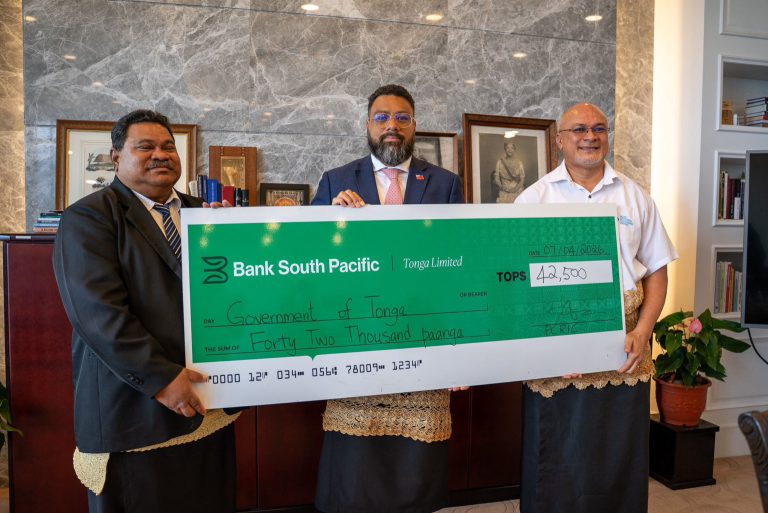
Convicted Tongan Finance Minister still active as PM’s Office welcomes TOP$42,500 payout

0

Two weeks after the Supreme Court convicted Tonga’s Finance Minister of electoral bribery, the Prime Minister appears to continue to work alongside him, despite the ruling.

In a judgment delivered on 24 March 2026, the Supreme Court ruled that Lata ‘i Faingata’a Tangimana had committed two acts of bribery during the lead‑up to the 20 November 2025 general election for the Ongo Niua 17 constituency, in breach of section 21 of the Electoral Act.

The court found beyond reasonable doubt that Tangimana, acting indirectly through another person on his behalf, provided valuable gifts of fish to two electors in September 2025, within three months of the election, for the purpose of inducing them to vote.

Justice Garlick KC accepted evidence that the fish were delivered with an explicit request to “remember” Tangimana at the election and rejected the defence claim that the gifts were acts of personal generosity.

The judgment stated that the statutory presumption of bribery applied and had not been rebutted by the respondent.

As a result, the court declared Tangimana’s election void and ordered that its determination be certified in writing to the Speaker of the Legislative Assembly, formally unseating him as a Member of Parliament.

Section 9 of Tonga’s Electoral Act states:“It shall be unlawful to use threatening language or bribery for the purpose of obtaining votes or of influencing electors in their votes, and any person found guilty of such offence shall, upon conviction, be punished in accordance with the law relating to bribery. Where the offender is a member of the Legislative Assembly, that member shall be unseated, and it shall be lawful for the Minister of Police to prosecute all parties concerned in the offence.”

“Threats and Bribery” – Clause 66 of the Constitution states that:“Any person elected as a representative who is proved, to the satisfaction of the Assembly, to have used threats or offered bribes for the purpose of persuading any person to vote for him shall be unseated by the Assembly.”

Despite the ruling, a statement issued by the Prime Minister’s Office shows Tangimana continuing to participate in official government activity.

Photographs released with the statement show Tangimana either standing alongside Prime Minister Lord Fakafanua or seated beside Ministry of Finance CEO Kilisitina Tuaimei’api.

In one image, Tangimana is seen posing with the Prime Minister and Chief Executive Officer of the Pacific Catastrophe Risk Insurance Company (PCRIC) ‘Aholotu Palu as the TOP 42,500(US$17, 700) insurance payout cheque is displayed.

The statement avoided naming Tangimana and did not elaborate on his role in the insurance payout.

Microplastics found in fish in Tuvalu

0

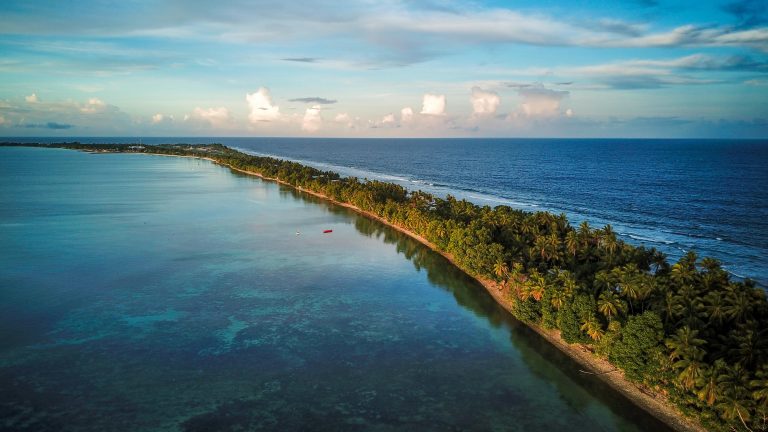
Tuvalu is a remote Polynesian nation made up of three reef islands and six atolls.

Home to fewer than 11,000 people, Tuvalu is 1,100 kilometres (680 miles) from its nearest neighbor in Fiji. Yet dispite its isolation and small population, new research shows that the ocean ecosystems around Tuvalu are polluted with microplastics.

A team of researchers collected 201 individual fish from 44 species around Funafuti Atoll, the capital of Tuvalu. They removed the gastrointestinal tracts of the fish and tested them for the presence of microplastics — plastic particles smaller than 5 millimeters (0.2 inches).

Of the 201 fish sampled, researchers found microplastics in 75 individuals (37.3 percent). Fish from more developed areas of the world have been found to contain much higher rates of pollution; one study from the U.S. West Coast found 99 percent of fish were polluted with tiny bits of plastic.

These microplastic particles often originate indirectly from the breakdown of plastic debris and directly from personal care products and industrial chemicals.

Frequently transported by rivers, once microplastics arrive in oceans, they easily disperse throughout ocean ecosystems and bioaccumulate in food webs. When fish ingest microplastics, the particles accumulate in their gastrointestinal systems where they can cause internal damage to organs and affect reproduction, behavior and metabolism, the study notes.

Scientists have found microplastic everywhere they’ve looked, Margaret Spring, chief science and conservation officer of the Monterey Bay Aquarium, not involved with the study, told Mongabay in an email.

“From the highest mountains and inland lakes and rivers to the ocean’s surface to the seafloor, as well as in our food and drinking water we are finding microplastics and nanoplastics,” Spring said.

Microplastics have already been found throughout human bodies, including in brains and placentas, raising serious concerns for human health. That’s a particular worry for South Pacific nations like Tuvalu, which depend on the sea for their diet.

Amanda Ford, a member of the research team, said in Science Daily, “While microplastic levels in Pacific fish are generally lower than in many industrialized regions, Pacific communities rely far more heavily on fish as a primary protein source.”

Small islands like Tuvalu are vulnerable in many ways.

“Small island states are uniquely and disproportionately affected by the endless flow of plastics and related pollution. They are also heavily reliant upon seafood for both sustenance and livelihoods. The discovery of microplastics in fish around Tuvalu confirms the urgency of the call to end plastic pollution, starting at the source,” Spring said.

Cyclone Maila strengthens to Category 5, batters Solomon Islands and threatens PNG

0

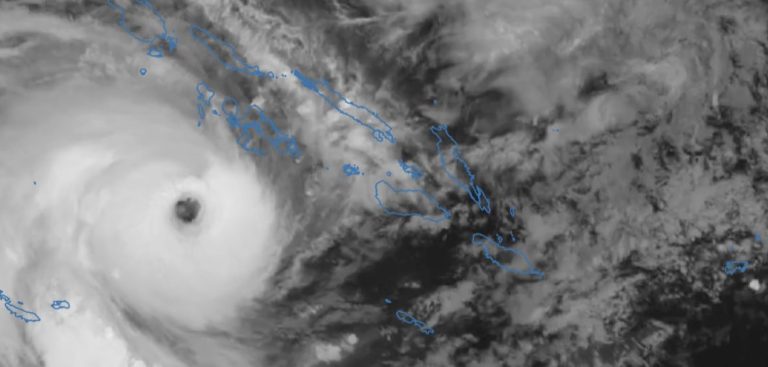
Severe Tropical Cyclone Maila has intensified into a Category 5 system in the Solomon Sea, the first of its kind recorded in the area under the Australian scale.

According to Pacific Tropical Cyclone Updates, Cyclone Maila (31P) continues to strengthen, bringing heavy rain, gusty winds, rough seas and coastal flooding to the western Solomon Islands. These conditions are expected to persist for the next one to two days before the system begins to move away.

The cyclone is forecast to track over Milne Bay Province in Papua New Guinea on Thursday. Although some weakening is expected, Maila is still likely to generate hurricane-force winds, intense rainfall, and dangerous surf and coastal flooding.

These impacts are expected to reach mainland Papua New Guinea, particularly the Alotau area, from late Friday into Saturday. Authorities say preparations to protect life and property should be completed urgently.

The Solomon Islands Meteorological Service said the cyclone was located about 165 kilometres southwest of Rendova Island, with a central pressure of 936 hectopascals. It is moving slowly northwest while continuing to intensify.

Gale force winds of between 63 and 87 kilometres per hour are forecast for Western Province, along with very rough seas and swells of up to six metres. Coastal flooding, heavy rain and thunderstorms are also expected.

Choiseul and Isabel provinces are likely to experience winds of up to 61 kilometres per hour, with moderate to rough seas and possible coastal flooding. Heavy rain and thunderstorms are forecast across the rest of the country.

Authorities warn that the severe weather could trigger flooding and landslides, particularly in low-lying and flood-prone areas. Sea travellers have been urged to take extra precautions, while motorists are advised to avoid flooded roads and river crossings.

Residents are being urged to take all necessary safety measures as the cyclone poses a serious threat to lives and property.

In Papua New Guinea, West New Britain Governor Sasindran Muthuvel said continuous heavy rain over the past four days has already caused significant damage.

“All the roads within Gloucester-Kandrian (district) are very badly affected. In fact, in our New Britain Highway, one bridge is almost like washed away, or it’s in a very bad shape.”

He said similar damage is being reported in East New Britain and Bougainville.

“I can see very similar damage, like, it’s just just high, I mean, high level of rain or heavy downpour that caused, because our drainage is already poor,” Muthuvel said.

“So most of our drainage has been filled and water is on the road, flowing on the road, and some water is like flowing on top of the bridge, and that’s when some of these main roads have been cut off.’

The Papua New Guinea Defence Force is preparing to deploy engineers from Lae for possible rescue and recovery operations.

Meanwhile, several people, including a critically injured patient, remain missing at sea after leaving Woodlark Island last week in a dinghy bound for Alotau General Hospital.

Muthuvel said the national government is expected to respond once damage assessments are completed.

“The PM (Prime Minister) also mentioned that once they receive all the reports, then cabinet can deliberate on it and see how they can they can support.

“Actually, the Department of Works has more of a role to play in terms of trying to help with fixing those roads or fixing those affected bridges and all those things, because most of these roads have hardly any maintenance – that’s one of the reason why some of these roads are badly affected,” he said.

Climate experts warn that shifting weather patterns linked to the climate crisis could extend the cyclone season beyond its usual November to April period.

Vinzealhar Nen, 350.org Papua New Guinea Coordinator said communities are already facing serious impacts.

“There are already heavy rains and floods in New Britain areas and expected for coastal communities in Milne Bay. The development of Cyclone Maila has already interrupted power supply in these local communities, due to strong winds and damaged the powerlines.

While the small communities are being asked to move to higher ground, it will be difficult to move at a time like this. With the cyclone, so much is at stake. Homes will be destroyed, lives could be taken, injuries might not be treated due to lack of basic health services nearby and livelihoods will be affected. Many of the people from these communities rely on subsistence farming and fishing to earn their income. These damages and trying to recover from them will cause many problems for the people from these communities once the cyclone passes through.”

Fenton Lutunatabua, 350.org Pacific and Caribbean Team Lead said multiple systems are now affecting the region.

“We’re currently seeing two severe tropical cyclones impacting the Solomon Islands, Papua New Guinea and Fiji, with our brothers and sisters in the North Pacific also monitoring a weather system that could develop into a third cyclone. At some point we need to ask ourselves, who should fit the cost of these climate disasters? The communities that bear the physical and emotional brunt, or the coal, oil and gas CEOs that fuel them? Our teachers, farmers, health workers and parents are bracing for a cyclone period that could extend well into May. That’s beyond our typical cyclone season. The climate crisis is shifting the goalposts of what our people have to endure, and those most responsible for this crisis should also be responsible for some form of relief.”

TC Vaianu slowly moving away from Fiji

0

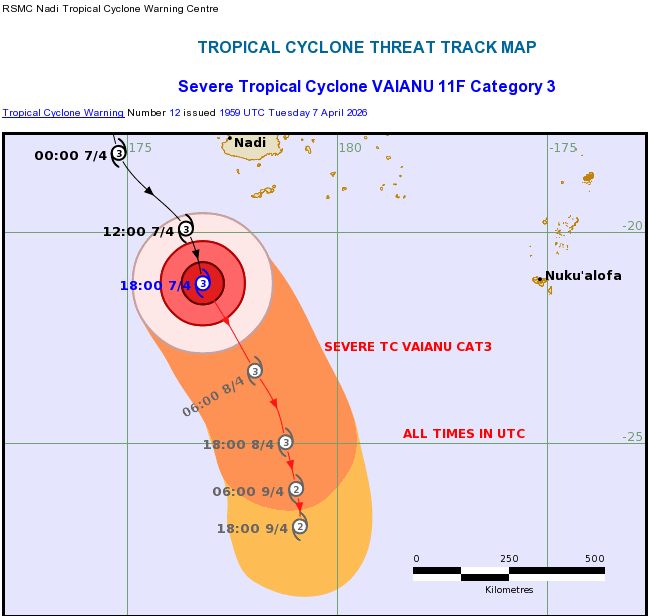
Severe Tropical Cyclone Vaianu continues to move away from Fiji waters this morning, but its outer bands are still bringing heavy rain, strong winds, and flooding risks across the country.

The National Weather Forecasting Centre in Nadi said, Category 3 Cyclone Vaianu was located about 255 kilometres west-southwest of Nadi and around 300 kilometres west of Kadavu.

Forecasters say the system is moving south-southeast at about 18 kilometres per hour, and is expected to be positioned further away by tomorrow evening about 420 kilometres south of Nadi and 305 kilometres south-southwest of Kadavu.

While the cyclone is steadily moving away, a Heavy Rain Warning remains in force for the entire Fiji group, along with a Flash Flood Warning for Viti Levu and a Flash Flood Alert for the rest of the country.

A Strong Wind Warning also remains in force for all land areas, with gusty northerly winds expected to continue across many parts of the country today.

Forecasters say Western Viti Levu, including Nadi, Lautoka, Ba, the Coral Coast and Rakiraki, will continue to experience strong to near-gale force winds, with gusts up to 95 kilometres per hour.

The Yasawa and Mamanuca groups are also expected to be heavily affected, along with Kadavu and parts of the Northern Division, where rough seas and periods of heavy rain will persist.

However, weather conditions are expected to gradually improve from the west later tomorrow as the cyclone continues moving further away from Fiji.

Authorities are warning that localised heavy rain could still cause flash flooding in low-lying and flood-prone areas, even as the system weakens and exits.

They say conditions should steadily ease into Thursday, with showers gradually clearing across most parts of the country.