
Home Blog Page 654

Nauru prepares to mine deep seas in big climate controversy

0

Nauru is a small Pacific island 4,000km (2,485 miles) off the coast of Australia. It is so small, it has no capital city and just one road.

But its roughly 12,000 inhabitants are at the heart of a conflict over mining the world’s sea beds for precious minerals.

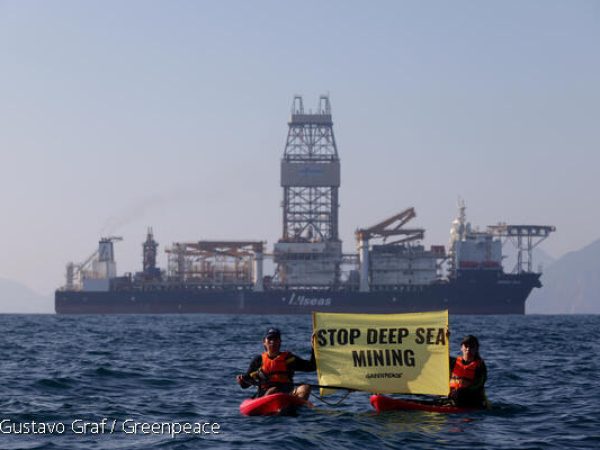
The clash pits differing views about how to tackle climate change. Nauru’s government sees rare earth metals as a key component in the green energy transition. However, conservationists argue that mining the ocean floor will threaten vital marine ecosystems.

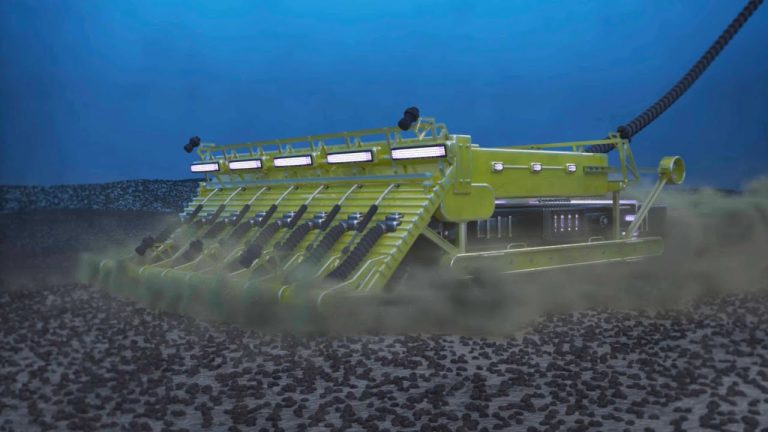
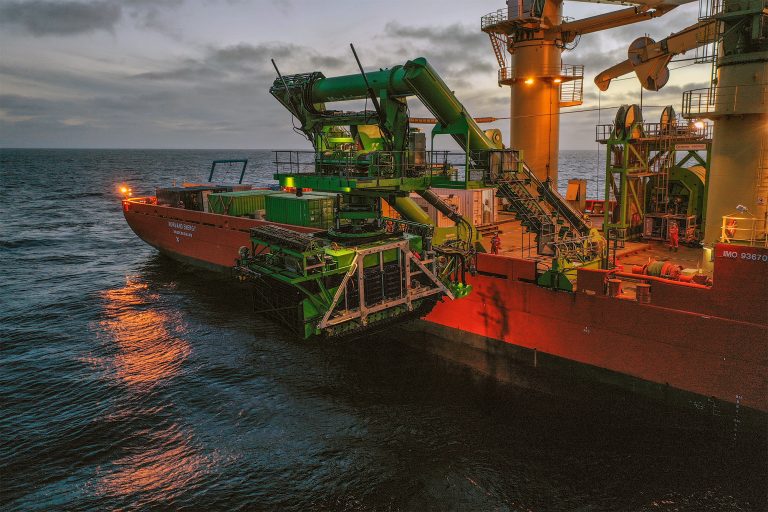
Deep-sea mining involves hoovering poly-metallic nodules – resembling potato-sized nuggets – off the ocean floor and piping them up to vessels on the water’s surface. These nodules contain copper, lithium and other treasured elements.

Advocates for the controversial practice contend that terrestrial mining will soon fall short of the demand for rare earth metals, particularly cobalt and nickel, which are needed to power “green” storage batteries and ensure a shift away from fossil fuels.

According to the International Energy Agency, the surge of battery technology in electric cars, solar panels and wind turbines, resulting from a push to meet the Paris Climate Agreement, will see global mineral demand increase four-fold by 2040.

“The green energy transition will require an enormous amount of storage capacity,” said Jeroen Hagelstein of Allseas, a Swiss subsea contractor. “Metals on the seabed can help meet those needs.”

“Sea mining also leaves a smaller carbon footprint than on land, with fewer impacts on humans,” he said, adding that companies intend to maintain the highest environmental standards and operate within guidelines laid out by regulatory bodies

Environmentalists, however, warn that deep-sea mining poses an existential threat to fragile marine ecosystems. Ancient lifeforms like polychaete worms, dumbo octopuses and twilight zone corals are at risk from dredging.

Deep-water industrial noise would also distort communication between whales, prompting distress and interrupting feeding patterns. Elsewhere, plumes of sediment laced with toxic metals could spiral upwards from seafloor vehicles, contaminating marine food chains.

“Deep-sea habitats are largely unknown. We do know that they take millennia to evolve and can take seconds to destroy. Who knows how long it would take to reestablish dynamic ecosystems once the mining has finished?” asked Jessica Battle, a senior expert on global ocean policy at the World Wide Fund for Nature (WWF).

Environmental groups are not alone in denouncing the practice. In March 2021, BMW, Volvo and Samsung, among others, joined the WWF in calling for a moratorium on deep-sea mining until the ecological risks are better understood.

Today, opponents are mobilising around the International Seabed Authority (ISA) – a United Nations-backed regulator established in 1994 to protect the seabed and regulate mining activities in areas beyond national jurisdictions or in international waters.

Since 2001, the ISA has approved 31 exploration licences. Mining permits, however, have not yet been authorised. That could change this month as Nauru triggered an obscure legal provision two years ago that may allow it to start mining soon.

Under that legal sub-clause in the UN’s Law of the Sea, if a country applies to start deep-sea mining, the ISA has two years to finalise a rulebook for commercial deep-sea mining activities.

If there is no rulebook, mining can start. The loophole expires on 09 July. In theory, mining applications can start after that.

Over the past 23 months, negotiations have failed to result in a mining code. The ISA may be forced to accept Nauru’s application to start activities this summer (via a subsidiary of The Metals Company, a Canadian firm) even in the absence of industry regulations.

“Nauru’s application could be provisionally approved,” said Costa Rica’s Permanent Representative to the ISA Gina Guillen Grillo. “Among other requirements, however, it would need to submit an environmental impact statement. Right now, we have no internal process to assess this first step.”

She added that “plenty of member states feel the ISA is under no obligation to approve mining applications until robust regulations with environmental safeguards are in place. And we’re still several years away from that.”

Under existing rules, a mining application must be approved by the ISA’s Legal and Technical Commission (LTC), which then issues recommendations to the body’s ruling council. For a licence to be granted, it would need the support of one-third of the council’s 36 members.

“The council could instruct the LTC not to issue any recommendations before a mining code is established, essentially stopping the process in its tracks bureaucratically,” Guillen Grillo added.

“For now, we continue to work under the principles of consensus and preserving the common heritage of mankind. Decisions about deep-sea mining cannot be rushed to meet some arbitrary deadline,” she said.

Internal disputes are a measure of the tensions hanging over the agency amid pressure from some members to slow down ocean mining, while others want it sped up.

Norway’s government is readying plans to license exploration applications. Chinese vessels, meanwhile, have been prospecting the ocean floor for decades. In contrast, Germany and Costa Rica have advocated for a temporary pause of the practice, citing a lack of scientific impact data.

Looking ahead, Nauru’s actions may prompt other countries to begin applying for licences in July. This has triggered consternation among environmentalists who fear the possibility of a commercial race to the bottom of the ocean.

“Nauru’s legal loophole is small, not big,” said the WWF’s Battle. “We’re hopeful that licences won’t be granted anytime soon and that a moratorium on deep-sea mining will be implemented to help safeguard the health of our seas, rather than use them as a source of short-term profit.

SOURCE: ALJAZEERA/PACNEWS
North Korea calls on international community to stop Japan’s release of treated Fukushima wastewater

North Korea has called upon the international community to stop Japan from releasing treated wastewater from the Fukushima nuclear plant into the ocean.

“The just international community must not sit and watch the evil, anti-humanitarian and belligerent action by the corrupt force that is trying to disrupt humanity’s home of the blue planet – and must unite to thoroughly stop and destroy them,” the country’s Land and Environment Protection Department said.

Its statement, reported by state media outlet KCNA on Sunday, comes after the UN’s International Atomic Energy Agency (IAEA) said last week that Tokyo’s plan was safe and in line with international standards for environmental safety.

Japan plans to release the wastewater sometime this summer.

Pyongyang’s statement is the latest in a series of concerns voiced by neighbouring countries like South Korea, China and the Pacific Islands – all of which have raised fears about potential harm to the environment and public health.

Chinese custom authorities on Friday announced that a ban on food imports from 10 Japanese prefectures including Fukushima would remain in place and that it would strengthen inspections to monitor for “radioactive substances, to ensure the safety of Japanese food imports to China.”

The UN’s approval has done little to reassure fishermen and residents still affected by the 2011 disaster.

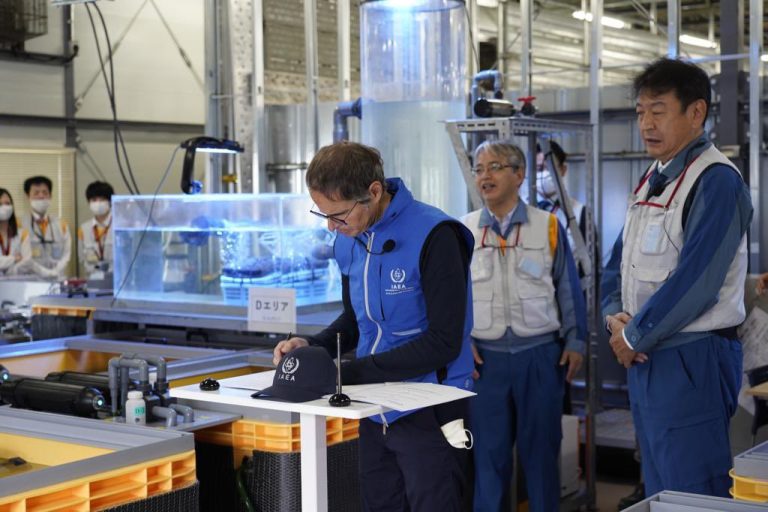
Speaking to CNN in a recent interview in Tokyo, IAEA Director General Rafael Grossi said he had met with Japanese fishing groups and local mayors and acknowledged their fears.

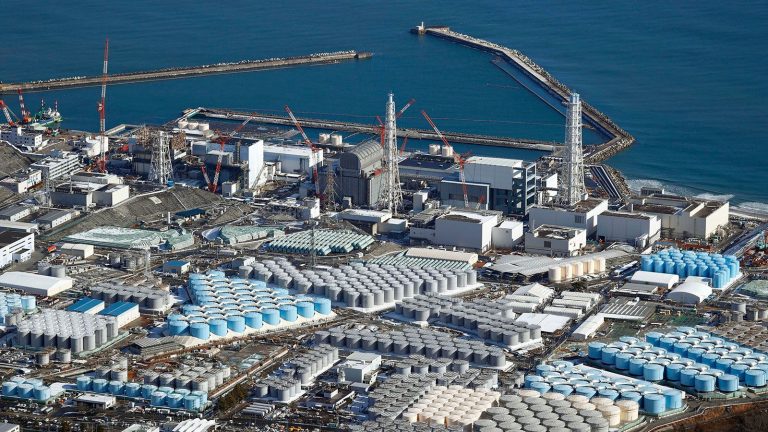
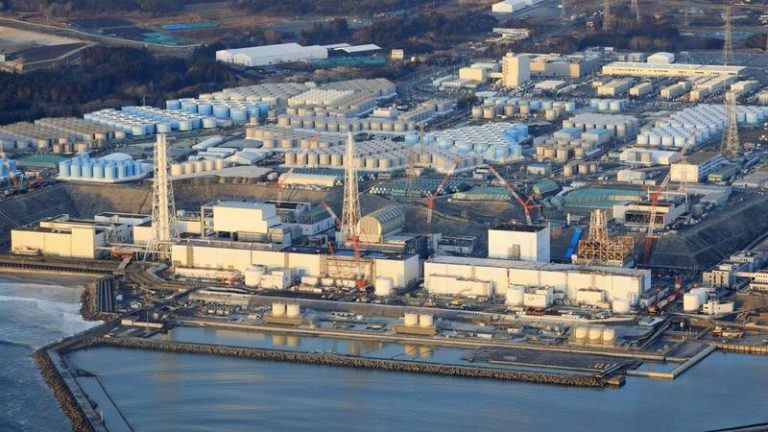
“My disposition … is one of listening, and explaining in a way that addresses all these concerns they have,” he said. “When one visits Fukushima, it is quite impressive, I will even say ominous, to look at all these tanks, more than a million tons of water that contains radionuclides – imagining that this is going to be discharged into the ocean. So all sorts of fears kick in, and one has to take them seriously, to address and to explain.”

The IAEA has said that there was no better option to deal with the massive buildup of wastewater collected since the disaster.

“We have been looking at this basic policy for more than two years. We have been assessing it against … the most stringent standards that exist,” Grossi said. “And we are quite certain of what we are saying, and the scheme we have proposed.”

The 2011 disaster caused the plant’s reactor cores to overheat and contaminate water within the facility with highly radioactive material.

Since then, new water has been pumped in to cool fuel debris in the reactors. Ground and rainwater have also leaked in, creating more radioactive wastewater now measuring 1.32 million metric tons – enough to fill more than 500 Olympic-sized swimming pools.

Japanese authorities have maintained that the release is necessary as space runs out to contain the contaminated material – and the move would allow the full decommissioning of the Fukushima nuclear plant.

International scientists have expressed concern to CNN, saying that there is insufficient evidence of long-term safety and arguing that the release could cause tritium – a radioactive hydrogen isotope that cannot be removed from the wastewater – to gradually build up in marine ecosystems and food chains, a process called bioaccumulation.

SOURCE: CNN/PACNEWS

Going broke and sinking, Nauru wants to mine the ocean floor

Nauru wants permission to mine the ocean floor for critical minerals used to make batteries for the global transition to net zero, saying it would give the tiny Pacific nation the chance of economic survival with the end of offshore processing.

Potato-sized nodules laden with some metals, including cobalt, manganese and nickel, required to make the batteries needed for electric vehicles and green energy systems lay on the sea bed in the Clarion-Clipperton Zone, an area spanning 4.5 million square kilometres between Hawaii and Mexico.

Around 30 countries, including Nauru, were granted exploration contracts by the UN agency that governs deep-sea mining, the International Seabed Authority (ISA), in 2011. But since then, there has been no progress on authorising the exploitation of the minerals with the international community divided over the idea.

The Authority is due to meet this week in Jamaica with speculation a decision on granting permission will be delayed again.

Nauru’s Ambassador to the International Permanent Sea Bed Authority Margo Deiye said Nauru’s economic prospects were dwindling with the phasing down of its phosphate mining and offshore processing of Australia’s unwanted asylum seekers.

“We need to diversify, we have more ocean than land,” she said in an interview over Zoom from New York where she is Ambassador to the UN.

Nauru Ocean Resources Inc (NORI), a subsidiary of Canadian mining company The Metals Company, has led efforts to exploit seabed minerals in the Pacific.

Nauru is urging the international community to stop stalling on a decision and allow it to collect the nuggets using robots ahead of the crunch meeting on the issue next on 09 July.

At the heart of the discussions is a loophole known as the “two-year rule”, which says the ISA council must “consider and provisionally approve” applications two years after they are submitted, even though it has yet to finalise related regulations. Nauru, TMC’s sponsoring state, triggered the loophole in July 2021.

Nauru has indicated it would submit a “plan of work” to the ISA’s technical committee this year, but the committee is not expected to formally recommend approval.

Western countries have expressed alarm at the risks posed by China dominating the supply of critical minerals. But many countries are also deeply opposed to deep-sea mining including Germany, France, Spain, Chile and New Zealand, arguing that it would destroy the underwater ecosystem. They want a moratorium on all in line with Greenpeace, which says the industry should be banned before it begins.

Environmental groups warn that the use of heavy machinery to extract polymetallic nodules from ocean floors could cause irreparable damage to marine ecosystems, destroying habitats, churning up sediment and disrupting migratory routes.

TMC says that while deep-sea mining will have some ecological impact, it would be less damaging than land-based extraction.

Sian Owen, director of the Deep Sea Conservation Coalition said new technology and recycling could reduce demand for critical minerals by as much as 58 per cent by the middle of the century.

“We are facing a dual crisis of biodiversity loss and climate change,” Owen said.

“One should not be sacrificed to address the other. Deep-sea mining would see industrial extraction on a far greater scale than anything on land.”

Nauru is slowly sinking into the Pacific because of climate change. Deiye said allowing mining for the metals to produce the batteries required to reduce greenhouse gas emissions was a balanced trade-off.

“We need to take our own development into consideration while everyone else emits their greenhouse gases,” she said.

She said the country had a shot of forging its own economic future having suffered the consequences of phosphate mining when colonised. Nauru gained control of its phosphate industry in the 1970s and for a time became one of the wealthiest countries on a per capita basis before verging on bankruptcy when the deposits ran dry.

“We don’t go with this without eyes closed but with our eyes open because we’ve had that experience,” she said. “The misunderstanding is that any human activity does not have risks – every activity has risks. “But the risk of not doing anything with this current climate crisis, is much bigger for us and it’s an existential threat for the Pacific. “

She said allowing Nauru to mine was a better solution for the nation than having to beg from richer countries for income.

Nauru earned hundreds of millions of dollars by agreeing to house Australia’s unwanted asylum seekers. Although all asylum seekers have now been removed from the island, Australia will provide $350 million (US$234 million) a year to the tiny island.

SOURCE: SMH/PACNEWS

Underwater mining of high seas inches closer, worrying environmentalists

Governments will soon likely be able to apply for deep sea mining contracts in international waters, a plunge into the unknown that is worrying conservationists as calls for a moratorium on such digging grow.

States have for ten years been negotiating a mining code to set rules for the possible exploitation of nickel, cobalt and copper in deep seabed areas that fall outside of national jurisdictions.

But agreement has so far been elusive, and on Sunday (09 July) a clause is set to expire that allows governments to apply for contracts while negotiations continue.

“I think it’s a very real possibility that we see an application submitted this year,” Emma Wilson of the Deep Sea Conservation Coalition told AFP.

“So it’s crucial for states to be bold and implement the necessary measures to protect our ocean,” she said, adding that the International Seabed Authority (ISA) is entering “the most critical decision-making period in the history of its existence.”

The ISA was established under the 1982 UN Convention on the Law of the Sea. It is responsible for protecting the seabed in the high seas as well as regulating activities related to coveted minerals.

Presently, the Jamaica-based body only grants exploration permits for these areas, which the UN convention classifies as “the common heritage of mankind.”

In the summer of 2021, the small Pacific island state of Nauru threw a spanner into the works of the decade-long negotiations for the mining code by triggering a clause demanding that agreement be reached within two years.

With that timeframe now up, if Nauru were to apply for a contract for Nauru Ocean Resources (Nori), a subsidiary of Canadian firm The Metals Company, then ISA would have to consider the request — but may not necessarily give the green light.

The Nauru authorities have given assurances that they will not act immediately, but other companies sponsoring states’ underwater mining ventures could take advantage of the opportunity, experts say.

“I’m not too concerned,” Pradeep Singh, a laws of the sea expert at the Research Institute for Sustainability in Potsdam, Germany, told AFP.

“I think it would be a mistake to submit an application anytime soon, seeing that states are still negotiating and working towards completing the regulation.

“The indication is quite clear that states are very reluctant and hesitant to allow mining to commence without regulations,” he added.

In March, the 36 member states of the ISA Council, the decision-making body on contracts, noted that commercial exploitation “should not be carried out” until the mining code was in place.

But they were unable to agree on the process for examining a possible application, or on the precise interpretation of the clause triggered by Nauru.

NGOs fearing that companies may exploit the legal vacuum hope that the Council will make a much clearer decision when it meets in Kingston from 10 to 21 July.

Meanwhile, Chile, France, Palau and Vanuatu have chosen to take the debate to the political level.

At their request, and for the first time, the assembly of ISA’s 167 member states will discuss a “precautionary pause” in mining when it meets between 24 and 28 July.

“The aim is to put the issue on the table, to have a debate that has never taken place before”, French Secretary of State for the Sea Herve Berville told AFP, hoping that this will “encourage other countries to follow suit.”

The coalition supporting the moratorium, although gaining ground, currently comprises just under 20 countries.

“The aim is that by 2024, it will be clear to a majority of countries that a precautionary pause in the exploitation of the seabed is the right thing to do if we are to meet the challenges of climate change and biodiversity,” Berville added.

He insists it’s a “question of credibility” at a time when the world has just adopted the first treaty to protect the high seas and has set itself the target of preserving 30 percent of land and oceans by 2030.

NGOs and scientists say that deep sea mining could destroy habitats and species that may still be unknown but are potentially vital to ecosystems.

They also say it risks disrupting the ocean’s capacity to absorb carbon dioxide emitted by human activities, and that its noise interferes with the communication of species such as whales.

“We have the opportunity to anticipate this new extractive industry and stop it before it can do any damage to our planet,” said Louisa Casson of Greenpeace.

SOURCE: AFP/PACNEWS

Calls for more recognition for Mururoa nuclear peace mission survivors

Survivors of a New Zealand Navy peace mission to observe nuclear weapons testing in French Polynesia 50 years ago are calling for more official recognition.

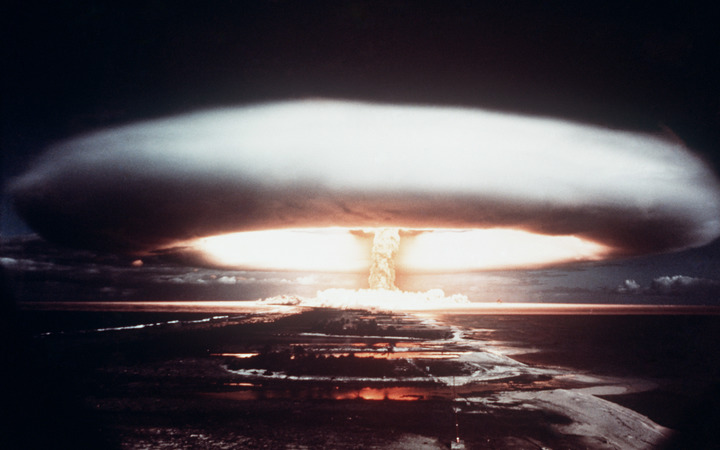
France conducted around 190 nuclear tests from 1966 to 1996 at Mururoa and Fangataufa atolls.

More than 40 atmospheric tests were also carried out in the region.

In 1973, after France ignored an international court ruling to end testing, the frigates Otago and Canterbury – with 500 sailors onboard – were dispatched to Mururoa atoll by then-Prime Minister Norman Kirk.

Their task was to be what he called “a silent accusing witness with the power to bring alive the conscience of the world”.

While the protest achieved some success, testing continued but underground.

It also saw the anti-nuclear movement grow, leading eventually in 1987 to a nuclear-free New Zealand.

1News reporter Simon Mercep was in Mururoa for two days in 1995 to investigate the fallout.

At the time, he spoke of how a thousand French military personnel, and hundreds of scientists and civilian workers, prepared to detonate a nuclear bomb.

In a hangar, bombs were being assembled in 70 tonne tubes, as a floating platform transported the devices to the test site.

Mercep joined the veterans as they were reunited after five decades.

Veteran John Carter said there were no nerves on board the HMNZS Otago, only “a bit of frivolity, of bare backsiding the French planes that flew past”.

“We ducked down when the 2310 came on, and then looked up and basically saw a very small cloud going up.”

While the sailors took part in one of the most significant chapters in modern New Zealand history, the survivors say they also feel completely let down by a government that failed to properly look after them and their families.

The Mururoa Nuclear Veterans Group believes more than 130 of their children and grandchildren may have suffered genetic damage.

“Well it’s bloody shameful, is all I can say,” the group’s president, Gavin Smith, said.

Smith said one of his fellow sailor’s granddaughters has only peripheral eyesight, while another has a significant learning disability.

They believe the problem was contaminated seawater.

“We brought the seawater on board those ships, desalinated it and then we drank it, washed it, prepared our food in it,” he said.

Charlie Lamb, who was on board the HMNZS Otago, remembered then-Prime Minister Kirk promising to look after the sailors and their families as he bid them farewell.

“He said, ‘We will look after you, we will look after you,” Lamb said.

“But we haven’t been looked after.”

An official Mururoa medal was unveiled Friday night. Last week, a report was also released recommending the Government provide veterans’ families with genetic testing.

“I’ve heard you, and that is now my job to carry your fight into the spaces where it needs to happen,” Veterans’ Affairs Minister Peeni Henare said.

Michael Bain, the son of one Mururoa sailor, said Cabinet must act.

“I encourage Cabinet Ministers to listen and do the right thing,” he said.

SOURCE: TVNZ/PACNEWS

Japan provides Kiribati with training to address illegal fishing boats

0

The Japan Coast Guard has provided its counterpart in the Pacific island country of Kiribati with technical support to crack down on illegal fishing boats.

The move came following China’s recent increased presence in the region.

Japan sent three officers for the support programme from 19 – 26 June in the capital, Tarawa. The programme was the first of its kind extended by Japan to Kiribati. It involved training on how to conduct on-board inspections and how to approach and climb aboard a ship using a small boat.

Kiribati has only about 40 coast guard personnel and one patrol boat. It is exploring effective ways to crack down on a growing number of illegal fishing boats operating around the country known for its rich fishery resources.

The Japanese officers included members of a special team that helps foreign coast guard agencies build their capacity for maritime safety and security. Japan’s coast guard set up the team in 2017 to help realize a free and open Indo-Pacific region.

A boat captain at the Kiribati Police Service’s maritime unit, Tom Redfern, said the training provided by Japan was important and helpful to develop his nation’s capabilities.

A Japan Coast Guard official, Nishimura Issei, said the Kiribati side sought martial arts techniques for use during crackdowns. He said Japan is willing to give Kiribati necessary support in both hardware and software.

In recent years, Japan has been expanding its support for Pacific island nations, as many of them have traditionally friendly ties to the country.

In 2021 amid the COVID-19 pandemic, Japan provided vaccines to Kiribati through the COVAX Facility, a framework led by the World Health Organization for the development and distribution of vaccines.

In January this year, Japan opened an embassy in Kiribati, saying their bilateral relations are growing in importance.

Japan has also hosted a summit-level gathering, called the Pacific Islands Leaders Meeting, every three years since 1997 to discuss maritime security, climate change and other issues.

Kiribati switched its diplomatic relations from Taiwan to China in September 2019 following a similar move by the Solomon Islands, another Pacific island nation.

Kiribati has been receiving infrastructure investment and support including building a port facility and a runway from China, which is pushing for the Belt and Road initiative to create a massive economic zone. China is believed to be trying to secure maritime resources from Kiribati in exchange for the development support.

China is also believed to be moving to ramp up its military involvement in the region. Beijing announced in April 2022 that it had signed an agreement on security cooperation with the Solomon Islands.

In an apparent countermeasure against China’s move, the administration of U. S President Joe Biden disclosed in July last year that it would begin talks with Kiribati and Tonga on opening embassies there.

SOURCE: NHK/PACNEWS

Pacific “mixed feelings” after compromise on shipping’s climate goals

Governments have agreed to an improved set of climate goals for the shipping sector after climate vulnerable Pacific nations and trade-reliant emerging economies struck a compromise at talks in London.

After two weeks of negotiations which Kiribati’s negotiator described as “challenging and distressing” for everyone, negotiators at the headquarters of the United Nations shipping arm rose to applaud the agreement of the shipping industry’s new climate strategy.

At the International Maritime Organisation (IMO), they agreed that the sector will aim to cut emissions 20% between 2008 and 2030, 70 percent by 2040 and reach net zero “by or around, ie close to 2050”.

The targets are less ambitious than those that international bodies including the Science Based Targets initiative (SBTi) consider compatible with limiting global warming to 1.5 degrees Celsius.

While not legally binding, the agreement sends a signal to the industry on the direction of travel. Future work is planned to set out concrete measures that aim to reduce emissions, for example by introducing more climate-friendly fuel standards.

In the final evening of the talks, the Pacific island nations managed to include provisions for the sector to “striv[e]” for a 30 percent reduction by 2030 and an 80 percent cut by 2040. It was a last-minute victory that allowed them to claim that the global temperature limit of 1.5C was kept “in reach”.

Despite resistance, the meeting agreed to look into a tax on shipping emissions – although how much the tax should be and how the money should be spent will be fought over at future meetings.

The meeting was marked by divisions between Pacific islands and developed countries that wanted more ambition and big emerging economies, especially in South America, that expressed concern about making shipping more expensive and damaging global trade and their economies.

In final comments, after the deal was agreed, Tuvalu’s negotiator said he was “very disappointed with a strategy which falls short of what we needed”.

The Marshall Islands negotiator said he had “mixed feelings” and there was “much work to do to make sure 1.5 remains not just within reach but a reality”.

On the other hand, India’s negotiator said he remained concerned about “unrealistic targets” while the USA said the targets were “ambitious but also feasible”.

Governments on both sides of the debate repeatedly praised the constructive nature of talks. Brazil thanked “friends in the Pacific islands” while Tuvalu gave “thanks to Latin America and developing countries of the global south for the spirit of compromise”.

But Vanuatu’s negotiator complained that small groups of states had hashed out deals in closed rooms.

As it was his first IMO meeting, he said “it strikes me that there needs to be better transparency and open decision-making”

The IMO rules ban journalists from reporting negotiators’ names without their permission.

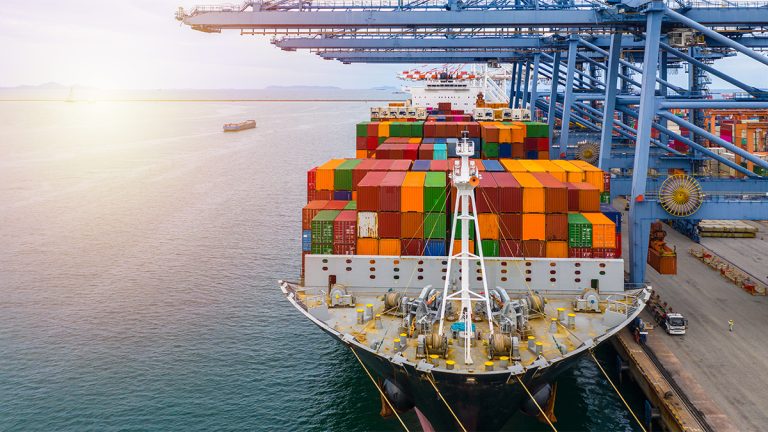
As they transport goods around the world, ships burn huge amounts of polluting fuel. This contributes around three percent of the world’s total emissions, more than major nations like Germany.

But, like plane travel, international shipping is not included in countries’ climate plans, so they gather at the United Nations shipping arm, the IMO, in London to set the rules.

Most big emitters already have net zero targets and the body governing international plane travel set an “aspirational” net zero by 2050 goal last year.

But, before negotiators gathered in London, the shipping sector only had a target, set in 2018, to cut emissions in half on 2008 levels by 2050. The sector had no targets for 2030 or 2040.

Since that target was set in 2018, momentum has grown towards setting a net zero goal. Big developing countries like Nigeria, Chile and Vietnam had joined developed countries and climate vulnerable Pacific islands in calling for such an outcome.

After a week of behind closed door talks in London, the chair produced a draft agreement on Monday which included a goal to reach net zero “by 2050 at the latest” or “by or around 2050”.

In an open meeting on Monday, the “2050 at the latest” goal was supported mainly by Pacific islands and developed countries.

On the other hand, several big developing countries like China, Indonesia and Saudi Arabia called for the weaker “around 2050”.

Saudi Arabia’s representative called for a “flexible and adaptable approach” while China’s said that shipping enabled economic growth which gave the world more money to spend battling climate change.

After two days of talks in a large IMO meeting room that was closed to the press, the chair produced a new draft which compromised on “by or around, i.e. close to 2050”.

The U.S negotiator said this was a “clear signal to all stakeholders that we need to take decisive action”.

As ships usually last for decades, some being built now will still be in use around 2050.

As the prospect of a 2050 net zero goal increased over the last few years, campaigners and some governments turned their focus to more immediate targets.

The industry’s emissions are currently rising and are predicted to keep doing so until 2050, unless shipping changes.

Pacific islands, the U.S and the UK went to London calling for cuts of 36 percent by 2030 and 96 percent by 2040, which stem from what the SBTi judged compatible with limiting global warming to 1.5C.

The European Union called for slightly less ambitious figures of 29 percent and 83 percent while sources involved in last week’s closed talks, said some countries like China, South Africa and Saudi Arabia didn’t want 2030 or 2040 targets at all.

China’s negotiator argued in open talks on Monday that the targets should be “practical, reasonable and feasible” and their impact should be assessed. He described trade and development, as well as climate, as “existential” issues.

A draft strategy on Monday included targets of 20 percent and 70 percent and, despite a lobbying campaign from Pacific islands, these remained unchanged throughout the week’s talks.

But Pacific islands did win a last-minute improvement in an additional goal on what to “striv[e]” for. Monday and Thursday’s draft strategies included goals of 25 percent by 2030 and 75 percent by 2040.

After talks on Thursday evening though, these were upped to 30 percent and 80 percent respectively. The Marshall Islands negotiator Albon Ishoda told journalists “these higher targets are the result of relentless, unceasing lobbying by ambitious Pacific islands, against the odds.”

After the deal was struck, Malaysia’s negotiator quoted the Chinese philosopher Confucius: “It does not matter how slowly you go, as long as you don’t stop”.

But Vanuatu’s negotiator expressed more urgency. He said that, as the smashing of global temperature records recently showed, “none of us have time.

SOURCE: CLIMATE HOME/PACNEWS

Forum Chair confirms IAEA mission to Rarotonga

The Pacific Islands Forum Chair, Cook Islands Prime Minister Mark Brown will receive a high-level mission from the International Atomic Energy Agency (IAEA) led by Director-General Rafael Grossi in Rarotonga, Cook Islands from 10 – 11 July.

The IAEA delegation will present their report on the Safety Review of the ALPS-treated water at the Fukushima Daiichi Nuclear Power Station.

Prime Minister Brown met with the Pacific Island Forum’s Troika and the Secretariat last week to discuss the forthcoming IAEA visit and the proposed way forward for Prime Minister Brown’s further discussion with all Forum Leaders in the coming week.

“Recognising our strong collective Forum advocacy on this issue to date, and in the spirit of transparency and dialogue, I have invited my colleague Forum Leaders to attend the IAEA presentation through virtual means next week,” said Prime Minister Brown.

Prime Minister Brown acknowledged the support and guidance of the Forum Troika who were represented by the Prime Minister of Tonga, Siaosi Sovaleni, and the Assistant Minister of Foreign Affairs of Fiji, Lenora Qereqeretabua.

“As a collective, we have maintained from the beginning the importance of international consultation and keeping with international law. We have agreed on the need for decisions that are informed by independent and verifiable scientific assessments, particularly as they relate to the safety of any radioactive nuclear wastewater release into our shared ocean. We also respect the sovereignty of each Member on this complex issue,” said the Forum Chair.
“We have continued to uphold our commitments under the South Pacific Nuclear-Free Zone Treaty (the Rarotonga Treaty), including the prevention of nuclear contamination, whether by direct means or through transboundary impact,” he added.

PM Brown acknowledged the effort by the IAEA to visit our Blue Pacific region in person to present their report findings. PM Brown confirmed that following the IAEA visit and in consultation with the Forum Troika, he would propose a way forward for Forum Leaders consideration that would be respectful of the views of all Members.

“As stewards of the Pacific Ocean, it is incumbent upon us to leave no stones unturned in our collective effort to leave behind for our future generations a healthy and resilient ocean.”

The IAEA delegation will arrive in Rarotonga on Monday 10 July, departing on Tuesday 11 July.

SOURCE: PIFS/PACNEWS

PIF panelist hits back at IAEA ‘Fukushima is safe’ decision

A Pacific Islands Forum expert panellist has criticised the International Atomic Energy Agency (IAEA) for “ignoring one of its own fundamental principles”, in its report on the upcoming dump of treated nuclear wastewater into the Pacific Ocean.

The IAEA’s principle means it must prove the benefits outweigh the harm to society and individuals.

The IAEA has presented Japan with its final report before the release is set to start, saying the discharge proposal is consistent with relevant international safety standards.

However, it stopped short of endorsing the move, saying the release is a decision for the Japanese Government.

Dr Arjun Makhijani, the Institute for Energy and Environmental Research’s President, has criticised the IAEA for ignoring its own principle of justification.

“Justification is a fundamental principle for the international standards of radiation protection. It considers that activities giving rise to radiation risks must yield an overall benefit,” the IAEA report said on page 18.

Makhijani, who has half a century of expertise, said it was “egregious” the IAEA has decided it’s not going to look at this principle because Japan has already done so.

“The IAEA has abandoned its responsibility to review the justification of actions, even though it is part of the fundamental safety principles,” he said.

“Principle number four is justification. It is part of the general safety requirements.”

He said the IAEA says it is not looking at justification, because Japan already made its decision to dump.

“In a way, it’s a little bit of sophistry for the IAEA to say it’s not a decider,” he said.

“It’s not, but if the IAEA said, ‘we don’t think this is a good idea’, there’s no way this plan could go forward.

“By saying, basically, that Japan had decided to dump and invited [the IAEA] to look afterwards at how it should be done; and so we will not look at justification, because it was already a done deal.

“They’re saying, if you want the imprimatur (official approval) of the IAEA, and if you want to look good for anything, you’ve already decided, whether it’s justified or not, just invite us after you’ve decided it.

“That’s a truly egregious way in which the IAEA is undermining its own guidelines.”
But he adds legally, the IAEA is right – it is Japan’s decision to make, and how Japan relates to the Pacific Region countries is also a matter for it and/or for the Pacific countries to take up.

“But there’s a bit of kind of disingenuousness – because Japan asked the IAEA to review this because Japan wanted the imprimatur of the IAEA that this is safe.

“And if the IAEA said, ‘we think there’s a better option that would avoid even whatever harm you think is going to happen; avoid the societal harm, avoid the economic harm. We don’t think you should do this now; postpone it and look at this other thing’.

“[If the IAEA said that] I do not believe that anybody would find a decision to go ahead next week or next month to be acceptable.”

Dr Makhijani said he has raised his concerns with the IAEA as part of the PIF expert panel.

He said he does not take criticising the IAEA lightly, as it does “important work”.

“The IAEA is refusing to acknowledge its responsibility, and basically abandoning the countries of the Pacific region to whatever mercies the government of Japan might offer them.”

IAEA director-general Rafael Grossi presented the report to Japanese Prime Minister Fumio Kishida in Tokyo last week.

The IAEA said the controlled, gradual release as planned by the Tokyo Electric Power Company (TEPCO) would have a “negligible radiological impact on people and the environment”.

He said the IAEA would continue to monitor the discharge, which is expected to continue for the next 30 or 40 years.

“My experts will come back to Fukushima repeatedly, and for as long as the process takes, to take samples at different locations and confirm the water remains safe,” Grossi said.

Grossi said the IAEA has established a permanent on-site office.

“We’ll provide live continuous monitoring throughout the treated water discharge process,” he said.

“Our task is just starting – we’re here for the long haul.”

He has also met with mayors, fishermen associations, and local groups in Fukushima.

“We’re here to listen, explain, and ensure safety – and we’ll stay here true to our commitment before, during, and after the treated water discharge.

“[The IAEA] will maintain its unwavering commitment to safe, peaceful nuclear energy in Japan as it does elsewhere”.

TEPCO has yet to confirm a start date.

SOURCE: RNZ PACIFIC/PACNEWS

Solomon Islands stand by Pacific call on Tokyo to postpone its decision to dump radioactive water into the Pacific Ocean

Solomon Islands Government has declared its ongoing concern about the International Atomic Energy Agency (IAEA) report endorsing Japan’s plan to release radioactive water into the Pacific Ocean. It joins other Pacific regional governments in calling on Tokyo for a deferral.
A statement issued through the Ministry of Foreign Affairs, stated that, “Solomon Islands Government remains concerned about the International Atomic Energy Agency (IAEA) report which endorses Japan’s plan to release treated radioactive water from the 2011 Fukushima nuclear plant accident into the Pacific Ocean.

The statement said there was ongoing dialogue with Japan via the Pacific Islands Forum panel of scientists and experts to look at the science of Japan’s proposed discharge of the treated nuclear contaminated water and therefore Solomon Islands continues to join the region in calling on Japan to defer its decision to dump radioactive water into the Pacific Ocean.

“The Pacific has been used as a testing and dumping ground for nuclear weapons and nuclear waste as the Solomon Islands is and remains a nuclear free state and party to the 1985 Rarotonga Treaty,” the statement said.

It added that Solomon Islands Prime Minister, Manasseh Sogavare, at the 2022 United Nations General Assembly Meeting in New York, reiterated Honiara’s concern on the proposal by Japan to discharge radioactive water from the Fukushima Daiichi Nuclear Power Plant into the ocean because of potential transboundary and intergenerational implications.

Solomon Islands joins other countries in the Blue Pacific Continent who are signatories of the Rarotonga Treaty to maintain a nuclear- free Pacific.

“The Solomon Islands position on the issue is in unison with the Communique of the 2022, 51st Pacific Islands Forum Leaders Meeting, particularly, paragraphs 48.

“Leaders reiterated their strong concerns for the significance of the potential threat of nuclear contamination to the health and security of the Blue Pacific, its people and prospects, and reaffirmed the importance of ensuring international consultation, international law, and independent and verifiable scientific assessments as per the PALM9 Declaration.

“Solomon Islands continues to rely on Pacific Islands Forum scientists to assess the IAEA’s report,” the statement said.

SOURCE: SOLOMON STAR/PACNEWS

Stay connected

529FansLike
172FollowersFollow
156SubscribersSubscribe
- Advertisement -