Home Blog Page 63

Solomon Islands requests PNG police assist in emergency response as Cyclone Maila hits islands

0

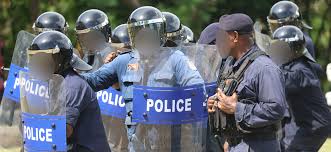
The Papua New Guinea Government is considering a request from the Solomon Islands Government to deploy police officers to the country to assist with emergency response efforts after destructions left by Cyclone Maila.

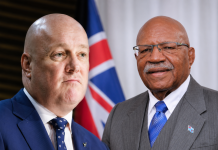
Foreign Affairs Minister Justin Tkatchenko confirmed that the Government received a request from Solomon Islands Prime Minister Jeremiah Manele.

He said Prime Minister James Marape was currently meeting with the National Security Council and police to assess the level of support required, including how many personnel from the Special Services Division to be deployed.

He said no decision was made yet on whether Police would send personnel.

Manele sent a formal request to Marape, seeking urgent police assistance for disaster response operations and potential law and order support.

The request comes under a bilateral policing agreement signed three years ago between Tkatchenko and Manele, who was then the Solomon Islands’ foreign affairs minister.

Sinlaku upgraded to supertyphoon, Threat veers toward Tinian and Saipan

0

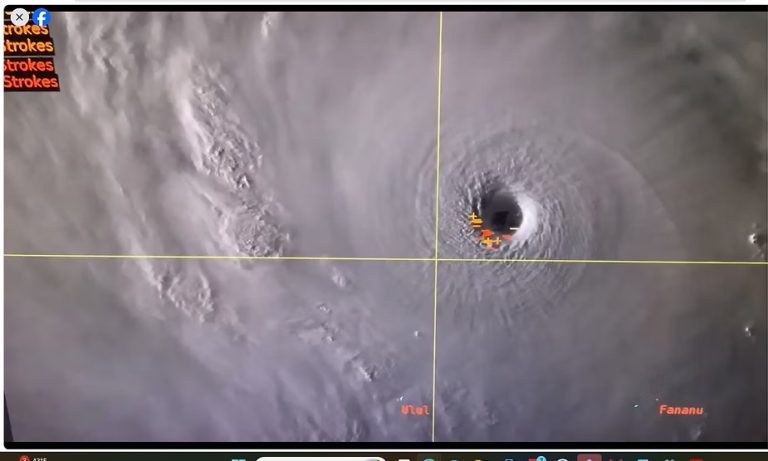
Sinlaku has been upgraded to a super typhoon, with maximum sustained winds of 150 mph and maximum gusts of 184 mph, according to the latest update from the Joint Typhoon Warning Centre.

Sinlaku’s threat has now shifted to Tinian and Saipan, which could “potentially experience the strongest of Super Typhoon Sinlaku,” according to the National Weather Service.

“After several northward shifts in the track the past 24 hours, the latest track shows Sinlaku crossing through the Marianas just south of Tinian Tuesday afternoon/evening,” NWS said.

The storm’s centre was earlier forecast to pass between Rota and Tinian at approximately 4 pm Tuesday.

“The tracking shift has continued to reduce the overall threat of typhoon conditions over Guam and has reduced the threat of Rota seeing the worst of a Category 4 typhoon (but not entirely),” NWS said.

Since Guam is well south of the track of Sinlaku’s powerful super typhoon winds, NWS said only tropical storm conditions are expected for the island.

“Rota should expect typhoon conditions, whereas Tinian and Saipan could see the strongest of Sinlaku’s winds,” NWS said.

Sinlaku, located approximately 398 nautical miles east-southeast of Guam, has tracked northwestward at 08 knots over the past six hours, JTWC said.

Guam is now under Condition of Readiness 2, while military installations across the island are under Tropical Cyclone Condition of Readiness 2, signalling the opening of emergency shelters in preparation for Typhoon Sinlaku.

In the CNMI, Governor David Apatang declared Typhoon Condition II for Saipan, Rota, Tinian, and Tropical Storm Condition for Pagan and Alamagan.

Brandon Aydlett, a meteorologist with the NWS, said: “The outlook is still for continued intensification. Track shifts are still anticipated as we go through the next 36 hours.”

Joint Task Force Micronesia is postured and integrated with local and federal partners to respond as requested by the appropriate authority, according to the Joint Information Centre.

“We are prepared to support civil authorities with professionalism, transparency, and unity of effort as conditions evolve,” JIC said.

“Based on its current track, all populated islands within the CNMI, including Saipan, Tinian, and Rota, are under threat,” the governor said in an executive order declaring an emergency.

The CNMI anticipates a high probability of widespread power outages, wind damage to homes and critical facilities and significant disruptions to transportation and communications systems.

“This emergency declaration is necessary for the commonwealth government to identify and mobilise available resources in response to the anticipated impact and potential damages of Tropical Storm Sinlaku approaching the Mariana Islands,” reads the executive order.

The governor has ordered the activation of the State Emergency Operations Plan throughout the commonwealth and authorised the Office of Homeland Security and Emergency Management to deploy any forces to distribute any supplies, equipment, materials and facilities.

In a separate directive, Apatang ordered a price freeze on consumer products and housing rentals. Under CNMI law, violation of a price-increase moratorium during a disaster is punishable by a penalty of not more than US$10,000, one year of imprisonment, or both.

Taiwan’s return to Pacific Islands Forum should demonstrate its strategic value

0

Pacific Islands a ‘triple junction’ of climate risk, ocean governance, and geopolitical competition

By Jack Huang

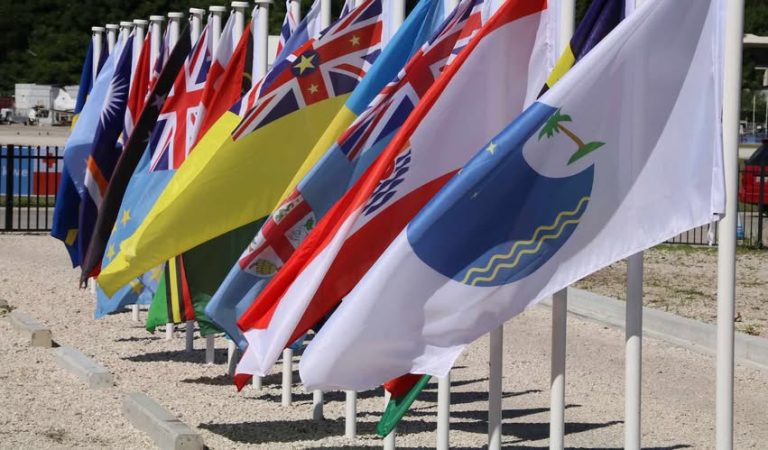
Taiwan’s return to the Pacific Islands Forum (PIF) in 2026 should not be read as a simple diplomatic comeback.

It is better understood as a rare inflection point in Pacific regionalism — one that gives Taipei a chance to reposition itself from a politically contentious presence to a consistently useful partner in the Blue Pacific’s long-term development agenda.

The facts are now clear. Palau will host the 55th PIF Leaders Meeting from 30 August to 04 September, under the theme “B.E.L.A.U. or Building Economies: Life. Action. Unity.”

Palau’s president has publicly signalled that all dialogue partners will be welcomed back. This is an unmistakable response to the precedent set last year when external partners were shut out in an effort to preserve internal unity amid intensifying great-power competition. Taiwan’s officials have separately indicated that Taipei will again participate as a development partner this year.

Why does this matter beyond Taiwan’s own diplomatic storyline? Because the Pacific Islands have become a strategic “triple junction”: climate risk, ocean governance, and geopolitical competition now intersect in ways that reshape regional institutions and external partnership rules.

Ocean governance

Start with geography and sovereignty. Pacific island states may be small in land area and population, but they sit atop vast maritime domains.

Their exclusive economic zones, fisheries, seabed resources, and the sea lanes and undersea cables that connect Asia and the Americas make ocean governance central to their statecraft. Add climate vulnerability — low elevation, extreme weather, and the fiscal devastation that follows disasters—and you have a region where development, security, and survival are no longer separable categories.

In this context, aid and investment are not side issues, rather, they are structural forces. Australia and New Zealand have long been dominant donors and institutional partners. Japan sustains deep engagement through a mix of development assistance, infrastructure, and multilateral diplomacy, including the longstanding PALM summit process.

China’s development footprint has recalibrated but remains politically salient, especially where financing and infrastructure intersect with domestic politics and elite competition. A major Australian think tank’s Pacific Aid Map series has documented the evolving patterns of development finance and the way China’s engagement has stabilised and adapted after earlier surges, illustrating how aid flows can reshape political and economic incentives.

Strategic bargain

The U.S, meanwhile, is not simply “back.” It is embedding its Pacific posture into institutional and legal architecture.

Washington has emphasised partnership with the PIF as part of a broader Indo-Pacific approach, seeking to work through regional mechanisms rather than purely bilateral channels. As such, the renewed Compacts of Free Association (COFA) with Palau, the Federated States of Micronesia, and the Marshall Islands have locked in a strategic bargain, security access and strategic alignment in exchange for long-term economic assistance, reinforcing the US role as a foundational power in Micronesia.

U.S congressional and legal analyses put the scale of renewed COFA assistance at roughly NT$225 billion (US$7.1 billion) over 20 years, underscoring how the Pacific is now treated as a core national interest rather than an episodic concern.

These overlapping external strategies are precisely why the PIF’s internal cohesion and its rules for engaging external partners have become more important, not less.

The PIF is no longer just a summit, it is the region’s primary mechanism for collective bargaining: on climate finance, on fisheries and ocean governance, on infrastructure standards, and on how outside powers are allowed into Pacific decision-making. The PIF’s “2050 Strategy for the Blue Pacific Continent” is explicit about long-term, Pacific-owned priorities and accountability.

Partnership value

That institutional lens also clarifies Taiwan’s dilemma — and its opportunity.

Taiwan’s diplomatic presence in the Pacific has narrowed in recent years as several countries switched recognition, illustrating how Pacific politics can become a theatre for cross-strait competition. Yet Taiwan still maintains formal ties with Palau, the Marshall Islands, and Tuvalu, and retains deep people-to-people and development relationships across the region.

The more urgent question is not how to win recognition battles, but how to create partnership value that Pacific governments and communities will defend because it serves their priorities. This is where Taiwan’s strategic value to the Pacific — and to external partners — becomes clearer than the traditional diplomatic allies framing suggests.

Taiwan is not a military power in the Pacific. Its leverage is functional: it is a high-capacity democracy with a world-class technology base, a proven ability to deliver complex systems under constraints, and a dense private-sector ecosystem that can move faster than many state-driven aid programmes.

If Taiwan can translate these strengths into lower transaction costs and higher delivery reliability for Pacific partners, it can build a form of influence that is resilient precisely because it is not dependent on headline politics. For foreign audiences, this matters for three reasons.

Regional resilience

First, Taiwan is a practical contributor to regional resilience. In a region where capacity constraints are a binding limitation, projects fail not mainly due to a lack of ambition, but because maintenance, training, data governance, and institutional handoffs are underfunded or overlooked.

Taiwan’s comparative advantage lies in implementation intelligence: designing systems that can be operated by small administrations, training local teams, and building feedback loops and transparent data practices. That is a strategic asset in the Blue Pacific context.

Second, Taiwan can serve as a standards-reinforcing partner. Pacific governments are increasingly wary of opaque financing and short-term projects that create long-term liabilities.

A partner that emphasises transparency, accountability, and locally owned governance can strengthen, not weaken, Pacific regionalism. That helps the PIF maintain unity as it navigates external competition, a concern repeatedly highlighted by Australian strategic commentary on regional cohesion.

Third, Taiwan is increasingly relevant to the U.S and allied Pacific approach — even without being framed as such. Washington’s Pacific strategy is not designed to “carry” Taiwan into regional institutions. It is designed to sustain a workable regional order, reduce the costs of strategic competition, and demonstrate visible development outcomes that Pacific publics can trust.

Taiwan can complement that agenda by supplying what large donors often struggle to provide: execution capacity, trusted technical cooperation, and durable partnerships that survive electoral cycles. In other words, Taiwan’s value is not that it makes the Pacific more anti-China, but that it can make Pacific development partnerships more credible and effective, thereby strengthening the region’s agency.

Two problems

But this functional strategy only works if Taiwan avoids two predictable pitfalls.

The first is over-politicisation. If Taiwan’s PIF engagement is narrated primarily as a symbolic contest with Beijing, Pacific leaders will have less room to work with Taipei without raising domestic and regional costs.
In the wake of the 2025 decision to exclude external partners, Pacific governments are signalling that they want to manage external competition, not be consumed by it. Taiwan’s posture should reflect that preference.

The second is “project theatre.” Pacific communities have seen too many announcements that do not translate into sustained delivery. Any Taiwanese initiative pitched at PIF 2026 must demonstrate credible pathways for maintenance, local ownership, and long-term financing. Otherwise, it will be perceived as a one-off public relations exercise.

Which brings us to a substantive theme that can tie Taiwan’s technical strengths to Pacific priorities while also aligning with emerging global climate governance: ocean-based “blue carbon.”

Blue carbon refers to carbon captured and stored by coastal and marine ecosystems, most commonly mangroves, seagrass meadows, and tidal wetlands. For the Blue Pacific, this is not a niche environmental topic.

Blue carbon

It sits at the intersection of climate mitigation, coastal protection, fisheries health, tourism value, and community livelihoods. It is also an area where global climate and carbon-market governance is still evolving, and where credible models are urgently needed.

That urgency comes with a warning. Blue carbon has become attractive precisely as voluntary carbon markets face a crisis of confidence.

Without rigorous measurement, reporting, and verification (MRV), and without governance safeguards against double-counting, weak additionality claims, or inequitable benefit sharing, blue-carbon initiatives can trigger reputational and political backlash. In small island states, where land and marine tenure can be complex, the legitimacy of any blue-carbon project hinges on social consent and tangible co-benefits — not just carbon accounting.

This is where Taiwan could offer a compelling, credible proposition: not selling carbon credits, but helping build the institutional and technical infrastructure that makes high-integrity blue carbon possible.
A Palau-anchored approach, aligned with the host’s agenda and timed before PIF 2026, could focus on three practical pillars.

Soft power wins

First, governance and legitimacy. Work with Palauan counterparts to map the minimum viable governance conditions for blue-carbon projects: who holds authority, how community consent is obtained, how benefits are shared, how data sovereignty is protected, and how disputes are handled. This turns blue carbon from a speculative promise into a structured policy option.

Second, digital MRV and capacity. Combine satellite observation, field sampling, and community-based monitoring into a transparent MRV framework that is affordable for small administrations.

Taiwan’s strengths in digital systems and data governance could be used to develop reusable tools such as templates, training modules, and dashboards that help local teams operate MRV systems without perpetual external dependence.

PIF’s own 2050 Strategy emphasises ownership and accountability across society. MRV capacity is one way to operationalise that principle.

Third, finance and durability. Instead of treating carbon revenues as the sole business case, design blended pathways that connect blue carbon to resilience investment: coastal protection benefits, fisheries recovery, ecotourism value, and results-based finance. This reduces the risk that projects collapse when carbon prices fluctuate or verification costs rise.

Importantly, blue carbon also offers a platform for constructive US–Taiwan complementarity in the Pacific without forcing Pacific partners into overt geopolitical alignment. US policy increasingly links strategic competition with tangible delivery such as energy, infrastructure, resilience, and governance.
Pacific agency

Taiwan can add implementation depth to those aims, turning broad resilience commitments into field-level programs that can be audited, scaled, and trusted.

This is the kind of division of labour that strengthens Pacific agency. It expands the menu of credible options available to Pacific governments, rather than narrowing it to a binary choice.

For a foreign audience, the takeaway is straightforward. Taiwan’s strategic importance in the Pacific is not only about diplomacy or symbolism. It lies in the practical capability to help make Pacific regional priorities deliverable — especially in emerging domains where global governance is still being written.

PIF in Palau, after the turbulence of 2025, offers a stage where effectiveness will matter more than rhetoric. If Taiwan uses its return to anchor partnerships in high-integrity, capacity-building, and locally owned initiatives, it can build influence the way the Pacific itself increasingly demands through results that strengthen sovereignty, resilience, and regional unity.

And that, ultimately, is the kind of soft power that endures.

Western Force go down to Drua in thriller as NRL star Lomax debuts

0

Zac Lomax has been unable to inspire the Western Force to victory in his professional rugby union debut as they went down to the Fijian Drua 24-22 in a thriller in Lautoka.

Ex-NRL and State of Origin star Lomax looked comfortable after coming off the bench to the wing in the 60th minute before a raucous Fiji crowd, five weeks after signing his two-year deal with next year’s home World Cup front of mind.

Lomax registered 40 run metres and two clean breaks but did not get to enjoy a winning debut after five eighth Ben Donaldson missed with a long-range penalty attempt in the 80th minute that could have secured victory.

The loss left the WA-based side’s finals hopes on life support as they sit well below the sixth-placed Reds on the ladder.

For the Drua, they kept their 100 per cent record against the Force in Fiji intact, ending a three-game losing streak as winger Isikeli Basiyalo (102 metres, one try) starred in his competition debut.

Victory was doubly welcome for their fans after Cyclone Vaianu lashed parts of the tropical island earlier in the week.

The Drua were behind early after flanker Etonia Waqa copped a yellow card before the Force’s Misinale Epenisa crossed in the 10th minute.

The hosts responded strongly with tries to prop Penaia Cakobau and five eighth Isaiah Armstrong-Ravula, before fullback Isikeli Rabitu scored in the 34th minute after some brilliant hands.

Trailing 19-7 at halftime, the Force cut the deficit when winger Dylan Pietsch strolled over after a lofted pass from Bayley Kuenzle.

Lock Jeremy Williams wrestled across the line to move the Force within two points of the hosts, but Basiyalo intercepted a Kurtley Beale pass and stormed down the field to give the home side some breathing room.

The Drua’s Ilaisa Droasese was sent to the sin bin in the 70th minute, and moments later Will Harris capitalised from a maul, but Beale missed a conversion attempt to equalise before Donaldson scuffed his penalty kick.

Fijian Drua 24 (Tries: Cakobau, Rabitu, Armstrong-Ravula, Basiyalo; Cons: Armstrong-Ravula 2) def Western Force 22 (Tries: Epenisa, Pietsch, Williams, Harris; Cons: Donaldson)

Pacific shipping lifeline faces crisis as experts push wind-powered transition

0

For many Pacific Island communities, a delayed ship does not just mean inconvenience. It can mean empty store shelves, fuel shortages and isolation.

“Shipping is for us as railways, canals and freeways are for developed countries,” said Natasha Chan, assistant legal researcher for Micronesian Centre for Sustainable Transport.

“It is our absolute lifeline.”

Speaking during a regional discussion on low-carbon maritime transport, Chan noted that Pacific island nations remain heavily dependent on imported fossil fuels and aging vessels, leaving them vulnerable to rising fuel costs and climate change.

The Pacific’s geography compounds the problem. Island nations span millions of square miles, with routes often stretching hundreds of miles between small, low-income communities.

According to Chan, the region faces some of the highest maritime connectivity costs in the world, paired with long distances, limited trade capacity and aging fleets.

“Our domestic shipping services are often inadequate and substandard, except on the most profitable routes,” she said.

Decades of development reports have highlighted the same issues. Limited investment and insurance capacity have forced operators to rely on old or donated vessels. Maintenance systems are weak, and the workforce is often undervalued and under-resourced.
Chan said the result is a cycle that keeps the sector struggling.

“We are trapped in a vicious cycle, where no investment and insurance capacity means we are reliant on either old, imported, end-of-life or donated aid vessels,” she said.

Despite these challenges, experts say solutions already exist.

Chan pointed to research showing that fuel savings of at least 40 percent are achievable today using existing technologies if applied correctly in the Pacific context.

“If we can understand the unique nature of our problem and apply the appropriate development and climate financing modalities, fuel savings of at least 40 percent are available to us today with existing, mature technologies,” she said.

Globally, innovation in maritime decarbonisation is accelerating. Countries such as China, France and Norway have recently announced hydrogen-powered ships and large-scale clean fuel programs. But Chan said these advances are not always suitable for Pacific conditions.

“What is not happening is the investment in research and development at our scale of vessels,” she said. “It is not a case of simply taking international market leaders and scaling them down.”

Researchers have identified wind-assisted propulsion as one of the most practical near-term solutions.

Wind-assisted systems, which use sails or similar technologies to reduce fuel consumption, were tested in the Pacific during the 1980s fuel crisis and showed fuel savings of about 30 percent. With modern materials and designs, newer systems could achieve more than 50 percent savings, she said.

Andrew Dickson, director of Australia’s Smart Energy Council, said wind propulsion offers a rare combination of simplicity and effectiveness.

“Wind is the ultimate low-tech solution. It’s available everywhere today. It’s available at the point of use. There is no complex supply chain that’s needed,” he said.

Dickson said newer fuels like hydrogen and ammonia may play a role in the future but remain expensive and difficult to scale in the near term.

“In theory, they could help decarbonize shipping, but it’s going to take a long time before it’s viable,” he said, describing wind-assisted systems as a practical starting point that can be added to existing ships or built into new vessels.

“It’s not the complete solution. It’s a hybrid,” he said. “Wind reduces the need for shipping fuel. So, it’s a really, really great place to start.”

One example already operating in the region is a prototype vessel developed for the Republic of the Marshall Islands. The ship combines wind propulsion with hybrid systems, including solar and electric components, and has been in service since mid-2024.

Raffael Held, a project director working on the initiative, said the vessel represents both a technical and political milestone.

“The ship is currently underway, and I think we are still learning,” he said.

Held emphasised that the project was designed not just to test technology but to function in remote island conditions, where spare parts and technical support can be difficult to access.

“It was really essential for us to design a ship that can function in this extremely remote region,” he said.

Interest in similar projects is growing across the Pacific and beyond.
Held said countries including Palau, Fiji, Kiribati and the Federated States of Micronesia have expressed interest, along with nations in the Indian Ocean and Caribbean.

“The Marshall Islands has led the way and paved the path,” he said.

Still, experts cautioned that technology alone will not solve the region’s shipping challenges.

Chan outlined several foundational needs, including training for seafarers and regulators, better maintenance systems, improved access to maritime data and stronger institutional capacity.

“The transition requires informed and empowered people,” she said.

Without those systems in place, even the most advanced vessels may struggle to operate effectively.

Held echoed that point, stressing that a functioning maritime system depends on more than ship design.

“The vessel alone is a really important element,” he said. “But those elements alone will not make a functioning system. It is much more about the governance around it.” Held said.

Timor-Leste is vulnerable to ‘infiltration by foreign organised crime’, President José Ramos-Horta says

0

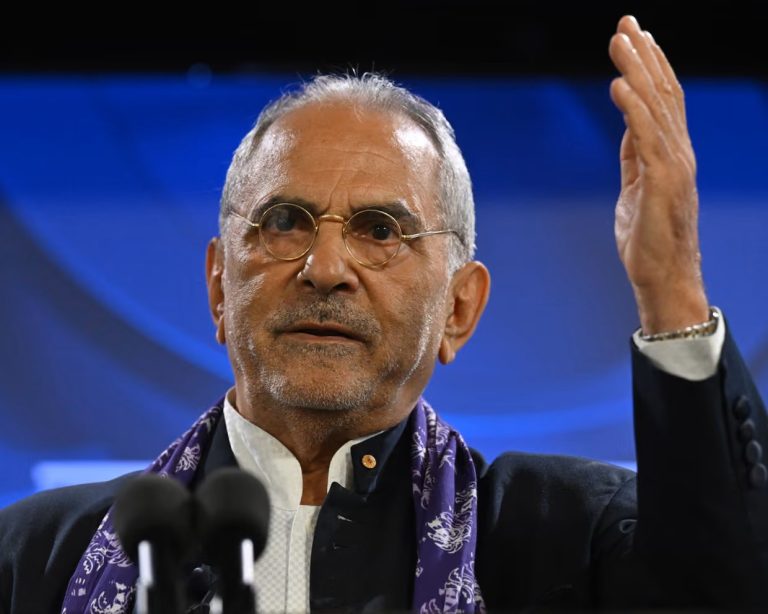
Timor-Leste is vulnerable to “infiltration by foreign organised crime”, the country’s president, José Ramos-Horta, has warned.

His comments come as Australian federal police (AFP) confirmed to the Guardian the force is providing support to local law enforcement in Timor-Leste, including a December 2025 visit from the agency’s digital forensic and cyber experts.

“The AFP is increasing its focus on cybercrime and digital forensics capability development within the region in response to the threat of online scam centres,” a spokesperson said.

On Tuesday a joint investigation between the Guardian and the Organised Crime and Corruption Reporting Project (OCCRP) revealed an alleged connection between three individuals involved with a proposed “blockchain theme” resort project in Dili and the Prince Group, which was sanctioned by the U.S and UK governments in October.

The Cambodia-based Prince Group describes itself as a real estate and financial and consumer services conglomerate but U.S authorities allege that it ran compounds reliant on human trafficking that targeted victims globally with online fraud.

Last year the UN issued a warning about the risk of unnamed scam networks infiltrating Timor-Leste. This followed the raid of an alleged unrelated scam operation in Oecusse, a remote pocket of the country, in August.

“Together with the government and our entire society, we remain alert to the dangers of organised crime,” Ramos-Horta wrote in a statement published on the president’s website on Wednesday in response to the Guardian’s report.

He added: “But I cannot accept information that comes merely from media reports or from certain individuals in Timor-Leste – people who may wish evil upon the country or seek to tarnish the name of Timor-Leste, they are the ones produce false information against those who wish to invest in Timor-Leste …

“Currently, I do not see any organized crime installed in Timor-Leste.”

Prince Group’s founder, Chen Zhi, was indicted by the U.S for alleged wire fraud conspiracy and money laundering conspiracy, and billions of dollars in bitcoin was seized. In January, Chen was extradited to China, but it is not clear what charges he faces there.

A spokesperson for the Prince Group denied the U.S and UK allegations, saying they were “nothing more than a cash grab” and that Chen and the Prince Group of companies had never had any connection to any “scam” business.

“They are innocent of the absurd allegations used simply as air cover by a multitude of governments to seize billions in assets from an innocent entrepreneur, all while destroying legitimate businesses and hurting tens of thousands of hard-working people.”

The spokesperson said neither Chen nor the Prince Group had any knowledge or connection to Timor-Leste or any activity in that country.

“The inclusion of speculation around Chen and Prince in this reporting is just salacious rumor-mongering with no foundation,” they said.

The three individuals involved in the proposed resort project in Timor-Leste were also sanctioned by U.S authorities in October for their alleged involvement in another real estate development connected to Prince Group. They have not been charged and there is no allegation the Timor-Leste project received Prince Group funds.

Current shareholders in the project denied any involvement with organised crime or any other wrongdoing and said the three alleged Prince Group associates had been immediately dismissed from the resort after the U.S sanctions were announced.

The joint investigation also examined the role of an investor and the face of the resort in Timor-Leste, Lin Xiaofan – also known as Frank Lin. There is no suggestion Lin is sanctioned or a member of Prince Group, and he is not accused of any criminality.

“Timor-Leste possesses abundant natural resources and strong potential for tourism development,” Lin said of his interest in the project. He said all his activities in the country had been “conducted within a legal and compliant framework, in cooperation with relevant authorities”.

In the statement published on the president’s website, Ramos-Horta said he had welcomed Lin “just as I welcome any investor from countries across Asia and Europe”.

“Like many investors, Lin arrived with ideas, plans, and dreams of making significant investments in Timor-Leste, though these have not yet materialised,” he wrote.

He added: “Lin has done nothing wrong in Timor-Leste. It is the government that will decide whether to accept any investment, and if that investment is good for Timor-Leste, then the government will decide accordingly.”

A Department of Foreign Affairs and Trade (DFAT) spokesperson said the Australian government was “working closely with Timor-Leste to address transnational crime and strengthen regional security and resilience”.

In January Anthony Albanese visited Dili to establish a Parseria Foun ba Era Foun (“Parseria”), which is Tetum for a New Partnership for a New Era, alongside his counterpart, the prime minister of Timor-Leste, Xanana Gusmão.

The agreement committed the two counties to regular communication, consultation and collaboration on common security interests, including on transnational crime.

Fiji Climate Change Minister set key priorities to accelerate Pacific climate action

0

“1.5 is not negotiable and is a red line grounded in science and in our lived reality.”

This was the strong reminder from Fiji’s Minister for Environment and Climate Change Lynda Tabuya at the Post-COP30 Debrief of the Political Climate Champions in Nadi Thursday.

As Chair of Pacific Small Island Developing States (PSIDS), and with Fiji serving as the political climate finance champion at the meeting, Minister Tabuya warned that time is running out to keep global warming within 1.5°C and called for urgent emissions cuts.

She said the Pacific must continue pushing for stronger global action and cannot rely on others alone.

The Minister highlighted that global temperatures are already nearing or exceeding the 1.5°C limit and said the ICJ Advisory Opinion strengthens the Pacific’s call for action and support for vulnerable nations.

Tabuya outlined six key priorities including: cutting emissions, securing climate funding, moving from planning to action, ensuring fair support for the Pacific, protecting science-based decisions, and recognising the role of the ocean.

Minister Tabuya also warned of growing global challenges and stressed the need for the Pacific to stay focused and proactive.

The Political Climate Champions was formed in 2021 to strengthen the Pacific’s voice in global climate talks.

Cook Islands-NZ security pact ‘is about us moving forward as two countries’ – PM Brown

0

Cook Islands Prime Minister Mark Brown says New Zealand remains the Cook Islands’ “partner of choice” in security but insists that will not change how it engages with global partners.

His comments come after the signing of a new defence and security declaration with New Zealand, and the resumption of New Zealand funding to the Cook Islands, following a year long rift in the relationship.

“New Zealand, clearly in the declaration that we’ve signed, is our partner of choice, but this does not dictate to us how our foreign policy is applied,” Brown told RNZ Pacific.

“It is incumbent on the Cook Islands to be able to look at other development partners who wish to engage with the Cook Islands across a whole range of areas to look at how we can best advance the priorities of our country.”

Brown said the new agreement helps strengthen ties between the two countries.

“We’re very pleased to be able to sign on the declaration of defence and security between the Cooks and New Zealand. So, this really provides a platform where we can build and strengthen and grow the relationship going forward.”

The relationship between the Cook Islands and New Zealand came under strain in early 2025 after the Cook Islands signed a deal with China, raising concerns in Wellington over a lack of consultation.

New Zealand later announced they would pause nearly NZ$30 million (US$17.59 million) worth of annual funding.

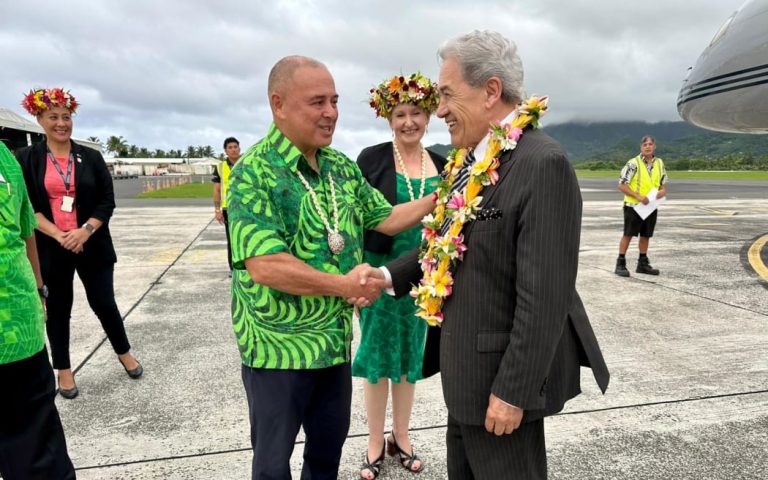
With funding resuming a year later, New Zealand Foreign Minister Winston Peters said the new agreement reset the two countries dynamic.

“The China deal is behind us. That’s the announcement today. We’re not going to go back there. We’re going forward,” Peters said.

“This declaration resolves this former ambiguity and provide clarity to both governments so that we can move forward focused on the future, not the past,” he said.

Brown said government officials worked endlessly culminating in the newly signed declaration.

“Some of these things, they are very complex in nature, and it takes time to get through the issues that were identified.

“But we’re very pleased that we took our time to carefully consider this agreement that we’ve signed up to and work diligently with New Zealand during that period of the year.”

The agreement also reinforces expectations around consultation – a key concern for New Zealand during the China deal.

Brown said while there had been communication with New Zealand, formal diplomatic processes required a level of confidentiality.

“These normally take place in confidence between two countries and don’t include third member countries.”

He said “good faith consultation ultimately comes down to trust and transparency at a broader level, while protecting sensitive details.

“It’s a matter of trust and being open about what you are doing … but there are also certain matters that need to be kept in confidence.”

Brown confirmed the agreement would not affect any existing arrangements with global partners.

“No, this agreement is about us moving forward as two countries, the Cook Islands and New Zealand.”

He said the Cook Islands, which has been expanding its international partnerships, will continue to do so – while keeping New Zealand as it’s “partner of choice.”

Legal, political tensions shape Kanaky’s path toward self-determination

0

The future of Kanaky, New Caledonia, remains uncertain as legal debates, political divisions and community realities continue to shape what Indigenous advocates describe as an unfinished process of decolonisation.

At the centre of that argument is Viro Xulue, who framed the territory’s status not as a political disagreement but as a matter of international law and human rights.

“The decolonisation of Kanaky is an international obligation that remains incomplete,” he said.

His position draws on United Nations frameworks that place New Caledonia on the list of non-self-governing territories, requiring France to guide the territory toward a political future determined by its people.

He cited provisions of the UN Charter and key resolutions that recognise the right to self-determination and outline pathways toward independence, free association or integration.

“All peoples have the right to self-determination,” he said, pointing to international covenants that reinforce that principle across civil, political and economic rights.
While France has long described the decolonisation process as a gradual transfer of powers, Xulue said recent events have exposed structural gaps that remain unresolved.

“The current crisis is not a surprise,” he said. “It is the result of ignored systemic issues.”

Those issues came into sharper focus following the unrest in May 2024, which left multiple people dead, led to thousands of arrests and caused widespread economic damage. Community leaders say recovery is still ongoing, with many residents dealing with the social and economic fallout.

Xulue pointed to disparities affecting the Indigenous Kanak population, citing figures from French institutions that show higher poverty rates, lower access to higher education and disproportionate representation in the prison system.

“These are not activist figures,” he said. “They are France’s own data.”

For observers like veteran Pacific Journalist Nic Maclellan, the current moment is defined as much by political uncertainty as it is by social recovery.

“This throws the whole process up in the air and creates a level of uncertainty,” Maclellan said, referring to stalled legislation and contested agreements in France that could delay a long-term settlement.

He said disagreements remain between pro-independence groups and those who want to remain within France, particularly over proposed changes to voting rights in local elections. That issue, he said, will continue to shape political debates regardless of whether broader agreements move forward.

Maclellan also pointed to upcoming provincial elections and shifting political dynamics in France as factors that could further complicate negotiations.

“Tough times ahead,” he said, noting that economic pressures and global instability are likely to affect the territory alongside ongoing political tensions.

The legal and political debates are rooted in the legacy of the Nouméa Accord, signed in 1998, which established a framework for the transfer of powers and set out a process for determining New Caledonia’s future status through a series of referendums.

Three votes were held between 2018 and 2021. While the first two produced narrow majorities against independence, the third referendum was boycotted by pro-independence groups and widely criticised.

Xulue said the 2021 vote lacked legitimacy. “It was organised without free, prior and informed consent,” he said.

He also criticised subsequent efforts to negotiate new arrangements, including the Bougival Accord, arguing that they were developed without meaningful participation from Kanak institutions.

“It is perceived as a unilateral imposition,” he said.

Despite those concerns, discussions between France and local political groups have continued, with some factions participating while others remain opposed.

At the same time, community leaders say the focus on the ground has shifted toward recovery and resilience.

Guillaume Vama, a community practitioner working with youth, said rebuilding trust and strengthening local initiatives are essential as communities move forward.

“We have to understand the history of our country,” Vama said, emphasising that development efforts must be rooted in local knowledge and experience.

He highlighted the importance of youth engagement, nonviolence approaches and intergenerational leadership, particularly in the aftermath of the 2024 unrest.

Vama said young people are not only participants in political movements but also key actors in shaping community recovery.

“We are trying to put in place concrete actions for our region,” he said, pointing to grassroots initiatives that aim to support cultural identity and economic development.

Those community-based efforts are increasingly being recognised alongside formal political processes, as regional organisations and advocates seek to incorporate local perspectives into broader discussions.

Joey Tau, Coordinator for Pacific Network on Globalisation (PANG) who works with Pacific partners on regional advocacy, said the goal is to bring together voices from communities, youth and civil society to better understand conditions on the ground.

“For many of us in the region, this is about the right to be self-determined, the right to be heard,” Tau said.

He said the current moment reflects both a continuation of long-standing struggles and a new phase shaped by recent events, including the Bougival Accord and legislative developments in France.

“What happens next is important,” Tau said, referring to both political negotiations and the everyday realities faced by residents.

For Xulue, those realities reinforce the need for a process that aligns with international standards.

He outlined several principles he believes should guide future efforts, including the strict application of free, prior and informed consent, equal participation of Kanak institutions in decision-making and stronger international oversight.

“The decolonisation process cannot be reversed,” he said, referencing commitments made under earlier agreements.

He also pointed to recent findings from France’s National Consultative Commission on Human Rights, which documented structural inequalities and raised concerns about the current trajectory.

“France condemns itself,” Xulue said, describing the findings as confirmation of long-standing issues.

Regional initiatives, including efforts to gather firsthand accounts from communities, are now feeding into advocacy at international forums such as the United Nations and Pacific regional organisations.

Advocates say those efforts are intended to ensure that discussions about Kanaky’s future reflect not only political negotiations but also lived experiences.

“Decolonisation is a living, evolving process,” Xulue said. “It requires respect for human rights and international law.”

As negotiations continue and communities work to rebuild, that principle remains central to ongoing debates about the territory’s future.

For many in Kanaky, the outcome will depend not only on decisions made in Paris but on whether those decisions reflect the voices and aspirations of the people on the ground.

Commonwealth and global partners ramp up support for SIDS on the climate frontline

0

Small Island Developing States (SIDS) stand on the frontline of the global climate crisis, facing a convergence of environmental, economic and institutional challenges that disproportionately threaten their sustainable development pathways.

Despite contributing minimally to global greenhouse gas emissions, SIDS have demonstrated strong climate ambition through their Nationally Determined Contributions (NDCs).

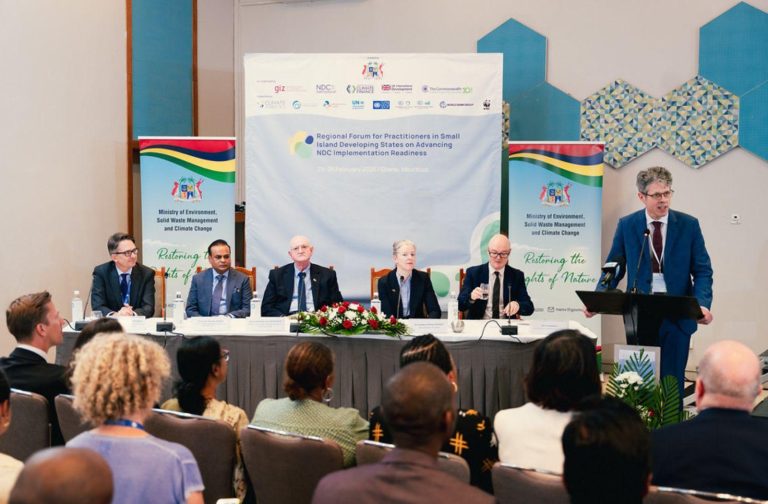
It is against this backdrop that the Regional Forum on SIDS Readiness for Nationally Determined Contribution (NDC) Implementation, convened in Ébène, Mauritius.

The forum brought together more than 70 government representatives from 14 SIDS, development partners, and technical experts to explore strategies for strengthening institutional readiness, mobilising climate finance, and accelerating implementation of NDCs under the Paris Agreement.

Co-organised by the NDC Partnership, GIZ, and the Commonwealth Secretariat through its Commonwealth Climate Finance Access Hub (CCFAH), the event provided a platform for peer learning among countries facing similar climate vulnerabilities.

With climate finance a central focus of the forum, the Commonwealth Secretariat shared technical expertise across sessions on gender and social inclusion, health integration, sustainable transport, and innovative financing approaches.

Aurelius Nkonde, Manager and Adviser for the Commonwealth Climate Finance Access Hub (CCFAH), shared with participants that: “The Regional Forum sent a clear message: SIDS do not lack ambition – they need stronger pathways to implementation and finance. Through the Commonwealth Climate Finance Access Hub, we are turning this momentum into action by helping countries transform climate priorities into investment-ready projects, unlock climate finance at scale, and build the institutional capacity needed to deliver lasting resilience.

“Our role is to ensure that NDC commitments move beyond policy documents and become real investments that protect communities, strengthen economies, and secure a climate-resilient future for Commonwealth member states.”

Participants highlighted the importance of regional collaboration and knowledge exchange among SIDS.

Peer-to-peer learning, regional alliances, and shared project development approaches were identified as important mechanisms for addressing common challenges such as coastal degradation, disaster risk, and limited access to climate finance.

Speaking on the sidelines of the forum, Uzoamaka Nwamarah, Adviser and Head of Climate Change at the Commonwealth Secretariat, noted that strengthening institutional readiness and partnerships is essential for translating climate commitments into practical action.

“Partnership, peer learning and strong country ownership remain central to delivering ambitious and implementable NDCs, particularly for SIDS on the frontlines of climate change. A key highlight of the forum was hearing directly from member countries about the tangible difference CCFAH support has made. When countries are able to move from ideas and concepts to bankable climate projects, that is what sustainable capacity building looks like,” she said.

Discussions also explored how innovative financing mechanisms, including blended finance and public–private partnerships, could help mobilise investment for climate action while safeguarding fiscal sustainability in SIDS.

As climate risks continue to intensify, participants stressed that sustained collaboration, strengthened institutions, and improved access to finance will be essential to translating climate ambition into tangible, resilient development outcomes for SIDS.

- Advertisement -