Home Blog Page 62

ONOC welcomes IOC President Coventry to Oceania at XLVI Annual General Assembly in Auckland

0

The Oceania National Olympic Committees (ONOC), in partnership with the New Zealand Olympic Committee (NZOC), will welcome delegates from across the Pacific to Auckland for the XLVI ONOC Annual General Assembly, to be held from 17–23 May 2026.

ONOC President Baklai Temengil expressed her confidence in Auckland as 2026 host at this important time in Oceania Olympic Committee history.

“There is a strong sense of momentum across the region as we take the learnings from the Paris Olympic Games and transition towards LA2028 and on to Brisbane 2032, our Home Games. We look forward to New Zealand playing a role in bringing our Pacific and Oceania family together at next year’s General Assembly.

We also thank President Coventry for graciously accepting our invitation and we look forward to discussing the future of Olympic sport in Oceania with her,” said Temengil.

The official Preliminary Notice of the Assembly was issued to all ONOC Member National Olympic Committees in December 2025, in accordance with ONOC governance requirements.

The Assembly forms a key milestone in the delivery of the ONOC Strategic Plan, providing a regional platform to strengthen governance, enhance collaboration, and advance athlete-centred development across Oceania.

An expanded programme of strategic forums, workshops, and stakeholder engagements will take place from 17–23 May 2026, supporting ONOC’s long-term objectives of organisational sustainability, capability building, and collective leadership.

The XLVI ONOC Annual General Assembly will be marked by the inaugural visit of IOC President Kirsty Coventry to Oceania, during which she will attend and formally address the Assembly, underscoring the region’s growing role within the Olympic Movement.

For the first time, the Oceania Athletes’ Forum will be represented at the Assembly as observers, followed by a two-day Athletes’ Forum workshop commencing immediately thereafter.

This milestone reflects ONOC’s commitment to strengthening athlete-centred governance and embedding athlete voice within regional leadership and strategic direction.

Programme highlights include:

*17–18 May 2026 – LA28 Pre-Games Forum and delegate registration, supporting future Games preparedness and knowledge sharing.

*19 May 2026 – ONOC Executive Board Meeting, NOC one-on-one meetings, Commonwealth Sport Regional Forum, and NZOC Welcome Cocktail Reception, strengthening governance oversight and regional partnership.s

*20 May 2026 – ONOC Workshops, focused on capability development, operational excellence, and shared solutions.

*21 May 2026 – XLVI ONOC Annual General Assembly, followed by the ONOC President’s Dinner.

*22–23 May 2026 – Oceania Athletes’ Forum, ORADO Annual General Meeting, and Oceania Impact Network Meetings, reinforcing athlete representation, integrity, and sustainable impact

The ONOC Annual General Assembly remains the region’s principal governance forum, bringing together NOC leaders, athletes’ representatives, and strategic partners to review organisational performance, uphold strong governance standards, and agree on collective priorities aligned with ONOC’s strategic direction and upcoming Games cycles.

The New Zealand Olympic Committee looks forward to hosting the ONOC family in Auckland and providing a collaborative environment that supports shared leadership, regional alignment, and the continued advancement of the Olympic Movement in Oceania.

Military buildup in Palau faces growing dissatisfaction, report says

0

The guardrails built into agreements between the United States and Palau to protect the Pacific nation’s environment and preserve its sovereignty are rendered ineffective by the accelerated military buildup, leaving Palauans out of the loop, according to a new report by the Guam-based think tank Pacific Centre for Island Security.

The Micronesia Security Outlook 2025 report raises new questions about the U.S military’s presence in Palau.

Jodean Remengesau, who authored the Palau segment of the report, said that although the Compact of Free Association grants the U.S military exclusive use of Palauan land, waters and airspace and allows the installation of military infrastructure, the treaty requires that environmental standards be met.

“The U.S military had missed and fell short of fulfilling its duties and responsibilities under the compact of the U.S with Palau,” writes Remengesau, director of the Bureau of Agriculture of Palau’s Ministry of Agriculture, Fisheries and the Environment.

In one instance, he said the U.S military cleared land in Angaur, one of the 16 states of Palau, for the first site of its tactical mobile over-the-horizon radar system without obtaining an environmental earthmoving permit or conducting community consultations, as required by Palauan law.

“The piles of shredded tree debris inviting invasive coconut rhinoceros beetle infestation at (the radar site) were later dumped on residents’ yards in a rushed effort to deal with the problem, an issue that the environmental stipulations in the compact were designed to prevent,” the report says.

In 2023, Angaur Governor Steven Salii sued Palau’s central government, the Palau Environmental Quality Protection Board the U.S government and its military contractors, alleging violations of Palau environmental laws and compact agreements, for the clearing 271,807 square meters of land in the state without conducting an environmental impact assessment and obtaining permits before disturbing the property.

The report concedes that Palau’s current geopolitical position may increase the nation’s involvement in U.S and international security objectives. Under the renegotiated compact, the U.S pledged an US$890-million package to Palau over 20 years. The cycle began on 01 October 2023. The compact also provides for the United States’ defence of Palau. Since a large portion of Palau’s national budget comes from compact funds and foreign aid, the military is anticipated to make further use of Palau.

“The island nation’s peace and sovereignty as its people once knew it has been increasingly compromised by accelerated militarization, but the potential for this has long been there,” the report says.

The geopolitical tension between the U.S. and China set the stage for recent military activities in Palau. The U.S military’s US$118 million radar project is expected to be up and running this year.

The installation of a shoreline radar tower system, initially presented as a single infrastructure for mutual use by Palau and the U.S military, later turned out to be two separate systems—one for the Palauan government’s use and another, the TACMOR system, for exclusive military use, the report says.

“Palau had become a distinct U.S chess piece played on the Indian and Pacific Ocean chessboard against China,” the report says. “It has inadvertently made Palau a target for China.”

The report states that plans for the system had gone through national leadership and landowners, but without the full, prior and informed consent of the Palauan people—a gap that has led to resistance, with some calling for increased transparency and consultation. The report also highlighted a growing grassroots demand for enhanced protection in case Palau faces attacks as a result of this increased militarisation.

The dredging of the Malakal Port, Palau’s only commercial harbour capable of accommodating large vessels, including military warships, has drawn public scrutiny. The project involves increasing the port’s storage and operational capacity for joint military and commercial use.

Another project that raised concerns for the Palauans is the planned airstrip and dock in Peleliu, which will serve as a Marine Corps base. “In a closed-door deal in mid-October 2025, one that did not include any Peleliu residents, the Peleliu State Public Lands Authority and state leadership sold Peleliu lands worth US$11.8 million to the national government, which then, in turn, awarded it to the U.S military for indefinite use,” the report says.

The U.S military has also begun rebuilding the former Japanese naval runway in Peleliu to accommodate military aircraft, adding fuel to the mix.

The renewal of compact agreements came with greater U.S military involvement in Palau, the report says, citing a visit by a top-ranking military official in 2018. U.S Navy Admiral Philip S. Davidson’s visit was soon followed by the largest U.S Army exercise ever held in Palau, the launch of the radar surveillance systems and the creation of the U.S Task Force Oceania, a unit tasked with building positive relationships between the military and the local civilian population.

Palauans initially welcomed military traffic, but the rapid influx of troops quickly strained domestic resources and damaged roads, causing anxiety among residents.

The report says details of visits by ranking military officials, including U.S Defence Secretary Mark Esper in 2020, were never disclosed to the public.

“Somehow along the chain of command, the U.S ultimately decided to operate under the umbrella of the compact to advance their mission, but the agreements Palau and the U.S struck years ago carry important guardrails, like due process, that should be followed,” the report says.

Palauan leader Whipps makes historic first state visit to New Zealand

0

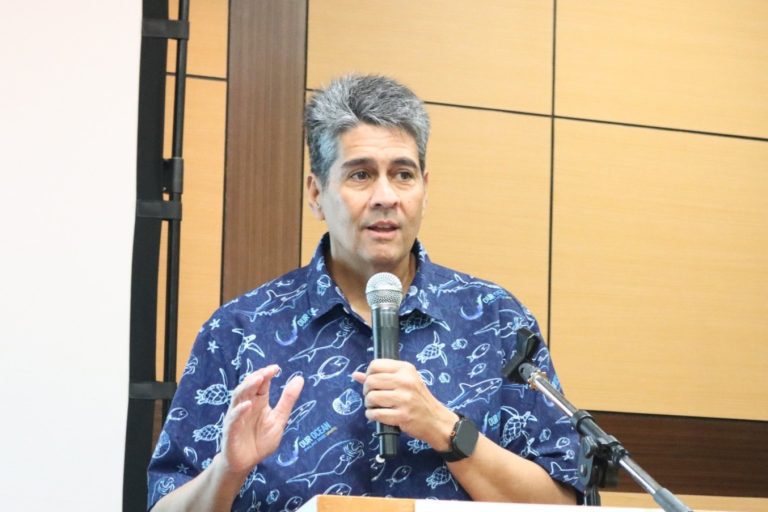
Surangel Whipps Jr is set to become the first Palauan President to make an official visit to Aotearoa New Zealand.

Whipps is in New Zealand this week and will be meeting with New Zealand Prime Minister Christopher Luxon.

The visit comes as Palau prepares to host this year’s Pacific Islands Forum later this year, with New Zealand set to host the annual leaders meeting in 2027.

Luxon is looking forward to discussing how two nations can continue to work together closely on the key issues facing the region, particularly ahead of their respective Forum hosting responsibilities, a statement from his office said.

“As consecutive Forum hosts, we want to make the most of the next two years. The Forum provides an important opportunity to work with partners and ensure their support reflects priorities set by Pacific countries,” he said.

Whipps will also meet several New Zealand government Cabinet ministers, a range of agencies and businesses, and iwi in Auckland and Rotorua.

Governor-General Dame Cindy Kiro will formally welcome President Whipps at Government House in Auckland on Monday.

French Polynesia’s legislature shows new shape, more divisions

0

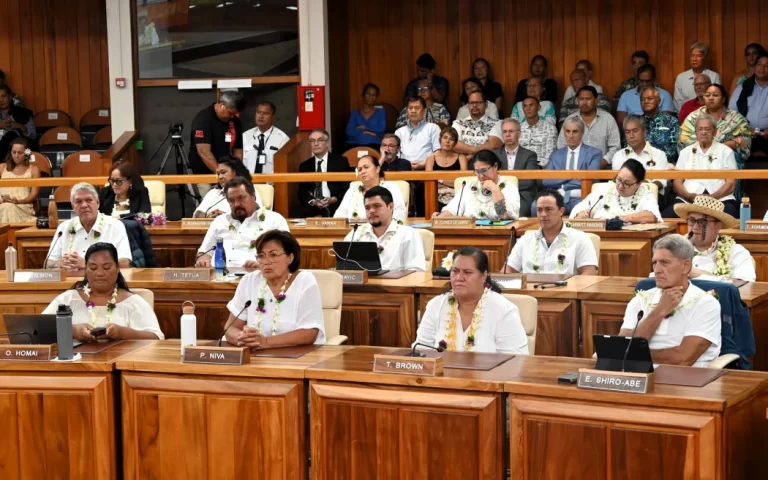
The Territorial Assembly of French Polynesia has for the first time shown a new configuration during its first administrative sitting on Friday, following a mass resignation of a group of young elected members of the ruling Tavini Huiraatira.

This follows the mass resignation of a group of 15 members of the Assembly, now headed by 25-year-old member Tematai Le Gayic.

The mass resignation de facto brings down Tavini’s majority to 22 within the Territorial Assembly (of a total of 57 MPs).

The outcome of the rift within the ruling party is that now, for the first time in its history, it’s divided into two groups.

One consists of the remaining “old guard’, headed by historic pro-independence “radical” members such as former President Oscar Temaru, 81, and his closest ally, Antony Géros (currently Speaker of the Assembly and Vice-President of the Tavini Party).

On the other side, the breakaway group of Tavini members from a younger generation, under a group now called “A Fano Tia” (Stay the course) now gathers some 15 members.

“A Fano Tia” is also reported to be close to French Polynesia’s government President Moetai Brotherson, whose father-in-law is no other than Temaru himself (Brotherson is married to Temaru’s daughter).

To mark their difference and differences with their former party, under which they were elected during the territorial elections (in May 2023), at this new sitting, A Fano Tia members made a point to all appear dressed in white, as opposed to Tavini’s official light blue colour.

The sitting was marked by heated debates between the two groups, while the opposition ‘pro-autonomy” (in effect supporters of French Polynesia remaining part of France under the current Autonomy Status) essentially stood as spectators.

As a preview to future debates and local Assembly’s modus operandi, until the next territorial elections, in 2028, questions have been raised as to how a more divided house could function.

There could be more open opposition during debates for future Bills, especially those which are related to points of notorious contention (such as the notion of independence).

Tavini’s hard line, defended by Temaru, favours a short-term process to access French Polynesia’s independence, including a more confrontational approach vis-à-vis France.

Speaking last week), Brotherson elaborated on the divergence of views regarding independence.

“Independence is not an end in itself … it’s a choice, but this choice can be neither imposed nor rushed,” Brotherson said last week at the tribune.

In earlier statements, Brotherson had favoured a more gradual process within a window “ten to fifteen” years.

More than ever, every Bill is likely to be treated on a case-by-case basis and alliances formed accordingly around the vote.

This could also involve, on the same principle, more alliances between A Fano Tia and pro-autonomy Tapura Huiraatira, as well as a handful of independent MPs.

It could involve more open opposition from the “historic” Tavini, which could oppose future Bills from Brotherson’s government.

The other components of the Assembly include 16 from the opposition pro-France (pro-autonomy) Tapura Huiraatira and 4 others not registered under any party.

The rules have changed, but no one wants to topple the government

Sometimes floated during earlier Tavini internal debates, the notion of Brotherson’s departure or resignation as President was eventually not regarded as a solution.

“Since we were elected and until 2028, there won’t be any defiance motion”, Géros publicly assured.

“We’re asking the (Brotherson) to carry the weight of his Presidency until 2028,” he told MPs.

Tapura, on its side, said it was not prepared to “contribute to government instability”.

“We’ll always be here in a constructive way”, Tapura wrote in a release posted on social networks.
It however deplored that during this session, the floor was “confiscated” by Tavini’s internal bickering.
Any motion of defiance requires the approval of at least 35 of the 57 MPs.

At the sitting last week, the allocation of chairs for the Assembly’s very influential legislative committees was also renewed.

A Fano Tia said it did not intend to bid for any of those because it did not want to be accused of being “opportunistic”.

As a result, Tavini retained the chair of key committees such as Economy, Finance and Budget, Education, Youth and Sports (which could turn crucial as French Polynesia is hosting the 2027 Pacific Games), as well as Tourism and Culture.

Opposition pro-autonomy Tapura also retains Employment and Public Service and gains one more Committee (Health and Solidarity).

Other parliamentary Committees (Institutions and international affairs, Housing, Land and sustainable development, Transports and Public Words, as well as Agriculture and Marine resources – another point of contention between the historic Tavini and A Fano Tia – were allocated to other Assembly groups.

“Unfortunately, today, (Assembly) debates were confiscated by political statements. And at the end of the day it is (French) Polynesians who will be forgotten,” French Polynesia’s representative at the French Senate Teva Rohfritsch deplored.

3.4 percent growth expected in Pacific region in 2026, 3.2 Percent in 2027 — ADB

0

Economic growth in the Pacific is projected to moderate to 3.4 percent in 2026 and 3.2 percent in 2027, according to the Asian Development Outlook (ADO) April 2026, ADB’s flagship economic publication.

“There is an unprecedented need for the Pacific to build resilience against the economic impacts of the Middle East conflict,” said ADB Director General for the Pacific Emma Veve.

“Higher oil prices, prolonged international commodity price spikes, and trade uncertainty in particular will weigh on subregional growth momentum.”

The ADO’s regional forecasts are informed by assumptions finalised on 10 March under exceptionally high uncertainty, envisaging an early stabilisation scenario for the conflict in the Middle East. Evidence since then points to a higher likelihood of more persistent disruptions.

ADO April 2026 includes a section that assesses the impact of the conflict on economies in the region under alternative scenarios. The adverse effects of the current Middle East crisis on both growth and inflation are likely to intensify if the duration and severity of the conflict increase.

The ADB report projects inflation in the Pacific to pick up to 4.2 percent in 2026 then moderate to 3.5 percent in 2027. Growth in Papua New Guinea (PNG), the subregion’s largest economy, is forecast to ease to 3.6 percent in 2026 and 3.4 percent in 2027 dictated by mixed performances across the resource and non‑resource sectors.

Mining is likely to remain a key growth driver in both 2026 and 2027, with higher production anticipated at Porgera and Lihir. Structural challenges—particularly power shortages, security, efficiency of public capital spending, and skilled human resources—continue to weigh on the outlook, amplified by inflationary pressures from the conflict in the Middle East.

In Fiji, the subregion’s second-largest economy, growth is projected to moderate from 3.0 percent in 2025 to 2.9 percent in 2026 and further to 2.7 percent in 2027 as visitor arrivals slow and investors exercise caution ahead of the general elections. Non-communicable diseases continue to strain Fiji’s health system and threaten productivity. Increased health investment and reform, especially in primary care, are needed to strengthen longterm health outcomes and system resilience.

The ADO April 2026 projects growth in Solomon Islands to moderate to 3.0 percent in 2026 from 3.6 percent in 2025 as mining eases, while higher oil prices associated with the Middle East conflict are likely to dampen economic activity and put upward pressure on inflation.

Growth in Vanuatu is projected to increase to 4.7 percent in 2026 before moderating to 3.9 percent in 2027. Continued post-earthquake reconstruction of public infrastructure and private assets, together with the public investment program, is expected to sustain construction and related services.

In the Central Pacific, growth is expected to ease in Kiribati (to 3.1 percent in 2026 and further to 2.6 percent in 2027) and in Tuvalu (to 2.5 percent in 2026 and 2.4 percent in 2027) as the pace of fiscal expansion slows. Growth in Nauru is projected to remain stable at 2.5 percent in both 2026 and 2027, supported by development partner assistance.

Growth in North Pacific economies of the Marshall Islands and Palau is projected to follow divergent paths, while economic growth in the Federated States of Micronesia (FSM) is expected to remain stable. In the Marshall Islands, growth is projected to increase to 3.7 percent in 2026 from 3.0 percent in 2025, before moderating to 2.8 percent in 2027. In the FSM growth is forecast to remain at 1.0 percent in both 2026 and 2027, while in Palau growth is expected to decelerate to 6.0 percent in 2026 and further to 3.7 percent in 2027.

Across the South Pacific economies of the Cook Islands, Niue, Samoa, and Tonga, growth is moderating as tourism normalises and major projects wind down. Inflation has generally eased but remains vulnerable to external shocks, particularly those affecting energy and import prices.

Growth is projected to moderate to 2.7 percent in 2026 and rise to 3.0 percent in 2027 in the Cook Islands, and to 3.2 percent in 2026 and 3.0 percent in 2027 in Samoa.

Meanwhile, growth is expected to remain stable at 2.5 percent in both 2026 and 2027 in Niue, and at 2.3 percent over the same period in Tonga.

How Vanuatu’s proposed UN climate change resolution may shift climate accountability for decades

0

A draft United Nations (UN) resolution on climate change is seeking to turn the International Court of Justice’s (ICJ) Advisory Opinion on states’ obligations concerning the “urgent and existential threat” posed by climate change, into a roadmap for concrete action and accountability.

Although non-binding, the landmark opinion issued by the world’s highest court in 2025 is widely regarded as an authoritative opinion that clarified the obligations of states in respect of climate change. It will significantly strengthen efforts to hold world leaders to account, guide the just and equitable phaseout of fossil fuels, reinforce climate laws and policies, and advance climate justice for billions of people globally.

UN member states are currently negotiating the draft resolution which gives full support to the ICJ opinion. They are expected to vote on the text towards the end of April 2026. Vanuatu, which has repeatedly warned that it could disappear under rising sea levels, is spearheading efforts to secure the resolution. The Pacific island nation and archipelago also led the diplomatic drive for the ICJ’s 2025 advisory opinion through active campaigning initiated by a group of young law students.

A core group of states contributed to the “zero draft” first version of the resolution, with cross-regional representation from Vanuatu, Barbados, Burkina Faso, Colombia, Jamaica, Kenya, the Marshall Islands, the Federated States of Micronesia, the Kingdom of the Netherlands, Palau, Philippines, Singapore, and Sierra Leone.

What was the ICJ’s Advisory Opinion of 2025?

The historic Advisory Opinion marked the first time the ICJ had examined the international legal framework as it applies to climate change. It is a milestone that was made possible by years of campaigning that brought together governments, youth movements, civil society organisations and frontline communities demanding climate action.

In order to reach its opinion, 15 judges from around the world sought to answer two central questions: what obligations do states have under international law to protect the climate and environment from human-caused greenhouse gas emissions; and what are the legal consequences for governments where their acts, or lack of action, have significantly harmed the climate and environment?

In a rare unanimous opinion, the ICJ made it clear that protecting the global climate system is a legal obligation – not a political choice. Not to do so threatens human rights and the well-being of present and future generations. The ICJ also stated that countries must act together to remediate existing harm and prevent more climate havoc.

The key points of the ICJ’s Advisory Opinion:

*limiting global temperature rise to below 1.5°C above pre-industrial levels should be the primary temperature goal for all states, consistent with the Paris Agreement.

*where deemed relevant, international human rights law should be applied to determine states’ duty in addressing the climate crisis rather than being limited to specific climate agreements.

*the failure to phase out fossil fuels constitutes a wrongful act, including any continued exploration and provision of subsidies to the fossil fuel industry.

*states must cooperate to mitigate climate change and adapt to it to minimize harm, including through providing finance, technology and know-how.

*all countries have an obligation to address climate change; however, it is recognised that their responsibilities and capabilities will differ according to their circumstances.

*states are obliged to make full reparation for any loss and damaged caused by internationally wrongful acts.

*those forcibly displaced by climate change, including across borders, must be covered by non-refoulement protections; that is, protections against being returned to a country where they may face serious harm

What would the draft UN climate change resolution require governments to do, if adopted?

The zero draft resolution set out steps countries must take to limit dangerous heating, protect communities, and provide justice when harm occurs.

It calls on countries to:

*Keep to 1.5°C: Adopting and implementing national climate action plans aligned with keeping global heating below 1.5°C with efforts reflecting each State’s highest possible ambition;

*Pass Strong Climate Laws: Adopting and enforcing laws and policies to prevent global environmental harm and protect human rights from the adverse effects of climate change;

*Phase Out Fossil Fuels: Taking effective steps to protect the climate system from greenhouse gas emissions, including through measures to urgently and equitably phase out fossil fuel production, use and ending fossil fuel subsidies;

*Centre Frontline Communities: Ensuring the full, meaningful and equal participation of women, Indigenous Peoples, youth, and other marginalised groups in all forms of climate action;

*Protect Climate Displaced People: Upholding the rights of people displaced by climate impacts and creating safe, regular and non-discriminatory pathways for cross border protection;

*Deliver Reparations: Providing full and prompt reparations when states violate their obligations, including through an International Register of Damage attributable to climate change and an accompanying International Mechanism for Climate Reparation.

These actions aim to stop climate harm at its source and support frontline communities most affected by climate change-related extreme weather, sea level rise, food insecurity and water stress.

Why does this resolution matter for human rights?

The ICJ recognised that “the environment is the foundation for human life, upon which the health and well-being of both present and future generations depend.” It confirmed that people cannot fully enjoy their human rights unless governments protect our climate system. Climate harms are already putting millions at risk.

By turning global legal standards into practical guidance for climate action, this resolution strengthens protections for people facing climate injustice and reinforces the reality that human rights and environmental protection are inseparable.

Why has Vanuatu tabled this new UN climate change resolution now?

Climate change is an unprecedented global human rights emergency. The burning of fossil fuels (coal, oil and gas) emits heat-trapping greenhouse gases that are the primary current and historical cause of climate change; this has been settled science for decades. The world is on track to exceed 1.5°C of warming within the next decade, making climate impacts more severe and pushing many ecosystems and communities to breaking point.

At the same time, political choices by some world leaders, like rolling back climate protections or revoking greenhouse gas rules, have weakened global progress just when we need stronger action. Fossil fuel infrastructure alone poses risks for the health and livelihoods of at least 2 billion people globally, roughly a quarter of the world’s population.

This resolution is a chance for governments to show they stand for climate justice rather than delay.

Why are some countries opposed to the new UN climate change resolution?

Higher income states, who have also been historically high-emitters, have benefited from decades of fossil fuel use and have contributed the most to greenhouse gas pollution. Today, these governments face growing expectations to lead on cutting emissions through just transitions to renewable energy accessible to all, and by providing technological support and grant-based climate finance for mitigation and adaptation to lower income countries which are the least responsible for climate change, yet most vulnerable to its harms. They should also provide reparations for climate change related loss and damage according to their level of responsibility.

Some powerful governments have pushed back because they fear accountability for historical responsibility and the financial obligations that follow. Yet we know that there is plenty of money to go around if polluters are made to pay for the damage they have caused.

What happens next?

UN member states are currently expected to vote on the resolution towards the end of April 2026. If governments adopt it, this will send a strong message that the world is ready to follow the ICJ’s legal guidance and turn it into concrete measures to protect people and the planet.

At a time when fragmentation between nations feels more visible than ever, the UNGA Resolution endorsing the ICJ Climate Ruling offers a renewed path for international cooperation. The resolution has the potential to shape global climate accountability for years to come and therefore UN Member States must engage constructively, support adoption, and protect the resolution’s ambition during negotiations.

What can you do right now?

You can support our call for governments to:

*back this resolution without weakening its commitments;

*stop delaying action to rapidly and equitably phase out fossil fuels production and use;
protect people whose lives are already being devastated by the climate crisis;

*invest in a just and human rights centred transition to renewable energy that leaves no one behind.


Solomon Islands MP Kenilorea challenges Governor General, defends court move

Solomon Islands MP Peter Kenilorea says history and the Constitution are on the side of the 28 MPs challenging the Governor-General’s refusal to convene Parliament, declaring: “We have the numbers. We remain 28 strong.”

Kenilorea said the current standoff is not new, highlighted past political crises where important action was taken.

“So, we heard in court last Friday that there have been three instances in the past which were very similar to the situation we face today – where support for a sitting PM was in serious doubt. These occasions were in 1994, 1998, and 2007. In all those three situations the serving GGs during those times acted. They did so by calling parliament to allow the house to test the support for the then PMs on the floor of parliament. The same floor they got elected on,” he said in a social media post.

He stressed that the constitutional framework remains largely unchanged and continues to vest authority in the Governor-General.

“The Constitution of Solomon Islands has not changed much in the intervening years. The GG remains the Head of the Executive – vice regal – for our Head of State, King Charles III. The government Ministers that he appoints, on the advice of the PM, are still called ‘Ministers of the Crown’. The PM is still the Head of Government.”

Kenilorea said the group was “bewildering” by the Governor-General’s response declining to act.

“That is why it was bewildering for us, the 28 who signed the petition to the GG asking him to convene parliament to allow a motion of no confidence to be debated and voted on, to get a response from the GG saying he has no power to convene parliament. He even replied saying that we can take the matter to court if we so wish.”

He said the decision to go to court was a direct response to that position.

“That is why we, the 28 MPs, decided to take the matter to the courts to review the decision by the GG stating that he is powerless. Our argument in a nutshell is this: GG, you are not powerless, you have the power to convene parliament. Afterall, on three prior occasions previous GGs have called parliament for motions of no confidence to test support for the PM by parliament.”

Kenilorea said arguments have now been put before the court, with a ruling expected soon.

“We feel our arguments were well made by our lawyers. We’ll see what the court’s ruling will be.”

He also alleged sustained political pressure in the lead-up to the court decision.

“Meanwhile, over the last 4 weeks, the offers, enticements and propaganda continued unabated. Propagated by the nation’s highest political leaders both at the national and provincial levels, by political appointees, by special interest supporters of GNUT, public supporters ridiculing us on social media platforms, to so-called concerned citizens.”

Despite this, he said the group remains united and confident.

“Yet, we, the group of 28 national leaders, continue to stand together, firm in our conviction that we are the government in waiting. Defying all odds by our strong resolve and solidarity.”

“Come what may with tomorrow’s expected court ruling, we continue to stand for the values of democracy, for majority rule, and the rule of law. We are confident because we have what GNUT doesn’t have. We have the numbers. We remain 28 strong,” he said.

FLP raises alarm over attempted breaches at military facilities

0

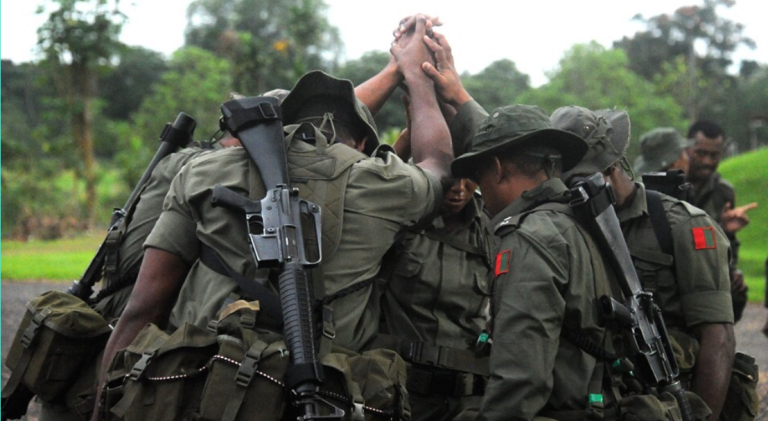
The Fiji Labour Party has expressed “grave concern” over recent attempts to gain unauthorised access to Republic of Fiji Military Forces (RFMF) installations in Lautoka and Nabua, calling for a full and transparent investigation.

Party leader Mahendra Chaudhry said the incidents cannot be dismissed as minor security lapses.

“In a small island nation like Fiji… such incidents require planning, resources, and possibly insider knowledge — the hallmarks of organised networks rather than random criminality,” he said.

Chaudhry warned the situation is particularly concerning amid rising drug-related activity in the country.
“The emergence of sophisticated, well-coordinated criminal elements poses a direct threat to public safety and national stability,” he said.

While the military has confirmed that no weapons or ammunition were compromised, he said the attempted breaches still raise serious questions.

“The very fact that such attempts were made sends a dangerous signal: our defence installations may not be as impenetrable as we have been led to believe,” Chaudhry said.

He called on Government and Defence Minister Pio Tikoduadua to provide clearer answers.

“The public demands full transparency: who was behind these attempts, what was their objective, and are there links to wider criminal syndicates?” he said.

The party is urging a “swift, independent and thorough investigation” by the Fiji Police Force, warning that failure to act decisively could erode public confidence.

“National security is not a partisan issue — it is the solemn duty of every government to protect its citizens,” Chaudhry said.

Palau is stepping up its digital defences

0

Palau President Surangel Whipps Jr has established a new Office of Applied Technology and Strategy to strengthen cybersecurity, streamline government systems, and accelerate the country’s push toward e-government following recent cyberattacks on key institutions.

President Surangel J. Whipps Jr on Friday signed an executive order creating the Office of Applied Technology and Strategy within the Office of the President, aiming to centralise government technology planning amid rising cybersecurity threats and fragmented systems.

The move addresses vulnerabilities exposed by recent cyber attacks on the national hospital, police station and financial institutions, Whipps said in remarks accompanying the order.

“When we talk about technology, we always talk about cybersecurity, we talk about how we can move to an e-government, those are themes we tackle, how to use AI,” Whipps said.

“We talk about how we can make our lives good by using these new tools that are now available. As of right now, we know about those that have happened, cyberattacks to the hospital, to the police station, to finance. And we found that something we are short of is that materials and tools we use are different from each other and there are leaks in our systems.”

“It’s very important that there is an office that overlooks this work and is one mind,” he added. “To establish the Office of Applied Technology and Strategy within the Office of the President.”

The order cites Palau’s growing reliance on information technology for public administration, service delivery, national security, financial management, communications and economic development. It notes that decentralised planning and procurement across ministries have led to fragmented systems, duplicative spending, inconsistent standards and heightened risks including cybersecurity gaps, data protection issues, interoperability problems, vendor dependency and inefficient use of public funds.

A prior Technology Governing Body Task Force, established under Presidential Directive No. 26-69, recommended the permanent office after assessing government IT assets, expenditures and risks.

The new office, headed by a Chief Technology Officer (CTO) appointed by and serving at the president’s pleasure, will advise on significant technology matters; review procurements for efficiency and cost savings; develop government-wide standards and architectures; promote shared services and joint procurement; assess risks like cybersecurity and system resilience; and support digital transformation initiatives, including the Palau National Cybersecurity Strategy.

Australia pledges cyclone aid to Pacific neighbours

0

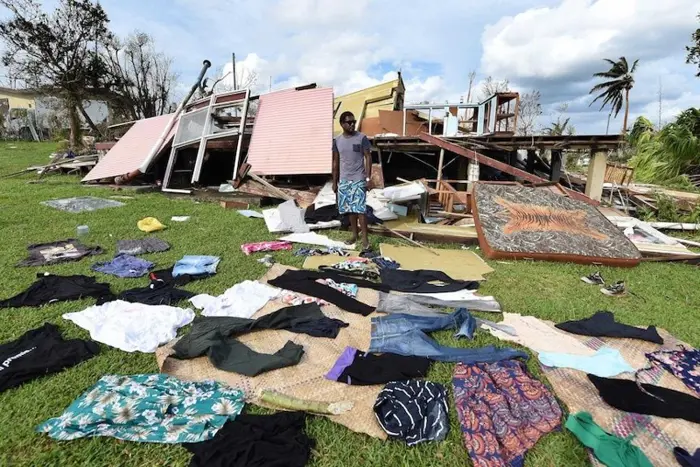
Australia pledged AUD$2.5 million (US$1.7 million) in aid to Pacific neighbours Papua New Guinea and the Solomon Islands Sunday, 12 April 2026, after tropical cyclone Maila caused devastating floods and landslides that killed 11.

In Bougainville, an autonomous region of Papua New Guinea that is seeking independence, school was cancelled this week after the cyclone destroyed critical infrastructure including roads and bridges and severely disrupted food supply chains, the region’s government said in a statement Saturday.

Eleven people were killed in the region, including eight in a landslide. Access to Panguna, home to a gold and copper mine that was once among the world’s largest, had been cut.

The Bougainville autonomous region president, Ishmael Toroama, urged the population to “not lose hope” in a statement Friday.

The weather system began to weaken Saturday and has since been downgraded to a tropical low.
Australia’s Foreign Minister Penny Wong pledged AUD$1 million (US$702,000) for Papua New Guinea to respond to the cyclone’s impact in Bougainville and Milne Bay.

Another AUD$1.5 million (US$703,000) will be provided to Solomon Islands, where severe impacts have been felt in remote communities across Western and Choiseul provinces.