Home Blog Page 557

Fiji PM Rabuka announces cabinet reshuffle

0

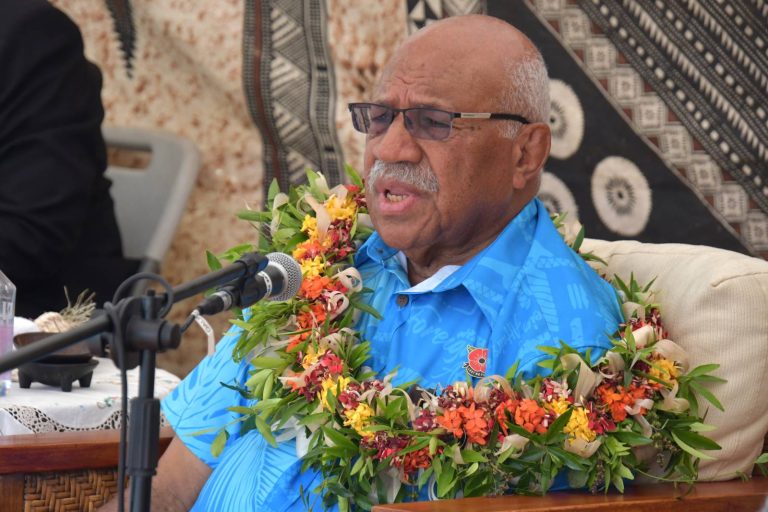
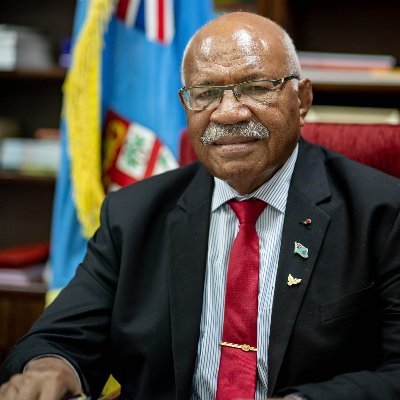
Fiji’s Prime Minister Sitiveni Rabuka has announced a strategic reassignment of ministerial portfolios Friday.

The reshuffle is intended to enhance governance, improve policy coordination, and further improve service delivery to the people of Fiji,

The following ministerial reassignments will become effective Tuesday 17 October 2023:

* Siromi Turaga is reassigned to the ministerial portfolio of Lands and Mineral Resources;

* Filimoni Vosarogo is reassigned to the ministerial portfolio of the Attorney General & Minister for Justice;

* Ifereimi Vasu is reassigned to the ministerial portfolio of Education; and

*. Aseri Radrodro is reassigned to the ministerial portfolio of Minister for iTaukei Affairs.

These strategic changes reflect the government’s dedication to fulfilling its responsibilities to the people of Fiji and ensuring that the nation continues on the path to progress and development.

Meanwhile, Prime Minister Sitiveni Rabuka has appointed Minister for Public Works, Transport, and Meteorological Services, Ro Filipe Tuisawau as the Leader of Government Business in Parliament.

The Prime Minister has also informed the Honorable Speaker of Parliament, Ratu Naiqama Lalabalavu of his decision to nominate Ro Filipe Tuisawau as Leader of Government in Parliament, under Standing Order 3 of the Standing Orders of Parliament.

Tuisawau’s selection for this role is driven by his extensive experience as a Parliamentarian and particularly given his tenure as the Opposition Whip from 2020 to 2022.

This appointment follows a strategic decision to ensure efficient and effective governance as part of a broader strategy to enhance the leadership and policy coordination within government, in particular, the coordination of Government business in Parliament.

In his new position, Tuisawau will be responsible for guiding the government’s legislative agenda, fostering cooperation among government members, and ensuring the smooth functioning of parliamentary affairs.

Government is confident Tuisawau’s ability to excel in this crucial position, and his appointment reinforces the commitment to ensuring the smooth functioning of parliamentary proceedings and the effective representation of government’s interest in the legislature.

Tuisawau replaces the outgoing Leader of Government Business, the Minister for Women, Children and Social Protection, Lynda Tabuya, who has contributed significantly to the government’s operations during her tenure.

Prime Minister Rabuka expressed his appreciation for her dedicated service and commitment to the nation.

The Prime Minister is confident that with Tuisawau leading government business, government will continue to progress in achieving its development goals and addressing the urgent needs of its citizens.

As part of his new role, Tuisawau will become the second Government member of the Parliamentary Business Committee, as well as the Standing Orders Select Committee of Parliament.

The role of Leader of Government Business in Parliament holds a pivotal place in the coordination of government activities and legislative priorities.

SOURCE: FIJI GOVT/PACNEWS

Supreme Court strikes out petition by former Vanuatu PM Kilman

0

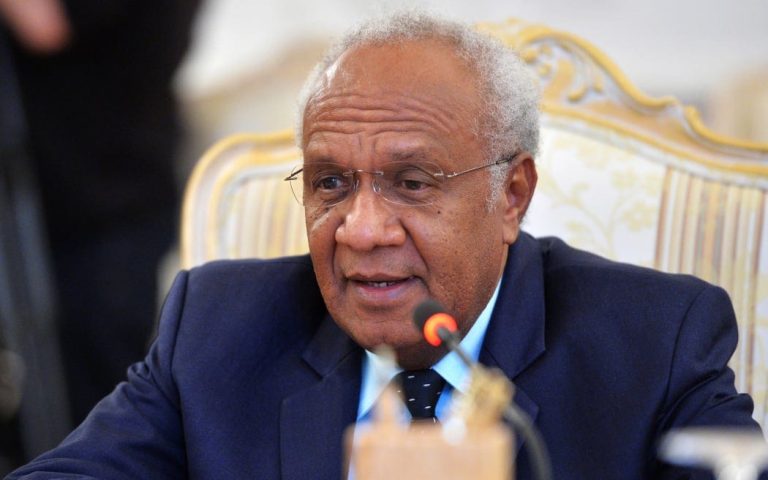
Vanuatu’s Supreme Court has struck out the constitutional petition of ousted prime minister Sato Kilman.

Kilman had filed submissions for urgent relief on Wednesday, 11 October.

His counsel argued that the challenge by now Prime Minister Charlot Salwai was unlawful because he did not secure the required 27 signatures for a vote of no-confidence.

However, the Speaker Seoule Simeon had contended that since there was a seat vacant at the time the motion of no confidence was deposited, only 26 signatories were required.

Late on Friday, Judge Edwin Goldsbrough said that the former prime minister had “no arguable case”.

“The position may change following the decision on appeal in CAC 2642 of 2023 but the function of this court is to determine whether a date be fixed for a hearing or whether the petition be struck out on the material now presented.

“On that material now presented, the petition must be struck out as the petitioner has no arguable case. Unless the submissions to contrary are filed during 7 working days, the publication of this decision and order for applicant to pay the costs of the 1st and 2nd respondent, to be agreed or taxed, is made,” Judge Goldsbrough ruled.

Following the ruling, the Speaker Simeon welcomed the decision of the court saying he anticipated already that the court would rule in his favour.

Meanwhile, sources from the opposition said they will decide on whether they would appeal the judgement later.

SOURCE: RNZ PACIFIC/PACNEWS

Incoming New Zealand PM Luxon prepares to form coalition government

0

Christopher Luxon said it was a “tremendous privilege” to wake up on Sunday as New Zealand’s incoming prime minister as he eyed talks to form a new coalition government.

Voters ended the six-year reign of the centre-left Labour government on Saturday as Luxon’s conservative National Party won enough seats to govern in a coalition with liberal party ACT.

Labour leader Chris Hipkins, who replaced Jacinda Ardern as prime minister in January, conceded defeat after his party lost nearly half their seats from the previous election in 2020.

Luxon fronted the media on Sunday wearing an All Blacks jersey after watching coverage of New Zealand’s victory over Ireland at the Rugby World Cup in France, which kicked off at 8am local time.

“It’s a great start to the day when you’ve got a National government, and you’ve got the All Blacks winning again,” he told reporters.

Luxon, who prides himself on needing only a few hours of sleep each night, said he celebrated with family and supporters, then analysed the election results “until 0330” before an early sporting start.

The 53-year-old former airline executive, who entered politics in 2019, can only take over as prime minister after the final election results are declared on 03 November.

“It’s a tremendous privilege,” he replied when asked about being the incoming premier.

“I came to politics with a view of making a contribution to New Zealand, unhappy that we weren’t realising our potential.

“That’s why I feel very optimistic about our path going forward.”

He said he planned a strategy meeting on Sunday, ahead of coalition talks.

“We are going to deliver a strong and stable government that is going to get things done,” Loon told a press conference in Auckland a day after Saturday’s election.

He said he had spoken to the leader of the conservative ACT New Zealand party, David Seymour, twice on Saturday and believed the two parties would work constructively.

National won 50 seats and ACT 11, securing a majority of just one seat in the 121-seat Parliament, according to provisional results from the Electoral Commission.

While the election produced a notable swing from left to right, Bryce Edwards, a research fellow at the School of Government at Victoria University of Wellington, said he did not expect a radical right-wing government in any significant sense.

“It’s just so opaque at the moment,” he said. National “will be coalescing with the ACT party and also with New Zealand First, and we just don’t know yet what dynamic that’s going to bring”.

While National and ACT have the numbers to form a government on the current count, roughly 567,000 special votes – around 20 per cent of the total – must still be counted. The official result is due on 03 November, and right-wing parties have historically lost at least a seat with the final count.

In their first 100 days, National has promised changes such as a ban on cellphones in schools, a crackdown on crime and the scrapping of planned fuel tax hikes.

With New Zealand in a cost-of-living crisis and crime figures rising, Luxon admitted having “some tough decisions” to face.

“When you do a turn-around, you’ve got to call the brutal facts of your reality, put a plan together and get yourself to a better place,” added the former businessman.

National cleaned up at the polls, but some big-name casualties fell in Labour’s defeat.

Foreign Affairs Minister Nanaia Mahuta, 53, lost her Hauraki-Waikato seat to 21-year-old Hana-Rawhiti Maipi-Clarke of Te Pati Maori, who will become New Zealand’s youngest MP in 170 years.

Michael Wood, who resigned as transport minister in June after failing to declare shares in Auckland airport, was also ousted after losing his Mt Roskill seat to National candidate, Carlos Cheung.

SOURCE: AFP/PACNEWS

Black mist across the desert

0

By Nic Maclellan

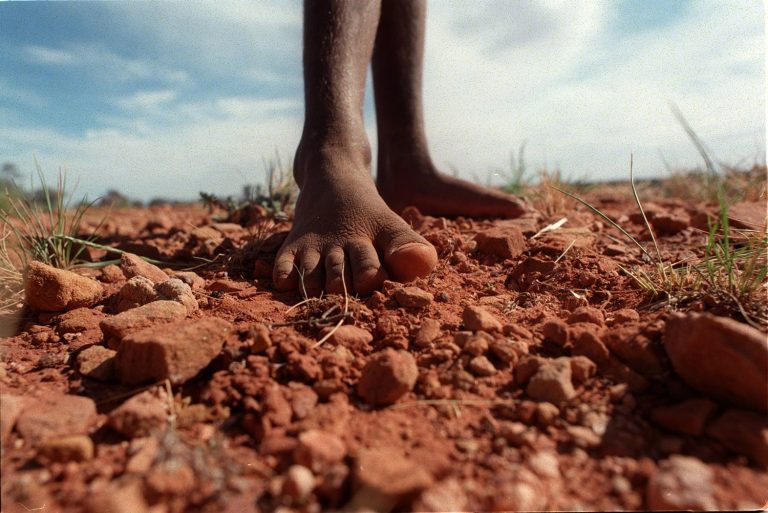
Yami Lester was ten years old when a British atomic weapon, codenamed Totem 1, was detonated at Emu Field on 15 October 1953. The isolated test site in the desert of South Australia was downwind from his home at Wallatinna, and the wind carried dust into his eyes. Four years later, he lost all sight.

Before his untimely death in 2017, Lester’s autobiography recounted memories of the day when the Totem test sent a black mist across the desert.

“It was in the morning, around seven and I was just playing with the other kids,” Lester said. “That’s when the bomb went off. I remember the noise. It was a strange noise, not loud, not like anything I’d ever heard before. The earth shook at the same time; we could feel the whole place move. We didn’t see anything, though. Us kids had no idea what it was. I just kept playing.”

“It wasn’t long after that a black smoke came through,” he reported. “A strange black smoke, it was shiny and oily. A few hours later we all got crook, every one of us. We were all vomiting; we had diarrhoea, skin rashes and sore eyes. I had really sore eyes. They were so sore I couldn’t open them for two or three weeks. Some of the older people, they died. They were too weak to survive all of the sickness. The closest clinic was 400 miles away.”

It took years – and a Royal Commission – before the Australian and British governments would even begin to address the impact of UK nuclear testing on the Yankunytjatjara and Pitjantjatjara peoples.

Rushing to develop a nuclear arsenal and maintain a seat on the high table of international affairs during the 1950s, post-war UK governments sought vast, open sites to test atomic bombs and later thermonuclear weapons. After the first UK nuclear test in 1952, at the Monte Bello Islands off the coast of Western Australia, the lands of the Anangu people in South Australia were used to establish the Emu Field and Maralinga test sites.

Led by scientists like William Penney and Ernest Titterton, Britain conducted 12 atomic tests at the three test sites in Australia from 1952–57. These were followed by nine hydrogen and atomic bomb tests in 1957–58, at Malden Island and Christmas (Kiritimati) Island in the British Gilbert and Ellice Islands Colony (today, part of the atoll nation of Kiribati).

The UK program was endorsed and encouraged by then Australian Prime Minister Robert Menzies, without Cabinet or parliamentary approval. Little thought was given to the reality that the deserts and oceans of the southern hemisphere were not empty places, but home to indigenous peoples.

After the end of Emu Field and Maralinga tests, some Aboriginal people lived in contaminated zones for up to six years, while others had been relocated to coastal towns away from their traditional lands. The 1985 McClelland Royal Commission investigating the hidden history of Britain’s testing program recognised that the denial of access to land for displaced people “contributed to their emotional, social and material distress and deprivation.”

In October 2023, 70 years on from the first test of a British nuclear weapon on the Australian mainland, many people are still living with the health and environmental consequences. They are also still actively campaigning to gain recognition, health assistance and full compensation.

Kuntili June Lennon is a Yankunytjatjara, Antakarinya and Pitjantjatjara woman, who was just four months old when the Totem atomic bomb was detonated at Emu Field. Her mother Lallie and brother Bruce later received some compensation for ill-health caused by radioactive contamination. But for Lennon and other Aboriginal survivors, there are mental and emotional scars as well as physical ones.

“Every day I see my family and there so many problems with their health,” she told a webinar to mark the 70th anniversary. “Nobody thought about the effects that those bombs would have on our family, but I can tell you that our family is not a well family: we’ve had cancers, there’s been miscarriages and deformities. All we gained was a lifetime of illness and a lifetime of grief, watching our families pass on a long way before their time.”

“It is just so heartbreaking to live day by day knowing what the government did to the people of this country,” she added. “It’s also mental health. I wonder if a bomb dropped on you, how could you not suffer from mental health, anxiety and never-ending grief.”

Campaigning for justice

As the first generation of Totem survivors are ageing and dying, their descendants have picked up the torch to continue the campaign for recognition, compensation and clean-up.

Just weeks before Yami Lester’s death in 2017, his daughter Karina travelled from the deserts of South Australia to the United Nations in New York. She joined Pacific activists from Fiji, Marshall Islands and French Polynesia, to lobby more than 120 nations negotiating the new Treaty for the Prohibition of Nuclear Weapons (TPNW). To applause, Karina Lester presented a petition from indigenous groups around Oceania, calling for the treaty to include provisions that specifically assist nuclear survivors, with health care, support and reparations.

The nuclear abolition treaty entered into force on 22 January 2021, and its preamble now recognises “the disproportionate impact of nuclear weapon activities on indigenous peoples.” Uniquely for a disarmament treaty, TPNW Articles 6 and 7 require state parties to provide assistance to nuclear survivors and affected communities.

In June, Karina Lester and June Lennon travelled to Canberra as part of an Atomic Survivors Delegation, accompanied by former military personnel who staffed the test sites and ambassadors of the International Campaign to Abolish Nuclear Weapons (ICAN). The Anangu women met with Australian Foreign Minister Penny Wong and other parliamentarians, to describe the ongoing legacies of British nuclear testing. As Lester told MPs, “the scars are still felt on our country and the scars are still evident on our people.”

Delegation members also called for Australia to join its regional neighbours to sign and ratify the TPNW nuclear ban treaty: Aotearoa-New Zealand and ten Pacific island states and territories were amongst the first of the 69 states parties that have signed and ratified TPNW.

There were more than 310 U.S, UK and French nuclear tests at ten sites across Oceania between 1946 and 1996, alongside countless technical and medical experiments. For this reason, anti-nuclear sentiment remains strong across the islands region. On 28 September, the Assembly of French Polynesia passed a resolution endorsing the TPNW and calling on the French government to respect it as a norm of international law. France, like other nuclear weapons states, is opposed to the treaty and refuses to sign. But the Assembly resolution sends a pointed massage to Paris from the Ma’ohi people, who continue to endure the radioactive consequences of 193 French nuclear tests at Moruroa and Fangataufa atolls.

French officials were also angered when last August’s National Conference of the governing Australian Labor Party (ALP) agreed to send a government representative to observe the next TPNW Meeting of State Parties in November. Many Labor MPs have pledged support for signing TPNW, in line with party policy to ratify the treaty “after taking account of the need to ensure an effective verification and enforcement architecture; ensure the complementary interaction of the Ban Treaty with the longstanding Nuclear Non-Proliferation Treaty; and work to achieve universal support for the Ban Treaty.”

However, these conditions – combined with the opposition of key members of Cabinet – create enough loopholes to delay action on signature. There is growing pressure for the Albanese government to act, heightening by the decision to purchase nuclear submarines under the Australia-United Kingdom-United States (AUKUS) partnership.

Impact on soldiers

The advocacy of affected indigenous communities is matched by decades-long campaigns by nuclear veterans – at the time, young military personnel who staffed the test sites and faced exposure to hazardous levels of ionising radiation. Nearly 20,000 Australian and British soldiers, sailors and aircrew worked in and around test sites in Oceania, as the UK government tested nuclear weapons between 1952 and 1958.

Operation Totem was the first series of British atomic tests on the Australian mainland. Held at Emu Field, it involved two atmospheric nuclear tests, codenamed Totem 1 (15 October 1953) and Totem 2 (27 October). The Royal Air Force, Royal Australian Air Force (RAAF) and US Air Force all deployed aircraft to Emu Field, to monitor the tests and collect samples of radioactivity, as the mushroom cloud rose and spread across the desert.

For the Totem 1 test, RAF pilot Geoffrey Dhenin captained a Canberra bomber that flew through the mushroom cloud to gather radiation samples, so UK scientists could determine the explosive yield of the weapon. After testing the level of radioactivity with sensors mounted on the wing, Dhenin made three passes through the mushroom cloud. On return to base, the aircraft was surveyed and found to be extensively contaminated with fallout.

Despite shielding on the aircraft, Dhenin and the two other crew members received high doses of gamma radiation, far above the permitted level. Although they were scheduled to perform the same role for the Totem 2 test a fortnight later, the crew were withdrawn from service.

To this day, the British government continues to claim that safety preparations and the conduct of the tests minimised radioactive fallout. But for all the UK tests, British and Australian groundcrew as well as pilots were exposed to significant levels of radiation. Aircrew scrubbed downs the planes after each test, using mops and buckets to remove contamination, with little or no protective gear.

Bryan Young was one of the ground crew sent to scrub down a plane that had transited the radioactive mushroom cloud: “We were cleaning off barrier paint above me and water came off the back of the wing. I was only wearing cotton whites so, of course it went straight through. Bearing in mind that it was contaminated water coming off, I wasn’t a very happy person underneath. But we were all too busy at the time to do much about it.”

Today, decades later, many survivors suffer from serious illnesses that they attribute to exposure to hazardous levels of radiation. The ageing participants are also fearful about possible intergenerational effects that may threaten the health and wellbeing of their children and grandchildren.

The remaining British, Australian, NZ and Fijian nuclear veterans, now into their 80s, are campaigning for compensation from the UK Government. Despite this, UK authorities continue to resist full reparations. The UK Ministry of Defence and successive British governments have systematically resisted legal cases launched by veterans of the British tests in Australia and Kiribati.

Alan Owen is the former chair of the British Nuclear Test Veterans Association (BNTVA), whose father served on Kiritimati. Through the LABRATS network, Owen is calling on the UK government to release medical records and open the archives of ministries involved in the tests.

This year, after a long campaign by British nuclear veterans, the UK government announced it will grant a medal to all service personnel who participated in the testing programme. For Alan Owen, it’s a start, but little more.

“The veterans believe that a medal was given begrudgingly, and this has been shown by the failure to organise an initial event to honour their service, instead sending medals in the post,” he said. “We always wanted to use medallic recognition as the first step and that is why we have continued to work on further recognition. Many are pleased that they now have some recognition, but they want an apology and formal compensation.”

“We stand shoulder to shoulder with the indigenous community in Australia, and everyone who was affected by the British nuclear testing program and feel the effects today,” he added. “Seventy years is too long to wait. Seventy years is too long to keep fighting for the truth, for formal recognition, and for proper compensation.”

Silencing voices and closing the archives

Sadly, the anniversary of the first Totem test fell on the day after a majority of Australians voted No in a referendum to establish The Voice – a proposal for an indigenous advisory body to government and parliament on matters affecting the land, welfare and culture of Aboriginal and Torres Strait Islands peoples.

Such silencing of indigenous voices has been a central element of the hidden history of nuclear testing in Oceania. The official literature on the nuclear era features the generals and scientists who led the atomic testing programs, rather than the people who live with the consequences.

Associate Professor Elizabeth Tynan is a former science writer and leading historian of British nuclear testing in Australia. Her book “Atomic Thunder” was awarded the Prime Minister’s literary award for Australian history, as she documented the legacies of atomic testing at Maralinga during Operation Buffalo and Operation Antler. Her latest study on UK nuclear colonialism, “The Secret of Emu Field”, focusses in detail on the health and environmental consequences of Operation Totem.

Drawing on extensive archival research, Tynan’s book details the casual way the Menzies government allowed Britain to use “a tiny slice of a vast swathe of beautiful and wild central Australian territory” for nuclear testing, noting “the fact that this pristine land was so casually handed over to a foreign power to test weapons of war speaks volumes about the particular bonds of colonialism.”

Seventy years ago, Britain was rushing to develop atomic weapons before the US and Soviet Union could agree on a moratorium on the atmospheric testing of atomic and hydrogen bombs. In response, the Emu Field facilities were quickly thrown together, in an area traversed by indigenous people and near to communities within range of plumes of radioactive fallout. The rush to hold the tests in October 1953 ignored the way that indigenous Anangu were moving around the area’s waterholes at that time, during dingo pup hunting season.

Tynan argues that “the callous disregard the British displayed towards the local inhabitants of the region had the same effect as if they had overtly sought to use Aboriginal people as experimental subjects.” She also notes that the UK scientific team misjudged the yield of the two Totem tests, and “the meteorology at the site was not up to the task of managing the complex process of predicting and tracking atomic clouds – both Totem clouds went rogue once they had been detonated.”

The atomic tests in Australia were a crucial prequel to the development of the British hydrogen bomb, codenamed Operation Grapple, when the UK Government decided to follow the United States and the Soviet Union in the development of more powerful thermonuclear weapons. In this military deployment, at Malden and Christmas Islands in the central Pacific, thousands of British service personnel were joined by hundreds more New Zealand sailors, Gilbertese labourers and members of the Fijian Military Forces. As in Australia, many face illness and early death related to their participation in the Kiribati tests.

Researchers are campaigning for greater access to nuclear archives, to reveal hidden history but also to seek evidence that might vindicate the claims of civilian and military survivors about health and environmental impacts.

However, as she prepared her award-winning histories, Tynan faced a challenge common to many researchers of the nuclear era. The Cold War secrecy that surrounded the tests in the 20th century continues to this day. Key documents that are crucial to understand the history of the tests are buried in the archives or deliberately withheld by authorities. Academics and researchers studying the British tests have been hampered by the withdrawal of key files from public access at the UK National Archives.

“Most of my research is based on archival records and one of the things that always strikes me is the sheer arrogance and cruelty that comes through from the architects of the British test program,” Tynan said. “What strikes me particularly is the lack of curiosity and the indifference that the test authorities had towards the people whose land this was. They were detonating bombs in people’s homelands, but the British test program was notable for its lack of respect for safety generally and the lack of safety protocols.”

Tynan’s history of the Totem test looks at the stories of ‘puyu’ or black mist from indigenous survivors – an issue of extensive debate at the Royal Commission, with William Penney and other scientists disputing any danger. Drawing on analysis by meteorologists and anthropologists, Tynan navigates the conflicting evidence, concluding “the black mist was not just a physical phenomenon but a psychological one that shows the damage in populations altered by the possibility of unknown and unquantifiable harm.”

Waste dumping

In the 1990s, Aboriginal women in South Australia formed the group Kupa Piti Kungka Tjuta and the campaign Irati Wanti (The Poison – Leave It), to oppose government proposals to create a nuclear waste dump on their land. More recently, a Federal Court ruled in favour of the Barngarla Determination Aboriginal Corporation, with a decision last July halting plans for a low-level nuclear waste dump at Kimba, on South Australia’s Eyre Peninsula.

Now, under the AUKUS partnership, Australian Defence Minister Richard Marles has announced that, in future decades, the spent high-level waste from the reactors of proposed AUKUS nuclear submarines will be stored forever on “defence land.” Given Australia and Britain have not managed the environmental legacies of nuclear testing and experiments from the 1950s and 1960s, Anangu people are worried that their land will be targeted once again as a sacrifice site for the nuclear industry.

Indigenous culture is still strong on country, and for Karina Lester, past radioactive contamination of the South Australian desert should not justify further attempts to store high level wastes on Anangu land.

“Knowing the struggles we’ve gone through and the fights that we First Nations peoples have had in South Australia, we’re constantly having to voice these concerns openly to the community,” she said. “I really have a fear with Australia’s role around AUKUS – is my state of South Australia going to be pressured to be the nuclear waste dump of the world?”

On 15 October, a coalition of church and civil society organisations released a public statement to commemorate the 70th anniversary of the first Totem test, calling for urgent nuclear disarmament: “The trauma of the past cannot be undone, but we have the desire, ability and responsibility to create a peaceful and safer future.”

Endorsed by international partners such as the Pacific Conference of Churches, the statement calls on the Australian government to join its Pacific neighbours by signing and ratifying the nuclear ban treaty: “As Australia pursues nuclear-powered submarines under the AUKUS agreement, it is now more vital than ever for our nation to demonstrate its commitment to nuclear non-proliferation and disarmament by joining the Treaty on the Prohibition of Nuclear Weapons.”

Some voices have been blown away in the wind, but others still cry for justice.

SOURCE: ISLANDS BUSINESS/PACNEWS
England end Fiji dreams 30 – 24 in Marseille

0

England are through to the semi-finals of Rugby World Cup 2023 after surviving a late fightback from Fiji to win 30-24 at Stade de Marseille on Sunday.

Tries from Manu Tuilagi and Joe Marchant as well as 11 points from the boot of Owen Farrell had given England a handy 21-10 lead at half-time.

However, the Flying Fijians roared back into the game in the second half, scoring tries through Peni Ravai and Vilimoni Botitu to level things at 24-24.

In the end it was England fly-half and captain Farrell who settled things for the 2003 champions, kicking a drop goal to regain the lead before slotting a late penalty to secure victory and a place in the last four.

England will find out later today who they will face at Stade de France in six days’ time, when France take on South Africa in Saint-Denis in the last of the quarter-finals.

“It was what we expected. They are a tough, tough team that can turn it on in the blink of an eye,” said Farrell, the Mastercard Player of the Match.

“I thought we started the game really well. We really got after it in that first half.

“We always knew Fiji were going to have some good patches and they did. To find a way to win and get through to the semi-finals is a big step forward but we know we have plenty of work to do.”

Fiji’s head coach Simon Raiwalui watched his team come close to an upset in the south of France only to fall to Farrell’s accuracy with the boot in the final eight minutes of normal time.

“”I think it is just the start of something special,” said Raiwalui in the immediate aftermath of the match. “They wanted to create a new identity, I think they have done that.

“A couple of mistakes today, didn’t take our chances and we paid for it. But I couldn’t be prouder of the boys.

“We’ve worked so hard from week one, 15 weeks now and they’ve shown where we belong on the world stage.”

His England counterpart Steve Borthwick, while delighted to remain in the tournament, praised Raiwalui and his players.

“What a performance by Fiji, not just tonight but this World Cup. What a team they are. Well coached and jam-packed with world-class talent. We knew it was going to be a tough game and it was.”

Despite losing to Fiji for the first time in August, in a Rugby World Cup warm-up match at Twickenham, England have since risen to the tasks set before them in France.

“The players were written off,” said Borthwick. “A lot of people said we wouldn’t get out of the pool. We got out of the pool, now we got out of the quarter-final.

“Now these players have an opportunity in Paris in the semi-final. I am sure we will be written off again but these players rise to the occasion,” he said.

SOURCE: WORLD RUGBY/PACNEWS

South Africa beat France in seven-try thriller

0

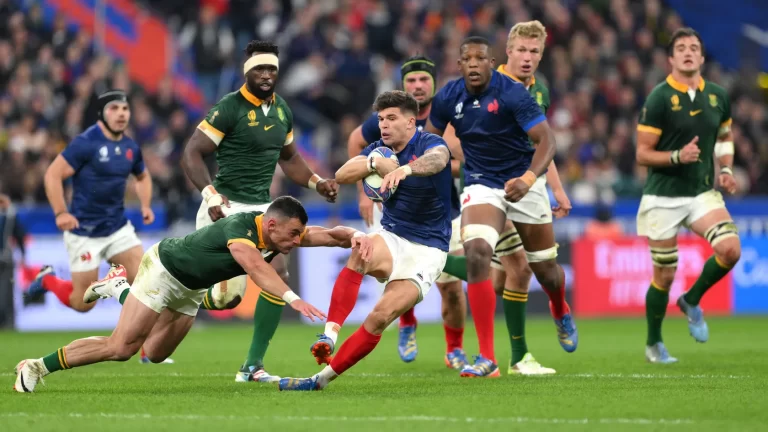
Defending champions South Africa booked a Rugby World Cup 2023 semi-final against England after beating hosts France 29-28 at Stade de France on Sunday, 15 October.

Defending champions South Africa twice came from behind to overcome France in a pulsating encounter and secure a semi-final date with England back at the Stade de France next Saturday.

The hosts made a blistering start with an early try from prop Cyril Baille but they failed to deal with two high kicks as first Kurt-Lee Arendse sprinted to the corner before Damian de Allende plunged over to give the Springboks a 12-7 lead.

France drew level with a try from hooker Peato Mauvaka, Cheslin Kolbe charging down the conversion from Thomas Ramos before the South Africa wing raced onto Jessie Kriel’s deft grubber to score, only for Baille to grab his second try and Ramos to land a penalty – for a high tackle by Eben Etzebeth which earned the second-row a yellow card – to give Les Bleus a 22-19 interval lead.

Ramos extended their advantage with a penalty, but Etzebeth stretched over with 14 minutes left, replacement Handre Pollard converting and adding a penalty which proved decisive despite a late reply from Ramos.

“I just thought we really wanted it,” said Springboks captain Siya Kolisi. “We knew how tough it was going to be. I must give credit to the guys that came off the bench, they came and made a huge difference.

“And most importantly, the people back at home. Honestly, the support that we’ve received. You know, they can’t afford to be here but the videos, the schools singing for us and the videos.

“We play for the nation, it’s not about us on this field any more, it’s about the people back home and that’s what’s driving us.”

Kolisi paid tribute to France for their display in a heart-breaking defeat in front of their home fans.

The flanker added: “It was a hard game. We knew how tough it was going to be with the French team at home and honestly, I just want to say well done to them for what they’ve achieved and how hard they’ve worked.”

Kolisi went off early in the second-half but urged his team to victory that keeps alive their hopes of defending the title they won in Japan four years ago.

“Obviously, somebody else was on the field, all I could do was bring the energy. With the amount of French people in the crowd, the boys need all the energy,” he added.

South Africa’s hooker Mbongeni Mbonambi, named the Mastercard Player of the Match, said: “We knew it wasn’t going to be easy playing the host team in their backyard, sold out crowd singing their national anthem the whole time.

“We’ve still got two more games to go, this is still nothing. We were just focused on what we had to do, we stayed on task. It was a great game of rugby”

France’s team manager Raphael Ibanez admitted being unable to convert several try-scoring opportunities proved costly as their hopes of winning the trophy for the first time were dashed.

“We are very sad tonight,” said Ibanez. 2I think we gave everything to win that game. We knew it would be a very tight game and we had to score every opportunity. We had some good opportunities but unfortunately we couldn’t convert them into points.”

“We had our chances, they were pragmatic and sometimes we try and try our best with the support of the French fans. This is why we are sad tonight, we are sad for them.

“We have to get up and stand up and go for the next fight. We have other games coming, not in this World Cup, but we have to still believe in the team”.

SOURCE: WORLD RUGBY/PACNEWS

Fiji PM Rabuka announces cabinet reshuffle

0

Fiji’s Prime Minister Sitiveni Rabuka has announced a strategic reassignment of ministerial portfolios.

The reshuffle is intended to enhance governance, improve policy coordination, and further improve service delivery to the people of Fiji,

The following ministerial reassignments will become effective Tuesday 17th October 2023:

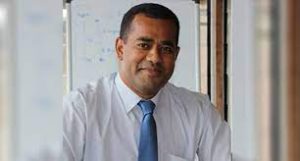
1.Siromi Turaga is reassigned to the ministerial portfolio of Lands and Mineral Resources;

Siromi Turaga

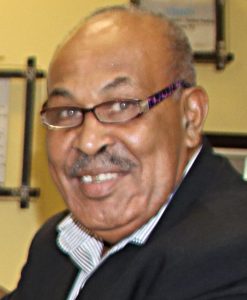
2. Filimoni Vosarogo is reassigned to the ministerial portfolio of the Attorney General & Minister for Justice;

Filimoni Vosarogo

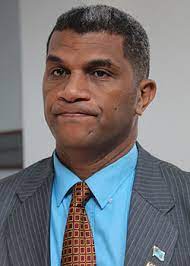
3.  Ifereimi Vasu is reassigned to the ministerial portfolio of Education; and

Ifereimi Vasu

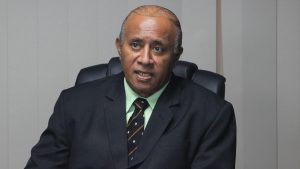
4. Aseri Radrodro is reassigned to the ministerial portfolio of Minister for iTaukei Affairs.

Aseri Radrodro

These strategic changes reflect the government’s dedication to fulfilling its responsibilities to the people of Fiji and ensuring that the nation continues on the path to progress and development.

Meanwhile, Prime Minister Sitiveni Rabuka has appointed Minister for Public Works, Transport, and Meteorological Services, Ro Filipe Tuisawau as the Leader of Government Business in Parliament.

Ro Filipe Tuisawau

The Prime Minister has also informed  Speaker of Parliament, Ratu Naiqama Lalabalavu of his decision to nominate Ro Filipe Tuisawau as Leader of Government in Parliament, under Standing Order 3 of the Standing Orders of Parliament.

Tuisawau’s selection for this role is driven by his extensive experience as a Parliamentarian and particularly given his tenure as the Opposition Whip from 2020 to 2022.

This appointment follows a strategic decision to ensure efficient and effective governance as part of a broader strategy to enhance the leadership and policy coordination within government, in particular, the coordination of Government business in Parliament.

In his new position, Tuisawau will be responsible for guiding the government’s legislative agenda, fostering cooperation among government members, and ensuring the smooth functioning of parliamentary affairs.

Government is confident Tuisawau’s ability to excel in this crucial position, and his appointment reinforces the commitment to ensuring the smooth functioning of parliamentary proceedings and the effective representation of government’s interest in the legislature.

Tuisawau replaces the outgoing Leader of Government Business, the Minister for Women, Children and Social Protection, Lynda Tabuya, who has contributed significantly to the government’s operations during her tenure.

Prime Minister Rabuka expressed his appreciation for her dedicated service and commitment to the nation.

The Prime Minister is confident that with Hon. Tuisawau leading government business, government will continue to progress in achieving its development goals and addressing the urgent needs of its citizens.

As part of his new role,Tuisawau will become the second Government member of the Parliamentary Business Committee, as well as the Standing Orders Select Committee of Parliament.

The role of Leader of Government Business in Parliament holds a pivotal place in the coordination of government activities and legislative priorities.

SOURCE: FIJI GOVT/PACNEWS

Small states’ climate pleas finally heard but COP 28 ‘cannot fail’

0

Years of protests by small climate-vulnerable nations have finally put critical reform of the global financial architecture high on the agenda of major international organisations and developed market governments.

But the COP28 climate conference in United Arab Emirates in November-December will be the true test of whether the talk leads to action.

“I think the anger and the advocacy of some of the vulnerable countries — particularly small island states — is being noticed,” Biman Prasad, Fiji’s deputy prime minister and minister for finance, told GlobalMarkets.

“Now [we are] firmly on the agenda […] and hopefully a lot of discussion within groups like the Commonwealth […] will feed into this overall attempt to reform the global financial architecture. Many of these wonderful countries are at a cliff edge, and we cannot waste any more time.”

Prasad said Janet Yellen, U.S treasury secretary, had this week invited him to attend a meeting to discuss innovations within the International Monetary Fund, including the Poverty Reduction and Growth Trust, its main vehicle for concessional financing.

Ryan Straughn, minister of finance and economic affairs for Barbados — whose prime minister Mia Mottley has been become a leading voice calling for more support for climate-vulnerable nations — told GlobalMarkets that was now seeing “better coordination in terms of what we have been doing” on climate.

Small island nations, which have barely contributed to greenhouse gas emissions, are particularly vulnerable to more frequent weather disasters, partly because one storm or flood can wipe out swathes of their GDP. But funding that would enable them to invest in becoming more resilient can be hard to come by.

“We need to ensure that climate vulnerability is factored into debt sustainability assessments and recognise the positive impact of climate-related investments,” Baroness Patricia Scotland, secretary-general of the Commonwealth, told a meeting of the group’s finance ministers in Marrakech on Wednesday.

“Countries need the fiscal space to invest in the climate-resilient infrastructure which can ensure their survival and growth, irrespective of historical debt stock.”

She added: “It is neither just nor sensible to prevent vulnerable countries from accessing the support they need because of debts they incur from a problem they have not caused.”

Baroness Scotland called for reform to increase countries’ access to both concessional and non-concessional financing. Developing and vulnerable countries needed cheaper development finance with longer maturities, she argued.

A financial system “engrained with conditionalities and heavy-handed eligibility criteria” was “loading the dice” against countries that most needed developmental finance.

“Business as usual is not an option,” she said. “Business as usual provides insufficient support for the countries which is needed now, it will not help us overcome the grave, entrenched challenge we all face, and it’s not enough for us to attain the Sustainable Development Goals.”

Some steps are seen as helpful, such as the IMF’s Resilience and Sustainability Trust, launched in May 2022, which provides longer term loans than the Fund has ever offered before. But they are not enough to address the climate finance need. The RST, for example, still requires that borrowers meet IMF programme conditionality.

Vulnerable nations are therefore looking to the COP 28 climate conference, taking place in Dubai in December. At COP 27 last year, countries reached — after a decade of debate — an agreement to establish a Loss and Damage Fund to help developing countries with the effects of climate change.

The committee charged with putting this fund into operation issued an update on September 8saying it had made “significant progress”. But its funding remains up in the air.

Fijian minister Prasad said there had to be real action — COP 28 “cannot fail” in this respect. “Success would consist of creation of a Loss and Damage Fund with substantial allocations,” he said, “so that many of these countries which are struggling under debt stress and with an infrastructure deficit can have concessional funding and grants support.

“These are required to build. If you don’t build the infrastructure, you can’t sustain the economy in the future.”

Although climate-resilient infrastructure could become financially sustainable and funded with domestic resources a few years down the line, there is a “huge” funding gap.

“I’m not saying that [the Loss and Damage Fund] will forever be a need,” Prasad said. “But to get there and for it to be sustainable, you need support. That’s what many of these countries are asking.

SOURCE: GLOBAL MARKETS/PACNEWS


Fiji PM Rabuka expresses solidarity with Israel

0

Fiji’s Prime Minister Sitiveni Rabuka Friday issued a strong condemnation of the recent attack by Hamas on Israeli towns and settlements near the Gaza Strip and central Israel.

The Prime Minister expressed profound concern regarding the indiscriminate firing of thousands of rockets toward Israeli population centres, as well as the use of other munitions with the sole intention of causing harm and loss of life, regardless of age, gender, or status.

“Fiji is deeply troubled by the distressing reports of civilians, including the elderly and young, who have been subjected to attacks and abductions from their homes,” the Prime Minister said.

“The Government of Fiji categorically abhors the barbarity of these atrocities and calls for the immediate release of all abducted persons. The attack has, regrettably, resulted in the loss of over 1,200 Israeli civilian lives, with many more injured.
“I want to make clear our condemnation of the terrorist attack by Hamas which targeted innocent non-combatants and resulted in continuing loss of life. We also stand with Israel. Israel has the right to defend itself and her people.

In light of these tragic events, Fiji extends its heartfelt condolences to the victims and their grieving families.

“We stand firmly with the State of Israel and affirm its unequivocal right to defend itself against such indiscriminate attacks, as permitted by international law.”

At the recent United Nations General Assembly, Fiji, in alignment with other nations, called for global peace and the establishment of zones of peace in our respective regions.

Central to this pursuit of peace is our unwavering commitment to opposing aggressions that violate the principles of human decency, territorial integrity, and the deliberate targeting of innocent civilian lives, in accordance with international humanitarian law.

The Prime Minister and the people of Fiji send their thoughts and prayers to Israel as it navigates through these difficult days, working diligently to safeguard its people and secure peace for the region.

SOURCE: FIJI GOVT/PACNEWS

Fiji minister urges ‘quicker’ plastic pollution treaty

0

The world must move faster on a plastic pollution treaty that is currently not expected to be finalised before the end of next year, Fiji’s deputy prime minister told an international summit on Thursday.

A draft of the treaty on reducing global plastic pollution was unveiled last month and will form the basis for several rounds of negotiations, including next month in Nairobi.

But Viliame Gavoka, who also serves as Fiji’s tourism minister, said small, developing island states like his needed quicker action.

“I would urge that we try and wrap this up ASAP,” he told the Global Plastics Summit in Bangkok.

“I’m told that it will take another 15 months after Kenya, but I would urge that we do it quicker than that.”

Tourism accounts for 40 percent of Fiji’s GDP, but the industry depends on visitors attracted by the promise of a pristine natural environment.

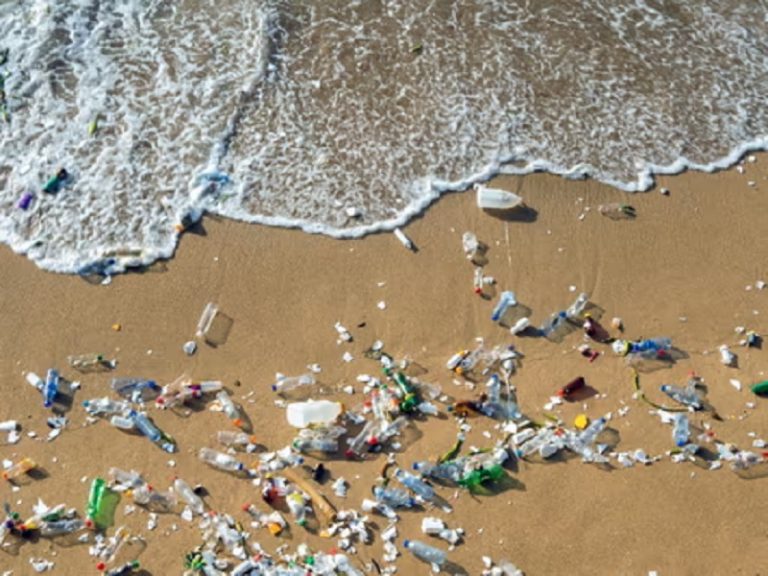
That is increasingly compromised by plastic washing up along the country’s shore, he said.

“Plastics is the biggest threat to our economy and our livelihoods,” he added.

The draft plastic pollution treaty contains a range of options, or so-called low- to high-ambition pathways.

The plastics industry and top plastic-producing countries are keen to put the focus on reuse and recycling, despite problems including the fact that most plastic can only be recycled a handful of times before becoming unusable.

Activists and some countries instead want tougher measures upstream, including taxes and potential caps on new plastic production.

How those differences are navigated will be key to whether an effective treaty can be reached, said Peter Thomson, the UN secretary-general’s special envoy for the ocean.
“We have to see this treaty as something that has ambition for us to be making peace with nature,” he told the summit.

“Is this treaty going to be part of that peace process or is it going to be a cosy accommodation with the plastic industry?”

Global plastic production has more than doubled since the start of the century to reach 460 million tonnes, and it could triple by 2060 if nothing is done. Only nine percent is currently recycled.

Microplastics have been found everywhere from clouds to the deepest sea trenches, as well as throughout the human body.

The effects of plastics on human health remain poorly understood, but there is growing concern among scientists.

“The evidence is mounting that it is damaging to human health,” said Thomson.

“What I would ask the negotiators to be ruled by when they turn up in Nairobi and thereafter is intergenerational justice, what we are creating for our children,” he said.

SOURCE: AFP/PACNEWS

Stay connected

529FansLike
172FollowersFollow
156SubscribersSubscribe
- Advertisement -