
Home Blog Page 527

Yearbook of Global Climate Action 2023: Pace of Change needs to speed up

0

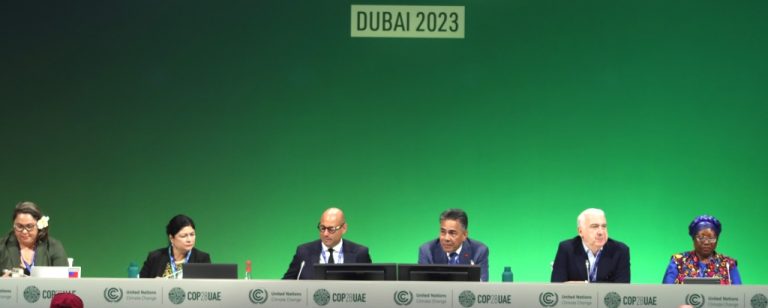
Businesses, investors, cities, states and regions are stepping up to take climate action in greater numbers than ever before – just not at the pace or scale needed to limit global temperature rise to 1.5 degrees Celsius, according to the 2023 edition of the Yearbook of Global Climate Action released at the UN Climate Change Conference (COP28) today.

“Climate action needs to accelerate everywhere. Systems transformation, from energy and transport to our relationship with nature and our social systems, is essential to rapidly reducing emissions and building resilience,” said UN Climate Change Executive Secretary Simon Stiell. “Greater collaboration between Parties and non-Party stakeholders is an opportunity to radically enhance action towards our collective climate goals.”

The 2023 Yearbook, the seventh of the series, provides an overview of the progress, trends and challenges of real-world climate action taken by non-Party stakeholders.

For example, the Yearbook reports that the Global Climate Action Portal – a platform that tracks climate action around the globe – now has more than 32,000 registered actors, an increase of approximately 6 percent from what was reported in 2022, and almost six times higher than in 2015. However, gaps remain, both in terms of increasing the geographical coverage and breadth of climate action of the portal itself but also in the solutions being pursued by non-Party stakeholders.

In the Yearbook’s foreword, High-Level Champions Mahmoud Mohieldin (Egypt) and Razan Al Mubarak (United Arab Emirates) jointly called for a step-up of climate action this decade.

“Effective implementation – in the context of achieving the Sustainable Development Goals – is our common goal that needs to be pursued under the guiding principle of climate justice. The global stocktake is our opportunity to forge ahead, together,” they wrote.

Other key advances outlined in the 2023 edition of the Yearbook include increased support to cities that are adapting to the impacts of climate change, more finance mobilised for marginalised groups such as Indigenous Peoples, the publication of a handbook to help non-Party stakeholders align their policies with net-zero goals, and the launch of a report that explains how to unlock climate financing in Africa.

The 2023 Yearbook also has a strong focus on the conclusion of the first global stocktake at COP28, which got underway in Dubai today.

The global stocktake is a process for countries and stakeholders to see where they’re collectively making progress towards meeting the goals of the Paris Climate Change Agreement – and where they’re not. Governments will take a decision on the global stocktake at COP28, which can be leveraged to accelerate ambition in their next round of climate action plans due in 2025.

Non-Party stakeholders shared their insights for how governments can come together at COP28 with a strong response to the stocktake. Seven key messages emerged from the Yearbook that could help inform the conclusion of the global stocktake:

*Climate action needs to align with the goal of keeping 1.5 degrees’ Celsius climate-resilient world within reach.
*The opportunities to accelerate climate action exist but need to be scaled up.
* Non-Party stakeholders are key partners in ramping up climate action and ambition.
*Credibility of action and commitments of non-Party stakeholders need to be systematically ensured.
*International cooperation across sectors and actors – guided by the principle of climate justice – is instrumental in systems-transformation.
*Climate action should not be siloed.
*Fair finance flows are needed now.

“There can only be one response to the stocktake: renewed ambition and accelerated action – climate action that charts a course to 2030 to limit global warming to 1.5 degrees Celsius and build resilience,” said Stiell.

More information about the Marrakech Partnership and High-Level Champions:

When adopting the Paris Agreement in 2015, Parties also welcomed the efforts of non-Party stakeholders to address climate change and appointed two High-Level Champions to scale up initiatives and actions and strengthen collaboration.

The Marrakech Partnership, under the leadership of the High-Level Champions, has been enabling collaboration between governments and cities, regions, businesses and investors acting on climate change.

In addition to supporting the High-Level Champions and the Marrakech Partnership, UN Climate Change tracks and recognises climate action through its Global Climate Action Portal. The portal is an online platform where commitments and actions by all stakeholders around the globe are registered. It will be updated for COP28 with the latest information and progress updates from cooperative climate initiatives and individual actors. Upgrades to the portal will also increase transparency regarding which initiatives have recently reported information and which have not.

Download the Yearbook of Global Climate Action 2023 here, https://unfccc.int/documents/632342

For media enquiries, please contact:press@unfccc.int

SOURCE: UNFCCC/PACNEWS
At AOSIS preparatory meeting, world leaders urged to seize opportunity at COP28

0

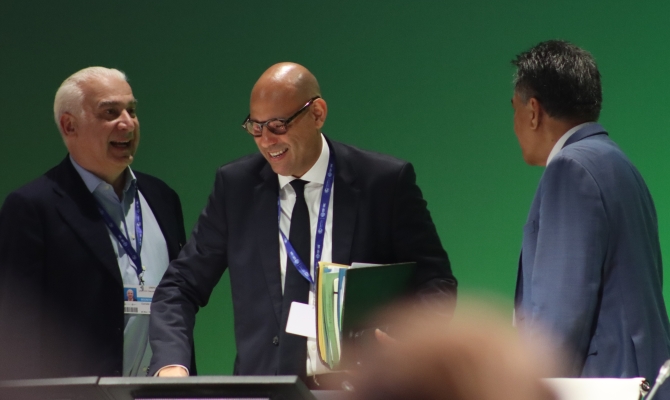
The Executive Secretary of the UN Framework Convention on Climate Change (UNFCCC), Simon Stiell has added his voice to that of Small Island Developing States (SIDS) from the Pacific, Caribbean, African, Indian Ocean and South China Seas, who are members of the Alliance of Small Island States (AOSIS), calling for decisive action from world leaders at COP28.

“COP28 is our chance to make a dramatic course correction and do right for our future generations,” said Stiell. “We need to seize this opportunity, we need to do everything possible that will lead to the best possible outcome from this COP, come 12th December.”

The call comes as the countdown to the opening of COP28 in Dubai continues, where thousands of delegates are expected to attend. The Executive Secretary of the UNFCCC was addressing members of AOSIS at their preparatory meeting in Dubai, on Monday.

The two-day meeting, chaired by Samoa, is to strengthen AOSIS positions on priorities that must be achieved to give SIDS the best chance of sustainably coping with worsening climate change impacts.

For two days, lead coordinators for AOSIS, the negotiating bloc for SIDS, gave critical updates on the various thematic topics that will be negotiated at COP28.

The session with the Executive Secretary of UNFCCC provided delegates with an opportunity to hear from the UNFCCC, ask questions, seek clarifications, and to raise matters AOSIS views as priorities for COP28.

“I am here to assure you that we are here to provide support to ensure your voice is heard. COP28 must be a clear turning point. Governments must not only agree on what stronger climate actions will be taken but also start showing exactly how to deliver them,” said Stiell.

Discussions at COP28 will build on progress made at the 27th meeting of the Conference of the Parties (COP) held in November 2022 and the 58th sessions of the UNFCCC’s Subsidiary Body for Implementation (SBI) and Subsidiary Body for Scientific and Technological Advice (SBSTA) held in June 2023.

One of the biggest items is the completion of the first Global Stocktake (GST) under the 2015 Paris Agreement, which aims to assess collective progress towards achieving the objectives of the Paris Agreement.

Photo: SPREP

Stiell told AOSIS that the GST is extremely important and what comes out of it must serve as our collective compass, showing us where we stand in relation to our commitments, and more importantly, leading us to where we need to go.

“We need to leave COP28 with an ambitious outcome that cuts across adaptation, mitigation, loss and damage, and means of implementation.”

Samoa’s Permanent Representative to the United Nations (UN), Fatumanava-o-Upolu III Dr. Pa’olelei Luteru, said the GST should be based on the best available science and give us a roadmap for course correction.

“Failing here is not an option for SIDS,” he said. “Small Island Developing States have been crying out for urgent climate action for over three decades and we can no longer be ignored.

“Now is the time for concrete action, and we are amplifying our call. Real results matter to us. We cannot, must not, go into COP28 banking on a lot of pledges with no tangible commitments. Our survival is at stake.”

Other key items on the COP28 agenda are the early capitalisation of the Loss and Damage Fund, Climate Finance, Mitigation Ambition and Adaptation, in particular the Global Goal on Adaption (GGA).

The 28th Conference of the Parties to the UN Framework Convention on Climate Change (UNFCCC COP28) in Dubai, UAE is taking place from Thursday 30 November 2023 – Tuesday 12 December 2023.

It is being attended by Pacific leaders and their delegations, who are advocating for the survival of Pacific communities who continue to be at the forefront of climate change impacts.

SOURCE: SPREP/PACNEWS

Forum SG urges investment and action to eliminate violence against women and girls

0

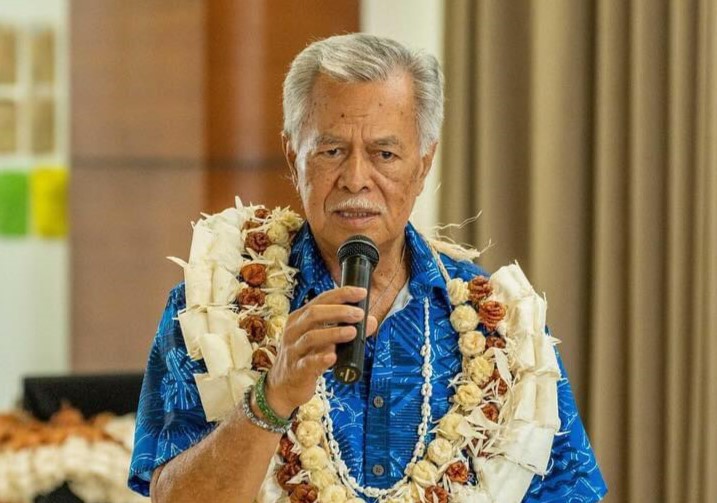
The Forum Secretary-General Henry Puna, has called for urgent action to address the alarming rates of Violence Against Women and Girls in the Pacific region.

Observing the global annual 16-Days campaign, Puna emphasised the critical need to invest in preventing gender-based violence for the prosperity and resilience of the Blue Pacific Continent.

The 2023 United Nations 16 Days of Activism theme, “Invest to Prevent Violence against Women and Girls,” resonates strongly in the Blue Pacific Continent.

Puna highlighted the awareness of high rates of violence in the region, stressing the necessity to move beyond awareness and invest more in concrete actions. The call for investment is not just financial but extends to collective efforts, solutions, and community engagement.

“In the face of often daunting challenges, the resilience of feminists, women’s rights activists, community activists, traditional and religious leaders, and human rights defenders is truly commendable. Their contributions, though often unseen, are instrumental in driving the change we seek,” acknowledged Puna.

“A thriving Blue Pacific Continent, aligned with the Leaders 2050 vision, must include women and girls in all their diversity. It requires a multifaceted approach—from holding perpetrators accountable to ensuring survivors receive necessary services. Building confidence in the security and rule of law, as well as engaging men and boys, is essential for a comprehensive strategy against violence,” stated Puna.

“As seen in successful programmes like the Pacific Partnership to End Violence Against Women and Girls, holistic approaches involving communities in faith, sport, and civic spaces are crucial. At the regional level, the Pacific Islands Forum Leaders have endorsed the 2050 Strategy Implementation Plan and the revitalised Pacific Leaders Gender Equality Declaration, providing a strategic framework for our collective efforts,” highlighted Puna.

“Investing in preventing gender-based violence is an investment in families, clans, tribes, and communities. It ensures that all citizens can contribute to building a safe and free Blue Pacific Continent. It is a call for a united stand against violence in all its forms, accelerating actions for a secure and prosperous future,” urged the Forum Secretary-General.

SOURCE: PACNEWS


Raiwalui joins World Rugby as High Performance Pathways and Player Development Manager

0

World Rugby has appointed Simon Raiwalui in a key role to support its core mission of increasing the competitiveness of international rugby as the sport prepares for a new era of opportunity and growth.

With expanded men’s and women’s Rugby World Cups the cornerstones of a reimagined global rugby calendar from 2025, which features USA’s groundbreaking hosting of the men’s and women’s editions in 2031 and 2033 respectively, Raiwalui joins the governing body at an exciting and pivotal time.

Renowned for his passion for rugby across the globe and ability to build winning player development and pathway programmes, Raiwalui joins World Rugby’s Competitions and Performance function as High Performance Pathways and Player Development Manager. In line with the federation’s central mission of growing the global game, he will support Director of High Performance Peter Horne to assist performance and emerging unions identify, develop and fast track player development initiatives as well as support other HP rugby projects.

Raiwalui joins World Rugby having completed his contract as Flying Fijians head coach, and formerly General Manager of High Performance for the Fiji Rugby Union, after a highly successful period on and off the field across the men’s and women’s national team and pathway programmes.

The former Fiji, Sale, Newport, Saracens and Racing 92 second-row’s high performance credentials are impressive, having coached Fiji’s men to a first Rugby World Cup quarter-final in 16 years at France 2023, been integral in the establishment of the Fijian Drua Super Rugby Pacific franchise and assisted Fijiana to their first women’s Rugby World Cup in 2022.

Raiwalui said: “World Rugby is passionate about growing our sport, increasing opportunity and certainty for more unions to breakthrough. Underpinning all of this is player and competition pathways, something that I am passionate about and I look forward to contributing to what promises to be an exciting and challenging journey, ultimately increasing the competitiveness and impact of international rugby.”

World Rugby Chief Executive Alan Gilpin said: “Simon joins the team at an exciting and pivotal time for the game with expanded men’s and women’s Rugby World Cups the pinnacle of major calendar reform, providing unprecedented certainty and opportunity for performance nations.

“Simon is an experienced and successful operator who is able to understand how to extract the best from teams. His skillset will complement the wealth of experience and talent that we have within our high performance unit, working with Peter Horne and the wider team to implement strategies that add depth to the competitiveness of the international game.”

Director of High Performance Peter Horne added: “We have traditionally played a supporting role, getting teams who have qualified for a Rugby World Cup ready for the tournament. However, calendar certainty gives us an exciting new mandate to work with teams over a longer period of time to prepare them for not just World Cups, but new competition structures.

“With all his experience, his understanding of the needs of unions and the high-performance landscape for performance unions, Simon is perfectly placed to help us drive forward in partnership with unions to build a more competitive game on the road to Rugby World Cups in the USA. We are excited to be working with him, said Horne.

SOURCE: WORLD RUGBY/PACNEWS

Samoa Associate Minister sacked after alleged misuse of passport

0

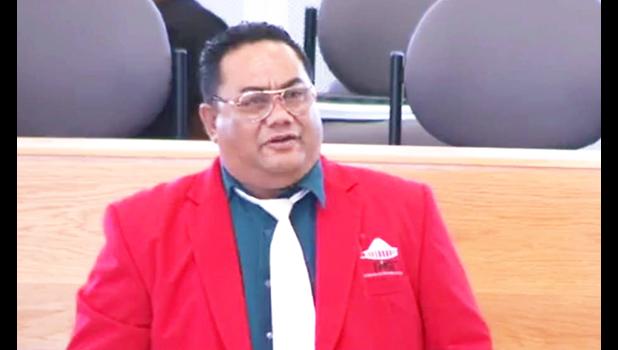
Samoa’s Associate Minister of Police, Fepulea’i Fa’asavalu Su’a has been asked to resign from his post following his recent trip to American Samoa, reports Samoa News.

He allegedly used his diplomatic passport without a permit or an okay board to enter the territory.

Senior Immigration officers, who are not allowed to speak to the media, confirmed this with Samoa News.

It’s alleged that local immigration officers detained him, and he was later released.

Police Commissioner Auapa’au Logoitino Filipo confirmed to Samoa News from Samoa that the incident in American Samoa led to the removal of Fepulea’i from office.

He said the Cabinet ordered the police to seize government assets including the vehicle from the outgoing Associate Minister.

Samoa Observer out of Apia reported that highly placed Samoa government officials have confirmed that the instruments for his removal were approved and effected on Friday by the Prime Minister Fiame Naomi Mata’afa before flying out of the country on duty travel.

They made attempts to get comments from the Acting Prime Minister Tuala Iosefo Ponifasio, as well as the Minister for Police, Prisons and Corrections Services, Faualo Harry Schuster, but were unsuccessful. Attempts were also made to reach out to Fepulea’i on Saturday to confirm his sacking, but his phone rang out.

The Observer was advised that the Prime Minister’s decision to sack Fepulea’i is connected to an American Samoa immigration-related matter where he allegedly travelled without a permit and did not have an “okay board” upon arriving in the U.S territory.

He was allegedly detained by the Immigration Department in the territory as he tried to use his “diplomatic passport” to be released.

The Associate Minister’s sacking comes on the back of a case last month when the MP for Faleata No. 3 Lealailepule Rimoni Aiafi – who is also the Human Rights Protection Party (HRPP) secretary – lodged a complaint with the Police against Fepulea’i.

The Opposition MP told a media conference that two witnesses had stepped forward alleging Fepulea’i was aiding Sam and his wife. He added that more witnesses are stepping forward in support of his case. Sam Su’a claimed he was the eyewitness to the hit-and-run case of 18-year-old Tuuau Faasavalu in April 2021 and alleged that Lealailepule was the driver of the vehicle that killed the teenager.

Contacted by Samoa News for a comment, the Associate Minister of Police, Fepuleai said he had no knowledge of what Lealailepule was accusing him.

He also denied picking up Sam and his wife and transporting them to a hotel, where Lealailepule alleged that his witnesses claimed the man was being hidden.

SOURCE: SAMOA NEWS/PACNEWS

Analysing the Australia-Tuvalu ‘Falepili’ treaty

0

By Enele Sopoaga, Leader of the Opposition and former Prime Minister of Tuvalu

The Australia-Tuvalu ‘falepili’ strategy is bullish and most alarming. The initiative was never consulted with the people of Tuvalu, nor was it ever raised in Parliament. It is not a climate change response. It is ceding Tuvalu sovereignty to Australia. It reverses Tuvalu political status to that of 45 years ago.

The Albanese-Kausea ‘falepili’ deal is exactly and literally that, secretive and scathing, between their very own houses. The devil of course is in the details since little is known in Tuvalu about the deal, and I suspect it is also of the same in Australia. The real concern now, given the secretive nature of the deal was formulated in both countries and the very dubious aims contained therein, is whether the deal is legally doable and sustainable, and whether or not Tuvalu as Australia’s territory will continue to be eligible to international arrangements of membership, ODA and special support from GEF, GCF.

Tuvalu enjoys strong cordial relations with Australia. It benefits from Australia’s ODA, bilateral relations, and by virtue of their membership in regional fora including in the Pacific Islands Forum. The bilateral relations are so strong it is hardly necessary to have another special bilateral treaty. Moreover, this deal is signed a mere month before the dissolution of Parliament on 24 November 2023, and General Elections in January 2024. It would be extremely naive to believe this deal did not aim as well as a dangling carrot to influence the elections outcome on 24 January and interfere in Tuvalu’s sovereignty.

But given the information shared on the media, Australia is offering to resettle 280 Tuvaluans per year in Australia as climate change refugees. In return Tuvalu will allow Canberra to take control of Tuvalu’s fishing rights, and national security within its EEZ and territorial waters. It is the view of this piece that this so-called treaty must be scrutinised within the bounds of international law, and first be ratified by the people of Tuvalu before enforcement. The sovereign independent Nation of Tuvalu cannot and must not be used as ‘guinea pigs’ in the zero-some game being dangerously played by metropolitan powers in the Pacific.

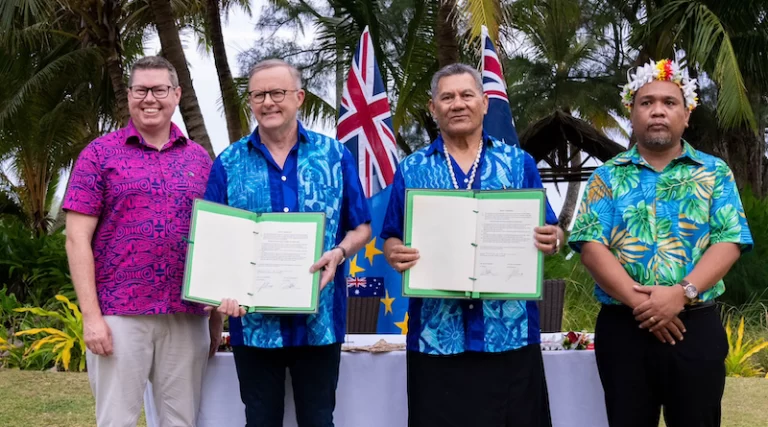
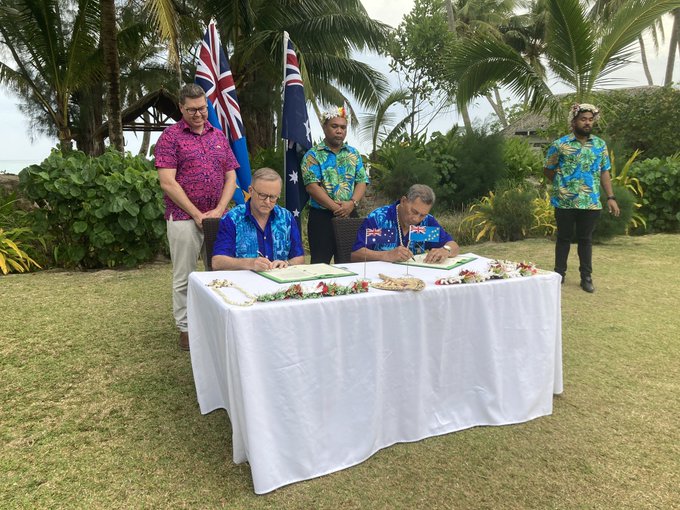
The deal was signed in the Cook Islands, a self-governing island territory in free association with the Government of New Zealand, at the margins of the 52nd Pacific Islands Forum Meeting, the regional body supposedly to be the paramount body of sovereign independent States of the Pacific. The PIF main concerns are primarily to deal with the political sovereignty, stability and security of the Pacific. It is unclear if the deal was an outcome of the PIF Leaders, and/or whether there has been a shift in PIF.

There are however serious problems with such a deal:

First, the Albnanese-Kausea deal was consulted and signed between the two prime ministers governments themselves without the knowledge of the people. It was never consulted with the people of Tuvalu nor by the Parliament of Tuvalu to better digest and comprehend the socio-economic and political implications of such an undertaking. Why so secretive, and who was hiding what. Speculations are flying everywhere, but one central rational that seems to be so overwhelming is honey money, for influence. Is Canberra the real harbour Tuvalu to park? What about the Saudis who have been ferrying the PM on their jets, and the Iranians to whom in 2012 we gave the Tuvalu flag of convenience to ship their oil to the world, against the UN and U.S trade sanctions.

It is not the first time that such an idea was floated around to Pacific Island countries. At the behest of hosting the 50th Pacific Islands Forum Meeting in Tuvalu August 2019, former Australian prime minister Kevin Rudd wrote an essay suggesting for the three micro-States in the PIF, Nauru, Kiribati and Tuvalu to be subsumed under some territorial arrangements with Australia. As the then Prime Minister of Tuvalu and host of the PIF Meeting, I rejected the idea as outright disrespectful and imperial colonialist.

Kevin Rudd is now Australia’s Ambassador to the U.S which may explain why there is a return to the original proposal as it seems to be aligned with the AUKUS security pact.

It is with similar sentiments that the proposed deal as now offered by Australia and signed with Tuvalu at the Cook Islands, must be considered appropriately within the bounds of international law and practices. Tuvalu’s political status now is reversed. The signed treaty must be ratified first by the Tuvalu Parliament before it enters into force.

Photo: Dr Anna Powles/X

Second, for the two prime ministers to advocate the application of climate change refugees to Tuvaluans who might be displaced by sea level rise and climate change is misplaced and naive. There is no such a thing as climate change refugees. Based on the 1951 Convention on Refugees “refugees are people displaced by political conflicts” in their own countries. To force an interpretation that Tuvaluans are “climate change refugees” is to self-serve and self-admit that the world is giving-up not only on Tuvalu, but also on honouring the commitments and the responsibility to account to the devastating damages that have been inflicted upon people, in Australia as well.

This deal, it seems, is like to buy Tuvalu’s silence over Australia’s coal exports which will contribute to Tuvalu’s demise as a nation. It is a very high cost to pay to allow coal exports for a small intake of Tuvaluans. It is also most likely that the entry requirements for Tuvaluans to go to Australia will be difficult, so like in the NZ PAC the year quota will never be reached.

There needs to be established, urgently, not a military pact disguised as a climate change response, but an international convention to recognise and protect the rights of people affected by climate change so that when they are displaced or resettled in other countries, they must continue to enjoy their fundamental human rights to culture, living, food, shelter, education, health, choice, nationhood, security, etc… Strictly, the displaced Tuvaluans must be relocated and resettled as a one sovereign nation in a process recognised and managed in line with the appropriate UN arrangements.

It is also shameful for a Tuvalu leader to self-admit defeat to climate change and sea level rise by choosing the option for Tuvalu’s sovereignty to be re-colonised by the biggest GHG carbon emitters, Australia. This is cheap compromise. Quite clearly, the Falepili Union deal is defeatist and self-serving offering advantages only to Australia but not to Tuvalu. Simple logistical and political questions will arise: how are the annual intake of Tuvaluans to be selected? And where in Australia would they resettle the Tuvaluans, would they be given a choice.

Australia must stop bullying the weakest and vulnerable PICs like Tuvalu in the guise of a climate change response to reclaim for their full political sovereignty and control over their rights and security. They must adhere first and foremost honour its commitments to the Paris Agreement on real concrete climate change actions. Their lack of real tangible actions is the cause of climate change and sea level rise in Tuvalu.

Third and finally, the deal is setting a very awkward precedent for Small Island Developing States (SIDS) whose recognition to participate in international relations is premised on their being sovereign independent States under international law. Tuvalu is a member of the United Nations and is able to participate fully in that capacity by token of that it is recognised of its defined territory, population and full control of its rights and foreign policy. Perhaps having the deal signed in a self-governing entity as Cook Islands was not a coincidence given that Tuvalu’s very sovereignty was now being practically changed and reversed to the same category as that of Pacific territories.

Are we still eligible to be a sovereign independent Member in the UN, UNFCCC, WHO, Commonwealth, etc… And are we now required to seek Canberra’s approval on Tuvalu’s vote in the UN or elsewhere, there will of course be more votes for Australia.

Another serious concern is to what extent is the signed “falepili” pack, together with its consequential arrangements, is going to affect international relations in the future. Australia is not the only country that possesses huge lands and lots of money, and who can afford perhaps more to bribe other weak and vulnerable SIDS for favours of falepili. Where would Tuvalu stop auctioning its sovereignty for money, including to the Saudis. Recall at one stage in 2008 Tuvalu was labelled by the New York Times as akin to a money seeking “prostitute” for shifting its votes in the UN General Assembly to Iran, for a few extra dollars, despite that country’s human rights abuse and violations. Shameful.

The notion of “falepili” is traditionally understood in the Polynesian societies as referring to the practice of serving, caring, loving and looking after your friends, families, nearby houses and neighbours. But whilst it may be true, the “falepili” notion is not without protocols. There are boundaries and lines of responsibility to each other to be observed. You cannot simply walk across to your “falepili” and harvest other people’s bananas or taro, without the consent and approval of the owner – a red line.

The deal now signed by the PIF leaders for Tuvalu, will surely have implications for new definition and understanding for the small island developing States in international relations. It will have serious implications for the upcoming collaborations with the rest of the world on climate change including such as those to be held in Dubai come COP28 next month and into the future. Is Tuvalu’s voice in COPs and UN to be trusted? Will Tuvalu continue to have trust from the other SIDS and AOSIS Members?

In effect Tuvalu has given away its future to Australia. Australia continues to export coal at an alarming rate and this agreement is now placed to buy Tuvalu’s silence against these coal exports. It basically says that we don’t care if Tuvalu disappears, we will be able to live in Australia. This is shocking, a complete divestment of national interests. A classic example of neo-colonialsm.

The metropolitan powers not only in the Pacific but worldwide are once again redefining the terms of sovereignty of the SIDS on the basis of their powers. The falepili union treaty is far from being a climate change resettlement deal. It is in fact a power intervention, a bribery, and a military deal against China and others, and against the weak and vulnerable SIDS like Tuvalu.

SOURCE: PACNEWS

‘No more excuses’: Commonwealth Secretary-General will call for accelerated action on climate crisis at COP28

0

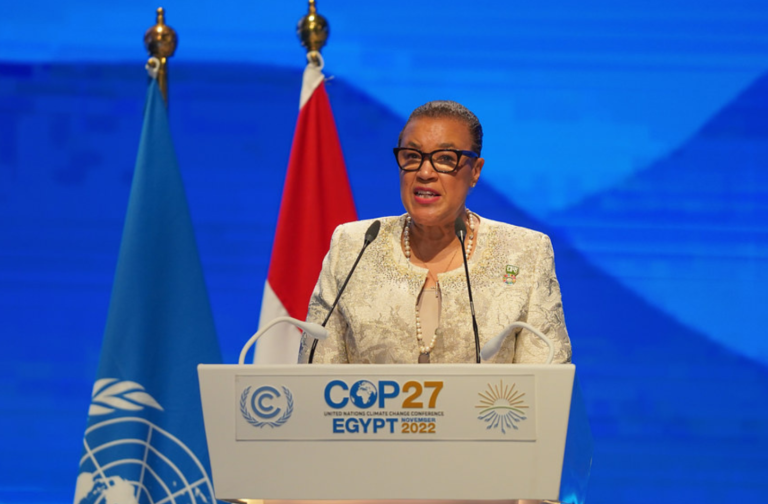
The Secretary-General, Patricia Scotland KC, will lead the Commonwealth delegation at the United Nations Climate Change Conference (COP28) in Dubai to call for accelerated action on the climate crisis in light of intensifying threats to small and vulnerable member countries.

Scheduled from 30 November to 12 December 2023, the annual summit comes just months after Commonwealth environment ministers committed to accelerating climate action at their inaugural meeting, held alongside the 78th Session of the United Nations General Assembly in New York City.

The Secretary-General, who will deliver at least 20 speeches across the summit, will urge negotiators to deliver a transformative outcome at the summit.

This includes accelerating efforts to implement national climate plans mandated under the Paris Agreement, using the findings of the ‘global stocktake’ report to increase ambition and action, and delivering an inclusive, operational Loss and Damage Fund.

Secretary-General Patricia Scotland will officially open the Commonwealth Pavilion COP28, which will host about 40 events across the two weeks, demonstrating the Commonwealth’s ability to convene vital dialogues between governments, experts, businesses, youth leaders and civil society.

She will also meet with leaders and ministers from Commonwealth member countries and across the international community, to advance progress on emissions, finance, adaptation, biodiversity, oceans, health, innovation and the green economy.

Ahead of the summit, the Commonwealth Secretary-General said:

“The worst predictions of climate change have become a daily reality. In the Commonwealth’s most vulnerable countries, fertile lands are turning to dust, wells are running dry, storms and floods are overwhelming communities, and the ocean is rising.

“This represents not only a threat to the health, welfare and survival of millions of people, but to our collective stability and economic prospects.

“Yet as climate change advances, the gap on emissions, finance and justice has widened, while the window for action continues to narrow. COP28 must close that gap.

“Every day of delay makes life more dangerous, and makes climate action more complex, challenging and expensive. There can be no more delays, and no more excuses – this is the time for implementation.”

“The health of us all and of our planet rests on a 1.5°C degree cap on global warming,” she added. “We cannot lose sight of that objective, and I implore leaders at COP28 to renew their determination to deliver a bright, resilient, sustainable common world – now and for generations to come.”

During the summit, the Secretary-General will call for increased support for small and vulnerable states, highlighting that despite ambitious pledges, these countries are receiving limited funds to mitigate, adapt to and build resilience against the impacts of climate breakdown.

She will also draw attention to the broader consequences of the climate crisis on economic growth, leading to high debt burdens, food insecurity, stressed resources, and impaired livelihoods for many of the 2.5 billion people living across the Commonwealth.

Secretary-General Scotland will inform delegates at COP28 about the Commonwealth’s programme, designed to assist its member countries – including 33 small states – in dealing with the challenges posed by the climate crisis.

These include:

– the Commonwealth Climate Finance Access Hub, which has mobilised US$310 million in climate finance for 17 vulnerable Commonwealth countries, with an additional US$500 million in the pipeline;
– the Commonwealth Blue Charter, which is an agreement by all 56 member countries to actively co-operate to address shared ocean challenges;
– the Commonwealth Living Lands Charter: A Call to Action, which commits Commonwealth countries to safeguard global land resources while taking coordinated action on climate change, biodiversity loss and sustainable land management;
– the Commonwealth Disaster Risk Finance Portal, which gives countries open, 24-hour hour access to key information on financing to better manage the impact of disasters; and
– the Commonwealth Sustainable Energy Transition Agenda, which seeks to fast-track an inclusive, just, and equitable transition to low-carbon energy systems across the group.

In light of 2023 being designated as the Commonwealth Year of Youth, the Commonwealth delegation will also host a series of events focused on promoting youth-led action on challenges posed by climate change.

SOURCE: THE COMMONWEALTH/PACNEWS

Achieving a robust Global Stocktake imperative to Small Island Developing States survival

0

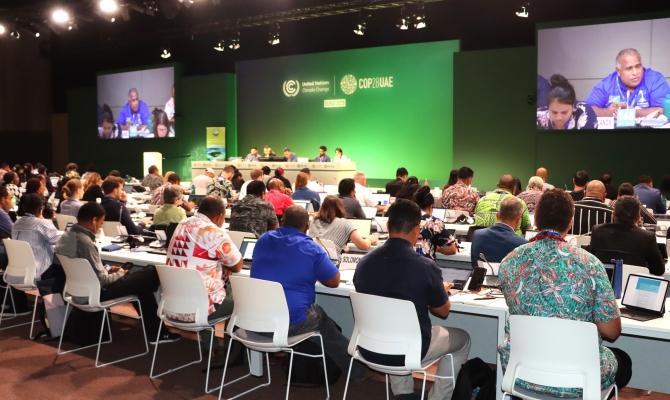
Small island developing states (SIDS) from the Pacific, Caribbean, African, Indian Ocean and South China Seas have converged in Dubai ahead of the pivotal United Nations climate summit, COP28, to strengthen positions on priorities that must be achieved to give SIDS the best chance of sustainably coping with worsening climate change impacts.

At SIDS Prep days on 26 and 27 November, all lead coordinators for the Alliance of Small Island States (AOSIS), the negotiating bloc for SIDS, presented on the state of play, giving critical updates on the various thematic topics that will be negotiated at COP28.

Chair of AOSIS, Ambassador Fatumanava-o-Upolu III Dr Pa’olelei Luteru, stated that AOSIS will be taking a strong position on issues central to safeguarding vulnerable countries, such as the Global Stocktake (a tool within the Paris Agreement which assesses progress of all countries’ actions to address climate change).

“This is a global mission for the greater good. SIDS have been making significant strides on climate action, but we must be realistic. We account for less than 1 percent of global emissions. The developed countries which contribute 80 percent of the world’s carbon emissions must raise their ambition. They must lead on fossil fuel phaseout. Phasing out fossil fuel subsidies and making deep, drastic cuts to ensure we reach net zero by 2050 is of the essence. This is a matter of survival not just for our islands, but our world,” he said.

“For our countries on the frontlines of this climate crisis, a strong outcome on the Global Stocktake is imperative. We know we are woefully behind on achieving the climate goals of the Paris Agreement. The GST is a critical process that indicates where we need to re-orientate.

“We know we must stay within the 1.5°C warming limit if we are to avoid the worst impacts of climate change – impacts our islands are already suffering from, including loss of land from sea level rise, catastrophic loss of lives and homes from more frequent and severe storms, lack of drinkable water, agricultural depletion, and more. The GST should be based on the best available science which supports this need, and gives us a roadmap for course correction.

“In addition to the GST and keeping 1.5 alive, at COP28 we must achieve a robust framework for the Global Goal on Adaptation to accelerate adaptation action. Failing here is not an option for SIDS.

“On Loss and Damage funding arrangements, we look forward to countries taking the recommendations of the Transitional Committee on board so we can finally open the channels of finance to assist the vulnerable countries that desperately need the support. It is fundamental that the Loss and Damage Fund has an adequate scale of capitalisation, at least US$100 billion for the first four years of the Fund.

“Small island developing states have been crying out for urgent climate action for over three decades and we can no longer be ignored. Now is the time for concrete action, and we are amplifying our call. Real results matter to us. We cannot, must not go into COP28 banking on a lot of pledges with no tangible commitments. Our survival is at stake.

“We are all in this together. Small island developing states may be on the immediate frontlines of the climate crisis – but be assured, if we do not act together, we will all be affected. The climate crisis is here and it is very real. The time to act must be now, said Ambassador Luteru.

SOURCE: AOSIS/SPREP/PACNEWS

Samoa in talks with England about 2024 tour

0

Samoa is considering a proposal to build on their rivalry with England during last year’s Rugby League World Cup after officials agreed to re-open talks about a series in 2024.

Rugby League Samoa officials agreed to re-engage with their English counterparts about a series in England at the end of next season following a meeting with International Rugby League chair Troy Grant on Monday.

The IRL board last Thursday discussed Samoa’s decision to decline an invitation to travel to the England next year and strongly encouraged the 2022 World Cup finalists to reconsider a proposal for the series.’

Grant met with Toa Samoa team manager Hanan Laban in Brisbane, with Rugby League Samoa Executive President Fiu Faaolatane Ponifasio Vasa also involved in the meeting remotely.

Vasa gave a commitment to re-engage with the Rugby Football League about Samoa touring England in 2024 and it is hoped the likes of Jarome Luai, Stephen Crichton, Brian To’o and Junior Paulo will be keen to play in the series.

After being humbled 60-6 by England in the opening match of the World Cup at Newcastle’s St James Park, Samoa gained revenge when they triumphed 27-26 in a gripping semi-final at Arsenal’s Emirates Stadium.

In doing so, Samoa became the first Tier 2 nation to qualify for a World Cup final and attracted support around the world, including from The Rock, ahead of the decider against the Kangaroos.

Grant, who has also spoken with Samoa coach Ben Gardiner, praised the leadership of Vasa and the new Rugby League Samoa executive board, who were elected in July.

“I am excited by the new direction and vision of Rugby League Samoa, their improved capability and plans for the growth of rugby league in Samoa,” he said.

“It is pleasing that they understand how important Samoa is to the international rugby league family and I was very impressed by their positive approach towards helping to build the game in the Northern Hemisphere.”

The IRL board recently announced an international calendar through to 2030, commencing this year with Tonga’s historic tour to England and the inaugural Pacific Championships, featuring New Zealand, Australia, Samoa, Papua New Guinea, Fiji and Cook Islands.

The European Rugby League is working on a Euros competition to coincide with the desired Samoan tour to England, giving the Northern Hemisphere the most international content in recent memory at the end of next season.

England will then travel to Australia for the first Ashes series in 21 years at the end of the 2025 season, with Samoa re-joining the Pacific Championships.

Grant offered Samoa the support needed to ensure the Pacific nation can successfully and viably tour England in 2024 to provide international rugby league fans one of the most highly anticipated series in recent memory.

“Rugby League Samoa will work with the IRL and RFL to understand any hurdles needed to overcome in making the tour a successful reality and continue to build on the wonderful legacy they have recently achieved,” he said.

England officials welcomed the news after previously announcing they were exploring all options following Samoa’s decision to turn down an invitation to play a three-match series.

England completed a 3-0 series whitewash of Tonga and with a tour of Australia scheduled for 2025 and the next Rugby League World Cup taking place in 2026, the RFL is determined to maintain the momentum next year.

“We now owe it to Shaun Wane and the players, and to England supporters, to deliver meaningful international rugby league in 2024, and we are working with RL Commercial and the IRL to make that happen,” RFL chair and IRL director Simon Johnson said.

England men and women are scheduled to tour Australia in 2025, while New Zealand and Australia have both agreed to visit England in consecutive years after the 2026 World Cup in the Southern Hemisphere.

SOURCE: NRL/PACNEWS

FSM ‘faced with a fiscal cliff’, President Simina says

0

Federated States of Micronesia (FSM) President Wesley Simina says his country could be staring down a “fiscal cliff” very soon if the U.S Congress does not approve its Compact of Free Association (COFA) agreement.

“If nothing works out, if the U.S Congress does not approve [COFA] in time, we’re faced with a fiscal cliff,” President Simina said.

“That means we will have to find different sources of funding…and that’s not out there available immediately.”

At the tail end of the 52nd Pacific Islands Forum Leaders Summit in Rarotonga, Wesley Simina told RNZ Pacific domestic issues, particularly U.S financing, were front of mind for him.

The FSM Congress had ratified the compact but the U.S congress also needed to approve it to push through funding.

“Our part is done. Our Congress has ratified it,” he said.

Two weeks ago, he was hoping for U.S approval in a matter of days.

However, RNZ Pacific understands that still has not happened.

“We are dependent on U.S assistance, and they’re having their own issues.

“So we’re trying to make sure we can [make] do while they’re working on our new Compact of Free Association.

“That’s the treaty that takes care of our relationship with the United States.”

The Marshall Islands and Palau have also signed a similar compact association deals with Washington.

However, it is not just the FSM’s financial situation needing approval by the U.S Congress.

There are the billions of dollars pledged by President Joe Biden to Pacific Island Forum member states at this year’s U.S-Pacific meeting and this year’s one yet to make it to the front line due to the nation’s debt crisis.

Simina said the U.S Congress understands just how urgent the financing matter is for Micronesia.

“What we understand is that the U.S Congress also understands that situation, and they’re working very hard,” he said.

While a stop gap is in place the funding available is slim.

A spokesperson for the FSM government told RNZ Pacific they appreciate the interim support from the United States while it awaits approval of The Compact of Free Association Amendments Act of 2023.

“As of now, the House Natural Resources Committee and the Senate Energy and Natural Resources Committee have approved the 2023 Compact and the 2023 Subsidiary Agreements at the Committee level.

“The bill approved by these two committees that would approve the U.S-FSM agreements is entitled ‘The Compact of Free Association Amendments Act of 2023”

“The House Natural Resources Committee and the Senate Energy and Natural Resources Committee have asked that the Senate and House Armed Services Committees include the text of this bill in the annual National Defense Authorization Act (NDAA), a bill that normally passes in Congress before the end of December every calendar year.

“The Biden Administration and the FSM Government are strongly urging that the Compact of Free Association Amendments Act of 2023 be included in the NDAA. The House and Senate conference process for the NDAA will take place over the next 2-4 weeks and we will know in that time frame whether the Compact Act is included in the NDAA.

They said while the Compact Act is pending, “the Congress has approved pro rata funding for sector grants at the FY 2023 level through 02 February 2024, as a part of the US Congress’s continuing resolutions”

“his means that the FSM has a stopgap funding stream at the FY 2023 level for sector grants until the U.S Congress completes its consideration of The Compact of Free Association Amendments Act of 2023.

“While this is a lower amount than the funding the FSM would receive for sector grants once the new Compact amendments are approved, we appreciate this interim support from the United States,” the spokesperson added.

The FSM’s new administration started in May 2023.

President Simina said that his government was still in the process of filling roles of ambassadors and officials, almost six months after the election.

Like the rest of the world, the Federated States of Micronesia is also in pandemic recovery mode.

“There’s no question that the impact of Covid-19 was real for us economically and socially,” Simina said.

But because of former president David Panuelo’s quick action, Simina believes his nation was one of the “luckiest” in the Pacific.

“We took quick action in locking down our nation’s borders. I was the Speaker then of the FSM Congress,” he said.

Lockdown impacted FSM’s economy, particularly with the loss of tourism.

Fortunately, there was money set aside for a rainy day and the nation also had assistance from ADB and the U.S, Simina said.

“Right now, we’re just continuing to make sure that tourists come back,” he said.

National and regional unity is Simina’s top priority for this term.

“Our unity is our strength and our prosperity,” he said in his inaugural address.

“Trying to keep the ropes of unity, to keep tying up our states,” he said.

Starting off internally, he wants unity between Pohnpei, Kosrae, Chuuk and Yap – the four states that make up FSM.

“We have to find the common grounds that will keep us together,” Simina said.

Climate change is a “huge problem” and infrastructure is another issue that needs addressing, he noted.

Regional issues are also front of mind as Simina is the current chair of the Micronesia Presidents Summit which is made up of FSM, Kiribati, Nauru, Palau and the Marshall Islands.

“We have five governments to deal with. And being the chairman of the MPS, I am very mindful of that.

“So that kind of unity I want to also bring out to the Micronesian region as well,” Simina explained.

All this talk of unity on the backdrop of Nauru ditching Pacific Islands Forum leaders in Cook Islands.

This, following discussions regarding the appointment process of the controversial incoming Forum Secretary-General Baron Waqa.

Simina said he had not been party to any discussions around apologising to Nauru over what has been called a “misunderstanding”.

“We’re looking at our process moving forward into the future, for example the appointment of the next SG,” Simina said.

He said strengthening the framework around the Suva Agreement has also been discussed.

“I’m not sure there was anything that went wrong with the appointment.

“But the process itself because of the special circumstances of the time…so they kind of rushed and put together something so that we know it’s working properly.

“So that’s exactly what happens. We were discussing how to strengthen to make sure that something like what happened before that happened again,” he said.

SOURCE: RNZ PACIFIC/PACNEWS

Stay connected

529FansLike
172FollowersFollow
156SubscribersSubscribe
- Advertisement -