Home Blog Page 505

Australia supports Pacific athletes on their journey to Paris 2024 Olympic and Paralympic Games

0

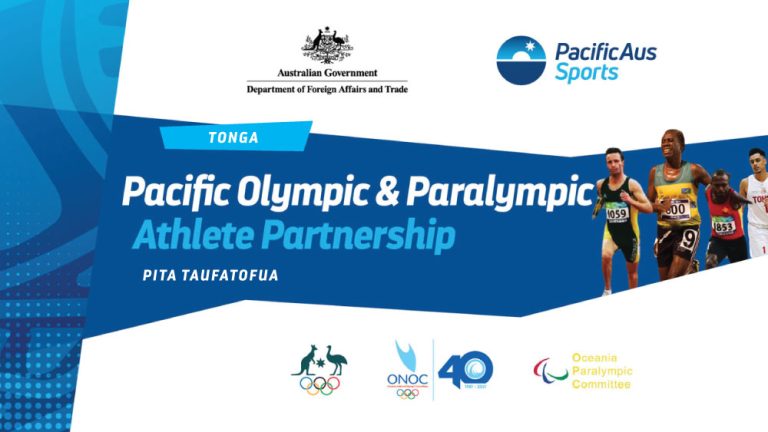
The Australian Government, through PacificAus Sports, will partner with the Australian Olympic Committee (AOC) to support more than 250 athletes from 13 Pacific nations as they prepare for the Paris 2024 Olympic and Paralympic Games.

The supported athletes will compete across 15 sports including athletics, swimming, boxing, weightlifting and Rugby 7s. Australia’s commitment to promoting greater inclusion of women and girls in sport at the highest levels remains in place with almost equal representation of both male and female athletes included in this support.

One of the athletes benefiting from the Australian Government’s support ahead of the Paris Games is Papua New Guinea long jumper Rellie Kaputin.

Kaputin made her Olympic debut in Tokyo and finished ahead of 9 other competitors despite entering the Games as the lowest ranked athlete in the long jump event.

Rellie Kaputin, Papua New Guinea long jumper said:“Leading into the Tokyo Olympic Games, the funding from Australia made a huge difference to me in my ability to be able to prepare for the Games as well as my competition at Games time. I’m very grateful to again have that level of support as I prepare to represent not only Papua New Guinea, but my region at the Paris 2024 Olympics.”

Minister for International Development and the Pacific, Pat Conroy said:“Australia and the Pacific share a deep and enduring love of sport. The Australian Government is proud to be partnering with the Australian Olympic Committee to support so many talented athletes from across the Pacific to realise their Olympic and Paralympic dreams, and to further bolster our strong bond with the Pacific region.”

Minister for Sport, Anika Wells said: “Sport unifies nations and is vital to creating community spirit. This funding will foster enduring memories for the athletes and their passionate supporters throughout the Pacific.

“I can’t wait to see the talent of the Pacific region displayed on the world stage in Paris.”

AOC CEO Matt Carroll said:“Sport and the Olympic and Paralympic Games can inspire athletes across the world to create connection, to build relationships and to craft a strong positive dialogue between nations.

“Our thanks to the Australian Government for involving the AOC in this important project to assist our Oceania colleagues.

“Paris will be a wonderful Games and a great opportunity for our Pacific neighbours to show the world what they can do.”

Oceania National Olympic Committee President Dr Robin Mitchell said:“We’re excited again to work with the Australian Government to support our athletes through their final preparations on their Journey to the Games.”

Oceania Paralympic Committee President Paul Bird said:“This funding is vital to assist our Pacific Island Paralympians reach their goals and achieve their best in Paris. With this level of funding, we are hoping for the largest representation of Pacific Paralympic athletes and Nations at a Games – at least twice as many as Tokyo.”

International Olympic Committee CEO James MacLeod said:“The International Olympic Committee is delighted to learn of the continued support for Pacific Island nations via the Australian Government, through PacificAus Sports and the Australian Olympic Committee.

“This will assist these smaller nations with qualifying, competing and performing at the Paris Games, and is a true model for continental solidarity

SOURCE: AUST GOVT/PACNEWS

Super Rugby Pacific introduces offside law variations

0

Super Rugby Pacific will look to encourage more counterattacking from kicking duals as they tweak the offside laws.

The current laws state players can be put onside from a kick if the ball is either passed or the ball carrier runs five metres.

This limits the amount of opportunities and space to attack, leading to further kicking between the teams.

Super Rugby Pacific’s Law Innovation will remove those two clauses, meaning defenders will remain offside until they have been put onside by a teammate who has come from behind the kicker, or the kicker themself.

“We want to create a game that’s exciting for our fans and enjoyable for our players,” Super Rugby Pacific Chair Kevin Malloy said. “Part of that is seeing our players running the ball rather than trading multiple kicks in a battle for territory. We’re listening to our fans and with the full support of New Zealand Rugby,

“Rugby Australia, and our coaches we’ve responded with a small change we think could make a big difference.

“Fans have been vocal in recent times about teams exploiting a loophole that’s seen large number of players standing still while kicks go over their heads in what some people have called kick tennis.

“We don’t believe that’s the spectacle our fans want to see in Super Rugby Pacific.

“We want to open up the opportunity for teams to counterattack with the ball in hand and we’re confident this tweak to the law will encourage that trend and encourage exciting, attacking rugby.”

The Law Innovation has been sanctioned by World Rugby as a trial during the 2024 Super Rugby Pacific season.

“We were really happy with the spectacle last year and hence we have only made one tweak to the laws for 2024,” Molloy added.

“We want to keep building an exciting, fast-moving brand of rugby that our fans want to watch.”.

SOURCE: RUGBY.COM/AU/PACNEWS

Japan reaffirms commitment to safety in Fukushima Treated Water discharge into Pacific Ocean

The government of Japan reaffirmed its commitment to ensuring the safety of releasing treated water from the Fukushima Daiichi nuclear power plant into the Pacific Ocean.

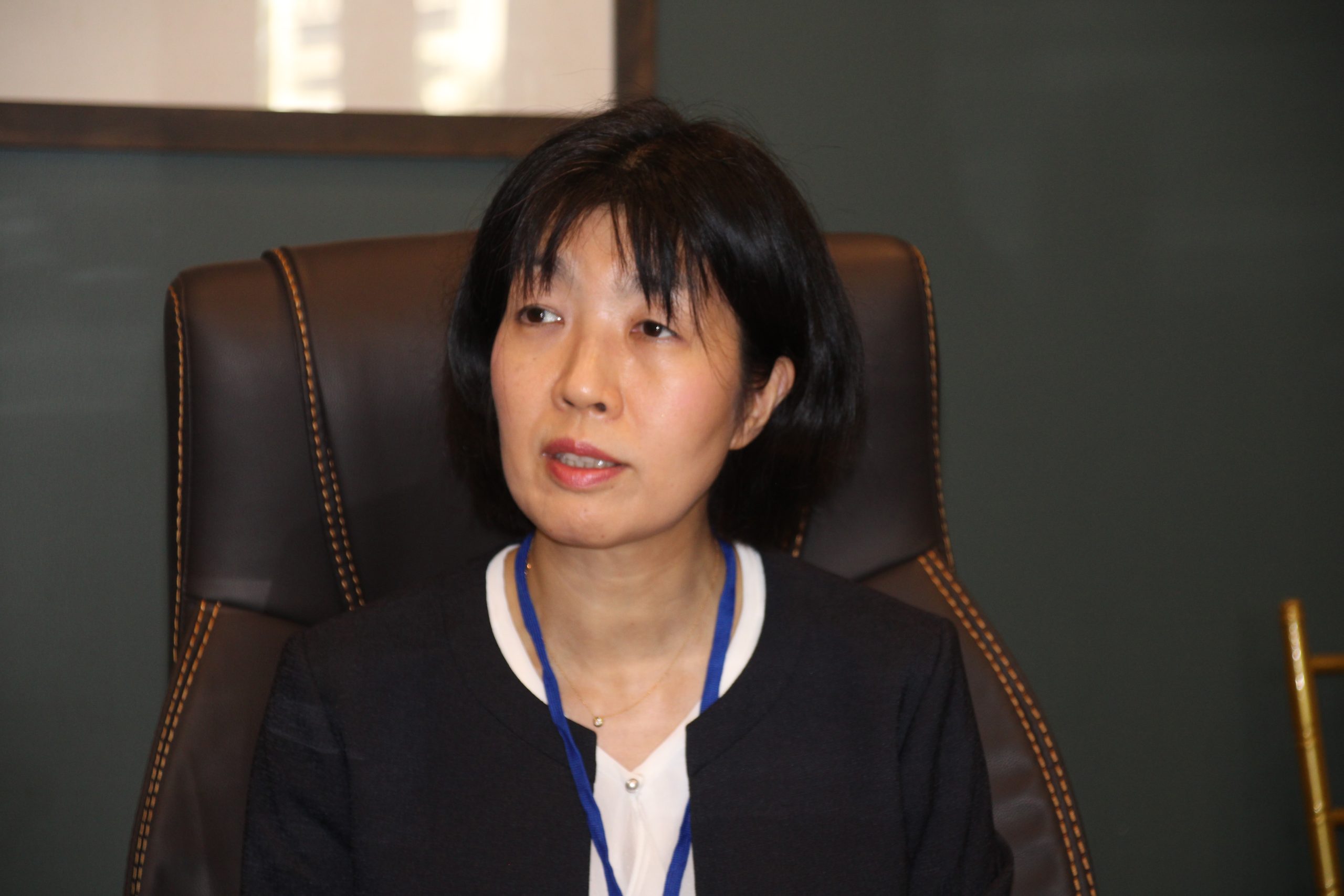
In a press briefing in Suva Monday, Japan’s Deputy Press Secretary Mariko Kaneko said the decision to discharge the treated water into the ocean came after six years of extensive research and consultation with the International Atomic Energy Agency (IAEA), the authoritative international organisation regulating nuclear activities.

Kaneko said the Advanced Liquid Processing System (ALPS) has been instrumental in treating the water, removing all nuclides except tritium from the contaminated water used to cool down nuclear reactors.

“We spent over six years to decide which method is the best and safest way because after discharging, maybe through land in Japan or evaporating into the air these methods are considered difficult to monitor so, most chosen method by other nuclear power plants all over the world was discharging into the water that can be monitored correctly,” she explained.

“Every nuclear power plant in the world needs water to cool down the reactor, not only the reactor that had an accident, like Fukushima, all the nuclear power plants have water to cool down and then that water needs to be clean in a way.

“We were using a lot of water to cool down the reactor in the Fukushima Daiichi nuclear power plant and we could not continue just storing it in the tank and a lot of the other nuclear power plants in the rest of the world do discharge the waters, this treated waters, into ocean.

“It’s a common way of discharging and based on the discussion and consultation with IAEA which is the authentic and authority international organisation that has authority to decide, came up with a regulation of the nuclear activities, until then we have always been in consultation with the IAEA and came up to a decision that we are discharging the treated water, and treated water is safe.”
She highlighted that Japan dilute very much until it’s so below the regulatory standards and the discharge water has the amount of tritium less than other waters discharged in other countries,

“We know how much of the tritium is discharged from other nuclear power plants in rest of the world and even compared to those waters, the waters coming out from the operating nuclear power plant that was not an accident, we are discharging lower amount because we diluted enough and that is how we do it.”

Japan’s Deputy Press Secretary Mariko Kaneko. Photo: Sanjeshni Kumar/Pasifika Environews/PINA

She assured this method aligns with international standards and ensures the safety of both Japanese citizens and neighboring Pacific Island countries.

She reiterated the Prime Minister of Japan, Fumio Kishida when he received the delegation from the Pacific Island told them that, “We will not discharge water that would harm the health of both Japanese people and the people of the PIF countries.”

“We believe that what we have done that until now is safe, and we will continue to ensure that is safe and have continued dialogue and discussions with the Pacific Island countries on this matter,” Kaneko said.

Kaneko underlined that the discharge location is within Japan’s territorial waters, where the water will be diluted and dispersed naturally, minimising any potential risks.

She stressed that Japan has been vigilant in monitoring not only the discharged water but also fisheries and agricultural products from the surrounding area.

Products exceeding regulatory standards are withheld from the market, ensuring consumer safety.

“We are monitoring the fisheries products and as well as agricultural products produced in that area and are already in the market of Japan and even in other countries now.

“We monitor the safety of those products as well.

“And if we find anything that has some nuclides that is over the regulatory standard then that product will not go into the market, that is how we’ve been doing it until now, and we didn’t have big problems.

“Already most of the countries have lifted the import restrictions on our products. Even the products from that area are of course not in Japan, but also in other countries,” she said.

While asked by Pasifika Environews if there are any plans for international cooperation in managing the aftermath of the discharge and mitigating any potential environmental impact, Kaneko said that Japan has cooperated with third-country laboratories to ensure thorough oversight and verification of the discharged water’s safety.

“Through IAEA, we have been cooperating with other third country parties as well who have knowledge in monitoring these waters or the ocean. We are trying to be transparent, and we are confident. We also had expertise, but IAEA has more expertise and they’re always there monitoring with us and reviewing.”

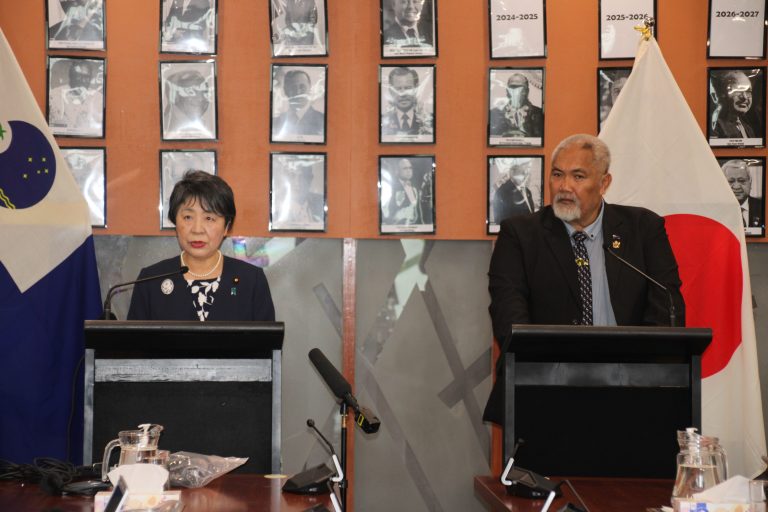
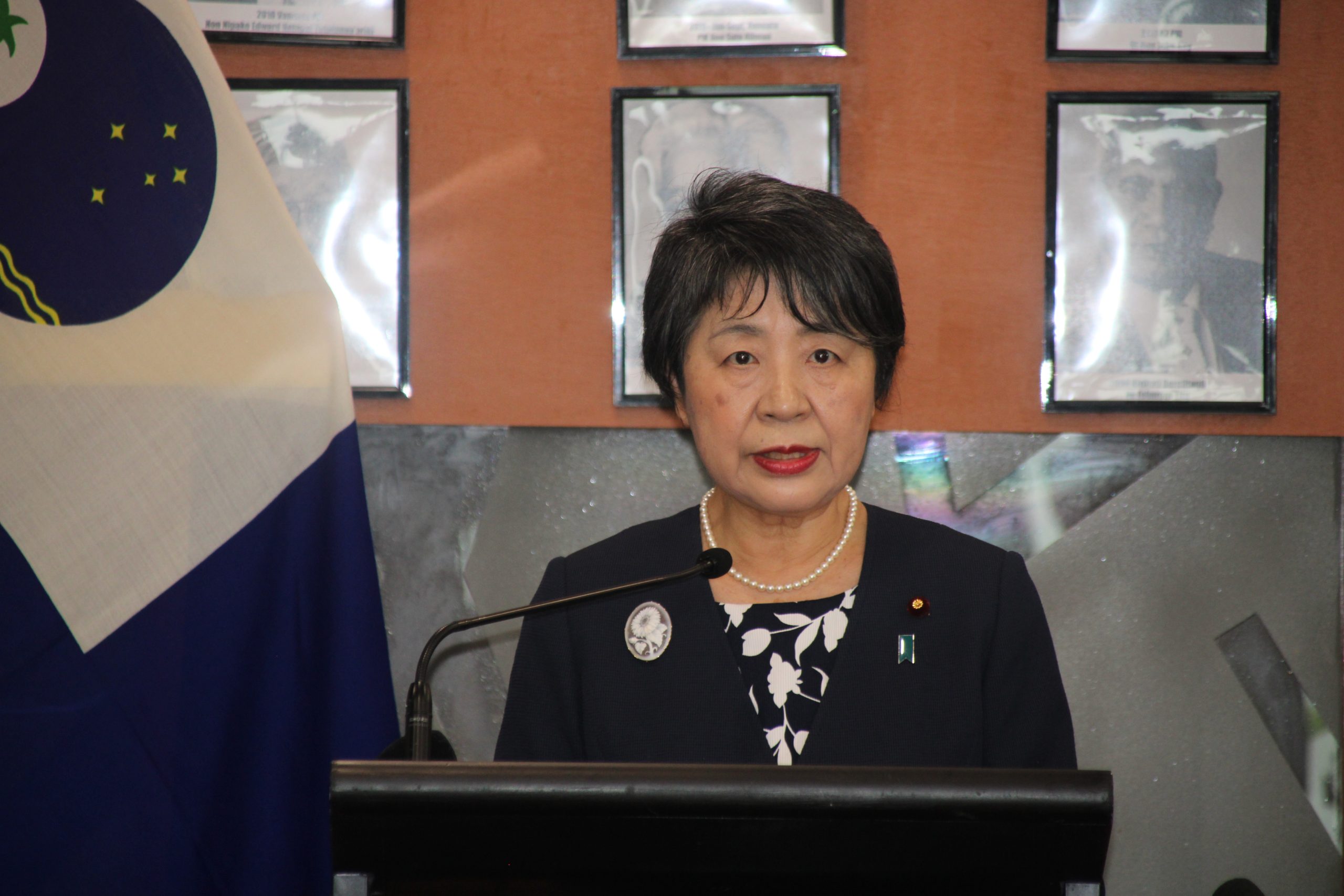
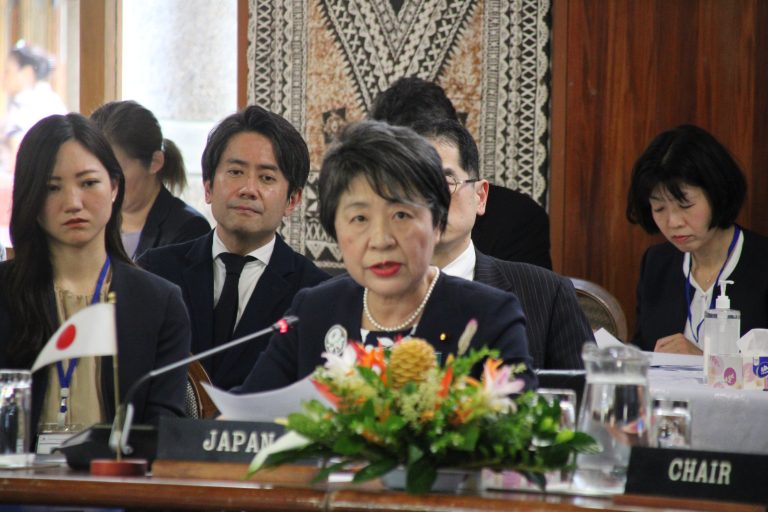
Minister for Foreign Affairs of Japan, Yoko Kamikawa. Photo: Sanjeshni Kumar/Pasifika Environews/PINA

During a joint press statement at the Pacific Islands Forum (PIF), Monday, Japan’s Foreign Affairs Minister, Yoko Kamikawa said in the 5th Japan- Pacific Ministerial Interim Meeting, Japan and PIF members agreed to recognise the IAEA as an authority, a nuclear safety and to continue a dialogue with high level of transparency based on scientific evidence.

She told the Ministers in the meeting that the discharge has been carried out in accordance with relevant international safety standards and practices, and Japan is committed to continue working closely with the International Atomic Energy Agency (IAEA).

Minister Kamikawa also expressed her appreciation for the science-based discussions that Pacific Island Countries have been engaging in with Japan and the IAEA.

She concurred on maintaining the ALPS issue as a standing agenda item for PALM, supported by an ongoing dialogue process.

SOURCE: PACNEWS/PASIFIKA ENVIRONEWS

Former advisor says King should dissolve Tonga’s parliament following standoff

0

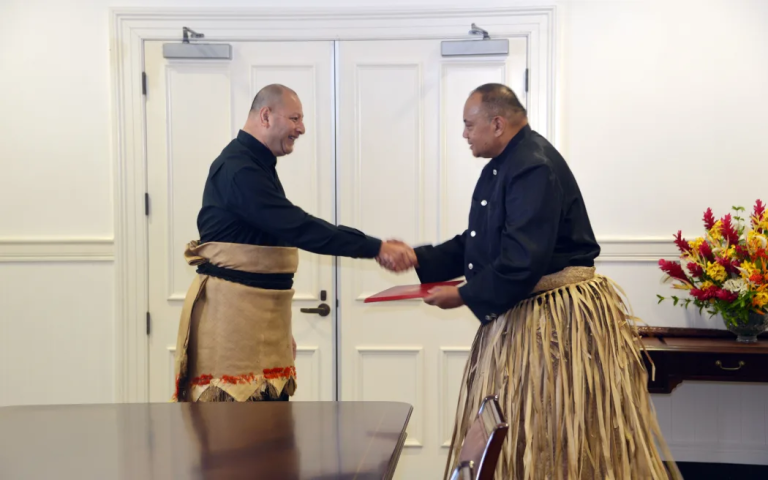
A former political advisor believes Tonga’s parliament should be dissolved due to the current stand-off between King Tupou VI and the government.

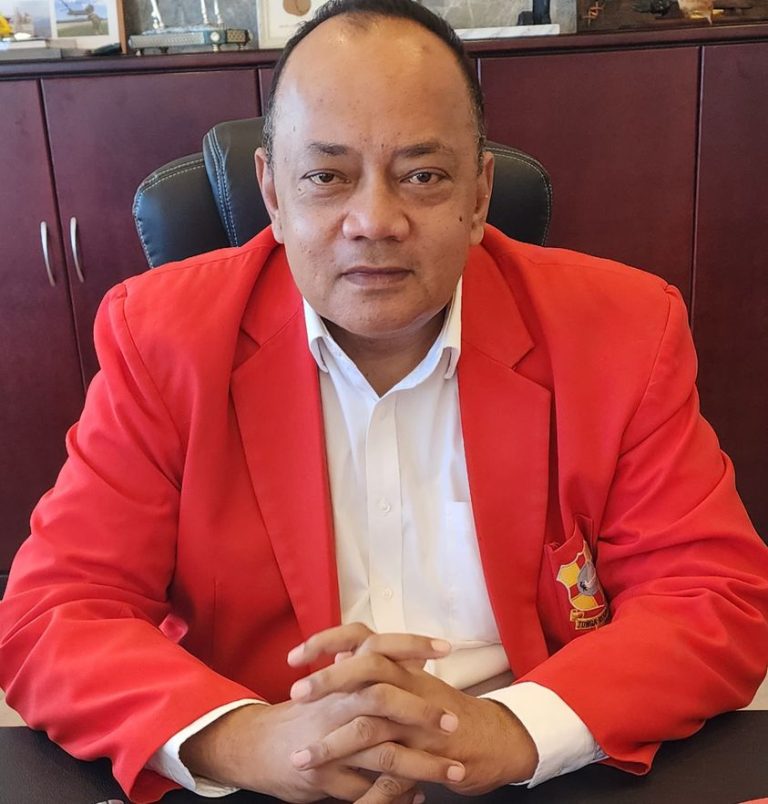
Lopeti Senituli advisor to former Prime Minister Akalisi Pohiva says the King has no confidence in the current Prime Minister Siaosi Sovaleni.

And he says it’s time for the prime minister to step down.

Meanwhile, a stalemate remains in Tonga after an announcement last week from the Privy Council that King Tupou VI was withdrawing confidence in the Minister of Foreign Affairs and Minister of Defence.

But the government, through acting Prime Minister Samiu Vaipulu announced, its advice was the decision as to who occupies ministries is not the King’s to make, but rather the government’s.

For this reason, he said, the government was maintaining its appointments in the ministries.

SOURCE: ABC PACIFIC/PACNEWS

Uncharted waters: the standoff between Tonga’s King and government

0

By Lopeti Senituli

Early last week, the Secretary of Tonga’s Privy Council wrote to the Chief Secretary (Secretary to Cabinet and to the Prime Minister), saying “I have the honour to inform you that His Majesty in Council’s Decision PC17/2024, approved by circulation of 02 Feb 2024, was … pleased by and with the advice of the Privy Council to withdraw His confidence and consent to the appointment of Hu’akavameliku [the hereditary title of Prime Minister Siaosi Sovaleni] as Minister for His Majesty’s Armed Forces and … to the appointment of Fekitamoeloa Katoa ‘Utoikamanu as Minister for Foreign Affairs and Minister for Tourism.”

The Privy Council is composed of people whom the King “sees fit to call his Council”. They are appointed under the Constitution to “provide him with advice” on all and sundry. The Council does not have any executive powers. Its current membership includes one Law Lord (Lord Dalgety of Scotland, a former Chief Justice who took up Tongan citizenship on retirement from the Bench), the President of the Free Wesleyan Church of Tonga (Rev. Dr Tevita K. Havea) and a former Deputy Prime Minister and Chief Surgeon at the main referral hospital (Dr Viliami Tangi, who was appointed to the non-hereditary title of “Lord Tangi ‘o e Vaonukanuka” by the previous king in 2011). It is significant that the PC17/2024 decision was “approved by circulation”, meaning there wasn’t a face-to-face meeting of members.

The Acting Prime Minister, Samiu K. Vaipulu (the Prime Minister being overseas for medical reasons) issued a media release on 06 February 2024 stating that the decision of the King in Council was contrary to clause 51(3)(a) of the Constitution which specifies that a minister shall retain his or her position as minister until his or her appointment is revoked by the King on the recommendation of the Prime Minister. The statement went on to say that a letter will be sent to the Palace Office reminding the King of that clause and added, “the Prime Minister, who is currently overseas, has reiterated his confidence in the Minister of Foreign Affairs and Tourism, Fekitaloa Katoa ‘Utoikamanu”. However, not a word was said about the removal of the King’s confidence and trust in the Prime Minister as Minister for His Majesty’s Armed Forces.

So, the ball is in the King’s court. What will happen next is anybody’s guess. The country has never had to cross this bridge before.

The last time a minister’s appointment was revoked by the King was in the middle of 2018, but in that case it was done on the recommendation of the late Prime Minister, Samuela ‘Akilisi Pohiva. Akosita Lavulavu, Minister for Internal Affairs, had been jointly charged with her husband ‘Etuate Lavulavu in March 2018 with three counts each of knowingly dealing with forged documents and three counts of obtaining credit by false pretences, relating to several irregularities in an audit of their ‘Unuaki ‘o Tonga Royal Institute which, like other non-government secondary and tertiary educational institutions, had received annual government subsidies. Pohiva had asked the minister to resign from Cabinet and await the outcome of the trial. She refused, so he recommended to the King that her appointment be revoked. The King complied, although it took some months.

This latest Royal decision does not constitute a revocation of the appointments of the two ministers. It is an expression by the King of his loss of confidence in them. It was for the Prime Minister to decide whether or not he concurred. In the event, the Prime Minister did not concur with the King’s opinion in relation to the Minister for Foreign Affairs and Minister for Tourism, who was appointed to that role from outside Parliament at the beginning of the current government’s four-year term in January 2022 and is the only female Cabinet member. She had previously been a civil servant and diplomat, serving as the country’s Ambassador to the United Nations in New York and as a Deputy Director-General of the Secretariat of the Pacific Community.

The lack of any official response to the withdrawal of confidence and consent to the appointment of Prime Minister Sovaleni as Minister for His Majesty’s Armed Forces is concerning. In addition to being Prime Minister and Minister for His Majesty’s Armed Forces, Sovaleni is also Minister for Education and Training, Minister for Meteorology, Energy, Information, Disaster Management, Environment, Climate Change and Communications, and Minister for Police. The loss of royal confidence in his person as minister for the defence portfolio has definite implications for his other portfolios. He is a single human being whose strengths and frailties are equally relevant across his several portfolios.

One possible interpretation of the Prime Minister’s silence on his own position is that he concurs with the King and will relinquish the armed forces portfolio. However, this could be a politically terminal move for him. On the other hand, if he were to oppose the King’s will, Parliament could be dissolved and new elections called.

The last time the King dismissed an incumbent Prime Minister was in August 2017, when he dissolved Parliament and called for new elections as he is constitutionally empowered to do, with no requirement that he publicly disclose the reasons. On that occasion, the King did not give the then incumbent Prime Minister (Pohiva) an opportunity to say whether he concurred with the King’s assessment of the situation.

The last time the King threw his weight around in this way was in the middle of 2019 when he effectively caused the removal of the Secretary for Foreign Affairs, Mahe ‘Uli’uli Tupouniua Jr, for not doing his bidding in relation to his appointment of the country’s current Ambassador to the United Arab Emirates,‘Akau’ola. The then Prime Minister, Pohiva, was not in favour of the appointment. Tupouniua sided with him against the King and paid the price – later becoming the current Prime Minister’s international affairs adviser!

Given that no reasons for the King’s recent decision have been disclosed, it is plausible that the current Minister for Foreign Affairs and Prime Minister have clashed with him on some matter of state close to his heart, presumably in the King’s traditional domains of interest, foreign policy and defence, earning this royal rebuke.

The country is in uncharted waters, and the forecast is for some serious turbulence. But we can say with confidence that the rule of law will prevail.

SOURCE: DEVPOLICY.ORG/PACNEWS

Japan Foreign Minister assures Pacific nations of ALPS treated water discharge compliance

Japan’s Foreign Minister Yoko Kamikawa has reassured her Pacific counterparts the discharge of Advanced Liquid Processing System (ALPS) treated water from the Fukushima nuclear plant into the Pacific Ocean last year followed international safety standards.

The commitment includes continued collaboration with the International Atomic Energy Agency (IAEA).

She appreciated the science-based discussions between Pacific Island Countries, Japan, and the IAEA.

The Ministers recognised the IAEA as the nuclear safety authority, referring to the Comprehensive Report issued on 4 July 2023 and “concurred on the importance of being based on scientific evidence in this matter”.

“PIF Ministers welcomed the intensive dialogue with Japan and recalled the Communique of the 52nd Pacific Islands Forum Leaders, inter alia the importance of the South Pacific Nuclear Free Zone Treaty (Rarotonga Treaty). The Ministers concurred on maintaining the ALPS issue as a standing agenda item for PALM, supported by an ongoing dialogue process,” the chairs summary statement said.

Ministers also committed to working together based on the international rules-based order, rooted in mutual respect and consistent with the UN Charter principles. The commitment aims to uphold rights, freedoms, and sovereignty protected by international law.

“This included shared universal values such as freedom, democracy, sustainable development, the rule of law, human rights, human dignity, the peaceful resolution of disputes, and respect for environmental integrity,” the summary stated.

The Ministers expressed their commitment to achieving a world without nuclear weapons.

“The Ministers reaffirmed the importance of nuclear disarmament and non-proliferation efforts to create a more stable and safer world and of the Treaty on the Non-Proliferation of Nuclear Weapons (NPT) as the cornerstone of the global nuclear non-proliferation and nuclear disarmament regime and the pursuit of peaceful uses of nuclear energy, alongside a wide range of treaties and arms control agreements that contribute to this aim,” said the summary statement.
Minister Kamikawa explained these shared values form Japan’s effort to establish a free and open international order in the region, following international law and the UN Charter.

She emphasised Japan’s commitment to supporting the Pacific Region’s vision, priorities, and regionalism in line with the 2050 Strategy and the 2050 Strategy Implementation Plan (2050 IP).

“The PIF Ministers expressed their appreciation for Japan’s enduring support for a resilient Pacific Region of peace, harmony, security, social inclusion, and prosperity, ensuring all Pacific peoples can lead free, healthy, and productive lives,” the summary statement said.

The PIF Ministers highlighted the importance of working in close partnership to ensure PALM10 strengthens collective efforts in responding to regional and global development challenges including: climate change and disasters; ocean and environment; resources and economic development; technology and connectivity; and people-centered development.

Minister Kamikawa explained that the PALM10 will be held in Tokyo in July 2024 and PIF Ministers welcomed Japan’s hosting of PALM10.

SOURCE: PACNEWS

Cook Islands Foreign Minister urges global recognition of regional priorities

Cook Islands foreign affairs minister Tingika Elikana Monday highlighted the need to drive discussions on regional priorities and forge inter-regional cooperation essential for global acknowledgment of these priorities.

He acknowledged the presence of Yoko Kamikawa, Minister for Foreign Affairs of Japan in attending 5th PALM Ministerial interim meeting – a first in the Pacific.

Kamikawa comes face to face with her Pacific counterparts for the first time after the controversial treated radioactive water release from the Fukushima nuclear power plant on 24 August 2023.

“It is indeed an honour and privilege to have you with us.”

“We welcome the opportunity to meet for the first time at Foreign Minister level in the Pacific Islands. We thank you Minister Kamikawa for your commitment and making this a reality.”

Reflecting on the past two years since PALM9, Elikana highlighted the challenges faced globally.

“PALM9 was held at a time when the Pacific region and indeed the world was grappling with COVID-19 pandemic. The economic and social disruption caused by the pandemic has been devastating, and the Pacific is still trying to recover.

“As we continue to recover, and in the context of our 2050 Strategy for the Blue Pacific Continent and our development aspirations, we recognise that genuine partnerships are essential. Indeed, in our ever-changing and unpredictable world, partnerships are now more important than ever before,” he said.

Elikana expressed gratitude for Japan’s role as a longstanding Forum Dialogue Partner.

“We value Japan’s role as a long-standing Forum Dialogue Partner. We also see our PALM partnership as a critical means of strengthening our region’s relationship with Japan.”

He emphasised the need for inter-regional cooperation and acknowledged the significance of the meeting.

“Today, we have the opportunity to advance our dialogue on regional priorities and promote the inter-regional cooperation key to ensuring that these priorities are recognized as globally important.

“This is our first collective engagement for the Pacific Islands Forum at a Ministerial level, with the Government of Japan since the intense bilateral engagements in the region in 2023.”

“Today is an opportunity to both efficiently reflect on PALM9 to ensure that we are meeting the commitments set forth in that meeting and effectively look forward to PALM10, to discuss our vision and priorities for the future,” Elikana said.

He invited the Government of Japan and fellow Ministers to continue strengthening their partnership.

Japan’s foreign affairs minister also addressed the PALM Ministerial Interim Meeting in Suva.

“I am honoured to be co-chairing with Prime Minister’s Special Envoy Elikana this PALM Ministerial Interim Meeting that is being held in a Pacific Island country for the first time.”

Acknowledging Fiji’s role as host, she said “I would like to thank the Government of Fiji for hosting this event and the PIF Secretariat for its cooperation in the preparations.”

Reflecting on Japan’s history of engagement with Pacific Island countries, Kamikawa said Japan has been the first in the world to establish a forum in 1997 to discuss future visions with the entire Pacific Island countries. The PALM process itself embodies Japan’s support for regional unity, which becomes more important than ever. Indeed, we share the “Blue Pacific Continent.”

She also highlighting the shared vision of the “Blue Pacific Continent.

“We share the future. Therefore, Japan is committed to working hand in hand with Pacific Island countries for a resilient, sustainable, and stable region.”

“Today, I would like to renew our commitment to work together to address the changing situations and challenges, while cherishing “Kizuna” and its spirit that our PALM has cultivated. I look forward to following up on the major achievements of PALM 9 and having a meaningful discussion for the success of PALM 10,” she said.

In another development, Fiji’s deputy Prime Minister Manoa Kamikamica also met with Japan’s Minister for Foreign Affairs Yōko Kamikawa today, at the margins of the fifth PALM Ministerial Interim Meeting at the Pacific Islands Forum.

Yōko Kamikawa reaffirmed Japan and Fiji’s strong social and economic ties during the meeting, highlighting the commitment of both nations to further strengthening their bilateral relationship and cooperation.

SOURCE: PACNEWS

Chairs’ Summary of the 5th Japan- Pacific Ministerial Interim Meeting for PALM10

0

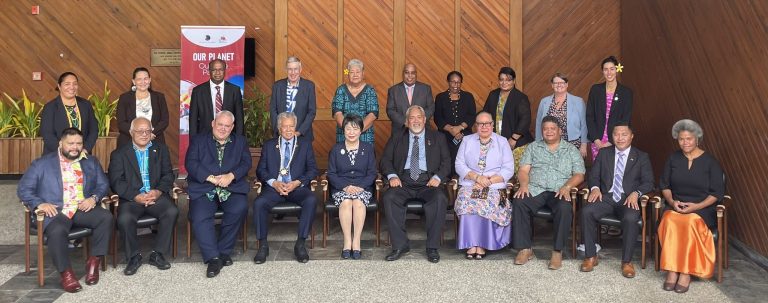
The PALM Ministerial Interim Meeting (MIM) for PALM10 was held in Suva, Fiji, on 12 February 2024 in order to follow up on the outcomes of the Ninth Pacific Islands Leaders Meeting (PALM9) as well as to prepare for PALM10. This was the first time for MIM to be held in the Pacific Islands Region.

2. The Meeting was attended by representatives from Japan and the Pacific Islands Forum (PIF) Members. The Meeting was co-chaired by Kamikawa Yoko, Minister for Foreign Affairs of Japan and Tingika Elikana, Minister for Foreign Affairs, Marine Resources and Parliamentary Services of Cook Islands, current Chair of the PIF.

3. The Meeting was held at a critically important moment when countries continue to recover from the socio-economic impacts of the COVID-19 pandemic and continue to address the existential threat of climate change. Upholding the international rules-based order, where international law including the Charter of the United Nations (UN) and fundamental norms, rules and principles of the international community are respected, is becoming more important now than ever for global peace and stability, reaffirming the importance of unity and solidarity on matters of global interest.

4. The Ministers reaffirmed the significant role the PALM process has played for over a quarter of a century in enhancing genuine partnership and their determination to further strengthen it to better address the evolving opportunities and challenges of the region. Recalling the Ninth Pacific Islands Leaders Meeting Leaders Declaration (“PALM9 Leaders Declaration”), the Ministers affirmed their strong commitment to the friendly and cooperative relations between Japan and the PIF Members, an important partnership underpinned by mutual trust and respect, as well as the 2050 Strategy for the Blue Pacific Continent (2050 Strategy).

5. In line with the international rules-based order, Ministers committed to working together in genuine partnerships, rooted in mutual respect, consistent with the principles of the UN Charter, and in the spirit of transparency and accountability, recognising that the rights, freedoms and sovereignty of all countries, regardless of size or power, are protected by international law, rules and norms. This included shared universal values such as freedom, democracy, sustainable development, the rule of law, human rights, human dignity, the peaceful resolution of disputes, and respect for environmental integrity. Minister Kamikawa explained such shared universal values form the basis of Japan’s effort to realise a free and open international order in the region in accordance with international law and the UN Charter.

6. Minister Kamikawa emphasised Japan’s long-standing commitment to support the Pacific Region’s vision, priorities and regionalism in accordance with the 2050 Strategy and the 2050 Strategy Implementation Plan (2050 IP). The PIF Ministers expressed their appreciation for Japan’s enduring support for a resilient Pacific Region of peace, harmony, security, social inclusion and prosperity, that ensures all Pacific peoples can lead free, healthy and productive lives.

7. The Ministers acknowledged the PIF as the apex of the Pacific regional architecture and the driver of regional priority setting and resource allocation, and fully supported the Blue Pacific Principles for Dialogue and Engagement and regional unity. The Ministers intend to continue working through established mechanisms within the Pacific regional architecture.

8. Minister Kamikawa highlighted Japan’s renewed commitment to the Pacific Region through its “All Japan” efforts under Japan’s Pacific Bond (KIZUNA) Policy announced in PALM9 and prioritising transparent and inclusive partnership. The PIF Ministers shared the importance of the free and open international rules-based order in accordance with international law and the UN Charter and welcomed Japan’s commitments and concrete actions to further strengthen cooperation with the PIF Members.

9. Regarding the discharge of ALPS treated water into the Pacific Ocean, Minister Kamikawa explained the Japanese Government’s position that the discharge has been carried out in accordance with relevant international safety standards and practices, and committed to continue working closely with the International Atomic Energy Agency (IAEA). Minister Kamikawa also expressed her appreciation for the science-based discussions that Pacific Island Countries have been engaging in with Japan and the IAEA. The Ministers recognised the IAEA as the authority on nuclear safety, noted the IAEA Comprehensive Report issued on 4 July 2023 and concurred on the importance of being based on scientific evidence in this matter. PIF Ministers welcomed the intensive dialogue with Japan and recalled the Communique of the 52nd Pacific Islands Forum Leaders, inter alia the importance of the South Pacific Nuclear Free Zone Treaty (Rarotonga Treaty). The Ministers concurred on maintaining the ALPS issue as a standing agenda item for PALM, supported by an ongoing dialogue process.

Follow-up of PALM9

10. Minister Kamikawa provided an update on the implementation of Japan’s PALM9 commitments as well as related development assistance and cooperation projects. Since PALM9, Japan has continued to implement its robust and sustainable development assistance, and supported human resource development and people-to-people exchanges for approximately 6,500 people, exceeding Japan’s PALM9 commitments (5,500 people). This cooperation continues to support progress towards the achievement of the PIF Leaders 2050 Vision.

11. The Ministers concurred on continuing cooperation to address issues related to their shared past including repatriation of the remains of war dead from World War II, the urgent clearance of unexploded ordnance, and maintenance of government-built monuments for the war dead as appropriate to maintain friendly bonds and to build future-oriented relations.

12. Minister Kamikawa explained Japan’s cooperation projects to the PIF Members on the Areas of Cooperation concurred in PALM9, as provided in the Attachment. The Ministers acknowledged the work undertaken in:

a) Priority Area 1 – COVID-19 Response and Recovery: reaffirming the importance of regional and multilateral collaboration to build back better and address ongoing health challenges and allaying social and economic impacts;

b) Priority Area 2 – Sustainable Oceans Based on the Rule of Law: on regional cooperation to support Leaders commitment to the importance of free, open and sustainable maritime order based on the rule of law and in accordance with international law and the UN Charter;

c) Priority Area 3 – Climate Change and Disaster Resilience: recognising the need to address climate change, including through related key Pacific initiatives like the Pacific Resilience Facility, with a sense of urgency and commitment;

d) Priority Area 4 – Strengthening Foundation for Sustainable and Resilient Economic Development: reaffirming their continued cooperation in developing quality infrastructure in line with international standards, including the Pacific Quality Infrastructure Principles; and

e) Priority Area 5 – People to People Exchanges and Human Resource Development: reaffirming the importance of strong personal bonds through active people-to-people exchanges, in particular among the youth.

13. The PIF Ministers expressed appreciation for Japan’s smooth and steady implementation and welcomed Japan’s long-standing record of consistent implementation of its commitments. The PIF Ministers welcomed the commitment by Japan to work bilaterally and in partnership with the PIF to develop and refine Japanese development assistance, cooperation projects and initiatives in alignment with the 2050 Strategy and the 2050 IP. The Ministers concurred that the priority areas of cooperation for PALM10 will be framed according to Japan’s vision for its partnership with the Pacific region in alignment with the 2050 Strategy and the 2050 IP.

Cooperation in International Fora

14. The Ministers reaffirmed their appreciation for the continued cooperation between Japan and the PIF Members on initiatives and efforts at the multilateral level and in international fora.

15. The Ministers discussed the broad regional security issues affecting the region since PALM9 and concurred on the importance of enhanced cooperation in maintaining and strengthening global peace and stability.

16. The Ministers opposed any war of aggression and committed to seeking a permanent and sustainable peace consistent with the purposes and principles of the international law including the UN Charter. They expressed strong opposition to any unilateral attempts to change the status quo by force or coercion anywhere in the world.

17. Recalling the UN General Assembly Resolution 70/1 of 25 September 2015, entitled “Transforming our world: the 2030 Agenda for Sustainable Development”, in which it adopted a comprehensive, far-reaching and people-centered set of universal and transformative Sustainable Development Goals and targets, the Ministers reaffirmed their commitment to advancing gender equality and social inclusion as well as the Women, Peace, and Security (WPS) agenda, including in alignment with the Revitalised Pacific Leaders Gender Equality Declaration (PLGED).

18. The Ministers expressed their commitment to achieving a world without nuclear weapons. The Ministers reaffirmed the importance of nuclear disarmament and non-proliferation efforts to create a more stable and safer world and of the Treaty on the Non-Proliferation of Nuclear Weapons (NPT) as the cornerstone of the global nuclear non-proliferation and nuclear disarmament regime and the pursuit of peaceful uses of nuclear energy, alongside a wide range of treaties and arms control agreements that contribute to this aim.

19. The Ministers stressed the importance of efforts to achieve Democratic People’s Republic of Korea (DPRK)’s complete, verifiable, and irreversible dismantlement of all weapons of mass destruction and ballistic missiles of all ranges in accordance with UN Security Council (UNSC) resolutions as expressed in the PALM9 Leaders Declaration and called on DPRK to take concrete actions toward that goal. They expressed their grave concern over the surge in DPRK’s launches using ballistic missile technology, which undermines regional peace and security. They called on DPRK to accept repeated offers of dialogue, including from Japan, the United States and the Republic of Korea. The Ministers condemned DPRK’s malicious cyber activities that fund its unlawful weapons of mass destruction and ballistic missile programmes. The Ministers reaffirmed their commitment to fully implementing and enforcing the UNSC resolutions, including addressing the DPRK’s sanctions evading tactics such as “ship-to-ship transfers.” The Ministers emphasised the continued importance of addressing humanitarian concerns, including the immediate resolution of the abductions issue.

20. The Ministers stressed the importance of an early reform of the UNSC, including expanding permanent and non-permanent categories of its membership, reaffirming the need to further enhance the legitimacy, effectiveness and representativeness of the UNSC to better reflect the realities and challenges of the international community in the twenty first century. The Ministers reaffirmed the importance of an expanded, democratic, equitable, transparent and accountable UNSC.

Towards PALM10

21. The Ministers discussed further cooperation between Japan and the PIF Members towards PALM10 for the Pacific Islands Region’s priorities in accordance with the 2050 Strategy. Minister Kamikawa appreciated ideas expressed by the PIF Members about their priorities and needs. The Ministers also welcomed cooperation with all partners, in the region and beyond, sharing the objectives based on the region’s priorities.

22. The PIF Ministers highlighted the importance of working in close partnership to ensure PALM10 strengthens collective efforts in responding to regional and global development challenges including: climate change and disasters; ocean and environment; resources and economic development; technology and connectivity; and people-centered development. The Ministers jointly discussed their visions and priorities for PALM10, thereby laying the groundwork for PALM10.

23. Minister Kamikawa explained that the PALM10 will be held in Tokyo in July 2024. The PIF Ministers welcomed Japan’s hosting of PALM10. The Ministers shared their determination to continue close consultation in preparation for a successful PALM10.

SOURCE: PIFS/PACNEWS
Indian Ocean security threats on par with Pacific: Wong

0

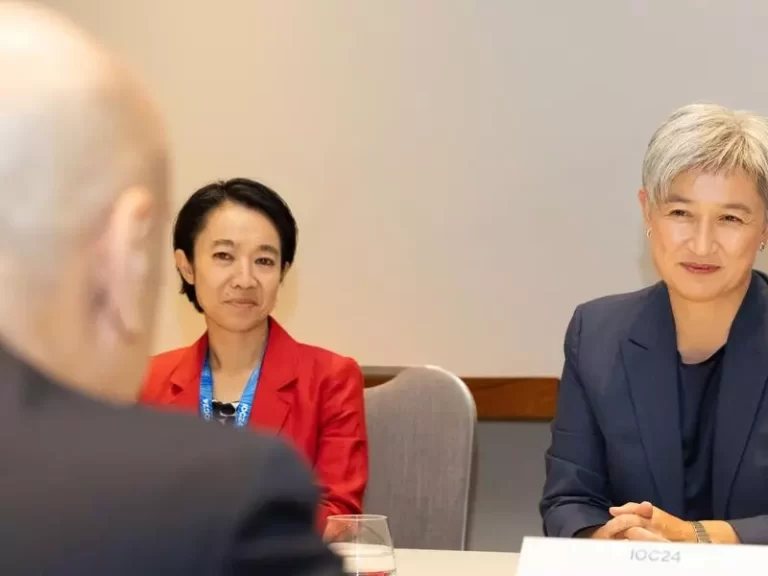
Unprecedented threats facing the Indian Ocean are just as serious as those confronting Pacific nations, with regional security, climate change, and humanitarian issues causing major concern, Australia’s foreign minister says.

Penny Wong put a spotlight on issues in the vast waters to Australia’s west during a speech at the Indian Ocean Conference in Perth on Friday.

Some 400 delegates from 34 countries gathered for the conference, including Sri Lankan President Ranil Wickremesinghe.

Prosperity and peace were being challenged by a heightened risk of conflict over flare-ups and rising tensions in disputed areas, Wong said.

Expanding military powers are taking a greater interest in the region, the foreign minister said, singling out China’s rapid military build-up while advocating for greater transparency.

Wong highlighted a jump in military and commercial vessels in the Indian Ocean, now host to more than one third of the world’s bulk cargo traffic, saying there must be new ways to protect against miscalculation or accidents.

The risk of military capabilities being used will be great without more active diplomacy, she said, warning research vessels are particularly vulnerable to becoming caught up in strategic plays.

Wong said there were few concrete mechanisms to avert military conflict, so Australia was seeking to contribute to the region’s strategic balance.

Changes are being sought so potential aggressors realise the benefits of conflict do not outweigh the risks.

The foreign minister also highlighted initiatives including a Marine and Coastal Resilience Hub focusing on climate change and sustainability research.

The CSIRO-led Blue Carbon Hub is scaling up capacity to assist nations to restore ecosystems in the region, she said.

‘Blue carbon’ ecosystems include seagrasses, mangroves, and tidal marshes that have high quantities of organic carbon, according to the hub.

Wong’s comments come ahead of the ahead of the ASEAN-Australian Special Summit in Melbourne in March, with security expected to be high on the agenda.

SOURCE: AAP/PACNEWS

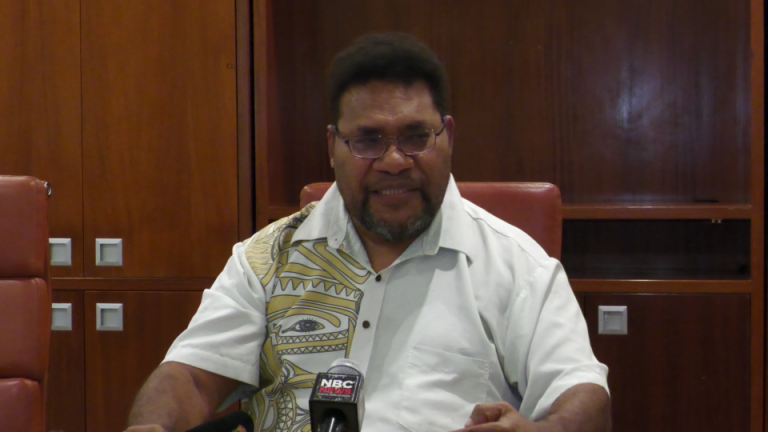
Joseph Lelang resigns as PNG Opposition Leader

0

Joseph Lelang has resigned as Papua New Guinea Leader of the Opposition and also as a member of the People’s National Congress party.

This shocking announcement comes after Lelang received huge backlash from the public through social media for not attending media conferences staged by the members of the Opposition.

The member for Kandrian-Gloucester made the announcement in a media conference in Port Moresby.

His resignation comes on the eve of the first Parliament sitting for 2024 and as MPs from the government tender their resignations to join the Opposition.

Lelang said his resignation is due to the fact that he had been left out of discussions of political leaders who have resigned from the government and his absence from media conferences as the opposition leader.

He said he had considered his decision long and hard before taking this action.

Lelang will not be moving to another party, but rather be sitting at the opposition backbench of parliament.

His resignation now leaves the Opposition Leader’s post vacant, giving space for the opposition to choose the next leader who hopes to become the nominee for the post of Prime Minister in the Motion of No Confidence that is expected to be introduced during this week.

Meanwhile, Prime Minister James Marape is confident that Pangu Pati will remain in Government after confirming a total membership of 54 Sunday during the Party’s 27th National Convention at the Hilton Hotel.

The ruling Pangu party is not shaken by the possibility of a vote of no confidence after declaring a solid membership with the inclusion of two additional Members of Parliament joining from PNG National Party and United Labour Party.

He welcomed the two first term MPs, Raphael Tonpi for Mendi Open who resigned from United Labor Party and Karamui-Salt Nomane MP Francis Yori Alua who resigned from PNG National Party and joined Pangu Pati bringing the total to 54 MPs.

Prime Minister Marape says Pangu has contributed immensely to nation building and will continue to deliver going forward.

“Even with or without me, Pangu is here to stay. We don’t care after upcoming Vote of No Confidence, we care about future of our children and progress of this nation, and we stand committed to serve,” Marape said.

Marape informed the county that this Convention is important for the party as they discussed on important agendas for the party going forward but, he assured that Pangu remains intact and Confident in the upcoming VONC.

“We only need two more members to pass the absolute majority in upcoming VONC. Who knows we have high and low tides and more will be joining us,” Marape said.

Leader of Pangu Highlands and Governor of Southern Highlands William Powi welcomed the two MPs into the Pangu Network nationwide.

He said with the inclusive of two MPs brings the total of Highlands Pangu MPs up to 21.

“We want stability and continuity and your coming to Pangu gives hope and confidence to PNG,” Powi said.

The first term MPs said that their decision is purely for the best interest of the people who mandated them.

Karamui-Salt Nomane MP Yori Alua said, “I made my decision at my own initiative to join the party. I thought it was in the best interest of my people who gave me the mandate…as the first term MP I feel it’s important to be in the government”.

In another development, Governor for West Sepik, Tony Wouwou announced in Vanimo that he will move from middle bench back to Government.

He made this announcement in the presence of Minister for Works and Highways Minister Solan Mirisim.

Both MPs were in Vanimo to witness the presentation of two Isuzu NPR Dyna trucks to the people of Edwaki LLG of the Telefomin District.

Minister Mirisim welcomed the decision by Govenor Wouwou stating that stability in government is important for service delivery in a province like West Sepik.

He stated that to have many leaders from the same province in government will see a lot of benefits in terms of service delivery.

SOURCE: NBC PNG NEWS/POST COURIER/PACNEWS

Stay connected

529FansLike
172FollowersFollow
156SubscribersSubscribe
- Advertisement -