Home Blog Page 493

“When are we going back?” – nuclear displacement in the Marshall Islands

By Nic Maclellan in Majuro, Marshall Islands

Gina Langinbelik Anuntak is a student at the College of the Marshall Islands (CMI). She’s President of the CMI Nuclear Club, a student association that unites Marshallese students to understand the legacies of 20th century US nuclear testing.

“We want to learn about the nuclear history that we were never taught when we were kids”, Anuntak said. “The Nuclear Club goes out to visit the survivors in our families, interview them, talk with them and get to know them. It’s always hurtful to hear their sad stories, but they just smile and say ‘It happened.’”

The college students work with local NGOs, church groups and the RMI National Nuclear Commission to raise awareness amongst younger Marshallese. They organise art exhibitions, run a weekly radio show, and contribute to citizen science programs (such as monitoring water supplies).

Showing a picture of her great-grandmother, Anuntak said that many CMI students have family members who witnessed the 67 U.S nuclear tests, conducted on Bikini and Enewetak atolls in the 20th Century.

“The survivors are really fragile, because most of our grandparents went through it,” she said. “They do talk about how scared they were, and some have nightmares about the unexpected event. When we visit people exiled from Bikini, Enewetak, Rongelap or Utirik, we see how much they were affected by it. It’s hard for them to talk about it, but they want to be heard. They want us to learn about our history and continue advocating and educating our generation and younger kids.”

For the descendants of nuclear survivors, the trauma of displacement and illness resonates across the years.

As the first generation of survivors age and die, subsequent generations of Marshallese are grappling with the legacies of the past, and it hurts. With sadness, Anuntak acknowledged that some Marshallese were uncomfortable engage with this history.

“When I was a young girl, my great grandmother would always try to tell us stories about this time, but we were not interested,” she said. “We only learned about American history, but we never learned about our history. My bubu would say ‘they knew what they were doing, they used us.’ But as kids we ignored her, thinking she was talking to herself. If I could turn back time, to have a better understanding while she was still alive, I would sit there and listen to her all day. So now, in my heart, she is the reason we stand up today, for our history.”

For the good of mankind

Soon after the end of the Second World War, the U.S military displaced hundreds of people from the northern atolls in the Marshall Islands, in order to test nuclear weapons and conduct other military activities.

In 1946, U.S Commander Ben Wyatt asked the people of Bikini Atoll if they would leave their islands temporarily, to allow the testing of atomic bombs “for the good of mankind and to end all world wars.” The United States went on to conduct 67 nuclear tests over the next twelve years, before relocating operations to Christmas Island, where they held another 24 atmospheric tests in 1962.

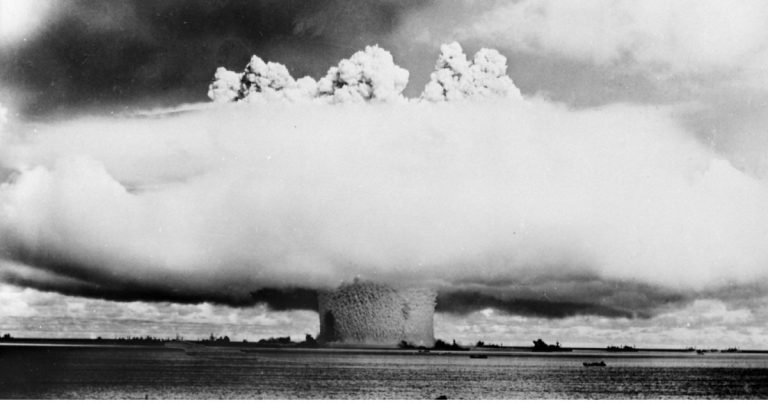
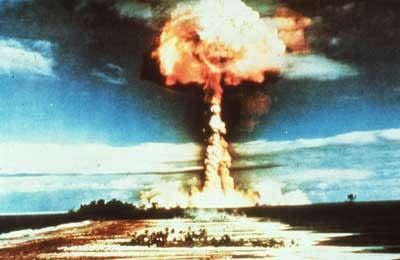
The largest thermonuclear test, codenamed Bravo, was held on 01 March 1954 on Bikini Atoll. The hydrogen bomb test had an explosive yield of nearly 15 megatons, a thousand times more powerful than the US atomic bomb dropped on Hiroshima. It sent plumes of radioactive fallout across most islands of the Micronesian nation, especially impacting the northern atolls of Rongelap, Utirik, Enewetak and Ailininae. All across the Ratak and Ralik archipelagos, atolls received varying amounts of low-level radiation.

In subsequent years, many Marshallese were relocated from their contaminated islands. Some returned to their homes after US assurances that the islands were safe, but many weren’t and they fled again. As a result, there are many elderly survivors living in exile to this day. Their descendants often identify with their lost homeland, even though they’ve never visited and live in the capital Majuro or other islands like Kili and Mejatto.

Some elderly witnesses of the US testing program, uprooted from their islands for decades, want to return home before dying. However parts of the northern atolls remain contaminated to this day, as US and RMI scientists debate whether the decaying radioactive isotopes are still hazardous to human health.

Inter-generation truth-telling

Alson Kelen is a founder of the Waan Aelõñ in Majel programme, working with young people on the construction of Marshallese canoes, and encouraging pride in indigenous culture and knowledge. A master navigator, story teller and former Mayor of Bikini, he serves as a Commissioner of the RMI National Nuclear Commission.

For Kelen, it was encouraging to see the activities of students and young people during the lead up to the Nuclear Victims Remembrance Day on 1 March, as they discussed the history of seventy years ago.

“I went to school in Hawai’i,” he said. “I learned about the bloodiest world war, I learned about American history and world history, but none of this had anything really about nuclear testing in the Marshall Islands. Once in a while, you would run into things that said ‘America dropped the bomb on Hiroshima and Nagasaki to stop the war’. But anything beyond this was not part of American history.”

“I thought that was kind of shocking and brought it up with my classmates and teachers, but they’d look at me and say ‘What are you talking about?’,” he laughed. “In those days, people in Hawai’i didn’t know much about the Marshall Islands or even where the Marshalls is located – even though we’re right next door! So I think that nuclear testing in the Marshalls, and nuclear testing everywhere in the Pacific, should be included in Pacific history courses.”

For Bikinians like Kelen, the long exile from their home island reverberates across the generations.

“My mom just passed away not too long ago, very peacefully,” he told me. “But for a long time, she’d been asking me ‘When are we going back?’. I told her that I didn’t know. But in my heart, I do know. From the articles and studies that I’ve read, it’s hard to see. So I don’t know, but I do – I was lying and not lying at the same time.”

“It saddened me to look at my mother in the face and lie to her,” he said. “I was guilty because I felt I was lying, even though I do not have the full information about whether we’re ever going back. My daughter heard all this and answered her grandmother ‘Bubu, I don’t know if we’re going back.’ But then she turned to me and asked ‘Will we?’ In my mind, I was crying. The truth is, I don’t know. But another truth is, we’re not going back.”

Today, people displaced from their islands by U.S nuclear testing are once again threatened by displacement caused by the adverse effects of climate change. Through his work with the RMI National Nuclear Commission, Kelen wants young people to understand how the nuclear legacies connect to the climate emergency.

He explained that when they moved from Bikini to Ejit island, “my grandfather and his siblings agreed that everyone buried on Ejit would have a concrete frame [for the coffin]. They thought that Ejit was a temporary site, so when we return to Bikini, we can take everyone with us. But today, around that very graveyard, land is eroding so fast, to the point where people want to build a seawall there so our people don’t drift off. The ocean is eating up the land that displaced people are buried in.”

Going home

The trauma of displacement is echoed amongst many survivors who were relocated from other northern atolls, to live on Kili, Ejit, Mejatto or in the national capital Majuro.

Kathy Joel was six years old when the Bravo nuclear test spread radioactive fallout over Rongelap and other atolls. Today, 70 years on, she lives in Majuro but still dreams of return.

Speaking through a translator at an event hosted by RMI President Hilda Heine, Joel recalled the events of 1954: “I remember when I saw planes flying over my island. I was really frightened. My father tried to pick me up, to hold me, but I wouldn’t let him. We were evacuated by the U.S.”

“Until now, I long for my homeland,” she said. “I always think about my homeland and I wish one day – with the help of our President – that I may set foot again on my homeland.”

It’s a heavy burden for President Heine. Since taking office in January, she has visited three of the four main nuclear-affected communities on Kili, Mejatto and Enewetak, with plans to visit people still living on Utirik.

“These visits have taught me that while these nuclear-affected communities continue to survive, thanks to the resilience of the people, they are not necessarily thriving,” Heine said. “There is much that needs to be done to create opportunities for these communities to thrive and to be productive.”

Speaking to Islands Business at her office in Majuro, President Heine reflected on the importance of this year’s Bravo commemoration.

“Every year 1 March is important for us, because we need to not forget what happened,” she said. “We need to look into ourselves and see how we can keep the legacy alive. It was the worst period in the history of our lives and it’s important not to forget that. We cannot allow ourselves to get into that situation ever again. We should continue to talk about it and make sure that it doesn’t happen to anybody else around the world.”

Heine recently appointed David Anitok, Senator for Ailuk Atoll, as a Presidential Envoy for Nuclear Justice and Human Rights: “I’m tasking him to work with the National Nuclear Commission (NNC) to look again at our situation with the nuclear legacy and come up with what we should do going forward.”

The RMI President welcomed the work of the NNC to mobilise young people throughout this month’s 70th anniversary and raise awareness of the nation’s nuclear history: “Every year, 1 March gives us the opportunity for the younger generation to learn what happened and what the nuclear testing program has done to the people of the Marshall Islands, to the land, to people’s psyche and to their livelihoods.”

For NNC Commissioner Alson Kelen, education is the bridge between the ageing cohort of nuclear survivors who witnessed the U.S tests, and younger Marshallese born in the 21st Century.

“When we started the NNC in 2017, we were tasked to do a strategy, which now has five pillars,” he said. “Right now, the one pillar that’s important is education. It can be a bridge from what happened, to what might happen. The first thing we want to do is educate ourselves. We have a curriculum on nuclear issues that is now part of the primary school and secondary schools. We want to fine tune that curriculum, so it tells a story but also opens your eyes to see what you can add to that story.”

Throughout the week before 1 March, NNC staff like Evelyn Ralpho Jeadrick and student leaders helped co-ordinate a series of events for young people. The Nuclear Institute of the College of Marshall Islands (CMI) and the university’s Nuclear Club organised a morning of story-telling, presentations and cultural performances. Students studying overseas zoomed in, including members of the Marshall Islands Students Association at the University of the South Pacific (USP) in Fiji and the Marshallese Educational Initiative (MEI) in Arkansas, USA.

The Marshallese students were joined by a delegation from Japanese universities in Hiroshima and Tokyo. They reflected on the fate of Japanese sailors affected by radioactive fallout from the Bravo test, as dozens of fishing boats near Bikini and Enewetak atolls were showered with radiation from the 15-megaton blast on 1 March 1954. They also discussed the Japanese government’s current program to dump treated nuclear wastewater from the stricken nuclear reactor at Fukushima into the Pacific Ocean.

Regional support

At the ceremony for Nuclear Victims Remembrance Day on 1 March, President Heine sat alongside Pacific Islands Forum Secretary General Henry Puna, Marshallese dignitaries and Lance Posey, Chargé d’affaires in the US Embassy in Marshall Islands.

In his speech, Henry Puna proclaimed: “I stand with you this day to honour and respect the lives of your people – of our people – who bore and continue to bear the permanent inter-generational illnesses caused by nuclear weapons testing in our region.” Puna highlighted the five decades of nuclear testing at ten sites across Oceania between 1946 and 1996: “I stand in solidarity with you, to ensure that we never forget those 50 long years of atrocities perpetrated on our Blue Pacific…It’s sad to see our history is littered with instances of foreign disrespect.”

Mayor of Majuro Ladie Jack pledged ongoing action for people displaced to the capital from other atolls that bore the worst of nuclear fallout in 1954: “In remembrance of our beloved brothers and sisters who are victims and survivors of the dark times from the nuclear testing era – we will not forget and we will not give up our fight. We will remember – always.”

Jess Gasper Jr. is the new Minister for Culture in the Heine administration and has served in the RMI Nitijela (Parliament) as Senator for Bikini. His speech brought tears to many with a passionate call for remembrance and action: “70 years ago today is etched on the minds of our people when our world was turned upside down. 167 people from Bikini were forcefully removed to relocate ‘for the good of mankind’. Out of the 167, only seven are still alive. This is our story – we have not forgotten. We have not forgotten the promise, that if our island home did not turn into glass, we would be able to return. Till this day, the people of Bikini have not been able to go back home. We have not forgotten.”

The climate-nuclear nexus

As part of this mobilisation, the government and people of the Marshall Islands continue to address the nexus between climate change and nuclear contaminants.

A key concern is the potential for radioactive isotopes to leach into the marine environment from the Runit Dome on Enewetak Atoll. After the end of the U.S nuclear testing program in Marshall Islands, this concrete dome was built in the 1970s to cover radioactive-contaminated waste and soil that had been dumped into the deep crater of a previous nuclear test – including contaminated soil that was transported from the Nevada nuclear test site in the United States!

The government highlights the link between nuclear legacies and the climate emergency in a newly published RMI Climate Security Risk Assessment: “Nuclear waste represents an ongoing threat to the Marshallese people and the environment, because of the risk that nuclear waste stored in the Runit Dome cannot be contained.”

President Heine told me that “when you look at sea-level rise and the Runit Dome, there is the possibility that whatever is in there will be seeping into the ocean. It’s very scary for all of us.”

Despite this, youth climate activists across the region share a common slogan: “We’re not drowning, we’re fighting.” As a leader dedicated to youth empowerment and Oceanic identity, NNCs Alson Kelen welcomes their fighting spirit.

“The ocean that provides wealth for the government is crawling closer and closer to our living rooms,” he said. “It’s something that we see every year. But young people here have the strongest pride. They don’t want to move. They want to stay as long as they can, but they also want to go and get educated, to find ways to stay as long as they can. Just like other countries, we want to go out there and get educated, then bring in technologies, bring in capacities that can help us stay on these rocks.”
Forum SG Puna urges global action on nuclear legacy issues at RMI Nuclear Victims Remembrance Day

Pacific Islands Forum Secretary General, Henry Puna Friday delivers heartfelt remarks at the Republic of Marshall Islands (RMI) Nuclear Victims Remembrance Day, emphasising the event’s significance with gratitude and solemn acknowledgment.

“May I firstly extend my sincerest appreciation to the President and the Government of the Republic of the Marshall Islands for the warm invitation to join you here today. I am deeply honoured to be a part of this occasion to mark an issue that remains deeply important to our Blue Pacific Continent.”

Reflecting on past commemorations and the resilience of Marshallese youth, he stated.

“While remembering tragedies of the past, I am always filled with hope and optimism, witnessing your children – the Marshallese youth based in Fiji – bravely leading and honouring their history with pride,” he said.

Puna emphasised solidarity with the Marshallese people in acknowledging the enduring effects of nuclear testing.

“I stand with you on this day to honour and respect the lives of your people – of our people – who bore and continue to bear the permanent and inter-generational illnesses and problems caused by nuclear weapons testing.

“I stand in solidarity with you all to ensure that we never forget those 50 long years of atrocities perpetrated on our Blue Pacific,” said Puna.

He highlighted the Forum’s commitment to addressing nuclear legacy issues.

“The Nuclear testing legacy remains a priority of our Leaders, and the region continues to turn to you, the Marshall Islands, for your stewardship on this critical issue.

“Just three months ago, at their 52nd annual meeting held in the Cook Islands, Forum Leaders reaffirmed commitment to continue support towards bilateral, regional and multilateral action to resolve these outstanding legacy issues.

“As articulated in our 2050 Strategy for the Blue Pacific Implementation Plan, our Leaders prioritise effective inclusive leadership at the international level on all nuclear issues.

“Together, we will heighten advocacy to urge the global community to address nuclear legacy issues in the Pacific through the Rarotonga Treaty and other mechanisms,” explained Puna.

Puna emphasised the importance of accountability and cooperation with the United States.

“And we must hold our great friends, the U.S, accountable to this.

“If I may be frank, our history is littered with overwhelming foreign disrespect for our Blue Pacific. Clearly, we were used as a testing ground – more like a testing laboratory. And we must ask the question, why was the most beautiful corner of the world, with the most beautiful and peaceful people, chosen for these horrific acts without our informed consent?

“While we have come a long way in mending past grievances, regrettably, the terms of resolving nuclear legacy issues in the Marshall Islands have been inadequate, and therefore remain unfinished,” he said.

SG Puna called for mutual respect and recognition of Pacific nations’ grievances.

“We must overcome any imbalances of respect in our partnership, so that we can determine the true value of what was truly lost all those years ago, when these waters and lands were contaminated.

“But I am hopeful that this issue will not go away, until we are satisfied that we have been heard. And this is why occasions such as this Nuclear Victims Remembrance Day, are critical in our endeavours.

“Although difficult, remembering this history is important to empower generations toward the justice that we continue to seek for the Marshall Islands, for French Polynesia, for Kiribati, and indeed for the whole Blue Pacific Continent,” said Puna.

Puna also reaffirmed his commitment to justice and a nuclear-free Pacific.

“To ensure that we will always remember. More importantly to ensure that justice is done.

“I renew my full commitment to supporting all efforts to ensure that nuclear testing never happens again in our blessed Pacific, and that the light of hope shines brightly upon a safer and more secure tomorrow for all,” SG Puna said.

Fiji celebrates World Seagrass Day: Urgent call for action to safeguard vital ocean ecosystems

On Friday, 01 March, World Seagrass Day was celebrated in the capital of Fiji to emphasise the critical role of seagrass ecosystems in sustaining biodiversity and mitigating climate change.

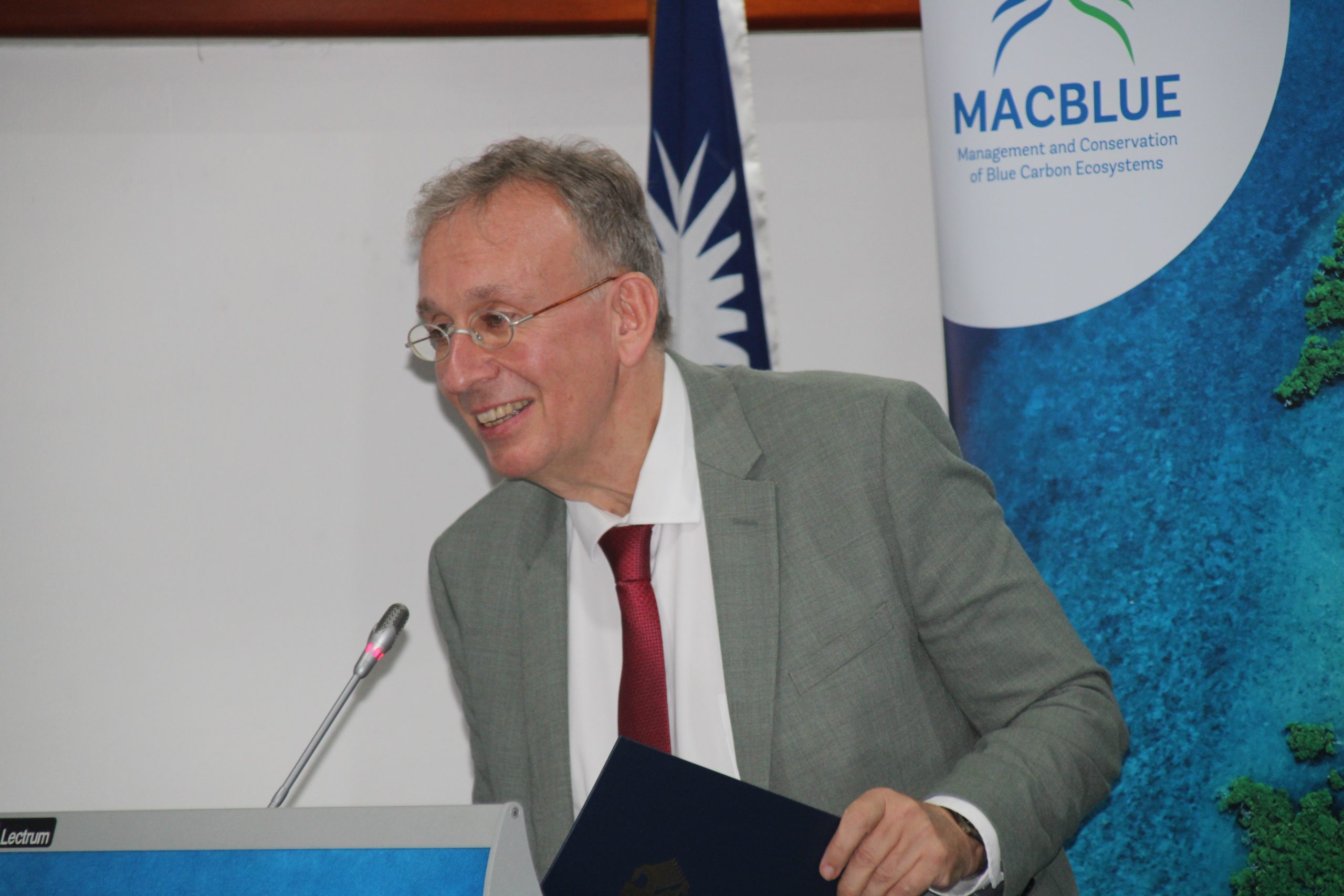
German Ambassador to Fiji, Dr Andreas Prothmann described seagrass as the “lungs of the ocean”, stressed the significance of seagrass conservation for Pacific Island nations, particularly in sustaining coastal fisheries and achieving climate mitigation goals outlined in the Paris Agreement.

“Seagrass ecosystems are particularly important in the Pacific, given that a key feature of many of our island communities is their reliance on coastal fisheries for sustenance and income,” Dr Prothmann said.

“Seagrass meadows help mitigating climate change by sequestering carbon dioxide (CO2) from the atmosphere and the ocean and storing it in their soils for a very long time.

“Their conservation is crucial for the achievement of the mitigation goals of the Paris Agreement on Climate Change.”

German Ambassador to Fiji, Dr Andreas Prothmann. Photo: Sanjeshni Kumar/Pasifika Environews

He highlighted the unique biodiversity supported by seagrass ecosystems, and the connection between the conservation of seagrass and the protection of marine species such as turtles.

“One turtle eats up to 2kg of seagrass a day. So, if we want to conserve turtles, it is crucial to protect our seagrass meadows.

“It is pivotal that we raise the profile of seagrass ecosystems and their role in climate change mitigation as well as providing ecosystem goods and services.”

The German Government through the Federal Ministry for the Environment, Nature Conservation, Nuclear Safety and Consumer Protection (BMUV) continuously support the Management and Conservation of Blue Carbon Ecosystems (MACBLUE) project in Fiji, Papua New Guinea, Solomon Islands, and Vanuatu that underscored as evidence to their commitment to seagrass conservation in the region together with regional partners – the Pacific Community (SPC) and the Secretariat of the Pacific Regional Environment Programme (SPREP).

“We encourage our partners in the Pacific to anchor the importance of seagrass in national policies and priorities. Effective conservation strategies must be customised to the Pacific’s unique and specific economic, cultural, environmental, and technological contexts” he said.

Dr Prothmann also recognised the participation of women in the conservation efforts of seagrass in the Pacific.

“Women in fisheries, whether they are marine scientists, fisherwomen, or seafood vendors, are important stakeholders in the conservation efforts of coastal ecosystems. Therefore, their participation should be valued and appreciated.”

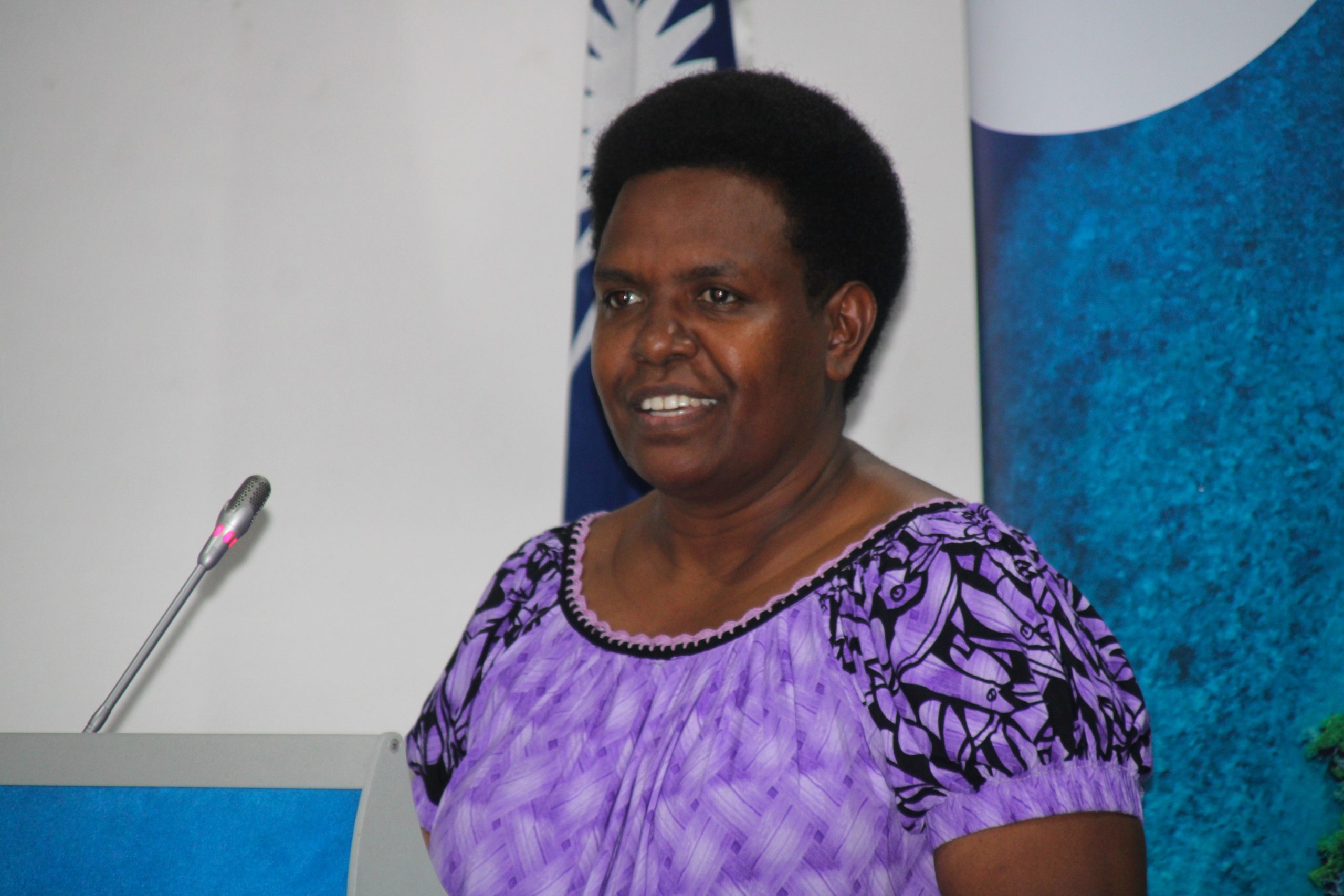
SPC Lands Resources Division Deputy Director, Florence Rahiria reiterated the importance of seagrass ecosystems and called for collective action to protect them whilst stressing the need to raise awareness about the value of seagrass and advocating for traditional knowledge to be integrated into conservation efforts.

“Seagrasses are not merely submerged vegetation; they are intricate ecosystems that harbour a plethora of marine life, mitigate climate change and provide vital services to coastal communities,” Rahiria said.

“Therefore, it is incumbent upon us to amplify their significance, educate our communities, and advocate for their protection.”

SPC Lands Resources Division Deputy Director, Florence Rahiria. Photo: Sanjeshni Kumar/Pasifika Environews

She underscored the MACBLUE project’s efforts in utilising advanced remote sensing technology to monitor and protect mangrove and seagrass habitats across the Pacific region.

“Within MACBLUE the framework of MACBLUE, SPC is tasked with the digital measurement, reporting, and verification of mangrove and seagrass coverage, utilising advanced remote sensing products developed through Digital Earth Pacific.”

She stressed the urgency of addressing threats such as coastal development, nutrient runoff, and land reclamation, which contribute to the loss of seagrass beds in many Pacific Islands.

Moreover, the Deputy Director called for a shift in marine conservation efforts, urging stakeholders to prioritise seagrass ecosystems alongside coral reefs while highlighting the invaluable role of traditional knowledge in managing these ecosystems, urging for its incorporation into modern conservation practices.

“Marine conservation across the region overwhelmingly focuses on coral reefs, with seagrass ecosystems marginalised in conservation legislation and policy.

“Traditional knowledge is proving to be a powerful tool for managing these ecosystems, often surpassing modern approaches. This is a testament to the deep connection between Pacific Islanders and their environment.

“Therefore, let us heed the call to action of this World Seagrass Day! Whether it is adopting sustainable practices, supporting research, or advocating for change, every action counts.

“Our individual and collective contributions hold the power to effect transformative change and secure the future of seagrass ecosystems.

“Let’s be inspired by the unyielding spirit of seagrasses, their roots firmly planted, yet adapting against challenges. Together, let’s become stewards of our oceans, guardians of biodiversity, and true champions of sustainability,” she said.

The United Nations General Assembly adopted World Seagrass Day on 23 May 2022 to raise awareness and recognise the role of seagrass ecosystems.

Tuvalu’s new PM says democracy and loyalty are reasons for preferring Taiwan over Beijing

0

The new prime minister in the Pacific island nation of Tuvalu said on Friday his country shares democratic values with Taiwan and reaffirmed that his government would maintain diplomatic ties with Taipei, ruling out a shift to Beijing.

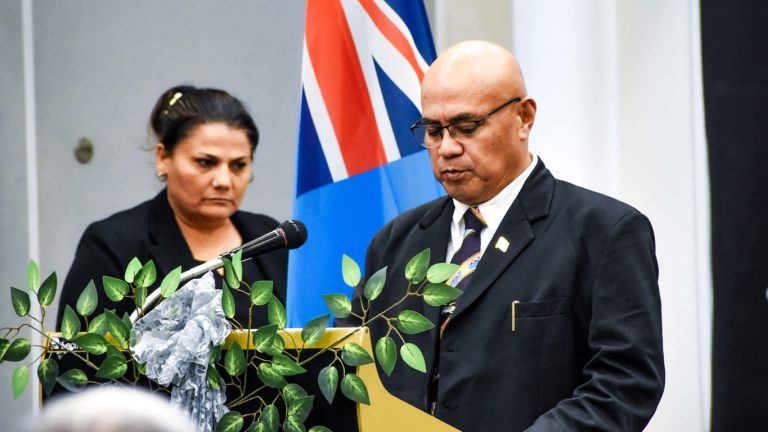
Prime Minister Feleti Teo spoke to The Associated Press via Zoom, his first interview with international media since his government took office earlier this week.

“Our ties with Taiwan are purely based on democratic principles and they have been very loyal to us,” Teo said.

Teo, a 61-year-old first-time lawmaker, and his eight Cabinet ministers were sworn into office on Wednesday, a month after general elections in the strategically significant nation of 11,500 people half way between Australia and Hawaii.

Election campaign issues included whether Tuvalu should switch its diplomatic allegiance from Taiwan to Beijing. An elected candidate proposed scrapping a treaty, which has yet to be ratified, that would give Australia veto power over any security-related agreement Tuvalu wants to make with any other country, including China.

The new administration announced it would maintain diplomatic ties with the self-governing Taiwan. China has claimed Taiwan since a 1949 split amid civil war.

“We don’t see any reason why we need to invest in time to discuss and engage in the two-China discussion,” he added, referring to the counter-policy from the “One China” principle, which is China’s view that it has sovereignty over the mainland, Hong Kong, Macao and Taiwan.

Seve Paeniu, who was finance minister in the previous government and was considered a leadership contender in the election, had argued for Tuvalu’s relationships with both Taiwan and Beijing to be reviewed. Paeniu was excluded from Teo’s Cabinet.

Tuvalu’s Parliament has 16 lawmakers and no political parties so a prime minister must garner the support of at least eight independent lawmakers to command a majority.

After Teo was chosen by 10 of his fellow lawmakers to be prime minister last Monday, China’s foreign ministry urged Taiwan’s diplomatic allies to “stand on the right side of history and make the right decision that truly serves their long-term interest” by switching allegiances to Beijing.

When the tiny atoll country of Nauru switched alliances to Beijing in January, Tuvalu was left one of only three Pacific island nations aligned with Taiwan, a self-governed democracy that China claims as its own territory.

Teo, a former long-term Tuvaluan public servant and regional bureaucrat, said the question of changing allegiances was “definitely not” an issue for his people.

Teo said he hopes to renegotiate development assistance agreements with Taiwan and that impacts of climate change and sea level rises remain top priorities for his nation of low-lying atolls.

The treaty with Australia, announced by previous Tuvalu Prime Minister Kausea Natano and Australian Prime Minister Anthony Albanese in November, offered Tuvaluans an option of resettlement in Australia to escape rising oceans and worsening storms.

Australia would initially allow up to 280 Tuvaluans to immigrate each year. The treaty would also commit Australia to helping Tuvalu in response to major natural disasters, pandemics and military aggression.

But Teo wants Australia to drop a clause that both countries must “mutually agree” on any third-country security agreement that Tuvalu may seek.

Teo said he had been involved in drafting the treaty as a legal consultant for Tuvalu and the original intention had been only for Australia to be informed of such third-party agreements. Australian approval had not been expected.

Teo would not speculate on whether Australia wants veto power to avoid a repeat of the security pact signed between China and the Solomon Islands in 2022 that raised the prospect of a Chinese naval foothold being established in the South Pacific.

Teo said while his government is “certainly behind the broad principle and objectives of the treaty,” it still has ways to go. In his view, the treaty would become acceptable if Australia dropped the mutual agreement provision.

“We need to revisit that provision,” Teo said. “The general perspective here in Tuvalu is that it might encroach on Tuvalu’s sovereignty.”

Australian Foreign Minister Penny Wong’s office did not immediately respond to a request or comment on whether further negotiation was possible.

Impasse on Pacific nation agreement exposes ‘fundamentally unfair’ finances

0

U.S agreements with Pacific islands are set to expire this year and Hawaii’s congressional delegation is urging action.

An impasse has exposed Hawaii’s financial burden in paying for assistance for legal migrants.

U.S Rep Ed Case says after negotiations under two administrations, the Federated States of Micronesia, the Republic of the Marshall Islands and the Republic of Palau have signed agreements to renew the Compacts of Free Association for 20 more years, but now it’s stalled in Congress.

Hawaii and Arkansas represent the two states with the largest number of COFA migrants.

In a letter, Case, U.S Rep. Steve Womak, of Arkansas, and others are urging Congress to act.

“An element of the agreements that are before Congress right now require the federal government to assume financial obligations, which they have not assumed for the compact residents in our state,” said Case, D-Hawaii.

Josie Howard is CEO of We Are Oceania, a nonprofit that serves Micronesia and Pacific Island Communities.

“It’s kind of scary and I think it’s really unfortunate. It’s sad for people like me, and like the many of us who are out here, because that decision will impact our life,” said Howard.

“I don’t want to one day have to go back home because our government changed partnership dramatically,” she added.

We Are Oceania says there are 20,000 to 30,000 thousand Pacific migrants in Hawaii.

“If you take Hawaii for example which was getting about US$15 to US$16 million a year to assist us with the needs of our compact residents, but those needs amounted to US$100 to US$200 million a year for Hawaii. That’s obviously a huge burden that we should not have have to bear,” said Case.

The nonprofit has worked with at least 300 who were displaced by the Maui wildfires and are not eligible for assistance under the Federal Emergency Management Agency even though they are in the U.S legally.

“That’s fundamentally unfair. That is an obligation that the federal government should cover as they do anybody else who is legally in our country,” said Case.

Case says the defense part of the agreement would continue, but there are still implications impacting security in the Indo-Pacific.

“China would love nothing more than to put a military base in Palau or elsewhere and they’d love to get closer to Hawaii for that matter which the Marshall Islands is,” said Case.

U.S Senator Mazie Hirono, D-Hawaii, is also urging an agreement with her colleagues.

“Failure to pass the renegotiated Compacts as soon as possible imperils our relationships with the Freely Associated States and the entire Pacific Island region, who view the COFA as a barometer of the U.S. commitment to the region,” she said.

MC13 ends with decisions on dispute reform, development; commitment to continue ongoing talks

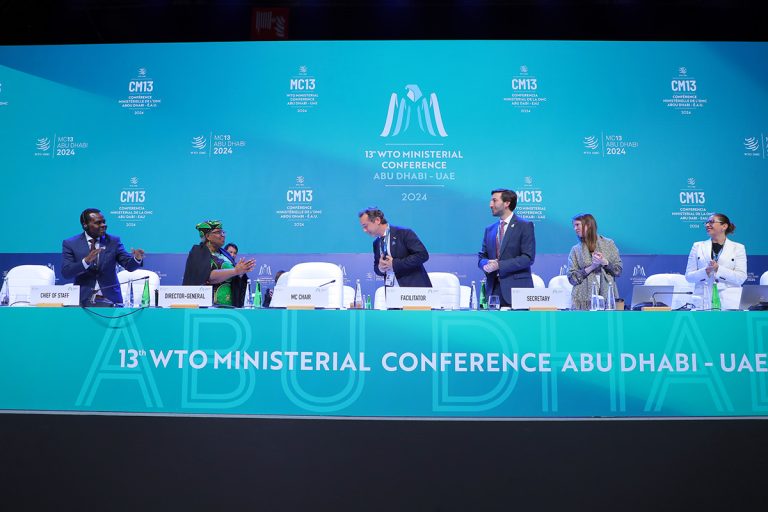
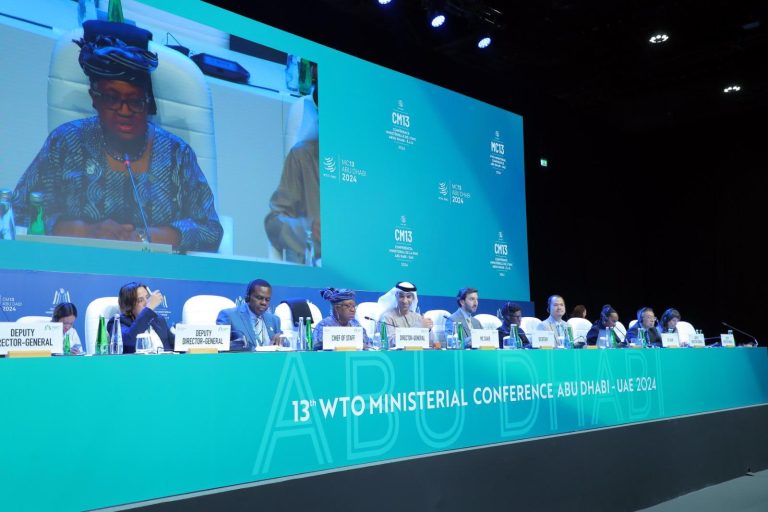
World Trade Organisation (WTO) members concluded the 13th Ministerial Conference (MC13) in Abu Dhabi on 2 March with the adoption of a Ministerial Declaration setting out a forward-looking, reform agenda for the organisation.

Ministers also took a number of ministerial decisions, including renewing the commitment to have a fully and well-functioning dispute settlement system by 2024 and to improve use of the special and differential treatment (S&DT) provisions for developing and least developed countries (LDCs).

They also agreed to continue negotiations in all areas where convergence was elusive at MC13.

The Ministerial Conference brought together nearly 4,000 ministers, senior trade officials and other delegates from the WTO’s 164 members and observers as well as representatives from civil society, business and the global media.

Initially scheduled for 26-29 February, the Conference was extended in a final push to reach outcomes on the various issues at stake.

Members adopted the Abu Dhabi Ministerial Declaration, where they committed to preserve and strengthen the ability of the multilateral trading system, with the WTO at its core, to respond to current trade challenges.

The Ministerial Declaration underlines the centrality of the development dimension in the work of the WTO, recognising the role that the multilateral trading system can play in contributing towards the achievement of the UN 2030 Agenda and its Sustainable Development Goals. It also recognised the contribution of women’s economic empowerment and women’s participation in trade to economic growth and sustainable development.

Members recognised the role and importance of services to the global economy as it generates more than two-thirds of global economic output and accounts for over half of all jobs. They encouraged the relevant WTO bodies to continue their work to review and build on all the lessons learned during the COVID-19 pandemic and to build effective solutions in case of future pandemics in an expeditious manner.

Dr Thani bin Ahmed Al Zeyoudi, Minister of State for Foreign Trade of the United Arab Emirates (UAE) and MC13 Chair, thanked members for their active engagement during the Conference. He noted that while not everything that delegations set out to accomplish could be delivered, the commitment shown will further strengthen the multilateral trading system.

On dispute settlement reform, members adopted a Ministerial Decision recognising the progress made with the view to having a fully and well-functioning dispute settlement system accessible to all members by 2024. Ministers instructed officials to accelerate discussions, build on the progress already made, and work on unresolved issues.

WTO Director-General Ngozi Okonjo-Iweala stressed the progress made with contributions from members. “Let’s continue to roll up our sleeves to advance this reform and deliver by 2024,” she said.

Ministers adopted a Ministerial Decision that responds to a 23-year-old mandate to review special and differential treatment (S&DT) provisions for developing and least developed countries (LDCs) with a view to making them more precise, effective and operational.

“This is a win for development, one that will help enable developing countries, especially LDCs, fulfil their WTO commitments, exercise their rights and better integrate into global trade,” said DG Okonjo-Iweala.

In another first, ministers engaged in conversations on how trade relates to two pressing issues that go to the heart of current political, economic and environmental challenges, namely sustainable development and socioeconomic inclusion.

DG Okonjo-Iweala emphasised the recognition by members of “the role trade and the WTO can play in empowering women, expanding opportunities for micro, small, and medium-sized enterprises (MSMEs,) and achieving sustainable development in its three dimensions – economic, social and environmental.”

Earlier in the conference, ministers formally approved the WTO membership terms of Comoros and Timor-Leste, the first new members in almost eight years. Members also agreed on a Ministerial Decision on concrete measures to ease the path to graduation from the category of least-developed countries. Additionally, ministers adopted a Ministerial Decision reaffirming the commitment to the Work Programme on Small Economies.

On electronic commerce, ministers adopted a Ministerial Decision instructing the General Council to hold periodic reviews on the E-commerce Work Programme with a view to presenting recommendations for action to the Ministerial Conference. Members also agreed to maintain the current practice of not imposing customs duties on electronic transmissions until the 14th Session of the Ministerial Conference (MC14) or 31 March 2026, whichever is earlier. The moratorium and the Work Programme will expire on that date.

Ministers also adopted a Ministerial Decision to extend the moratorium on non-violation and situation complaints regarding the Agreement on Trade-related Aspects of Intellectual Property Rights (TRIPS) until MC14.

Momentum behind the Fisheries Subsidies Agreement continued to pick up pace, with South Africa presenting its instrument of acceptance to DG Okonjo-Iweala just before the closing of the Conference.

Earlier in the conference, ten WTO members – Brunei Darussalam, Chad, Malaysia, Norway, the Philippines, Rwanda, Saudi Arabia, South Africa, Togo, and Türkiye – deposited their instruments of acceptance of the Fisheries Agreement, bringing the total number of WTO members to have formally accepted the Agreement to 71 and putting the historic agreement for ocean sustainability on track for entry into force at a record pace.

“In the second wave of fisheries subsidies negotiations, you narrowed some outstanding gaps, but several more remain,” said DG Okonjo-Iweala.

“While I had hoped that we could finish these negotiations in Abu Dhabi, you have prepared the ground for its conclusion at the next Ministerial Conference, if not earlier. The livelihoods of 260 million people who depend directly or indirectly on marine fisheries are at stake.”

On agriculture, despite the intense negotiations during MC13, members were not able to find convergence. Divergences remained on public stockholding (PSH) for food security purposes and in respect of timelines, expected outcomes and the scope of the flexibility to be provided to food imports by the most vulnerable countries from export restrictions.

DG Okonjo-Iweala recalled that this has been in the works for over two decades. “At MC12, we couldn’t even agree on a text. Even though there are challenges, for the first time we have a text. We couldn’t finish the work on it here. So let us get back to Geneva and deliver!” she said.

DG Okonjo-Iweala thanked members for their efforts to seek convergence on difficult issues, particularly as the Conference took place against a global backdrop marked by economic and geopolitical uncertainty.

“We have worked hard this week. We have achieved some important things and we have not managed to complete others. Nevertheless, we moved those pieces of work in an important way. At the same time, we have delivered some milestone achievements for the WTO and laid the groundwork for more,” she said.

MC13 also saw the entry into force of new disciplines on services domestic regulation, which is expected to lower trade costs by over USD 125 billion worldwide. Supported by 72 WTO members, this joint initiative is designed to facilitate services trade by streamlining and simplifying regulatory procedures. It includes the first-ever commitment in a WTO agreement to ensuring non-discrimination between men and women when they seek permits to supply services.

Co-sponsors of three environmental initiatives at the WTO presented at the Conference the next steps they are taking to advance work on plastics pollution, environmental sustainability, and fossil fuel subsidy reform.

Additionally, ministers representing 123 WTO members issued on 25 February a Joint Ministerial Declaration marking the finalisation of the Investment Facilitation for Development (IFD) Agreement and made it available to the public. Participants represent three-quarters of the WTO membership, including close to 90 developing economies and 26 least-developed economies.

Looking ahead, DG Okonjo-Iweala said: “The WTO remains a source of stability and resilience in an economic and geopolitical landscape fraught with uncertainties and exogenous shocks. Trade remains a vital force for improving people’s lives, and for helping businesses and countries cope with the impact of these shocks. Let us get some rest, then regroup and resume,” she concluded.

Fiji to attend Commonwealth Law Ministers Meeting in Tanzania

0

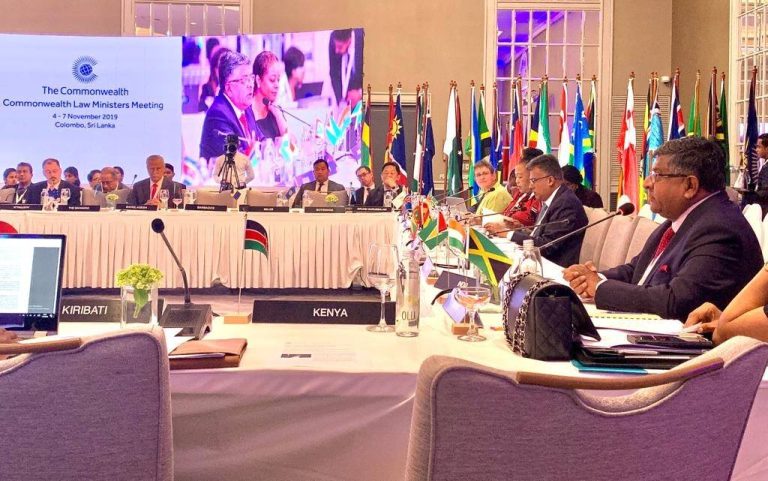
The United Republic of Tanzania is all set to welcome ministers and attorneys-general, including from Fiji, to the Commonwealth Law Ministers Meeting, which will open in Zanzibar on 4 March 2024.

Held every two years, the meeting of law ministers is a leading platform for collaboration among the 56 Commonwealth countries, which share a common legal tradition.

The theme of this year’s meeting is ‘Technology and Innovation: How digitalisation paves the way for the development of people-centred access to justice.’

Under this theme, law ministers will examine ethical ways to use technology to make legal services and information more accessible to people, while exploring responses to threats, such as cybercrime.

Speaking about the meeting, the Commonwealth Secretary-General, Patricia Scotland, commended the Government of the United Republic of Tanzania for making exceptional arrangements for the meeting.

Secretary-General Scotland drew attention to the pressing need to close the access to justice gap, which currently affects two-thirds of the world’s population.

She highlighted the detrimental consequences of the lack of people’s access to justice on development, inclusive growth, and conflict prevention.

The Secretary-General continued: “At a time when increasing conflicts are undermining respect for international law, ensuring equal access to justice remains a fundamental precondition for building peace and security for all.”

She said: “Our priority is to help all our member states deliver equal access to justice for all. That requires legal systems which can meet the needs of all.

“The upcoming Commonwealth Law Ministers Meeting offers us a vital platform to discuss the growing threats to the rule of law and find innovative ways to deliver the changes which will guarantee justice for every one of the 2.5 billion people living in our Commonwealth.”

Ambassador Dr Pindi H. Chana, the United Republic of Tanzania’s Minister of Constitutional and Legal Affairs and Chair of the 2024 Commonwealth Law Ministers Meeting, announced the meeting’s details at a press conference in Zanzibar on 26 February 2024.

Addressing journalists, she said: “We expect to get a lot of benefits following this meeting as the topics that will be discussed will help to find the right ways to strengthen and enforce the law and access to human rights.”

The meeting’s four-day agenda will cover a range of topical legal issues, including digital assets, electronic resources for efficient legal systems, access to justice for people with disabilities and developments in climate legislation.

The outcomes from the meeting will shape the agenda for the upcoming Commonwealth Heads of Government Meeting (CHOGM) in Samoa later this year.

The meeting will be held at the Mora Hotel in Zanzibar from 04 to 08 March 2024.

No WTO deal on fisheries subsidies for Pacific nations, but PANG pleased

A fractious meeting of world trade ministers in Abu Dhabi ended with little to show for the time and money spent early Saturday morning New Zealand time.

Pacific Island nations were seeking at the WTO ministerial meeting to have the governments of the larger fishing nations stop or reduce the subsidies they pay their fishers.

This did not happen but a spokesman for PANG, the Pacific Network on Globalisation, Adam Wolfenden, said this is a better result than having a substandard deal foisted on them, which had been the prospect right to the end.

“It’s not for lack of effort. And I think we’ve seen what was put on the table, the text particularly on fisheries subsidies, and that was on offer right up into the last minute, there was still quite a few holes in it that from.”

Wolfenden said from PANG’s perspective a lot needed to be fixed in that offer for a deal that would fulfill the promises of the negotiations.

He said the Pacific did a lot of negotiating and really fought for an outcome which would hold the big distant water fishing fleets to account.

They wanted a standstill and eventual reduction in the subsidies, he said.

The United Nations Sustainable Development Goal 14.6 calls for the prohibition of certain forms of subsidies that contribute to overfishing and overcapacity, while ensuring appropriate and differential treatment for developing nations.

But Wolfenden said at the ministerial “the prohibition on those rules that were going to dictate how those subsidies would be cut was so watered down and so weak for, particularly for those countries who could meet the thresholds.”

He said at the end it was very much a case of try your best to not make these subsidies, which he calls a complete failure of the WTO mandate.

“The mandate was saying, you need to prohibit these subsidies that contribute to overfishing and over capacity. And what was on the table for the big fishing plane failed that completely.”

The Pacific plan

He said the Pacific came to the meeting with a “strong proposal to explicitly come up with a mechanism to make the subsidies for distant water fishing come to a standstill, and then reduce within a certain amount of time.”

“So they were very clear in what they were asking for and explicit that this had to have an impact on the subsidies.

“his was heavily contested by a lot of the big fishing nations, because you know, it’s very much in their interest to not have that come into effect.”

Wolfenden said the end result was a text that largely gave those big fishing nations a number of options to evade the push on subsidies.

Why is the removal of subsidies so important?

Pacific nations now earn significant amounts of money from fishing licences, so why the emphasis on removing subsidies?

He said firstly there is the matter of overfishing, so cutting subsidies would help both in terms of limiting the distant water nations ability to catch more than they’re allowed.

But he said it also opens up the prospect for Pacific countries to increase their own domestic fishing capacity.

“When you have your own boats fishing your own resources, the economic benefits to that are far greater than if you’re paying someone else or someone else is coming in taking the fish and taking it elsewhere. So, we see these subsidies play into that.

What is next for the WTO?

Auckland University emeritus law professor, Jane Kelsey, a long-time critic of the WTO, was also observing the ministerial in Abu Dhabi.

She said the lack of agreement on almost anything “follows a pattern of failures over successive ministerials. The WTO continues its steady decline, no longer just on life support but nearing death’s door.”

Kelsey said the refusal of developing countries to be steam-rolled into accepting global trade rules that fail to address their concerns was a significant feature of the meeting.

She said she hopes “the failure of yet another ministerial will generate an overdue recognition that the neoliberal agenda of the WTO is past its use-by date.”

Wolfenden said when the WTO tries to deal with issues like sustainability, fisheries or climate change, its approach seems totally focussed on creating a better business environment.

“So lowering import taxes, lowering the ability of governments to regulate services, it becomes problematic with that when sometimes these sustainability issues that they’re trying to resolve, they’re using the same tools that caused the problem, to try and solve it,” he said.

Wolfenden said the WTO faces a reckoning over this kind of ideological approach to all problems.

“Professor Kelsey is speaking to a lot of fundamental truths that I think the WTO hopes to avoid, but are becoming quite a reckoning for them,” he said.

Tonga becomes first Pacific island country to apply WHO’s Strategic Toolkit for Assessing Risk (STAR)

0

On 15 January 2022, a massive volcanic eruption shook the small island nation of Tonga at a scale that the country hadn’t witnessed since 1883. The volcanic eruption was followed by tsunami waves which struck the west coast of Tongatapu, ‘Eua and Ha’apai islands.

Two weeks after the volcanic eruption, Tonga detected cases of COVID-19 and initiated a response to what became their first wave of community transmission. “We were stretched thin,” said Dr Joseph Takai, Senior Medical Officer at Tonga’s Ministry of Health, when asked about the impact of three simultaneous emergencies. “The tsunami damaged an undersea communications cable, cutting us off from the rest of the world for over a month. So, we had to rely on ourselves and draw from previous efforts to prepare for such emergencies,” he added.

Elaborating on the importance of emergency preparedness, Dr Takai shared “Although our first case of COVID-19 was not until 2022, we had started preparing for it since 2020. So that whole period—between 2020 and 2022—we were trying to organise ourselves, create guidelines and train health care workers. When COVID-19 eventually hit us, we were ready.”

Identifying and addressing risks: an evidence-based approach to emergency preparedness

The Government of the Kingdom of Tonga has since used lessons learned from the triple emergency response to enhance the country’s preparedness for future emergencies. As part of these efforts, it is working alongside the World Health Organisation (WHO) to improve multi-hazard response planning and manage concurrent risks. WHO Country Liaison Officer, Dr Anup Gurung emphasized how funding from the United States Agency for International Development (USAID) is enabling WHO’s support to Tonga. “This initiative aligns closely with WHO and USAID’s broader goals of promoting health security, building resilient health systems, and fostering partnerships for sustainable development,” he said.

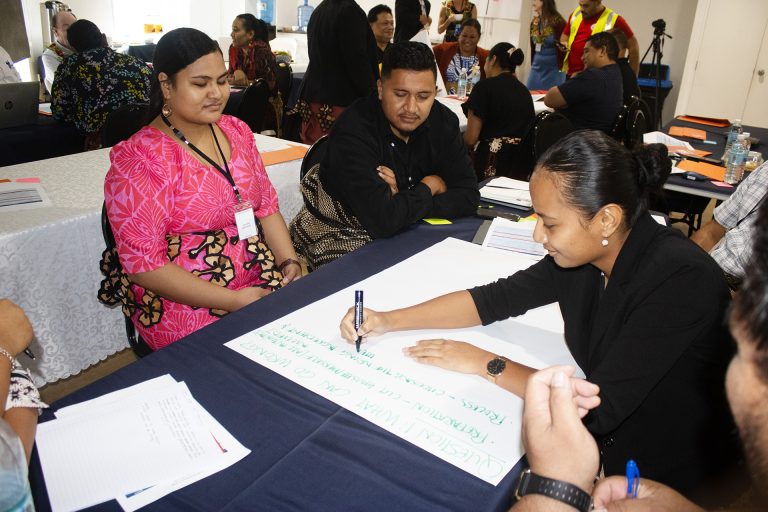
From 28 February to 1 March 2024, the Tonga Ministry of Health in collaboration with WHO convened a multi-sectoral group of participants active in health security and emergency preparedness and response for a workshop analysing health risks using WHO’s Strategic Toolkit for Assessing Risk (STAR) tool. During the three-day workshop, representatives from different sectors applied a stepwise process to identify hazards facing the country, describe the seasonality and likelihood to occur, and assess their potential impact. The workshop was co-facilitated by the Ministry of Health, the National Disaster Risk Management Office and WHO.

When risks associated with disasters are not effectively managed, they can result in preventable injury and loss of life. Among the hazards discussed were disease outbreaks, tropical cyclones, flooding and other disasters that are increasingly exacerbated by climate change. Many Pacific islands have witnessed the impacts of climate change and rising sea levels. Increasingly frequent flooding, storm surges and soil erosion pose a significant threat to health security.

“In small island developing states like ours, we’re seeing first-hand the impact of climate change,” said Dr Ofakiokalani Tukia, acting Chief Medical Officer for public health in Tonga, who played a key role in coordinating the STAR workshop in Tonga. “Given that this is an El Niño year, we are evaluating potential health risks—including physical injuries, food-and water-borne illnesses and vector borne infectious diseases—from possible tropical cyclones or droughts,” she added.

Tonga will use insights from the STAR workshop to inform emergency preparedness activities, including an upcoming Joint External Evaluation and the national action plan for health security. The STAR workshop is a catalyst for countries to gain consensus on priority hazards to further improve emergency preparedness, response and multi-sectoral coordination.

Employing a multi-sectoral approach to risk management

WHO’s Strategic Toolkit for Assessing Risk (STAR) brings together stakeholders from multiple sectors to assess disaster-related risks. In Tonga, STAR participants included representatives from the Ministry of Meteorology, Energy, Information, Disaster Management, Environment, Climate Change and Communications; the Ministry of Agriculture and Food, Forests and Fisheries; Revenue and Customs; Tonga Airport Limited; the Port Authority; His Majesty’s Armed Forces (HMAF); Tonga Police; and the Ministry of Health.

Speaking to the importance of this multi-sectoral approach, Viliami Tongamana, National Inter-Cluster Coordinator, National Disaster Risk Management Office said, “Over the last few days, we’ve had the opportunity to work together with stakeholders across various Ministries, departments and organisations—learning from each other and creating cross-cutting channels for communication. This collaboration alone may determine how successful or unsuccessful we are when responding to future disasters.”

Strengthening Tonga’s capacity to assess and mitigate disaster-related health risks

Tonga is the first Pacific island country to undertake a STAR risk assessment. Speaking of the significance of this event, United States Embassy Chargé d’ Affaires Bradley Coley said, “Today marks a step forward in our collective efforts to address public health risks and enhance preparedness in the Pacific region. In a world facing ever-evolving threats, from infectious diseases to natural disasters, the importance of robust risk assessment and preparedness cannot be overstated.”

Through tools like STAR, WHO supports countries to plan for and manage health emergencies at the national and subnational levels as aligned with the International Health Regulations (IHR 2005), Asia Pacific Health Security Action Framework (APHSAF) and the Sendai Framework for Disaster Risk Reduction (2015-2030).

Nuclear Victims Remembrance Day – United States must comply with Marshall Islands demands for recognition and nuclear justice

0

By Shaun Burnie

70 years ago, on Bikini Atoll in the Marshall Islands, a thermonuclear weapon with codename Castle Bravo, exploded with an energy of 15 megatons.

The mushroom cloud reached 40 kilometres into the atmosphere, resulting in thousands of square kilometres of the Pacific Ocean being contaminated by radioactivity. Its explosive yield was 1000 times more powerful than the Hiroshima bomb; and within 4 hours of the explosion, radioactive fallout made up of crushed coral, water, and radioactive particles, rained down over inhabited atolls, including Rongelap Atoll that is 150 kilometres away.

A fine white ash landed on the heads and bare arms of people standing in the open, dissolving into water supplies and drifting into houses. Witnesses of the Bravo nuclear fireball described seeing a second sun rising in the west, just before the terrifying shock waves hit them.

For the people of the Marshall Islands, that day will forever be known as Nuclear Victims Remembrance Day – the anniversary of Castle Bravo, the largest ever nuclear weapons ‘test’ conducted by the United States military.

In the 1950s, after the explosion, U.S. government scientists warned that the people of Marshall Islands were subjected to “high sub-lethal dose of gamma radiation, extensive beta burns of the skin, and significant internal absorption of fission products”. They were subjected to decades of medical experiments run by secretive U.S. laboratories.

70 years after the detonation, there remains no cancer clinic in the whole country. Many of the citizens still live in permanent exile, with some of the islands vaporised by nuclear weapons, while others remain too radioactive for safe return. The consequences of Castle Bravo have echoed through generations of the people in the Marshall Islands who have been denied the right to justice, proper medical care and full reparation for loss and damage.

“After centuries of colonial rule, the people of the Marshall Islands and the wider Pacific, were made 20th century victims of a nuclear arms race which for them was never a ‘Cold War’,” said Shiva Gounden, Head of Pacific at Greenpeace Australia Pacific.

“But all through this, their decades of resilience, resistance and refusal to be silenced in their quest for nuclear justice, has been an inspiration across generations. The proud people of the Marshall Islands have retained their profound and deep connection to their Pacific home, despite all efforts to destroy that connection through displacement and contamination. That same determination is now evident in their response to the devastating impacts of climate change. The refusal of the U.S. to meet in full their obligations, is matched today by the neo-colonial forces which deny the right of Pacific islanders to climate justice, funds for climate adaptation and mitigation, and financing for loss and damage. Today, we pay our deepest respects to the people of the Marshall Islands and their demands for nuclear and climate justice.”

The Marshall Islands government continues its strenuous efforts to secure compensation and justice from the U.S government. It received US$150 million in nuclear compensation under its 1986 Compact of Free Association (COFA) with the U.S The COFA established a tribunal to adjudicate compensation claims. The tribunal sought over US$3 billion in today’s dollars that the U.S has never paid.

Like the resilient people of the Marshall Islands who refuse to give up, Greenpeace continues to speak up for communities impacted by nuclear and speak out about the dangers it imposes. As their people are today pursuing those responsible for their suffering through the human rights institutions of the United Nations, Greenpeace will also continue to highlight this injustice.

Shaun Burnie is International Climate & Nuclear Campaigner for Greenpeace International.

Stay connected

529FansLike
172FollowersFollow
156SubscribersSubscribe
- Advertisement -