Home Blog Page 246

Pacific ‘needs predictability’ in a ‘changing environment’ – Solomon Islands official

0

Pacific Islands Forum (PIF) leaders have drafted a letter to the Trump administration, addressing concerns about the United States’ support in the region.

Solomon Islands Foreign Affairs Ministry permanent secretary Collin Beck told RNZ Pacific that there are significant gaps between what Washington has committed to and what it has actually delivered in the region.

The Biden administration promised US$200 million in new funding to the Pacific, but the money has not yet been delivered.

It is one of the concerns Forum leaders may look to address with the Trump administration as well as import tariffs and millions of dollars owed by the US to fish for tuna in the Pacific Ocean.

“The world has changed…and with the United States’ posture, we just need to keep talking and adapt to the changing environment,” Beck said.

“The Pacific needs predictability in all our cooperation with everyone, and it will not stop,” he said.

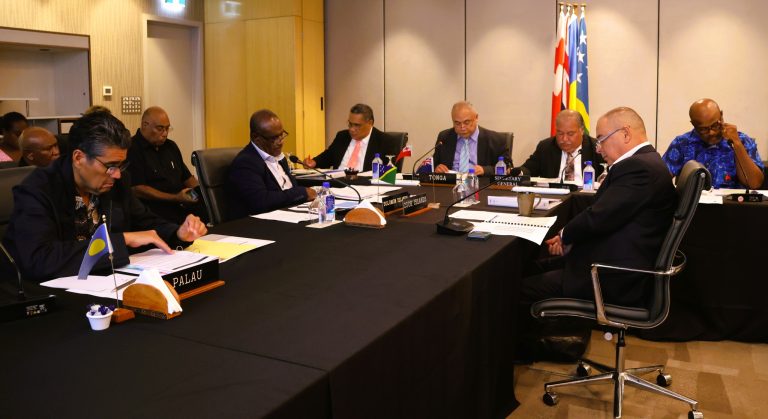
Last week, PIF chair and Tongan Prime Minister Dr ‘Aisake Eke, the incoming PIF chair and Solomon Islands Prime Minister Jeremiah Manele, the Cook Islands Prime Minister Mark Brown, and Palau President Surangel Whipps – as the Micronesian representative – held their first in-person meeting this year at the Forum headquarters in Suva.

Among the key issues on their agenda were the implications of the U.S tariffs and the Review of the Regional Architecture (RRA).

The RRA is the PIF leaders’ response to the increasing interest from a growing number of Forum dialogue partners wanting a seat – and influence – at the regional decision-making table.

The Forum Secretariat said the Troika leaders discussed the high-level political talanoa process, which will focus on political consultations with Forum leaders on strengthening Pacific regionalism, and a fit-for-purpose regional architecture.

“The Review of the Regional Architecture comes at a timely juncture and gives us the opportunity to reflect on Pacific Regionalism and what we need to do to strengthen and realise deeper regionalism in the Pacific,” Dr Eke said.

“This too will shape how we refine our regional architecture to drive the achievement of our 2050 vision.”

Beck confirmed that an eminent persons group was endorsed by the PIF Troika leaders while in Fiji last week.

“There is a high-level persons group that will hold more consultation going into another phase of the review,” Beck said.

Currently, both China and the U.S have dialogue partner status along with more than 20 other countries.

“There are dynamics that are happening that might speed the review,” Beck said.

“There is a process in which we are looking at all partners in terms of having a tiered approach in terms of engaging with all our development partners.

In relation to United States support that has been suspended to a number of regional entities, Beck said, it means that “the Pacific will need to adapt and try to also try to see how to mitigate against some of these.”

“We certainly would like to keep working with the United States in finding a solution.”

Meanwhile, Solomon Islands hopes the 54th Pacific Islands Forum Leaders Meeting will unite regional leaders in dialogue and solidarity.

Solomon Islands is set to host the annual meeting in Honiara later this year.

Manele said it is an opportunity to bring Pacific leaders together in the spirit of unity, dialogue, and collective action.

Tavuli News reported Manele saying that Solomon Islands has submitted a proposed theme for this year’s gathering, which is now being considered by the Forum Secretariat.

He said Solomon Islands wants the theme to reflect the shared challenges and opportunities that bind the region.

Manele said that it must speak to the strength of Pacific solidarity and the region’s shared future.

A national taskforce is now in place to coordinate all aspects of the event.

Fentanyl threatens to hit Fiji next

0

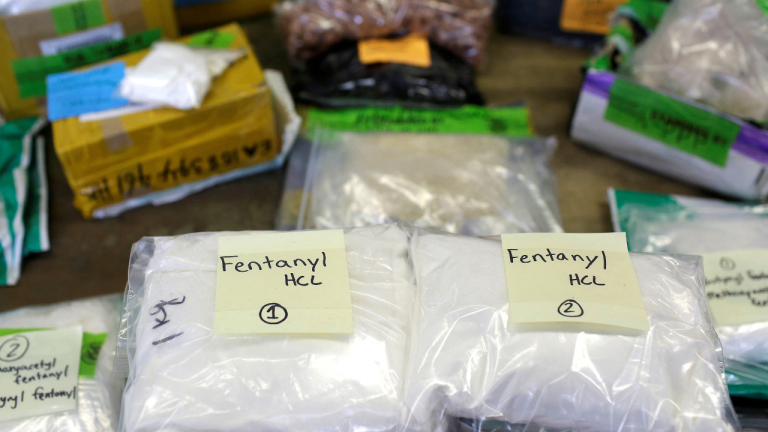
Fiji is at risk of a new and far more dangerous drug crisis as experts are now warning about the rise of fentanyl.

The drug is a synthetic opioid that’s killing thousands overseas and could soon affect Fiji if strong actions are not taken.

Jemesa Lave from the Narcotics Bureau warned that Fiji’s battle against drugs can be challenged further if fentanyl becomes widespread.

He said this drug is more dangerous than the current methamphetamine and cocaine.

Lave said that it is now trafficked by powerful cartels in Mexico and Latin America and has already made its way into nearby countries like Australia and New Zealand.

“The fentanyl; it will kill people, or drug users, instantly. It takes only a few grams of fentanyl if the dose is very little. So that is what is in the future. And now, we see a lot of Mexican cartels and Colombian cartels mixing these drugs into their illicit drug manufacturing and trying to market that across. Which is in the future.”

He said that there are countries that benefit from the supply while some benefit from the use, and countries like Fiji are vulnerable to being a transit point for bigger markets.

“As I said, 30 years, 28 years ago, there was no methamphetamine, there was no cocaine that was coming in, but now, police have experienced the urge of this coming in. The question that we want to ask is, What about what’s coming in the future?”

Assistant Commissioner of Police Sakeo Ganivatu said Fiji’s future now depends on the current generation, and it’s high time to take drastic actions to protect them.

New Zealand’s top cop embarks on historic visit to the Pacific

0

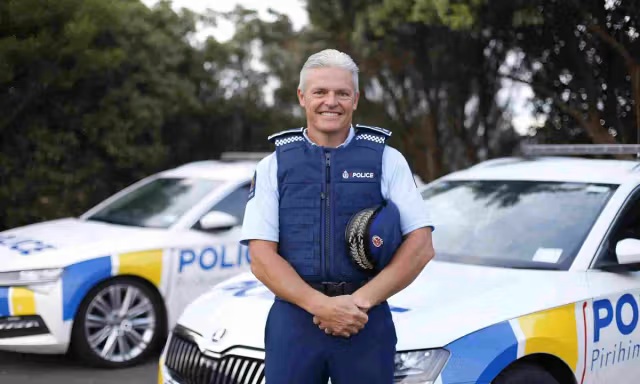
New Zealand’s Police Commissioner, Richard Chambers, is travelling to Fiji and Sāmoa this week for the first time without a specific event prompting the visit.

In November, the Government announced that Chambers, a three-decade veteran of the police force, would take over from Andrew Coster, who accepted a new role at the Government’s Social Investment Agency.

Chambers’ visits to Sāmoa and Fiji aim to strengthen partnerships and boost cooperation in law enforcement with both Pacific island nations.

He said the tour is particularly important, given the current global political challenges, including crime and corruption.

During his visits, Chambers plans to meet with police leaders and teams in Fiji and Sāmoa, reinforcing New Zealand Police’s dedication to being a supportive ally in regional efforts.

In an interview with Pacific Mornings, Chambers says he is excited about visiting both countries.

“I’m departing Auckland on Monday, 28 April, and I’ll be up in both countries for the week. First visit to Fiji and then to Sāmoa. Back home to New Zealand at the end of the week.”

He emphasised New Zealand’s strong ties with police forces in the Pacific, saying, “I want to ensure that that continues under my commissionership.

“It’s a great opportunity for me early in my tenure to get up there, meet with the police commissioners, their respective executive teams, also administrators of police and of course, my New Zealand police colleagues – just to be able to show my support to both countries, to the police forces over there.”

Chambers refers to his trip as a “special visit,” highlighting that it is the first time a New Zealand police commissioner has visited both countries without a major event to attend.

He believes the Pacific is a crucial partner for New Zealand and wants to reinforce the importance of this relationship.

He said that by maintaining a presence and supporting several Pacific nations, including Fiji, Sāmoa, and others, the New Zealand Police aims to collaborate on various policing challenges.

“With all the global issues unfolding, New Zealand and the Pacific face similar challenges in policing.”

Chambers aims to work closely with his peers in Fiji and Sāmoa to ensure they receive the support they need.

“New Zealand Police is dedicated to being easy to work with and offering support, especially during challenging times.”

With a long history of engagement in the Pacific region, Chambers views the visits as an opportunity to reaffirm his commitment.

As of June 2023, the New Zealand Police force has 10,700 officers – a significant increase from 2017.

The Government is committed to adding 1800 frontline officers, aiming for a ratio of one officer for every 480 New Zealanders.

After this trip, Chambers is already planning visits to Tonga and the Cook Islands, and he hopes to visit the Solomon Islands and Bougainville later.

When asked how New Zealand Police handles the complex relationships in the region, especially with some countries aligning with China, Chambers says that his focus is on working effectively with communities.

He said the support and training New Zealand provides to Pacific police forces is vital, and he wants to continue strengthening those partnerships.

Chambers said Pacific police leaders often request additional assistance, showing that the collaboration is highly valued.

This Is How Washington Loses the Pacific Islands

0

The U.S is harming Pacific Islanders, destroying its relationships in the region, and letting China win the competition for influence.

By Camilla Pohle

The Trump administration’s withdrawal from the Pacific Islands – because that’s what is happening – benefits China at the expense of U.S national security.

Washington’s latest series of policy blunders comes at a crucial time when China is seeking to expand its military presence beyond the First Island Chain, which could allow Beijing to project power farther into the region and complicate U.S and allied contingency plans for a war in East Asia.

Building close partnerships with Pacific Island countries could help Washington prevent such an outcome, if U.S leadership were interested in doing that. Instead, the United States is harming Pacific Islanders, destroying its relationships with Pacific Island countries, and letting China win the competition for influence.

And it’s only April.

Since January, the Trump administration has withdrawn from the Paris Agreement, withdrawn from the World Health Organisation, suspended most foreign aid, accelerated deportations, and raised tariffs to an extreme degree with no discernible justification (then most of the additional tariffs were delayed). Any one of these policies would have damaged the United States’ ties with Pacific Island countries; there is no doubt that, collectively, they will severely undermine the United States’ relationships and its ability to secure its own interests in the region. These policies will make Pacific Island countries less likely to seek partnership with Washington in the future and reinforce the perception that the United States is withdrawing from the world stage, ceding ground to an ascendant China.

The right-wing Heritage Foundation – architect of the anti-democratic Project 2025, which is closely aligned with Trump’s policy priorities – acknowledges that China poses a threat to U.S interests in the Pacific. But the foundation’s purported strategy for the region, which could inform the Trump administration going forward, neglects the basic tenets of diplomacy necessary to win such a competition.

It’s simply not possible to strengthen Washington’s ties with Pacific Island countries when U.S foreign policy is harming them to such an extreme degree. Pacific Island countries are among the most vulnerable to climate change in the world, have the least developed health infrastructure in the world, and are especially aid-dependent. They are also resourceful and pragmatic, and they have many other options besides the United States for building international partnerships. The Trump administration is just ensuring that Washington will be increasingly frozen out.

Of course, it’s unlikely that the Pacific Islands were even on anyone’s mind when the White House withdrew from the Paris Agreement or dismantled USAID, and Pacific Island countries aren’t the only ones affected. The bottom line is that whatever progress the United States made in the Pacific during the last couple of years, the White House is throwing it away.

In 2022, under the Biden administration, the United States launched its first-ever strategy for the region. It didn’t always go smoothly: Pacific Island countries questioned Washington’s commitment when funding for the Compacts of Free Association (COFAs) was held up for six months in the U.S Congress and after then-President Joe Biden cancelled his trip to Papua New Guinea. Regional leaders were frustrated by the United States’ insufficient efforts to cut carbon dioxide emissions and its refusal to fairly address the legacy of U.S nuclear testing in the Marshall Islands.

Still, the strategy – which involved opening new embassies and making massive funding increases to address Pacific Islands countries’ own priorities – was largely welcomed, and it made Washington a player in the region again. The United States was actively seeking to secure its interests and influence and to make up for decades of neglect.

Not anymore. Pacific Island countries will go back to being neglected or considered only through the prism of defence. Efforts to militarise the region, absent U.S commitments to combat climate change and address other regional priorities, will continue to deplete whatever goodwill these countries have toward the United States. Analysts often describe the current Republican foreign policy as “transactional,” but that implies that both sides are getting something out of it. It’s better understood to be one-sided: the White House gets what it wants and other countries don’t. Even islands that are solely inhabited by penguins weren’t spared from arbitrary tariffs.

It will take some time to see the full damage of this administration’s foreign policy toward the Pacific, but the only question is the degree of severity. When Pacific Island countries continue to be hit by cyclones and besieged by rising tides, they will remember the Trump administration withdrawing from the Paris Agreement and gleefully celebrating increased fossil fuel production. As they face growing health challenges, many of which are likely to be exacerbated by climate change, they will remember that the United States cut its funding for the WHO and promoted vaccine skepticism.

Palauan President Surangel Whipps Jr said last week during a visit to Australia, “We’ll get through this.” He said he hopes that current U.S policies are a temporary retreat and that the United States will come back stronger. To some degree, Pacific Island leaders have to be diplomatic. But U.S relations with the Pacific will probably get even worse.

Cuts at the State Department won’t help the already short-staffed U.S embassies across the Pacific. Some of them may even close down as part of the global reduction of U.S diplomatic posts, although none of them are on the list yet. But Trump’s purge of federal agencies will likely be felt most acutely in the Marshall Islands, the Federated States of Micronesia, and Palau, which receive U.S federal programmes and services under the COFAs, including from the National Oceanic and Atmospheric Administration (NOAA), the Federal Emergency Management Agency (FEMA), the Environmental Protection Agency, the Centres for Disease Control, the Postal Service, and others. A reduction in federal workers at the Department of Veterans Affairs will probably hamper long-overdue efforts to give health benefits to U.S veterans living in these countries. The Department of Interior, which administers federal assistance to the Freely Associated States, is also facing cuts.

What’s next? COFA funding itself? The Trump administration may soon ask the U.S Congress to rescind billions in already-approved foreign aid spending. If COFA funding, which was approved by the U.S Congress last year, eventually winds up on the chopping block too, that would damage U.S relationships in the region and U.S national security to an unprecedented degree. The COFAs are seen as the litmus test of U.S commitment to the Pacific Islands. It was bad enough that the funding was delayed for so long. Rescinding that funding would have catastrophic consequences, including encouraging the Freely Associated States to reconsider the benefits of the overarching agreements themselves.

Congress must not let this happen. If there is a war in East Asia, the Freely Associated States could bolster U.S national security in a variety of ways, including allowing for a more dispersed force posture; serving as command and control nodes, reserve airfields, and locations for fuel and munitions storage; and facilitating the transfer of troops and supplies from the United States to East Asia. If there is one essential lesson from World War II in the Pacific that is relevant in the present day, it is about the importance of logistics for winning a conflict. The bigger picture is that a U.S presence in the Freely Associated States supporting operations in East Asia could help ensure that the perimeter of a conflict stays west of Hawaii.

But all of this is only possible if the Compacts of Free Association, which allow the Department of Defence operating rights in these countries, remain intact. If the United States rescinds COFA funding, which has never been done before, then the Freely Associated States may consider terminating the agreements.

The Trump administration could create an even worse scenario for the Pacific and for the entire world. Against the recommendations of actual experts in the field, the Heritage Foundation argued this year that the United States should resume nuclear testing. The report mused that a nuclear test could be conducted “in the Pacific Ocean over open water, where nuclear fallout can be minimised.” In reality, the fallout from atmospheric tests cannot be “minimised,” and the Pacific has already been scarred by hundreds of these tests. No matter where tests might be conducted, a resumption of nuclear testing would truly be a worst-case scenario for the entire world, kicking off the kind of global nuclear arms race that hasn’t been seen in decades.

At best, Pacific Island countries will try to wait out Trump’s term and hope that the United States will course-correct after its next presidential election, but even that won’t undo the damage of these four years. Representative Ed Case from Hawaii wrote in a recent op-ed that Trump’s foreign policy will be seen in the future as an “aberration” among the fluctuations of broader U.S policy, an overly optimistic perspective that downplays the sheer harm this administration will do to Pacific Island countries in the meantime. It won’t be easy for the United States to come back from this. Nor can Australia, despite its best efforts, truly make up for a U.S. withdrawal from the region, especially if it destabilizes the Freely Associated States.

Meanwhile, what could China accomplish in the next four years? The head of U.S forces for the Indo-Pacific, Admiral Samuel Paparo, said at a congressional hearing this month that Beijing will capitalise on the vacuum of foreign aid to advance its own interests. China will also attempt to leverage every other pitfall in U.S relations with Pacific Island countries, large and small, from dysfunction in federal agencies all the way up to anxiety about U.S commitment to the COFAs. The Trump White House, with its aid cuts, chaos and capriciousness, can’t compete with China.

Last year, Australian Foreign Minister Penny Wong said that Australia was in a state of “permanent contest” with China in the Pacific. With the rollout of its Pacific strategy, it appeared that the United States had entered the same state of permanent contest. It made little sense, at the time, to declare who was “winning” or “losing” because the competition was still active, and there were so many metrics to consider: aid, climate policy, diplomacy, infrastructure, soft power.

Now it’s clear what losing looks like for the United States. It looks like this.
Young Drua stars lead potential debutants in Fijiana XV squad

0

Four young exciting talents from the Fijian Drua setup, Josivini Naihamu, Litiana Vueti, Isabella Koi, and Carletta Yee headline the list of potential debutants named in the Fijiana XV extended squad to face the Wallaroos in 2025.

The quartet only joined the Drua this season as professional rugby players and have now been handed a shot at national honours following standout performances in the Super W.

They are among seven uncapped players included in the 38-member extended squad, signaling a bold move by selectors to inject youth and energy while building depth for the future.

Veteran leaders like Rusila Nagasau, Bitila Tawake, Mereoni Nakesa, and Jade Coates also return to guide the team in what is expected to be a high-intensity Test match.

The Fijian XV side will face the Wallaroos on the 3rd of next month at the HFC Bank Stadium in Suva, with the match kicking off at 5pm.

Extended Vodafone Fijiana XV Squad 2025:
• Salanieta Nabuli
• Anasimeci Korovata
• Lavenia Nauga Grey
• Isabella Koi
• Tiana Robanakadavu
• Vika Matarugu
• Asinate Serevi
• Bitila Tawake
• Merevesi Ofakimalino
• Mereoni Nakesa
• Alfreda Fisher
• Jade Coates
• Nunia Daunimoala
• Carletta Yee
• Sulita Waisega
• Ema Adivitaloga
• Salaseini Railumu
• Rusila Nagasau
• Karalaini Naisewa
• Kolora Lomani
• Repeka Mata
• Setaita Railumu
• Evivi Senikarivi
• Noelani Baselala
• Salanieta Kinita
• Merewaisi Rokouono
• Merewai Cumu
• Vani Arei
• Josivini Naihamu
• Alowesi Nakoci
• Merewairita Naivoha
• Atelaite Buna
• Adi Repeka Tove
• Luisa Tisolo
• Timaina Ravisa
• Litiana Vueti

Assault allegations against Fijian Drua player prompts intervention

0

The Fiji Women’s Crisis Centre(FWCC) is calling for immediate and mandatory gender sensitization training for all Fijian rugby players and personnel, following the reported assault case involving Fijian Drua centre Iosefo Masi.

FWCC Coordinator Shamima Ali says these incidents reflect a much deeper issue that must be addressed with structured and ongoing gender sensitisation training across all levels of rugby in Fiji.

Ali described the situation as “tragic” and emphasised the wider impact such incidents have on families, the sport, and the country’s reputation.

“This should not happen, particularly this kind of behaviour from rugby players who are seen as stars. A lot of young people aspire to reach those heights of playing at the national and international level.”

She stressed that gender-based violence is not only a serious crime but also a career-damaging issue that can deeply affect the sport’s future in Fiji.

“Players need gender sensitization, awareness of domestic violence, and legal education on how this harms everyone. If they are convicted or sacked, we all lose out. These are good players, and it impacts our teams and results.”

Ali calls on Fiji Rugby and Fijian Drua management to incorporate gender training not only for players but across the board, including coaches and administration, to ensure a zero-tolerance approach to violence and abuse in sport.

Meanwhile, Fijian Drua have stood down Iosefo Masi and has sanctioned Peni Matawalu after allegations of domestic violence.

The Drua has chosen not to comment further on the matter as they do not want to interfere with judicial processes and investigations.

Fijian Drua head of commercial and marketing, Shane Hussein, said the matter is being handled by relevant authorities and they await the outcome of it.

Iosefo Masi allegedly assaulted his de facto partner last week and had a special court hearing on Saturday.

Tonga yet to pay off loan for Nuku’alofa reconstruction of 2006 riots

0

A political storm is brewing over the repayment of a US$190-million loan from China, originally borrowed to help rebuild the capital after riots in 2006.

The money was also spent on major projects like the renovation of the royal palace, an upgrade of Nukuʻalofa wharf, and loans to local businesses to help them rebuild.

With the loan repayments now due, debate is intensifying over how previous governments handled the funds.

The Lowy Institute has described it as “a millstone around Tonga’s neck”, with the Kingdom’s debt levels ranked among the highest in the world—fourth globally.

“It’s very important to pay off your loan,” said former Tonga Prime Minister Siaosi Sovaleni Hu’akavameiliku.

We don’t want future generations to be burdened by a loan that we took out,” he added.

Tonga, which was hit by a volcanic eruption and tsunami has external debt of US$195m or 35.9 percent of its GDP, of which two-thirds is owed to China’s Export-Import Bank (Exim).

There are concerns about debt repayments to China that are due on a loan used to rebuild its central business district after riots in 2006.

Asian scam centre crime gangs expanding worldwide including the Pacific: UN

0

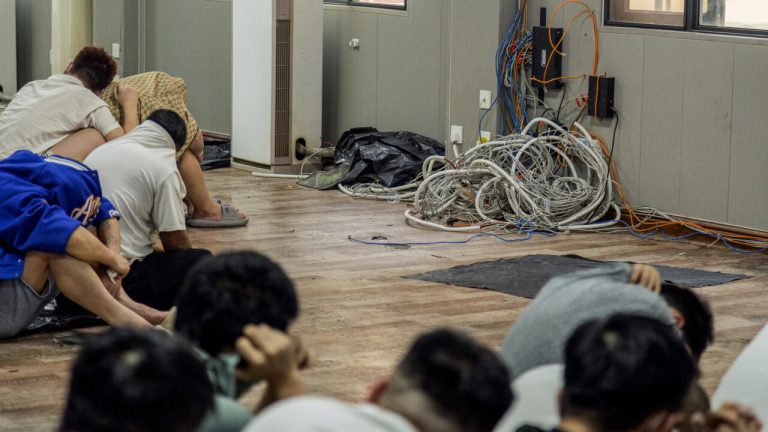
Chinese and Southeast Asian gangs are raking in tens of billions of dollars a year targeting victims through investment, cryptocurrency, romance and other scams — using an army of workers often trafficked and forced to toil in squalid compounds.

The activity has largely been focused in Myanmar’s lawless border areas and dubious “special economic zones” set up in Cambodia and Laos.

But a new report from the UN Office on Drugs and Crime (UNODC) warned the networks are building up operations in South America, Africa, the Middle East, Europe and some Pacific islands.

“We are seeing a global expansion of East and Southeast Asian organised crime groups,” said Benedikt Hofmann, UNODC Acting Regional Representative for Southeast Asia and the Pacific.

“This reflects both a natural expansion as the industry grows and seeks new ways and places to do business, but also a hedging against future risks should disruption continue and intensify in Southeast Asia.”

Countries in east and southeast Asia lost an estimated US$37 billion to cyber fraud in 2023, the UNODC report said, adding that “much larger estimated losses” were reported around the world.

The syndicates have expanded in Africa — notably in Zambia, Angola and Namibia — as well as Pacific islands such as Fiji, Palau, Tonga and Vanuatu.

Besides seeking new bases and new victims, the criminal gangs are broadening their horizons to help launder their illicit income, the report said, pointing to team-ups with “South American drug cartels, the Italian mafia, and Irish mob, among many others”.

Illicit cryptocurrency mining — unregulated and anonymous — has become a “powerful tool” for the networks to launder money, the report said.

In June 2023 a sophisticated crypto mining operation in a militia-controlled territory in Libya, equipped with high-powered computers and high-voltage cooling units, was raided and 50 Chinese nationals arrested.
The global spread of the syndicates’ operations has been driven in part by pressure from authorities in Southeast Asia.

A major crackdown on scam centres in Myanmar this year, pushed by Beijing, led to around 7,000 workers from at least two dozen countries being freed.

But the UN report warns that while such efforts disrupt the scam gangs’ immediate activities, they have shown themselves able to adapt and relocate swiftly.

“It spreads like a cancer,” UNODC’s Hoffman said.

“Authorities treat it in one area, but the roots never disappear, they simply migrate.”

Alongside the scam centres, staffed by a workforce estimated by the UN to be in the hundreds of thousands, the industry is further enabled by new technological developments.

Operators have developed their own online ecosystems with payment applications, encrypted messaging platforms and cryptocurrencies, to get round mainstream platforms that might be targeted by law enforcement.

Economist slams EU blacklisting of Vanuatu as discriminatory and unfair

0

Caribbean economist and regional economic policy advisor Marla Dukharan has criticised the European Union’s (EU) decision to blacklist Vanuatu over tax governance and financial regulation concerns as discriminatory, unjust, and immoral.

Speaking in a recent interview with Daily Post, Dukharan urged Vanuatu to support the United Nations (UN) Convention on Tax, a multilateral initiative aimed at improving global tax cooperation. She noted that countries in both the Pacific and Caribbean have not done enough to back the convention, which could help create a more equal platform in international tax discussions.

“The EU is blacklisting countries that are not predominantly white, countries without material wealth or global economic influence,” said Dukharan. “This is not just unfair—it is immoral. It breaches international standards on how we treat each other. That level of discrimination should not be tolerated.”

She warned that blacklisting causes long-term reputational damage.

“You can’t measure the full impact of being labelled this way. It affects cross-border transactions, trade, and the cost of doing business. In the Caribbean, for instance, it costs twice as much to send an international wire transfer from Trinidad to Jamaica than from the U.S to the U.K Being blacklisted limits which banks we can use, and those we can use often require more documentation and due diligence.”

Dukharan also pointed to limited awareness of the UN tax convention.

“Many people haven’t even heard about it because certain countries—like the U.S, U.K, EU members, New Zealand, Japan, and Canada—have blocked media coverage. But this is the one forum where all sovereign nations have a voice, unlike the Organisation for Economic Cooperation and Development (OECD) or Financial Action Task Force (FATF), where countries like Vanuatu have little or no representation.”

She urged Vanuatu’s policymakers to engage more actively in international tax discussions and explain the country’s situation.

“Vanuatu is a zero-tax jurisdiction, and imposing income or corporate tax in an economy that’s largely based on subsistence agriculture would create more problems than solutions. When the global minimum tax was agreed upon, even Switzerland requested a 10-year transition period. For Vanuatu, it might take 20 years. The country needs to be at the table, sharing its context and concerns.”

Dukharan noted the EU’s selective approach to blacklisting. Until Russia was added to the list in February 2022, she said, no predominantly white country had ever been blacklisted.

“This is institutional discrimination,” she said. “It’s not just unfair—it’s a clear case of bias based on ethnicity and economic power.”

She said she has spoken with Vanuatu’s Attorney General and encouraged the government to consider taking the issue to the International Court of Justice (ICJ), noting that there is enough evidence to support a case.

“I’ve read articles comparing Vanuatu to countries like Venezuela and the Vatican. Despite being in similar or worse breach of anti-money laundering and counter-terrorism financing standards, the Vatican has never been blacklisted—despite well-documented financial scandals. Why blacklist Vanuatu and not the Vatican?”

Dukharan called for more awareness, unity, and resolve among small developing states facing unequal treatment in the global financial system.

Pacific Conference of Churches mourns the passing of Pope Francis

0

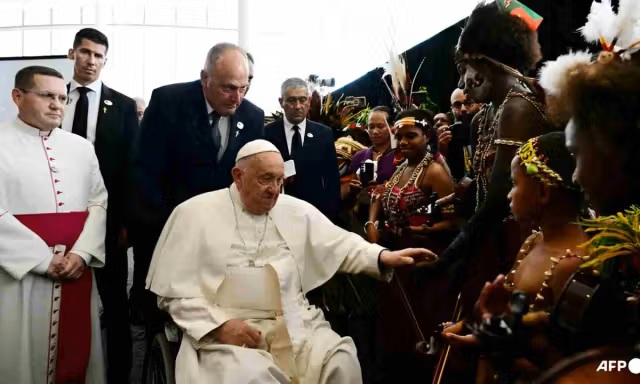
The Pacific Conference of Churches (PCC) has joined the global Christian community in mourning the passing of His Holiness Pope Francis, who died on Monday.

In a heartfelt tribute shared on social media, the PCC expressed deep sorrow and solidarity with the Catholic faithful across the Pacific and around the world

“We join our Catholic sisters and brothers of the Pasifika Household of God and the global Catholic Church in mourning the passing of His Holiness Pope Francis.”

Pope Francis, who became the first pontiff from the Southern Hemisphere and the first non-European Pope in more than 1,200 years, was elected in March 2013. He was widely known as the “Pope of the Peripheries,” for his deep commitment to peace, inclusion, and compassion for the world’s most vulnerable.

The PCC praised his ecumenical spirit and unwavering dedication to social and ecological justice, calling his leadership “an inspiration and a legacy for the Pasifika Household.”

“We call the Pasifika Household of God to pray for the soul of the late Pontiff, for a faith community in mourning, and for those who will soon seek divine wisdom in electing Pope Francis’ successor as Bishop of Rome,” the PCC said.

Messages of condolence and remembrance continue to pour in from around the globe as the world reflects on the impact and legacy of Pope Francis’ papacy.

Stay connected

529FansLike
172FollowersFollow
156SubscribersSubscribe
- Advertisement -