Home Blog Page 22

El Niño confirmed, set to fuel more extreme weather, says WMO

0

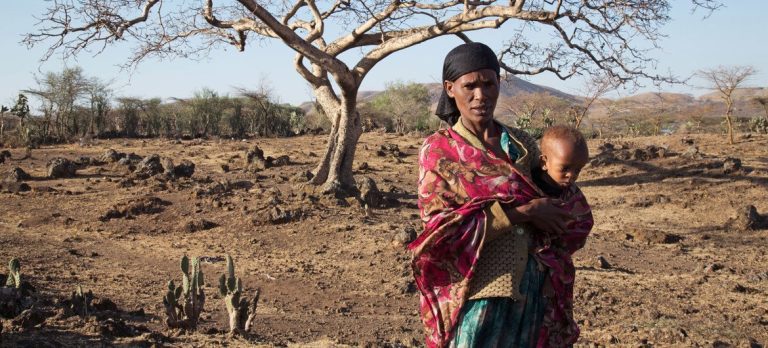
The UN urged all countries on Tuesday to bolster early warning systems after confirming the onset of El Niño, warning that the Pacific Ocean-warming phenomenon will bring above-average temperatures “nearly everywhere” and fuel more extreme weather.

According to the World Meteorological Organisation (WMO), there is an 80 percent chance that El Niño conditions will emerge between June and August and a 90 percent probability of this happening thereafter.

“This update matters because El Niño is a major driver of global weather and climate patterns,” said WMO Secretary-General Celeste Saulo.

“The footprint of an El Niño travels far beyond its origins in the Pacific Ocean, impacting agriculture, energy supplies, trade, water resources, supply chains, and livelihoods across entire regions.”

At 6°C above average, tropical Pacific Ocean temperature readings are fuelling concerns that this El Niño could feed on this extra heat and devastate vulnerable and unprepared communities worldwide.

“The world must treat it as the urgent climate warning it is,” stressed UN chief Antonio Guterres, reacting to the WMO alert.

The last El Niño in 2023-24 was one of the five strongest on record and it played a role in record global temperatures registered in 2024, noted Saulo.

There is “no evidence that climate change increases the frequency or intensity of El Niño events”, according to WMO, but it can amplify associated impacts because a warmer ocean and atmosphere provide more energy and moisture for extreme weather events such as heatwaves and heavy rainfall.

“We understand El Niño; we can prepare much better for El Niño thanks to science and to the investment of many countries to be well prepared,” the WMO chief told journalists in Geneva.

“But on top of El Niño, you have extreme events and those extreme events are requiring more and more [investment].”

Together with weather agencies worldwide, the WMO’s role in the coming months involves monitoring conditions to inform decision-making by governments, humanitarian agencies and other climate-sensitive sectors.

“Advance seasonal forecasts and early warnings are vital to save lives and cushion the impact on our economies and our communities,” Saulo insisted.

Both El Niño and La Niña are opposite phases of the El Niño–Southern Oscillation (ENSO), one of the most powerful naturally occurring climate patterns on Earth.

El Niño is characterized by a warming of ocean surface temperatures in the central and eastern Equatorial Pacific. It typically occurs every two to seven years and lasts around nine to 12 months.

It generally begins developing between March and June and reaches its peak intensity between November and February, with impacts on global temperatures typically being most pronounced in the second year after development.

ENSO events fall into four categories: weak, moderate, strong or very strong. “Even a moderate El Niño makes some weather and climate extremes more likely,” said WMO.

NBC Managing Director opens 16th Pacific Media Conference

0

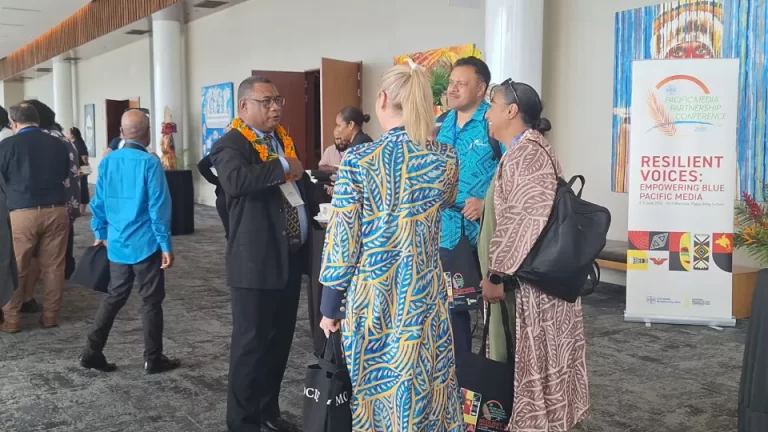
Papua New Guinea’s National Broadcaster Managing Director Kora Nou has officially opened the 16th Pacific Media Partnership Conference in Port Moresby.

The conference brings together media leaders, journalists, broadcasters and development partners from across the Pacific to discuss the future of regional media.

Welcoming delegates, Nou said the conference provides an important opportunity to strengthen networks, build partnerships and find new ways to tell Pacific stories to the world.

He encouraged participants to actively engage in discussions, workshops, masterclasses and networking sessions over the next two days.

“Let us share ideas openly, learn from one another’s experiences, explore new partnerships and identify practical solutions that will strengthen the sustainability and impact of Pacific media,” Nou said.

He also urged international partners to continue supporting media development through capacity building, technology transfer, content exchange and collaborative storytelling initiatives.

Nou said this year’s theme, “Resilient Voices: Empowering Blue Pacific Media,” reflects the challenges facing media organisations across the region, including rapid technological change, shifting audience expectations, economic pressures, climate-related challenges and the growing influence of artificial intelligence and digital platforms.

Despite these challenges, he said Pacific media remains resilient because it is grounded in communities, cultures and a commitment to truth and public service.

“As broadcasters and media practitioners, we play a critical role in informing our citizens, preserving cultural identities, promoting democratic values and amplifying Pacific perspectives on issues that matter most to our people,” he said.

“Our voices help shape public discourse, strengthen social cohesion and ensure Pacific stories are told by Pacific people for Pacific audiences and the world.”

Asia-Pacific Broadcasting Union(ABU) Secretary-General Ahmed Nadeem also addressed delegates, highlighting the need to build resilient and sustainable media organisations in an increasingly digital environment.

The conference covers key topics including the state of Pacific media in 2026, reporting on sensitive issues, media innovation, climate journalism, misinformation, strategic partnerships and business sustainability.

Practical workshops on radio scheduling, low-cost content production and content distribution will also help broadcasters improve efficiency and expand audience reach.

The conference will conclude with the signing of a communiqué outlining key priorities and future areas of cooperation among Pacific media organisations.

Israel opens Embassy in Suva as Fiji and Israel deepen relations

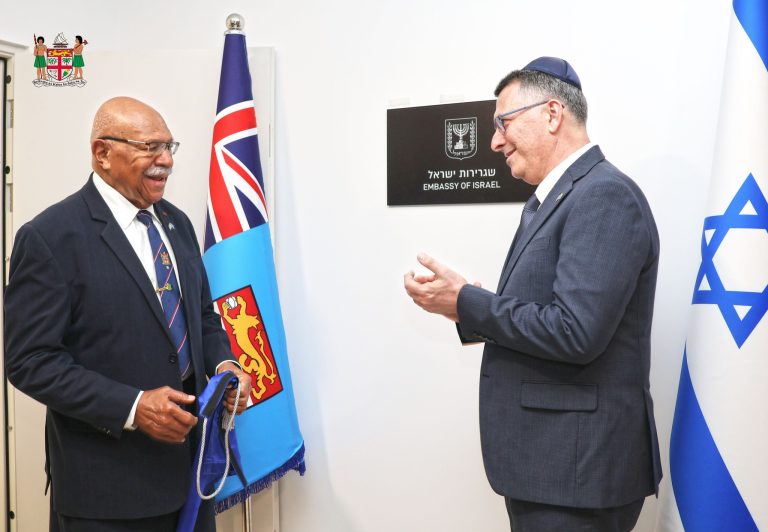
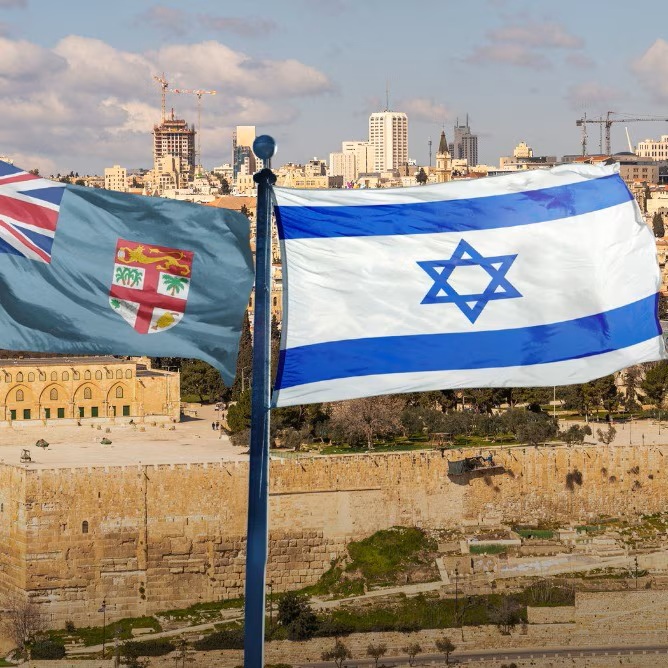
Israel has officially opened its embassy in Suva, marking a new chapter in diplomatic relations between Fiji and Israel.

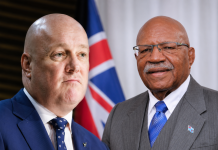
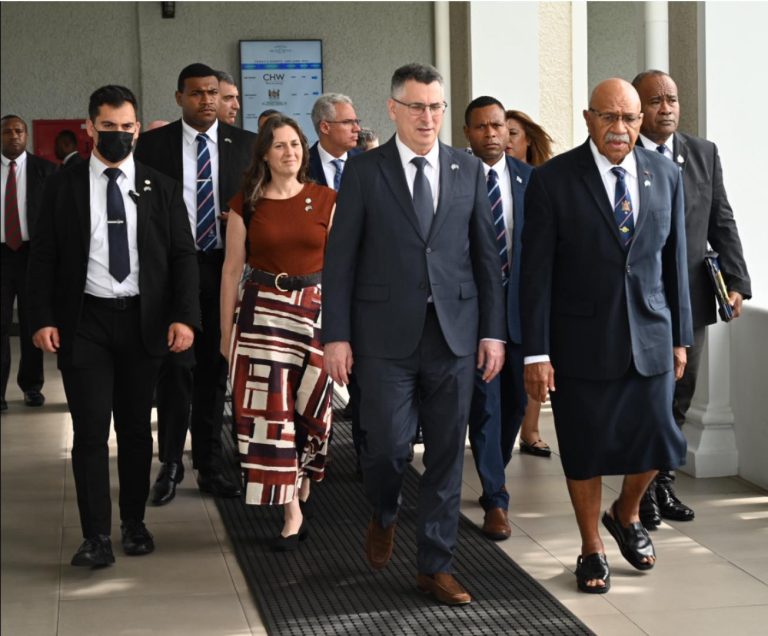
The embassy was formally opened on Tuesday by Fiji Prime Minister Sitiveni Rabuka and Israel’s Minister for Foreign Affairs, Gideon Sa’ar in a ceremony described by both leaders as a significant milestone in bilateral ties.

Addressing guests at the opening, Prime Minister Rabuka welcomed Israel’s decision to establish a permanent diplomatic presence in Fiji.

“You have blessed Fiji by deciding to open your Embassy here in Fiji,” Prime Minister Rabuka said.

He described the occasion as a landmark moment for the country.

“This is a proud moment for Fiji,” Prime Minister Rabuka said.

Israeli Foreign Minister Gideon Sa’ar said the opening of the embassy reflected the growing partnership between the two nations.

Sa’ar said the opening of the Embassy would be remembered as a milestone in strengthening bilateral relations and reaffirming the shared commitment between the two nations.

Located on Level 9 of the Fijian Holdings Limited (FHL) Tower in Suva, the embassy will serve as Israel’s diplomatic mission in Fiji and a base for expanding engagement across the Pacific.

According to officials, the new embassy will focus on strengthening diplomatic relations, increasing economic cooperation and promoting closer people-to-people links between Fiji and Israel.

The opening follows a period of growing engagement between the two countries and signals a further commitment to deepening cooperation in areas of mutual interest.

Ambassador Maya Yaron heads the Israeli Embassy in Suva.

Fiji PM Rabuka hails ‘golden era’ with Israel

0

Fiji Prime Minister Sitiveni Rabuka has labelled the opening of the Israel embassy in Fiji as the beginning of a “golden era” in relations between the two countries.

Rabuka made the remarks Tuesday at a joint press conference marking the first official visit to Fiji by Israel’s Minister of Foreign Affairs, Gideon Sa’ar.

Sa’ar said the mission would strengthen ties between Israel and Fiji for generations to come.

“I thank you for your true friendship, for your hospitality,” Sa’ar said.

“I came from very far, but I feel very close and I feel at home.

“I came to inaugurate the Israeli Embassy in Fiji, the Pacific Islands in order to strengthen our great bilateral relations for the next generations.”

Sa’ar described it as an honour to be welcomed to Fiji and acknowledged the country’s traditions and heritage.

“It’s an honour to be greeted by your great tradition and heritage and to be accepted here in your distinguished country,” he said.

Prime Minister Rabuka said the opening of the Israeli Embassy in Suva completed a diplomatic milestone that began with Fiji establishing its own embassy in Israel.

“We have officially opened Fiji’s embassy there in Israel. The first time Fiji establishes a mission in the Holy Land and in doing so, Fiji became the seventh nation in the world to establish its embassy in Jerusalem and the 100th diplomatic mission in Israel,” Rabuka said.

“We come full circle, and Saar’s presence in Suva marks the reciprocal visit or reciprocal opening or reciprocation of that commitment as we gather to officially inaugurate the resident embassy of the State of Israel right here in the capital of Fiji, in Suva.”

Rabuka said the presence of Israel’s foreign minister underscored the growing importance of the relationship.

“His physical presence cements our ties and ushers in a golden era of our relations.”

The Prime Minister said discussions between the two countries had moved beyond historical and symbolic ties and were now focused on practical cooperation in areas critical to Fiji’s future development.

“Our discussion this afternoon proved that friendship between Fiji and Israel is no longer just a symbolic or historic relationship.

“It is dynamic, it’s tech-driven, and it takes on board today’s realities, the emerging issues of our time and a clear-eyed view of what is ahead of us.”

Rabuka said Fiji saw significant opportunities to work with Israel in areas where the Middle Eastern nation has internationally recognised expertise.

“These include cooperation in health, digital transformation, cyber security, where strengthening resilience and protecting critical national systems is important for Fiji and throughout and through Fiji for the region.”
He said agriculture and food security were also key areas for future collaboration.

“We see immense opportunities in agriculture and food security, particularly in enhancing productivity, climate resilience and innovation, particularly in our private sector.”

Rabuka added that Fiji valued continued support in diplomatic training, human resource development and institutional capacity building.

He also highlighted security cooperation as an area of growing importance, particularly as Fiji confronts rising threats from illicit drugs and organised crime.

“We recognise the importance of security cooperation, including institutional linkages and capacity building that support national and regional stability, and Fiji’s fight against illicit drugs, transnational organised crime, will benefit from Israel’s depth of knowledge and technology-based solutions,” he said.

Solomons PM to meet Albanese with China pact in focus

0

A treaty between Australia and the Solomon Islands is on the cards as the Pacific nation’s new prime minister prepares for talks with Anthony Albanese.

Matthew Wale is in Canberra for his first overseas trip since he was elected by his country’s parliament in May.

Wale has long been an advocate for diplomatically tying his country to Australia, but it’s the Pacific nation’s relationship with China that has drawn attention.

The Solomon Islands and China signed a security pact in 2022, which partially eclipsed the bilateral security arrangement Australia has had with its Pacific neighbour since 2017.

Wale has been critical of the Solomons’ relationship with China, using the 2024 elections to accuse his political opponents of “sleazing up” to Beijing.

He promised to release details of the secretive 2022 security pact if elected, although the information is yet to be made public.

The Solomons and Australia will likely sign an agreement to set aside $190 million (US$136 million) for expanding and training the Royal Solomon Islands Police Force.

A further deal between the countries is also expected to be discussed, but details have not been released.

Australia has in recent times finalised treaties with Tuvalu, Nauru and Papua New Guinea, while a security pact with Fiji is in the works.

A wide range of topics were likely to be canvassed during the visit, Australian National University Pacific scholar Anouk Ride said.

“Anything substantive, we are going to have to wait a while to see,” she said.

The Solomons is the only Pacific country to sign a security deal with China, so the visit remains significant regardless of diplomatic milestones reached.

“Maybe his early visit here is sending a signal of who he wants to engage with,” Dr Ride said.

“We will have to wait to see how deep that relationship goes and if it supersedes that of other countries.”

Albanese said the decision of Wale to visit Australia as his first destination emphasised the importance of ties between the two nations.

Dr Marat presents Bougainville Affairs Bipartisan report

0

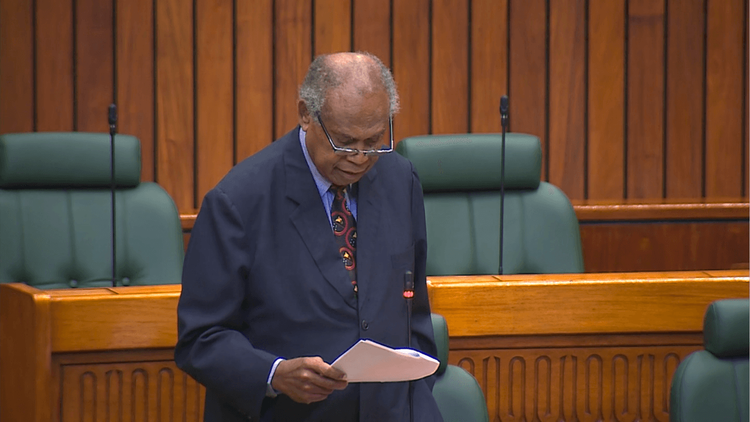
Chairman of the Bipartisan Parliamentary Committee on Bougainville Affairs, Dr Allan Marat, presented the Report on the nationwide public consultation regarding the Bougainville Referendum in Papua New Guinea Parliament Tuesday.

This report is a significant step in fulfilling Parliament’s ongoing responsibilities under the Bougainville Peace Agreement and the Constitution of Papua New Guinea.

The nationwide consultations were designed to gather a comprehensive understanding of the perspectives and sentiments of the Bougainvillean people concerning their future governance and potential independence.

Dr Marat highlighted the importance of involving the public in this critical decision-making process, as it aligns with the principles of peace, democracy, and self-determination outlined in the peace agreement.

He detailed the key findings of the consultations, emphasising the diverse opinions expressed by different groups across the country.

Dr Marat noted the need for transparency and thorough consideration of these views as the government moves forward with discussions about Bougainville’s political status and its relationship with the national government.

“First, there was strong recognition across all consultations of the importance of maintaining peace and stability.

“Participants frequently referred to the legacy of the Bougainville conflict and emphasised the need for Parliament to approach its consideration with care, responsibility, and a clear commitment to preserving the peace achieved through years of dialogue and reconciliation.

“Second, many participants highlighted the importance of constitutional process.

“There was a strong emphasis on the expectation that Parliament’s consideration of the referendum outcome will proceed transparently and in accordance with the Constitution and the Bougainville Peace Agreement, recognising that clarity and openness in the process can help foster public understanding and confidence.

“Third, consultations highlighted the need for careful planning in considering future arrangements. Participants raised issues related to governance capacity, economic sustainability, and institutional development, emphasising the importance of managing any transition in an orderly and responsible manner.”

The report not only serves as a reflection of the people’s voices but also as a guide for policymakers as they navigate the complexities of Bougainville’s future.

Dr Marat called for ongoing dialogue and collaboration between the national government and Bougainville’s leadership to ensure a peaceful and inclusive process moving forward.

In conclusion, he reaffirmed the commitment of the Parliamentary Committee to uphold the rights of the Bougainvillean people and to support their aspirations in line with the frameworks set forth in the Bougainville Peace Agreement.
He urged all stakeholders to engage constructively in this pivotal phase of Bougainville’s journey.

Many Members of Parliament during the debate called for deferral of the debate to another session of Parliament as leaders want to have a clear understanding on the report presented.

Consultations were held in five locations representing all major regions of the country: Goroka (Highlands), Lae (Momase), Kokopo (New Guinea Islands), Port Moresby (Southern), and Buka and Arawa (Autonomous Region of Bougainville).

Participants included a broad cross-section of society, such as community leaders, church representatives, women and youth groups, civil society organisations, academics, legal practitioners, former and current public officials, and members of the general public.

The diversity of participants ensured that the consultations captured a wide range of perspectives, experiences, and concerns.

Pacific Power, how regional cooperation transformed the world’s largest tuna fishery

0

The Pacific Islands Forum Fisheries Agency (FFA) has released a major report documenting two decades of transformative work in tuna fisheries management – a story of unprecedented collaboration between scientists, government officials, fisheries workers, NGOs, and international development partners.

Pacific Power: A 20-Year Journey of Regional Leadership in Tuna Fisheries distils hard-won lessons from the Oceanic Fisheries Management Project, revealing how regional solidarity and science-based decision-making have turned the Western and Central Pacific Ocean into a global model for sustainable fisheries governance.

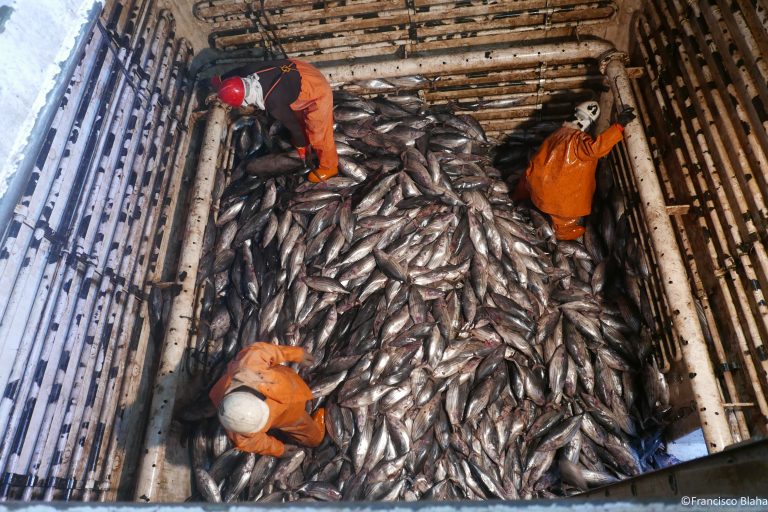
The achievements are remarkable: all four economically important tuna stocks – skipjack, yellowfin, bigeye, and South Pacific albacore – remain healthy and sustainably fished, making the Pacific the only ocean basin tuna fishery to achieve this milestone. The region now accounts for 54% of the world’s tuna catch, generating an average of US$480 million annually in licencing and access fees for Pacific governments over the past five years.

From Fragmentation to Regional Unity

Pacific Power chronicles a fundamental shift in how Pacific Island nations manage their most valuable marine resource. Ludwig Kumoru, director of fisheries management at FFA and former CEO of the Parties to the Nauru Agreement, recalls the early days: “In the beginning, every country tried to do their own thing. With the help of FFA, and eventually, the Commission, we were able to push ideas through as a bloc” he noted.

This unity empowered Pacific nations to negotiate collectively, shifting control from distant-water fishing nations to local hands.

“People began to really take ownership… If we were to benefit, we had to step up,” says Kumoru.

The establishment of coordinated regional frameworks through the FFA, the Western and Central Pacific Fisheries Commission, and sub-regional bodies like the PNA, enabled Pacific nations to speak with unified voices in international negotiations.

This unity delivered tangible results. The pioneering Vessel Day Scheme, introduced by PNA members in 2015, quadrupled purse-seine revenues within a single year by setting hard caps on fishing days based on scientific advice about stock health. Employment in the tuna sector grew 44% between 2015 and 2022, directly supporting nearly 28,000 Pacific livelihoods.

Ten Lessons for Sustainable Fisheries

Pacific Power distils over two decades of collective Pacific experience into ten key lessons, grouped under three themes: foundations for success, managing for resilience, and enabling long-term change.

Regional cooperation emerges as the most powerful driver of progress, but one that requires sustained commitment, trust-building, and carefully structured processes. Coordination mechanisms such as the ‘Monitoring, Control and Surveillance Working Group’, and pre-meeting consultations, have been central to aligning national priorities and strengthening collective oversight.

Science-based management has proven effective, but only when understood and applied in context. Targeted investments in stock assessment workshops, technical exchanges, and long-term scientific positions have enabled Pacific nations to engage confidently with complex models and incorporate scientific advice into decision-making. This is where OFMP has played an important role over two decades: supplying funding, scientific expertise, and capability-building programmes and expertise to help support sustainable tuna fisheries.

The region has also pioneered advanced monitoring systems: 100 percent observer coverage on PNA-licensed purse seiners, electronic reporting technologies, and satellite-based vessel tracking have significantly reduced illegal, unreported, and unregulated fishing.

The adoption of harvest strategies represents a fundamental shift from reactive, year-by-year negotiations to pre-agreed, science-based rules that guide management responses to stock changes. As Kumoru explains: “What used to happen is that we would negotiate every year what could be taken. But with harvest strategies, we have to agree well in advance.”

Climate Change and Equity at the Forefront

The report emphasises that climate change is no longer a future threat but a pressing reality requiring immediate action. While Pacific nations contribute minimally to global carbon emissions, they face disproportionate risks as ocean warming alters tuna distribution, potentially shifting access rights and revenues between countries. The report calls for climate considerations to be embedded in harvest strategies, access agreements, and governance systems, with Pacific nations playing meaningful roles in shaping global responses.

Gender and social inclusion emerge as critical priorities requiring structural change beyond participation targets.

“One of the key lessons from OFMP is that gender equality in fisheries is not just about participation numbers,” writes Lisa Buchanan, Chief Technical Advisor, OFMP3, in Pacific Power.

“Real progress requires addressing influence, safety, and opportunity across the value chain, and removing structural barriers through intentional policy, systems, and programme design from the outset.”

The report highlights that women and marginalized groups play vital roles across the tuna value chain, particularly in processing, administration, informal trade, and compliance functions. These contributions have not always been reflected in formal policy and planning. To be successful, effective initiatives must intentionally incorporate specific goals for women and marginalized groups into activity design, addressing barriers such as safety, leadership access, and decision-making power.

Looking Ahead to 2050

The report underscores that the region’s most important resource is people. The strength of Pacific tuna governance comes from skills, experience, and relationships built across national and regional institutions over many years. Long-term professional development, consistent training grounded in Pacific contexts, and knowledge-sharing across countries and generations have reinforced regional identity, peer learning, and shared ownership of outcomes.

Building on these foundations and maintaining a focus on evidence-based fisheries management and regional collaboration will be crucial as the Pacific tuna fisheries face pressures from climate change, growing demand, and geopolitical uncertainty.

As Midori Paxton, Global Head, Ecosystems and Biodiversity, Planet Hub, UNDP, notes in the report’s foreword, the learnings captured are “not only a record of what has been achieved, but also a roadmap of next steps”.

Pacific Power demonstrates that sustainable fisheries management underpins food security, creates economic opportunity, and helps sustain cultural identity across the Pacific.

‘Pasifika Rugby can’t be ignored’: Cook Islands and Tonga make case for Kanaloa takeover

0

The leaders of Tonga and Cook Islands rugby have broken their silence on Kanaloa Rugby’s bid to take over Moana Pasifika, arguing that the future of Pacific rugby must be shaped by Pacific voices.

With Moana Pasifika set to leave Super Rugby Pacific after the 2026 season because of financial pressures, support for the Kanaloa consortium’s proposed takeover continues to grow across the region.

Kanaloa is one of a number of groups understood to be interested in taking over the licence, with New Zealand Rugby expected to assess competing proposals before making a decision on the club’s future.

PMN’s Pacific Mornings first revealed last week that the rugby unions of Sāmoa, Tonga, Cook Islands, and Niue had formally backed Kanaloa’s bid, with chief executive Tracy Atiga confirming the support during an interview on the programme.

While the Pacific unions do not decide who ultimately takes over Moana Pasifika’s licence, their backing carries significance because the franchise was created to represent Pacific communities and provide professional pathways for players across the region.

The endorsements also increase pressure on New Zealand Rugby, which last week declined to say whether it recognised the support Kanaloa has received from Pacific unions.

NZ Rugby told PMN News that any bidder would need to present a “long-term, sustainable business plan” as it considers several options for Moana Pasifika’s future beyond 2026.

Tonga Rugby Union chief executive Aisea Aholelei said the issue goes beyond the future of a single team.

“Pasifika Rugby cannot be ignored,” Aholelei told PMN’s Pacific Huddle.

“I mean, the stats there, the numbers are there, the visuals are there. Everywhere you look in professional rugby, international rugby, everywhere around the world, Pasifika is represented by our players.”

Aholelei said having a professional team based closer to home would strengthen Pacific national teams and give unions greater opportunities to monitor and develop players.

“It is very, very important that they are here at home playing in a professional setup.”

He said professional rugby was about more than developing players.

“You’re leaving the development side of it and everybody else behind, especially in the local development and the rugby itself on island,” Aholelei said.

“But if we all go hand in hand with the players, the coaches and management, the setup and working in a professional environment, it’ll be fantastic.”

Aholelei also revealed on Friday that the Tonga Rugby had not been approached by New Zealand Foreign Affairs Minister Winston Peters following recent comments suggesting positive developments could be on the horizon for Moana Pasifika.

“We haven’t heard anything from a union perspective,” Aholelei said. “But it sounds positive. Any support that helps move Moana Pasifika forward would be welcomed.”

New Zealand is urgently exploring ways to secure Moana Pasifika’s future with Peters telling Pacific leaders in Apia that officials have been directed to work with NZ Rugby and other stakeholders on a financially sustainable plan.

Peters, who was in Sāmoa over the weekend, said it would be a major loss for the Pacific if Moana Pasifika were to disappear from Super Rugby, and he reaffirmed New Zealand’s support for keeping the franchise alive.

Cook Islands Rugby Union president Simiona Teiotu said Kanaloa earned the union’s support by approaching them directly with plans for grassroots rugby and player development.

“They are the ones who initially reached out to us,” Teiotu told PMN. “They gave us a proposal in terms of grassroots rugby.”

While backing Kanaloa, Teiotu acknowledged the long-standing support his union has received from World Rugby and New Zealand Rugby, particularly in coaching, development and community programmes.

But he said Pacific rugby nations continue to face challenges including population decline as young people move overseas for work and opportunities.

“A lot of our players have left the country,” he said.

Despite those challenges, Teiotu said grassroots rugby remains strong and continues to play an important role in keeping young people active and connected to their communities.

Both leaders pointed to the wider value of professional rugby pathways for Pacific nations, saying they help create opportunities not only for players but also coaches, administrators, referees and support staff.

Their comments add further momentum to Kanaloa’s campaign as New Zealand Rugby considers the future of professional Pacific rugby beyond 2026.

Aholelei says the message to rugby’s decision-makers is straightforward: “Kanaloa is stepping up to the plate to help Pasifika Rugby and it must be supported.”

Any change in ownership would still require approval from New Zealand Rugby and other key rugby stakeholders, with no timeline yet announced for a final decision.

As New Zealand Rugby weighs competing proposals for Moana Pasifika’s future, the message from Tonga and the Cook Islands is clear: Pacific nations want a greater voice in shaping the professional game and the pathways that support the next generation of players.

Quad’s Fiji port plan will challenge China’s Pacific supply-chain dominance

0

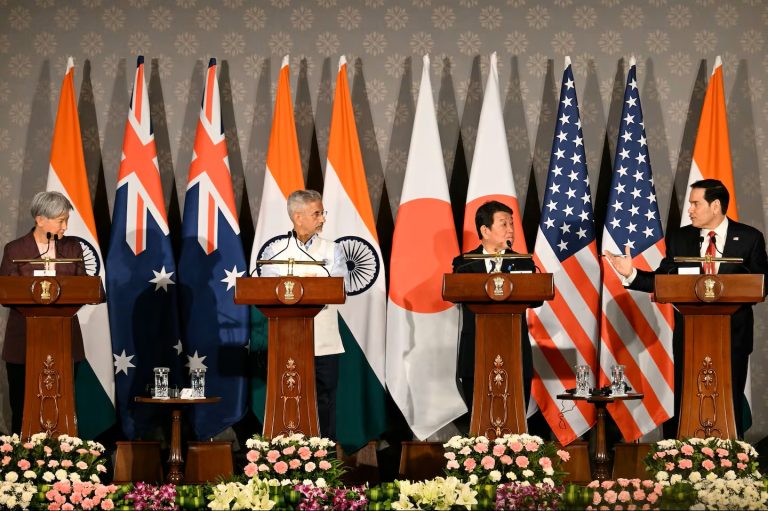
A plan by the United States, Japan, India and Australia to collaboratively invest in port infrastructure in Fiji is a step towards challenging China’s hegemony over supply chains in the region while simultaneously signaling to Pacific island countries that the four regional powers can give them a better deal than Beijing can, experts told Radio Free Asia.

The plan was unveiled earlier this week in New Delhi, after a meeting of foreign ministers of member nations in the Quadrilateral Security Dialogue (QUAD) alliance, or Quad.

Fiji was likely chosen because of its strategic location as a convergence point for many global shipping lanes, Gregory Brown, director of the Alliance Futures Initiative, a Washington-based think tank, told RFA.

“Fiji sits at the crossroads of the South Pacific and is the natural logistics hub for everything moving between Australia, New Zealand, and the wider island chain,” said Brown.

“If you’re going to build one port that serves the whole Pacific, you build it where the shipping lanes converge—and that is Suva, the fulcrum for the region.”

According to a fact sheet published by the U.S State Department, the Tuesday’s meeting focused on maritime and transnational security, economic prosperity and security, critical and emerging technology, and humanitarian assistance and emergency response.

“Following the Quad Ports of the Future Partnership conference hosted in India in October 2025, the Quad committed to identifying critical port projects that it can support to increase trade and economic prosperity by increasing port infrastructure and capacity for key Indo-Pacific corridors,” the fact sheet said.

“As such, we are proud to announce that the Quad countries will work with the Government of Fiji, to advance port infrastructure and associated activities in the country.”

The port project would be a major Western infrastructure project in a region that has seen increasing investments from China in recent years, as Beijing and the West jostle for geopolitical influence.

Through the port project, the Quad hopes to send a message to Fiji and other Pacific Island countries that there are alternatives to working closely with China.

In recent years, Beijing has been aggressively investing in Pacific Island infrastructure as part of its Belt and Road Initiative.

The plan has been criticised as a “debt-trap”—partner countries borrow heavily to finance bridges, roads or seaports, but when they struggle to repay, China gains leverage and control.

Fiji owes roughly US$110 million to Chinese state banks, or about 6.5 percent of its external debt, according to its Ministry of Finance. While this figure is relatively small compared to other creditors like Japan (9.7 percent) the World Bank (36.3 percent) and the Asian Development Bank (38.7 percent), the nature of loans from the other major creditors are “highly concessional,” and have longer payback windows than the Chinese loans.

“China’s model in the Pacific is loans,” said Brown. “The debt becomes a strategic instrument.”

Brown noted that the Quad’s plan is to fund the Fiji port project primarily through grants, allowing Suva to avoid falling into a debt-trap.

“China lends, the Quad gives,” he said. “For a country the size of Fiji, that’s the entire calculation.”

China also provides grants to international partners, but only at a fraction of the United States. According to a March 2025 report by the Washington-based Brookings Institution, Chinese aid spending totaled about 14.6 percent of that of the United States between 2013-2018, and grants totaled 47.3 percent of this aid.

The report said that grants are “traditional foreign aid projects in the Western definition” and said that it was a “common misperception” that China’s Belt and Road Initiative is aid.

Still, the prospect of a partnership with Beijing for these projects is attractive. Brown recalled how Fijian Prime Minister Sitiveni Rabuka toured ports during a visit to China in 2024 and discussed potential partnerships for port modernisation.

“The Quad didn’t randomly choose Fiji,” he said. “This pitch is a direct counterbid.”

He said that Fiji is the biggest, most visible island nation in the Pacific, and should the project be successful, it would send a message that “resonates across the region.”

“I think the whole point is to show the Pacific island countries that there’s a better deal available than Beijing’s,” said Brown.

Should the Quad’s port project in Fiji prove successful, the climate could be ripe for port upgrades in other parts of the region.

U.S Secretary of State Marco Rubio said at a press conference following the Quad meeting that the Fiji project would “serve as a model for other projects in the future.”

Port infrastructure in the Pacific is much needed, Cleo Paskal, a senior fellow at the Washington-based Foundation for Defence of Democracies research institute, told RFA.

“The choice of Fiji is a relatively easy first step – a location that is relatively high profile and dovetails with Australian and Indian priorities,” she said. “Ideally the next choice will be infrastructure in locations that make an even stronger statement, and difference, such as Bina Harbor in Solomon Islands.”

She also noted that the Pacific Island countries that still recognise Taiwan–Marshall Islands, Palau and Tuvalu–would be ripe for cooperation with the Quad, because Chinese infrastructure projects in those countries would be problematic from Beijing’s point of view.

“I expect this is a pilot. If it works, we’ll replicate it,” said Brown. “The real question is whether the Quad can deliver this project on time and within budget.”

Though the port has been announced, construction will not start overnight, as Fiji has yet to agree to the project, Fiji’s foreign minister Sakiasi Ditoka said to Indian news outlet The Hindu.

Ditoka confirmed that Fiji was in discussions on port infrastructure with the Millennium Challenge Corporation, or MCC, a bilateral U.S foreign aid agency.

The U.S State Dept announced in March that the MCC signed an agreement with Fiji for a US$12 million grant “to support design and feasibility studies,” which Ditoka said were focused on ports and Fiji’s business regulatory environment.

When asked about the port and an initiative on maritime surveillance discussed at the Quad meeting, Chinese Foreign Ministry Spokesperson Mao Ning restated China’s stance on the Quad that cooperation between countries should not target a third party, and that China opposes “forming exclusive groupings or engaging in bloc confrontation.”

Beyond the port and maritime surveillance, other projects unveiled at the meeting included a minerals investment framework, an initiative on energy security, and a promise to ensure that countries in the region are connected via undersea cables “by 2026.”

Brown believes these commitments indicate a “qualitative shift” away from talking about Pacific strategy to announcing “concrete deliverables.”

“The Pacific is where great power competition will be decided, and the Quad just acknowledged it,” Brown said. “That is, the U.S has limited resources and has to concentrate them where the strategic stakes are highest.”

He said the port is the Quad’s “belated recognition” that it needs to compete in the region.

“The Quad is essentially saying: we’re not going to let one country control the infrastructure through which strategic resources move,” he said.


Pasifika for Palestine Australia and APAN condemn Israeli Embassy opening in Fiji

Pasifika for Palestine Australia and the Australia Palestine Advocacy Network (APAN) have strongly condemned the opening of Israel’s embassy in Suva, accusing the Fiji Government of deepening ties with Israel despite ongoing international criticism over the war in Gaza and Israel’s occupation of Palestinian territories.

The criticism comes as Israeli Foreign Minister Gideon Sa’ar visits Fiji to officially inaugurate the new diplomatic mission.

In a joint statement, the two groups said the embassy opening represents a further strengthening of relations between Fiji and Israel, following Fiji’s decision to open an embassy in Jerusalem in September 2025.

Sa’ar reportedly described Fiji as “one of Israel’s most consistent supporters in the United Nations.”

The groups argued that Fiji’s diplomatic engagement with Israel contradicts international legal obligations and raised concerns about growing cooperation between the two countries in trade, security and technology.

The statement highlighted to a cybersecurity Memorandum of Understanding signed in October 2025 and discussions regarding the possible supply of Israeli patrol boats to the Fiji Navy.

“We stand in solidarity with our Pasifika community calling out the opening of an Israeli embassy in Fiji. The International Court of Justice (ICJ) has been unequivocal: states must not recognise, assist or normalise Israel’s unlawful presence in occupied Palestinian territory. Fiji is doing all three. Across the Pacific our complicity in genocide and apartheid must end.”

Kavita Naidu, spokesperson for Pasifika for Palestine, said Pacific communities and Palestinians share a common struggle.

“From the Pacific to Palestine, we stand together in our responsibility to end Israel’s genocide, occupation and apartheid. The opening of the Israeli embassy in Suva and the repression of those protesting is an act of complicity. Where the governments of Australia and Fiji have failed, the people will continue to resist.”

APAN Executive Officer Katie Shammas said Fiji’s support for Israel would surprise many Australians.

“Many Australians would be shocked to know that far from its paradise image, Fiji has become one of the most active supporters of Israel’s conduct in the Pacific bloc. The Fijian government is also repressing communities who are protesting against the ongoing atrocities in Gaza and West Bank.”

Shammas also questioned Fiji’s priorities at a time when the country faces social and economic challenges.

“Fiji is grappling with a health and economic crisis, so it boggles the mind that their priority is not on their people but on building diplomatic relationships with an apartheid state committing genocide.”

She added: “It is a profound embarrassment that Pacific governments demand the world to respect international law on climate change while actively covering up violations of that same body of law for Palestine.”

The two organisations called on the Fiji Government to close its diplomatic mission in Jerusalem, suspend all security and military cooperation with Israel, and protect the right to peaceful protest.

They also urged the Australian Government to oppose Fiji’s diplomatic moves and reject any involvement in Israeli military or security cooperation in the Pacific.

The groups further called on members of the Pacific Islands Forum to uphold international law and resist what they described as Israeli efforts to build diplomatic support within the Pacific region.

Stay connected

529FansLike
172FollowersFollow
156SubscribersSubscribe
- Advertisement -