Home Blog Page 177

PNG names Prime Minister’s 13 squads for annual clash

0

The Papua New Guinea Rugby Football League has named its squad lists for the annual Prime Minister’s 13 clash in Port Moresby.

Chairman Sandis Tsaka said the squad lists highlighted PNG’s push for pathways within the domestic competition and PNG’s success stories, who were currently playing in Australia and in the English Super League.

This year’s clash between PNG and Australia is set for Sunday (Oct 12), with the men’s and women’s and junior teams arriving in camp on Monday.

The PM’s 13 match will feature the Junior Kumuls taking on the Australian School Boys. While the Junior Orchids go up against the Australian School girls before the women’s and men’s matches.

Tsaka said this year marks the 20th anniversary of the international match between PNG and Australia, which began in 2005.

“The Prime Ministers 13 match kicks off the representative season with the Pacific Championships straight after PM’s 13 match,” Tsaka said.

“While the relationship between Australia and PNG goes far beyond the number of years of the PM’s 13 matches played between both countries, the 2025 Prime Minister 13 marks 20 years of close relations with Australian Rugby League and NRL in the space of the development of rugby league in PNG.”

“I am pleased to announce our selection for the PM’s 13 men’s and women’s squad and the Junior Kumuls and Junior Orchids squad.

“Our Junior Kumuls and Junior Orchids have been selected through the PNG NRL Bid Academy, PNGNRLC National Youth Competition and Santos Cup. We wish all squads the very best as they move into camp.”

Honiara primed to host FIBA Melanesian Cup 2025

0

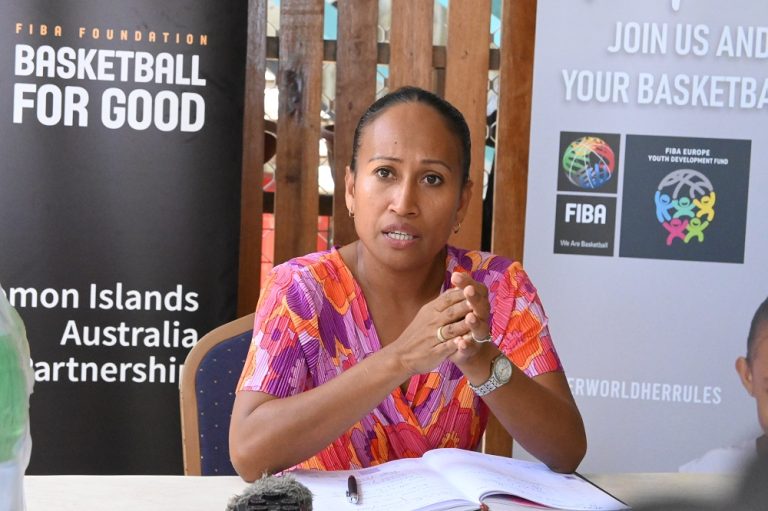
The Solomon Islands is gearing up to make history as host of the inaugural FIBA Melanesian Cup 2025, with organizers reporting smooth progress in welcoming four competing nations for the basketball showdown set for October 13-18 at Friendship Hall.

FIBA Melanesian Cup 2025 Chairlady Gloria Hong shared updates with local media, highlighting the event’s readiness despite some logistical tweaks.

Hong outlined the accommodation plans, prioritizing comfort for the delegations.

“Most teams will be accommodated at the Solomon Islands National University (SINU) Campus, while Fiji will be resided at Henderson Sky Residence,” she said.

“Accommodations for New Caledonia and PNG are still pending due to their flight schedules, so we are yet to get confirmation. But most participating teams will be accommodated at SINU.”

Tickets will be sold at a flat rate of $20 across all ages, aligning with Friendship Hall’s seating limits.

“The ticket price ensures compliance with the available seats at the game venue,” Hong explained.

“At the moment, we try to sell a total of 1,300 tickets because we have two grandstands with 750 seats per grandstand. We have been looking at selling 1,500 tickets, but since we will be having VIPs and officials watching the games, we will reserve a total of 200 seats for them, including the teams. That’s why it’s very important to grab a ticket in time to be able to secure a seat.”

Tickets will be available Monday through Saturday.

“But we will only stick to the total of 1,300 tickets per day, which caters to the venue capacity,” Hong added.

“During the selling of the tickets, there will be a tent available at the entry of the venue for selling tickets, but if the 1,300 tickets are sold, then all seats are sold out.”

Safety remains a top priority, blending professional oversight with community involvement.

“The venue has its own security firm responsible for looking after the venue,” Hong noted.

“We will increase the number of securities, basically involving the volunteers who will be engaged in the event. At the moment, we have 30 volunteers who will deploy around all required areas of support, from logistics and catering to other areas. We will also reach out to the RSIPF for further assistance just to manage the crowd from over-excitement.”

Hong expressed confidence in delivering a flawless debut for the host nation.

“I don’t think it may turn bad,” she remarked.

Meanwhile, teams from Fiji, New Caledonia, Papua New Guinea, and Vanuatu are slated to arrive between 10 to 12. October.

The tournament promises high-stakes Melanesian rivalry, with games unfolding over six days at the iconic venue.

Organisers are fine-tuning every detail to ensure a seamless experience for players, officials, and fans.

FLNKS leader calls for UN–Pacific Forum mechanism to resolve New Caledonia crisis

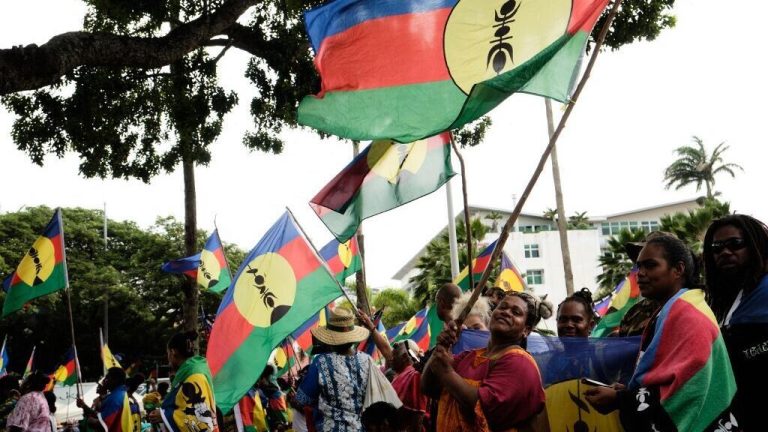
The President of the UC–FLNKS and Nationalist Group in the Congress of New Caledonia, Pierre Chanel Tein Tutugoro, has issued an urgent international appeal calling for the establishment of a joint United Nations–Pacific Islands Forum (PIF) facilitation mechanism to restore dialogue and ensure the decolonisation of Kanaky–New Caledonia.

In a letter addressed to the UN Fourth Committee, the Special Committee on Decolonisation, the UN Secretariat, the Forum Troika, and the Melanesian Spearhead Group (MSG), Tutugoro said New Caledonia’s political crisis had reached a critical point and demanded immediate international engagement.

“For over twenty-five years, the Nouméa Accord of 1998 has provided the framework for New Caledonia’s political trajectory, outlining a progressive path toward self-determination,” he said. “However, the third referendum, held on 12 December 2021 under exceptional health and customary circumstances, was imposed despite our repeated requests for postponement.”

Tutugoro said the result of that referendum, which proceeded without the participation of most Kanak people, “left behind a profound fracture and a contestation that remains unresolved, including within the United Nations system.”

He added that the situation had been made worse by the French government’s 2024 attempt to reform the electoral roll — a move he described as “undermining the fundamental provisions of the Nouméa Accord and a deliberate dilution of New Caledonian citizenship.”

“The ensuing unrest resulted in serious human and material losses, painfully recalling the tragic memories of the 1980s,” Tutugoro said.

He also rejected the so-called “Bougival Accord” signed in Paris in 2025, saying it failed to meet the aspirations of the Kanak people.

“This text, which maintains New Caledonia within the French Republic with limited and conditional transfers of powers, does not address the legitimate aspirations of our people,” he said. “Consequently, during our extraordinary congress of 9 August 2025, the FLNKS solemnly rejected this proposal, confirming that it could not constitute the basis for consensus.”

Tutugoro pointed to the findings of the Pacific Islands Forum’s Troika Plus Mission, which visited New Caledonia last year, as evidence of the country’s deepening divisions.

“The Troika Plus Mission of the Pacific Islands Forum, to which I had the privilege of contributing, delivered a clear and sobering assessment: deep political polarization, widespread mistrust, worsening social inequalities, and a high risk of lasting instability,” he said.

He noted that the 54th Pacific Islands Forum in September 2025 had also recognised the gravity of the situation, highlighting that the New Caledonian process was “at a critical juncture and must be guided by a truly inclusive dialogue.”

Calling on the international community to act, Tutugoro emphasised that New Caledonia remains listed by the United Nations as a Non-Self-Governing Territory.

“In accordance with General Assembly Resolutions 1514 and 1541, our people are entitled to the exercise of their inalienable right to self-determination,” he said. “Yet this right can only be guaranteed if an impartial and secure framework is urgently established.”

Tutugoro called for “the immediate establishment of a joint facilitation mechanism under the auspices of the United Nations and the Pacific Islands Forum.”

“Such a mechanism would supervise a cycle of inclusive dialogues, open to all components of our society, including youth, women, customary authorities, and economic actors,” he said.

“It would ensure that discussions are conducted transparently, under the authority of respected international guarantors.”

He added that such a process “would help restore confidence, prevent further violence, and guarantee that the future of Kanaky–New Caledonia is determined freely, in full conformity with international law.”

Tutugoro urged France to suspend “any unilateral implementation of the post-Bougival framework” and warned that peace and security in both New Caledonia and the Pacific region depend on establishing an impartial mechanism for dialogue.

“The establishment of an impartial framework is essential before any resumption of discussions on the future of our country, as the security and peace of New Caledonia and of the Pacific region depend on it,” he said.

He concluded by reaffirming the FLNKS’s readiness to engage with international partners: “We remain at your full disposal for any further engagement or hearing that may assist in identifying a peaceful and just solution for the future of our country.”

NZDF marks one year since HMNZS Manawanui sinking, pays SAT10 million to Samoa

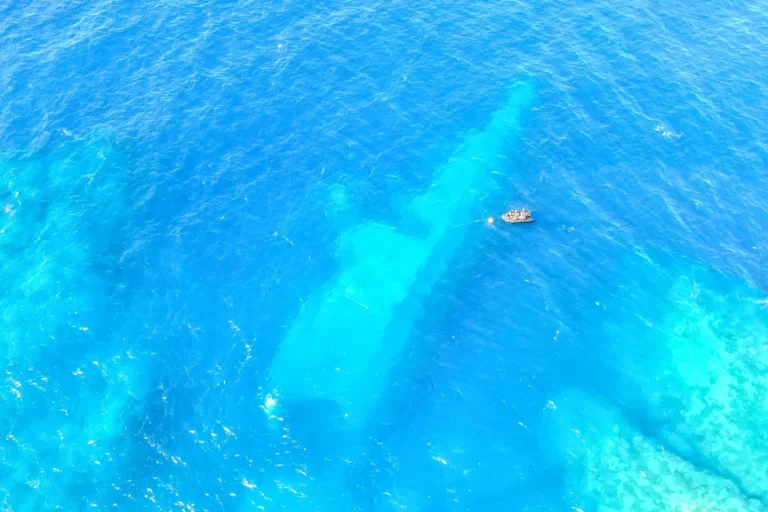
The New Zealand Defence Force (NZDF) has marked one year since the sinking of HMNZS Manawanui off the coast of Samoa, reaffirming its commitment to supporting Samoa’s recovery efforts and addressing the environmental and operational consequences of the incident.

Captain Rodger Ward, who recently took over from Commodore Andrew Brown as the Manawanui Response Lead, reflected on the events of 06 October 2024, when the vessel ran aground on a reef off Upolu while conducting a survey task and later sank.

“Today marks one year since the sinking of HMNZS Manawanui off the coast of Samoa on 6 October 2024,” Ward said.

“The ship ran aground the previous evening on a reef off Upolu while conducting a survey task. In the ensuing hours, despite the elements and the darkness, all 75 ship’s company and passengers made their way to shore safely, thanks in very great part to Samoan authorities and the courage of the local Samoan community who responded to the incident as it unfolded.”

Ward said significant progress had been made in the past year to address the environmental and logistical impacts of the wreck.

“Alongside our Samoan colleagues much work has been carried out in the past 12 months to minimise the effects of the sinking and investigate the causes. Fallen shipping containers have been removed. Fuel, oil, other pollutants, equipment, weapons, ammunition and debris have been recovered and the wreck has been made as safe as possible,” he said.

He confirmed that more work remains to be done, including an independent wreck assessment and environmental studies.

“Further work is required. That work includes progressing an independent wreck assessment together with environmental studies. This information will be essential in supporting decisions about the future work required,” Ward said.

“The priority remains, as it has been throughout, to minimise any environmental impacts of the sinking, and to support the Government of Samoa in its response.”

Ward noted that water quality in the affected area had improved considerably.

“It is pleasing to note that monitoring by the Scientific Research Organisation of Samoa has shown the seawater in the area is clear and uncontaminated from elevated hydrocarbons resulting in the warning on fishing being lifted completely in February,” he said.

He also acknowledged the psychological and social impact of the incident.

“We also recognise the need to support the sailors, passengers, and those involved in the rescue, and what followed,” Ward said.

“One year on we recognise the impact that the sinking has had on the people of Samoa, particularly the communities of the South coast, and also the support the NZDF has received from the Government and people of Samoa in dealing with the aftermath.”

Ward confirmed that a Court of Inquiry into the causes of the grounding had been completed.

“A comprehensive Court of Inquiry into the causes has been concluded and considerable work to implement the recommendations is underway,” he said. “Any disciplinary proceedings that may arise are yet to be determined, but we can advise that the investigation is reaching its closing stages.”

He reaffirmed the NZDF’s commitment to accountability and cooperation.

“The NZDF and our supporting agencies remain committed to doing the right thing: working with the Government of Samoa in dealing with the effects of the sinking, implementing the recommendations of the Court of Inquiry and ensuring that the 75 ship’s company and passengers continue to be supported,” Ward said.

“In reflecting on a year on from the grounding and sinking, we remain eternally grateful that no lives were lost,” he added.

Marking the one-year anniversary, New Zealand’s Foreign Minister Winston Peters announced that the New Zealand Government has made a payment of Samoan Tala (SAT) 10 million (NZD$6 million) to the Government of Samoa following the incident.

The payment follows a formal request from the Samoan Government and is intended to support its ongoing recovery and environmental management efforts.

Further inquiries have been directed to the Office of the Minister of Foreign Affairs or the Ministry of Foreign Affairs and Trade.

The ICJ climate ruling has major implications for the loss and damage fund

0

As the fund struggles with lack of money and bureaucratic barriers, its board must align its actions with the landmark court decision

By Liane Schalatek, Lien Vandamme, Isatis Cintron-Rodriguez, Rajib Ghosal, Teo Ormond-Skeaping, Monica Iyer

Next week’s seventh meeting of the board of the Fund for Responding to Loss and Damage (FRLD) in Manila presents a critical moment for a course correction.

The fund’s establishment in 2022 was hailed by climate justice advocates. However, three years later, its operations and future are hampered by insufficient attention to human rights and the communities most impacted, as well as a severe lack of resources. Currently, less than 0,1 percent of the estimated funding needs are in the FRLD’s bank account.

Key items on the Manila meeting’s agenda, including the fund’s start-up phase and its long-awaited resource mobilisation strategy, could change this. It’s also the first meeting since the International Court of Justice (ICJ)’s historic advisory opinion on the legal obligations of states in respect of climate change.

This authoritative legal opinion clarifies states’ loss and damage obligations and has significant implications for ensuring that the fund will effectively deliver resources at scale directly to communities on the frontlines of the climate crisis, in line with their right to remedy.

A long-awaited clarification

The advisory opinion comes with unparalleled legitimacy: all countries agreed through a consensus resolution by the UN General Assembly to ask the ICJ for guidance on their international legal obligations in the context of climate change.

Decades of foot-dragging and deliberate blockage under the climate regime have led to rapidly escalating climate harm. It’s therefore no surprise that the most climate-vulnerable countries, like small island developing states and their communities, led the charge on taking climate change up to the world’s highest court.

The importance of this ruling – an authoritative interpretation of binding international law – cannot be understated, particularly for loss and damage.

Legal obligation to remedy climate harm

The court strongly affirmed that climate harm – also known as loss and damage – is a reality that requires dedicated responses and finance as a matter of obligations, including within the climate regime. This is especially true for those most responsible for causing the crisis, in line with long-established principles of equity and Common But Differentiated Responsibilities.

The ICJ also affirmed loud and clear that human rights law is critical to interpreting and addressing loss and damage: not only is the climate crisis harming a wide range of fundamental human rights, but rights-based principles and standards are also fundamental to loss and damage responses.

Additionally, by looking at international law holistically, the court endorsed what grassroots movements have long known: frontline communities and countries have a right to full reparation.

The court confirmed the basic principle of international law that those who breach their legal obligations, including under the climate treaties, have a duty to repair the harm they cause. In explicitly recognising legal consequences for “peoples and individuals”, the ICJ reaffirmed communities as direct rights-holders for such reparations.

How the fund should respond to ICJ decision

As board members consider the fund’s future, they must ensure that loss and damage responses are fully consistent with international law. This will be essential to overcoming longstanding impasses and to building an institution that is founded on justice.

First and foremost, states have a duty to provide resources at the scale of loss and damage needs, based on their Common But Differentiated Responsibilities. This has important implications for the upcoming resource mobilisation strategy for the FRLD, both in terms of the scale that it needs to aim for – as needs are in the hundreds of billions – and how to reach it.

The board must move beyond voluntary contributions and periodic pledging conferences to clarifying differentiated obligations, with concrete pathways to make polluters pay and hold big polluters accountable.

Second, all those harmed by the climate crisis have a right to remedy – not charitable assistance. This has critical implications for decisions on access to the fund.

Bureaucratic rules and the limitations imposed by the World Bank as the FRLD’s trustee cannot stand in the way of all climate-vulnerable developing countries having direct access to the fund. Moreover, as the ICJ affirmed, the legal consequences of states’ wrongful acts extend to peoples and individuals, making direct community access a matter of right rather than discretion.

Third, international human rights law must guide loss and damage responses as a legal requirement, not as best practice. The fund’s start-up phase and long-term operations should recognise that losses and damages are, first and foremost, human rights violations and adjust accordingly.

Loss and damage needs assessments must explicitly include human rights criteria and non-economic loss and damage. The fund must urgently develop policies and do-no-harm frameworks that ensure inclusive, participatory, and accountable operations that protect ecosystems and human rights, including Indigenous Peoples’ rights.

‘There is no going back’

The momentum for climate justice needs to continue after the fund’s board meeting. At COP30 in Belém, Brazil, states are expected to finally deliver action consistent with their legal obligations on mitigation, adaptation and loss and damage.

Beyond COP30, the Pacific island nation of Vanuatu has announced its push for a new UN General Assembly resolution to endorse and operationalise the ICJ’s advisory opinion.

All states have agreed that guidance from the ICJ on legal climate obligations was necessary. Now, they must deliver urgent, tangible solutions for the communities most affected by the climate crisis. The legal landscape has shifted – there is no going back to a world where climate accountability can be evaded.

Liane Schalatek is associate director of the Heinrich-Böll-Stiftung in Washington DC. Lien Vandamme is a senior campaigner at the Centre for International Environmental Law (CIEL). Monica Iyer is an assistant professor at the Georgia State University College of Law. Rajib Ghosal is an international consultant working on climate justice and development. Teo Ormond-Skeaping is a coordinator of advocacy and outreach at the Loss and Damage Collaboration. Isatis M. Cintron is a climate justice postdoctoral researcher and director of the ACE Observatory.

Nauru election week begins with music festival and beauty pageant

0

Nauruans will head to the polls on Saturday for two important votes: to elect their members of parliament and to decide on a change to the nation’s constitution.

Ahead of election day, the island is hosting the Musical Festival and Miss Micronesia Pageant from 06 October to Friday, 9 October.

The Nauru parliament is made up of 19 members elected from multi-seat constituencies – 14 administrative districts grouped into eight constituencies.

According to the Nauru Electoral Commission, a total of 60 candidates are vying for seats in parliament – six of them are women.

Under current law, the parliamentary term is three years. Nauru’s MPs have already voted for a change to the parliamentary term from three to four years.

However, for the constitution to change, at least two-thirds of voters must vote in favour of the referendum.

In Nauru, voting is compulsory for all citizens aged 20 and over.

Incumbent President David Adeang, 55, is contesting a seat in the Ubenide constituency, where 12 candidates are vying for four seats.

The Nauru Electoral Commission conducted the candidate ballot draw on Friday and urged all eligible voters to participate and make their voices heard.

Constituencies and seats
*Aiwo (2 seats)
*Anabar (2 seats)
*Anetan (2 seats)
*Boe (2 seats)
*Buada (2 seats)
*Meneng (3 seats)
*Ubenide (4 seats)
*Yaren (2 seats)

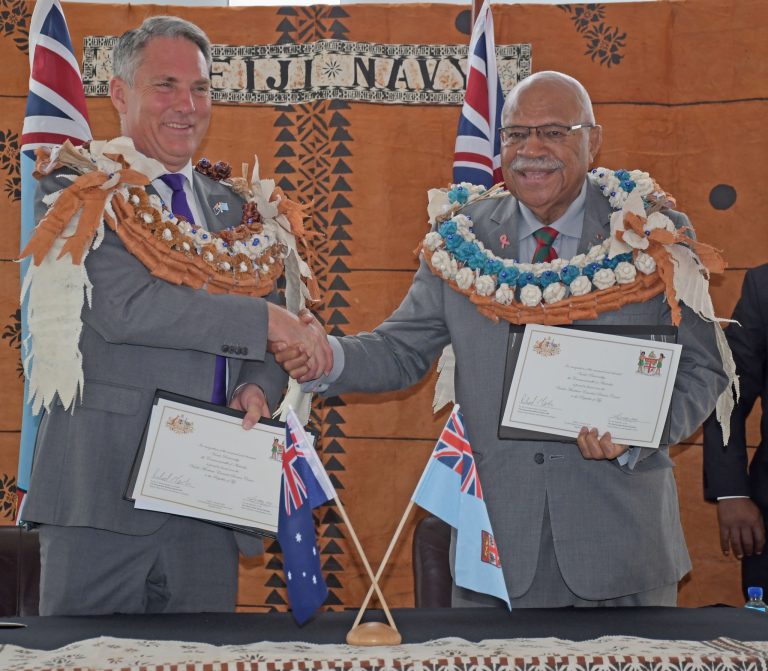
Vuvale Maritime Centre a symbol of Fiji-Australia security partnership: Marles

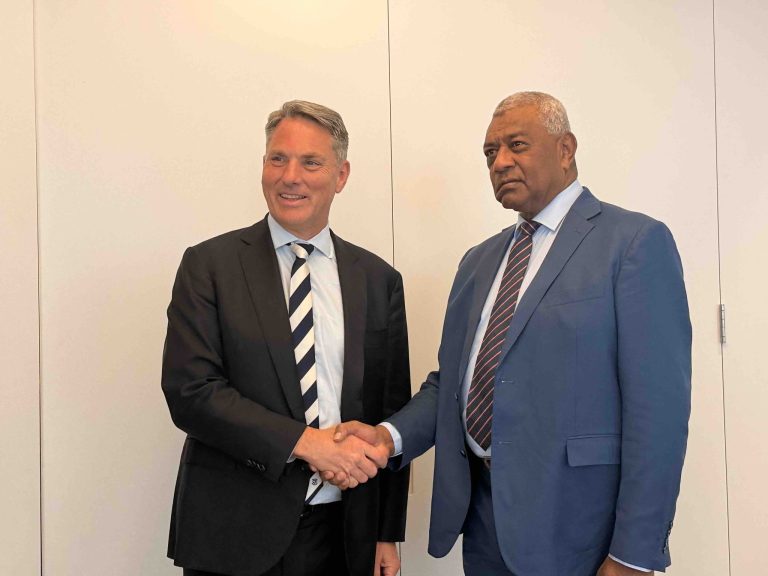
Australian deputy Prime Minister and Defence Minister Richard Marles says the opening of the Vuvale Maritime Essential Services Centre in Suva marks a major milestone in regional security cooperation between Fiji and Australia.

Speaking at the official opening last Friday, Marles said the new $83 million(US$41.5 million) facility represents not only a significant investment by Australia but a lasting partnership built on shared security and trust.

“It is an enormous honour, and an excitement really, to be here today for the opening of the Vuvale Maritime Essential Services Centre,” Marles said.

“This is an incredible achievement – over the course of two years, transforming what was essentially jungle into this incredible facility that we all sit within today.”

“More than 1400 contracts were signed with Fiji and partners for the delivery of this facility. 1275 jobs were created in the building of this facility. It was, over the last two years, a massive endeavour to bring us to this day. But as significant as these facts and figures are, what is much more profound is the capability that this now represents for Fiji and indeed for the Pacific region,” he said.

Marles said the centre demonstrates the power of coordination among Fiji’s key agencies.

“Under one roof, we have the Fiji Navy, the Fiji Police, Fiji Customs, Fiji Fisheries, the Search and Rescue Coordination Centre, the Hydrographic Office and more. Bringing those agencies together into one place represents power. It represents the ability to make change. It represents the ability to give effect to practical outcomes,” he said.

Marles said the centre gives Fiji greater control and agency over its maritime domain, strengthening its capacity to respond to illegal fishing, drug trafficking and other transnational crimes.

“The ability to coordinate in that way is profound, and it represents an ability to have much greater agency and control over Fiji’s maritime domain,” he said. “That is significant, because Fiji is a maritime nation. The maritime domain for Fiji is utterly central to Fiji’s economic prosperity and Fiji’s national security.”

He said the Vuvale Maritime Centre embodies the meaning of “Vuvale,” or family — both within Fiji’s agencies and in the broader Fiji-Australia partnership.

“Vuvale, family, is exactly the word which captures what this centre is about, because the agencies at work here are indeed a family, and this is the opportunity for all of those agencies to now operate as one,” he said. “But Vuvale is also a word which is used to refer to another family, a family which encompasses both Fiji and Australia and indeed the Pacific.”

Marles said the centre is one of the largest infrastructure investments Australia has made anywhere in the world and forms part of a 20-year sustainment package alongside the Blackrock Camp in Nadi.

“These are the two most significant investments that Australia has made in respect of Fiji,” he said. “It’s more than bricks and mortar — it will ensure that both of these facilities are at the cutting edge of their capability for decades to come.”

Marles highlighted Fiji’s leadership in regional peace and security under Prime Minister Sitiveni Rabuka.

“I want to acknowledge your personal leadership within the Pacific in seeking and aspiring to have the Pacific as an ocean of peace,” Marles said. “It is impossible to conceive of Australia’s security without, in the same breath, acknowledging the need for the security of the Pacific region.”

He said Australia and Fiji’s security are “intimately connected,” and the centre’s establishment demonstrates that shared understanding.

“There is an intimate relationship between the security of Fiji and the security of Australia, and this facility goes to both,” he said.

Marles concluded by thanking all those involved in building the centre.

“I want to thank all the contractors who have been involved in the construction of this incredible facility, all the workers who have laboured to bring this about, all the agencies who now reside in this facility,” he said.

“Your service, your contribution is to Fiji, but it is very much to the security of both of our countries and to our region. And for that, Australia stands deeply grateful,” he said.

China to step up Pacific push after Australia–PNG defence treaty

0

China will double down on efforts to expand its influence across the Pacific after Australia and Papua New Guinea agreed to ink a comprehensive defence treaty, foreign policy experts have warned.

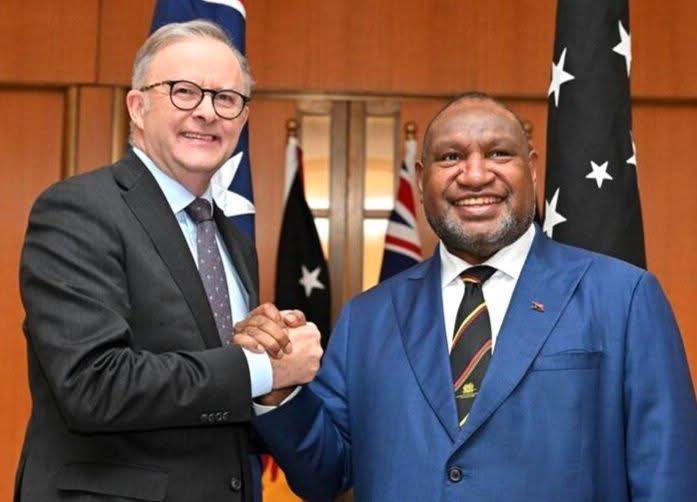
Papua New Guinea Prime Minister James Marape confirmed last Thursday that his cabinet had approved the Pukpuk Treaty – named after the pidgin word for crocodile – making it Australia’s third formal alliance after the United States and New Zealand, and the first it has entered into in almost 75 years.

Prime Minister Anthony Albanese and Marape are expected to sign the treaty on Monday, one day after the pair attend the NRL grand final in Sydney.

The treaty commits Australia and Papua New Guinea to defend each other if attacked, giving the Australian Defence Force access to PNG when there is a security threat. The treaty will also allow up to 10,000 Papua New Guineans to serve in the ADF, while Australia helps Port Moresby expand its air force and create a new special forces unit.

Jennifer Parker, a maritime security expert linked to the National Security College, said the realists within the Chinese government would understand that Australia would be concerned about the Pacific, but nevertheless, China will be critical of the Pukpuk Treaty.

“We have seen China be critical of Australian agreements in the Pacific, including the Falepili Union. We’ve seen China be critical of Australia’s use of alliances and relationships. China is incredibly critical of AUKUS [and] of the Quad,” Parker told AFR Weekend.

The Chinese embassy in Papua New Guinea has already voiced its concerns with the Pukpuk treaty, saying in September that while it respected the Pacific country’s right to sign bilateral treaties, they should not come at the expense of China’s presence there.

“Such a treaty should not be exclusive in nature, nor should it restrict or prevent a sovereign country from co-operating with a third party for any reason,” the embassy spokesman said in a statement on Facebook.

“It should also refrain from targeting any third party or undermining its legitimate rights and interests. We hope that the PNG side will continue to uphold independence and self-reliance, properly handle issues bearing on its sovereignty and long-term interests, and work with China to maintain the sound development of China-PNG relations and mutually beneficial co-operation.”

The treaty was originally supposed to be signed when Albanese visited Papua New Guinea last month to celebrate the country’s 50th anniversary, but the prime minister left empty-handed after it emerged that Marape’s cabinet had not signed off on the deal.

The ratification of the Pukpuk Treaty will come as a relief for Albanese. But the government still faces an uphill battle in convincing Vanuatu to sign a separate security deal, the Nakamal Agreement, which some local politicians fear would restrict their ability to negotiate with China.

Parker said China will intensify its influence activities, including efforts to sign security deals and policing partnerships across the Pacific.

“I think more focus on that from China in the region may well be a response to not only the PNG treaty, but the other security agreements we’ve been discussing with a number of Pacific Islands,” Parker said.

The Albanese government has tried to strengthen Australia’s ties with the Pacific after the Solomon Islands stunned the region in 2022 when it struck a secretive security pact with Beijing.

To counter China’s influence, the Albanese government has signed far-reaching deals with Tuvalu and Nauru, giving Canberra a final say over any other security agreements the two nations might want to strike with other countries.

The government has also unveiled a $200 million(US$131 million) deal to train thousands of new police officers in Papua New Guinea, and announced a $190 million(US$125 million) fund to set up a training centre for the Royal Solomon Islands Police Force as part of its efforts to curb China’s security presence.

Lowy Institute research fellow Oliver Nobetau agreed it was possible that the treaty could embolden China to bolster its efforts to build influence in the Pacific, but said it was not clear what that would look like.

“Over the past couple of years, Australia has done well to really spread itself thin, but also touch in so many factors where it hasn’t traditionally been involved in,” Nobetau said.

These include infrastructure development, negotiating Commonwealth Bank’s entry to Nauru to block a deal with the Bank of China, and funding a new NRL team in Papua New Guinea.

“So Australia itself is testing new waters, but it’s covering a lot of ground. So the question now, which remains, is, what is left there for China to double down on?” Nobetau said.

Parker said the Albanese government had successfully stabilised the economic and diplomatic aspects of the bilateral relationship with China, but the security dimension was not stable.

“We see that through China’s operations in the Pacific. We see that through the unsafe and unprofessional activities that China’s military undertakes against ours,” Parker said.

Australian military officials lodged a formal protest through embassies in Canberra and Beijing in February after an Australian surveillance plane had a near miss in the South China Sea when a Chinese fighter jet released flares that came within 30 metres of the aircraft.

Defence Minister Richard Marles said the Pukpuk Treaty showed that Papua New Guinea viewed Australia as its natural security partner of choice.

“History, geography, affinity all make that manifestly plain. I mean, there is no world in which we would see any kind of attack on PNG as doing anything other than engaging our national interest,” he said.

Fiji and Australia strengthen defence ties, commit to new treaty talks and deeper security cooperation

Fiji and Australia have reaffirmed their growing security partnership, committing to deeper defence cooperation and new treaty negotiations under their elevated Vuvale Partnership.

Fiji’s Minister for Defence and Veterans’ Affairs Pio Tikoduadua and Australia’s deputy Prime Minister and Defence Minister Richard Marles met in Suva last Friday for the annual Fiji-Australia Defence Ministers’ Meeting, highlighting the close alignment between the two nations.

“Deep and enduring people-to-people links are integral to the success of our defence cooperation,” the ministers said in a joint statement. “Within our renewed and elevated Vuvale Partnership, we welcome the agreement by our Prime Ministers to commence negotiations to elevate our Vuvale Partnership to a treaty.”

The two leaders said the endorsement of the Blue Pacific Ocean of Peace Declaration at last month’s Pacific Islands Forum Leaders’ Meeting in Honiara demonstrates their “significant strategic alignment” and commitment to a peaceful, stable, and prosperous Indo-Pacific.

They pledged to continue collaboration through the Defence Cooperation Program and the Pacific Maritime Security Programme, including training, infrastructure projects, and the Defence Pacific Air Program. Both sides will expand exchange officer programmes and instructor exchanges to further strengthen interoperability.

The ministers highlighted growing maritime security cooperation, including the opening of the Vuvale Maritime Essential Services Centre in Suva — a sovereign Fijian asset jointly developed with Australia.

“Our joint development of this facility is a tangible example of our shared commitment to combating maritime security challenges,” the statement said.

The partnership also extends to regional operations, with Fiji and Australia contributing to the Pacific Response Group and co-deploying with other Pacific militaries. Fiji’s participation in Exercise Talisman Sabre 2025 and Exercise Coral Warrior 2025 was described as a “true partnership” between the Republic of Fiji Military Forces (RFMF) and the Australian Defence Force (ADF).

Building on that momentum, Fiji will embed an RFMF Company with Australia’s 7th Brigade in 2026, marking a new phase in defence collaboration.

The two nations also reaffirmed their cooperation in peacekeeping, pledging to seek UN accreditation for training at Fiji’s Blackrock Peacekeeping and Humanitarian Assistance and Disaster Relief Camp.

“Fiji has long made distinguished contributions to global peacekeeping efforts, and Australia has been proud to provide strategic airlift for Fiji’s brave women and men,” the ministers said.

Tikoduadua and Marles concluded by reaffirming their commitment to the strategic partnership and agreed to reconvene at the next Defence Ministers’ Meeting in 2026.

All 45 Bougainville seats declared as 2025 General Election concludes peacefully

0

The Office of the Bougainville Electoral Commissioner (OBEC) has announced the successful conclusion of the 2025 Bougainville General Election, with all 45 seats now officially declared.

Speaking at a media conference in Buka today, Bougainville Electoral Commissioner Desmond Tsianai confirmed that the final count has been completed, and all winning candidates have been duly declared.

“Today marks a proud moment for Bougainville,” said Electoral Commissioner Desmond Tsianai. “With the declaration of all 45 seats, we bring this electoral process to a close with gratitude, humility, and confidence in the will of the people.”

The Commissioner acknowledged the peaceful conduct of the elections across the Autonomous Region of Bougainville and for those living outside of Bougainville, thanking voters, candidates, polling officials, security personnel, media and observers for their roles in ensuring a transparent and credible electoral process.

“This election has been a powerful expression of democratic choice. I commend the people of Bougainville for turning out in numbers, for respecting the process, and for contributing to the peaceful environment that made this election possible.”

“To the people of Bougainville. Your voice has been heard. Your vote has shaped the leadership that will carry us forward,” Commissioner Tsianai said. “To the newly elected representatives. The responsibility now rests with you to serve with integrity and commitment to all Bougainvilleans.”

“If there are any candidates or voters who may wish to dispute the results of the election, please note that you may still submit a petition to the Courts within one month of the declaration of the election. This is your right, and an important part of the electoral process.”

The Electoral Commissioner also expressed appreciation to partners and stakeholders, including the Bougainville Police Service, civil society, community leaders, and technical advisors. “I thank our dedicated electoral officials, the tireless counting teams, and our local and international partners for their professionalism, neutrality, and unwavering support.”

“With the election now concluded, it is important that all parties respect the results, uphold democratic principles, and work constructively within Bougainville’s institutions. The Bougainville Electoral Commission remains committed to supporting transparent and inclusive electoral processes into the future” he added.

The Bougainville Electoral Commission will return the writs to the Speaker of the House Monday 6th October 2025 and then initiate post-election reviews to further improve future electoral processes.

Meanwhile, Delourdes Motsi Semoso has been declared the newly elected Member for the North Bougainville Women’s Regional Seat.

The declaration was made after Semoso surpassed the absolute majority of 27,863 votes, securing a total of 33,915 votes following the third exclusion.

Semoso contested the seat alongside five other prominent women leaders from North Bougainville.

Stay connected

529FansLike
172FollowersFollow
156SubscribersSubscribe
- Advertisement -