Home Blog Page 152

Fiji reaffirms regional leadership in Tuna Industry at Pacific Tuna Forum

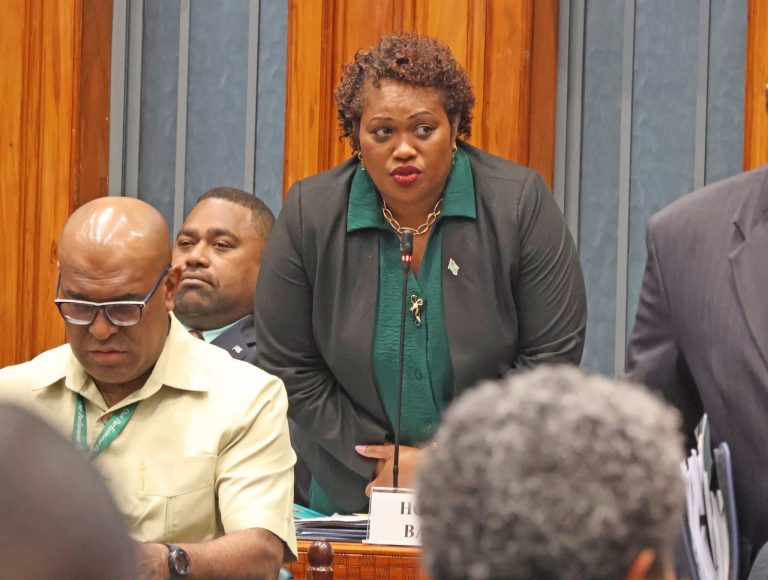
Fiji’s Minister for Fisheries, Alitia Bainivalu, says the successful hosting of the 9th Pacific Tuna Forum has reinforced Fiji’s leadership in ocean conservation and sustainable fisheries management across the region.

Delivering a ministerial statement in Parliament Thursday, Bainivalu said the two-day event, held in Denarau from 14 – 15 October, brought together 430 participants including fisheries experts, policymakers, industry leaders, and development partners to discuss the future of the Pacific’s tuna industry under the theme “Pacific Tuna 2050: Resilience, Innovation, Equity, and Sustainable Trade for a Prosperous Future.”

“The 9th Pacific Tuna Forum showcased regional cooperation and solidarity and, most importantly, reaffirmed Fiji’s position on ocean conservation and sustainable fisheries management,” Bainivalu said.

She said Fiji’s co-hosting of the Forum with Papua New Guinea highlighted the Pacific’s shared goal of managing its tuna resources responsibly and ensuring that Pacific Islanders continue to benefit from one of the region’s most valuable natural assets.

“The Western and Central Pacific Ocean accounts for nearly 60 percent of the global tuna harvest,” Bainivalu told Parliament.

“The stock status in the WCPO not only indicates effective fisheries management and robust scientific monitoring but also demonstrates strong regional cooperation.”

Bainivalu outlined measures taken by Fiji to safeguard tuna stocks, including national quotas, licence caps, closed fishing areas, and protections for sharks, turtles, marine mammals, and cetaceans.

She said Fiji’s leadership in sustainable tuna management has also been supported by practical steps to increase onshore processing and value addition.

“Fiji has been fortunate that out of the 15 developing states in the region, we have been able to lead the quest of being able to invest in onshore processing establishments to value-add products and export tuna caught within our waters as a Fijian product,” she said.

Bainivalu added that while the Pacific Islands Forum Fisheries Agency (FFA) members collectively harvest about 1.5 million metric tonnes of tuna annually, only 214,000 tonnes are processed in FFA countries — meaning 86 percent of the catch is processed offshore.

“When raw materials are exported offshore for processing, we miss out on job opportunities, equitable wealth creation, and the transfer of technology and knowledge,” she said.

The Minister said hosting the Forum gave Fiji an opportunity to engage directly with global industry leaders and strengthen its national strategy to increase returns from the tuna value chain.

“The 9th PTF provided an opportunity for the Fisheries Ministry to learn and understand the global tuna supply chain and identify new entry points into the competitive global tuna trade market,” Bainivalu said.

She said the Forum discussions focused on four pillars — resilience, innovation, equity, and sustainable trade — to guide the industry toward long-term sustainability and fairer benefits for Pacific communities.

“The number of registered participants reached 430 from the targeted 300, confirming that the Pacific Tuna Forum remains the leading platform for dialogue, cooperation, and strategic engagement on the tuna industry in the Pacific,” she added.

Bainivalu highlighted Fiji’s advantage as one of the region’s most developed tuna industries, with a fully domesticated long-line fleet, onshore processing facilities, and established export markets in Japan, the U.S, and the EU.

“The 9th PTF created a space and platform to present and market Fijian-caught and produced fisheries products, which is essential to the industry’s growth,” she said.

She said the discussions would help “re-strategise development aspirations and provide a strategic direction to transform the fisheries sector,” including investment in cold-chain infrastructure and logistics under Fiji’s role as a regional fisheries hub.

Bainivalu said the government’s $562,500 (US$281,250) budget allocation for hosting the Forum reflected its commitment to strengthening regional partnerships and promoting sustainable fisheries management.

“The successful convening of the Pacific Tuna Forum is a clear indication that, through collaboration, solidarity, and a shared vision, the Pacific region can continue to protect, develop, and sustain its tuna resources for the long-term benefit of our people,” she said.

“As we look ahead, we do so with confidence and conviction that we can continue to build a future where we capture greater returns from processing, marketing, and branding our own products,” she said.
Fiji Parliament Passes Fisheries amendment bill to modernise 80-year-old law

Fiji’s Parliament has passed the Fisheries (Amendment) Bill 2025, overhauling the 80-year-old Fisheries Act 1941 to strengthen compliance, enforcement, and accountability in managing coastal and inshore fisheries.

The new law gives fisheries, police, and customs officers expanded powers to enforce regulations and introduces Inshore Fisheries Fixed Penalty Notices for minor offences.

It also imposes stronger penalties for illegal fishing, ensures greater oversight of fishing licences, and updates definitions to reflect modern fishing practices and technology.

The amendment marks a major step toward a modern, efficient, and transparent fisheries management system — one designed to protect Fiji’s marine resources, support sustainable livelihoods, and align national governance with today’s environmental and legal standards.

American Samoa faces triple threat to its fishing-based economy

0

By James Borton

In American Samoa, the ocean is life — but that life is under siege.

The U.S territory, marooned in the heart of the Pacific, faces a triple threat of climate change, industrial fishing and the rising push for deep-sea mining — forces that threaten to reshape its future.

For many fishermen, whose faith and families are tied to the sea, these waters no longer feel endless or secure. Decisions about their future — and the ocean itself — are now being made far beyond their shores. From Washington boardrooms to global summits, the people most bound to these waters barely register.

As U.S officials weigh reopening parts of the Pacific Remote Islands Marine National Monument to commercial fishing fleets — and consider seabed mining — the voices of local fishermen and StarKist cannery workers are reduced to background noise in decisions that will define their survival.

The island’s economy depends on tuna, and every policy shift ripples along Pago Pago’s docks and canneries. This vast region falls under the nation’s largest Fishery Management Council, overseeing 1.5 million-square-nautical miles and an indigenous mix of Samoan, Chamorro, Hawaiian and Carolinian communities — making consensus across this vast ocean anything but simple.

But on Tutuila, the anxiety is direct: fishers speak of shrinking catches, rising fuel costs and the sense that the sea that once sustained them is slipping away — not just to climate change, but to distant powers charting their future.

“Tuna is the economic lifeblood of American Samoa and our fisheries are essential for food security, recreation and the perpetuation of our Samoan culture,” said Nathan Ilaoa, director of American Samoa Department of Marine & Wildlife Resources.

He warned that pitching deep-sea mining as a replacement for a declining fisheries industry may offer some potential short-term economic benefits, but risks destabilizing the tuna sector that still anchors the territory’s economy.

“As this process moves forward, DMWR will remain deeply involved to protect our interests and ensure our fisheries remain stable,” Ilaoa said.

The struggling industry’s survival runs through every deck and dock in American Samoa’s fishing industry. The territory ranks as the nation’s fifth-largest producer of fish, anchored by StarKist’s sprawling cannery in Pago Pago, which employs about 2,000 people who represent about 80 percent of the territory’s private-sector jobs.

But decades of overfishing have thinned Pacific stocks and island crews are squeezed between rules meant to protect the ocean and corporate fleets that dominate the catch, leaving livelihoods hanging in the balance.

Western Pacific Regional Fishery Management Council (WPRFMC) Executive Director Kitty Simonds warned that shutting down Starkist’s cannery could wipe out an estimated US$300 million a year in gross domestic product. Council members agree that the company is under increasing pressure from rival canneries in China and across Asia.

U.S Rep Aumua Amata Radewagen, American Samoa’s non-voting delegate to Congress, backs calls to expand fishing access — a move she said could boost the territory’s struggling economy. But many coastal fishers said their catches are already shrinking and warn that more exploitation could push a fragile ecosystem beyond recovery.

Fish stocks are collapsing across the Pacific, and the call for sustainable fishing has never been louder. Yet, in American Samoa, local leaders watch helplessly as distant water fleets — led by China’s mega-fishing armada, now estimated at more than 18,000 vessels — sweep through the Western Pacific’s exclusive economic zones, reshaping the seas on which their communities have relied for generations.

For High Chief Taulapapa William Sword, a noncommercial fisherman, and an engineer with the American Samoa Power Authority, fishing is not just commerce; it’s identity.

“Our people grew up with the land and the sea as sources of sustenance, so conservation must guide how we live,” he wrote in an email. But Sword said U.S National Marine Fisheries policies, driven by global trade interests, have sidelined small island economies and left American Samoa’s last tuna cannery — along with its longline and purse-seine fleets — battling to survive.

Sword said the island’s longline fleet has shrunk, while foreign vessels fill the gap, especially Chinese boats fishing with little U.S Coast Guard oversight.

“Beijing’s heavily subsidized fleet steals our fish and sells it back to us,” he said at a recent Fishery Council meeting. “China — and its fishermen — follow no one’s rules.”

Meanwhile, the Trump administration is racing to open the seabed around American Samoa and other U.S Pacific islands for cobalt, manganese and nickel — minerals now considered national security assets and pillars of the clean energy transition.

Officials argue deep-ocean mining would slash dependence on China for materials needed in defence systems, batteries and high-tech manufacturing.

But for American Samoa’s 50,000 residents, the sudden federal push to open the deep ocean raises troubling questions over consent, environmental risk and who truly benefits.

Marine scientists caution that deep-sea ecosystems remain among the least explored on Earth. Mining could stir up plumes of sediment, smothering fragile coral and disrupting migratory species on which islanders depend.

In a region already reeling from rising seas and coral bleaching, critics argue that deep-sea mining could inflict irreversible harm for short-term economic gain. Once the seabed is scraped and disturbed, there is no guarantee of recovery, at least not within human timeframes.

Local environmental activist Tisa Fa’amuli, who runs a small eco-resort on the island’s north coast, said the idea of seabed mining “feels like another assault on the ocean that feeds and defines us.”

She added in a telephone interview, “We already face the loss of our reefs and rising tides that eat our land. To think that the deep sea — a place we barely understand — could be torn apart without our voice in the matter is heartbreaking.”

The territory’s governor, Pula Nikolao Pula, has taken a measured approach to deep-sea mining. In remarks to local media, he urged a full environmental review before any permits are granted, stressing that American Samoa’s ocean remains its “lifeline.”

He said innovation must not come at the expense of clean waters, healthy reefs or the livelihoods on which future generations depend.

That call for caution is underscored by U.S. Rep Radewagen, who is pressing federal agencies to place island communities at the centre of ocean policy, not on the sidelines. She warned that deep-sea mining companies’ promises of low-impact technology remain unproven.

“Our people do not want our clear blue Pacific waters clouded off our shores,” Radewagen said in an email.

While Washington frames the hunt for undersea minerals as a matter of national security, mining companies see opportunity.

Oliver Gunasekara, co-founder and CEO of Impossible Metals, a California-based company developing autonomous undersea robots to collect minerals without dredging the seabed, insisted that “a responsible, science-driven approach can balance environmental protection with resource needs.”

The tension between environmental risk and economic hope is not new to the Pacific. From phosphate mining in Nauru to nuclear testing in the Marshall Islands, the region bears scars of decisions made elsewhere in the name of progress or security.

In that sense, American Samoa’s situation feels achingly familiar — a territory asked once again to absorb the consequences of policies forged far beyond its shores.

Yet, resilience also is here. American Samoans have a long history of self-reliance and stewardship, where community and nature coexist through mutual respect.

Villages already are leading coastal restoration projects, planting mangroves and rebuilding reefs using traditional knowledge. In a telephone interview with Fa’amuli, she said, “Our people understand the ocean’s pulse better than any outside expert, and we just want the chance to decide our own path forward.”

For many Samoans, the ocean is not just geography; it is genealogy — an ancestral inheritance that links generations. The call now is not only to protect that heritage from the encroaching sea, but also to ensure that any development in their waters begins with their consent.

As Fa’amuli put it, “The ocean is our mother. You don’t just take from her without asking.”

James Borton is a non-resident senior fellow at Johns Hopkins/SAIS Foreign Policy Institute and the author of Harvesting the Waves: How Blue Parks Shape Policy, Politics and Peacebuilding in the South China Sea

Flying Fijians coach Byrne names side to hunt another English scalp

0

Flying Fijians coach Mick Byrne has named a powerful match-day squad to take on England in their much-anticipated clash at Twickenham on Sunday morning.

Byrne has gone with a blend of experience and flair, backing his men to rise to the occasion against one of rugby’s traditional powerhouses.

The front row sees Eroni Mawi at loosehead prop, Tevita Ikanivere at hooker and Mesake Doge at tighthead prop, while Isoa Nasilasila partners Temo Mayanavanua in the second row.

In the loose forwards, Kitione Salawa starts at blindside flanker, Elia Canakaivata on the openside and Vilame Mata anchors the pack at number eight.

In the halves, Simione Kuruvoli takes charge at scrum-half with Caleb Muntz directing play at fly-half.

The midfield features the hard-running Josua Tuisova at inside centre and Kalaveti Ravouvou outside him, while Jiuta Wainiqolo and Selestino Ravutaumada provide pace on the wings and Salesi Rayasi slots in at fullback.

On the bench, Byrne has named Zuriel Togiatama, Haereiti Hetet, Samuela Tawake, Mesake Vocevoce, Motikiai Murray, Sam Wye, Isaiah Armstrong-Ravula and Sireli Maqala, offering strong impact options across the field.

The side will play England at Twickenham stadium.

Fijian Drua unveil 2026 squad

0

The Fijian Drua have unveiled their 2026 Super Rugby Pacific squad, which features 29 capped Flying Fijians alongside four Drua Development players heading to the big stage for the first time.

Thursday’s announcement highlights a successful off-season recruitment drive, with six new additions expected to play key roles in the 2026 campaign, as well as re-signing those expected to be a big part of the Club’s future. An impressive 13 players in the squad are ‘Drua Originals’ – players who were part of the first ever Fijian Drua squad which assembled in 2022 for the team’s first ever Super Rugby Pacific season.

NEW RECRUITS

The squad has been strengthened with the addition of Flying Fijian Temo Mayanavanua, who brings with excellent experienced and leadership skills. The towering lock joins the Drua from Northampton Saints, where he made 35 appearances and scored a try. He has played 59 first class matches between Saints and Lyon in France’s Top 14 competition.

The dynamic Joji Nasova joins the Drua from the Fiji Airways Fijian 7s team, where he earned a spot in the 2025 HSBC SVNS Men’s Dream Team and finished as joint top scorer with 26 tries. He is already a capped Flying Fijian in 2025.

Iosefo Namoce will compete for the centre position after playing for the Fijian 7s at last year’s Oceania 7s tournament in the Solomon Islands. He is a product of local competition pathways, featuring regularly for Suva in the country’s premier provincial competition. He played in Canberra’s John I Dent Cup for Gungahlin Eagles I the recent off-season.

Angelo Smith joins the Club after making 20 appearances and scoring 4 tries for the Melbourne Rebels. The 24-year-old lock also offers versatility, capable of playing at blindside flanker. He spent the off-season playing for Lautoka in the local provincial competition.

Manasa Mataele joins the Drua to continue an impressive Super Rugby Pacific career, featuring in 58 matches — 32 for the Crusaders, 24 with the Western Force, and 2 with the Chiefs. He was also part of the Canterbury side that recently reclaimed the Bunnings NPC title from Otago, securing their 15th national championship and first since 2017.

Issak Fines-Leleiwasa joins the Drua from the Western Force, where he made 45 appearances, and the ACT Brumbies (11 appearances). The former Australian international has announced his intention to represent Fiji, with his three-year stand-down period concluding in October 2026. Eligible through his Fijian-born father, Fines-Leleiwasa has strong roots in Vatani, Kaba, Tailevu. The 2023 Rugby World Cup Wallaby brings an exceptional set of skills to the halfback quartet of the Drua.

DEVELOPMENT PLAYERS PROMOTED

The Fijian Drua continues its proud track record of progressing players along the pathway to professional rugby. The 2026 squad sees the promotion of four promising players from last year’s development group to the main Swire Shipping Fijian Drua squad for the 2026 season.

Wingers Isikeli Basiyalo and Aisea Nawai, centre Maika Tuitubou, and hooker Kavaia Tagivetaua have all signed full-time multi-year contracts, making them eligible for selection in the matchday 23 next season.

THE SQUAD

The loosehead props in the squad in the squad are Flying Fijians Haereiti Hetet and Peni Ravai alongside Emosi Tuqiri.

The tighthead props cohort includes Mesake Doge, Samuela Tawake and Meli Tuni.

The Drua’s hooker roster will include Mesulame Dolokoto, Zuriel Togiatama and Kavaia Tagivetaua.

The second row includes Flying Fijians lock and 2025 Drua Men’s Player of the Year Isoa Nasilasila, who has the most Drua appearances in Super Rugby Pacific (50). Alongside him are Mesake Vocevoce, Vilive Miramira, Temo Mayanavanua and Angelo Smith.

A powerful backrow contingent includes Flying Fijians flankers Etonia Waqa, Kitione Salawa, Isoa Tuwai, Elia Canakaivata, Motikiai Murray and 2025 Bunnings NPC finalist Joseva Tamani.

The halfback group will be led by Frank Lomani, joined by Flying Fijians Simione Kuruvoli and Philip Baselala. Issak Fines-Leleiwasa rounds out the quartet.

The flyhalf group includes Drua’s top points scorer Isaiah Armstrong-Ravula (181), alongside sharpshooter Kemu Valetini and Isikeli Rabitu.

In the midfield, 2025 Tanoa Hotels Community Champion Tuidraki Samusamuvodre will lead the centres alongside Inia Tabuavou, Joji Nasova, Iosefo Namoce, and Maika Tuitubou.

In the back three, speedster and 2025 Pepsi Drua Men’s Rookie of the Year Ponipate Loganimasi is joined by Taniela Rakuro, Manasa Mataele, Ilaisa Droasese, Epeli Momo, Isikeli Basiyalo and Aisea Nawai.

“We’re delighted to present to the people of Fiji and our fans all over the world their Swire Shipping Fijian Drua squad for 2026. It’s very exciting to welcome some experienced players like Temo, Manasa and Angelo into our group. It’s also important for us to retain a strong core group of players who have been with us from the very beginning of this journey, like Miramira, Zuriel, Mesu and Tuidraki. Everyone at the Fijian Drua is looking forward to the upcoming season.”

“Our seven home games in the new season will be another showcase for the best rugby experience in the competition. Our players love playing at home in front of their families, friends and the Drua Nation, and to be able to play for the first time ever in Ba will be truly special for the team,” said Glen Jackson, Fijian Drua Head Coach

He added: “The promotion of Kavaia, Maika, Basiyalo and Nawai from Drua Development to the main squad is another cause for celebration. They have worked hard to earn these upgrades, it’s brilliant for them and bolsters our squad significantly. All of them are raring to go and fight for spots in the matchday 23 every week.”

The Club will announce the squad captaincy at a later stage. The Drua squad is now actively in the Pre-Season campaign except for those players in the Flying Fijians November Tests Squad.

14 HIV cases in Vanuatu

0

Vanuatu’s Ministry of Health (MOH) has recorded a total of 14 people currently living with HIV (Human Immunodeficiency Virus), a virus that weakens the immune system and can develop to AIDs if left untreated.

These cases were reported over a five-year period and are mostly transmitted by expatriates, according to the HIV Unit Manager, Florida Toa.

Manager Toa said the number of cases does not show if HIV is increasing or decreasing, as more testing is needed to accurately assess the situation.

Currently, only certain groups are being tested, but more testing is needed to get a full picture of the whole population, she said.

Director General (DG) of the ministry, Shirley Tokon, said that some of these cases were identified through blood tests at the hospital or during antenatal check-ups for pregnant women.

She said the ministry cannot confirm at this stage if Vanuatu students abroad or seasonal workers are at high risk due to lack of testing, but assumptions can be made as they are coming from high-risk countries.

The DG urged citizens to take responsibility for their health by practising safe sex, sticking to one partner, getting tested, and following health advices.

“Whether in Vanuatu or abroad, people must really listen to health advices,” she said.

While its a challenge with people still afraid to get tested or ask for information it’s important to start having conversations about it, said the DG.

She said an increase in HIV cases would put a strain on the country’s health system, as it will need to continue supplying the medications.

“With HIV, you can still enjoy life as a normal person as long as you take your medication. We (the ministry) will need to cover the cost of medication for those who will rely on it for their entire life, so that’s costly,” she said.

“Currently, Non-Communicable Diseases (NCDs) are already consuming a large portion of the government’s budget. There will be economic impact because we have a health system where people rely on the government, as many of us do not have medical insurance.”

Recently, health experts have warned that Fiji’s rapidly rising HIV infection rate could spread across the Pacific if urgent action is not taken.

DG Tokon said the rising cases in neighbouring countries are a worry.

She said they have discussed with Fiji’s Ministry of Health the support they can offer regarding advice on facilities where Vanuatu student can seek care, and also how they are strategically addressing the current situation.

She said Fiji’s situation driven by drug use practices is beyond their health ministry, involving other sectors. They are struggling, but they are more transparent in addressing the issue and have more resources, she said.

“How to address the issue depends on each country’s context,” she said.

Manager Toa said the ministry is focussing on prevention to ensure citizens are aware of the situation and practise safe sex behaviours.

According to the DG, MOH has internal policies, an action plan, and strategies for managing HIV, but are focus on situations within the country, meaning that they need to approach the rising trends in Fiji differently.

Pacific voices challenge militarisation, deep-sea mining and nuclear threats

0

Militarisation is the greatest environmental threat facing the Pacific region, according to regional peace advocates.

“We see how much of our ocean is being militarised from within,” said Maureen Penjueli former Pacific Network on Globalisation (PANG) Coordinator and the regional feminist alliance DAWN.

“From deep seabeds to surface waters, 2025 has shown how critical minerals are linked to military end uses.”

Penjueli cited the growing number of nuclear-powered submarines operating under the AUKUS defence pact between the United States, the United Kingdom and Australia.

“Since August, there have been at least six nuclear submarine visits to the Pacific,” she said. “Australia’s position on whether these vessels carry nuclear weapons remains unclear.”

She added that the Trump administration’s recent decision to resume nuclear weapons testing after a 30-year moratorium has deepened regional anxiety.

“We are now in a context where rearmament and nuclear war are becoming the clearest trends,” she said. “The Pacific is once again at the frontline.”

Penjueli also described how disaster response and climate initiatives are increasingly being folded into defence strategies.

“We’re seeing the militarisation of humanitarian aid,” she said. “Disaster assistance missions are starting to include military components without legal frameworks or regional consent.”

The militarisation trend mirrors a parallel race for seabed resources. Penjueli and researcher Ma’ia’i Tau both linked the demand for critical minerals to expanding deep-sea mining interests across the Pacific.

Tau called deep-sea mining another “false promise.” The International Seabed Authority held its 30th session this year in Kingston, Jamaica, to finalize a long-delayed mining code.

“There’s still a lot of clauses yet to be agreed,” Tau said. “You have state parties like China really pushing to continue progress, but many sections remain bracketed, including those on underwater cultural heritage, environmental regulations and benefit sharing.”

While industrial powers press ahead, Pacific nations remain divided.

“We had the region’s first Deep-Sea Talanoa this year,” Tau said, referring to a regional political dialogue. “Some Pacific countries sponsor exploration. Others call for a moratorium. It’s important that these spaces open up for wider consultation.”

Forty countries, including eight from the Pacific, now support a global moratorium on seabed mining until scientists can prove extraction will not damage fragile ecosystems. Tau said the Pacific’s split stance reflects uncertainty in the global legal framework.

“Science is still developing around this. There’s some caution there,” he said.

Tau also criticised the United States’ growing involvement in seabed resource extraction. On 21 April, President Donald Trump signed an executive order expanding U.S offshore mining for “critical minerals.”

“This threatens multilateralism within the ISA,” Tau said. “The executive order gives industry a green light to pursue bilateral deals that ignore international law.”

He warned that U.S partnerships with private companies could trigger a “race to the bottom” in ocean governance.

“You could see how this sets a precedent,” Tau said. “It puts profit ahead of the protection and preservation of marine ecosystems.”

Pacific activists described 2025 as a turning point for the region’s identity as a “zone of peace.” Militarisation, extractive industry and market-based climate measures have converged to reshape the geopolitical and moral boundaries of ocean governance.

“The Pacific isn’t just where global powers test new technologies,” Penjueli said. “It’s where our collective survival depends on whether those powers choose restraint,” she said.

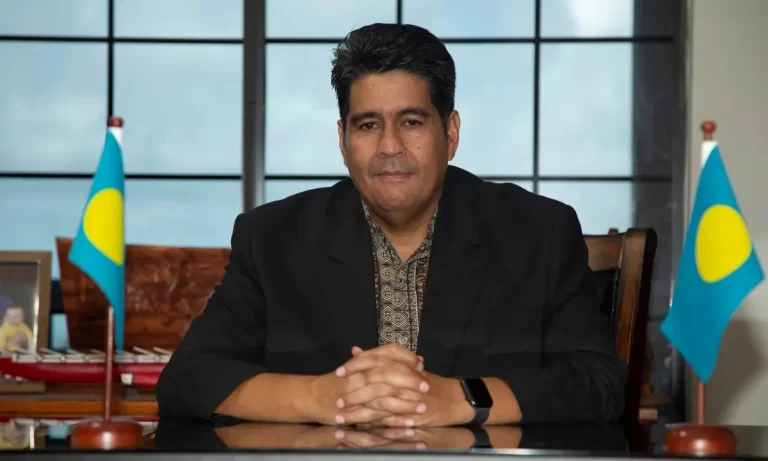
Palau president eyes U.S deportees as a solution to labour shortage

0

Deportees from the United States could fill Palau’s labour gaps, President Surangel Whipps Jr said, seeking to justify his apparent inclination to accept the Trump administration’s proposal to send its unwanted aliens to the Pacific island nation.

Whipps said under the current proposal, his administration would select deportees with specific skills Palau lacks, such as construction workers, nurses and other sectors facing workforce deficit.

“Converting from tourist visas to work permits is one possibility, but ideally we will have job placements (and the associated work permits) ready for these individuals before they arrive in Palau as we do for other migrant workers,” Whipps said in response to questions from the Pacific Island Times.

Palau’s Congress, also known as the Olbiil Era Kelulau, and the Council of Chiefs have rejected the proposal twice.

When asked if accepting deportees requires legislative consent, Whipps pointed to Palau’s existing laws governing foreign labour.

“The acceptance of foreigners into Palau is already authorised under existing laws, and the executive branch routinely administers and processes the entry and employment of nonresident workers,” he said.

While Whipps has created a working group, which includes legislators and chiefs, he hasn’t committed to bringing any final agreement back to the Palau Congress for a vote.

Whipps emphasized that the proposal remains subject to negotiation.

“While there may be individual Chiefs or OEK members who do not want to entertain any further discussions, that is not the consensus,” he said.

He stressed that “consensus and transparency” are being applied in the discussions, but remained ambiguous over whether legislative approval would be sought.

Critics have compared the proposal to Palau’s 2009 acceptance of six Uyghur detainees from Guantanamo Bay, all of whom eventually left the country. Whipps argued this situation differs significantly.

“First, the Uyghurs came from Guantanamo after being arrested during the Afghanistan War and held there,” he said. “Second, although President Obama’s administration cleared them as ‘enemy combatants,’ Palau didn’t have any say in who they would or wouldn’t accept.”

In contrast, he said, the current proposal gives Palau control over vetting and selection criteria.

“What we’re doing now with the Working Group is setting clear parameters by asking what the Palauan people are comfortable with, identifying if there are particular individuals or requirements we want for those coming to Palau, and then sharing those standards with the U.S,” Whipps said.

Taiwan says senior Fijian UN diplomat visited, despite Fiji’s formal ties with China

0

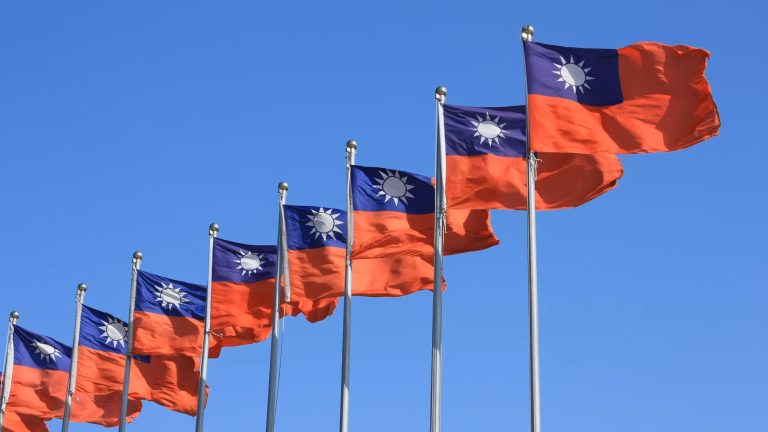
Taiwan said it welcomed a senior Fijian diplomat this week who met with Vice-President Hsiao Bi-khim, a highly unusual trip given the Pacific island state only has formal relations with Beijing, which decries any international exchanges with Taipei.

Taiwan’s presidential office said late on 05 November that Filipo Tarakinikini, Fiji’s permanent representative to the United Nations – of which Taiwan is not a member – had met Hsiao as part of a delegation of other UN ambassadors, including from the Marshal Islands and Paraguay which are Taiwanese allies.

Hsiao expressed “heartfelt thanks to the permanent representatives, as friends of Taiwan, for their longstanding support and assistance, which have helped Taiwan play a meaningful role in the international system, especially within the United Nations system,” the office cited her as saying.

Tarakinikini also met and had dinner with Taiwan Foreign Minister Lin Chia-lung, the foreign ministry said in a separate statement.

Tarakinikini, Fiji’s foreign ministry and China’s foreign ministry did not immediately respond to requests for comment.

China views democratically governed Taiwan as its own territory and strongly objects to any diplomatic interactions with Taipei, especially by countries with which Beijing has official relations.

Taiwan says it has a right to engage with other countries, and rejects Beijing’s territorial claims. China says Taiwan is merely one of its provinces.
In July, Fiji Prime Minister Sitiveni Rabuka said his country was opposed to China setting up a military base in the Pacific Islands, adding that it did not need such a base to project power, as shown by an intercontinental ballistic missile test in 2024 in the region.

Strategically placed between the United States and Asia, the Pacific Islands are a focus of rivalry between Washington and Beijing for security ties.

Of the 12 countries with formal ties to Taiwan, three are Pacific islands states – Palau, Tuvalu and the Marshal Islands.

Taiwan does, however, maintain a de facto embassy in Fiji.

In 2020, it said one of its diplomats was hospitalised in Fiji after two Chinese diplomats attempted to enter a reception and gather information on attendees.

China denied the account.

In 2005, then-Taiwan President Chen Shui-bian visited Fiji on a transit stop during a Pacific tour, though he did not meet with government officials.

Rare earths, rough seas: FSM at the crossroads of U.S-China resource rivalry

0

By Joyce McClure

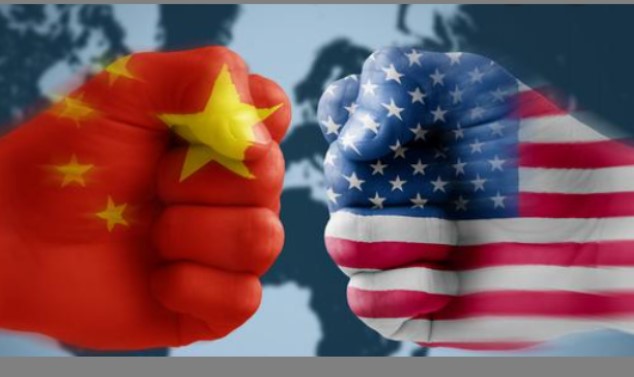
China’s new restrictions on the export of rare earth minerals are reverberating across the Pacific, raising concerns that the Federated States of Micronesia could become a new arena for resource competition between Beijing and Washington.

The Chinese government announced last month that it would impose new licensing rules on exports of critical minerals used in computer chips, batteries and defence systems. U.S officials condemned the move, calling it an attempt to use global supply chains as a form of leverage.

U.S Trade Representative Jamieson Greer described the policy as “a global supply-chain power grab,” according to Reuters, while Treasury Secretary Scott Bessent told the Financial Times that China “wants to pull everybody else down with them” through its mineral restrictions.

The export controls, which take effect later this year, follow escalating trade and technology disputes between the world’s two largest economies. But for Pacific island nations such as the FSM, the implications extend beyond trade. They touch on sovereignty, environmental protection and the balance of power that has long defined U.S-Micronesia relations.

Covering more than a million square miles of ocean, the FSM’s exclusive economic zone is among the largest in the Pacific. Beneath those waters lie potential reserves of polymetallic nodules rich in cobalt, nickel, manganese and copper. These minerals are essential for renewable energy and defence technologies.

Over the past several years, Chinese research vessels have conducted repeated expeditions in and near the FSM’s EEZ. While Beijing describes the voyages as oceanographic studies, regional security analysts say they could also be mapping mineral deposits.

China’s maritime research often serves dual purposes, blending scientific study with strategic resource mapping, according to some policy analysts. Micronesia’s deep-sea floor is of growing interest to both commercial and military planners.

U.S officials have expressed unease about these activities, noting that the FSM’s security and defence responsibilities fall under the Compact of Free Association, which gives Washington strategic access to Micronesian waters. The recently amended compact reflects Washington’s effort to reassert its role in the Pacific amid rising Chinese influence.

While the U.S remains the FSM’s key defence partner, China has become its largest trading partner and an active development donor. Chinese-funded infrastructure, including government buildings, roads, and bridges, can be seen throughout the islands.

Analysts say Micronesia is navigating between two powerful partners, one providing security and the other offering investment—a situation that creates both opportunities and vulnerabilities.

FSM authorities have so far taken a measured approach to Chinese maritime activity. In past public notices, the national government has acknowledged the presence of Chinese research vessels operating under permits but has not accused Beijing of violating FSM laws.

The FSM has also established a legal framework for future seabed mining. The Seabed Minerals Act of 2014 requires all exploration or extraction within its EEZ to undergo licensing and environmental review. The law affirms FSM ownership of marine mineral resources.

Although the act has been in force for a decade, no commercial permits have been issued. Officials say the government continues to evaluate both the economic potential and ecological impact of any future projects.

Environmental organiSations have warned that seabed mining could permanently damage fragile ecosystems due to their extremely slow recovery rate. Once mining begins, it would be nearly impossible to repair the damage.

The debate over seabed mining divides the region. Palau and Fiji have called for a moratorium, while Nauru and Tonga have defended their policy decisions to open their waters to deep-sea mining. The FSM has taken a cautious middle ground, emphasising consultation and scientific study.

Palau President Surangel Whipps Jr has been among the region’s most vocal critics of deep-sea mining, saying it threatens biodiversity and food security.

FSM leaders, meanwhile, have framed the issue primarily in economic and environmental terms, noting that any resource development must safeguard the ocean on which the country depends.

China’s export controls arrive as Washington renews its diplomatic and economic focus on the Pacific. Both the Biden and Trump administrations have described the region as “strategically critical,” reopening embassies, expanding Coast Guard cooperation and promising new infrastructure investments.

Despite this renewed attention, some observers question whether U.S engagement will last. There’s still a trust gap. Pacific partners want sustained, predictable cooperation, not policies that react only to China’s actions.

If China’s control over mineral exports continues, experts say demand for alternative sources will intensify, potentially drawing greater interest in Pacific seabed resources. This prospect creates both opportunities and risks for small island nations.

As U.S-China competition intensifies, analysts anticipate that the FSM’s strategic importance will increase. Its vast EEZ lies along key routes between Guam, the Philippines and the central Pacific. Both Washington and Beijing are likely to expand engagement—one through defence and diplomacy, the other through trade and investment.

FSM President Wesley Simina recently reiterated his government’s position of neutrality and balance. “We are friends to all and enemies to none,” he said during a ceremony marking the renewal of the compact’s economic provisions. “Our decisions will always be guided by the best interests of our people and our environment.”

Observers say that the approach will be tested as resource competition intensifies. Micronesia sits on valuable minerals and in a strategic corridor, a combination that ensures attention and pressure from both sides. The challenge will be preserving sovereignty while navigating between giants.