Home Blog Page 151

“Baku to Belém Roadmap” aims to mobilise $1.3 trillion for global climate action: UN Climate Chief

0

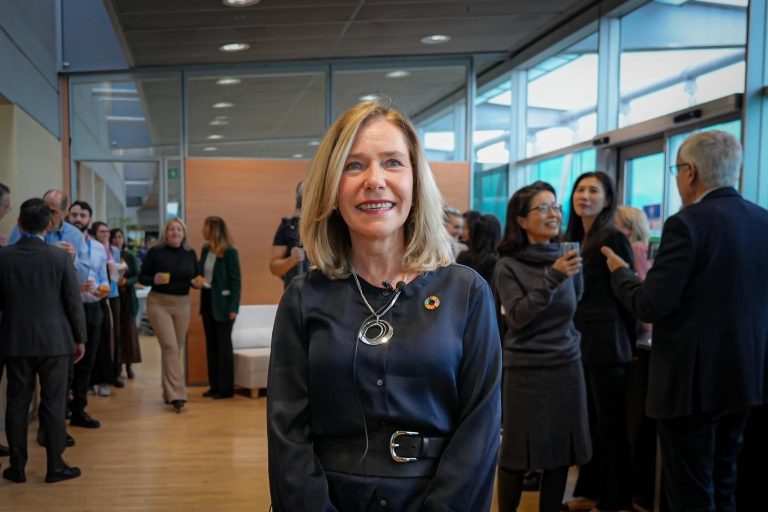
UN Climate Change Executive Secretary Simon Stiell has welcomed the launch of the Baku to Belém Roadmap to US$1.3 trillion, describing it as a practical plan to turn climate finance commitments into real-world results that protect lives and strengthen economies.

“The Baku to Belém Roadmap to US$1.3 trillion is a plan for action, building on COP29’s finance milestone agreement, and carrying momentum into COP30,” Stiell said in a statement.

At its core, he said, the roadmap is about “turning commitments into practical, inclusive climate finance action that’s effective in delivering real-world outcomes that protect lives and strengthen economies.”

For the first time, more than 200 governments, banks, businesses, and communities have joined forces to outline workable solutions to mobilise climate finance and scale up funding towards USD$1.3 trillion a year by 2035 to help developing countries meet their climate goals.

“This can bring tremendous benefits for the global economy – generating jobs, protecting communities, and driving innovation,” Stiell said.

He noted that while the goal is ambitious, it is achievable: “The tools exist; what’s been missing is coordination and shared commitment. This Roadmap provides a guide to both, aligning public and private finance behind a common direction, and building confidence that 1.3 trillion is within reach.”

Stiell said times are tough for many governments facing scarce resources, but positive signs are emerging with rapid declines in the cost of clean energy and innovations across economic sectors once thought to be slow to decarbonize.

He called for a shift in mindset about climate finance.

“Treating climate finance purely as cost, or as charity, is misguided and self-defeating, and has held back the progress we need,” he said.

“Make no mistake: scaling up climate finance hugely benefits every nation. It’s a vital investment in resilient global supply chains, supporting low-inflation growth, food security, and a stronger, more productive global economy that underpins peace and prosperity.”

Stiell emphasised that getting finance flowing means expanding access to grant finance, unlocking low-interest capital, managing debt pressures, and de-risking investment. He pointed to innovative tools such as debt swaps and private capital reinvestment as key to directing funds into clean energy and resilience efforts.

“Recent climate shocks show what’s at stake, as climate disasters like Hurricane Melissa rip through communities and economies. So, every early dollar deployed now helps avoid far greater costs later for all nations. There’s no time to waste,” Stiell said.

He acknowledged progress under the Paris Agreement but warned that it remains too slow. “

By scaling climate finance to match the scope of the climate crisis, we can turn ambition into momentum, making climate action a driver of economic growth, stability, and shared prosperity.”

“This new era will be about bringing our formal process closer to the real economy, accelerating implementation, and delivering benefits to billions more people. Bigger and better climate finance solutions will be a crucial part of that shift,” he added.

“From Baku to Belém, we are moving from agreement to action, focusing on solutions and alignment for people, prosperity, and the planet,” he said.

Missing 1.5C climate target is a moral failure, UN chief tells Cop30 summit

0

The failure to limit global heating to 1.5C is a “moral failure and deadly negligence”, the UN secretary general has said at the opening session of the Cop30 climate summit in the Brazilian city of Belém.

António Guterres said even a temporary overshoot would have “dramatic consequences. It could push ecosystems past catastrophic tipping points, expose billions to unliveable conditions and amplify threats to peace and security.”

Speaking to heads of state from more than 30 countries, Guterres called the target of limiting global heating to 1.5C above preindustrial levels a “red line” for a habitable planet and urged his audience to bring about a “paradigm shift” so that the effects of the overshoot could be minimised.

“Every fraction of a degree means more hunger, displacement and loss – especially for those least responsible. This is moral failure – and deadly negligence,” he said.

On Thursday, the World Meteorological Organisation confirmed that greenhouse gas emissions, which are heating the planet, had risen to a record high. It said 2025 was on track to be the second or third warmest year ever recorded. All of the 10 hottest years in measured history have been in the past decade.

Guterres said there had been some progress but it was not fast enough. Many countries had put forward more ambitious plans to cut emissions. If they were fully implemented, he said, the world would be on a pathway to about 2.3C of global warming.

This forecast leaves the planet in dangerous territory but is considerably better than seemed possible 20 years ago. This is largely thanks to international support for the 2015 Paris agreement and a clean energy revolution that is gathering pace. But several powerful countries are stepping away from climate action as far-right nationalism takes hold, particularly the U.S.

Guterres said the oil, gas and coal industries were holding back change. In his fiercest criticism yet, he said these companies commanded vast subsidies and political support and used them to the detriment of everyone else.

He said: “Too many corporations are making record profits from climate devastation, with billions spent on lobbying, deceiving the public and obstructing progress.”

The summit – and next week’s Cop30 – takes place in turbulent times. Much of the world is distracted by war, and the US is leading an attack on efforts to build international collaboration to deal with shared global problems.

Ding Xuexiang, a vice-premier of China, made a thinly veiled reference to Trump’s tariffs, saying the green energy transition depended on a free flow of green technology and the removal of trade barriers

“China is a country that honours its commitments,” he said, noting that his country, which is the world’s biggest carbon emitter, has set a goal for the next five years to peak its carbon use and reinforce ecological security goals.

Gustavo Petro, the president of Colombia, had particularly harsh words for the absent, science-denying US president. “ Trump is literally against humankind,” he said. “We can see the collapse that will happen if US does not decarbonise its economy. It is 100% wrong.”

“This is a real apocalypse,” he said. In addition to Trump, he laid much of the blame at the feet of petroleum industry lobbyists in the Cop system. “They are going against life. This is immoral. This is not human.” As a result, he said, the world had lurched from climate change to climate crisis and now faced climate collapse.

Many countries have already been hit by climate disasters. The UK’s Prince William noted the world was moving perilously close to tipping points in the natural systems – ocean currents, rainforest and ice caps – that all life depends on. Among the solutions, he said, was the need to acknowledge that Indigenous people were climate leaders and to give them legal recognition to their land.

Countries in the global south want the industrialised global north to provide support to adapt to ever more extreme weather and help them with energy transition, but financial commitments have so far fallen far short of the US$1.3tn a year that was agreed at Cop29 in Baku. Guterres said developed countries must lay out a clear path to that goal.

Keir Starmer told the summit that the UK was “all in” on tackling the climate crisis because it was a “win-win” for people and the economy that would reduce bills, create jobs and could be worth £1tn to the UK in five years.

He said: “Ten years ago the world came together in Paris, united in our determination to tackle the climate crisis. A consensus that was based on science that is unequivocal. And this unity was not just international, it was there within most of our countries. There was a cross-party consensus in the United Kingdom. The only question was how fast could we go. Today, sadly, that consensus is gone.”

The prime minister took veiled aim at prominent figures, including Bill Gates and Tony Blair, who have urged a slowdown on climate action. In a robust rebuff to that attitude, he said: “With some arguing this isn’t the time to act, and saying tackling climate change can wait, my question is this: can energy security wait too? Can billpayers wait? Can we win the race for green jobs and investment by going slow? Of course not.”

The Brazilian president, Luiz Inácio Lula da Silva, said Belém should be the Cop of truth. “Now is the time to take seriously the warnings of science,” he said, praising the Paris climate agreement for helping to nudge the world away from its previous doomsday path of 5C of warming, but warning that the planet was still heading towards 2.5C of warming, which would kill 250,000 people each year and shrink GDP by 30 percent.

He told leaders there could be no solution for the climate crisis without tackling inequality within and between countries, and said they should be inspired by Indigenous people who live more sustainably with nature.

He finished with a reference to the Yanomami Indigenous belief that the people of the forest are helping to hold up the sky and said he hoped this summit would help with that task of climate stabilisation.

The first day of the summit saw two other major announcements. Brazil formally unveiled its flagship Cop30 initiative, the Tropical Forest Forever Facility with new investment commitments of $3bn from Norway over 10 years and unquantified promises of support from China. The facility aims to attract $25bn of investment from governments and another US$100bn from financial markets to pay for the preservation of standing forests.

Another breakthrough was a first global agreement to recognise and strengthen land tenure for Indigenous peoples and other traditional communities. More than 160m hectares (395m acres) will be covered by the commitment up to 2030.

Fiji reaffirms commitment to One China policy amid diplomat’s Taiwan visit

0

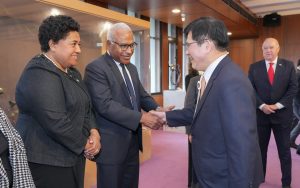
The Fijian Government has reaffirmed its commitment to the One China Policy following reports that senior diplomat Filipo Tarakinikini visited Taiwan.

In a statement, the Ministry of Foreign Affairs and External Trade (MOFA) said it is “taking appropriate steps to address the matter amicably.”

“The Government of Fiji through the Ministry of Foreign Affairs and External Trade reaffirms its commitment to the One China Policy,” the statement said.

Fiji emphasised that its relations with the People’s Republic of China are “grounded in mutual respect, cooperation, and adherence to the principles of sovereignty and non-interference.”

“The Government remains committed to strengthening the diplomatic ties and ensuring that all official actions align with Fiji’s foreign policy positions and international obligations,” the statement added.

UN chief urges world leaders to drive down global warming

0

As world leaders gather in Brazil for the COP30 climate summit, UN Secretary-General António Guterres on Thursday called for urgent action to drive down global temperatures and keep the 1.5°C goal within reach.

“Every fraction of a degree means more hunger, displacement, and loss – especially for those least responsible. It could push ecosystems past irreversible tipping points, expose billions to unlivable conditions, and amplify threats to peace and security,” Guterres told leaders in Belém.

Failure to contain global heating amounts to “moral failure and deadly negligence,” he added.

Each year that is warmer, he said, “will hammer economies, deepen inequalities and impact developing countries hardest — even though they did least to cause it.”

“After decades of denial and delay, science now tells us that a temporary overshoot beyond the 1.5°C limit – starting at the latest in the early 2030s – is inevitable,” Guterres continued.

“We need a fundamental paradigm shift to limit this overshoot’s magnitude and duration and quickly drive it down. Even a temporary overshoot will unleash far greater destruction and costs for every nation.”

Echoing his remarks, World Meteorological Organisation (WMO) chief Celeste Saulo said that greenhouse gas emissions are now at their highest level in 800,000 years.

“From January to August this year, the Earth’s average temperature was about 1.42°C above pre-industrial levels, with oceans also reaching record highs, which is inflicting lasting damage on marine ecosystems and economies,” she said.

The planet’s relentless warming trend has shown no sign of slowing, with 2025 projected to be either the second or third warmest year on record, according to the State of the Global Climate Update 2025 issued by the WMO on Thursday.

It warns that the 11-year stretch from 2015 to 2025 will be the hottest period since records began 176 years ago.

“This unprecedented streak of high temperatures, combined with last year’s record increase in greenhouse gas levels, makes it clear that it will be virtually impossible to limit global warming to 1.5°C in the next few years without temporarily overshooting this target,” said WMO Secretary-General Celeste Saulo.

She stressed that science still shows it is possible to bring temperatures back below that threshold by the end of the century.

The report paints a stark picture of compounding climate impacts. Arctic sea ice reached its lowest winter maximum on record, while Antarctic sea ice remained well below average.

Global sea level rise, nearly twice as fast as in the 1990s, continued to accelerate due to ocean warming and ice melt.

Extreme weather events – from devastating floods and storms to prolonged heatwaves and wildfires – have disrupted food systems, displaced communities and hindered economic development across multiple regions.

The Secretary-General told COP30 that the 1.5°C limit remains “a red line for humanity”, calling for rapid emissions cuts, an accelerated phase-out of fossil fuels, and stronger protection of forests and oceans.

Guterres highlighted the growing momentum of the clean energy revolution, noting that investments in renewables now exceed those in fossil fuels by $800 billion. “Clean energy is winning in price, performance, and potential,” he said, “but what is still missing is political courage.”

Also addressing delegates, Marinez Scherer, COP30’s Special Envoy for the Ocean, urged nations to unite efforts for both forests and oceans, calling them “one living system” that shapes the planet’s climate.

“Science is clear – we cannot solve the climate crisis unless we act together for the ocean,” she said, pointing to the Amazon and the Atlantic as symbols of this connection.

Dr Scherer, a marine biologist and coastal management expert at Brazil’s Federal University of Santa Catarina, noted that the ocean produces over half of the world’s oxygen, absorbs 90 per cent of excess heat, and sustains billions of livelihoods — yet receives less than one per cent of global climate finance.

“Protecting the ocean and the Amazon is not just an environmental imperative, but a collective act of survival,” she said. “The ocean cannot wait, and neither can we,” said Dr Scherer.

“We cannot defy the laws of physics” as 2025 nears record heat: WMO Chief

0

World Meteorological Organisation (WMO) Secretary-General Celeste Saulo has warned that 2025 is on track to be among the hottest years ever recorded, with global temperatures rising dangerously close to the limits set by the Paris Agreement.

Speaking at the General Plenary of the Belém Climate Summit, Saulo said the latest State of the Climate Update 2025 paints a stark picture of accelerating global warming.

“I stand before you today with the hard truth, as Secretary General Guterres has just said. We cannot defy the laws of physics. Science does not lie. The alarming streak of exceptional temperatures continues,” she said.

According to the WMO report, the average global temperature between January and August 2025 was about 1.42°C above pre-industrial levels. Concentrations of greenhouse gases are now the highest in 800,000 years, with carbon dioxide levels rising faster between 2023 and 2024 than at any time previously recorded.

“Ocean heat content is also record high, inflicting lasting damage on marine ecosystems and economies. Long-term sea level rise continues. Both Antarctic and Arctic sea ice are tracking at record lows,” Saulo said.

She added that the world is witnessing destructive weather “on a daily basis” from flash floods and heatwaves to super-charged tropical cyclones leaving behind lasting scars long after the news fades.

Saulo warned that the world is nearing a point where it will be “virtually impossible” to keep global warming below 1.5°C without temporarily overshooting the Paris Agreement target.

“Every fraction of a degree matters,” she stressed.

Despite the grim data, Saulo pointed to progress in adaptation and resilience, noting that early warning systems and climate services are saving lives and helping communities prepare.

“Across the globe, early warnings are saving lives. We are closing gaps in the world’s most vulnerable regions, helping communities act before hazards strike. Science is not only warning us; it is equipping us to adapt,” she said.

Ending her address with a call to action, Saulo urged world leaders to seize the moment at COP30.

“Let COP30 be remembered as the moment the world changed course with the Amazon as its witness. We can’t rewrite the laws of physics, but we can rewrite our path,” she said.

Pacific Elders Voice urge real action at COP30

0

The Pacific Elders’ Voice (PEV) has issued a sharp warning ahead of the UNFCCC COP30, calling on major emitters including Australia and New Zealand to deliver concrete, measurable outcomes to protect vulnerable Pacific nations from the worsening impacts of climate change.

“The forthcoming UNFCCC COP30 must deliver tangible outcomes. Only a commitment to measurable and specific outcomes will enable vulnerable nations like Pacific SIDS to deal with the adverse impacts of climate change on their development and survival,” the group said in a statement.

The PEV commended the Pacific’s success in securing a positive advisory opinion from the International Court of Justice (ICJ) on states’ obligations regarding climate change, praising Vanuatu for its leadership.

“The ICJ opinion not only provides a new impetus to the climate change dialogue, it provides the negotiators and governments, especially from the developing world, a much stronger legal basis for their demands of doing what is morally and scientifically right,” the statement said.

The elders renewed their call for industrialised nations particularly Australia to meet their Paris Agreement obligations and drastically cut greenhouse gas emissions.

“We reiterate our calls for Australia to urgently phase out gas and coal and stop opening up new coal mining, as it has promised many times to Pacific Leaders at past PIF meetings,” they said.

They also rejected the idea that development aid could replace genuine climate action.

“Real actions on climate change mitigation and adaptation, including for loss and damage, cannot be substituted by ODA, which, in any case, remains inadequate and well below the levels of 0.7 percent GNI, agreed to by the international community as the minimum level of assistance.”

The PEV highlighted key priorities for COP30: more climate finance, stronger adaptation measures, a global phase-out of fossil fuels, and urgent emissions cuts from big polluters to keep global temperature rise below 1.5°C.

On Australia’s ambition to co-host COP31 with the Pacific, the elders said the country must first demonstrate genuine climate leadership.

“Whilst we recognise that co-hosting COP31 would enhance the voices of small island states that have been consistently held back from opportunities on the global stage, we feel that Australia as a developed country member of the Pacific Islands Forum family is duty-bound to demonstrate greater and genuine leadership in climate action,” they said.

“This is the time for concrete and specific action.”

The Pacific Elders’ Voice includes former leaders and senior figures from across the region among them former Kiribati President Anote Tong, former Palau President Thomas Remengesau Jr, former Tuvalu PM Enele Sopoaga, Former Forum SG Dame Meg Taylor, former Guam Governor Robert Underwood, Former Fiji Foreign Minister Kaliopate Tavola, fomer Tuvalu PM Bikenibeu Paeniu, Academic Vijay Naidu, and Professor Peggy Fairbairn-Dunlop.

The group, an independent body of former Pacific leaders, said its purpose is to “provide guidance and advice that will strengthen Pacific resilience to current and future environmental, security, and human rights threats.”

China protests Fiji diplomat’s Taiwan visit, reaffirms 50 years of ties

0

China has lodged a strong protest with Fiji after senior Fijian diplomat Filipo Tarakinikini visited Taiwan, calling the trip a violation of the one-China principle.

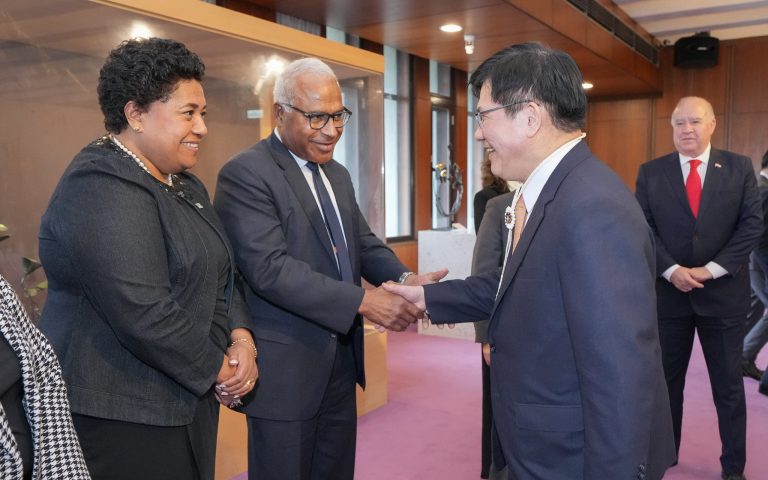
Tarakinikini, Fiji’s Permanent Representative to the United Nations, of which Taiwan is not a member this week met Vice-President Hsiao Bi-khim as part of a delegation of other UN ambassadors, including those from the Marshall Islands and Paraguay, which are Taiwanese allies.

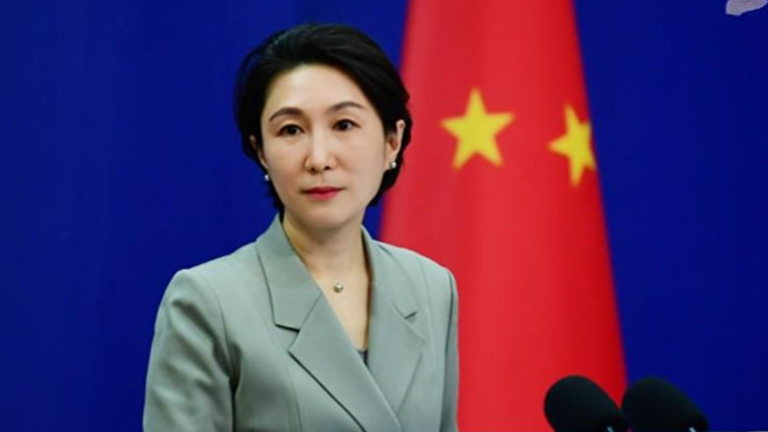
Foreign Ministry spokesperson Mao Ning said at a regular press conference that the visit “severely violated Fiji’s political commitment” to Beijing.

“China firmly opposes any form of official interactions between China’s Taiwan region and countries having diplomatic ties with China,” Mao said.

“Fiji’s relevant official’s visit to Taiwan severely violated Fiji’s political commitment to the one-China principle. China strongly deplores it and has lodged serious protests with Fiji. Taiwan’s disgraceful moves will not succeed,” she said.

The statement came as China and Fiji marked the 50th anniversary of their diplomatic relations.

“Fiji is the first Pacific island country to establish diplomatic relations with New China,” Mao said.

“Over the past 50 years, under the strategic guidance of the leaders of the two countries, bilateral relations have come a long way through the test of time.”

She said President Xi Jinping and Premier Li Qiang exchanged congratulatory messages with Fiji’s President Ratu Naiqama Lalabalavu and Prime Minister Sitiveni Rabuka to celebrate the milestone.

Mao added that China “attaches great importance” to its partnership with Fiji and remains committed to strengthening cooperation.

“We stand ready to work with Fiji to implement the important common understandings between the leaders of the two countries, enhance political mutual trust, expand cooperation in various fields, elevate the China-Fiji comprehensive strategic partnership to new heights, and deliver more tangibly for the two peoples,” she said.

On the eve of COP30, global shift needed for 1.5 to Stay Alive

0

Thirty-three years after the Brazilian Earth Summit set the climate change negotiations train in motion, Pacific leaders, climate change negotiators and government officials are returning to Brazil for the thirtieth Conference of the Parties to the UN Framework Convention on Climate Change (UNFCCC COP30).

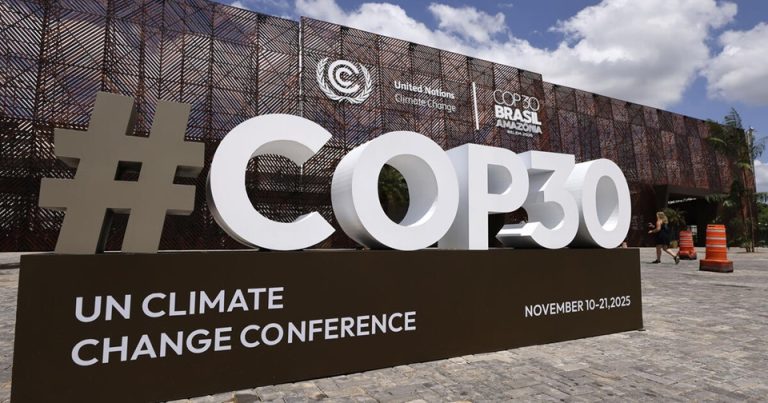
COP30, to be held in Belem, Brazil, from 10-21 November 2025, will mark 10 years after the Paris Climate agreement was signed, in which countries pledged to try to restrict the rise in global temperatures to 1.5C.

On the eve of the Belem climate change negotiations, and as Pacific delegations make their way to Brazil, UN Secretary-General, Mr António Guterres, reminded that going above 1.5C has devastating consequences for the world, especially for Pacific communities at the forefront of climate change impacts.

Calling for action during an interview with The Guardian, he said it is absolutely indispensable for the world to change course, to keep 1.5 to Stay Alive.

“Let’s recognise our failure,” he said. “The truth is that we have failed to avoid an overshooting above 1.5C in the next few years. It is absolutely indispensable to change course in order to make sure that the overshoot is as short as possible and as low in intensity as possible to avoid tipping points like the Amazon.

In Belem, Pacific delegations will be engaging in two weeks of crucial negotiations on tackling the climate crisis with urgency and ambition, to ensure the goal of 1.5 to stay alive.

The Secretariat of the Pacific Regional Environment Programme (SPREP), as Chair of the One-CROP (Council of Regional Organisations of the Pacific), has the mandate as coordinator of Pacific climate change action to lead work on enhancing Pacific engagement at COP30.

“1.5 is still within reach. COP30 takes place at a critical time where there are so many competing global issues,” said Tagaloa Cooper, SPREP Director of Climate Change Resilience.

“The signs and the daily lived reality we see in the Pacific are alarming, but we cannot give up – achieving a 1.5 world is still achieveable but we must act fast. At course correction is imperative to ensure a resilient Pacific where our people can thrive.”

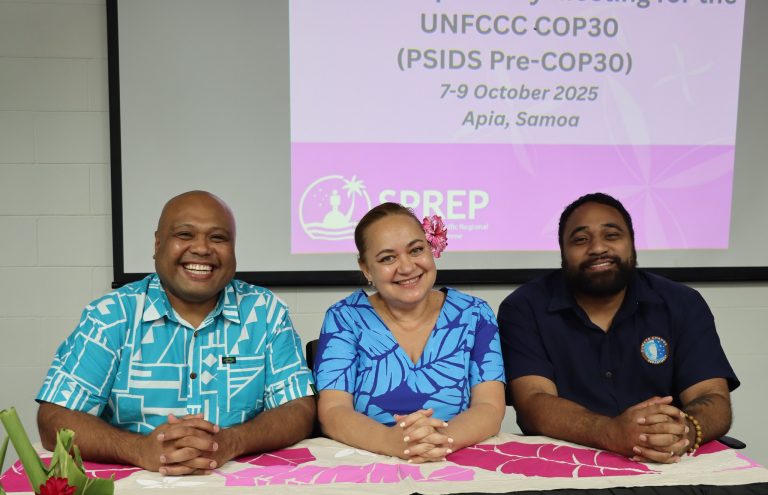
In the lead up to COP30, SPREP with support from Climate Analytics and One-CROP hosted the Pacific Small Island Developing States (PSIDS) pre-COP30 meeting. The meeting allowed the Pacific to finalise priority thematic areas and agreed regional positions ahead of Belem.

“Our One Pacific Voice will be heard in Belem and aside from our clarion call on “1.5 to stay alive”, we have critical key messages agreed to from our Apia meeting,” said Cooper.

“The Pacific will call for strengthened mitigation action through a COP30 package that keeps the 1.5 C target within reach by delivering genuine response to closing the NDC ambition gap.”

“We will also maintain that developed countries must ensure simplified access to additional, predictable, scaled-up, grants-based finance to support enhanced mitigation and adaptation implementation in SIDS.”

“We will also continue to remind the world that the Special Circumstances of SIDS are enshrined in the Paris Agreement and must be protected.”

SPREP and One-CROP will work collaboratively with Tuvalu as the Chair of PSIDS and Palau as the Chair of the Alliance of Small Island States (AOSIS) to support the Pacific’s collective aims in the global climate discussions.

“The key message for our Pacific countries heading to COP30 is one that we all know and that is 1.5 to stay alive is very critical,” said Director of Tuvalu’s Climate Change Department, Jamie Ovia.

“At the moment, it’s still alive but barely alive. So we’re going to push that really hard, as well as aligning NDCs, trying to ask countries to push their new NDCs to align better to the 1.5 message.”

The UN Climate Change Executive Secretary, Simon Stiell, said COP30 presents another opportunity for “clear stepping stones towards net zero emissions.”

COP30 will bring together world leaders, scientists, non-governmental organisations, and civil society to discuss priority actions to tackle climate change. The meeting will focus on the efforts needed to limit the global temperature increase to 1.5°C, the presentation of new national action plans (NDCs) and the progress on the finance pledges made at COP29.

The 30th Conference of the Parties to the UN Framework Convention on Climate Change (UNFCCC) is taking place from 10-21 November 2025 in Belem, Brazil.

It is being attended by Pacific leaders and their delegations, who are advocating for the survival of Pacific communities who continue to be at the forefront of climate change impacts.

A key part of amplifying the One Pacific Voice at COP30 is the Moana Blue Pacific Pavilion and the Pacific Delegation Office. The Moana Blue Pacific Pavilion at COP30 is a Pacific partnership with the Governments of Australia and New Zealand managed by the Secretariat of the Pacific Regional Environment Programme (SPREP). The Pacific Delegation Office at COP30 is a Pacific partnership with the New Zealand Government managed by the Secretariat of the Pacific Regional Environment Programme (SPREP).

The Moana Blue Pacific Pavilion, and the Pacific Delegation Office for the Pacific Islands Delegations is at the Thirtieth Conference of the Parties to the UN Framework Convention on Climate Change hosted in Belem, Brazil from 10 – 21 November 2025.

Cop30 participation shows PNG’s role to address climate change

0

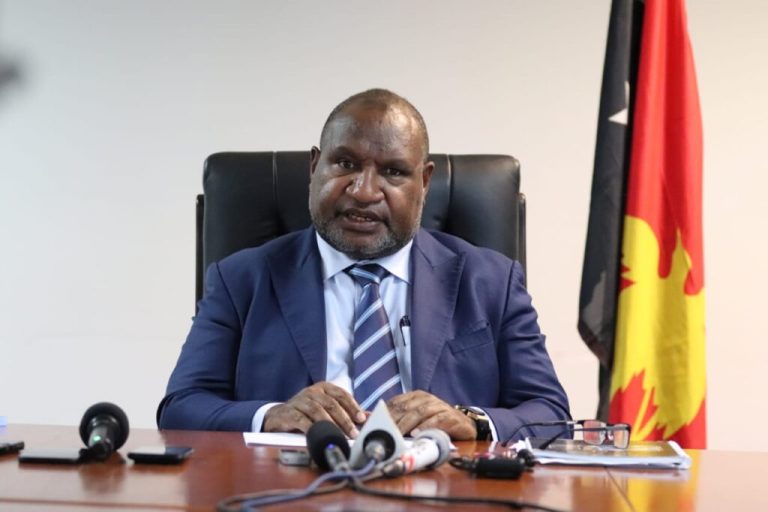
Papua New Guinea’s participation at the 30th Conference of the Parties (Cop) in Brazil next week highlights the country’s role in the global movement to address climate change, says Prime Minister James Marape.

Before leaving for Cop30 on Tuesday, Marape said: “PNG is also uniquely qualified to advocate on the impact of climate change.

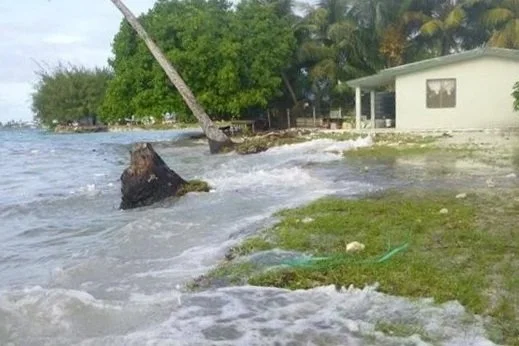
“Our Mortlock and Carteret islanders were the first in our country to relocate due to sea level rise, soil salination and water contamination.”

Marape said that PNG’s presence at Cop30, which is the main global forum under the United Nations Framework Convention on Climate Change where world leaders negotiate and implement international climate agreements, was important as a forest nation.

“This is an extraordinary Cop for Papua New Guinea and Brazil,” he said. “Brazil, the biggest forest nation, is hosting it. So, a large forest nation is hosting the conference for the first time.

“This aligns with Article 5 and Article 6 of the Paris Agreement, which focuses on forests and forest resource management. We will have PNG’s say at Cop30.

“We are saving our forests, which are among the world’s major carbon sinks, so industrialised countries with large carbon footprints must compensate us accordingly.”

Marape said that PNG qualified for both mitigation and adaptation discussions under global climate frameworks and would continue to advocate for maintaining life on islands wherever possible.

He also emphasised that climate change discussions were incomplete without acknowledging forest resource management and sustainable ocean governance.

“We are renowned for our biodiversity while our oceans and forests hold tremendous ecological value.

“The world has invited us into high-level global discussions on this matter. Fossil fuel use has not been seriously addressed, and despite all the talk, the world still depends heavily on fossil fuels.

“Transition energy options have not been fully used,” Marape said.

Winston Peters signals support for visa-free travel petition for Pacific nationals

0

Foreign Affairs Minister Winston Peters says the New Zealand Government will work closely with Sāmoa on a petition advocating for visa-free travel for Pacific nationals.

But he says that this initiative must have the full support of the Sāmoan government.

In an interview on Pacific Mornings, Peters says any changes to the visa system would need to be made carefully, in agreement with Sāmoa.

His comments follow a petition initiated by former National MP Anae Arthur Anae, which seeks to allow Pacific Island nationals to enter New Zealand on a three-month visitor visa issued on arrival.

Peters highlighted the importance of addressing the challenges faced by families, saying, “It’s not just visa-free, it’s if someone dies and they want to see this person before or after their death in New Zealand, these delays make it impossible.

“I’ve got a good grasp of what Arthur’s talking about and I’ve said to him, we’ll work on it as hard as we can.”

Acknowledging the current visa application process for Pacific nationals as unacceptable, Peters referred to an official based in Sāmoa who is reportedly working short hours.

“This is not good enough and so all those things are being addressed now in consultation with the incoming Sāmoan government.”

The petition has received backing from Sāmoa’s Prime Minister, Laaulilemalietoa Leuatea Polataivao Schmidt, who has promised to discuss the issue of visa-free travel with New Zealand’s Prime Minister, Christopher Luxon.

In a pre-recorded message presented at the Pacific Justice meeting in Sāmoa House on Tuesday, Laaulilemalietoa says travel between both nations should be easier.

“Families travel from Sāmoa to New Zealand for fa’alavelave, church, family and village obligations, but visa challenges always cause delays and blockages for many of us,” Laauli says.

“I support this petition and salute Anae for taking these first steps. While he has started this movement, I believe the Government of Sāmoa can bring the authority that this petition needs.”

Peters recently met with Laaulilemalietoa in what he described as a courtesy call, reaffirming the relationship between the two countries.

Peters says once Laaulilemalietoa returns to Sāmoa, consultations will begin, as visa-free travel could significantly impact the island nation’s population.

“We’ll do our best to get a fairer, more immediate deal. But I mean, we’re only about a few weeks away from receiving that petition as we speak,” Peters said.

Stay connected

529FansLike
172FollowersFollow
156SubscribersSubscribe
- Advertisement -