
Home Blog Page 143

Australia’s green energy push, Pacific ties face setback from COP31 hosting impasse

0

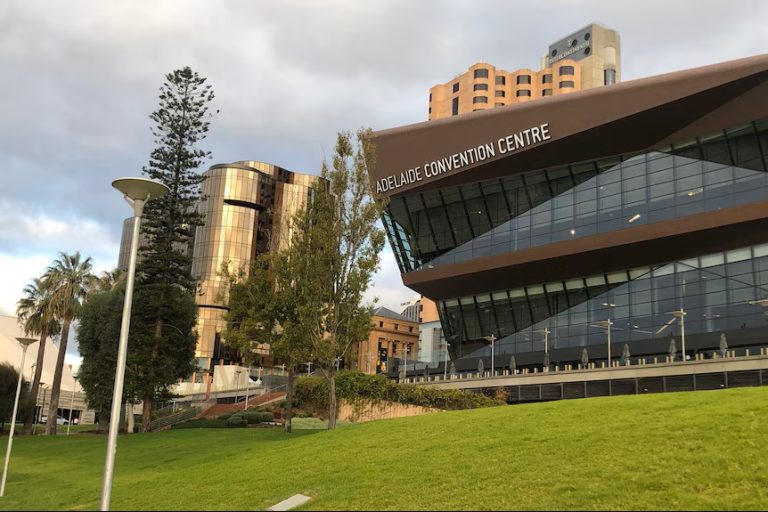
Australia risks undermining efforts to establish itself as a leader in the green energy transition and letting down its vulnerable Pacific island neighbours if its bid to host 2026’s biggest climate summit fails, diplomats and analysts say.

Australia was long considered the front runner to hold the COP31 conference, aiming to bolster its ambitions to become “a renewable energy superpower” and highlight issues faced by Pacific island nations, which it plans to co-host the conference with.

However, Turkey doubled down on a rival bid, saying it wants a summit that more directly tackles financing for developing countries’ climate efforts while showcasing its own progress towards a 2053 net-zero emissions target.

That has led to an attention-sapping impasse that must be overcome at 2025’s COP30 meeting, currently under way in Belem, Brazil.

The annual COP – or Conference of the Parties – is the world’s main forum for driving climate action.

The host matters because it sets the agenda and leads the diplomacy needed to reach global agreements, while drumming up investment for new green initiatives.

Australia is pivoting away from coal and gas power to renewables, and is seeking investment in critical minerals, green steel and transition technologies such as batteries.

“Hosting COP is absolutely crucial for Australia’s economic future,” said Dr Wesley Morgan, a climate academic at the University of New South Wales.

“We are a major commodities and fossil fuel exporter. If we stick our heads in the sand and pretend there is no transition, we will lose out. Without COP, we would lose out on investment, jobs and economic growth.”

COPs have grown over the years from diplomatic gatherings into vast trade shows where host countries can promote economic prospects.

Emma Herd, a partner at EY’s Net Zero Centre, said: “There is a clear and compelling case for investment attractiveness for hosting COP in Australia. We have the opportunities and need the capital. COP provides the platform to showcase those opportunities.”

For Australia, there is also the diplomatic goal of improving relations with island nations that are strategically located in the Pacific and are also being courted by China.

Australia’s Climate Change and Energy Minister Chris Bowen told reporters last week: “This is a remarkable geopolitical opportunity for our country.

“The climate is the number one, two, three, four and five issue for Pacific islands.”

Advocacy by Pacific nations was central to the world agreeing in 2015 at COP21 in Paris to limit global warming to 1.5 deg C, and many supporters of Australia’s bid think a Pacific COP would drive more ambitious action.

A former climate diplomat in Australia, who declined to be identified, said: “The big opportunity of the COP is this is the most profound opportunity we have ever had to demonstrate that we are the partner of choice for the Pacific.”
Former New Zealand prime minister Jacinda Ardern, a special envoy for Oceania at COP30, said Pacific leaders are still working hard to host the conference.

“The slogan from the Pacific is ‘1.5 to stay alive’. It is literally that proximate for the Pacific,” she told Reuters in Belem.

“The Pacific were critical in achieving the aspiration and the target and the goal of 1.5, but now they are critical to its maintenance.”

Protracted struggles over hosting are uncommon, with a venue usually settled 18 to 24 months in advance.

Indeed, Ethiopia was confirmed this week as the venue for COP32 in 2027.

UN rules require unanimity among the 28-strong group of countries on whose turn it is to host COP31.

If neither Australia nor Turkey compromises, hosting duties would default to Bonn in Germany, which houses the UN’s climate headquarters.

“We would have to (host),” Jochen Flasbarth, State Secretary at Germany’s Environment Ministry, told reporters in Belem. “But we do not want to.”

In Belem, the pavilions of Australia and Turkey are in prime position and side by side. But the two nations have struggled to connect.

Australia assumed Turkey was not a serious bidder for COP31, given strong support for Australia’s bid, and could be coaxed into withdrawing, said David Dutton, who until September was Australia’s assistant secretary of climate diplomacy.

Some observers thought Turkey would drop its bid if Prime Minister Anthony Albanese’s government won re-election against a climate change-sceptic opposition earlier in 2025, but Turkey instead upped its efforts.

Turkey dropped a previous bid to host COP26 and has said it does not want to withdraw again.

The country’s expectation about hosting was entrenched after it signed onto the Paris climate accord and thinks its odds have improved, a Turkish diplomatic source said in Belem.

Albanese wrote to Turkish President Recep Tayyip Erdogan in recent weeks seeking to break the impasse, and said on 13 November that Erdogan had written back and was “maintaining his position”.

Turkish officials did not respond to repeated requests for comment on the negotiations.

Turkey has said it would prioritise financing of poorer countries’ efforts to meet climate goals, and said its Mediterranean location would reduce emissions from flights bringing delegates to the conference.

One potential compromise is for Australia and Turkey to split hosting duties, with Turkey reportedly keen to host the global leaders’ summit, according to Dutton, now director of research at the Lowy Institute, an Australian think-tank.

The uncertainty has prevented Australian officials from switching attention to organising 2026’s conference, he said.

“All the effort has been around the bid, and not so much about what you are actually going to do to sustain climate momentum,” he said.

Australian PM disputes price tag attached to major climate meeting

0

Prime Minister Anthony Albanese rejects suggestions it could cost Australia more than $2 billion (US$1.30 billion) to host a major climate summit.

The prime minister pushed back when asked about the apparent price tag, floated in multiple media reports.

“Commentary is commentary,” Albanese told reporters on Sunday.

“People are plucking figures, from who?”

Australia and Turkey are jostling for the hosting rights of the United Nations conference in 2026.

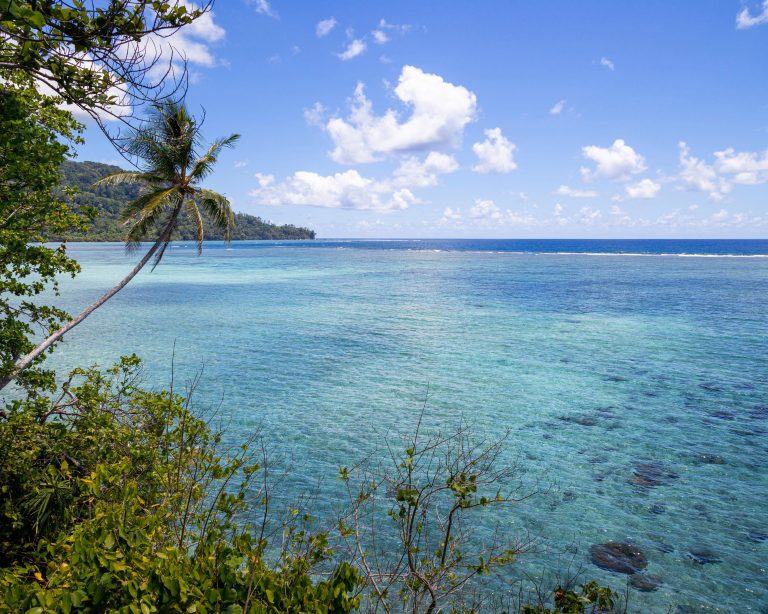
Australia’s bid has been presented as a partnership with Pacific neighbours.

Climate change was wreaking havoc across the nation and wider region and urgent action was required, Albanese said.

“Our Pacific family are under threat. Their very existence,” he said.

“And so we need to be a part of acting on climate change.

“We need to make sure that we act domestically, but we also engage globally as well.”

Albanese has written to Turkish President Tayyip Erdogan in a bid to resolve the hosting rights impasse.

Foreign Affairs Minister Penny Wong repeatedly refused to confirm the costs of a conference “that we haven’t won the bid for yet”.

She expected a resolution in coming weeks over hosting rights for the COP31 summit.

The United Nations’ annual Conference of the Parties lacks provisions to break deadlocks over such disputes, with the scenario relying on one side or the other voluntarily withdrawing.

Energy Minister Chris Bowen said he would stand his ground and Australia remained committed to securing the 2026 conference.

On his way to join this year’s summit in Brazil, he told reporters Australia had overwhelming support to host the international gathering.

Australia wanted to co-host with Pacific island nations for the first time and demonstrate how to work together to fight the “existential threat” of climate change, he said.

Bowen said he would continue to discuss with Turkish counterparts during the week, while a regional diplomatic bloc of 18 countries, the Pacific Islands Forum, is backing Australia’s bid.

With the United States absent from COP for the first time in three decades, China is stepping into the limelight as a leader in the fight against global warming.

Unlike previous years, when it had a modest pavilion with just a handful of seats available for mostly technical and academic panels, its display in Belem occupies prime space near the entrance next to host country Brazil.

China is also playing a more subtle role in filling the US void behind the scenes, with efforts to rally governments toward agreement.

The scientist who helped win the fight to protect a sacred piece of the Pacific

0

Respected ocean expert Katy Soapi continues to advocate to protect Tetepare, one of the last untouched places in Solomon Islands

By Sera Tikotikovat- Sefeti

Scientist Katy Soapi’s earliest memories are of the sea. She grew up on Rendova, a lush island in western Solomon Islands, and life centred around the ocean.

“I remember when the big waves came, we would dive under them and come up laughing on the other side. Being part of those natural elements brought me so much joy.”

At school, she excelled in chemistry and would later go on to study medicinal plants, fascinated by the possibility that nature could hold cures for modern diseases. She studied in Fiji, Australia and the UK and later became the first woman from Solomon Islands to achieve a PhD in natural sciences.

Yet Soapi kept being pulled back to her first love – the ocean. And what would end up being her most personal and satisfying work, defending one of the Solomon Islands’ most precious places, Tetepare island.

The fight for Tetepare

In the mid-1990s, the sound of chainsaws echoed through the forests of Solomon Islands as commercial logging swept across the country. Soapi had watched Rendova fall to the axes of loggers. Rivers once crystal clear turned brown with silt, and the forest songs of birds and insects faded into silence.

When whispers began that Tetepare might be next, the people of Western Province felt they were facing more than an environmental threat. Tetepare was tabu – sacred ground, home to ancestral gardens, burial sites, and memories etched deep into the soil.

“To lose Tetepare would have been like losing part of ourselves,” Soapi says. “It wasn’t just about trees any more, it was about identity and heritage.”

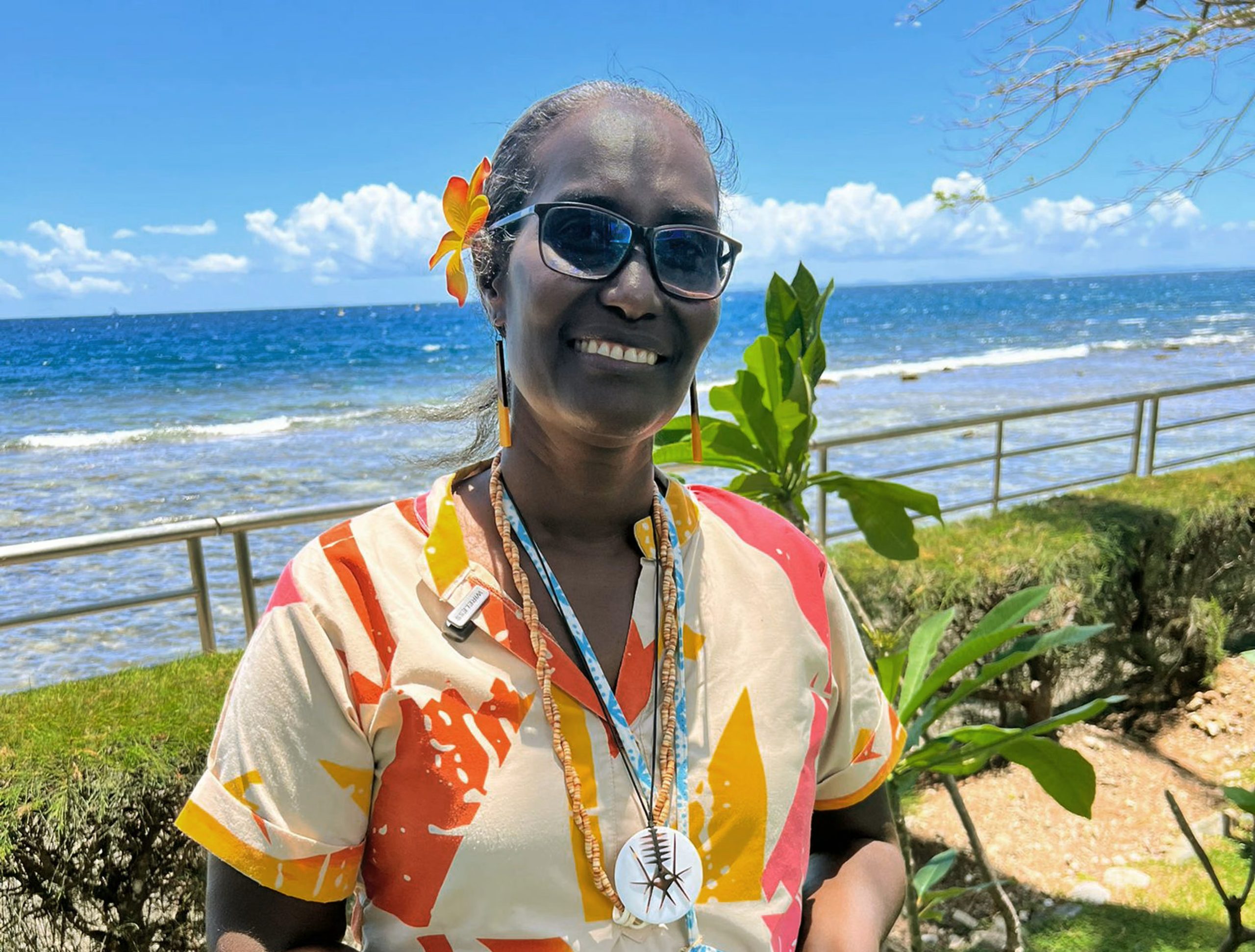
Dr Katy Soapi in Honiara. Photo: Sera Sefeti via The Guardian

Soapi joined others to resist logging and dedicated her spare time to the movement. Then a university student, Soapi was a founding member of the Friends of Tetepare, a grassroots movement that later evolved into the Tetepare Descendants’ Association (TDA).

“We worked with everyone on the island to conserve Tetepare, writing letters to certain individuals telling them not to do this,” she says.

They lobbied governments and rallied international allies to block logging concessions. The campaign was relentless. Soapi worked diligently, connecting descendant groups and holding meetings across villages – all united by a shared purpose: to keep Tetepare wild. The logging company tried to sway some families with money but people stood firm – and they made sacrifices to prove their commitment.

Soapi acted as a bridge between tradition and emerging conservation science.

“We needed both – the knowledge of our ancestors and the tools of science to show the world why Tetepare mattered.”

Their fight attracted global attention and in the 1990s a film crew arrived to document the story. Years later, the Australian documentary Since the Company Came carried Tetepare’s struggle to the world.

“That was when we realised the world saw what we had. We had to protect it – not just for ourselves, but for everyone.”

Their fight paid off and no company was allowed to log Tetepare at the time. Today, it remains one of the last untouched places in Solomon Islands. It is managed by the TDA which has thousands of members. Its rainforest canopy stretches unbroken, rivers run clear, and endangered leatherback turtles nest on its black-sand beaches.

Community rangers – descendants of Tetepare – patrol the island, drawing on both traditional knowledge and modern science.

“It’s not just western science at play. Traditional knowledge is woven into everything we do,” Sopai says.

The conservation effort also sustains livelihoods. The Tetepare Eco Lodge, managed by the TDA,lets visitors experience conservation in action. Income from the lodge supports rangers and community projects, while annual gatherings bring descendants together to make collective decisions.

Protecting Tetepare has never been easy. In communities where money is scarce, the lure of fast cash from extractive industries lingers.

“It’s always easier to sell trees for a few hundred dollars and have the money in your hand today,” Soapi admits. “But conservation gives us fish, food and clean rivers for generations. That’s harder to measure in the short term.”

Still, threats remain. TDA patron John Read says a recent proposal seeks to clear part of the forest that borders the island’s main marine-protected area, home to an abundance of sea life.

“Unfortunately being large, fertile and uninhabited makes it attractive to developers as well as landowners less committed to conservation.”

Read says that at this year’s TDA annual general meeting in October, members expressed anger over the proposal and vowed to reject any plan for logging, settlements, commercial extraction or destructive practices on Tetepare.

Soapi says: “I hope those seeking to establish settlements on the island will respect the ongoing conservation efforts our communities have worked hard to uphold for many years.”

A Pacific model of conservation

For Soapi, now a respected regional scientist and ocean advocate, Tetepare’s story is a leading example of Pacific-led conservation.

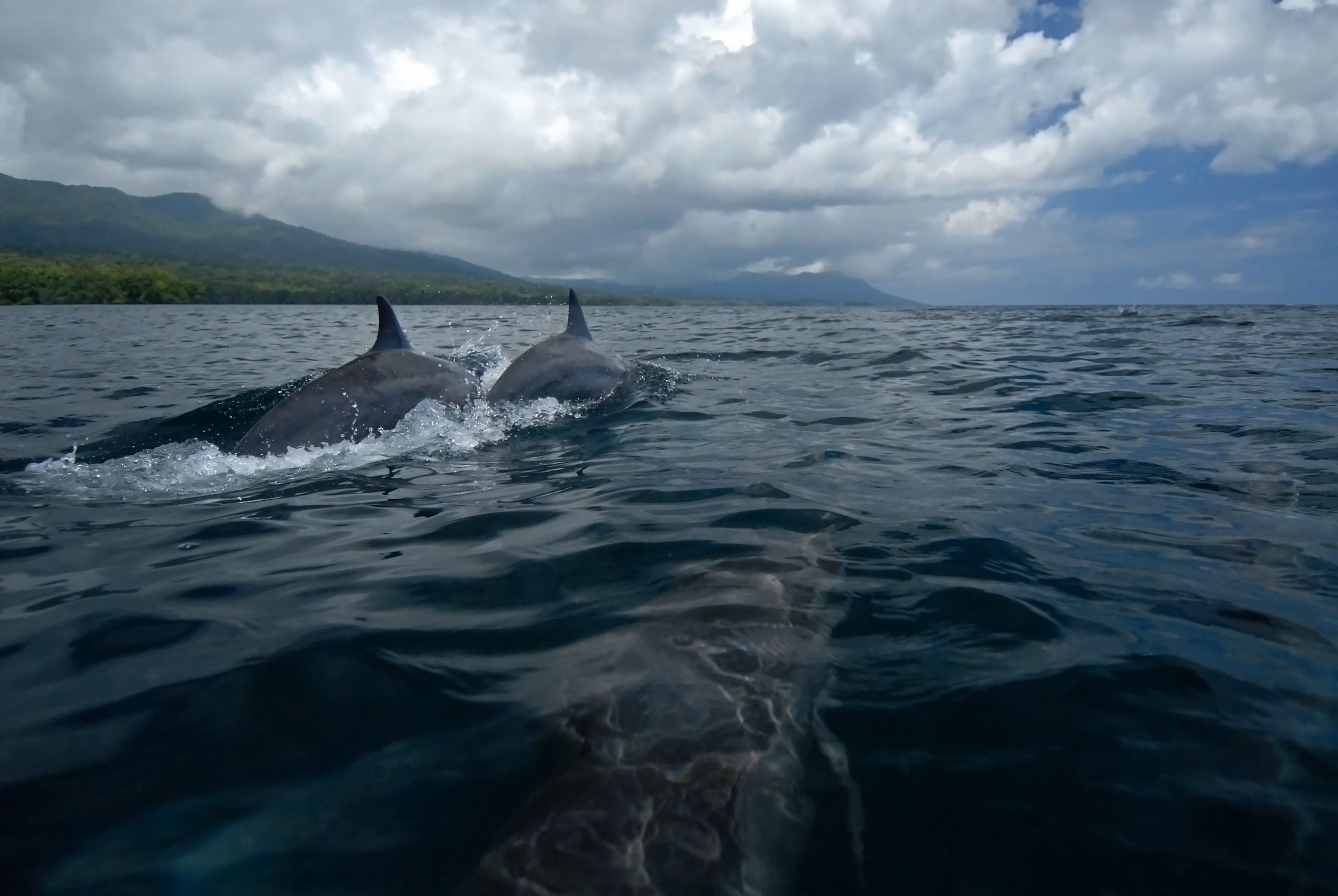
Dolphins near Tetepare Island. ‘Pacific people don’t just inherit conservation models – we create them,” Soapi says. Photo: Christophe Rouziou via The Guardian

“Tetepare taught us that conservation isn’t just about protecting land,” she says. “It’s about protecting who we are.”

Elisabeth Holland, former professor of ocean and climate change at the University of the South Pacific, has worked with Soapi for more than a decade. She describes her as a “talented Pacific scholar and a science rock star”.

Holland says Soapi’s work – particularly in ocean acidification – has had significant impact, while her leadership has given emerging scientists a “clear career path and strong mentorship to help secure ocean sustainability for the region”.

Tetepare’s success has inspired communities across the Pacific. In 2012, the TDA won the prestigious United Nations equator prize, a global recognition of its community-led conservation model.

“It shows that Pacific people don’t just inherit conservation models – we create them,” Soapi says.

Now working as a partnerships coordinator at the Pacific Community Centre for Ocean Science, she continues to advocate for indigenous knowledge and community-led approaches. Soapi remains deeply tied to Tetepare.

“I feel like I’m just one of many. I may have access to platforms and institutions, but the real work belongs to the Tetepare descendants. They are the true guardians of the island.”

Climate finance is a legal duty, not charity: Pacific SIDS tell World

0

Solomon Islands Environment Minister Polycarp Paea has delivered a blunt message in Belém, warning that Pacific nations are “at the frontline of a climate crisis not of our making” and demanding that developed countries meet their legal obligations on climate finance.

“We contribute less than 0.03 percent of global emissions, yet face the most devastating consequences — rising seas, intensifying storms, and the slow erosion of our cultures, sovereignty, and livelihoods,” Paea told the 3rd High-Level Ministerial Dialogue on Climate Finance.

He said the International Court of Justice’s recent Advisory Opinion made it clear that wealthy nations have binding responsibilities to provide developing states especially SIDS and LDCs with financial resources, technology, and capacity support.

“This obligation is not discretionary. It is a duty rooted in the principles of fairness and differentiated responsibilities that form the foundation of the UNFCCC and the Paris Agreement,” he said.

Paea backed the Baku to Belém Roadmap and its push to scale climate finance “from billions to trillions” by 2035, but stressed that the money must be predictable and fair.

“We cannot adapt with debt,” he said.

“Our economies are already strained by high debt-to-GDP ratios; loan-based finance only compounds our vulnerability. What we need is grant-based and concessional financing, provided in ways that are timely, simplified, and accessible.”

Speaking on behalf of Pacific Islands Forum Chair, Paea welcomed the Roadmap’s focus on reforming multilateral development banks and improving concessionality but warned that the Pacific cannot wait years for approvals.

“For the Pacific, delays of five years or more in project approvals mean lives lost, coastlines disappearing, and cultures displaced. The global financial architecture must evolve to deliver finance at the speed and scale of the crisis.”

Paea said climate finance is both a legal responsibility and a matter of survival.

“Climate finance is not an act of goodwill — it is an investment in our shared humanity and a legal and moral duty,” he said. “For the Pacific, climate finance is our right to survive, to thrive, and to secure a future for generations now and yet to come.”

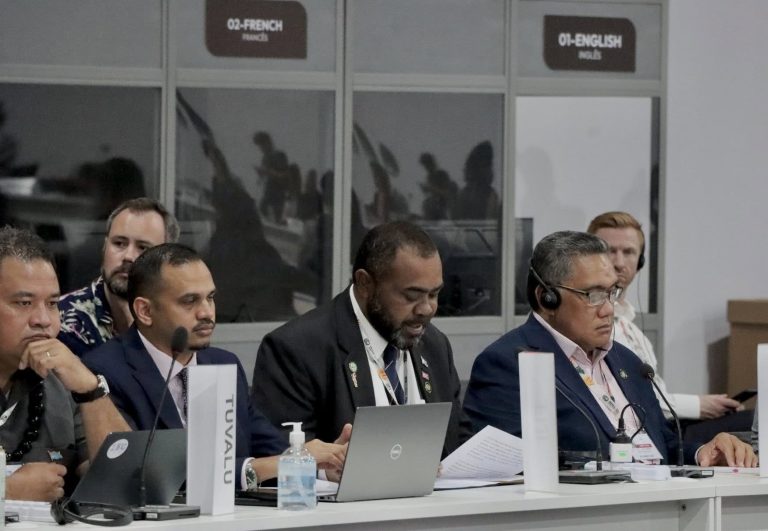
Fiji, Federated States of Micronesia, the Solomon Islands and Tuvalu delivered statements at the ministerial level, while Tonga was represented by its Head of delegation.

Climate finance is not charity, it’s climate justice, Pacific nations at COP30 Ministerial Roundtable

0

Pacific countries have reiterated the urgent need for scaled-up, predictable, and simplified climate finance to address the impact of the climate crisis.

The call was made during the COP30 High-level Intervention for the Ministerial Roundtable held on the margins of the ongoing 30th Conference of the Parties to the UN Framework Convention on Climate Change (UNFCCC) from 10-21 November 2025 in Belem, Brazil.

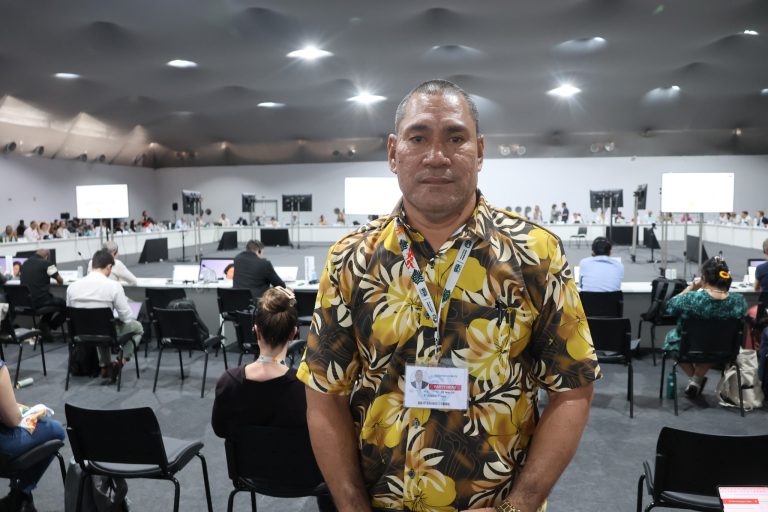
“We must ensure that we establish streamlined access to all the climate funds through harmonised modalities,” said Maina Talia, Tuvalu’s Minister for Home Affairs, Climate Change, and Environment.

“This includes establishing dedicated SIDS Adaptation Windows within the GCF and Adaptation Fund. These practical measures should translate to fast-tracked adaptation finance for countries already facing irreversible climate impacts like my country Tuvalu.”

Tuvalu is the current Chair of the Pacific Small Island Developing States (PSIDS) and Minister Maina is amongst Pacific leaders at COP30 advocating for the survival of Pacific communities who continue to be at the forefront of climate change impacts. Critical to the ability of Pacific communities to respond to the impacts of climate change is climate finance, often a difficult conversation at COP.

Minister Maina recalled that COP30 marks a decade into the Paris Agreement.

He said Articles 9.1 and 9.3 of the Paris Agreement, which deals with covering provision of resources, support and the mobilisation of climate finance, are not optional signposts.

“They are legal obligations, and whether they are honoured in the next few years will determine the survival of our islands, our economies, and our cultures,” added Maina.

“We made similar calls when we negotiated the New Collective Quantified Goal, where we urged the developed country Parties to move from broad pledges to real, time-bound commitments and actions. The next 2 to 5 years are critical. We cannot afford another lost cycle.”

Fiji’s Minister for Environment and Climate Change and Pacific’s Political champion for Climate Finance, Mosese Bulitavu, echoed the call, noting that Pacific countries speak as one voice grounded in the daily realities of rising seas, intensifying storms, and eroding livelihoods.

“The recent Advisory Opinion of the International Court of Justice reaffirms this as a matter of legal duty and shared responsibility. Failure to deliver predictable and adequate finance is not just an economic shortfall, it is a breach of trust and equity at the heart of this process,” said Bulitavu.

“COP30 must seize the political momentum of the Baku-to-Belém Roadmap and ensure that adaptation receives predictable, grant-based, and accessible finance capable of addressing the persistent funding gap and delivering resilience for the most vulnerable.”

Bulitavu said the multilateral development banks must align with Article 2.1(c), not by shifting burdens to the private sector, but by de-risking investments and expanding concessionality for those with limited fiscal space, particularly cognisant of the climate resilience development component.
“The Pacific’s message is clear: climate finance is not charity, it is climate justice in action. The success of COP30 will be measured by whether the world moves from promises to practice, from rhetoric to responsibility.”

The Kingdom of Tonga’s Head of delegation, Paula Pouvalu Ma‘u, highlighted the persistent challenges SIDS face in accessing resources despite being on the frontlines of climate impacts.

“Tonga supports our region’s calls for ongoing reform efforts across the multilateral climate funds, noting that despite progress – persistent access barriers still remain,” said Ma’u.

“These include lengthy and unclear accreditation procedures, as well as insufficient recognition of due diligence already undertaken by other multilateral funds and development banks. We call for deeper harmonisation and coherence between all actors serving the multilateral channels of climate finance.”

The sentiments from the Pacific were echoed by other nations deeply affected by climate impacts, many of whom described access to financial resources as “a matter of survival.”

UN General Assembly President Annalena Baerbock said in her opening remarks that COP30 should mark the beginning of implementing up to US$1.3 trillion in annual climate finance – disbursements that “reach those most in need, quickly, transparently and fairly.”

She stressed that climate action and social justice are “inseparable,” noting: “Climate insecurity fuels hunger and poverty, poverty drives migration and conflict; and conflict, in turn, deepens poverty and deters investment.”

UN Climate Change Executive Secretary, Simon Stiell described finance as the “lifeblood of climate action, adding: “When finance flows, ambition grows.”

COP31 deadlock: Australia has the votes, Türkiye won’t move

0

By Sera Tikotikovatu- Sefeti

While the world learned early on that Ethiopia will host COP32, the question of who will host COP31 remains unresolved after a week of talks here.

Australia continues to receive overwhelming support to host COP31 in partnership with the Pacific, yet Türkiye remains what several delegates have described as an immovable stone wall.

In response to questions from Islands Business, Australia reaffirmed that it remained “resolutely committed” to the bid.

“Our bid enjoys overwhelming support within the UN regional group responsible for the decision Western European and others Group (WEOG) and has strong backing from Pacific leaders,” was the written response from Australia’s Climate Change Ministry.

But they recognised Turkiye’s tactics.

“Türkiye is a determined and formidable competitor which also wants to host COP31. There is no forcing mechanism such as a vote.”

Australia insists it is committed to finding a resolution — and to bringing a COP to the Pacific for the first time.

Minister for Climate Change and Energy Chris Bowen echoed this sentiment in comments originally made to Michelle Grattan on the Conversation Politics Podcast, explaining that WEOG consists of 28 countries and that “they already have the support of 23 of the countries.”

“And no country has said we are not supporting you apart from Türkiye, there is only 23 who have shook my hand, looked me in the eye and said they are voting for us, but there is no agreed time or process for a ballot,” he adds.

Bowen described a process that is meant to operate on tradition and trust, “It is meant to work on a consensus, sort of an old world, sort of gentlemanly sort of approach to say whoever loses will withdraw. That’s not the way it’s panning out and I have had multiple meetings with my Turkish counterpart, including in Ankara, to try and find a way to maybe a sort of win-win solution. We haven’t been able to find that yet.”

Across the Pacific, the message this week has been clear: if Australia wins, it must be a Pacific COP in substance, not just branding. Delegates have not shied away from the reality that Australia still has a long way to go in earning that trust, particularly as one of the world’s largest fossil fuel exporters.

Fenton Lutunatabua of 350.org Pacific Team put it bluntly: “We need a COP in the Pacific not to focus on Pacific priorities, but to lift the UN climate talks to the standard of Pacific climate leadership, ten years from Paris the Agreement we are dangerously off track for 1.5 degrees.”

He added that the Pacific’s calls for action were often labelled unrealistic.

“Come to our homes, see the devastation, and then tell us that we don’t need the highest level of action possible,” Lutunatabua said.

On Australia’s bid, he said: “Australia has a lot to live up to if the COP31 bid is successful, this would be their opportunity to put rhetoric into action and phase out fossil fuels, domestic and exported once and for all.”

Asked about their energy trajectory, Australia pointed to its 2050 net-zero pathway — three system-wide shifts:

• Use energy more efficiently
• Electrify and fuel-switch
• Scale clean energy supply

And three phases of transition:
• Now to 2030: decarbonise electricity to reach 82 percent renewables
• 2030–2035: deepen decarbonisation across transport, buildings, and industry
• 2035–2050: accelerate clean energy switching and deliver a fully renewable, reliable system

But climate advocates say this is not enough. Shiva Gounden from Greenpeace Australia Pacific welcomed renewable progress but warned against contradictions, “In terms of renewable energy, yes Australia is making huge strides in terms of renewable energy in certain states but that shouldn’t be an excuse to mask its fossil fuel footprint.”

“On one hand they keep expanding, creating even fossil fuel projects, coal and projects, than on the other side they talk renewables, they need to make sure they have clear pathways, ensuring they also end fossil fuel subsidies and address their fossil fuel exports to be able to ensure that the people will be able to take their words seriously.”

The Pacific, he stressed, has no margin for failure.

“Hosting COP31 would be meaningless unless Australia demonstrates that it understands this existential reality, it must truly become a Pacific COP.”

Meanwhile, reports suggest a looming default scenario if Australia and Türkiye fail to reach agreement, COP31 may automatically fall to Germany, a prospect that Berlin is openly trying to avoid.

With rumours mounting that the deadlock may continue, Germany could find itself hosting a COP it doesn’t want — yet the Pacific remains hopeful that consensus can still be reached.

The world now watches closely: who will host COP31 — and will the Pacific finally see the climate leadership it has fought so long and hard for?

SPREP echoes Pacific call for grant-based adaptation finance to address climate change impacts at COP30

0

The Secretariat of the Pacific Regional Environment Programme (SPREP) has echoed the growing chorus from its Pacific membership calling for grant-based financing to aid the devastating impacts Pacific communities face as a result the triple planetary crisis.

As climate change negotiations ramp up in Belem Brazil, SPREP’s Head of Delegation at COP30 and Director of Climate Change Resilience,Tagaloa Cooper said that from the Pacific’s experience, blended finance has had limited success.

“For Pacific SIDS, adaptation is central. Our countries face high debt burdens and shrinking fiscal space,” said Cooper.

“In such contexts, adaptation finance must be grant-based. Experience shows that blended finance has had limited success in the Pacific. It is therefore crucial that MDBs (Multilateral Development Banks) and climate funds recognise the need for simplified, tailored, and predictable access modalities for our region.”

Cooper made the call when SPREP took the spotlight during the “From Pledges to Projects: Bridging the NDC-Investment Gap in Asia” side event on the margins of COP30.

She joined other speakers including Mathias Corman, Secretary General Organisation for Economic Co-operation and Development (OECD), Mathilde Mesnard, Deputy Director Environment, OECD, Yevgeniy Zhukov, Director General, Climate Change and Sustainable Development Department, ADB, Noelle O’Brien, Director, Climate Change, ADB, Dr Md Golam Rabbani, Associate Director, Climate Hub, Bangladesh NGOs Network for Radio and Communication (BRAC) and BRAC International.

With the submission of new Nationally Determined Contributions (NDCs) in 2025, at COP30 in Brazil, attention is now on turning these pledges into implementable, investable and impactful climate action.

SPREP’s Head of Delegation at COP30 and Director of Climate Change Resilience, Tagaloa Cooper. Photo: SPREP

Despite growing momentum, many countries, especially those most vulnerable to climate change, face systemic barriers such as limited institutional capacity, fragmented planning systems, and constrained access to finance.

According to Cooper, the implementation of NDCs in the Pacific is not only about climate ambition but about ensuring the survival of our communities. With a mandate to promote cooperation in the Pacific region to protect and improve the environment, and ensure sustainable development for present and future generations, SPREP is an implementing partner of the Pacific NDC Hub where the Secretariat has supported member countries in translating their NDCs into tangible action.

“This is always country-led and context-specific. For example, we have supported the installation of biogas systems in boarding schools in Vanuatu, developed a national GHG data repository for Tuvalu to enhance reporting, and supported agroforestry implementation in Samoa,” she said.

“To complement this, we provide annual training for NDC focal points, covering themes such as aligning NDCs and NAPs, and integrating nature-based solutions. These regular convenings enable the exchange of tools, data, and country experiences; critical for strengthening national investment and implementation planning.”

On financing, she told the audience of Government officials, climate finance practitioners, development partners, project developers, policy advisors, and civil society actors that while it is essential for climate finance to align with NDCs, Pacific SIDS face serious capacity constraints even in updating their NDCs.

“SPREP and other regional partners are doing our part to provide technical support, but there is a clear need for dedicated grant financing – both for NDC development and for implementation.”

Regional collaboration is essential, she added.

“Through the Pacific NDC Hub, four regional organisations including SPREP work closely to deliver coordinated support to all 14 NDC Hub member countries in the Pacific. Beyond the Hub, SPREP has also established Tomai Pacifique -a platform that mobilises Pacific expertise through a regional roster of climate consultants and provides countries with rapid technical assistance upon request.

“These regional mechanisms reflect our collective commitment to accelerate project development and delivery. But to scale what works, we need long-term, flexible and country-driven partnerships that reflect the realities of our region.”

Pacific Islanders march in Belém alongside thousands for climate action

0

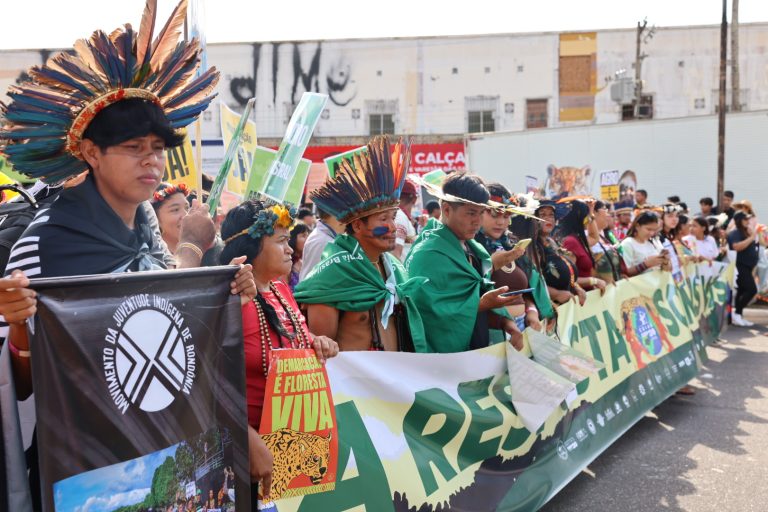
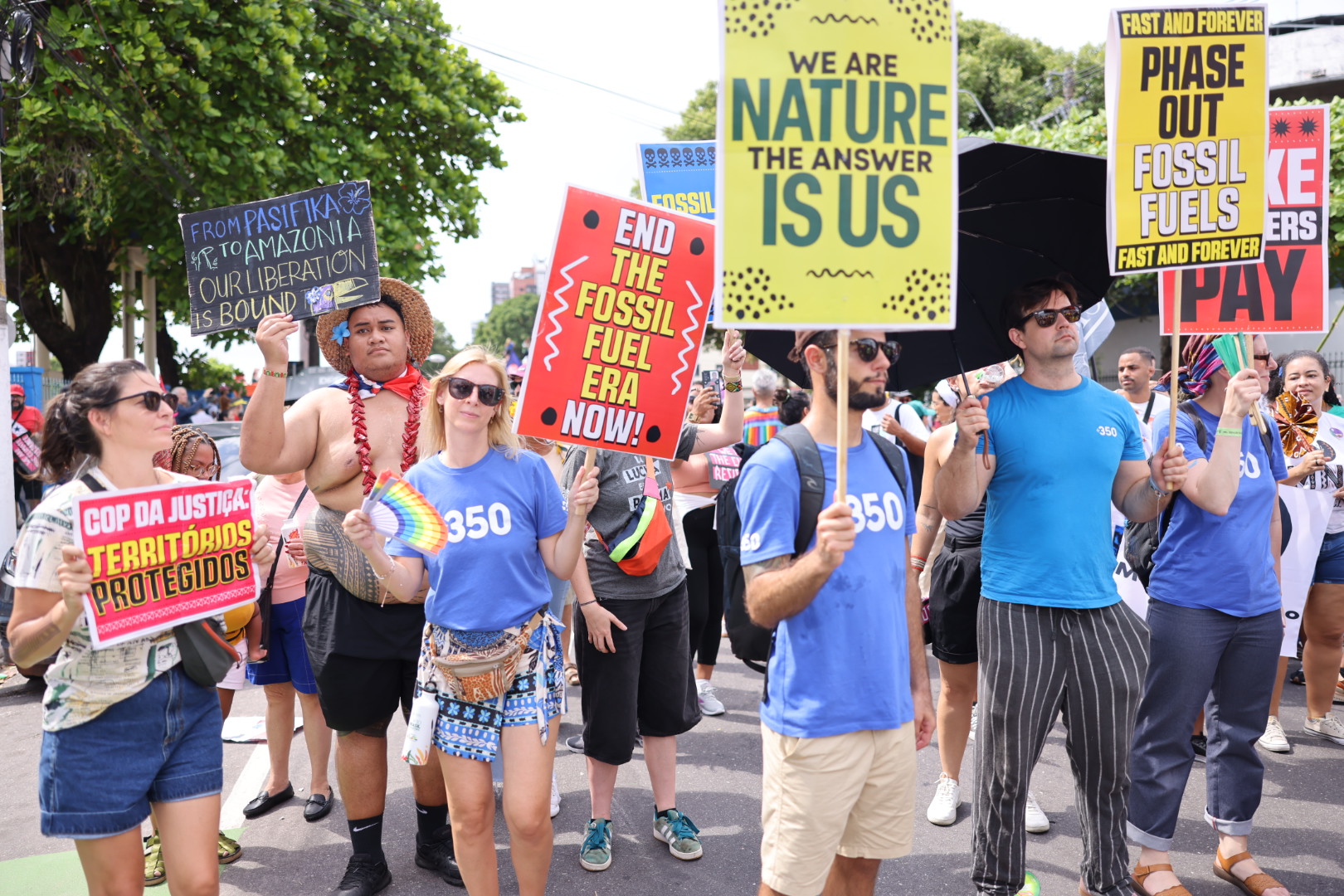
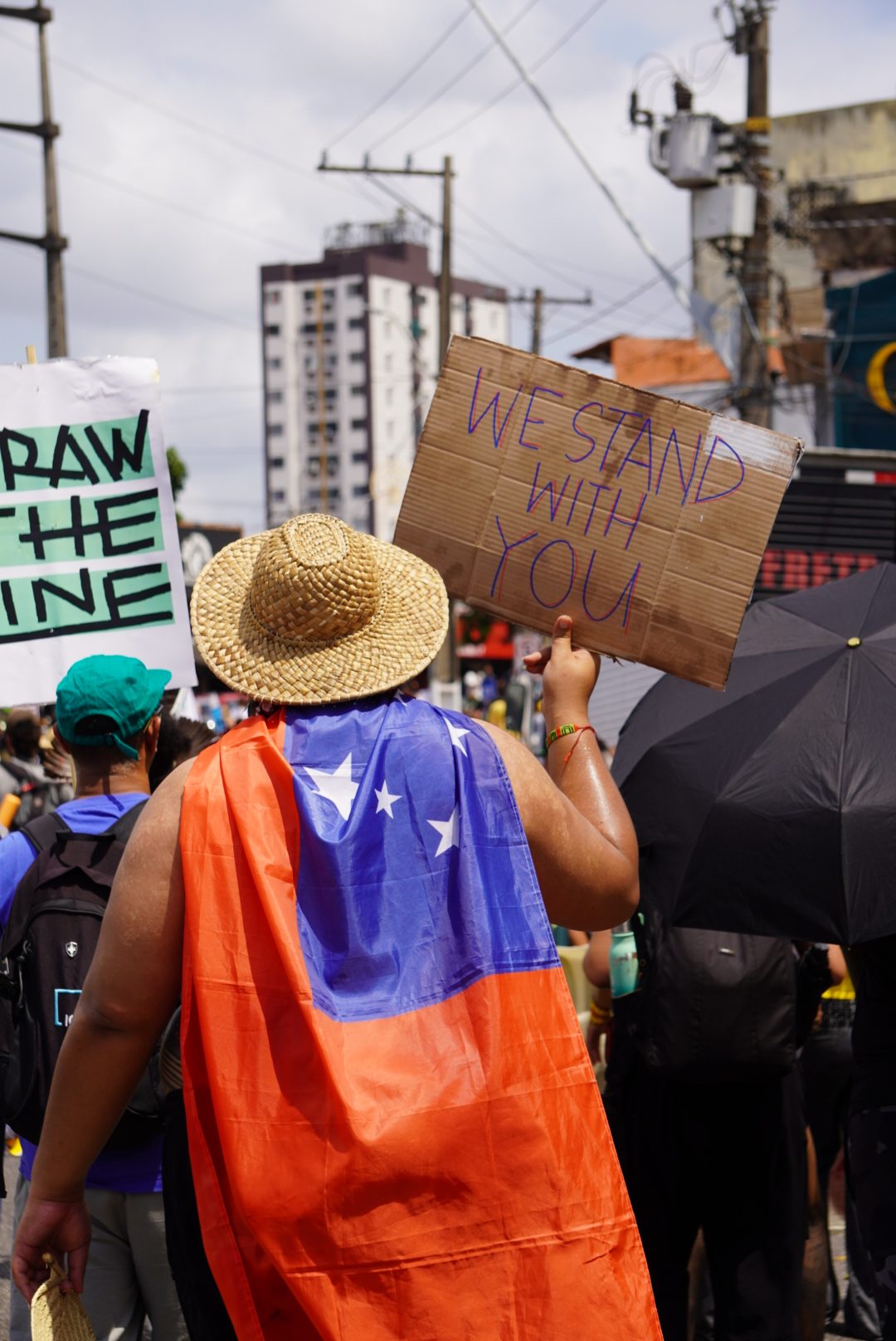
During COP30 in Belém do Pará, Brazil, more than 50,000 people took part in the People’s March for Climate, including a group of Pacific Island activists in Brazil for the UN climate talks.

The action brought together Indigenous peoples from across Latin America, activists from around the world and over 100 organisations, and has already been recognised as one of the defining moments of the conference.

Photo: Hugo Duchesne/350.ORG

The march featured indigenous communities from across the Amazon and the world, various civil society organisations, and movement art pieces such as giant coffins representing coal, oil and gas, large suns and wind turbines, over 80 jaguar performers, a 30-metre serpent and more than 100 artists — symbolised the beginning of the end of the fossil fuel era.

This epic intervention helped shape the narrative of the final phase of COP30 negotiations, reinforcing the global call to end oil exploration in the Amazon and to phase out fossil fuels worldwide. The message was unmistakable: the Global South is leading.

Fenton Lutunatabua, 350.org Pacific Team Lead says, “Today the strength of the people was on display. While leaders negotiate our lives at COP30, we take to the streets to remind them that we are watching and we demand action, not empty promises. As Pacific Islanders, it was important for us to show up today because our struggle is the same as the people of the Amazon. The fossil fuel industry ravages their homes to dig for oil and gas, and that in turn fuels the climate crisis that devastates ours. We will always show up for fellow frontline communities in the fight to end fossil fuels.”

Photo: Hugo Duchesne/350.ORG

Suluafi Brianna Fruean, 350.org Pacific Council Elder says,”We were here at the Peoples March for Climate showing that true ambition, action and justice is found here in the people’s movement.”

Grace Malie, Tuvaluan climate activist says, “I joined the Climate March in Belém because every step I take is for my home, Tuvalu. Standing shoulder to shoulder with Indigenous peoples, youth, true allies from across the world fills me with grief and courage. Grief for what is at stake for us and for what we are losing and courage because none of us are fighting it alone. I joined the march as a pledge of my solidarity for every community fighting until justice is not a plea we keep repeating, but a promise the world finally keeps.”

Photo: Drue Slatter/350.ORG

MANU SAMOA: One more to Go! Captain calls for moral support

0

As Manu Samoa prepares to face Belgium in a head-to-head showdown on Tuesday 18 November for the final place at Rugby World Cup 2027 in Australia, Captain Theodore McFarland has called on the country’s Tapuaiga in prayers and moral support.

Samoa and Belgium made it back-to-back wins on match day two of the Final Qualification Tournament in Dubai.

Belgium, who defeated Namibia in their first game, survived a scare as they played for over half an hour with just 14-men against Brazil, edging the game 30-27 with a try in the final two minutes to replacement prop Maxime Jadot.

Samoa, who accounted for Brazil on match day one, looked far more comfortable against Namibia, clinching the match 26-8.

The teams now have a few days to recover and prepare for one of the biggest matches in both nations’ histories.

Samoa has played in every Word Cup since its historic entry in 1991, had been pushed to the edge to play the final qualification rounds as the sides quality was diminished due to the availability of its top players.

After losing to Chile earlier in the competition when 10 players pulled out before match day, a former Manu Samoa Captain Filipo Levi made a public appeal for the players to make themselves available for the final qualification round.

The much rejuvenated side now has one more hurdle to get past Belgium to make the 2027 World Cup in Australia where it has a huge fan base.

In the second game a fast-improving Samoa were outstanding in a 26-8 victory over Namibia, which ends the Welwitschias dreams of Rugby World Cup 2027 and keeps Samoa firmly on track to claim the final place at Australia 2027.

Samoa were dominant right from the kick-off excelling in all facets of the game to totally control the first half, going into the sheds 19-0 thanks to tries to scrum-half Jonathan Taumateine and wings Va’afauese Apelu Maliko and Latrell Ah-Kiong, full-back Jacob Umaga adding two conversions.

Namibia started better in the second half with sustained pressure rewarded by a penalty goal from fly-half Cliven Loubser, to bring the score back to 17-3.

Namibia sought to play the game in Samoa’s territory using the excellent long kicking games of full-back Divan Rossouw, scrum-half Helarius Kisting and Loubser. But every kick was met with just as intelligent returns from the Samoa back three of Umaga, Apelu Maliko and Ah-Kiong.

Samoa also chose their moments well when to throw the ball wide and when to keep it tight, executing a driving maul close to the line perfectly on 54 minutes to see flanker Alamanda Motuga go over, Umaga landing the conversion from near the touchline to make it 26-3.

Namibia were able to turn the ball over at the breakdown 11 times, with Samoa’s total of 21 turnovers lost and just two won sure to concern Samoa head coach Lemalu Tusiata Pusi. But overall this was a very professional and disciplined Samoa outfit that look like they are running into form at exactly the right time.

Even when Namibia broke the Samoan line with just 15 minutes to go with a speedy break down the left-hand side, smart defence from Umaga and Ah Kiong closed down any opportunity for a Namibian five pointer. But the brave Welwitschias, led valiantly by the non-stop captain and hooker Louis van der Westhuizen, never gave up and were rewarded for their endeavor with a clever cross kick from Johan Deysel, putting Jay-Cee Nell over out wide with 11 minutes remaining to bring the score back to 26-8.

Namibia kept fighting valiantly with excellent defense. right to the end, winning the second half 8-7, which was a great result for Peter Rossouw’s team, who, if they had shown this form earlier in the tournament, may have had a better result against Belgium.

Rossouw was pleased with the 80-minute performance of his team: “We are very happy with the commitment and the effort the guys showed today. We were a lot more physical in the contact, which wasn’t that great the other day against Belgium, and I think we played the right game plan. We just couldn’t keep the ball for long enough in our phases to put pressure on attack. But very happy tactically, very happy. And we finish really strong in the second half, we were very happy with that.”

While for Samoa Pisi lauded the presence of the new players coming into the squad, which includes former Australia prop Scott Sio: “Obviously, we’ve had a few players come in and they brought their experience and just a calibre of where they play, and probably the main stays of our team – that’s coming. So it’s been good for the other players that were involved in the last campaign to see the level of these players and where they need to get to.”

Pacific leaders push for “Pacific COP” as region backs Australia’s COP31 bid

Pacific leaders remain “cautiously optimistic” as the region steps up efforts to secure a home-ground climate summit, supporting the push for a Pacific COP hosted by Australia.

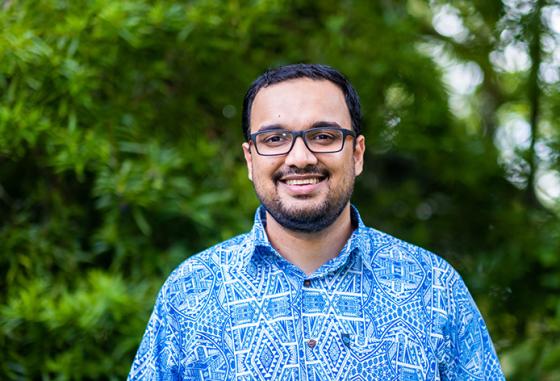
Speaking during an online media briefing from COP30 in Belem, Pacific Islands Forum Secretariat Director, Zarak Khan said the political will across the region is united and unwavering.

“The sentiment amongst our Pacific countries is that we are cautiously optimistic… because we believe as a Pacific region, through Australia, who has put in the bid, that we have a very strong case to make to host a Pacific COP in our region,” Khan said.

He highlighted that the push is grounded in lived experience.

“We are at the front lines of climate change. It’s a lived reality for us, whether you talk about tropical cyclones, landslides, droughts, many other climate-induced disasters—our people are facing that on a regular basis,” he said.

He added that hosting a COP “in our backyard” would not only reduce logistical challenges but also allow the Pacific to influence the agenda, set thematic priorities, and ensure outcomes are “tangible, substantive and meaningful for our people, not just another talk fest.”

A key priority for Pacific negotiators at COP30 is the formal inclusion of oceans on the COP agenda, which Khan described as long overdue.

“Oceans has been treated on the periphery,” he said.

“Apart from food security, it delivers half of the world’s breathable oxygen and absorbs a huge amount of carbon emissions. The Pacific Ocean is the largest body of water in the world. It’s a missed opportunity not to have oceans as a formal COP agenda item, where we could bring stakeholders, financing, and a structured approach to ocean issues.”

Khan also stressed the Pacific’s regional unity and diplomatic coordination.

“We may be very small countries with small GDPs, but we have an equal vote in UNFCCC processes. When we come together, we’re a much stronger grouping,” he said.

Pacific negotiators are also building a coalition of willing countries from Africa, the Caribbean, Latin America, and Asia to support the elevation of oceans as a formal COP agenda item.

While the Pacific is strongly backing Australia, Khan emphasised that the ultimate decision rests with the Western European and Other States (WEOG) group, a key body within UNFCCC decision-making processes.

“We are very respectful of their role,” he said.

The path to a Pacific COP remains politically complex.

Pacific Islands Forum (PIF) Climate Finance and Resilience Team Leader, Karlos Lee Moresi. Photo: PIFS

Forum Climate Finance & Resilience Team Leader Karlos Lee Moresi said negotiations between Australia and Turkey, the two contenders, are “very tough.”

“Turkey is adamant that they want a COP… they’re not giving up,” Moresi said.

Pacific countries are exploring whether they can be directly involved in these talks under the spirit of Talanoa.

“What we’re asking Australia is if there’s a potential for the Pacific to be brought into the negotiations between Australia and Turkey, so we can try and make some sort of compromise,” he said.

The leadership summit, traditionally held alongside COP, remains a sticking point. Pacific countries have pushed for it to be held together with COP to maintain visibility and credibility.

Moresi acknowledged that fallback scenarios are being considered but emphasised that “we don’t really want to get to that stage.”

For the Pacific, hosting COP31 is more than symbolism; it is a chance to reshape global climate priorities around the realities of frontline communities.

“Australia winning the bid to host COP31 in our region would be a major accomplishment,” Khan said.

“It would be the first time the Pacific hosts a COP, and we remain committed to supporting Australia so that we can secure this opportunity and bring oceans to the heart of climate negotiations.”

Stay connected

529FansLike
172FollowersFollow
156SubscribersSubscribe
- Advertisement -