Home Blog Page 140

Vanuatu warns COP30: “Our communities cannot wait years for approval”

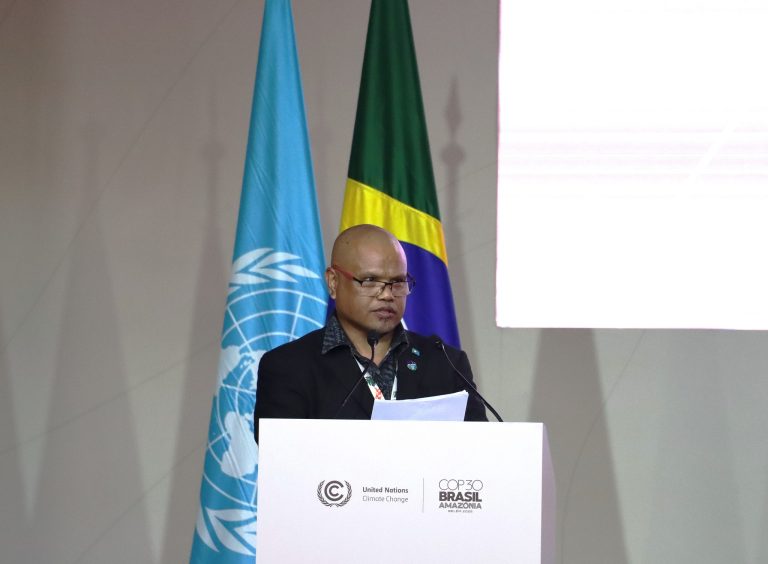
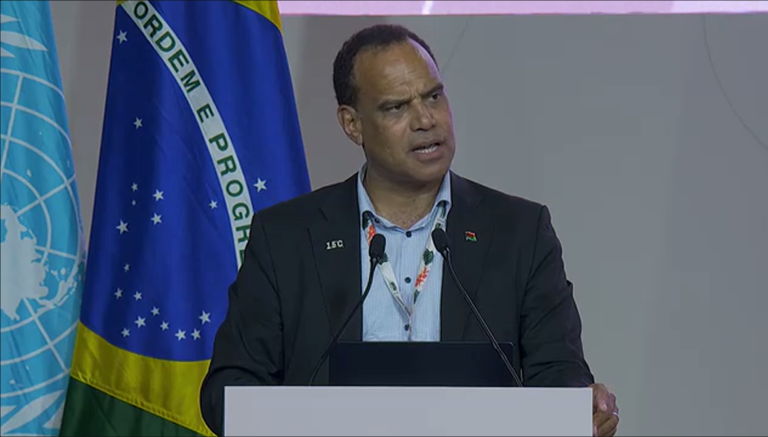
Vanuatu has warned world leaders at COP30 that climate disasters strike every season and its communities cannot wait, calling for urgent action and climate finance that reaches the most vulnerable.

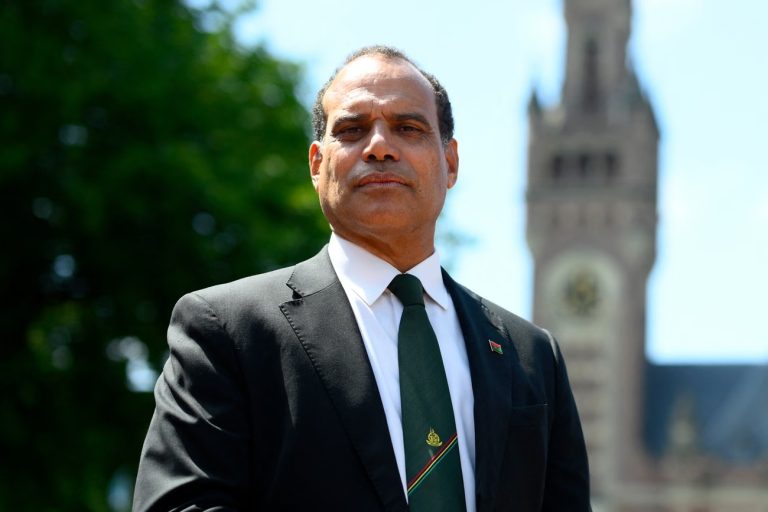
Speaking at the High-Level Segment in Belém, Vanuatu’s Minister of Climate Change Ralph Regenvanu said his country remains “among the most climate vulnerable nations on Earth,” facing climate impacts that are “not just environmental shocks, they are economic shocks of an existential scale.”

Regenvanu said the effects are already devastating. “In just the past decade, extreme weather events have inflicted damages equivalent to well over half of our GDP,” he said, noting that these repeated blows continue to “lock us in a cycle of perpetual recovery” and threaten the nation’s hopes for a self-determined future.

Citing this year’s International Court of Justice (ICJ) opinion, he stressed that the world now has legal clarity: states have binding obligations to protect the climate system.

“The ICJ reaffirmed what small island developing states have long insisted,” he said, adding that the findings “echo the IPCC’s warnings, reaffirming that 1.5 is the limit of survival in countries like Vanuatu.”

Vanuatu has submitted one of the world’s most ambitious NDC 3.0 commitments, but Regenvanu emphasised that “ambition from vulnerable states is not enough.”

He urged all major emitters to finally align their national commitments with a 1.5°C pathway “with the urgency that the science and now international law demands.”

He also highlighted the need for climate finance, saying ambition must be backed with funding that is “additional, accessible, grant-based, predictable, and equitable.”

Climate finance, he said, “is not charity. It is a legal and moral obligation grounded in responsibility and capacity as affirmed by Article 9.1 of the Paris Agreement.”

But current systems, he argued, are failing the communities most at risk.

“Accessing climate finance requires navigating complex procedures that undermine the very purpose of the support,” he said.

His frustration was clear: “Our communities cannot wait years for approval while disasters strike every season.”

Regenvanu welcomed the operationalisation of the Loss and Damage Fund but warned its success depends on “real resourcing and rapid disbursement.”

For Vanuatu, loss and damage is not theoretical. “It is already eroding our livelihoods and territory,” he said, stressing that the most vulnerable must be prioritised due to their special circumstances.

He cautioned that adaptation alone cannot protect small island nations: “The limits of adaptation are already being reached.”

Looking ahead, Regenvanu said the 2025 NDC synthesis report highlights the widening gap between what is needed and what countries have committed. “The timeframe for addressing 1.5 is urgent, and the window for action is closing,” he said.

Vanuatu strongly backed Brazilian President Luiz Inácio Lula da Silva’s call for a global roadmap “for a just, orderly and equitable transition away from fossil fuels.”

Regenvanu said such a plan is central to accelerating implementation of the Paris Agreement and closing the 1.5°C ambition gap.

“We need a clear action plan focused on implementing GST-1 (first Global Stocktake under the Paris Agreement), particularly the GST Energy Package.

“Together, we can and must deliver a future where no nation is left behind,” he said.
‘Every time we rebuild, we rebuild with debt’ – Fiji at COP30

0

Climate ambition requires resources. COP30 must deliver a Baku-to-Belém Roadmap that scales finance to the level of the crisis, simplifies access, and guarantees predictability for communities like Fiji and Pacific islands who are on the frontlines of climate change impacts.

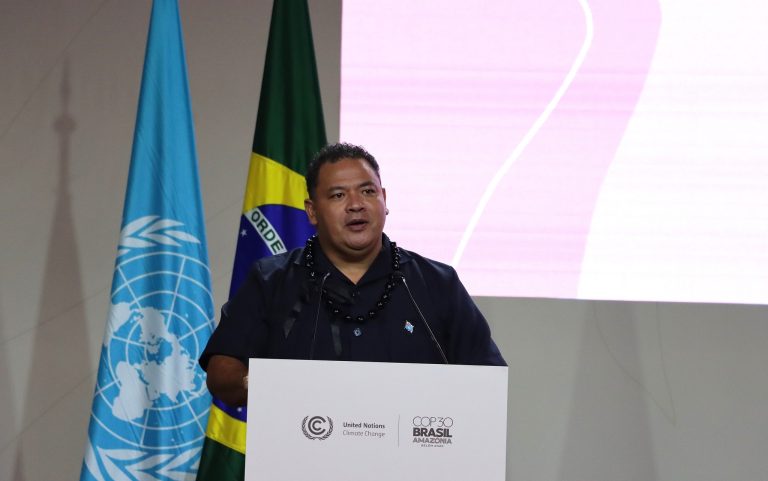
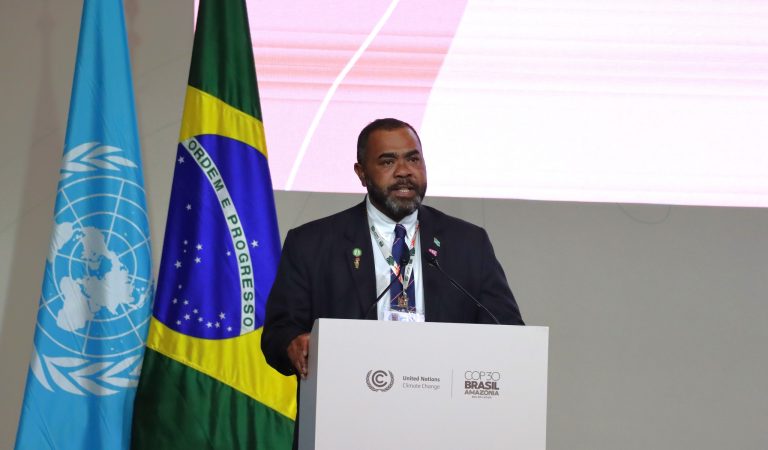
“When a cyclone strikes, it wipes out schools, hospitals, bridges — the foundations of dignity and development — in a single night. And every time we rebuild, we rebuild with debt,” said Mosese Bulitavu, Fiji’s Minister for Environment and Climate Change

“This is why finance is not charity for us. It is justice.”

Speaking at the High-Level segment of climate change’s biggest global stage at COP30 in Belem Brazil, Bulitavu reminded that as a “son of the Pacific”, the Ocean is our identity, our culture, and our inheritance.

“That inheritance now stands at risk,” he said.

Bulitavu, who is also in Belem as the Pacific’s Political Champion for Climate Finance, is amongst Pacific leaders, negotiators and delegates amplifying the one Pacific Voice on the region’s climate change response priorities.

Climate finance is amongst those priorities.

Bulitavu said the amount required to address the impacts of global warming and the climate crisis must move from billions to the trillions.

“Not someday, but now,” he urged.

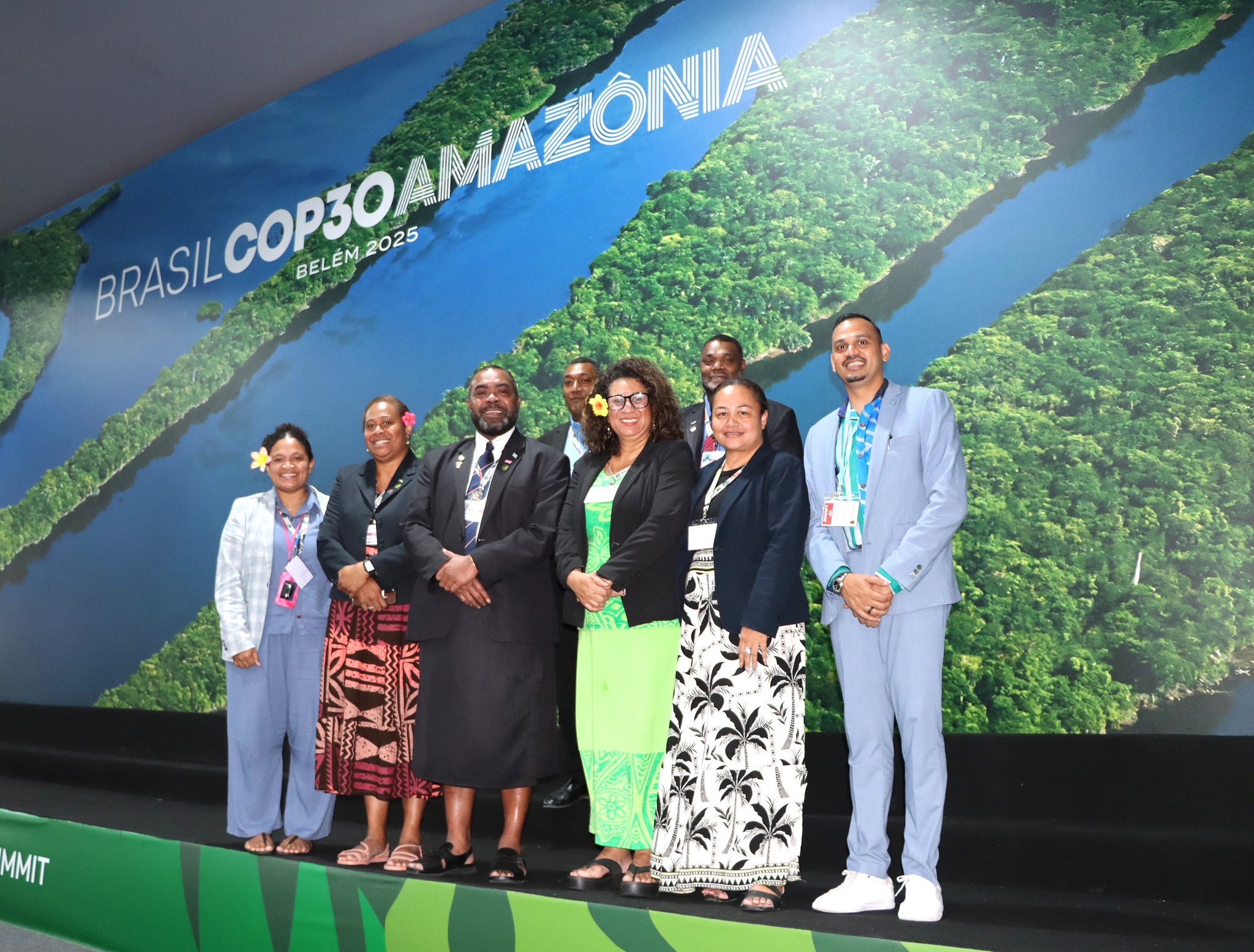
Fiji’s representatives at COP30. Photo: SPREP

COP30 takes place a decade after the Paris Agreement, and the Fiji Minister noted that the world is still drifting away from the 1.5°C limit, a critical number that determines whether Pacific islands thrive or disappear

“For us in Fiji and across the Pacific, 1.5°C is not a political target — it is a lifeline,” said Bulitavu.

“The recent Advisory Opinion of the International Court of Justice made it clear: every State has a legal obligation to act in line with the best available science.

“But science also makes something else painfully clear — without rapid, scaled, and predictable finance, vulnerable countries will continue to pay the highest price for a crisis we did not create.

“Small Island Developing States and Least Developed Countries contribute the least to global emissions, yet we are bearing the greatest costs.”

Fiji is doing its part, the Minister pointed out, with the launch of its enhanced NDC3.0 last month, a plan he said is rooted in “urgency and hope.”

He also highlighted the critical need to bend the emissions curve by phasing out fossil fuels and accelerating a just, orderly transition to clean energy for all.

“We cannot protect our Ocean — the beating heart of the Pacific — without protecting our climate. Excellencies, history will judge us by whether we matched courage with action,” he reiterated.

“Let COP30 be remembered as the moment we delivered — for the vulnerable, for the future, and for the planet we all call home,” he said.

Tonga calls on world to act as climate change devastates Island nations

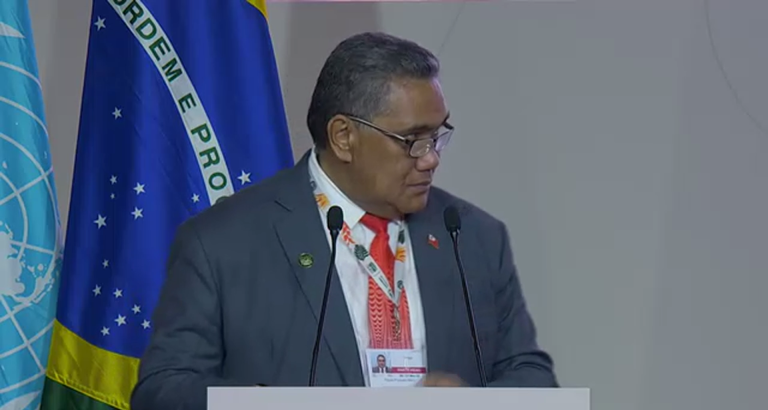
Climate change remains Tonga’s “most essential threat,” Head of Delegation and Secretary to Cabinet at the Prime Minister’s Office, Paula Pouvalu Ma’u, told world leaders.

Rising seas, extreme cyclones, and degraded ecosystems are already affecting communities across the islands. Speaking at the High-Level segment at COP30, Ma’u said the scientific evidence is clear.

“Human activities have driven a significant rise in greenhouse gas concentrations. The consequences of continued emissions are severe and alarming,” he said, citing the 2025 NDC Synthesis Report and the UNEP Emissions Gap Report, which paint a “sobering and troubling picture.”

Tonga, though a negligible emitter, is experiencing dramatic climate impacts. Sea levels are rising at 7.3 millimetres per year, faster than the global average, causing coastal erosion, flooding, and loss of infrastructure and habitats. Saltwater intrusion is harming groundwater, increasing soil salinity, and reducing agricultural productivity.

“Rising ocean temperatures have caused widespread coral bleaching and a decline in marine biodiversity,” Ma’u said.
He warned that Tonga’s land, ocean and marine resources, vital to livelihoods and survival, are under immediate threat.

Despite these challenges, Tonga remains committed to climate action. The country aims to achieve net zero emissions by 2050 through 70 percent renewable electricity, strengthened energy efficiency, and implementing adaptation and loss and damage strategies under its National Energy Plan by 2028.
Ma’u also stressed the urgent need for international climate finance.

“The critical importance of timely and adequate climate finance cannot be overstated. Without it, strategic actions cannot be realised,” he said, calling on developed countries to fulfill long-standing commitments.

Tonga reiterated that global climate action must align with frameworks like the Sendai Framework, the Sustainable Development Goals, and Paris Agreement goals. He voiced support for Australia’s bid to co-host COP31 as the “Pacific COP,” providing a platform for Pacific states to amplify solutions.

“The decisions and choices we make today will shape the future of our country, our generation, and those to come,” Ma’u said, urging genuine partnership and cooperation to ensure all voices are heard.

Vanuatu prioritises stronger climate finance and a clear roadmap away from fossil fuels

Vanuatu has set out its top priorities for COP30, calling for stronger climate finance commitments and a clear, actionable roadmap for transitioning away from fossil fuels.

Speaking to the media online from Belém, Vanuatu’s Minister for Climate Change, Ralph Regenvanu, said the country is pushing for tangible outcomes.

“A negotiated outcome that has good climate finance outcomes — better than we’ve come into COP with — and of course this roadmap we’re talking about,” Regenvanu said.

“Those are the two things that I would like to see that we can achieve here. That would be a good outcome for me.”

A major development on Monday was a high-profile press conference.

“Something significant today was a press conference led by Ambassador Tina Stege from the Marshall Islands, supported by 18 to 20 countries, including Vanuatu, Fiji, and other Pacific nations,” Regenvanu said.

He added: “On the front table were Kenya, the UK, Marshall Islands, Germany, Sierra Leone, and Colombia, saying they want this roadmap for a just and equitable transition away from fossil fuels. People who had been in Paris said it was reminiscent of when a group of countries came together and declared their position. For me, that is very encouraging.”

He said the coalition reflects rising support for a globally coordinated transition away from fossil fuels.

“We need this roadmap… as actionable as possible, as real as possible, as a measure that is going to be able to be legally binding as possible,” he said.

Vanuatu is also advancing the push for an International Court of Justice (ICJ) advisory opinion on states’ obligations to address climate change. But progress remains difficult inside negotiating rooms.

Regenvanu said many Small Island Developing States (SIDS) are referencing the initiative in their statements, but some negotiating blocs are resisting its inclusion.

“In the negotiating rooms, a lot of blocs of countries don’t want it mentioned, so I think in the final negotiated text, it’s not going to be prominent,” he said.

For Vanuatu, the focus is on the UN General Assembly resolution rather than pushing for prominence at COP30.

“We aren’t really pushing it that hard here. We are just trying to make sure that when it goes back to the General Assembly next month, we just want to see it go through,” Regenvanu explained.

The country has formed a core group of supportive nations representing different regions to negotiate the resolution’s text.

“We formed a core group of countries… who are with us on that text, and that is our focus.

We’re not so much thinking that this COP is going to be a place where it features prominently, because there are divergent views, and there are countries that don’t want it mentioned. We are not going to push the issue in the hope of having our resolution at the General Assembly pass,” he said.

Eke and Sovaleni leave PM bids to Parliament as Tonga heads to polls

0

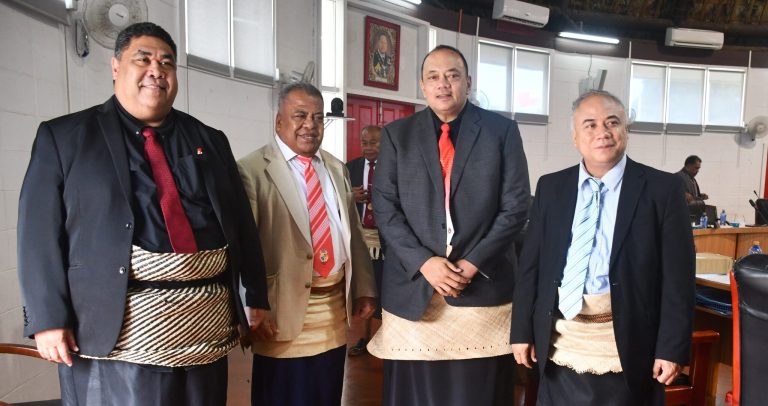
As Tongans head to the polls on Thursday, both Prime Minister Dr ʻAisake Eke and former leader Siaosi ‘Ofakivahafolau Sovaleni say they will leave their political futures to Parliament.

But neither man is ruling out a return to the position of prime minister.

Speaking with PMN News, Prime Minister Eke says he will not personally put his name forward for the role, but is open to being reinstated by Parliament if they choose.

“I give it to the members who they decide to put their name in. I don’t want to put my name, I want to listen to them and if they want me to come back again, yes. If not, I’m happy,” Eke said.

Former Prime Minister Sovaleni, who was removed in a vote of no confidence late last year, also says he will respect the process of the new Parliament.

While he avoided making any direct declaration of interest, he confirms he is open to discussions once the election results are in.

“I’m open for the discussion in Parliament on who should be representing us in government, and who should be in parliament. It’s all about what we can do. How can we make a difference?”

When asked if he still stands by earlier comments that he wouldn’t rule out running for Prime Minister, Sovaleni says his priority now is winning his constituency. “Whatever parliament decides, we will see how it goes from there.”

Prime Minister Eke took office in December 2024 and reflects on his short tenure by emphasising his administration’s focus on strengthening public services, accelerating major infrastructure projects, and unlocking resources for the private sector.

“I know coming into this position is not an easy task. There’s a responsibility for the whole country. And when we come in, we just look at those things that I think we could do to improve the situations where we pick up the situation.”

Eke highlights several achievements, including extending government service hours for the public, restarting the long-planned lagoon bridge project, and resolving a major legal dispute between the Reserve Bank and Tonga Development Bank.

His government also appointed a new Chief Eexcutive Officer for the Tonga Development Bank to reboot the institution’s role in financing economic growth.

Eke says one of the most important decisions in his first budget was to channel more capital into the local economy, directing significantly more resources towards the private sector, including T$56 million pa’anga (NZ$39.2 million) with T$30m (NZ$21m).

He also points to new business-development grants for young entrepreneurs, concessional loans for students, and an expanded investment in community health centres to reduce pressure on Vaiola Hospital.

Sovaleni, who was prime minister for three years from December 2021, reflects on the crises that defined his leadership: the Hunga-Tonga Hunga-Haʻapai disaster, the tsunami, the ashfall, and the reopening of Tonga’s borders during Covid-19.

“We always joke about the fact that when we started, we had a baptism of fire and water. We had the volcanic eruption and the tsunami in the first month, January of 2022. And then we were hit with Covid-19,” he says.

Sovaleni says hosting the Pacific Islands Forum in 2024 was one of the proudest moments of his administration, as it showcased Tongan resilience and community spirit.

On the campaign trail, Sovaleni outlines his four key priorities: safety and security, education and social development, climate resilience, and economic stability.

He warns that unemployment and the loss of workers to seasonal labour schemes continue to hurt local businesses.

“The seasonal workers programme has been helping, but in turn it actually has some negative impact on our private sector and our small businesses. Most of our able-bodied men and women are down in New Zealand and Australia.”

Access to education remains a key concern for Sovaleni.

He is keen to reduce dropout rates and keep students in the classroom, where they are less vulnerable to crime and social risks. “We should invest more on the youth,” he says.

In Tonga, the Prime Minister is chosen by the 26-member Parliament, with both People’s Representatives and Noble Representatives casting votes to decide the leader.

Two of the island kingdom’s most influential nobles have emerged as surprise contenders for Prime Minister – Speaker of Parliament, Lord Fakafanua, and former Prime Minister Lord Tu’ivakano.

First Tonga pre-election poll shows clear favourites, but many voters still undecided

0

Tonga’s first pre-election poll is offering the clearest picture yet of how voters on Tongatapu may lean ahead of Thursday’s general election.

The poll, conducted by the Tonga National University, shows that the final days of campaigning could be decisive.
The poll reveals a mix of dominant frontrunners, razor-thin races, and electorates split across several candidates.

In an interview with PMN News, Dr Malakai Koloamatangi, who oversees the university’s election observation programme, says the poll was also intended to encourage people to vote.

“We asked participants whether they’re voting and many said they weren’t until we raised it with them,” Koloamatangi said.

The survey, carried out on 15 November, interviewed 445 voters anonymously across Tongatapu’s 10 constituencies. Researchers visited three towns in each electorate.

Three constituencies – Tongatapu 1, 4 and 5 – each show a clear preferred candidate, with more than half of respondents backing the frontrunner.

The leading candidates in these electorates are followed by runners-up at roughly one-third.

Tongatapu 2, which covers some of Nuku’alofa’s biggest residential areas, including Fanga-’o-Pilolevu, Haveluloto, northern Tofoa and Mailetaha, is shaping up to be the closest contest in the Kingdom, with two candidates almost tied at 50 per cent each.

Tongatapu 3, 7, and 10 also show dominant favourites, each well ahead of the rest of the field.

Tongatapu 6 is a three-way contest: two candidates are sitting at around one-third of the vote each, while a third candidate is on about 20 per cent.

Tongatapu 8 is the most fragmented electorate, with five candidates clustered between 10-20 percent. In Tongatapu 9, one candidate leads on 40 percent, with two others polling between 20-30 percent.

Of the 445 respondents, over 300 stated that they voted in the 2021 election, while 90 revealed they did not. Almost all surveyed, except five, stated that they intend to vote this year.

Koloamatangi says the team met two distinct groups of voters: those firmly committed to a candidate, and a surprisingly large number still undecided.

“That means for the candidates, there’s still time,” he says. “The last few days of campaigning will be the difference in whether you get voted in or not. So there’s still time.

“But the reason why we’re doing the polling is that in a lot of countries, pre-election polls offer a sense of not exactly a prediction, but to indicate what the results might be,” he said.

Australia raises heat over climate summit hosting goal

0

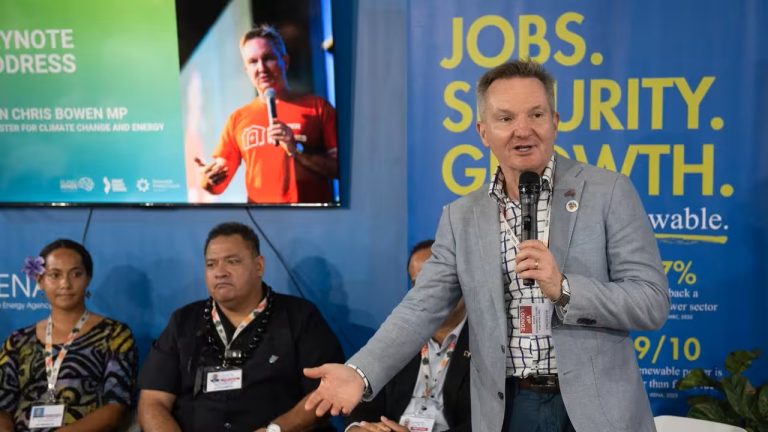
Chris Bowen is staring down rivals Turkey at global climate talks in Brazil, vowing to succeed with Australia’s bid to bring a 2026 conference to Adelaide.

It may come down to a crunch meeting between Australia’s climate minister and his Turkish counterpart, Murat Kurum.

A deadlock between the two aspirants must be broken at this week’s COP30 conference.

Ahead of last-minute negotiations, where Australia is expected to offer concessions for Turkey to drop out, r Bowen struck an optimistic note in a series of remarks to summit attendees.

“We are in it and we are in it to win it, let me make it clear,” he said.

“We’re not going anywhere and South Australia’s not going anywhere.”

In his first day in Belem, the Amazon rainforest gateway city, Bowen gave Australia’s national address, backed a Pacific decarbonisation plan, and held bilateral talks with a number of nations.

For most nations at the 2025 COP, the main game is making progress towards the Paris Agreement – a global pact that aims to limit global warming to 1.5C.

UN climate chief Simon Stiell said participants, representing much of the world but not the boycotting United States, had made major strides in negotiations.

“Nations have mustered a trillion-dollar charge into clean energy and grids, rallied around a global plan to quadruple sustainable fuels, unlocked new waves of green industry and started preparing a pipeline for new adaptation investment,” he said.

Australia is engaged in those negotiations, but is otherwise preoccupied by its bid for next year’s conference, which it hopes to host in South Australia in tandem with the Pacific.

Hosting decisions are made by consensus, meaning Australia needs to convince Turkey to drop its bid to avoid a diplomatic disaster and miss out.

“I don’t know what the result will be. It might be a good one. It might be one that we’re disappointed here, but we’re fighting hard and we’re going to fight hard for the end,” Bowen said.

Showing the dysfunction behind 2026 hosting rights, African nations have already resolved the question for the 2027 event, which is heading to Ethiopia.

In his national address, Bowen spruiked Australia’s climate credentials, including a 2035 emissions target of 62-70 per cent below 2005 levels.

Pacific leaders have unanimously endorsed the bid for some time, with Vanuatu Climate Minister Ralph Regenvanu saying the region was backing it, but he “didn’t have any sense” of the outcome.

“Pacific small island developing states are meeting delegations about it too,” he told AAP from Belem.

Australia has an overwhelming majority of support of the group that decides the outcome.

A briefing note seen by AAP states Australia has the explicit backing of 24 of the 28 “Western European and Others Group” nations, while Turkey has no publicly declared supporters.

While questions are being asked of the large cost of hosting the event, climate advocacy groups are desperate for the government to pull it off.

“This is a once-in-a-generation chance and will be a missed opportunity if they don’t win the COP presidency” Australian Conservation Foundation climate manager Gavan McFadzean told AAP.

“Our Pacific neighbours have contributed the least to climate crisis, but are amongst the worst affected, and there’s an enormous economic and jobs opportunity to … transition our coal and gas exports to renewable energy based manufacturing.”

Bowen also supported a report into Pacific decarbonisation, backed by Vanuatu, Tuvalu, Australia’s Smart Energy Council and others.

Pacific nations are plagued by unreliable or expensive power sources, such as imported diesel, and are seeking to transition away.

“If we can manage the rapid transition of our energy systems in Pacific Islands, it can be a beacon for the rest of the globe,” Regenvanu said.

“Our survival depends on it,” he said.

Solomon Islands to pilot a new model of reef-positive finance

0

As the world looks to COP30 in Belém to deliver ambitious breakthroughs for climate and nature, the World Wildlife Fund (WWF) and the Global Fund for Coral Reefs (GFCR), co-led by the United Nations Capital Development Fund (UNCDF), the United Nations Development Programme (UNDP) and the United Nations Environment Programme (UNEP), have joined forces to drive investment in reef-positive businesses in Solomon Islands.

The initiative aims to help local enterprises grow in ways that protect coral ecosystems, strengthen livelihoods, and support long term climate resilience. The partnership aims to strengthen the resilience of communities by supporting enterprises that depend on and protect healthy coral ecosystems.

Situated within the Coral Triangle, Solomon Islands host some of the most biologically rich and climate resilient reef systems on earth.

These reef systems are among the planet’s most valuable ecosystems, alleviating poverty, providing coastal protection, and enabling economic opportunity to millions of people. Yet, local pressures such as overfishing, coastal development, and land-based pollution continue to threaten these reefs, undermining their role in supporting community well-being and climate adaptation.

“Our reefs are the lifeblood of our communities, sustaining our food systems, protecting our shores, and anchoring our cultural identity and place. This partnership with the Global Fund for Coral Reefs, WWF, and UNCDF marks a new chapter in how we invest in the resilience of our people and our ecosystems in the face of climate change.

By investing in reef-positive enterprises, we are strengthening our national efforts to build socio-economic resilience, create and scale-up sustainable livelihoods, and safeguard the ecosystems that sustain our people,” said Minister Polycarp Paea, Minister of Environment, Climate Change, Disaster Management and Meteorology.

New Zealand’s High Commissioner to Solomon Islands, Jonathan Curr, welcomed the new initiative saying “Solomon Islanders depend on coral reefs for their livelihoods, cultures and for resilience. New Zealand became a member of the GFCR in 2024, because it recognises the potential to leverage finance and generate sustainable reef positive activities at the local level.

We also wanted to ensure the GFCR matched the needs of the Pacific where we have deep relationships with our partners. New Zealand is proud to partner with Solomon Islands Government on a number of fisheries and marine programmes and welcomes this new cooperation between Solomon Islands, GFCR, WWF and UNCDF. This is another demonstration of the value of collaboration among partners in the Pacific and we look forward to seeing the benefits for the reefs and the communities that depend on them”

Implemented in partnership by WWF-Pacific and UNCDF, the initiative will combine technical assistance, investment grants delivery, and innovative-finance mechanisms to strengthen both the supply and demand sides of reef-positive finance.

Focusing on up to two provinces among Central, Malaita, Isabel, and the Western – areas that host Solomon Islands’ most climate-resilient reefs-the initiative will target locations where local businesses can deliver the greatest reef-positive impact. The initiative will:

Provide tailored business development assistance and catalytic investment grants to help reef-positive businesses become investment ready, improve their business models, and scale ecological impact.

Support to local financial institutions so they are better equipped to assess and finance reef-positive businesses, backed by a credit guarantee facility, structured and managed by UNCDF

Blended finance solutions that help absorb investment risk and encourage lending to sustainable fisheries, ecotourism, regenerative agriculture, and pollution reduction activities.

“UNCDF is proud to support this initiative in the Solomon Islands,” said Maria Perdomo, Regional Team Lead for Asia and the Pacific, UNCDF.

“We absorb the risks that are too high for others to take on, so that local banks and investors can confidently finance reef-positive businesses. This is how we support communities to build stronger livelihoods while protecting the reefs that sustain them.”

“This initiative is a breakthrough oceans project for WWF, combining climate conservation impact with innovative finance and forging a bold partnership with WWF Pacific, UNCDF, and GFCR,” said Johan Bergenas, Senior Vice President of Oceans at WWF-U.S.

“This partnership aims to unlock the potential of a sustainable blue economy in the Solomon Islands, one of the world’s most climate-vulnerable nations. Together, we are addressing market growth needs on both the demand and supply sides, helping businesses that protect coral reefs, and strengthen coastal communities. This project will be an important showcase for how climate resilience, nature conservation, and financial innovation can work together to deliver lasting impact,” said Johan Bergenas, Senior Vice President of Oceans at WWF-U.S.

“My first exposure to the coral reefs of the Solomon Islands came during an underwater biology course as a student, where I saw first-hand their position as a global centre of marine biodiversity. However, the outsized importance of these amazing ecosystems stems from the high regenerative capacity that gives them their unique resilience. This is why it is so significant that the Global Fund for Coral Reefs has approved the Coral Reef Resilience initiative,” said Susan Gardner, Director of the Ecosystems Division at the United Nations Environment Programme (UNEP) and Co-Chair of the GFCR Executive Board.

“It will help local businesses grow in ways that protect reefs and strengthen community resilience in the face of the climate crisis. This is a model for the world of how innovative finance can work for people and for nature.”

With this approval, the GFCR continues advancing toward its goal of unlocking up to USD $3 billion in blended finance and investment for coral reef resilience, accelerating solutions that unite climate action, ocean protection, and inclusive economic growth.

“We’re not lying down,” Tuvalu as PSIDS Chair, highlights Pacific leadership in climate action, ambition

0

Pacific island countries might be amongst the hardest hit by climate change impacts but Pacific communities are not lying down.

Tuvalu, one of the smallest Pacific nations, facing the risk of being buried by sea level rise caused by the climate crisis, is showing the way by championing the Pacific’s leadership in climate action and ambition, on the global stage at COP30.

Speaking to world leaders and delegates during the High-Level segment of COP30 in Belem Brazil, Maina Talia, Tuvalu’s Minister for Home Affairs, Climate Change, and Environment, said the Pacific region continues to come up with innovative solutions to protect our lands, Ocean and people.

Vanuatu’s leadership in asking the International Court of Justice (ICJ) for an advisory opinion on climate change, which resulted in a landmark ruling in July 2025, is one example.

“As the recent ICJ Advisory Opinion has shown us, the 1.5 target is not just a political aspiration, but a legal obligation, informed by the best available science from the IPCC,” said Talia.

“Unless countries NDC targets and real-world action are substantially improved, significant overshoot of 1.5°C will become inevitable with widespread and destructive consequences particularly for the most vulnerable countries and peoples everywhere, including and especially for PSIDS.”

Tuvalu, as the Chair of the Pacific Small Island Developing States (PSIDS) group, delivered the statement on behalf of its 14 members.

COP30 is taking place after another year of record heat and extreme weather around the globe. At the same time, energy demand is rising and some of the world’s biggest economies are rapidly shifting their climate policies.

Pacific leaders, climate change negotiators and officials from Pacific countries have made the long journey to Belem to advocate for the survival of their communities, who have been unfairly placed at the forefront of climate change impacts.

Minister Maina and his delegation, working with the Secretariat of the Pacific Regional Environment Programme (SPREP) and One CROP, to coordinate the Pacific’s response, have followed the negotiations closely during the past eight days.

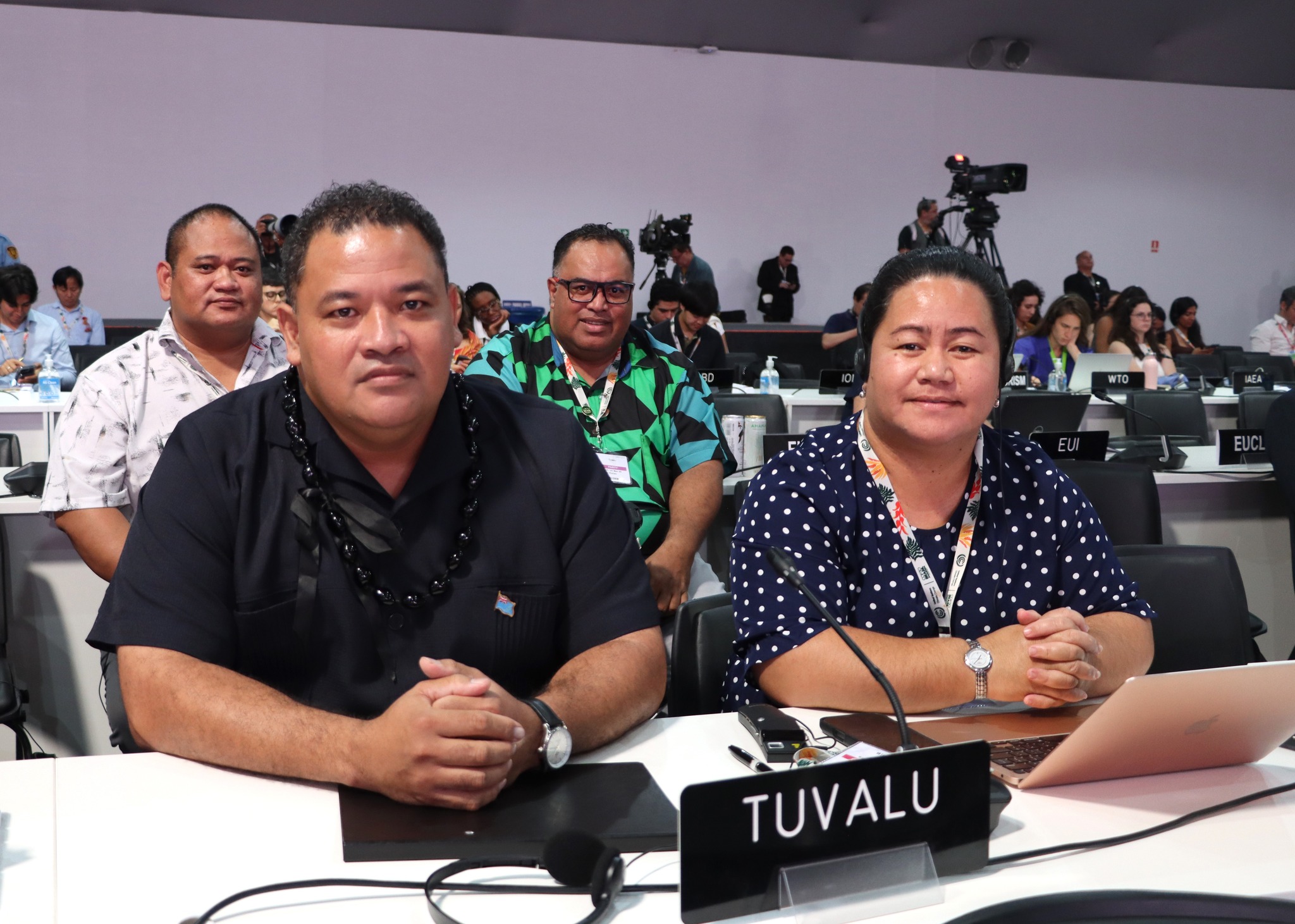
Tuvalu representatives at COP30. Photo: SPREP

One of the concerns expressed at COP30 is that an NDC Response Plan is an exercise in “pointing fingers” at certain countries.

“This is absolutely not the case,” he said. “It is about ensuring that we all work to respond collectively now to the climate crisis, the greatest threat we all face together.”

To deliver the necessary lift in ambition, developing countries need to urgently see a significant scale-up in new, accessible and predictable grant-based finance to enable climate action.

“To ensure this, we must deliver the necessary changes to the global fiscal landscape,” Minister Maina said.

“While last year’s NCQG opened the door for other sources of funding including private finance; the binding duty of developed countries is to provide public climate finance — This is grounded in Article 9.1 of the Paris Agreement and reinforced by the ICJ Advisory Opinion which recognises this as a matter of duty, equity, and justice.”

Pacific countries have only accessed 2.4 percent of total climate finance to date through the operating entities of the Financial Mechanism.

Tuvalu called for a reform of the financial architecture within the COP process, one that focusses on enhancing operating entities to address SIDS structural and capacity constraints through further simplified access, and transparency.

The Chair of PSIDS also highlighted the importance of the Ocean.

“For Small Island Developing States, the Ocean is our lifeblood. It sustains our economies, nourishes communities, and shapes cultures. It is also our first line of defence against the climate crisis,” said Talia.

“We welcome the inclusion of ocean-based actions in submitted NDCs of Parties and encourage support for their implementation, underpinned by environmental integrity and safeguards to align with the 1.5C temperature limit goal of the Paris Agreement.”

PSIDS also expressed its disappointment that the International Maritime Organisation (IMO) did not adopt the Net Zero Framework during its recent meeting, and echoes the call to continue work towards implementing this framework, to ensure a just and equitable transition to zero emission shipping for developing countries.

Described by the Brazilian President Lula as the “COP of truth”, Tuvalu challenged the notion as negotiations switches gear in the final week of COP30.

“The real Moment of Truth for all countries attending this COP is that we must leave Belem with a package that keeps the 1.5 degree target within reach – through a genuine response plan for closing the NDC ambition gap by strengthening mitigation action in line with the GST1 outcomes and advancing the phaseout of fossil fuels,” he said.

Palau, as Chair of AOSIS, urges ‘COP of truth’ to act with urgency, solidarity

0

World leaders and delegates attending the ongoing 30th Conference of the Parties to the UN Framework Convention on Climate Change (UNFCCC), dubbed by the Brazilian Presidency as the ‘COP of truth,’ must act with urgency and solidarity.
They must also be honest with themselves about the actions required to ensure a safe and prosperous future for us all.

“The latest science is clear. We are dangerously off track to limiting global warming to 1.5°C,” said Steven Victor, Palau Minister of Agriculture, Fisheries and Environment.

“Our collective response has not yet matched the scale and urgency of this crisis, worsening impacts across the planet.”

Speaking on behalf of Pacific Islands, Caribbean, African, Indian and South China Seas States, who are members of the Alliance of Small Island States (AOSIS) during the High-Level Segment of COP30 as AOSIS Chair, Victor said his thoughts were with the people of Jamaica, and the wider Caribbean, whose lives have been devastated by Hurricane Melissa.

In Cuba, more than 54,000 people remain displaced, including 7,500 staying in official shelters, according to the UN relief coordination office, OCHA. In Jamaica, access to isolated communities remains precarious after the hurricane destroyed their communities. In Haiti, Hurricane Melissa claimed more than 40 lives.

“These increasingly intense extreme weather events are becoming more common. We know that thoughts will not save us. This is why, for small island developing states, 1.5°C is not a political slogan. It is a non-negotiable survival threshold for our people, our cultures, and our livelihoods,” said Minister Victor.

At COP30, which is now into its second week, thirty-nine small island and low-lying nations who are part of AOSIS, are actively engaged, offering solutions. One of them is a proposal for a robust response plan to the Nationally Determined Contributions (NDCs) synthesis reports, setting out a clear plan of action to get the world on track for 1.5°C.

“Our goal is not to finger point or undermine the Paris Agreement policy cycle. Instead, it is to have us work together with trust to close the ambition gap to 1.5°C, which the International Court of Justice Advisory Opinion affirmed as the legal benchmark and scientifically based consensus target under the Paris Agreement,” the AOSIS Chair said.

Adaptation is an ever-increasing priority for AOSIS, Minister Victor pointed out.

At COP30, parties are mandated to conclude the UAE Belém work programme on indicators.

“We recognise the complexity of this task, given that further work is needed to refine those indicators that are not still complete,” said Victor.

“Our view is that the Subsidiary Bodies can continue this work towards a set of credible, balanced and workable set of indicators for the Global Goal on Adaptation. These indicators must be voluntary and non-punitive and must not become new conditionalities for accessing finance.”

For small islands, climate action is only possible if it is underpinned by credible and accessible finance, the development and transfer of appropriate technologies, and capacity building for developing countries, the High-Level Segment audience was told.

“COP30 must rebuild trust that commitments will be met and support delivered,” said Minister Victor.

“Public finance remains vital and this is why we join other developing countries in a call to operationalise Article 9.1.

“We must also see at least tripling annual outflows from our climate funds, including the Green Climate Fund, the Fund for Responding to Loss and Damage, the Adaptation Fund, and the Global Environment Facility. This will require that these funds are sufficiently capitalised and replenished.”

Palau representatives at COP30. Photo: SPREP

The adaptation financing gap continues to grow, AOSIS pointed out. The recent UNEP Gap Report found that developing countries will spend US$350 billion a year to adapt to climate change by 2035.

“To address this gap, we join other developing countries in calling for an at least tripling of adaptation finance to 120 billion by 2030.”

At COP29, parties agreed to the New Collective Quantified Goal (NCQG) on climate finance. A year later in Belem, a number of them have said they want to talk about the NCQG and its implementation.

“Yet in the relevant agenda item on article 9.5, where developed countries have agreed to elaborate their actual roadmaps on climate finance, we have seen deliberate attempts to stop any and all progress,” Minister Victor pointed out.

“It is crucial that we update the terms of reference of biennial communications of developed countries to reflect elements of the NCQG, including the necessary disaggregation of data to provide the needed transparency on climate finance and to rebuild trust. We urge Parties to act in good faith with the decisions they have previously agreed to and to not block progress.”

On the role of gender and social inclusion in addressing climate change impacts, AOSIS reminds that these impacts are not gender-neutral.

“We must adopt a well-resourced and implementable Gender Action Plan that pushes us towards gender equality with zero tolerance for regression.”

The High-Level Segment of COP 30/CMP 20/CMA 7 is held on Monday and Tuesday. The opening featured the President of COP30, André Aranha Corrêa do Lago, UNFCCC Executive Secretary, Simon Stiell, President of the UN General Assembly, Annalena Baerbock, and Vice President of the Federative Republic of Brazil, Geraldo Alckmin.

On the global stage of COP30, Minister Victor said AOSIS is in Belem with a genuine desire to build trust to deliver on our climate commitments.

“We urge all Parties, under the capable guidance of the Presidency, to act with the urgency and solidarity this moment demands. For us, this is not just about ambition, it is about taking the actions required to ensure a safe and prosperous future for us all,” he concluded.

Stay connected

529FansLike
172FollowersFollow
156SubscribersSubscribe
- Advertisement -