Home Blog Page 138

Fair seas ahead: FFA and ILO join forces to improve working conditions for Pacific fishers

0

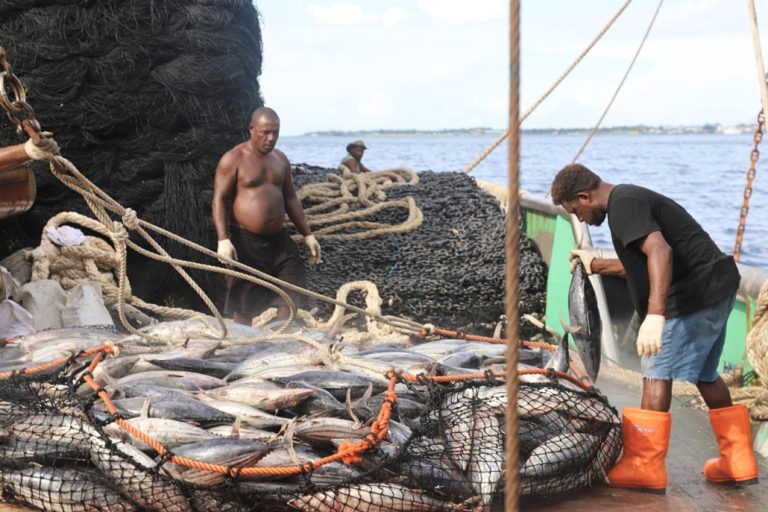
The International Labour Organisation (ILO) and the Pacific Islands Forum Fisheries Agency (FFA) have formalised a new partnership aimed at strengthening the protection of human rights and labour standards for crews working on fishing vessels across Pacific Islands Countries waters.

The signing of this Memorandum of Understanding (MOU) comes at a critical time as the region works to address ongoing concerns around crew welfare and labour conditions in the fishing industry.

The MOU was endorsed on 13th November 2025 by ILO Assistant Director-General and Regional Director for Asia and the Pacific, Kaori Nakamura – Osaka and FFA Director General, Noan David Pakop.

The partnership is grounded in key labour standards frameworks, including ILO Convention No. 188 on Work in Fishing, and the Western and Central Pacific Fisheries Commission’s (WCPFC) Conservation and Management Measure on Crew Labour Standards (CMM 2024-04), and FFA’s Harmonised Minimum Terms and Conditions (HMTC) for the employment of fishing vessels workers.

Under the MOU, ILO and FFA will work together through agreed contracts or Memoranda of Agreement (MOA) to combine resources, expertise, and training materials to support Pacific Island Countries.

Martin Wandera, Director of the ILO Office for Pacific Island Countries, said the organisation remains committed to supporting Pacific nations in their efforts to uphold decent work across the fisheries sector.

“This cooperation framework with the FFA strengthens our efforts to ensure respect for international labour standards, promote skills development, and expand productive employment opportunities in the most important economic sector for Pacific people,” he said.

This collaboration will focus on improving workplace safety, ensuring fair employment contracts and equitable wages, eliminating forced and child labour practices, reducing risks of human trafficking, improving accommodation and working conditions, supporting the ratification of ILO conventions, and guiding legislative reforms. The work will extend across all fishing vessel categories operating within WCPFC waters.
“This MOU represents a pivotal achievement in protecting the rights and welfare of fishers,” said FFA Director General, Noan David Pakop.

“It demonstrates our commitment to work with ILO in strengthening and implementing the FFA Second Phase of the Labour Standards on Fishing Vessel Project, in line with regional and international obligations, and reinforces the region’s position as a global advocate for ethical labour standards and sustainable fisheries development.”

This partnership is expected to improve labour conditions for fishers across the Pacific, enhance the capacity of Pacific Island Countries to identify and respond to labour rights violations, and foster stronger collaboration among national and regional stakeholders working to implement and uphold labour standards obligations.

The M0U will remain in place for two years, with the possibility of extending it if both parties agree.

Joint Letter from the Pacific Islands News Association (PINA) and the Pacific Freedom Forum (PFF)

0

To: The Honourable La’aulialemalietoa Leuatea Polataivao Schmidt
Prime Minister of the Government of Samoa
Apia, Samoa

Cc: – Agafili Shem Leo, CEO of the Ministry of the Prime Minister and Cabinet
shem.leo@mpmc.gov.ws

Dear Honourable Prime Minister,

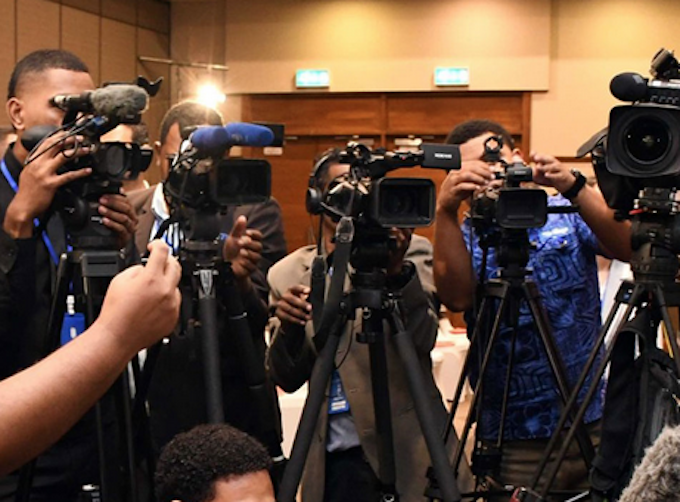
We write jointly, on behalf of the Pacific Islands News Association (PINA) and the Pacific Freedom Forum (PFF), to express our deep concern regarding your government’s decision to ban the Samoa Observer from attending official press conferences. We respectfully but firmly urge you to reverse this decision immediately.

This ban restricts media freedom protected under Samoa’s Constitution and undermines the public’s fundamental right to information. As Samoa’s only daily newspaper and its largest media organisation, the Samoa Observer plays a critical role in ensuring that citizens have access to independent reporting on matters that shape their lives. Excluding them from government press conferences weakens transparency and public accountability.

As Prime Minister, your leadership is rooted in service to the people of Samoa. A free and open press is essential to good governance, and actions that limit media access inevitably raise questions about government openness and risk eroding public trust.

We acknowledge that an incident took place involving Samoa Observer journalists.

However, an international journalist present at the time described their conduct as “careful and respectful.” We are also aware that the Samoa Observer editor has lodged a police complaint alleging assault—an allegation that must be properly investigated.

Even if there are different accounts of what occurred, a complete ban on an entire newsroom is not a fair or proportionate response. Samoa already has a legal mechanism designed specifically to address complaints about media conduct: the Media Council Act 2015. This law provides clear procedures for submitting complaints, reviewing conduct, and resolving disputes between government, the public, and the media.

PINA and PFF therefore urge the Government of Samoa to use the provisions of the Media Council Act—the lawful and democratic avenue for addressing concerns about journalistic behaviour or reporting accuracy—instead of imposing punitive measures that punish an entire organisation and restrict the public’s access to news.

By passing the legal framework and resorting to a blanket ban, the government sets a worrying precedent that future administrations could exploit to silence media outlets they find inconvenient.

Honourable Prime Minister, we respectfully call on you to correct this course. Lifting the ban and engaging through Samoa’s established media accountability mechanisms would reinforce your government’s commitment to transparency, the rule of law, and democratic governance.

The Pacific region is watching closely. Samoa’s democratic standing—and its reputation as a leader in the region—depends on the actions taken now.

Respectfully,
Kalafi Moala
President
Pacific Islands News Association (PINA)
Email: kalafiml@gmail.com

Robert Iroga
Chairman
Pacific Freedom Forum (PFF)
Email rliroga@gmaiil.com


Negotiations update: Just Transition in the final days of COP30

0

After burning the midnight oil in the run to the final hours of COP30 in Belem Brazil, delegates spent most of Wednesday and Thursday morning awaiting the Mutirao text.

Amongst them are Pacific delegations who have been working hard for the past two weeks, engaged in negotiation rooms and various COP spaces to advocate their national and regional priorities on ways to protect their communities already struggling with the lived realities of the climate crisis.

Delegates spent a good part of their day waiting, whether for guidance to emerge from the higher-level consultations, for Parties to report on progress achieved in informal informals, or for new texts to be released.

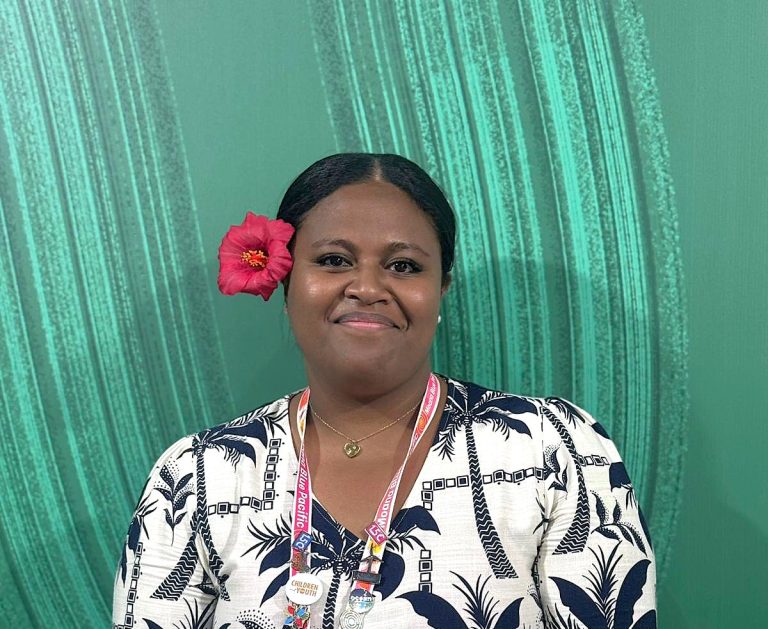
At the business end of COP, this is the reality. As the wait continues, and the anticipation builds in Belem ahead of the final day, we catch up with PSIDS lead negotiator on Just Transition (JT) track, Ms Talei Cavu, of Fiji.

Just transition is a framework for moving to a climate-neutral economy that ensures the process is as fair and inclusive as possible, creating decent work and protecting affected workers and communities.

It involves addressing social and economic impacts of climate and environmental policies by minimising negative consequences like unemployment and displacement, while maximising opportunities for all through measures like job creation, training, and social protection.

Question: Bula Talei, can you start by telling us why Just Transition is important for our Pacific communities?

Answer: In the national context it’s important because its purpose is to complement and support the work on mitigation, and adaptation. It ensures we do not overlook socioeconomic matters, particularly, the individuals and communities that maybe impacted by the transition.

It also determines whether the global transition away from fossil fuels will happen quickly enough, fairly enough, and with enough support for our islands to survive and thrive. JT provides a political space and technical mechanism to secure scaled up finance, technology access, skills, and energy system support to accelerate our shift towards renewables, strengthen energy security, reduce economic vulnerability, and safeguard livelihoods. At the COP, it strengthens the PSIDS mitigation priorities to ensure that 1.5-degree temperature goal remains the globe’s north-star.

QUESTION: At COP30, what is the most important issue for the Pacific when it comes to JT? What are our key asks?

We come here with a number of priorities, first amongst them is a decision that acknowledges the unique circumstances of SIDS and initiates a framework to develop a toolkit for open-market access to appropriate technologies in alignment with mitigation efforts (NDCs/LT-LEDS), supported by just transition measures, is essential for building SIDS resilience. We are also hoping for a decision on climate financing for just transition that should be understood in the context of climate justice and equity (grants>loans) as SIDS face distinct vulnerabilities that demand tailored responses to climate change impacts. SIDS continue to be on the frontlines of the climate crisis. We want a fair, fast, and 1.5⁰C aligned transition as it is not only a global imperative, it is a lifeline for SIDS.

QUESTION: Well, in the final hours of COP, how have negotiations been? Are we making progress? Or lack of?

ANSWER: There has been incremental progress with Parties converging on the broad structure of a mechanism and modes of work. The latest informal note keeps options in play rather than agreed text, like references to the 1.5 temperature goal, references to transition away from fossil fuels, etc.

PSIDS continue to work closely with AOSIS and G77+China group to safeguard the integrity of the mechanism, ensuring it is guarded by science, and preserve references to support equity, and the special circumstances of SIDS. Overall, meaningful convergence will depend on political guidance at the Ministerial level to prevent further dilution and ensure that the mechanism remains purposeful.

We have made our stance clear; we cannot support adoption of any outcome that does not explicitly advance a 1.5 aligned transition away from fossil fuels and backed by concrete means of implementation for developing countries, particularly SIDS. Without this clarity, there is no point in establishing a just transition mechanism.

QUESTION: What would it take for a good outcome for our Pacific countries?

ANSWER: A good outcome for PSIDS would be a clear, robust, operational mechanism that drives real progress on a 1.5 aligned global transition away from fossil fuels, while fully recognising the unique constraints and vulnerabilities of SIDS.

An acceptable outcome for SIDS would be to Rretain explicit language linking JT to deep, rapid, sustained emissions reductions and the transition away from fossil fuels. We want to strengthen enabling conditions, grant based finance, technology transfer, capacity building, to help SIDS overcome structural energy system barriers, as wel;l as protect our development space by keeping unilateral measures under the appropriate agenda item, not the Just Transition Work Programme (JTWP).

We also want to include a workplan that allows SIDS/PSIDS to meaningfully shape future dialogues and submissions and ensure the mechanism can contribute to real outcomes for Pacific communities, especially regarding energy security and resilience.

Without these elements, the mechanism becomes symbolic rather than functional, and the Pacific cannot support its adoption.

New Caledonia draw Jamaica for FIFA World Cup 2026 Play-off Tournament semi-final

0

New Caledonia will face Jamaica in the FIFA World Cup 2026™ Play-Off Tournament Pathway 1 semi-final, following the draw at the Home of FIFA in Zurich.

The winner will meet Congo DR in the Play-Off Tournament Pathway 1 final for a place at the FIFA World Cup 2026™.

The Play-Off Tournament involves two teams from CONCACAF, and one from each of OFC, AFC, CAF, and COMNEBOL, for the right to claim one of two final remaining spots at the global finals next year. It will take place in March 2026 in Mexico, with games to be held in Guadalajara and Monterrey.

New Caledonia qualified for the Play-Off Tournament by virtue of finishing runners up at the FIFA World Cup 26™ Oceania Qualifiers in March, losing 3-0 to New Zealand in the final at Eden Park in Auckland.

New Caledonia-born 1998 FIFA World Cup winner Christian Karembeu was among the assistants for the draw at the Home of FIFA in Zurich, whilst New Caledonia head coach Johann Sidaner was also present to learn his side’s fate.

“New Caledonia has earned the right to play in this play-off match, and it will be a fantastic event for us,” Sidaner said. “The draw has paired us with Jamaica. It looks promising on paper, but we will inevitably be underdogs against an opponent ranked 70th on the FIFA rankings.” He added.

Jamaica have previously qualified for one FIFA World Cup before, 27 years ago for the 1998 tournament in France. They missed out on direct qualification for FIFA World Cup 2026 on the final day of CONCACAF qualifying, following a 0-0 draw with Curacao in Kingston, a result that saw their Caribbean rivals qualify at their expense.

Head coach Steve McClaren resigned following that disappointment, and Jamaica are now on the hunt for a new coach to lead them against New Caledonia at the Play-Off Tournament. The Jamaican squad has recently featured several English-based stars, including West Ham’s Michail Antonio, Brentford’s Ethan Pinnock, and Birmingham City’s Demarai Gray, highlighting the challenge for Johann Sidaner’s team.

“We have an extraordinary opportunity to showcase our football, but we must be aware of the superiority of the Jamaican national team. They will have the advantage of the presence of their supporters given the geographical proximity to Mexico.” Sidaner said.

Sidaner acknowledges that preparing for the play-offs will be difficult given he doesn’t have any FIFA international window’s left to get his side together in camp. New Caledonia can hang some confidence on a 2-0 win over the Gibraltar national team last month though, their first ever victory against a European nation.

“The unique nature of our national team and the challenges of this preparation are numerous. Unfortunately, we no longer have a FIFA window, and opportunities to get together are very limited. We will proceed as we did for the OFC qualifiers and approach these play-offs with the utmost seriousness!”

Full match details for New Caledonia’s FIFA World Cup 2026 Play-Off Tournament semi-final with Jamaica are set to be announced in due course.

Curacao and Bolivia will meet in the other playoff semi-final with the winner to meet Iraq for a place at the FIFA World Cup 26.

Australia backdown hands climate summit to Turkey

0

Australia will not host the UN’s annual climate summit in 2026, instead yielding to a rival bid from Turkey.

Three years of campaigning to bring the COP31 climate talks to Adelaide, in partnership with Pacific nations, were dashed in last-gasp negotiations at the 2025 event in Brazil.

While Australia had the overwhelming backing of the “Western” grouping to stage the 2026 event, under UN rules hosting rights are decided by consensus and negotiation, not a vote.

In a stand-off where Turkey was unwilling to cede ground, and with a deadline looming, Australia compromised by withdrawing its hopes to stage the event.

Climate Change Minister Chris Bowen, Australia’s representative at the COP talks, said an in-principle deal would see the summit go to Antalya, and Mr Bowen taking the role of COP negotiations president, with a lead-up event hosted in the Pacific.

The result is a diplomatic disaster for Prime Minister Anthony Albanese’s government, which has spent great energy and, most likely, tens of millions of dollars campaigning for the event.

Bowen flew into Belem insisting Australia remained committed to the bid, telling attendees on Tuesday “We are in it to win it to the end, that’s Australia’s position”.

At the same time back home, Albanese appeared to cool on the bid.

Australia’s push was first launched at the climate talks in 2022.

The federal government championed the bid as a huge opportunity for Australia to both lead the world on emissions reductions, and secure “the world’s biggest clean energy trade fair” to bring investment for Australian business.

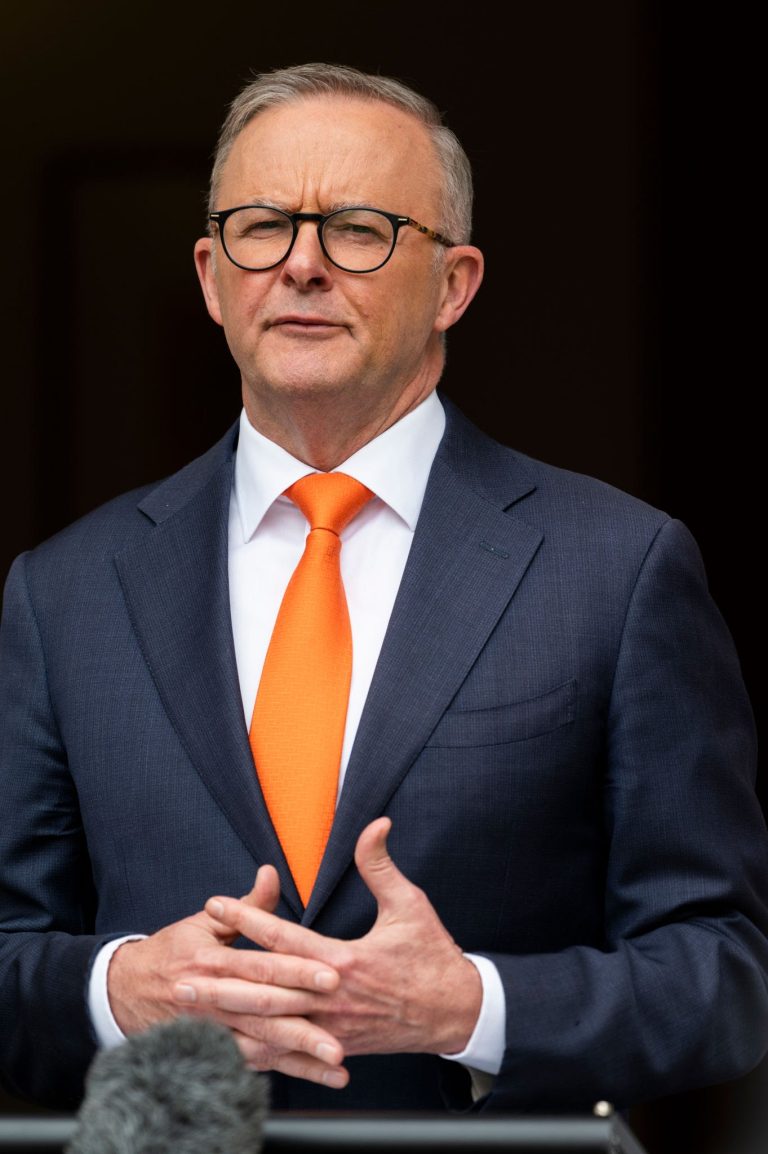
Despite losing out on hosting rights Albanese insisted the negotiated outcome was a “big win” for Australia. “We will be the negotiator on climate policy globally over the next year and during the conference. That is a very worthwhile investment,” he told the ABC on Thursday.

“Had we not put in bid for the COP that certainly wouldn’t have occurred, and that will enable us to prioritise the issues that are confronting the Pacific, the very existence of countries like Tuvalu and Kiribati.”

Bowen said he kept Pacific hopes front and centre through the negotiations, with the compromise model including a “pre-COP” event in the Pacific which will act as a pledging event for a Pacific climate financing fund.

“Obviously, it would be great if Australia could have it all. But we can’t have it all,” he said on Thursday (AEDT).

The decision comes at a time of renewed focus on Australian energy and climate policy, given the Sussan Ley-led opposition’s call to walk away from net zero.

Critics of the bid, including Ley, baulked at the likely cost of staging the summit, which had been estimated to cost at least hundreds of millions of dollars.

“Turkey is doing the Australian government a big favour,” she told the ABC on Thursday.

“We had a $12 billion (US$7.7 billion) deficit last year. We’re heading to a $42 billion (US$27.20 billion) deficit this coming year, and meanwhile, this prime minister wants to spend $2 billion (US$1.20 billion) on hosting a talkfest here in this country?”

Albanese said only “a small amount” had been spent on the bid by the government, and South Australia, on campaigning and preparations.

“The amount that has been (spent) has been promoting Adelaide, of course, to the world, and it’s been engaging with our priority about climate policy,” he said.

Papua New Guinea ‘not happy’ as Australia walks away from bid to host COP31

0

Papua New Guinea has voiced frustration after Australia ditched a bid to co-host next year’s UN climate talks with its Pacific island neighbours.

“We are all not happy. And disappointed it’s ended up like this,” foreign minister Justin Tkatchenko told Agence France-Presse after Australia ceded hosting rights to Turkey.

Australia had been pushing to host COP31 next year alongside South Pacific nations which are increasingly threatened by rising seas and climate-fuelled disasters.

But Australia pulled the plug on its long-touted bid after Turkey, the other prospective host, refused to back down. It would have been the first time the region had hosted the UN’s premier climate summit.

Turkey will host next year’s UN climate summit while Australia will lead the conference’s negotiations among governments, under a compromise deal taking shape in talks in Brazil, Australian Prime Minister Anthony Albanese said on Thursday.

Minister Tkatchenko on Thursday criticised the entire Cop summit process as a waste of time. “What has Cop achieved over the years. Nothing,” said Papua New Guinea’s top diplomat.

“It’s just a talk fest and doesn’t hold the big polluters accountable.”

Pacific Island leaders have long criticised COP summits for marginalising their voices or offering limited practical solutions as they battle the mounting costs of climate change.

They hoped that co-hosting duties could change that and raise awareness. But winning the COP hosting would also have drawn extensive scrutiny on Australia’s green record. The country has long profited from fossil fuel exports and treated climate action as a political and economic liability.

The former prime minister of Tuvalu – which may become uninhabitable this century if planet-heating emissions are not constrained – said the decision showed “the non-committal of Australia to climate justice”.

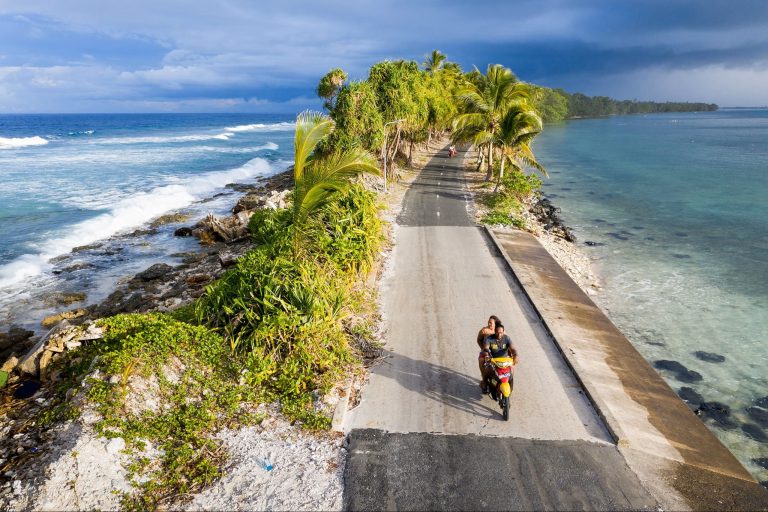
Tuvalu, a tiny nation of thinly populated atolls and reef islands, is among the world’s most vulnerable nations due to rising sea levels.

“The Pacific countries should seriously remodel their relationship with Australia,” Bikenibeu Paeniu told AFP.

He added it was not good enough that the Pacific region hosts a pre-COP event, while Turkey will host the summit.

“What a miss but the Pacific will continue its fight no matter what.”

Australia started walking back its bid earlier this week as leaders met in the Brazilian port city of Belém. Albanese had pledged that, if Australia did lose out, he would still look for ways to keep the Pacific’s plight on the agenda.

Australia had pitched its bid as a “Pacific Cop”, done in partnership with low-lying island nations and emphasising their exposure to climate change and rising sea levels.

The annual conferences are the world’s main forum for driving climate action.

About 320,000 people in the Pacific were displaced by disasters between 2008 and 2017, according to the International Organisation for Migration. Nasa projects sea levels could rise by up to 15cm over the next 30 years.

Tonga election: Nine noble seats decided

0

Two new noble representatives have been elected in Tonga, according to results announced Thursday in Nuku’alofa.

Lord Dalgety, chairman of the Tonga Electoral Commission, announced the results of the nobles election at the Palace Office in the Tongan capital shortly after midday.

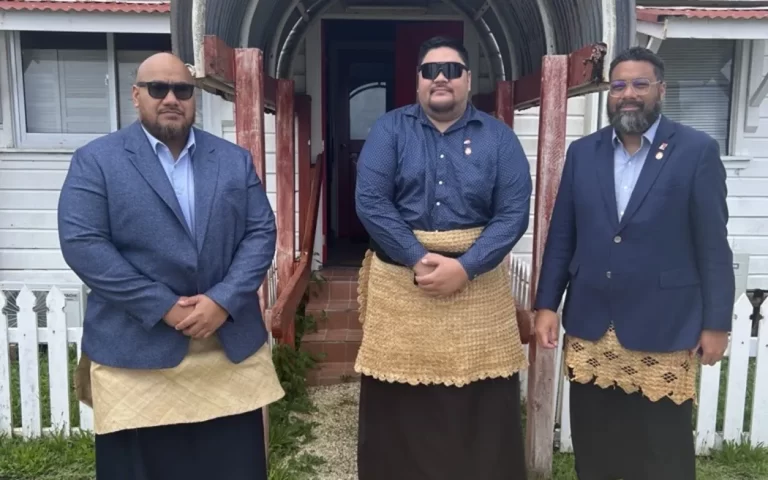
The two newly elected nobles are Lord Veéhala in Eua, who secured 20 votes, and Lord Ma’afu in Tongatapu, who received 12 votes.

Lord Veéhala, a senior military officer with His Majesty’s Armed Forces, replaces Lord Nuku, who was eliminated from the election on Wednesday due to ongoing court cases.

Lord Ma’afu continues the tradition of his family being represented in parliament, with his late dad, the previous Lord Ma’afu, having been a nobles representative over a number of years.

Voting continues for the general public to elect 17 people’s representatives, who will join their nine nobles counterparts in the Legislative Assembly.

Speaking after the result was announced, the re-elected nobles’ representative for Ha’apai, Lord Fakafanua played down reports he had his eye on becoming the next prime minister of Tonga.

“That didn’t come up, and you know, leading up to a general election there are always rumours coming around,” he said.

However, he did not rule it out completely.
“Everything is a bit premature right now because it is up to the 26 members, so once we know who is in there then it will be something that we will look forward to,” he said.

“There are many possibilities. There is still some time now before we have to go through that process.”

Results for Nobles Representatives

Va’vau (2 reps)

Incumbent Lord Tuiafitu 5 vote (re-elected)
Incumbent Lord Tuilakepa 5 votes (re-elected)
Lord Luani 3 votes
Lord Fulivai 1 vote

Ha’apai (2 reps)

Incumbent Lord Fakafanua 6 votes (re-elected)
Incumbent Lord Tuihaangana 6 votes(re-elected)
Lord Tuihaateiho 2 votes

Eua – (1 rep)

Lord Lasike 1 vote
Lord Veéhala 20 votes (newly elected)

Tongatapu – (3 reps)

Lord Lasike 6 votes
Lord Ma’afu 12 votes (newly elected)
Lord Tu’ivakano 8 votes (elected)
Lord Vaea 10 votes (elected)

Ongo Niua (1 rep)

Lord Fotofili (won unopposed).

New report makes ‘astonishing’ find on how to bring global warming below 2 degrees

0

By Lisa Williams

A new report from Climate Analytics finds that tripling renewables, doubling energy efficiency and cutting methane by 2030 and beyond would cut the warming rate by a third in ten years, and halve it by 2040. It would significantly cut projected warming this century, from 2.6˚C to 1.7˚C.

The analysis shows the three key near-term actions would bring projected warming below 2 degrees. the report focused on the G20 nations, finding that tripling renewables, doubling energy efficiency and cutting methane by 2030 and beyond would cut the warming rate by a third in ten years, and halve it by 2040.

Implementing the tripling and doubling goals of the COP28 Global Stocktake (GST) would be the first critical step in the GST agreement to transition away from fossil fuels in energy systems. It would significantly cut projected warming this century (about 0.9˚C – from 2.6˚C to 1.7˚C). Early reaction from some G20 nations here at COP30 is that they need more time to digest the findings — TPLnews sat with Climate Analytics CEO Bill Hare, in Belem.

TPL: Well, let’s talk about the report — What are the key findings from it, and how did Climate Analytica put it together?

BH: One thing we need to know is that the current policies of countries, taken together, would warm the world by 2.6 degrees. It’s a huge level of warming. It is an improvement of one degree from when we adopted the Paris Agreement, it was 3.6 then 2.6 but a long way from 1.5 degrees, right? So we asked ourselves the question, what if countries implemented the three big things that they agreed to in the first global stock take in 2023? The three big things were tripling renewables, doubling efficiency, and cutting methane emissions. So we added all that up and went through the G20 countries in detail, and came up with some astonishing results, I think.

Firstly, the urgent emission reductions that will come from that would halve the emission gap in 2030. Gap between where policy is ahead of 1.5 degree pathway–very important in the climate front. By the late 2030s that would slow the rate of warming by about half. Long term, beyond the 2030s it would bring total warming down by 0.9 degrees. That means we will go from 2.6 degrees warming down to around 1.7 degrees, still several tenths of a degree away from 1.5 degrees, but a massive improvement on where we’re headed now. The catch is that these were heavily negotiated by countries, they were hard fought over, negotiated and agreed. They haven’t been implemented yet. By and large, the renewable target tripling renewables is getting there. It’s about 2.6 times now, but energy efficiency has gone backwards. Methane emissions are still going up. So if countries just implemented what they had agreed, then we could really begin to crack this climate change problem. That’s the point of the study.

TPL: Does it matter which countries in particular?

BH: It does. And actually, the study looks at the G20, and we have unpacked each of the G20 countries. So yeah, it does matter. Each country plays its own role in tripling renewables. Some countries are already a long way down the road, so they don’t have to go as high. Others at a low starting point have to go higher. It’s the same with efficiency. We all have to reduce methane. So yes, it does matter, and the study does show which countries need to do what. We’ve unpacked that. So it’s a bottom up analysis that has these findings in it. The big political challenge now is whether countries can here, agree politically, to implement what they have negotiated. The big mantra at this COP, from President Lula downwards is that we have to move from negotiation to implementation. Well, here are three things that were negotiated. They make a really, really big difference, so implementing them would be the right thing to do. We will be taking the science of the problem seriously. We’re headed towards an overshoot of 1.5 degrees. Unless we get emissions down, we’re going to see massive sea level rise. So for example, from the Pacific point of view, recent scientific work has shown that the difference between 2.6 degrees of warming this century and 1.5 is over 65 cm of sea level rise in the next few hundred years in the Pacific. So there’s a very big cost to not doing anything now, and it’s going to sink islands like Kiribati, Tuvalu, the Marshall Islands, and will cause serious damage around the Cook Islands for example. Any low lying area in the Pacific is going to seriously suffer from us not doing this. That’s one of the big things.

TPL: As you’ve said, it comes down to the politicians.

BH: It comes down to governments and the politicians. That’s right, and that’s why, that’s why ministers are here, they’re gathering here this week, in this COP to make political decisions. To take the responsibility they as ministers, on behalf of their governments have, to protect the world from dangerous climate change. That’s the whole point, not to come and have lots of nice meetings, but to actually do something that really matters, that will make a difference and reduce the risks and damages that will otherwise come upon all of our peoples and all of our countries.

TPL: But how do you shift the politicians from their national interest to the interests of humanity?

BH: Look, let’s be really frank about it. The real problems here are driven by the fossil fuel industry. So a lot of the countries here, majority, I think, would benefit from less fossil fuel use. The fossil fuel exporters, Saudi Arabia, Emirates, Australia and others Canada– they are the ones that probably don’t want this action taken. They might not say that out loud. They might hide behind other fossil fuel exporters. But in general, they’re the ones that don’t want to see a specific call to do these three big things–triple renewables, double efficiency, reduce methane. That’s it. Will other countries and their ministers stand up to that? And it has to be a compelling case. The International Energy Agency showed last week in its New Energy Outlook, which has a new net zero pathway and very important calculations of just how much money would be saved by consumers from getting into high renewable high electrification world, getting emissions down towards 1.5 degrees. This would save money. Living costs will be lower. Electricity costs will be lower. That’s the cheapest option we have. High fossil fuels means higher living costs, higher economic damages, higher electricity bills for people. Now what this translates into is not abstract. A lot of countries are now having enough climate damages happening that an increasing number of people are unable to insure their houses. You can’t insure your house, and can’t get a mortgage. That’s a bigger and bigger problem that’s going to get worse and worse unless we bring the warming rate down and get back from peak levels below 1.5 degrees. We know that. So there’s a real economic cost, and real damages to the way we’re headed. And I think the issue is, will the ministers here bite the bullet and push back against the fossil fuel interests–who are in the negotiating rooms around here, by the way–and do the right thing, and move it forward? That’s the challenge here. It’s always a challenge at COPs right? But we did it once before, in 2023 we got all these energy measures agreed. We got the transition away from fossil fuels agreed, right? It just needs to be done now, implemented at this COP.

TPL: At this COP, we’re still hearing the same pushback against science. We’ve now got Brazil endorsing that initiative for information integrity. How much is that going to help to throw some more balance back for the scientists in favour of science?

BH: It’s a good question, but in the end, it comes down to whether government is prepared to act on the science. It’s one thing to have nice information about the science. It’s one thing to say we accept the science, but the real acid test is what governments do. Do they act on the science? For 30 years now or more we’ve been coming to these COPs, and fossil fuel interests, fossil fuel dependent countries have been pushing back and challenging science, sometimes bluntly, sometimes subtly, but all the way that game has gone on. What we have now is worse in the sense that we have massive disinformation on science going on. I think that is what everyone is talking about in this space, absolutely massive disinformation through all sorts of communication channels, social media, whatever, challenging, undermining, obscuring, confusing. That’s the challenge. But governments have enough scientific advice to be able to see through that. They don’t have to be bamboozled by it. They don’t have to be confused by it. The science is so clear now, and the scientific community has been here in force. There’s been scientific event after scientific event. I just wish the ministers could have been in each one, because they would be yelling for action. They will be kicking the fossil fuel countries out of meeting groups, saying, “this is too much. We have to do it now.”

TPL: Are we moving toward that anyway? Could this be the last COP where you have fossil fuel interests represented or misrepresenting as parties and those who are here to achieve 1.5?

BH: I wish one could say that. But the world is complicated. Governments will put in their delegations who they want, and the UN has to accept that. So maybe government’s are getting embarrassed into reducing the fossil fuel contingent, or maybe not. But I would hope it’s the last COP where we have to have this fight again. It will be just fantastic if we came to COP31–maybe we’ll be in Australia– to actually discuss just how fast we’ve gone on renewables, just how much we’ve made out of electrification, just how well we’ve done in reducing methane. Then we’d have a real implementation-COP discussion, we could say, Okay, let’s stop discussing whether we do it. Let’s discuss just how much money we need and where. That’s the other thing here, there’s a high level expert group on climate finance. They’ve got their 4th report out now, it’s pretty heavy-duty reading, but the main message is, there’s enough money out there, there is enough capital out there in the world to actually make all the investments, by the way, not just for mitigation, also for adaptation, resilience and loss and damage. So one of the big points they make is, yes, two thirds of the capital needed will be in mitigation, for energy, but the rest is needed for resilient infrastructure, for adaptation, technologies, for infrastructure that is resilient to the climate changes that are happening. So that means building roads, airports, everything.

TPL: We’ve got a COP Presidency looking to have a draft text out by tomorrow. Is that realistic, a swing swing away from leaving a text til the last day–Is it going to be enough to get everyone where they need to be (for consensus)?

BH: It’s a very professional approach. We might not have seen that in the last few years but previous COP Presidencies have done that. You get a good text out mid week Wednesday and you get a good basis for finishing the meeting well. If you leave it to the end you get complete chaos. This is how this works. I think it’s a very professional approach. They’ve heard all the views, there’s now meetings going on to try and work out what’s in, what’s not, what the options are. I think that’s a very good thing and sets it up for a very good conclusion to this meeting. It’s going to be very very difficult to get a good conclusion to this meeting. You can’t gloss over it. The resistance to the right things happening at this COP is really really extreme from a small number of countries. Will they be embarrassed into moving, we’ll see in the next days. I think so far the Brazilians have handled this really well, so one can be optimistic about the process but still be concerned that its going to be very tough to get a good outcome here.

TPL: What particular countries does the Pacific and the rest of the world really need to be (talking with) saying, ‘Hey, you’ve got this. How can we help you?’

BH: I think the Pacific has done a good job in highlighting the importance of 1,5 degrees. It’s been a leader on pushing that level of action for years and years. I think Pacific ministers are frustrated at the lack of progress, probably angry –they don’t show it out, but I suspect I know a few are angry as well. So they’ve done a pretty good job of pushing it, and I think they’re working hard now and over the next day. So there’s a long way to go at this COP. It’s only Tuesday, three days to go, maybe four. So in terms of the politics of the COP, it’s too early to comment on an outcome right now.

TPL: You said maybe four, but the COP President has promised that it will be over on Friday.

BH: He’s done that but the logistical note says otherwise. They have planned for the facilities through to Sunday morning. So let us see. I do hope that it closes on Friday. I do.

TPL: Was there anything in your report that surprised you where you went ‘wow! didn’t know that?’

BH: We expected a big warming reduction. We didn’t expect as big a one as we got. So that surprised us, so that meant that we needed to do more work, to ask ourselves ‘are these numbers crazy? Is it really the fact that you could get a 0.9 degree reduction, that you could half the warming rate by the late 2030’s?’ So we did a lot more work to analyse that. We looked at others who made similar calculations. For example, the International Energy Agency also tried to work out what emission reductions you get from tripling renewables, doubling efficiencies and methane and we worked out, with other calculations as well — and we were in the same ballpark. So we figured, okay, this is probably a solid guess. As you can imagine, there are uncertainties in going from emissions in 2030-2035 to then, what happens for the rest of the century? This has been a method that’s been developed from the scientific community. We were the first to develop one emission Gap Report uses others …groups. So we need to look at what other scenarios are showing post 2035, and find where those emissions fit. That’s how we do it, in rough terms, and this is where we get to. So we tested all of the uncertainties there, and if the world starts to move in this direction, for 2030 and 2035, that momentum will continue. Why? Because you would have invested so much in renewables and electrification, by the 2030s they will make no sense to turn the clock back. It’s cheaper, it’s faster, more profitable. So that momentum will continue.

TPL: People watching this from their homes, at home in the islands, will be thinking, but I still want to go out and buy that new four-wheel drive. I still got to get that truck. Should they just be kind of adopting that behaviour change mindset? How do they make the switch?

BH: Good question. Everyone has that problem now deciding what to do, to replace the car? What is true is that we are seeing more and more affordable electric vehicles come online. We’re even seeing 4WD drive vehicles, Utes and so on, which I know other people use, and these are becoming fully electric. So I think that’s out there. Would it be affordable? That’s a big thing. And I think without special provisions, without special permissions, like financing arrangements and so on, for small countries that always expensive to import. So there will need to be some public policy measures that help that, and also that would then need to be coupled with rooftop solar panels, all that kind of stuff.

Tonga election: Polls open for voters to elect new Legislative Assembly

0

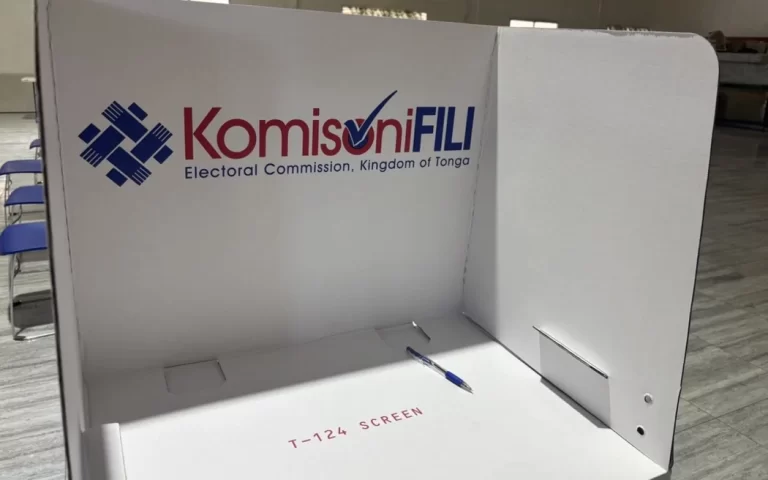
Polls have opened in Tonga on Thursday for voters to elect their 17 representatives in the Legislative Assembly, while the kingdom’s nobles will also elect nine of their own representatives today.

More than 200 polling stations are operating across the country’s islands, with a team of about 600 officials co-ordinating voting. About half of the polling stations are on Tongatapu.

There are 71 candidates vying for a seat in parliament, including eight women.

The electoral roll has more than 64,000 voters, however Supervisor of Elections Peter Vuki does not expect that many ballots to be cast.

Voter participation has declined in the past 15 years, which Vuki said was due to a range of reasons, including large numbers of registered voters being overseas on polling day.

He said with a polling station in every village, anyone who is registered to vote should be turning up today.

“It should be easy for them to get to either the community hall or church hall that we’re using for these elections. So hopefully they will turn up and cast [a ballot],” Vuki said.

“It is very important to vote – it’s very important for all of us.”

Incumbent Prime Minister Dr ‘Aisake Eke, who took on the role nine months ago, and his predecessor Hu’akavameiliku Siaosi Sovaleni, who resigned ahead of a no-confidence motion, are contesting the election.

Both men are being touted as key players for the prime ministership. Two nobles’ representatives – Lord Fakafanua and Lord Tu’ivakano – have also expressed interest in being prime minister.

Following the election, the newly convened Legislative Assembly is responsible for nominating one of its elected members to be appointed by the King as the Prime Minister. Following that, the prime minister picks his Cabinet, up to four of whom may be from outside parliament.

Polling stations for the general public will close at 4pm local time.

The nobles’ election process runs from 10am to 12pm. Results are announced at each polling station once voting finishes.

The overall count is then tallied at the Electoral Commission’s office in Nuku’alofa.

Vuki said he expected the results to be announced tonight.

Taiwan and Tuvalu seal “Kaitasi” partnership as President Lai hosts PM Teo

0

Taiwan President Lai Ching-te has hailed Tuvalu as one of Taiwan’s strongest supporters on the global stage, using a state banquet in Taipei to praise deepening cooperation and a series of new agreements that he says “lay a formidable foundation” for the two nations’ partnership.

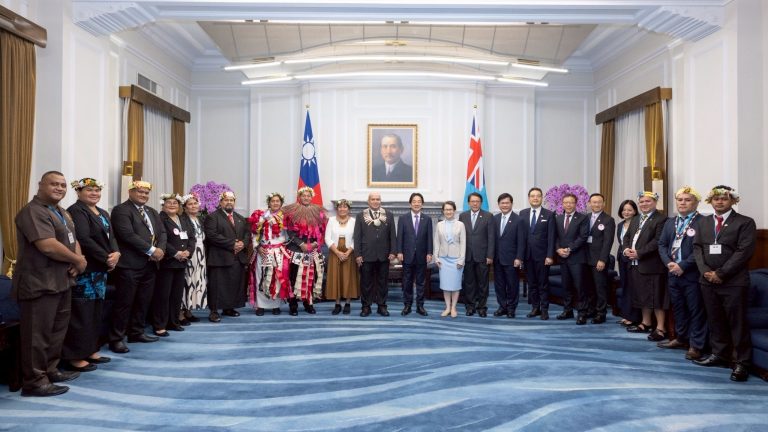
Hosting Prime Minister Feleti Teo and his wife at a luncheon on Tuesday, President Lai said Tuvalu’s backing has been decisive in ensuring Taiwan’s voice is heard internationally.

“On behalf of the people of Taiwan, I would like to especially thank Tuvalu for taking concrete action at various international venues in staunch defence of Taiwan’s right to international participation,” Lai said.

He highlighted Prime Minister Teo’s support at the Pacific Islands Forum in September and at the United Nations General Assembly, noting Teo’s push for Taiwan’s meaningful participation in the UN system.

“UNGA Resolution 2758 does not preclude Taiwan’s meaningful participation in the UN system,” Lai quoted Teo as telling world leaders.

Lai said the bilateral relationship has strengthened since Teo took office more than a year ago, pointing to the signing of multiple agreements-including the historic Taiwan-Tuvalu Kaitasi Treaty, an Agreement on Diversifying Fisheries Cooperation, and a Letter of Intent on Sports Exchange and Cooperation.

“We have signed numerous agreements… which have helped lay a formidable foundation for our diplomatic ties,” Lai said.

“Let us work closely together to defend democracy, maintain peace, and contribute to the prosperity and development of both countries.”

Prime Minister Teo, responding at the banquet, called the day “profoundly significant,” noting it began with “a magnificent military parade” and continued with “a substantive, fruitful, and highly productive bilateral meeting” with President Lai.

He said the signing of the Kaitasi Treaty delivered on the commitment both leaders made during Lai’s state visit to Tuvalu in December last year “to further strengthen and enhance the relationship between Tuvalu and Taiwan.”

Teo said the new agreements on fisheries cooperation and sports and cultural exchanges further demonstrate the two countries’ shared priorities.

“The moment that both sides shared reminded them once again of the enduring friendship, mutual respect, and shared values that unite Tuvalu and the Republic of China (Taiwan),” he said.

Teo described the state banquet as symbolising “the bond of family, cooperation, and shared purpose that underpin the new kaitasi relationship,” adding that it reflects “a bond of friendship grounded in mutual respect, loyalty, and trust.”

The Tuvalu leader reaffirmed his country’s commitment to Taiwan: “Tuvalu continues to stand steadfastly in support of Taiwan’s effort to reengage fully in international relations.”

He said the kaitasi principles “shared destiny, shared responsibility, and a shared future” would guide future cooperation. “We look forward to continuing this journey together as trusted partners,” Teo said.

Tuvalu Ambassador Lily Tangisia Faavae also attended the banquet.

Stay connected

529FansLike
172FollowersFollow
156SubscribersSubscribe
- Advertisement -