Home Blog Page 122

Mead puts hand up to coach PNG Orchids following coaching exit

0

Former PNG Kumuls skipper David Mead has publicly expressed his interest in coaching the PNG Orchids following the Papua New Guinea Rugby Football League’s decision to cut ties with former head coach Tahnee Norris.

Mead made the call through a social media post addressed directly to the PNGRFL, writing: “PNGRFL you have my number. I put my hand up to coach the Orchids. Ps I know some great assistant coaches who are willing to help. One of their initials are J.O…”

The Facebook post comes at a pivotal time for the national women’s program, with the Orchids now in search of new leadership as they prepare for upcoming Rugby League World Cup and continued development of the women’s game in Papua New Guinea.

The former Kumuls fullback brings a wealth of experience from a distinguished playing career in the NRL and Super League, along with a strong reputation for professionalism and leadership. His willingness to step forward has been widely welcomed by fans, many of whom believe former internationals should play a greater role in shaping the future of PNG rugby league.

The Kumul no.227 has also hinted that former PNG international and NRL centre Justin Olam could be among the assistant coaches he would look to involve, a suggestion that has generated strong interest and discussion among supporters. Olam’s experience at the elite level and his standing within the rugby league community are seen as assets that could add significant value to the Orchids’ coaching setup.

The PNGRFL has yet to issue a formal response to Mead’s expression of interest. However, his public statement has intensified discussion around the direction of the Orchids program and the importance of appointing experienced leadership following Norris’s departure.

As attention now turns to the PNGRFL’s next move, Mead’s post has ensured he remains firmly in the conversation for the Orchids’ coaching role.

Meanwhile, the PNG Orchids will head into the countdown to the 2026 Rugby League World Cup under new leadership after the Papua New Guinea Rugby Football League [PNGRFL] confirmed it has mutually parted ways with head coach Tahnee Norris, following a drop in the team’s world ranking.

After being ranked fifth in the previous World Cup, the national women’s side slipped to sixth during Norris’s two-year tenure, prompting PNGRFL to move decisively as preparations intensify for the home-and-away World Cup to be hosted by Papua New Guinea, Australia and New Zealand next year.

PNGRFL chairman Sandis Tsaka thanked Norris for her contribution to the women’s game, particularly her focus on development, while acknowledging the need to sharpen performance ahead of the global showpiece.

“Tahnee has played a pivotal role not only in leading the Orchids but also in developing women’s rugby league across the country,” Tsaka said. “We thank her for her dedication and the legacy she leaves within PNG Rugby League.”

Despite competing in the Pacific Championships and introducing more than 10 players to Test rugby league, the Orchids struggled for consistency against top-tier nations, reflected in the heavy back-to-back losses, which led to drop in ranking.

Norris said she remained proud of the progress made by the squad, especially the emergence of young players at international level.

“Watching our young players step onto the international stage and prove they belong has been one of the most rewarding parts of my role,” she said.

With the 2026 Rugby League World Cup scheduled for October and November next year, PNGRFL says it will immediately begin the search for a new head coach, tasked with reversing the rankings decline and lifting standards ahead of the tournament.

The coaching change is crucial for the Orchids as they seek to convert development gains into results, under the spotlight of a World Cup to be played partly on home soil.

Further updates on the recruitment process and team preparations are expected in due course.

Forum SG Waqa says Pacific unity key amid growing global interest

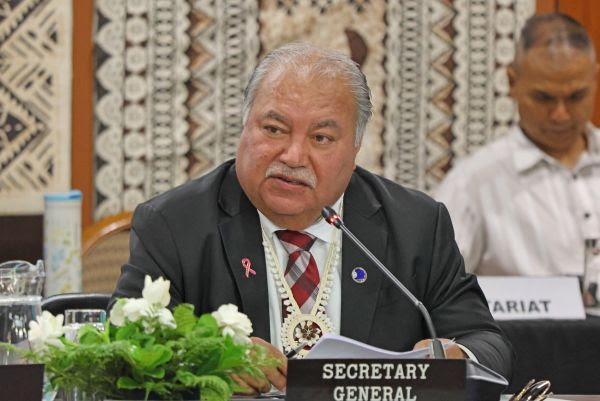
Pacific Islands Forum Secretary General Baron Waqa says the Pacific remains united and firmly present on the global stage, as leaders continue to advance regional priorities following the 54th Pacific Islands Forum Leaders Meeting in Honiara.

Speaking at a press briefing today, Waqa said Forum leaders have sustained high-level engagement throughout the year, including at COP30, the 80th United Nations General Assembly and other regional and global meetings, underscoring a consistent message from the region.

“The Pacific is united, and the Pacific is present,” he said.

He said this year’s Forum theme, “Iumi Tugeda: Act Now for an Integrated Blue Pacific Continent,” reflects both solidarity among members and the realities of a rapidly shifting geopolitical environment.

“The Pacific is experiencing a level of geopolitical interest not seen for decades. With this comes opportunity, but also responsibility,” Waqa said, noting that the end of the year provides a critical moment to take stock and plan ahead.

Waqa identified regional unity as a top priority, describing the Pacific Islands Forum as the region’s central political convening body for dialogue and collective decision-making in a highly contested geostrategic environment.

“In a highly contested geostrategic environment, unity matters more than ever,” he said, adding that the Forum’s role is to “hold the space and to ensure that our unity remains strong.”

He said leaders have also advanced the Blue Pacific Vision through the Ocean of Peace Declaration, which affirms the region’s commitment to peace, stability, and cooperation.

“It reflects Pacific values, and it reinforces the Pacific as a region that seeks security through dialogue, not division,” Waqa said.

He noted that work is now shifting toward socialisation and implementation, including engagement with members, partners, and regional institutions, and ensuring the declaration reshapes how the region engages externally.

On progress against leaders’ decisions, Waqa said the 2050 Strategy for the Blue Pacific Continent continues to guide regional work, with advances made in climate resilience, economic connectivity, and regional cooperation.

He highlighted the ongoing review of the regional architecture as a key part of this effort.

“This review is not about creating new institutions. It is about improving coordination, reducing duplication, strengthening coherence, and strengthening delivery across the regional system,” he said, adding that the process is now moving from recommendations to implementation.

Looking ahead, Waqa said the coming year will focus strongly on implementation and better integration across the regional system, with climate change resilience remaining central alongside economic connectivity and institutional strengthening.

He said leaders expect the regional system to work together more effectively, with the Forum Secretariat supporting coordination and ensuring political direction is reflected in action.

On external engagement, Waqa said the Pacific will continue to engage globally “with confidence and always on Pacific terms,” guided by the 2026 Leaders’ Policy on Partnerships.

He said the policy is designed to ensure partnerships are transparent, aligned, and supportive of regional priorities, particularly amid growing international interest in the
Pacific.

While expressing disappointment that a Pacific COP will not be hosted in Australia next year, Waqa welcomed Australia’s commitment to work closely with Turkey as president of COP31, including plans to host a pre-COP leaders’ summit in the Pacific in 2026.

“This provides an opportunity to elevate Pacific priorities, including the climate-ocean nexus, just transition, and access to climate finance,” he said, stressing that the Forum will continue to anchor regional advocacy, so partnerships strengthen rather than dilute Pacific priorities.

Pacific Islands Forum eyes pre-COP Summit to advance regional climate priorities

The Pacific Islands Forum will engage in a pre-COP leaders’ summit in 2026, as regional leaders work to ensure Pacific priorities remain central to global climate discussions, Secretary-General Baron Waqa said at a press briefing Wednesday.

“While we are disappointed that we will not host a Pacific COP in Australia next year, we are encouraged by Australia’s commitment to work closely with Turkey as president of COP31 and in its capacity as president of negotiations,” Waqa said.

“To be able to host a pre-COP leaders’ summit in the Pacific region in 2026 is no mean feat, and our teams are working closely with members to finalise the details around the high-level engagement.”

Waqa said the pre-COP summit will provide an opportunity to elevate issues critical to the Pacific, including the climate-ocean nexus, just transition, and access to climate finance.

“The Forum will continue to anchor advocacy for our regional priorities and ensure that partnership support does not dilute these priorities,” he added.

On the timing and expected outcomes of the summit, Waqa explained, “Next year, more will emerge from our engagement as part of the COP31 arrangements. On the negotiations side, Australia has a strong chance of setting the agenda alongside the region, advancing many of our priorities.”

He acknowledged the effort made by Australia in supporting the Pacific’s climate ambitions.

“We worked hard to gain confidence and have Turkey respectfully hand it over to us this time, but it wasn’t to be. We are, however, grateful that Australia has remained steadfast in supporting the Pacific.”

Waqa said that finer details on how the pre-COP summit will take shape are expected to be released early next year, signalling an important step for Pacific nations to influence global climate negotiations.

Trump signs order to further restrict entry of foreign nationals to U.S, includes Tonga

0

U.S President Donald Trump signed a proclamation on Tuesday that further restricts and limits the entry of foreign nationals to the United States, the White House said.

The U.S has imposed full restrictions and entry limitations on nationals from five countries – Burkina Faso, Mali, Niger, South Sudan, and Syria – in addition to the initial list of 12 countries. Full restrictions have also been imposed on individuals holding Palestinian Authority-issued travel documents, the White House said.

The move represents an intensification of Trump’s crackdown in the immediate aftermath of the shooting of two national guard members in Washington DC on 26 November. The suspected shooter is an Afghan national who served in a unit under the CIA in Afghanistan and was admitted to the U.S after its withdrawal from the country in 2021. He was granted asylum this year after being vetted.

The Trump administration has highlighted the case to justify further tightening controls on immigration. Trump himself has since engaged in incendiary racist rhetoric against some immigrant groups.

The inclusion of Syria among the five added countries comes days after three Americans – two soldiers and a civilian interpreter – were killed in the country in an attack the US blamed on the Islamic State.

Trump recently hosted the country’s president, Ahmed al-Sharaa, at the White House.

A White House fact sheet justifying the country’s inclusion on the list stated: “While the country is working to address its security challenges in close coordination with the United States, Syria still lacks an adequate central authority for issuing passports or civil documents and does not have appropriate screening and vetting measures.”

Partial restrictions were imposed on a further 15 countries, identified as: Angola, Antigua and Barbuda, Benin, Cote d’Ivoire, Dominica, Gabon, The Gambia, Malawi, Mauritania, Nigeria, Senegal, Tanzania, Tonga, Zambia, and Zimbabwe.
The expanded list of restrictions follows an announcement by Kristi Noem, the homeland security secretary on 5 December, which indicated her plan to increase the number of countries on the travel ban list.

Tuesday’s proclamation said the restrictions were “necessary to prevent the entry of foreign nationals about whom the United States lacks sufficient information to assess the risks they pose. It is the President’s duty to take action to ensure that those seeking to enter our country will not harm the American people.”

Pacific Islands Forum warns UN human trafficking is a growing threat in the Pacific

0

Solomon Islands’ UN envoy Jane Waetara addressed the General Assembly review of the Global Plan of Action on human trafficking on behalf of Pacific Islands Forum members.

In her statement, Ambassador Waetara reaffirmed the Forum members’ commitment to the principles of the Global Plan of Action to combat trafficking.

She emphasised that trafficking in persons in the Pacific is a growing threat that undermines security, hinders development, and violates human dignity.

Ambassador Waetara noted that trafficking encompasses not only the movement of persons but also exploitation, including forced labour, abuse of migrants, and sexual exploitation, particularly of women and children.

She further highlighted that trafficking in persons intersects with other transnational crimes, including illicit drug trafficking, cybercrime, and financial fraud.

Ambassador Waetara stressed that the Pacific is increasingly being targeted not only as a transit point but also as a destination for these crimes.

She highlighted the region’s collective response, as reflected in the Boe Declaration, the Pacific Regional Strategy for Combating Transnational Organised Crime, and the 2050 Strategy for the Blue Pacific Continent.

The Forum called for stronger partnerships with the United Nations system, including the United Nations Office on Drugs and Crime (UNODC), the International Organisation for Migration (IOM), and the Office of the United Nations High Commissioner for Human Rights (OHCHR), to support Pacific regional efforts in addressing these challenges.

She also urged UN Member States to recognise the unique vulnerabilities of Small Island Developing States (SIDS) and ensure that global frameworks respond effectively to their realities.

Meanwhile, the Permanent Representatives of the Pacific Islands Forum (PIF) to the United Nations held a meeting with the three United Nations Resident Coordinators (RCs) for the Pacific at the United Nations Headquarters in New York.

The meeting brought together the three UN Resident Coordinators responsible for the Pacific region:

• Dirk Wagener, UN Resident Coordinator for Fiji, Solomon Islands, Tonga, Tuvalu and Vanuatu;

• Karla Robin Hershey, UN Resident Coordinator for Samoa, Cook Islands, Niue and Tokelau; and

• Mamadou Kane, UN Resident Coordinator for the Federated States of Micronesia, Marshall Islands, Palau, Kiribati and Nauru.

Solomon Islands Permanent Representative to the UN, Jane Waetara, chaired the meeting in her capacity as Chair of the Pacific Islands Forum membership based in New York.

The meeting provided an opportunity for the Resident Coordinators to brief Permanent Representatives on their work across the Pacific, promote information sharing, and further strengthen cooperation between the Pacific Islands Forum group and the UN Resident Coordinator system.

During the discussions, the Ministry of Foreign Affairs and External Trade reiterated its call for an elevated United Nations presence in Solomon Islands, including the establishment of a dedicated Resident Coordinator for the country.

Ambassador Waetara acknowledged the United Nations’ continued commitment to the Pacific and underscored the vital role of Resident Coordinators in ensuring sustained UN engagement in the region.

She emphasised their importance in advancing national and regional development priorities and in supporting the achievement of the Sustainable Development Goals (SDGs) across Pacific Island countries.

She also noted that the PIF group looks forward to tabling the biennial Resolution on Cooperation between the United Nations and the Pacific Islands Forum.

The meeting further discussed the UN80 reform initiative and its potential implications for the Pacific region.
Permanent Representatives highlighted the importance of active engagement by the PIF group throughout the UN80 reform process.

A recurring theme in the discussions was the need to ensure that any reforms do not compromise support for Small Island Developing States (SIDS), including the preservation of UN programmes tailored to SIDS and strengthened coordination through the UN Resident Coordinator system in the Pacific.

Tuvalu condemns Bondi attack, Stands with Australia

0

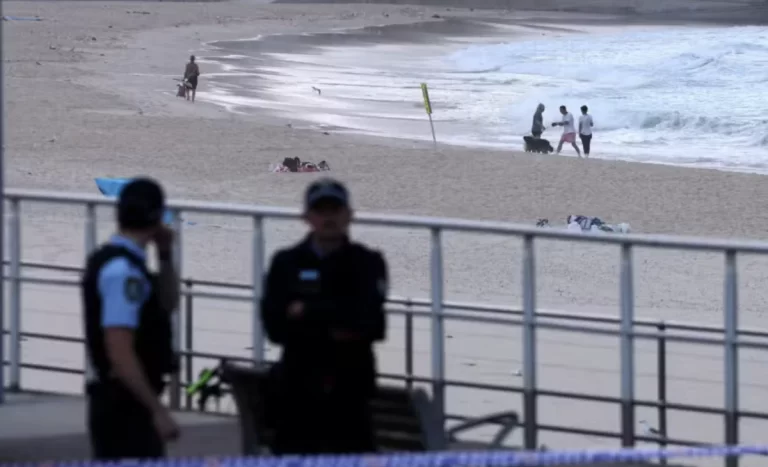
The Government of Tuvalu has condemned the deadly attack at Bondi Beach and expressed solidarity with Australia, offering condolences to the victims and their families.

In a statement Prime Minister Feleti Teo said Tuvalu was “profoundly saddened” by the loss of life and injuries caused by what he described as a “horrific and senseless attack.”

“We are profoundly saddened by the loss of innocent lives and the injuries sustained by many others in this horrific act of violence. Our thoughts and prayers are with the victims, their families, and all those affected during this most difficult time.”

Prime Minister Teo reaffirmed Tuvalu’s condemnation of terrorism and violence in all forms, and expressed support for Australia in the wake of the attack.

“Tuvalu stands in solidarity with Australia in condemning all forms of terrorism and violence,” he said, while commending the response of Australian authorities.

He praised the “swift response of Australian authorities whose courage undoubtedly saved lives.”

The Prime Minister also highlighted the enduring relationship between Tuvalu and Australia, saying the two nations share a close bond grounded in common values.

“Australia and Tuvalu share a close and enduring friendship, grounded in shared values of peace, security, and respect for human life.”

Prime Minister Teo said Tuvalu remains committed to upholding these values and supporting Australia during the difficult period.

“As we navigate through this tragedy, please be assured that Tuvalu stands with Australia in its efforts to uphold these values and to ensure the safety and wellbeing of its people.”

The Government of Tuvalu extended its deepest sympathies to the families of the victims and wished those injured a full and speedy recovery.

Pacific fisheries summit gives a boost to albacore & seabirds

0

By Edward Carver

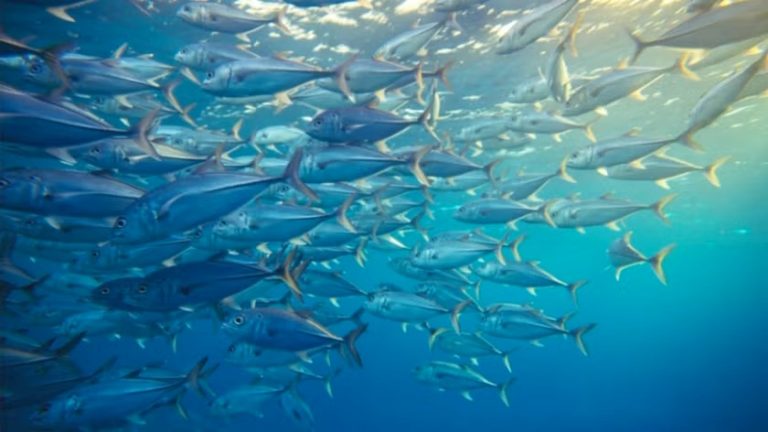
Much of the world’s albacore tuna catch, which usually ends up in a can, comes from the southwestern Pacific Ocean, where fishery managers just passed a new set of conservation rules.

The parties to the Western and Central Pacific Fisheries Commission (WCPFC), a multilateral body that sets fishing rules for an area that covers nearly 20 percent of the planet, adopted a harvest strategy for South Pacific albacore at their annual meeting, held 1-5 December in Manila, the Philippines.

Harvest strategies set near-automatic scientifically advised catch limits or other control measures in response to fluctuating fish stock levels; they’re considered a best practice in fisheries management because they reduce commercial or political influence. South Pacific albacore is one of two albacore (Thunnus alalunga) stocks in the WCPFC; the other is North Pacific albacore, which isn’t fished as much.

“This is a great move for the WCPFC,” Dave Gershman, a senior officer for international fisheries at The Pew Charitable Trusts, a U.S-based think tank, told Mongabay after attending the meeting. “This is a critical step to ensure the sustainability and stability of the top Pacific albacore fisheries.”

Gershman noted that the harvest strategy was a “long time in the making” and had been “discussed for many, many years.”

The parties discussed, but didn’t adopt, new rules on transshipment, or the ship-to-ship transfer of fish and other goods at sea, a practice that’s been linked to illegal and unsustainable fishing and other illicit activity.

Glen Joseph, director of the fishing ministry of the Marshall Islands, a WCPFC member state, said the meeting thus delivered both positives and negatives.

“We successfully pushed the Harvest Strategy,” Joseph told Mongabay in an email, noting the role of the Forum Fisheries Agency (FFA), a bloc of 17 island nations including the Marshall Islands that tends to act in unison at the WCPFC, in pushing reforms. “We were not so successful with the transshipment issue,” he added.

A deal finally done

South Pacific albacore isn’t considered overfished and its stock is at about 48 percent of its historical levels, which is higher than many commercially fished stocks. Yet experts have argued that a harvest strategy is essential to the stock’s long-term health and that current management is “outdated.” WCPFC parties were spurred to action in part because the Marine Stewardship Council, a London-based ecolabel certification NGO, had signalled that from 2026 it wouldn’t certify South Pacific albacore fisheries that weren’t under a harvest strategy.

China and Taiwan harvest the most South Pacific albacore, but a number of smaller Pacific nations and territories also fish enough that it’s important to their economies. Longline vessels, which drop huge numbers of baited hooks into the sea, do most of the fishing. The economic value of albacore in the WCPFC area is about US$1 billion per year, mostly from South Pacific albacore, according to Pew.

The new harvest strategy sets 56,096 metric tons per year as a sort of baseline harvest rate — lower than the roughly 65,000 metric tons that were harvested in 2024 in the part of the WCPFC area where the rules will apply, from 10-50° south. However, in coming years, the total allowable catch will remain above 56,096, because the rules stipulate that it can only be decreased by 5 percent per three-year period.

The exact figures for the first management period, 2027-29, will be determined next year. So will rules about how much of the catch can come from the high seas versus countries’ exclusive economic zones (EEZs).

The parties couldn’t reach an agreement on the harvest strategy at the 2024 annual meeting and so they discussed it at two intersessional meetings in 2025 — and then it dominated the meeting time in Manila in early December, with a deal being reached only in the final hours.

“It’s been looked at up and down, back and forth, sideways,” Gershman said.

Taiwan accepted the deal — WCPFC measures are adopted by consensus, so it wouldn’t have passed otherwise — but its delegation had pushed for a higher baseline rate, emphasizing that the stock is not overfished nor experiencing overfishing.

“This reduction will require us to further downsize our longline fleet in the area and will result in hundreds of fishers and crew members, mainly from developing states members, losing their jobs, with significant impacts on their families’ livelihoods,” a spokesperson for Taiwan’s fisheries agency who declined to be named, citing agency policy, told Mongabay in an email.

The Global Tuna Alliance, an industry trade group focused on sustainability, commended the adoption of the harvest strategy, saying in a press release that it will bring stability for industry actors and coastal states.

This is the third harvest strategy adopted by the WCPFC, following one for skipjack tuna (Katsuwonus pelamis) in 2022 and another for North Pacific albacore in 2023. New harvest strategies for both Pacific bluefin (T. orientalis) and bigeye tuna (T. obesus) could be adopted at the 2026 WCPFC annual meeting.

The WCPFC, which has 26 member parties including the European Union, was rated the highest among 16 of the world’s regional fisheries management organisations (RFMOs) in terms of its management policies in a recent paper in the journal Environmental Research Letters. The ratings were based on how RFMOs measured on 100 criteria as of December 2021, so they don’t account for the WCPFC’s harvest strategies. Other RFMOs have also adopted harvest strategies in recent years.

Tussle over transshipment

Despite that best-in-class rating, the WCPFC, which manages more than half of the world’s tuna catch, has plenty of room to improve its management practices, NGO representatives say. One of the most contentious issues in Manila was rules regarding transshipment, as they have been for many years.

WCPFC has had a transshipment measure on the books since 2009. But the measure has a loophole allowing transshipment when it’s “impracticable” for fishing vessels to land their catch at port. China, Taiwan, Japan and South Korea, which together dominate longliner fishing in the region, use transshipment frequently, saying that alternatives are impracticable. Conservation NGOs, members of the FFA bloc including the Marshall Islands and labor advocates disagree.

“Members that rely on high seas transshipment have effectively ignored the [2009 measure] and sought to maintain the status quo of transshipment as the rule, rather than the exception, in direct contravention of [the measure],” reads a position statement issued by Sharks Pacific, a Cook Islands-based NGO, at the Manila conference, echoing a strong statement submitted by the FFA in 2024.

At an intersessional meeting in September, the Marshall Islands put forward a proposal to tighten the rules on transshipment in a way that would largely eliminate the practice. In Manila, South Korea countered with its own proposed reform measure to safeguard and monitor transshipment.

Bubba Cook, Sharks Pacific’s policy director, said the South Korean proposal was not “significant” or “genuine.” He noted that transshipment was not just a conservation problem but also a human rights issue, as it “exacerbates the potential” for abhorrent labor practices akin to slavery, the likes of which would never be tolerated in land-based work.

The Union of Indonesian Migrant Workers (SBMI), which represents fishing industry workers, and Accountability.Fish, a U.S-based advocacy group, argued similarly in an intervention in Manila that called for an end to transshipment.

“At-sea transshipment keeps crews cut off from oversight for long periods, leaving them exposed to exploitation with little chance of protection or escape,” their statement said.

Taiwan’s fisheries agency spokesperson said Taiwan supports strengthening transshipment monitoring but that high seas transshipment was “very important for our longline fleet” and needed to continue.

“Taiwan has never opposed meaningful and constructive efforts to strengthen transshipment measures,” the spokesperson said. “What we are against is proposals of unreasonable measures that would have [an] effect on or eliminate the operation of high-sea transshipment.”

The Chinese, South Korean and Japanese delegations didn’t reply to requests for comment for this article.

In the end, WCPFC members reached no agreement on transshipment and left the matter for 2026.

Other steps

The WCPFC parties adopted a seabird protection measure that slightly changes existing rules.

As longlines are set, seabirds target the bait, get caught on the hooks, then drown as the hooks sink. An estimated 11,000-25,000 seabirds were killed annually in the WCPFC convention area between 2015 and 2018, including 4,000-4,600 albatrosses and petrels south of 25° south, according to an observer submission from UK-based NGO BirdLife International at the Manila meeting.

The new measure will require longliners to employ two bycatch mitigation methods out of three possible choices for much of the convention area below 25° south, similar to current rules below 30° south. The three options are weighted lines that cause hooks sink to faster, “tori lines” that deter birds from a vessel’s stern, and setting lines at night when birds are less active. Vessels also have the option to use hook shield devices as a standalone method. The new measure designates certain areas where only one of the three methods will be required. It will take effect in 2028.

But she said the measure didn’t go far enough. She argued that two of the three mitigation measures should have been applied without exception, or even all three below 30° south, which was proposed. She also said the 2028 start date was too late and that WCPFC needed to strengthen its compliance regime for existing and forthcoming rules. The failure to take stronger action “frankly demonstrates the failure of RFMOs to actually manage the impacts to ecologically related species,” she said in a text message to Mongabay.

The WCPFC adopted a groundbreaking crew welfare measure at the 2024 annual meeting that will take effect in 2028. Leading up to this year’s meeting, SBMI pushed for “accelerating and ensuring readiness for implementation,” and the International Labour Organisation, a U.N. body, has already taken steps to help, according to Cook.

Cook said South Korea now has a policy in place that requires crew welfare checks once per year, and its vessels are coming to port more often in the Marshall Islands as a result. He also cited some apparent progress on Taiwanese-flagged vessels. The spokesperson for Taiwan’s fishing agency said human rights at sea had “long been a priority” for the Taiwanese fishing agency and pointed to a 2022 national action plan on the topic and more recent reports.

“I think it’s fair to say that Taiwan’s relevant human rights improvement measures are not directed by the 2024 WCPFC [measure],” the spokesperson said.

PM Rabuka appoints Sakiasi Ditoka as Fiji’s new Foreign Minister in Cabinet reshuffle

0

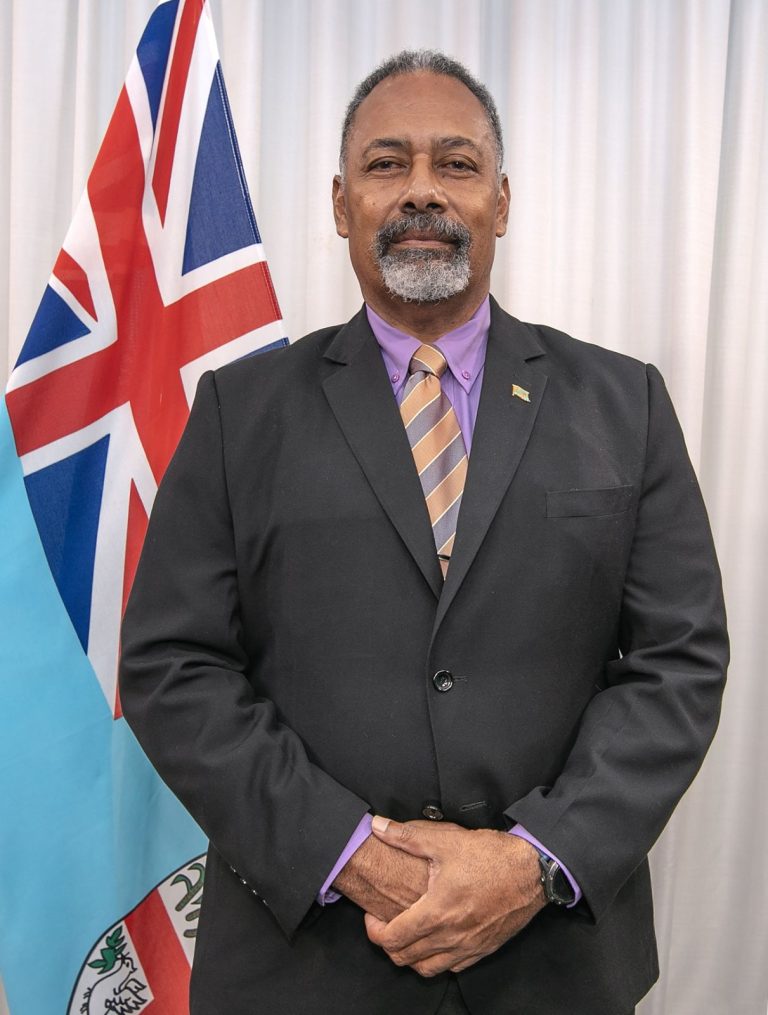
Prime Minister Sitiveni Rabuka has announced a Cabinet reshuffle, appointing Sakiasi Ditoka as Fiji’s new Minister for Foreign Affairs and External Trade.

“As we approach the end of our third year in Government, I have decided to make some changes to the ministerial responsibilities of my Cabinet Ministers, with effect from 19 January 2026,” Rabuka said in a statement.

Under the changes, Ditoka takes over the foreign affairs and external trade portfolio, while several ministers have been reassigned to new roles.

These changes are as follows:

*Sakiasi Ditoka: Minister for Foreign Affairs and External Trade.

*Mosese Bulitavu: Minister for Rural and Maritime Development and Disaster Management.

*Lynda Tabuya: Minister for Information, Environment and Climate Change.

*Charan Jeath Singh: Minister for Public Enterprises, Multi-Ethnic Affairs, Culture, Heritage and Arts.

*Ifereimi Vasu: Minister for iTaukei Affairs (which will include iTaukei culture, heritage and arts),

*Tomasi Tunabuna: Minister for Agriculture and Sugar Industry.

Rabuka said he will retain responsibility for the Civil Service and key planning portfolios.

“I will continue to be the Minister responsible for Civil Service and Strategic Planning, National Development and Statistics.”

He also announced changes to office accommodation arrangements across government.

“The office accommodation and housing unit will be transferred to the Ministry of Public Works and the Ministry of Civil Service will retain the role of setting the overall office accommodation housing policy for Government.”

Rabuka confirmed the reassignment of an assistant minister.

“I have also taken the decision to reassign Hon Sachida Nand as Assistant Minister in the Ministry of Commerce and Business Development.”

The Prime Minister said the reshuffle comes at a key point in the government’s term.

“These changes come at a crucial time as we enter into our fourth year of governance, and we remain steadfast in our commitment to the nation,” said Rabuka.

Solomon Islands Foreign Minister Agovaka warns OACPS is at a crossroads

0

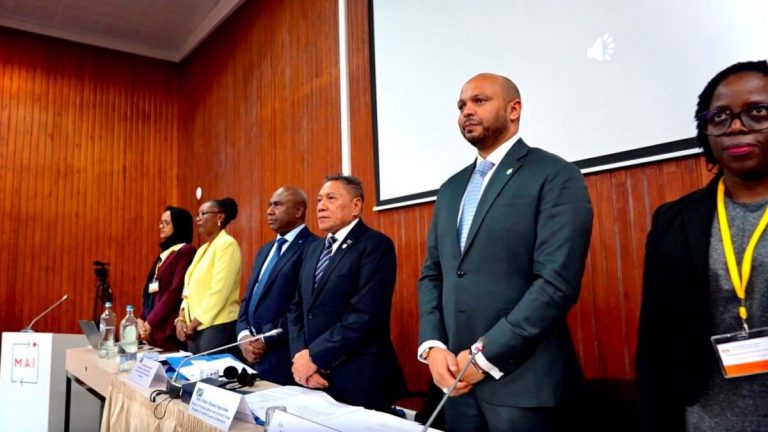
Solomon Islands Foreign Minister Peter Shanel Agovaka opened the 120th OACPS Council session in Brussels on 12 December as President-in-Office.

Addressing Ministers and delegates from Africa, the Caribbean and the Pacific, Minister Agovaka thanked OACPS Secretary-General Moussa Batraki and the Secretariat for driving reforms during a period of institutional transition, and acknowledged the Kingdom of Eswatini for its leadership at the 119th Session and the reform roadmap handed over to the current Presidency.

“The OACPS stands at a critical crossroads,” Minister Agovaka said.

“This is not business as usual. The choices we make at this Session will shape the Organisation we present to our Leaders at the 11th OACPS Summit in Malabo, Equatorial Guinea in Africa, in March 2026 and the legacy we leave to the next generation.”

He highlighted key reforms already agreed, including a leaner senior management structure, budgetary stabilisation measures, and the decision to sell the old ACP House and purchase new premises for a modern, fit-for-purpose Secretariat in Brussels.

He also welcomed the Republic of Equatorial Guinea’s offer to host the 11th Summit in Malabo from 27–29 March 2026, and urged Member States to accelerate ratification of the Samoa Agreement and conclude the Rules of Procedure for OACPS–EU joint institutions.

Minister Agovaka issued a clear call for unity, solidarity, and shared responsibility—especially on timely payment of assessed contributions, political backing for reforms, and fair decisions on leadership posts.

“We will either reform together, or we will decline separately,” he said.

Noting Solomon Islands’ own commitments to the OACPS, he confirmed that Solomon Islands has ratified the Samoa Agreement and contributed towards the 2026 and 2027 budgets, and further urged all Member States to act accordingly to their respective capacities but with a shared sense of responsibility.

Meanwhile, Agovaka has called for Member States to translate reform commitments into measurable action and restore the Organisation’s credibility through delivery.

“The renewal of the OACPS is no longer an aspiration, it is an obligation,” Minister Agovaka said in his closing remarks.

“The credibility of our Organisation will be measured not by the quality of our debates, but by the discipline with which we implement the decisions we have taken.”

Presiding in his capacity as President-in-Office of the OACPS Council of Ministers, Minister Agovaka thanked delegations for the spirit of responsibility, unity and solidarity demonstrated throughout the three-day meeting.

The session brought together Ministers and senior representatives from across the OACPS membership to assess progress and chart a clear path forward for the Organisation’s renewal agenda.
Ministers provided firm direction to accelerate the OACPS reform and renewal agenda, including:

•Driving ratification and implementation of the Samoa Agreement, and strengthening joint engagement with the European Union through the Agreement’s institutional frameworks;

•Enhancing financial sustainability, including improved discipline in the timely payment of Member State contributions and practical measures to stabilise the Secretariat’s operations and reform programme;

•Reaffirming political support for the Secretary-General’s reform agenda, including restructuring and results-focused delivery; and

•Advancing preparations for the 11th OACPS Summit, to be held in Malabo, Equatorial Guinea, in March 2026, with emphasis on inclusivity, resource mobilisation, and ensuring Leaders convene to endorse concrete solutions.

Minister Agovaka urged Member States to match the unity demonstrated in the meeting room with unity in implementation through coordinated positions, sustained political backing for the Secretariat, and concrete follow-up actions in the lead-up to the Malabo Summit.

Solomon Islands reaffirmed its full commitment to working closely with the OACPS Secretary-general, the Committee of Ambassadors, and all Member States to ensure diligent follow-up and effective implementation of the outcomes of the 120th Session of the OACPS Council of Ministers.

Nauru President condemns Bondi attack, Backs Australia

0

Nauru President David Adeang has condemned the deadly shooting at Bondi Beach, describing it as a horrific and senseless act of terror, and extended condolences to Australia.

In a letter to Australian Prime Minister Anthony Albanese, President Adeang said Nauru was deeply saddened by the loss of life, injuries and trauma caused by the attack.

On behalf of the Government and people of the Republic of Nauru, President David Adeang conveyed deepest condolences to the Government and people of Australia following the horrific and senseless terror attack that occurred at Bondi Beach.

He said those affected were in Nauru’s thoughts and prayers.

“In a letter addressed to Australian Prime Minister Anthony Albanese, President Adeang said Nauru is profoundly saddened by the loss of life, the injuries sustained, and trauma caused by this appalling act of violence. Those affected are in our thoughts and prayers,” Adeang said in a statement.

President Adeang said Nauru strongly condemns the attack.

“Nauru unequivocally condemns this act of terror and hatred which has no place in our societies, and which stands in direct opposition to the shared values of peace, tolerance, and respect for human life that unite our two nations.”

He reaffirmed Nauru’s close ties with Australia and praised first responders for their actions.

President Adeang reaffirms Nauru’s strong friendship with Australia and support for its people and commends the courage and professionalism of emergency responders and law enforcement personnel for their swift response to protect lives and ensure public safety.

Stay connected

529FansLike
172FollowersFollow
156SubscribersSubscribe
- Advertisement -