Home Blog Page 115

Forum Troika leaders meet in Brisbane

0

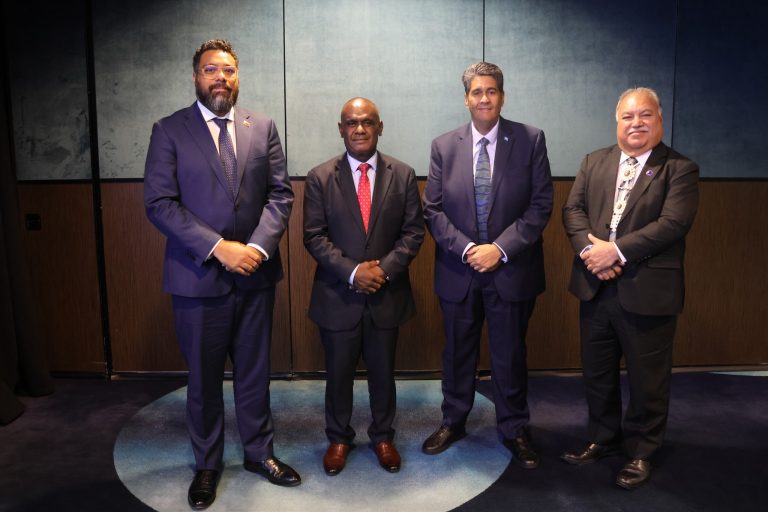
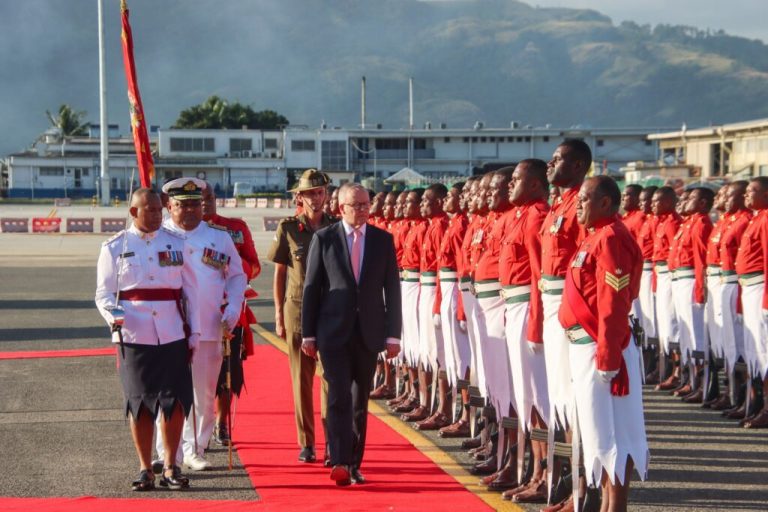
Pacific Islands Forum Troika Leaders convened their first in-person meeting of 2026 in Brisbane, Australia, reaffirming their shared commitment to Forum unity, regional solidarity, and collective leadership at a time of heightened global uncertainty.

The meeting was attended by Jeremiah Manele, Chair of the Pacific Islands Forum and Prime Minister of Solomon Islands; Surangel Whipps, incoming Forum Chair and President of the Republic of Palau; and the Lord Fakafanua, Prime Minister of the Kingdom of Tonga, attending his first Troika meeting following his recent appointment.

Through open and constructive Talanoa, Troika Leaders discussed follow-up actions arising from decisions of the 54th Pacific Islands Forum Leaders’ Meeting, including ongoing work under the Review of the Regional Architecture, the strategic outlook for 2026, and upcoming regional and international engagements.
Discussions underscored the enduring relevance of the Forum as the principal political platform for Pacific Leaders to advance shared priorities, accommodate varying perspectives, and strengthen regional cohesion.

Forum Chair, Prime Minister Manele, welcomed the participation of Prime Minister Fakafanua, noting that his first Troika meeting reflected the continuity, inclusivity and collective leadership that underpin the Forum family.

Secretary General Baron Waqa highlighted the significance of the meeting, noting that the Troika continues to play a vital stewardship role in supporting unity and confidence in Forum processes.

“At a time of heightened regional and global attention, the Pacific Islands Forum remains the trusted space for Pacific leaders to engage openly, resolve differences, and advance shared priorities in the spirit of ‘Iumi Tugeda’”.

Troika Leaders were also joined by Australia’s Minister for Climate Change and Energy, Chris Bowen MP, for discussions on preparations for COP31 and arrangements for the hosting of the Pre-COP 31 Meeting and related Pacific-based engagements.

Outcomes and recommendations arising from the Troika discussions will be conveyed by the Forum Chair to all Forum Leaders, consistent with established Forum processes, for their consideration and guidance.

Microplastics found in one-third of surveyed Pacific Island fish

0

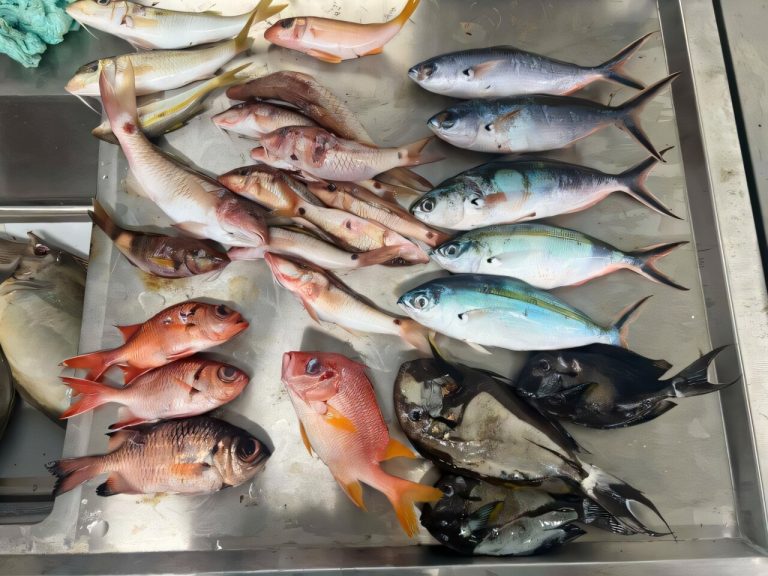
Microplastics were found in a third of hundreds of fish surveyed in the coastal waters of several Pacific Island nations, researchers said in a study published on Thursday.

The scale of contamination varied significantly across locations however, and the researchers warned against “alarmist” interpretations.

“We have to accept that almost everything, whether it’s table salt or beverages, people are finding plastics in all kinds of different sources,” said co-author Amanda Ford, a senior lecturer at the University of the South Pacific.

The research examined nearly 900 fish from 138 species – all of them consumed locally – taken from waters off Fiji, Tonga, Tuvalu and Vanuatu.

Overall, just under a third contained some microplastics, less than the global average of 49 percent.

But almost 75 percent of fish samples from Fiji’s waters were affected, while just five percent were in Vanuatu.

Ford said the low levels there were “surprising” and potentially the result of different waste practices or ocean currents.

Pacific nations may be particularly vulnerable to microplastic pollution given limited waste management systems and rapid urban growth on some islands, the study said.

And the findings, published in the PLOS One journal, are especially relevant given most Pacific communities rely on fish as a key source of nutrition and livelihood.

Still, Ford warned “it’s important we’re not alarmist with this.”

The findings were simply “evidence that plastic that ends up in the ocean breaks down into smaller pieces – it can get into food”, she told AFP.

The health implications of consuming microplastics remain unclear, especially at the low levels of contamination seen in many of the samples.

“We can’t draw clear conclusions yet on the risks,” she said.

A series of headline-grabbing studies in the last few years have reported detecting microplastics throughout human bodies, inside blood, organs and even brains.

However, some of this research has been criticised recently by scientists warning the results could be detecting plastic from laboratories or confusing human tissue with plastic.

No one disputes however that these mostly invisible pieces of plastic are ubiquitous throughout the environment – they have been found everywhere from the tops of mountains to the bottom of oceans.

The volume of plastic in the ocean is estimated to be anywhere between 75 and 199 million tonnes, according to the United Nations Environment Programme.

Tourism Fiji unveils ‘Be Fiji’ campaign to boost visitor arrivals

0

Tourism Fiji has launched Be Fiji, the next chapter of its long-running global brand platform Where Happiness Comes Naturally, as it looks to build on continued growth in inbound tourism.

Developed in collaboration with Havas, the campaign is built on the insight that while happiness comes naturally to the people of Fiji, it can feel increasingly out of reach in today’s fast-paced, always-on world.

Be Fiji invites travellers to reconnect with a happier version of themselves in a destination where happiness is not manufactured but discovered in the simple joys of everyday life — being connected, playful and present.

“For travellers looking for their next holiday destination for 2026, we’re excited to launch the latest iteration of Where Happiness Comes Naturally,” said Paresh Pant, chief executive officer of Tourism Fiji.

He said the campaign would roll out with a media strategy designed to playfully tap into people’s most “Un-Fiji” moments — everyday frustrations — using cheeky, contextual messaging that nudges audiences to ‘Be Fiji’ when they need it most.

The campaign visuals were shot by Josh Kelly of Chee Productions across Fiji’s Coral Coast, the Mamanuca Islands and mainland Fiji, contrasting moments of modern-day stress with experiences of happiness found through nature, adventure, community and rest.

“Be Fiji is a mantra we can all live by,” said Pete Sherrah, associate creative director at Havas Host.

“Anyone who has ever arrived in Fiji will know the warmth, the connection and the genuine happiness and smiles you want to bottle and bring back with you.

This campaign is about teaching the rest of the world to be a little more Fiji every day.”

Havas Media client partner Kimberly Stafford said the campaign aimed to move media beyond simple amplification and into active participation.

“At a time when people are sacrificing more than ever to make travel possible, we asked how the brand could do more than encourage people to ‘Be Fiji’ — and instead help them feel it,” she said.

The Pacific crossroads: Gaza vs the crisis at our door

0

By Ro Naulu Mataitini

An invitation from a distant warzone landed in Suva earlier this month. The United States, with Israel’s endorsement, has asked Fiji to send troops to join a proposed International Stabilisation Force in Gaza. For a nation proud of its United Nations peacekeeping legacy, this whispers of global recognition. Yet, it is a dangerous siren’s call, urging Fiji toward a perilous mission that risks betraying a far more urgent duty at home. This force would swap impartial peacekeeping for coercive enforcement, serving great-power ambition over principle.

Simultaneously, Australia faces its own costly summons, involving a bill of up to US$1 billion, to take up a permanent seat on a controversial “Board of Peace” overseeing Gaza. With no Palestinian voice and critics decrying it as a “transactional colonial solution”, this board aims not for peace but to sideline the UN, cementing a donor-driven world order. For the Pasifika, these parallel invitations present a defining choice: expend finite resources on a flawed project thousands of miles away or assert true regional independence by confronting the clear and present danger eroding our own communities — the transnational crime and drug epidemic.

The Gaza plan is architecturally unsound. The force Fiji is asked to join is not a traditional UN mission deployed with consent; it is a peace enforcement body expected to demilitarise a shattered, hostile territory — a task requiring overwhelming force and unambiguous political will, neither of which is guaranteed.

The Board of Peace itself is designed for dysfunction, acting as a parallel structure to the UN Security Council where influence is bought, not earned. For Australia, the billion-dollar question is stark: is this investment in distant geopolitical theatre wiser than addressing the existential crisis in its primary sphere of influence?

This moment mirrors a recent lesson from Europe. When President Trump targeted Greenland, European nations stood collectively on the principle of territorial integrity, forcing a retreat. Their unity demonstrated that defending sovereignty collectively is the only way smaller states are protected from the predations of larger ones. For the Pasifika, the lesson is clear: our security lies in collective regional resolve, not in subsidising external power plays that undermine the very multilateral rules that protect us.

This dynamic exposes the core hypocrisy of the new transactional order. It invites regions like ours to help manage conflicts born of imperial histories and great-power rivalries, while the same powers show a willingness to disregard the sovereignty of smaller states when it suits their strategic whims. The Greenland episode is not an isolated fantasy; it is a blueprint. If economic coercion can be levelled against a NATO ally for territory, what guarantees exist for nations in the Pasifika, whose strategic waterways and exclusive economic zones are equally coveted? The Board of Peace model enshrines this very coercion, asking nations to pay for a voice in a system that inherently devalues the sovereign equality that the UN Charter promises.

While Gaza beckons with false prestige, a real war is destroying our social fabric. Fiji’s National Security Strategy identifies the methamphetamine epidemic as a top-tier threat (p.19). Record drug busts reveal not success, but the staggering scale of invasion. This crisis fuels violence, overwhelms health systems, corrupts leaders and drains state resources.

To even contemplate diverting military and political focus to Gaza is to declare this domestic war secondary. It begs a foundational question: what is the ultimate purpose of sovereignty if not to deliver safety and security to one’s own people first? This is the primary duty of any state. When institutions are eroded by cartels while security forces look abroad, that duty is failed.

This crisis is the true test of our regional architecture. The traffickers’ networks are transnational, exploiting fragmented governance and weak maritime surveillance. Their success is a direct result of our collective vulnerability. To confront them requires a consolidation of sovereignty, not its diversion. Every police officer, intelligence analyst and naval patrol boat committed to a quagmire overseas is a resource stripped from guarding our own shores. The political capital spent navigating the diplomatic minefield of Gaza is capital not spent rallying the Pacific Islands Forum to adopt a wartime footing against a clear, shared enemy. We cannot allow the spectre of one crisis to blind us to the substance of another.

The strategic response lies not in the Middle East, but in our own waters. Australia must make up its mind. That US$1 billion — a sum that could transform regional security — could and should be the cornerstone of a bold, coordinated campaign against the drug crisis, championed through the Pacific Islands Forum.

I am not arguing for a return to failed, militarised prohibition. I propose a holistic, regional compact built on:

– Integrated policing: A permanent regional Task Force with real-time intelligence fusion to disrupt trafficking syndicates and their finances.
– Community resilience: Co-designed programmes creating economic alternatives for youth and supporting rehabilitation to erode the cartels’ demand.
– Institutional integrity: Major initiatives to shield judiciaries and border services from corruption, ensuring the rule of law is an asset.

In a world of transactional great-power politics, Australia must consciously encircle the Pasifika. This means investing politically and financially in the PIF, respecting its priorities and heeding its calls. Addressing this crisis would be an act of enlightened self-preservation for Australia, and a lifeline for the region. The model exists in our history: the Regional Assistance Mission to Solomon Islands, known as RAMSI, succeeded because it blended Australian resources with Pasifika personnel and local knowledge. We must summon that spirit again for a more complex fight.

The invitations to Gaza are a test of strategic identity. For Fiji, it is a test of resisting the seductive glare of distant drama for the sober duty of safeguarding the homeland. For Australia, it is a choice: to fund a board that undermines global order or to invest in a sovereign regional compact against a shared existential threat.

True leadership is demonstrated not by saying a reflexive “yes” to powerful patrons, but by having the wisdom to say “no” when their wishes conflict with fundamental principles of multilateralism and life-and-death needs at home. Europe showed that collective defence of sovereignty is how smaller states secure their future. For the Pasifika, our path to security and independence does not run through the rubble of Gaza. It runs through the strengthened, cooperative spirit of our own Blue Continent. Choosing this closer, harder path is the mark of a region that truly knows where it belongs. It is the only choice that builds a legacy of genuine security, leaving our children a future defined not by the crises we attended elsewhere, but by the community we fortified here.

Ro Naulu Mataitini is a Fijian high chief of Rewa Province. A founding member of the People’s Alliance Party, he now serves as a political member of Fiji’s Great Council of Chiefs and is the chairman of Rewa Provincial Holdings Company Limited. He is a retired security executive with the United Nations.
Strengthening people-led ocean services in American Samoa

0

As an island territory, American Samoa faces a set of challenges linked to its geographic isolation and exposure to changing ocean conditions. Government agencies, port authorities, marine operators, and emergency services all depend on timely, accurate information to operate effectively. But access to data alone is not enough. It must also be easy for stakeholders to translate complex ocean research into decision-ready services, whether supporting a harbourmaster in planning vessel movements, a weather forecaster issuing advisories, or an emergency responder preparing for hazardous conditions.

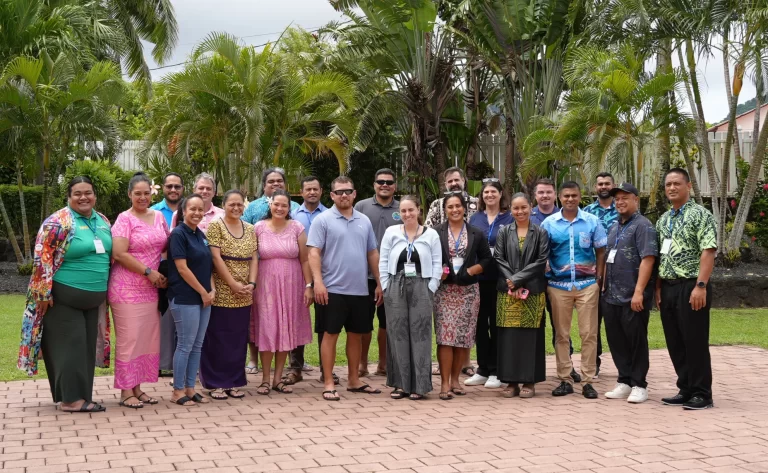
Recognising this need, American Samoa took an important step forward in late 2025 by hosting its first national capacity-building event dedicated to translating ocean science into real-world applications. The “Ocean Science to Service Workshop and Consultation”, held in November 2025, focused on strengthening locally driven ocean services with regional support. The workshop was organised by the American Samoa Weather Service in collaboration with the Pacific Community (SPC).

“This workshop is the first of its kind hosted in American Samoa. It grew out of a need identified by the National Weather Service for more discussion and training for our marine community across our island groups, and it responded directly to demand for more structured dialogue, collaborative learning, and hands-on training among organisations that regularly rely on ocean information,” said Elinor Lutu-McMoore, National Weather Service Director.

Participants represented a diverse variety of organisations concerned in marine safety, environmental management, emergency response, and maritime operations. These included the Department of Homeland Security, the American Samoa Coral Reef Advisory Group (CRAG), the Weather Service Office (WSO), the American Samoa Marine Patrol Division, the National Marine Sanctuary, the NOAA Fisheries Office in American Samoa, the Port Administrator, and the United States Coast Guard. Bringing these parties together provided a unique chance for interaction between sectors that frequently operate in parallel yet rely on the same ocean conditions.

Training on tidal calendars and sea-level statistics underscored their direct and practical importance for port and harbour operations. The 2025 tidal Predictions Calendar for Pago Pago provided detailed daily tidal heights and timings throughout the year, supporting safe navigation, efficient port management, and informed coastal planning. Knowing when and how to apply this information can make a meaningful difference in day-to-day operational decision-making.

The workshop also placed strong emphasis on hands-on training related to the Pacific Ocean Portal, an online platform that collects historical and near-real-time ocean data from throughout the Pacific. The portal provides users with access to data on waves, winds, ocean currents, sea level, and tides, all of which are critical for marine safety, forecasting, and coastal decision-making.

“The Ocean Portal brings together data from different Pacific islands, allowing you to easily select the information you want and need. It opens quickly, and you can view tides for different days and times. It could make my job easier and more efficient,” said Pu’amavae Ah-Mai, Harbormaster at the Department of Port Administration.

Finally, the event allowed participants to visit the American Samoa Weather Service and to discover how the station operates. During the visit, participants learned about daily forecasting procedures, including the launch of weather balloons twice a day. These balloons collect critical atmospheric data such as temperature, humidity, wind speed, and wind direction at different altitudes. This information plays a vital role in improving weather forecasts, marine advisories, and early warning services for American Samoa and the wider Pacific region.

By bringing together different institutions, the event fostered an understanding of how ocean information is used across sectors and how services may be better coordinated. Participants left with improved technical skills, new professional connections, and a better understanding of how ocean research can help American Samoa’s communities become safer and more resilient.

OFC Pro League | Welcome to Papua New Guinea

0

Following an action-packed start to the competition in Auckland, the OFC Pro League heads north to Melanesia as Papua New Guinea hosts Round 2.

Both environmentally and culturally diverse, Papua New Guinea is known for having 800 languages, the most of anywhere in the world.

Rugby league has long had a grip on the nation, and Papua New Guinea will soon welcome its first professional rugby league team as part of the NRL in 2028.

Football has also grown dramatically across the nation though, and it now has its first professional football club too – PNG Hekari FC – who are built on the legacy of former OFC Men’s Champions League winners Hekari United.

Despite a difficult start to the competition in Auckland, expect the home fans to get behind PNG Hekari FC and the rest of the seven OFC Pro League clubs, as professional football arrives in the nation for the first time.

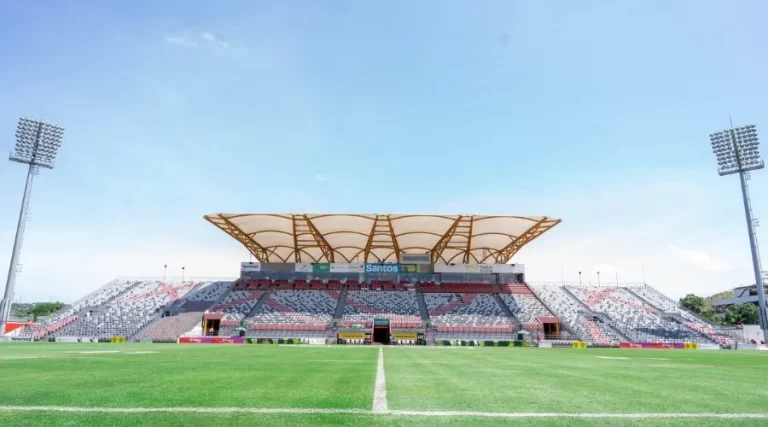
The action will take place at Port Moresby’s Santos National Football Stadium, across six match days, with each club set to play three games.

Venues  

Santos National Football Stadium  

Match Days Hosted:  31st January, & 1st, 3rd, 4th, 7th, & 8th February.

The Santos National Football Stadium in Port Moresby has traditionally been the home of rugby league in Papua New Guinea, the nation’s national sport. From 31st January, it will adjust to accommodate the inaugural OFC Pro League though, when Round 2 of the circuit series arrives to passionate crowds on PNG shores.

First used in the 1960s, and formerly known as Lloyd Robson Oval, it sits in the central urban area of Port Moresby surrounded by commercial and residential zones. In 2016, the Santos National Football Stadium hosted the final of the FIFA U-20 Women’s World Cup 2016™, which North Korea won in front of a capacity crowd of 15,000.

It marked just the second time a FIFA event had been held in the OFC region outside of New Zealand, underlining PNG’s passion for football, and its ability to host global competitions. That passion will be showcased again when the Santos National Football Stadium welcomes Oceania’s new professional football league.

Great moments in Papua New Guinea Football History  

Hekari United FC claim shock continental crown 

One of the most iconic moments in Oceania competition occurred in 2010, when Hekari United became the first club from outside Australia or New Zealand to win the OFC Men’s Champions League and qualify for the FIFA Club World Cup™.

After finishing top of their group, Hekari United defeated New Zealand’s Waitakere United 4-2 on aggregate across two legs in the final, thanks in part to three goals from Kema Jack.

They went on to represent OFC at FIFA Club World Cup 2010™ in the UAE but lost 0-3 to host club Al-Wahda in the first round.

Papua New Guinea finally lift OFC Women’s Nations Cup  

After finishing runners-up on three consecutive occasions between 2007 and 2014, Papua New Guinea won their first OFC Women’s Nations Cup in 2022.

Coached by English manager Nicola Demaine, they beat hosts Fiji 2-1 in the final in Suva, with Meagen Gunemba and Ramona Padio scoring the goals.

The result meant Papua New Guinea became the first nation other than Australia or New Zealand to win Oceania’s premier women’s title, also qualifying for the intercontinental play-offs for FIFA Women’s World Cup 2023™.

Kapuls reach OFC Men’s Nations Cup final as hosts  

Having never previously progressed past the group stages at the OFC Men’s Nations Cup, Papua New Guinea made an impressive run to the final of the region’s most prized possession, as tournament hosts in 2016.

Drawn into a tough group, the Kapuls drew with New Caledonia and Tahiti, but progressed virtue of a better goal difference, and beat Melanesian rivals Solomon Islands, 2-1 in the semi-finals.

Despite a brave effort in the final, they fell just short of lifting the trophy though, losing 2-4 on penalties to New Zealand in a shoot-out.

President Whipps Attends Pacific Islands Forum Troika Meeting in Brisbane Ahead of PIF 2026

0

President Surangel Whipps Jr. departed Palau on Monday for Brisbane, Australia, where he will attend a high-level Pacific Islands Forum Troika meeting this week as preparations intensify for the 2026 Pacific Islands Forum (PIF) Leaders Meeting, which Palau is set to host later this year.

The Troika meeting brings together the current Forum chair, Jeremiah Manele, Prime Minister of Solomon Islands, the immediate past chair, Prime Minister Aisake Value Eke of Tonga, and President Whipps, the incoming chair, to provide political coordination and continuity for the region between annual PIF leaders’ meetings. President Whipps’ participation highlights Palau’s growing role in shaping regional priorities ahead of its hosting of the 2026 summit.

The Pacific Islands Forum Troika serves as a senior political consultative mechanism that supports the Forum chair in carrying forward leaders’ decisions outlined in the annual PIF communiqué. While the Troika does not make decisions on behalf of the full Forum, it plays a critical role in advancing agreed regional initiatives, providing guidance to incoming chairs and ensuring momentum on urgent political and development issues affecting the Blue Pacific.

Under the Troika framework, leaders work collectively to advocate for Forum priorities at regional and international levels, offer political counsel to the Forum Secretariat and promote cohesion among member states. The mechanism is also designed to ensure a smooth transition of leadership from one Forum chair to the next.

Palau’s attendance at the Brisbane meeting comes as it prepares to assume heightened responsibilities as host of the 2026 PIF Leaders Meeting, an event expected to draw leaders from across the Pacific to address shared challenges including climate change, sustainable development and regional security.

Following the Troika meeting, President Whipps is also scheduled to meet with Asian Development Bank President Masato Kanda to discuss development cooperation and ongoing partnerships relevant to Palau and the wider Pacific region.

Palau’s government has said hosting the 2026 Forum presents an opportunity to highlight the country’s leadership role in the Blue Pacific and to help shape the regional agenda at a critical time for Pacific Island nations.

Second by-election confirmed as Sāmoa MP quits Parliament to join ruling FAST party

0

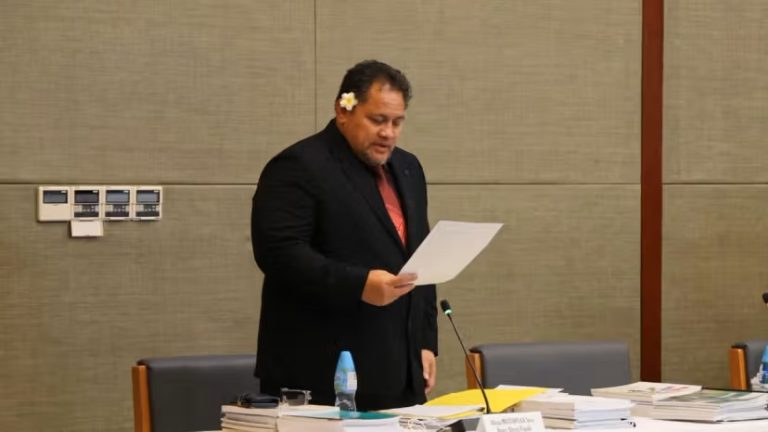
Independent MP Motuopuaa Seve Henny Papalii has resigned from Sāmoa’s Legislative Assembly, prompting a by-election in the Vaisigano II electorate as he prepares to contest the seat under the ruling Faatuatua i le Atua Sāmoa ua Tasi (FAST) party banner.

Motuopuaa announced his resignation in Parliament on 20 January, formally ending his tenure as an independent MP. The House accepted the resignation and declared the seat vacant.

Addressing Parliament, Motuopuaa said his decision reflected the wishes of his constituency and his intention to align himself with the governing party.

He said that under electoral law, standing as a FAST candidate required him to resign and seek a renewed mandate from voters.

Motuopuaa was first elected as the independent MP for Vaisigano II in the general election held on 29 August 2025, one of only six independents to secure seats at the time.

His resignation follows a ceremony held on 17 January, where village representatives and constituents formally endorsed his move to join FAST.

Talking chiefs from the district later conveyed their support for the decision to the party’s leadership.

Former candidates Sua Lesa Faavae and Tagaloa Leilua Tupou, who previously contested the Vaisigano II seat against Motuopuaa, were also present at the ceremony and have since publicly backed his decision to join the governing party.

FAST party chairman and Prime Minister Laaulialemalietoa Leuatea Polataivao Schmidt acknowledged the resignation in Parliament, saying MPs who change political allegiance should seek a fresh mandate from voters.

He told the House that Motuopuaa’s constituency had expressed support for the move and said returning to the polls upheld principles of fairness, transparency, and democratic accountability.

The resignation marks the second confirmed by-election in recent months, as Sāmoa continues to navigate a period of political adjustment following shifts in parliamentary alignment.

Under Sāmoa’s Electoral Act, a by-election is required when a sitting MP resigns from Parliament. The Electoral Commission of Sāmoa is expected to announce the timetable for nominations and polling in the coming weeks.

A public notice dated 21 January confirmed the vacancy in the Vaisigano II seat, although the date of the by-election has yet to be announced.

Now is the time to export goods as exchange rate is in country’s favour: PNG PM

0

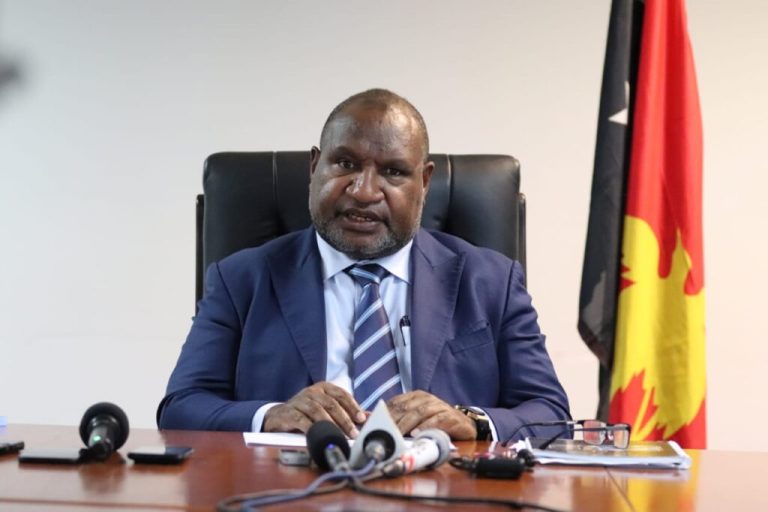
Prime Minister James Marape says that the current exchange rate favours exporters.

“At present, the Kina exchange rate is favourable for exporters,” he said.

“When you export, you earn more.

“This is an opportunity we must seize.”

Marape encouraged businesses, farmers, cooperatives and producers to take advantage of existing market access and global demand.

“While the global economic outlook remains uncertain, let us focus on what we can control,” he said.

“Let us produce to supply markets that are already within our reach.

“The world has a growing need for what Papua New Guinea has to offer.

“And now is the time for us to step up production.”

Marape said despite global uncertainty, PNG remained exceptionally well-positioned to access international markets.

PNG’s bilateral and multilateral relationships include:

– Connectivity with 13 G20 economies;
– Expanding engagement with the Middle East, including Arab nations such as Saudi Arabia, the United Arab Emirates, and Israel;
– Traditional partnership with the United Kingdom and Europe (European Union);
– Strong relations with the United States and Canada, and through the Asia-Pacific Economic Cooperation (Apec);
– Bilateral ties with China, Japan and South Korea; and,
– Close partnerships with neighbours Australia, New Zealand and Southeast Asian countries (Indonesia, Malaysia, Philippines, Singapore and Thailand).

“Our access to global markets is extensive,” Marape said.

“What is required now is for us to step up as producers.”

He urged provincial governments to take stock of their economic resources and work with the Government.

“I call upon all provincial governments to undertake a comprehensive assessment of the resources in your provinces.

“The Government (will see) how best we can partner in ramping up productivity in every province and region,” Marape said.

Fiji’s cocaine seizure shows the Pacific is learning to fight back

0

By Jose Sousa-Santos

The recent seizure of more than two tonnes of cocaine in Fiji, and the arrest of four South American nationals allegedly linked to international trafficking networks, marks a meaningful shift in how Pacific Island states and communities are confronting transnational organised crime. While drug trafficking through the Pacific is not new, what is changing is the degree of local confidence, capability and ownership shaping the response.

For decades, Pacific Island countries have been treated by traffickers and, at times, by international partners, as passive transit zones: remote, lightly policed, and reliant on externally driven intelligence and enforcement. Fiji’s latest operation, which began in July 2025 in close liaison with the United States Drug Enforcement Administration (DEA),suggests that these assumptions are increasingly outdated.

The importance of this seizure at Vatia in Tavua, in Fiji’s northwest, lies not only in the fact it was among the largest cocaine seizures Fiji has recorded in recent years, but in who was arrested. The apprehension of four Ecuadorians linked to international cocaine supply chains indicates that Fiji is no longer merely intercepting drugs at its own borders – it is beginning to penetrate and prosecute those within the networks.

Law enforcement operations in the Pacific have often ended once drugs were seized and local facilitators charged. Foreign organisers, financiers and logisticians typically remained beyond reach. This reflected limited intelligence ownership, jurisdictional constraints, and an understandable reliance on regional partners. In this instance, Fiji authorities were able to rely on stronger inter-agency coordination, improved intelligence handling, and a growing confidence to act independently rather than simply support externally led investigations. For an island state, that distinction matters. Control over intelligence determines whether a country sets priorities or reacts to events shaped elsewhere.

Recent discoveries of semi-submersible vessels in Solomon Islands waters underscore how Pacific routes are embedded in global cocaine supply chains.

This evolution in tactics has been swift. Fiji’s prosecution of those involved in a large-scale methamphetamine importation in 2024 sent a deterrent signal, even though no international figures were ultimately charged. But it also forced a reckoning within domestic institutions. Law enforcement agencies, including police and customs, began looking inward at corruption risks, insider threats and compromised units. Personnel were removed from sensitive positions, internal accountability strengthened, and professional standards reinforced.

The arrest of the four Ecuadorians suggests those changes are beginning to translate into real-world outcomes. For international criminal syndicates accustomed to operating with minimal resistance in the Pacific, the perceived risk environment is now shifting. However, none of this removes the enduring vulnerabilities that make the Pacific attractive to traffickers. Vast maritime zones, porous coastlines, abundant informal jetties, and limited patrol capacity remain defining features of the region. These challenges are compounded by economic pressures in coastal communities and the sheer tyranny of distance confronting enforcement agencies.

Recent discoveries of semi-submersible vessels in Solomon Islands waters, one of which reportedly contained an Ecuadorian voter identification card, underscore how Pacific routes are embedded in global cocaine supply chains. These are not opportunistic ventures but well-resourced, adaptive operations that view the region as both strategically valuable and vulnerable. Conventional border-control approaches alone will never be sufficient to counter them.

Pacific Island traditional leaders and communities are force multipliers in the fight against transnational organised crime. The region possesses a comparative advantage in its social and governance architecture. Initiatives such as Fiji’s Community Policing-Vanua-Multi-Agencies Crime Prevention and Maritime Security (CVM-CMS) pilot model are increasingly integrating traditional authority and governance – chiefly systems, churches, and customary land and sea owners – into national law enforcement frameworks. The aim is to empower community members to be the “eyes and ears at sea”.

When national institutions and traditional authority act in alignment, the combined effect is far greater than either could achieve alone.

By providing community leaders with direct, trusted communication channels to police and maritime authorities, these programmes convert local awareness into actionable intelligence. Fishers, villagers and chiefs are not expected to confront traffickers themselves, but to report anomalies quickly and safely: “Fishermen and women who spend hours at sea now have the opportunity to report suspicious yachts or illegal fishing activities to authorities for intelligence gathering and action.” The result has been earlier detection, faster responses, and broader coverage than formal agencies could achieve alone. As our research argues, this is a nascent Pacific maritime sentinel programme that can be replicated across the region.

This approach also addresses the social damage caused by illegal drugs. As narcotics penetrate Pacific communities, they generate shadow economies that undermine churches, chiefs and family structures. The visible willingness of traditional leaders to provide information and partner openly with authorities signals a critical shift away from fear and towards collective resistance.

At the launch of Fiji’s CVM-CMS pilot initiative in 2024, Prime Minister Sitiveni Rabuka called it a “whole-of-Fiji approach to preventing criminal and security activities arising on land or at sea”. Traditional leaders increasingly view this whole-of-society response to organised crime as their core responsibility as the impacts of drugs become more evident in their communities, from the corruption and distortion of village economies to the erosion of youth prospects.

This local ownership is essential. External partners can provide material assets, training and technical intelligence, but they cannot supply legitimacy. Trust and local leadership are critical force multipliers that must be generated internally. When national institutions and traditional authority act in alignment, the combined effect is far greater than either could achieve alone.

For the wider Pacific, Fiji’s experience offers cautious optimism. It demonstrates that island states are not condemned to vulnerability. Institutional reform, intelligence ownership and the deliberate mobilisation of traditional governance structures can meaningfully raise the costs of criminal activity. The cocaine seizure in Fiji is therefore more than a tactical success. It is evidence that the Pacific is beginning to fight back on its own terms, using its own strengths, and with growing confidence.

Stay connected

529FansLike
172FollowersFollow
156SubscribersSubscribe
- Advertisement -