

Home Blog Page 113

A Turning Point for Our Ocean – Why the High Seas Treaty Matters for the Blue Pacific

0

By Mohseen Riaz-Ud-Dean (PhD), Environmental Finance Specialist for the Pacific Region and Ashna Kumar, Communications Associate

The global ratification of the Biodiversity Beyond National Jurisdiction (BBNJ) Treaty marks a decisive moment in international cooperation and ocean governance. Referred to as the High Seas Treaty, the agreement establishes a legally binding framework to protect marine biodiversity in areas of the ocean that lie beyond national jurisdiction.

Covering nearly two-thirds of our planet’s ocean space, the high seas have long remained vulnerable to fragmented governance, overexploitation, and accelerating climate pressures.

For the Pacific, this treaty is more than a milestone in multilateral diplomacy – it is a profound opportunity. Our region has consistently championed stronger, more equitable rules for the ocean, recognising that the health of the Blue Pacific drives our economies, shapes our identities, and sustains our people.

As the treaty moves from negotiation to implementation, the Pacific stands ready to guide a new era of stewardship rooted in science, solidarity, and the principles of custodianship that Pacific peoples have upheld for generations.

Why It Matters for the Blue Pacific

Pacific Island Countries are among the most ocean-reliant nations in the world. The BBNJ Treaty aligns closely with the region’s immediate priorities and long-term aspirations.

The treaty fills longstanding gaps in the governance of areas beyond national jurisdiction that are ecologically connected to Pacific exclusive economic zones. By enabling countries to help shape rules for high-seas marine protected areas, environmental impact assessments, and benefit-sharing, the treaty strengthens the Pacific’s voice in decisions that directly affect the health and productivity of its ocean ecosystems.

Pacific fisheries, coral reefs, migratory species, and deep sea ecosystems face increasing threats from climate change, pollution, and unsustainable exploitation. The BBNJ framework offers practical tools to safeguard biodiversity that transcends borders.

For Pacific communities that depend on the ocean for food security, cultural continuity, and economic development, this protection is essential.

Many Pacific Island developing states face limited access to marine technology, deep sea research platforms, genomic analysis expertise, and consistent financing for ocean science. The treaty’s emphasis on capacity building and technology transfer could significantly reduce this inequity. It creates pathways for Pacific scientists, institutions, and youth to engage more fully in global marine research and innovation.

Connecting the BBNJ Treaty with UNDP’s BIOFIN Initiative

UNDP’s Biodiversity Finance Initiative (BIOFIN) is already supporting Pacific countries to close the financing gaps that hinder biodiversity protection. As nations begin implementing BBNJ commitments, such as establishing new conservation areas or conducting high seas environmental assessments, reliable, long-term financing becomes even more critical.

By pairing BIOFIN’s financial strategies with the BBNJ’s governance framework, Pacific countries can unlock innovative investments to safeguard marine biodiversity, ensuring that conservation efforts are not only ambitious, but durable, adequately funded, and nationally owned.

It will strengthen the rationale, urgency, and strategic importance of biodiversity finance planning in the Pacific Island Countries helping protect the ocean that supports the economies, cultures, and climate resilience.

The Next Decade: A Vision for the Next 5-10 Years

Over the next five to 10 years, the world will witness the true test of the High Seas Treaty. For the Pacific, this period may bring unprecedented opportunities.

Countries will move from legal ratification to practical implementation shaping guidelines for high seas protected areas, harmonising environmental impact assessment processes, and participating in global benefit-sharing arrangements for marine genetic resources. Regional cooperation, a hallmark of Pacific leadership, will be vital in ensuring that the treaty reflects the priorities and values of the Blue Pacific.

The treaty’s implementation could reinforce climate resilience by protecting biodiversity corridors, safeguarding blue carbon ecosystems, and ensuring the sustainability of vital fisheries.

The coming years will determine whether the High Seas Treaty delivers meaningful change. Success will not be defined solely by global milestones, but by how effectively countries translate commitments into action, finance into impact, and governance into protection.

For the Pacific, this is both a test and an opportunity to ensure that implementation reflects the values, priorities, and leadership of the Blue Pacific.

In our next blog, we examine how the High Seas (BBNJ) Treaty can become more than a legal instrument and agreement- emerging as a powerful catalyst for unlocking innovative marine finance for the Blue Pacific. For Pacific BIOFIN countries, the treaty presents a timely opportunity to harness global momentum and mobilise the scale of investment needed to secure ocean conservation, climate resilience, and sustainable livelihoods in the years ahead.

Super Rugby Pacific confirms new law innovations for 2026 season

0

Thirty years of leading innovation across the rugby world will continue in Super Rugby Pacific in 2026 with new law modifications designed to further reduce stoppages, inspire positive play and simplify the officiating of the game.

With the emphatic support of clubs, match officials and stakeholders, the competition has approved five key law innovations for the 2026 season:

*It will no longer be mandatory for the referee to issue a yellow or red card to a player on the defending team when awarding a penalty try. Any sanction will be at the discretion of the referee. (Law 8.3)

*Accidental offsides and teams delaying playing the ball away from a ruck will result in free kicks rather than scrums. (Law 10.5 and Law 15.17)

*After the referee has called “use it” at the ruck, no additional players from the team in possession may join the ruck. (Law 15.17)

*Teams will be permitted to pass the ball back into their half before kicking a 50:22. (Law 18.8a)

*Players will be allowed to take quick taps within one metre either side of the of the mark, or anywhere behind the mark, if they are within that two-metre channel running parallel to the touchlines. (Law 20.2)

Significantly, the competition has also re-committed to the guidelines first implemented in 2023 around the role of the Television Match Official (TMO).

In Super Rugby Pacific the TMO will only intervene unprompted if the referee has overlooked an act of serious foul play (yellow card level or above), or a clear and obvious infringement leading to a try.

The assistance of the TMO at any other time can only be instigated by the referee, which both empowers the on-field match officials and improves the flow of the game.

Over the last four years, more than four minutes of ‘dead time’ has been eradicated from Super Rugby Pacific games – a result of law innovation combined with strong intent from match officials.

Super Rugby Pacific CEO Jack Mesley said the competition was deserving of its reputation of being fan-focused and agile in driving the game forward.

“These innovations for 2026 reflect the ongoing commitment of Super Rugby Pacific to deliver the most entertaining and engaging rugby competition in the world,” he said.

“From the members and fans, to the players and coaches, and the referees themselves, we continue to experience resounding support for the measured steps that we’re taking to refine the game.

“We want to be a competition that encourages quick taps and faster restarts, that cuts down on unnecessary stoppages, and that embraces positive, attacking rugby.

“Super Rugby Pacific will continue to work closely with World Rugby and our stakeholders to evolve the game and produce the best version of rugby, and to strongly advocate that the innovations that are clearly working in Super Rugby Pacific be adopted more widely.”

Super Point has been retained for 2026, which sees teams contest an extra time period of up to ten minutes if scores are level at full-time.

The first team to score during Super Point wins the match, with the match declared a draw if neither team scores during the period of extra time.

Previously announced alongside the release of the 2026 draw, the six-team Finals Series format adopted last season will continue, but with a tweak to the ‘lucky loser’ mechanic.

In 2025 the ‘lucky loser’ was penalised one seeding, which saw the top-ranked Chiefs defeated in a Qualifying Final but still host a Semi-Final fixture the following weekend.

However in 2026 the highest ranked losing team from the Qualifying Finals will progress as fourth seed, ensuring they play away from home in the Semi-Finals and the Grand Final should they qualify.

The 2026 Super Rugby Pacific season kicks off on Friday 13 February with the Highlanders hosting the Crusaders, followed by the NSW Waratahs taking on the Queensland Reds.

Tonga’s PM wants to reset relations with U.S

0

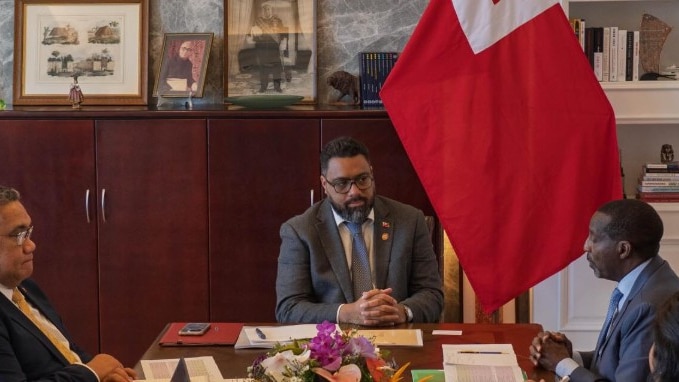
Tonga’s Prime Minister is seeking a diplomatic reset with the United States, following a U.S travel ban on Tongans.

Lord Fakafanua has invited the U-S Deputy Secretary of State Christopher Landau to visit the Kingdom after Washington halted new visitor and student visas.

He said Tonga was collateral damage in a change of U.S policy, and a high‑level visit would help repair and reset ties.

“On the back of an investment forum the United States was hosting in Hawaii, I reciprocated the invitation for him to visit Tonga,” he said.

Meanwhile, Tonga’s Kolofoʻou District and the City of East Palo Alto in California have formalised a sister city relationship in a move supporters say will strengthen cultural, educational and economic ties between the two communities.

The Memorandum of Intent was signed in a virtual ceremony connecting representatives in Nuku’alofa and the United States. The agreement marks what officials described as a milestone in people-to-people diplomacy between Tonga and an American city.

Crown Princess Sinaitakala Tukuʻaho joined East Palo Alto Mayor Webster Lincoln, former Mayor Martha Barragan and District Officer Alotaisi Takau to endorse the partnership, witnessed by community leaders and diplomats.

Chargé d’Affaires Devon Brown of the U.S Embassy in Tonga said the initiative opens opportunities for cultural and youth exchanges, collaboration on governance and innovation, and shared work on climate resilience and disaster risk management.

Brown noted that trade, tourism and entrepreneurship could also benefit as the relationship deepens.

The roots of the partnership trace back to humanitarian support following the 2022 Hunga Tonga–Hunga Ha’apai volcanic eruption and tsunami, when East Palo Alto’s community sent substantial aid to Tonga’s Kolofoʻou District.

Sister city arrangements are a long-standing form of civic diplomacy aimed at fostering international friendship through education, cultural events and municipal cooperation. They are part of broader efforts by the United States and its partners to deepen ties with Pacific island countries.

Local groups in both Tonga and East Palo Alto have welcomed the pact as a vehicle for greater mutual understanding and future exchanges.

Officials say practical programmes under the agreement will be developed in the coming months such as youth and cultural initiatives that reflect shared values and histories.

Fiji PM Rabuka orders appeal after High Court ruling on FICAC dismissal

0

Fiji Prime Minister Sitiveni Rabuka has directed that an appeal be lodged following a High Court ruling related to the dismissal of the former Commissioner of the Fiji Independent Commission Against Corruption (FICAC).

“Following today’s ruling of the High Court in relation to the dismissal of the former Commissioner of the Fiji Independent Commission Against Corruption, I have directed that an appeal be lodged,” Rabuka said in a statement.

He said the Government has noted the Court’s decision allowing a judicial review that challenges the validity of the Commission of Inquiry and will respond through lawful channels.

“The Court’s decision to grant leave for a judicial review challenging the validity of the Commission of Inquiry has been noted, and the Government will take the necessary steps to respond through the appropriate legal processes,” he said.

Rabuka said the outcome of the court proceedings reinforced confidence in Fiji’s democratic system and constitutional framework.

“I am encouraged that today’s proceedings reaffirm that democracy in Fiji remains strong, that the separation of powers is respected, and that there is no interference by the Executive in the work of the Judiciary,” he said.

He said the Government remains committed to upholding the rule of law and respecting institutional independence.

“The rule of law remains paramount, and Government will continue to uphold constitutional processes and respect the independence of our institutions,” said Rabuka.

Meanwhile, Fiji’s Chief Justice Salesi Temo has adjourned the delivery of judgment in the case involving former Attorney-General Aiyaz Sayed-Khaiyum and former Supervisor of Elections Mohammed Saneem to 30 March 2026.

The High Court matter centres on allegations that an unauthorised tax benefit was granted to Saneem in mid-2022.

Sayed-Khaiyum faces one count of abuse of office, with the State alleging that while acting as Prime Minister, he signed a Deed of Variation authorising the Government to pay approximately $55,944 (US$27, 972) in back taxes owed by Saneem.

Saneem is charged with receiving a corrupt benefit, accused of seeking and obtaining the tax relief without lawful authority.
The prosecution had argued that the agreement was a so-called “replacement deed”, created with corrupt intent to bypass required constitutional oversight by the Constitutional Offices Commission and the President.

The defence, however, maintains that the payment was a legitimate reimbursement for previously withheld earnings, describing the matter as an employment issue rather than a criminal act.

Defence lawyers have argued that no public funds were misused and that no constitutional provisions were breached.

Both Sayed-Khaiyum and Saneem remain on extended bail pending the ruling in March.

FFA DG sets priorities agenda as Members meet for PW5

0

The Pacific Islands Forum Fisheries Agency (FFA) has opened its fifth Prioritisation Workshop (PW5), with Director-General Noan David Pakop urging Members to clearly define regional priorities to guide the Secretariat’s work programme and budget.

Opening the workshop last week, Pakop thanked the current Chair for steering the agency through a strong first half of the 2025–27 financial year and reaffirmed the Secretariat’s support for his leadership.

“May I, at the outset, thank the Chair for his excellent guidance since assuming the Chairmanship, and for the collective success that FFA has achieved in the first half of the 2025/27 financial year,” Pakop said.

He said the meeting follows a major regional milestone, noting, “Against the successful backdrop of the adoption of the South Pacific Albacore Management Procedure at WCPFC, I trust that you have all had a well-deserved break over the holidays.”

Pakop told Members the new year begins with pride in shared achievements but also with a clear understanding of the work ahead to safeguard fisheries for Pacific communities.

“As we begin this new year, we do so with much pride in our collective achievements as the FFA family, and mindful of the ongoing work required to continue protecting our people’s rights to a sustainable fishery that delivers the greatest possible social and economic benefits for our Blue Pacific region,” he said.

He described PW5 as a core part of FFA’s annual planning, stressing that clear priorities are critical for aligning Secretariat resources with Members’ needs.

“Getting this right is important, as it helps the Secretariat to understand, in a structured way, the collective priorities of our Members for the coming year, and to align our resources and efforts accordingly,” Pakop said.

The Director-General said the workshop also draw on early findings from the Country Partnership Agreement review process, which began last week.

“These discussions will help ensure that our regional priorities remain grounded in national realities,” he said.

Pakop noted that the prioritisation exercise links directly to wider reform efforts within FFA, including the Independent Refresh and Performance Review and the Strategic Plan Review and Development.

“Together, these processes are strengthening how the Secretariat positions itself to support Members more effectively and strategically,” he said.

He added that outcomes from PW5 will feed into the staff retreat and divisional planning in the coming weeks, helping ensure consistency between Member priorities and internal planning.

“As always, frank and constructive feedback is welcomed to ensure your Secretariat best serves your needs and priorities,” he said.

UN says It’s in danger of financial collapse because of members’ unpaid dues

0

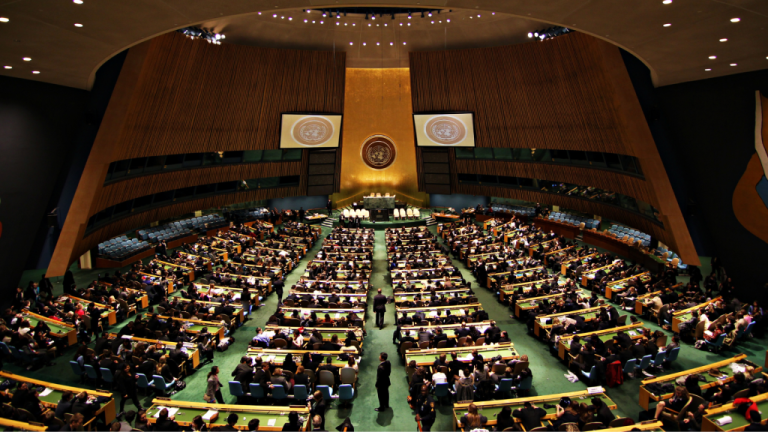
The United Nations said on Friday that it was facing imminent financial collapse and would run out of money by July if countries, namely the United States, did not pay their annual dues that amount to billions of dollars.

Senior UN officials said that if the cash ran out, the agency would be forced to shut down its landmark headquarters in New York by August. The UN Security Council, a 15-member body responsible for maintaining international peace and stability, convenes its meetings at UN headquarters.

It would also have to cancel the annual General Assembly gathering of world leaders held in September and shut the Office for the Coordination of Humanitarian Affairs, which responds to global emergencies like conflicts and natural disasters, it said.

The UN secretary general, António Guterres, sent a letter to the Ambassadors of all 196 member states last Thursday warning them of “imminent financial collapse,” saying the organisation’s financial straits this time were different from those in any previous periods, according to a copy of the letter seen by The New York Times.

“The crisis is deepening, threatening programme delivery and risking financial collapse,” Guterres wrote. “And the situation will further deteriorate in the near future. I cannot overstate the urgency of the situation we now face.”

On 30 December, the General Assembly authorised US$3.45 billion for the United Nations’ 2026 budget, covering the organisation’s three core pillars of work: peace and security, sustainable development and human rights.

The United States is responsible for about 95 percent of the money owed to the United Nations, about US$2.2 billion, according to a senior UN official who briefed reporters on the agency’s budget crisis. That amount is a combination of the U.S annual dues for 2025, which has not been paid, and for 2026, the UN official said.

As for comment, the U.S mission to the United Nations referred questions to the State Department, which did not immediately respond.

“It leaves the organisation exposed to structural financial risk and forces a stark choice: Member States must either agree to overhaul our financial rules — or accept the very real prospect of the financial collapse of our organisation,” Guterres wrote.

President Trump, citing mismanagement, waste and redundancy, withdrew the United States in early January from dozens of international organisations, including several UN agencies like the Population Fund.

Trump had already pulled the country out of UNESCO, the UN cultural agency; the World Health Organisation; and the UN Human Rights Council. And he said the United States would reduce funding for peacekeeping operations.

In addition to its annual dues, the United States also owes the United Nations about US$1.9 billion for active peacekeeping missions, US$528 million for closed missions and US$43.6 million for tribunals such as the International Court of Justice and the International Criminal Court, said the senior UN official in the briefing.

The United States has indicated to the United Nations that it would make a payment of about US$160 million for active peacekeeping but would not pay for the tribunals, the senior UN official said. Peacekeeping missions have been instructed to reduce their budgets by 15 percent, the UN official said.

“When it comes to paying, it’s now or never,” said Farhan Haq, a spokesman for the United Nations. “We do not have the sort of cash reserves and the sort of liquidity to keep functioning, as we’ve done in previous years. And this is something that the secretary general has warned with increasing strength each year.”

Haq said that if the United Nations shut down in July, humanitarian work around the world would also be affected and the work of civilian staff hampered. Agencies such as UNICEF, which handles children’s issues; the UN Refugee Agency; and the World Food Program have budgets separate from donations and would continue to operate. But the UN agency that coordinates relief work across agencies would close.

Richard Gowan, the UN director for the International Crisis Group, a conflict-resolution organisation, said that morale was already low among UN staff members across its agencies because of layoffs and shrinking programs. If money were to run out by the summer, Gowan said, one option would be to ask staff members to continue working free for an interim period.

But the real challenge would be to keep conflict mediations, including staff in war zones, and peacekeeping operations overseas afloat without salaries and payments to vendors.

“Guterres has made similar warnings before, and the UN has limped through,” Gowan said. “In the short term, he is probably trying to bounce some big donors into paying up as soon as possible,” he said.

Fiji High Court rules Malimali’s dismissal unlawful, says PM lacked authority

0

The Suva High Court has ruled that the dismissal of former Barbara Malimali as Commissioner of the Fiji Independent Commission Against Corruption (FICAC) was unlawful, finding that the Prime Minister did not have the constitutional authority to advise the President to revoke her appointment.

Delivering judgment today, Justice Dane Tuiqereqere upheld Malimali’s judicial review, which challenged her dismissal on June 2, 2025.

Malimali was removed from office following a Commission of Inquiry into her appointment, after the President acted on the advice of Prime Minister Sitiveni Rabuka.

Her counsel, Tanya Waqanika, had argued that under the 2013 Constitution and the FICAC Act, only the Judicial Services Commission (JSC) has the power to advise the President on the appointment, suspension or removal of a FICAC Commissioner.

The State countered that the Prime Minister acted out of “constitutional necessity”, claiming the JSC was effectively paralysed or compromised at the time the decision was made.

Malimali had asked the Court to quash the decision revoking her appointment, reinstate her to office, and award damages for loss of income and damage to her reputation.

Lawyer Tanya Waqanika, who represents former Barbara Malimali, says the High Court’s ruling confirms that the President’s decision to revoke her client’s appointment was ultra vires, or beyond legal authority.

Speaking after judgment was delivered in Suva today, Waqanika said the Court had made it clear that the process used to dismiss Malimali was unlawful.

“What the President did in that decision, acting on the advice given, was ultra vires,” she said.

Waqanika said the Court ruled that matters relating to the appointment or removal of a FICAC Commissioner must be left to the Judicial Services Commission.

“The judge has ruled that this must be left to the Judicial Services Commission, and so the ball is now in their court,” she said.

“We will be taking instructions from our client on the next steps.”

Asked what Malimali would have said had she been present, Waqanika replied light-heartedly: “She would have said a lot of things — she’s a funny one.”

On the implications of the ruling, Waqanika said the Court had clearly affirmed the constitutional role of the JSC.

“The Judicial Services Commission is the rightful body to recommend the appointment and removal of the FICAC Commissioner to the President, not the Prime Minister,” she said.

Waqanika also explained that the judge did not rule on reinstatement at this stage, noting that remedies would be addressed separately following further directions from the Court.

Pacific island Bougainville rejects Chinese partner for mine that will fund independence

0

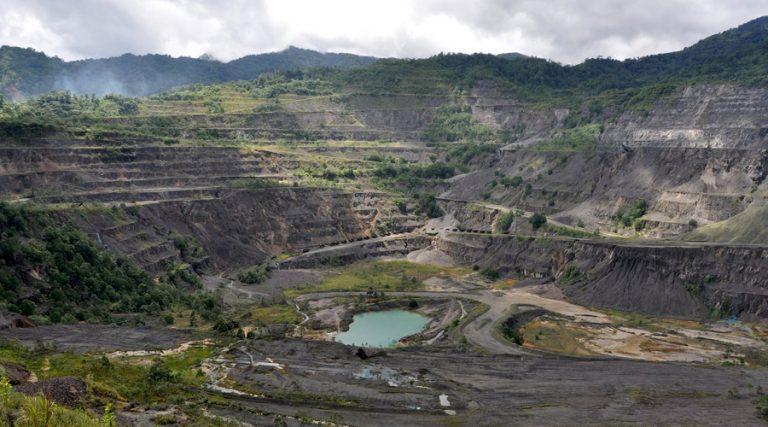
The Pacific island of Bougainville has rejected a partnership with Chinese miner CMOC, opens new tab to reopen a gold and copper mine that was among the world’s largest before it was shut by a bloody civil war, instead opting to deal with an Indian company.

With a population of 300,000, Bougainville has set a deadline of 2027 to achieve independence from Papua New Guinea and needs to reopen the Panguna mine to build its economy.

Previously operated by Rio Tinto, the Panguna mine was once a major export earner for Papua New Guinea, before it closed in 1989 as a civil war that killed 20,000 people broke out.

Bougainville President Ishmael Toroama said in a statement last Thursday that he had rejected a proposed partnership between Bougainville Copper (BOC.AX), opens new tab and CMOC. It was the first public indication that the Chinese company had been chosen by the local miner to invest in Panguna.

Bougainville Copper was instead directed by Toroama to engage with the Indian company Lloyds Metals & Energy Limited for a mining or services partnership contract model.

In a statement to the Australian Stock Exchange on Friday, Bougainville Copper said its representatives and CMOC were “continuing efforts to engage with the president”.

Bougainville sits 30 km (18 miles) from the Solomon Islands, which struck a security pact with China in 2022, as Beijing seeks to expand its influence in the strategically located region.

Oliver Nobetau, Pacific fellow at the Lowy Institute think tank in Australia, said Toroama has previously said he would seek investment from Beijing if western countries did not step up to support Bougainville, and it was interesting that an Indian company was now favoured.

“With a Chinese company there is a risk of what it will bring to regional stability. It is right next to Solomon Islands,” he said.

The Bougainville government became the largest shareholder in Bougainville Copper, with a 72.9 percent stake, after Papua New Guinea transferred its shares to the autonomous region on 14 January.

Nobetau said Bougainville needs an economic injection from the mine, as it can only generate 5.3 percent of its budget internally.

Papua New Guinea Prime Minister James Marape has said that Bougainville must be able to fund at least half of its budget if the Pacific archipelago’s aspiration of political independence is to be a success.

Before the mine closed, Bougainville contributed 44 percent of Papua New Guinea’s export earnings.

Bougainville’s population voted for independence in 2019. However, independence must be confirmed by a vote of Papua New Guinea’s parliament.

U.S territories brace for Trump’s deep sea mining

0

For the tiny island called “the tip of America’s spear” in the Pacific, it can be hard to say no to the United States government.

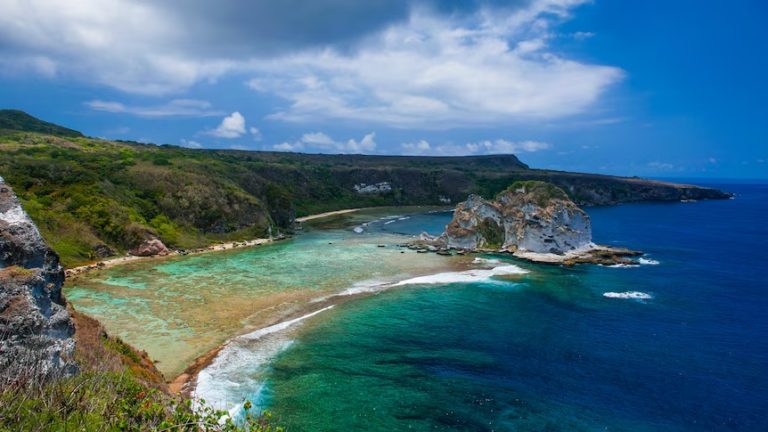
So Guam’s governor, Lou Leon Guerrero, expects a tough fight as the U.S territory pushes against a Trump administration-backed move towards opening nearby waters for deep-sea mining.

“We are not a sovereign nation, so we have no control,” Guerrero said.

“They can just come in and do whatever they want … We’re at their mercy.”

More than a year after U.S President Donald Trump signed an executive order to “accelerate” the exploitation of seabed minerals, the U.S government is moving quickly towards deep-sea mining in its Pacific territories.

The U.S Bureau of Ocean Energy Management (BOEM) has started gauging interest in mining leases for the waters of two U.S Pacific territories, the Commonwealth of the Northern Mariana Islands and American Samoa, issuing a “request for information and interest”.

The National Oceanic and Atmospheric Administration (NOAA), a U.S regulator, last week also made it easier to obtain permits for seabed mining by halving the required number of environmental assessments and public comment periods.

And the Trump administration expanded its search for seabed minerals in U.S territories, announcing a new survey mapping more than 100,000 square kilometres of American Samoa waters.

Guerrero said Guam — whose waters are connected with those of the Northern Marianas — was not consulted before BOEM issued its request for information about deep-sea mining.

“We’re concerned about how it’s going to impact our fish here,” she said.

So far, Guam’s opposition campaign is only taking shape.

“We’re working with attorneys … we’re working with scientists to see what kind of a fight we have legally and scientifically.”

The Trump administration says the minerals on the ocean floor are critical to national security, energy independence and advanced manufacturing.

And in a world order where the U.S is becoming increasingly assertive, there are fears the small Pacific Island territories have little bargaining power.

But Guam hosts U.S Air Force and naval bases, and the territories are strategically significant to Washington as it looks to counter China’s regional influence.

Guerrero hopes she and her counterparts in the Northern Marianas and American Samoa can leverage their islands’ strategic importance in opposing the deep-sea mining plans.

“All three of us are united in our position, and that is to pause any activities of deep-sea mining ’til we get more [scientific] evidence and data about the consequences and the effects,” she said.

Across the Pacific Ocean, rock-like lumps called 2polymetallic nodules” lie undisturbed at vast depths on the sea floor.

The Trump administration is eyeing them for their nickel, copper, cobalt and manganese.

Deep-sea mining would harvest the minerals using a robot to vacuum the nodules to the ocean’s surface for processing ashore.

Before Trump returned to power last year, the UN-affiliated International Seabed Authority (ISA) had granted a small number of exploration contracts to map and search potential mining areas in the Pacific Ocean’s international waters, while it developed rules for regulating deep-sea mining.

But the U.S isn’t a member of the ISA, and after re-entering the White House, Trump expedited licence approvals for deep-sea mining in American and international waters.
.
In written responses to the ABC, BOEM said deep-sea mining could enhance U.S economic and national security by reducing its dependence on other countries for critical minerals.

“The U.S relies heavily on foreign sources, particularly China, for these materials,” it said.

“Developing a domestic supply of critical minerals supports the [Trump] administration’s goals for energy independence, supply chain resilience, and technological leadership.2

Deep-sea mining has divided the Pacific, where many island nations remain worried about the potential impacts on fish and other species from the sediment it disturbs.

One recent study also suggested the nodules on the sea floor could be generating oxygen — a finding that scientists say warrants more research.

If proven, it challenges the belief that most deep-sea habitats are reliant on oxygen sinking from the surface.

The lieutenant governor of Guam, Josh Tenorio, the territory’s second-highest-ranking official, said the Trump administration’s push to harvest seabed minerals is another environmental blow to a region already struggling with the impacts of climate change.

“It’s a very violent proposal for deep-sea mining with limited research and with limited ethical supervision or proposed ethical parameters” he said.

“It really is a big threat.”

BOEM said while it was exploring the potential to commercially lease seabed critical minerals, there had been no decision to grant leases or conduct mining.

“Initiating a request for information is the optional, first step in a multi-phase process to assess industry interest, environmental considerations, and cultural impacts before any leasing decisions are made,” it said.

“This process ensures decisions are science-based, environmentally responsible, and informed by public input.”

The bureau said it would consult with the US territories before making any decisions.

“BOEM has emphasised that intergovernmental collaboration is a priority and will engage territorial governments, Indigenous communities, and stakeholders throughout the process,” it said.

Still, opponents of deep-sea mining in the Pacific fear the Trump administration is intent on granting commercial leases.

They’ve started a bipartisan campaign against the plan across US territories in the Pacific.

It’s gathered more than 60,000 public comments, letters and petition signatures, said Angelo Villagomez, a senior fellow at U.S think tank the Centre for American Progress.

“This is a wildly unpopular initiative that the Trump administration is trying to force on the territories in the Pacific” he said.

U.S territories have been unified in their response, said Neil Weare, co-director of advocacy group Right to Democracy, which is helping lead the campaign.

“I’ve really never seen this kind of cohesion, not just across territories but even within territories,” Weare, who grew up in Guam, said.

“This is not a partisan issue, this is not an ideological issue, people have really come together.”

Deep-sea mining in U.S territories would also likely face legal challenges, said Emily Jeffers, a senior lawyer at U.S-based environmental group the Centre for Biological Diversity.

“It is deeply offensive to the people of American Samoa and the Northern Mariana Islands that these lease sales might happen against the wishes of the entire population,” she said.

BOEM said it extended the comment period for the request for information in “response to territorial leaders’ concerns, ensuring ample opportunity for participation”.

BOEM said it would review the submissions to determine industry interest, environmental and cultural considerations, and potential conflicts with existing ocean uses — but said there was “no fixed timeline”.

Guerrero is hoping Guam’s relationships with the U.S government and its role as a defence hub will give it leverage, but she is doubtful of its options.

“We are the property of the United States … that’s the severity of it,” she said.

Advocates hope the united front of US Pacific territories against deep-sea mining will draw global attention.

“The US is investing billions and billions of dollars in the U.S territories, especially around national security, around defence, and this is the time for us to become very clear on the type of relationship that we have” Sheila Babauta, a former congresswoman for the Northern Marianas, said.

Babauta, who is also chair of the grassroots non-profit organisation Friends of the Mariana Trench, wants local people to continue standing up.

“We’ve had this relationship with the United States for almost 50 years now, influencing our way of life and introducing values that sometimes don’t fit with an island-specific viewpoint,” she said.

“I want to encourage our community here to continue practising our culture,” said Babauta.

Ravunawa: Fiji safe from Nipah virus threat right now

0

Fiji faces no immediate threat from the Nipah virus outbreak, with health authorities closely monitoring regional developments and maintaining strong surveillance systems, Assistant Minister for Health Penioni Ravunawa says.

Ravunawa gave the assurance while speaking to media on the sidelines of World Leprosy Day commemorations at the Twomey Hospital in Tamavua, Suva last week.

“At the moment there is no threat for Fiji. Our surveillance department are looking closer to the spread of that outbreak,” Ravunawa said.

Nipah virus is a highly infectious disease that can cause severe illness and has raised international concern following reported cases overseas.

Ravunawa said Fiji’s health system had significantly strengthened its ability to detect and respond to emerging infections, particularly since the COVID-19 pandemic.

He said Fiji’s Centre for Disease Control had the tools and expertise needed to identify viruses should they enter the country.

“We will be able to identify virus that would filter in similar to COVID.”

He said surveillance systems continued to play a critical role, with health officials closely tracking outbreaks across the Asia-Pacific region.

“The CDC will give indication when there is a risk, there is no need to report on anything when there is an insignificant number.”

Ravunawa said the Minister for Health remained closely engaged with regional developments and that the public would be advised if the situation changed.

“Once the number is identified significant for Fiji, then they will provide an advisory along the way.

“It is safe right now,” he said.

Stay connected

529FansLike
172FollowersFollow
156SubscribersSubscribe
- Advertisement -