
Home Blog Page 106

Corruption Perceptions Index 2025: Pacific leaders falling short on anti-corruption commitments

0

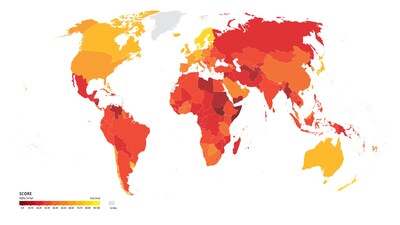
Corruption remains a persistent challenge across the Pacific, according to the 2025 Corruption Perceptions Index (CPI), released Tuesday by Transparency International.

Pacific leaders are failing to do enough to reduce corruption, despite their collective commitment to strengthen good governance as part of the 2020 Teieniwa Vision, the region’s roadmap to tackle corruption.

Whilst New Zealand (81) and Australia (76) retain relatively high rankings in the index, the long-term view shows a steady decline since 2012. In New Zealand, this downward trajectory is the result of a lack of action on anti-corruption legislation and insufficient resourcing to support investigative and prosecutorial functions.

Meanwhile, Australia should strengthen protections for whistleblowers with a whistleblower protection authority, tackle undue influence by introducing stricter regulations around lobbying, and strengthen its National Anti-Corruption Commission.

Nearby, in the Pacific Smaller Island Developing States, scores remain low. Papua New Guinea (26) is the lowest scoring country in the region, reflecting ongoing challenges in strengthening anti-corruption institutions and failing to address financial and political integrity risks.

In Vanuatu (47), Solomon Islands (44) and Fiji (55), there has been little to no change for the past several years, highlighting limited action to address corruption, weak oversight institutions and concerns around governance and transparency.

The Pacific’s journey toward transparency, and to live up to the commitments in the Teieniwa Vision to tackle corruption, is a shared one that calls for deep collaboration between political leaders, civil society and regional partners.

The Smaller Island Development States continue to rely heavily on foreign aid to advance development goals and need increased support from higher income nations in the region to progress the fight against corruption. However, leaders of these countries need to step up with stronger governance, and greater transparency and accountability. This will also help reduce corruption risks and increase the effectiveness and accountability of foreign aid.

Kelera Serelini-Varawa, Pacific Regional Engagement and Advocacy Lead at Transparency International said: “The Pacific cannot afford to let corruption undermine its future. Pacific leaders should move beyond statements and prioritise meaningful action to combat corruption, uphold integrity and strengthen democracy.

“With strong anti-corruption records, Australia and New Zealand are well placed to lead and support the region. Larger partners must step up, civil society must be empowered, and Pacific leaders must act with conviction to build a region founded on transparency, integrity and public trust.”

The CPI ranks 182 countries and territories by their perceived levels of public sector corruption on a scale of zero (highly corrupt) to 100 (very clean).

The top scorers were New Zealand (81) and Australia (76), ranking fourth and 12th in the world, respectively.

Papua New Guinea (26) is the lowest scoring nation in the region, dropping five points since 2024.

Fiji (55), the highest scoring of the Smaller Island Developing States due to its robust legislative framework, has seen no change in its score compared to five years ago.
Sacked Solomon Islands Ministers to get new roles as PM Manele defends Cabinet shake-up

0

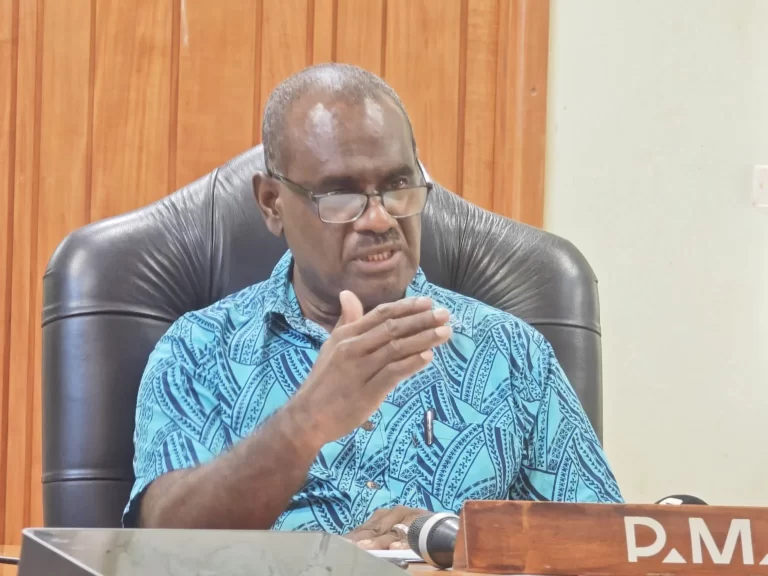
Solomon Islands Prime Minister Jeremiah Manele says two ministers removed from their portfolios this week will be offered roles on cabinet sub-committees.

Speaking to reporters in a doorstep interview Tuesday, Manele defended his decision to drop Rennell and Bellona MP John Tuhaika Jnr and Malaita Outer Islands MP Polycarp Paea.

Tuhaika was Minister for Traditional Governance, Peace and Ecclesiastical Affairs, while Paea held the Climate Change, Disaster Management and Meteorology portfolio.

Both were dismissed in a cabinet shake-up that also saw former Provincial Government Minister Rollen Seleso – who withdrew support from Manele during last year’s mass ministerial walkout – reinstated to the same role.

Manele said the decision to remove Tuhaika and Paea, and to bring back Seleso, was part of a cabinet realignment aimed at reflecting coalition commitments and ensuring the full implementation of the government’s budget.

“These changes are designed to ensure fair and balanced representation in the distribution of cabinet portfolios within the coalition government,” he said.

Despite the reshuffle, Manele maintained that the government remains stable.

He added that Tuhaika and Paea will continue to serve in the government caucus and contribute to policy-making.

“I’ve spoken to them already, and I intend to appoint them as chairs of a number of cabinet sub-committees,” the prime minister said.

Manele also gave a clear assurance that there would be no further ministerial changes at this stage.

He described the reshuffle as a demonstration of the government’s commitment to delivering its policies and national priorities.

The political shake-up resulted in the swearing-in of three ministers Tuesday. Rollen Seleso, MP for South Guadalcanal, has reclaimed the Provincial Government portfolio, replacing Wayne Ghemu (MP for Rannongga/Simbo), who has been moved to the Environment Ministry.

Stephen Kumi, MP for Temotu Nende, was sworn in as the new Minister for Traditional Governance, Peace and Ecclesiastical Affairs.

In a statement, Prime Minister Jeremiah Manele said the adjustments followed consultations with coalition partners and Members of Parliament to ensure Cabinet responsibilities fairly reflect the makeup of the Government for National Unity and Transformation (GNUT), giving due consideration to party representation and strengthening coordination for effective delivery of the 2026 programme of work.

“As we move into full implementation of the 2026 Budget, it is important that ministerial portfolios are aligned to support strong coordination and clear leadership across key sectors,” Prime Minister Manele said.

“These adjustments strengthen our collective capacity to deliver on the commitments we have made to our people,” he added.

The Prime Minister acknowledged the contributions of outgoing Ministers and thanked them for their service.

More banks give $15b PNG gas project the cold shoulder

0

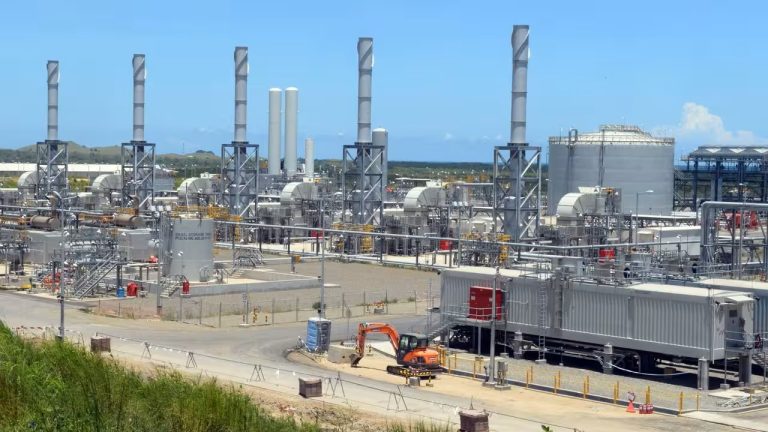
Another 12 banks have pledged not to provide financing for a proposed $15 billion (US$7.78 billion) liquefied natural gas project in Papua New Guinea, in which Australia’s Santos is a major investor.

Fifteen banks and credit agencies, including Commonwealth Bank, ANZ, NAB and Westpac, had already committed not to finance the TotalEnergies-led gas project, which would be PNG’s second biggest.

They have been joined by others including ING, Rabobank and Standard Bank, the Swedish Export Credit Corporation, five environmental groups said in a joint announcement on Tuesday.

“Many of the world’s major banks, including all of Australia’s big four, are recognising the growing risks and have ruled out funding the Papua LNG project, leaving MUFG (Japan’s Mitsubishi UFJ Financial Group) and other Japanese banks isolated,” said Market Forces chief executive Will van de Pol.

French energy giant TotalEnergies has proposed building a four-train LNG plant next to ExxonMobil’s facility in Caution Bay that would be capable of liquefying four million tonnes of gas per year.

A final investment decision on whether to move forward with the project has been pushed back for several years and is now scheduled for later in 2026.

Australia’s Santos holds a 22.8 per ent interest in the joint venture, with ExxonMobil on a 37.1 percent stake and TotalEnergies holding the remaining 40.1 percent.

TotalEnergies said the proposed plant is ideally located to supply LNG to Asia, a region that still relies on coal to supply 85 percent of its electricity.

PNG officials have called the project one of “national significance” and important to the country’s economy.

Activists say it would be disastrous for the people of PNG, the local environment and the global climate.

They also argue it would breach many of the voluntary standards banks use to assess the social and environmental risks involved in financing large infrastructure projects.

Peter Bosip, executive director for PNG’s Centre for Environmental Law and Community Rights, said financing the project was like borrowing against the future.

“Our land, sea, forests, reefs and communities will pay the debt long term after gas is gone,” he said.

TotalEnergies and Santos have been contacted for comment.

Solomon Islands faces a graduation it may not be ready for

0

Moving beyond “Least Developed Country” status may be a sign of growing incomes – but not less vulnerability.

By Alexandre Dayant

In December 2027, Solomon Islands is scheduled to graduate from the United Nations’ Least Developed Country (LDC) category. It will be only the third Pacific Island country to do so after Samoa (2014) and Vanuatu (2020). In New York and Geneva, this is framed as a success story: Solomon Islands has exceeded the income and human assets thresholds in two consecutive UN reviews, enabling it to graduate.

In Honiara, however, the discussion is far more cautious.

While Solomon Islands now meets the thresholds for graduation, its economic resilience remains weak. Indicators linked to diversification, fiscal stability, governance, and climate exposure point to a country still operating with thin buffers and high vulnerability to shocks. Senior government and central bank officials have openly questioned whether the country is ready to lose access to the international community’s most concessional assistance and preferential market access.

This tension goes to the heart of the Pacific LDC dilemma. Graduation is meant to signal that a country no longer needs special international support. But the LDC framework captures only part of the regional reality. Structural constraints – remoteness, narrow export bases, limited fiscal space, and extreme climate exposure – are not transitional challenges that disappear with income growth. They are permanent features.

This is reflected in the Economic and Environmental Vulnerability Index (EVI), the third graduation criterion. Solomon Islands’ recent EVI (50) remains well above the UN threshold (32), reflecting heavy dependence on logging and fisheries, geographic dispersion and climate risk.

Solomon Islands’ graduation should be treated as a test case for the Pacific.

Solomon Islands is not alone. Kiribati and Tuvalu, both of which have repeatedly met the graduation criteria, face similar debates. Each may continue to pass the technical thresholds while remaining highly vulnerable, raising a simple question: is the LDC graduation process placing enough weight on vulnerability?

No is increasingly the answer. The current framework allows countries to graduate by meeting income and social thresholds even when vulnerability remains extremely high. Yet countries that remain structurally exposed are often not ready to lose access to international support measures, including concessional finance, trade preferences and other forms of special treatment.

For highly vulnerable states, graduation is less about the date than the terms: transition length, access to concessional finance, and the pace of the shift from grants to loans. This argues for a stronger vulnerability lens in graduation decisions and, at minimum, more robust “smooth transition” frameworks, longer preparatory periods and extended access to key benefits after graduation.

In practice, Solomon Islands is already pursuing that path. Recognising these challenges, the government secured a delay to graduation from 2024 to 2027 after the Covid-19 pandemic, civil unrest and disasters disrupted national planning. It has since adopted policies aimed at making graduation “sustainable and irreversible” including through economic diversification, stronger public finance and climate-resilient infrastructure. But such ambitions will require significant investments at a time when government revenues are thin and unlikely to expand.

Development partners are therefore decisive.

Graduation will not immediately cut off Solomon Islands from aid. Official development assistance still accounts for roughly one-third of government revenue, and eligibility is determined by OECD income thresholds that are far higher than the LDC cutoff. Australia, New Zealand, Japan, and the European Union have all indicated that their support will continue after graduation. However, some losses are unavoidable: the UN’s dedicated climate fund for LDCs, even if small in scale for Solomon Islands, will close to new proposals once graduation occurs.

The main risk to development financing does not stem from LDC graduation but from the expected shift, from 2026, of multilateral development bank financing – around 13 percent of total aid – from grants toward loans, following the IMF’s assessment that Solomon Islands’ external debt is sustainable.

Australia, as the Solomon Islands’ largest development partner, will be central to managing the transition. Its support so far has rightly focused on governance, health and education. But as graduation nears, the emphasis should shift toward economic resilience – including scaled-up investment in climate-resilient economic infrastructure.

Partners can also accelerate economic diversification. Supporting the Bina Harbour tuna processing project – a credible near-term alternative to declining logging revenues – would be a strong first step. Mining, while politically sensitive, has already overtaken logging as a source of export revenue and could be transformative if governance improves and tax exemptions are tightened. Australia could help shape outcomes by pairing blended finance, guarantees and technical expertise with firm environmental, social and governance standards.

Trade policy is another lever. While most preferences will remain, some exports – particularly coconut oil and veneer sheets – will face higher tariffs in key markets such as South Korea, Switzerland and Japan. Partners could help offset this by supporting export diversification, facilitating market access elsewhere, and investing in standards compliance and value-addition.

Solomon Islands’ graduation should be treated as a test case for the Pacific. A “soft landing” – graduating on schedule, backed by well-managed resources, realistic sequencing of reforms, and extended support from development partners – offers the most credible path forward. Australia and other partners should also use this moment to continue to push for broader reforms through the UN, OECD and development banks so that vulnerability weighs more heavily in future graduation decisions.

And if Solomon Islands ultimately concludes that the risks of graduation are too great, partners should be prepared to support a further deferral request.

Because graduation should not lead to greater fragility. It should mark a transition to stronger resilience.

Fresh report warns fish fraud extends to one fifth of global catch

0

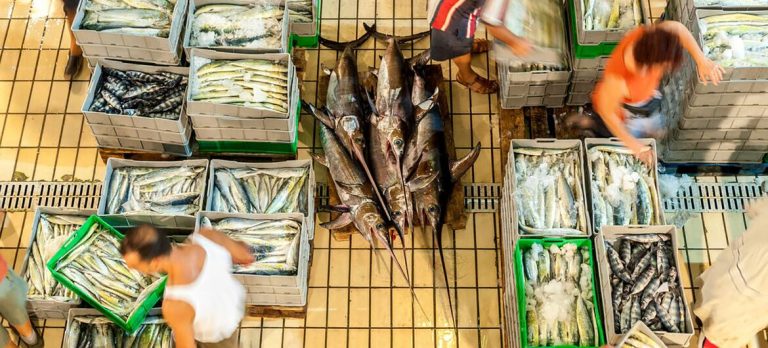
Fish fraud is widespread in markets, grocers and restaurants around the world, but a growing number of innovative tools are turning the tide, according to a new report published on Tuesday by the UN Food and Agriculture Organisation (FAO).

While there is no official estimate of how prevalent fraud is in the US$195 billion global fisheries and aquaculture sector, empirical studies suggest that 20 percent of the trade may be subject to some type of fraud, according to FAO.

Menu of misinformation

Some studies suggest that up to 30 percent of seafood products may be mislabelled in restaurants, with the report citing cases from around the world, from ceviche stands in Latin America and seafood eateries in China to canned tuna products in the European Union.

While as much as one third of aquatic products sold in the United States may not conform to package descriptions, less than one percent of imports are tested, the report warned.

What drives fish fraud?

Economic incentives are the most widespread driver of fish fraud.

Selling Atlantic salmon, almost all of which is farmed, as Pacific salmon, most of which is wild caught, delivers a nearly US$10 benefit per kilogramme.

Some fraud occurs to mask the geographic provenance of a product or to suppress evidence of above-quota landings, which may pose risks to the sustainability of fishery stocks.

Finding fraud

Fish fraud is defined in the report as “a deliberate practice intended to deceive others” and can pose risks to biodiversity, human health or economic systems, according to Food fraud in the fisheries and aquaculture sector, produced by FAO through cooperation between its Fisheries and Aquaculture Division and the Joint FAO/IAEA Centre of Nuclear Techniques in Food and Agriculture.

The main categories of fish fraud are:

*Adding water to unprocessed fishery products to bolster weight and price
*Adulteration (adding colouring to make tuna look fresher)
*Counterfeiting (imitation shrimp made from starch-based compounds)
*Simulation (packaging surimi to seem like crab meat)
*Diversion (distributing legitimate products outside of their intended markets)
*Misbranding (such as incorrect claims about sustainability)
*Overrun (involving overfishing)
*Species substitution (selling tilapia as red snapper)
*Tampering and mislabelling (involving origins and even expiry dates)
*Plain theft

Meanwhile, the human welfare risks of some seafood frauds are evident as some fish pose risks when eaten raw, while re-freezing seafood increases the risk of bacterial growth.

Catching fishy business

The global scale of fish consumption – targeting over 12,000 seafood species – the diversity of fraud type and the lack of standardised regulatory or legal definitions, make global estimates difficult to assess, but there are novel ways to tackle the scourge.

Advanced laboratory tests can be effective in identifying substances, but access to these methods is limited.

Meanwhile, the report shows that portable X-ray fluorescence and machine-learning models are innovations that could help cut fraud and make regulations more enforceable.

To quash fish fraud, the new report advocates for:

*Harmonised labelling requirements
*Mandatory inclusion of scientific names where possible
better traceability systems
*Adding science to the tacklebox

Given its complexity, identifying the crime is not straightforward, but the report goes into considerable detail about how advances in science can contribute to tackling fraud, including:

*A standard method to determine whether and how many times a seafood product has been frozen has so far proven elusive, but differences in the fatty-acid composition of wild and farmed fish may be used to detect fraud
*Carbon and nitrogen ratios to determine the geographical origin of major commercial fish species

Netting offenders

Prevention and enforcement are critical to reduce and eventually eliminate fish and all food fraud, according to the report, which reviewed concerted efforts to tackle cases in Argentina, Italy and the United States.

An investigation using DNA-barcoding to assess the scale of mislabelling in Los Angeles, California, found that while it is quite low in processing plants, it is moderate among grocers and particularly prevalent in sushi restaurants.

A local initiative by local academia, industry, government stakeholders – together with an education campaign coupled with ongoing blind tests, reduced seafood mislabelling in the focus area by two thirds over 10 years.

What the UN’s doing

Part of UN ongoing efforts include:

*FAO and the Codex Alimentarius Commission – the international food standards body – are working on toughening international standards to combat food fraud through the Joint FAO/IAEA Centre, FAO offers technical support to members that need to bolster their testing capacities.

‘No intention’: Luai makes call on Tigers future

0

Jarome Luai has delivered his strongest commitment to Wests Tigers to date, claiming he has “no intention” of leaving and declaring: “I’m comfortable in these colours and I want to be here”.

In news that will buoy the club’s long-suffering fans who are desperate to end a 15-season finals drought in 2026, Luai was adamant he wants to be a Tigers player long term.

The Samoa international arrived at the Tigers from Penrith last season after signing a five-year deal to leave the Panthers.

The deal included a clause, which must be activated by 30 April 2026, that gives the playmaker the option to exit at the end of this season.

But in a strong statement of intent, Luai was adamant he wants to see out all five seasons of his contract and be part of the Tigers’ resurgence under coach Benji Marshall.

Marshall inked an extension until the end of 2030 over the summer.

“Benji is a big part of why I’m here and a big part of why other boys made the move over,” Luai said.

“There’s quite a bit of relief and confidence that the club’s going in the right direction and as players and as the team, we just need to go out there on the field and do our job.

“I’ve no intention of (leaving), I’m captain and leader of this team and I think these young boys need me.

“I’ve been good at shutting everyone else out and knowing what I want to do and I’m comfortable in these colours and I want to be here.”

Luai said he struggled to deal with the expectation of being the Tigers’ saviour after arriving from Penrith as the team’s key recruit and new halfback.

Luai had left the Panthers where he played second fiddle to Nathan Cleary, once quipping he wanted to be Batman after years of playing the role of Robin.

But the 29-year-old will revert to five-eighth this season, with Adam Doueihi set to play as the Tigers’ No.7.

“At the end of the day, it’s just a number – I don’t think my role really changes in the team,” Luai said.

“I was coming here with the price tag, the expectation, the pressure – the team needs me to be at my best I think that’s in the No.6 with an attacking mindset.

“I probably didn’t handle it as well as I would’ve liked but that’s why I’m here, bro, it’s why I made the move – it’s all about growth for me.”

Luai namechecked winger Luke Laulilii to have a breakout season for the Tigers, who open their campaign in round two with a Saturday game at Leichhardt Oval against North Queensland.

Japan Prime Minister’s supermajority could reshape security for the Pacific, experts say

0

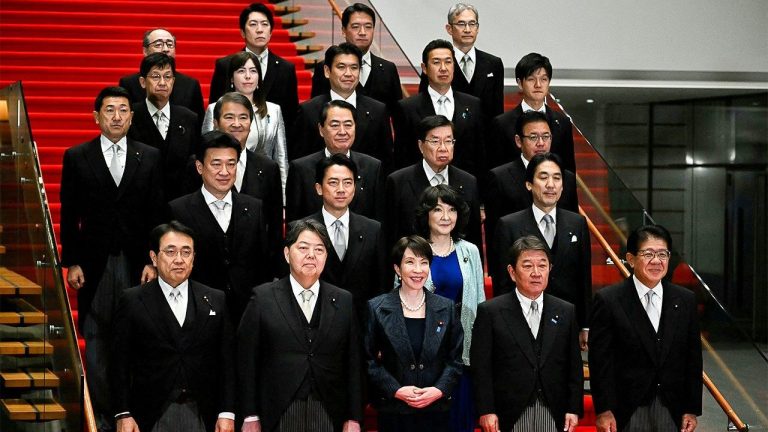
A landslide victory for Japanese Prime Minister Sanae Takaichi has put her ruling coalition in control of three-quarters of the lower house or Shūgiin.

Last weekend’s win has also given Japan’s first female leader unprecedented room to reshape Japan’s security and defence policies.

For Pacific nations closely tied to trade and regional stability, the results are significant.

The conservative Liberal Democratic Party, led by Takaichi, reportedly won 316 of 465 seats, its largest majority since 1955.

Its coalition partner, the Japan Innovation Party, added 36 seats, meaning the Prime Minister will control around 75 per cent of the House of Representatives.

Takaichi framed the win as a clear mandate. “This election involved major policy shifts,” she told reporters in Tokyo.

“Particularly a major shift in economic and fiscal policy, as well as strengthening security policy. These are policies that have drawn a great deal of opposition.

“If we have received the public’s support, then we truly must tackle these issues with all our strength.”

The Prime Minister has taken a much more assertive approach to China than her predecessors, especially regarding Taiwan.

Soon after taking office in late October, she warned in parliament: “I believe any action involving the use of force, such as China deploying naval ships, can only be described as a survival-threatening situation.”

The phrase sets the legal benchmark for Japan to respond militarily under current laws.

Beijing has responded with travel warnings against Japan, leading to an estimated 500,000 Chinese travellers cancelling trips.

Takaichi’s government had already planned to double defence spending to two per cent of GDP, and the new supermajority could allow her to push constitutional revisions, including Article 9, which limits Japan’s use of military force.

Analysts suggest her lower house supermajority makes it politically difficult for the upper house to block her ambitions.

Japan is not a member of the Pacific Islands Forum but engages closely as a dialogue partner, providing aid, trade, and security support to Pacific nations.

Pacific voices are watching closely. Solomon Islands PM Jeremiah Manele has emphasised the importance of Pacific unity and dialogue in leading the region forward.

He urged inclusive engagement among nations and partners.

Other planned reforms such as establishing a national intelligence agency, loosening restrictions on defence equipment exports, and reinforcing Japan’s commitment to a nuclear-free nation, signal a wide shift in Japan’s security posture.

Jake Thrupp, a communications adviser writing for the Australian Strategic Policy Institute, notes: “By pairing military and security capabilities with institutional reform, Japan is positioning itself as a central pillar of regional balancing.

“Recent deals with the United States, including on critical minerals, will benefit Japan’s defence industrial base while also assisting both countries’ efforts to diversify from China.”

Fiji’s Prime Minister, Sitiveni Rabuka, says the Ocean of Peace concept is aimed at seeking a region “in which strategic competition is managed.

“Where stability is the touchstone of regional relationships, and where coercion is eschewed.”

The election campaign in Japan largely focused on domestic issues like the cost of living, but Takaichi made clear her security ambitions. “We want to ask voters about a major turning point in Japan’s security policy.”

For Pacific nations, Takaichi’s supermajority may mean a more assertive Japan in regional security, increased defence spending, and a willingness to share the burden of deterring threats in the Indo-Pacific.

This is a change, experts say, comes with both opportunities and risks.

Marshallese deported by ICE ‘having the hardest time’

0

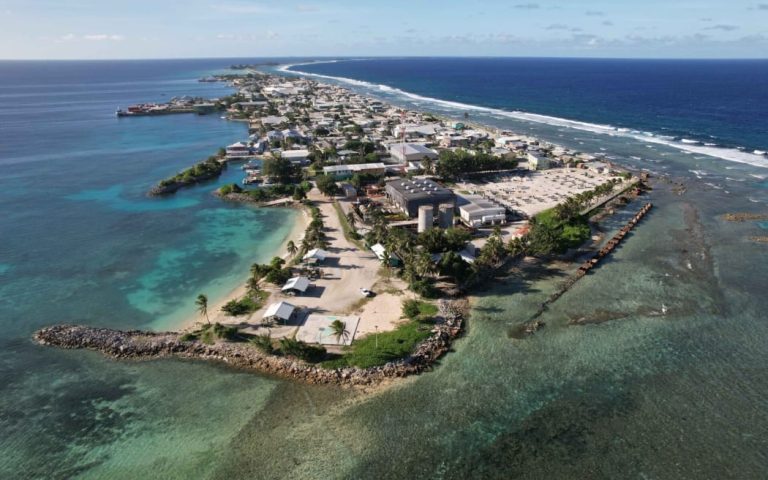
People deported to the Marshall Islands from the United States face a tough road to survival, experiencing difficulties being accepted by locals and often lacking the basics of life.

Marshallese are one of the main groups of Pacific peoples caught up in the immigration crackdown in the US.

Immigration and Customs Enforcement, or ICE, officers have been directed by the Trump Administration to arrest and deport large numbers of people to their country of origin, sometimes simply for a traffic infringement or a misdemeanour.

Last year alone, over 40 Marshallese were deported from the Northwest part of Arkansas, the state with the biggest concentration of Marshallese in the U.S.

RNZ Pacific has been talking to Marshallese, using pseudonyms in this article to protect their identity – deported from the U.S.

A Marshallese man deported in the past few months by ICE found himself back in an island nation he was born in but lived in only for a short time before his family migrated to the States where he was raised and lived most of his life.

Jack* had just served a custodial sentence when ICE came for him. Despite his good record inside, an Immigration Hold was placed on him just prior to his release.

“It was around the time that Donald Trump became president. It was messed up. They waited until I was done doing my time and then hit me with that information. If that was the case, they should have just come and picked me up from the beginning,” he said.

ICE swiftly removed Jack from the community he grew up with, who are all still back in the state of Arkansas.

“People I grew up with my siblings, my nieces and nephews, my daughter, my parents, my grandparents, my uncles, my aunties, everybody is over there,” Jack explained.

At least one Marshall Islander whisked away by ICE last year ended up at Guantanamo Bay, the United States’ infamous offshore detention facility, before diplomats secured his repatriation.

For deported Marshallese, finding themselves in Majuro or Kwajalein, without family or a job, has been challenging. Local people are suspicious of them.

“Some of these people deported back can’t go to those houses, because people in that family, in that house, are scared. They’re like, ‘oh, he’s a criminal’,” said Junior Bay, a Marshallese who was deported in 2013.

“Some of these guys are coming back for minor crimes or not even crime citations, and they’re having the hardest time with their life, so it’s hard for them to move around if they get judged.”

This was echoed by Jack.

“It’s a scary experience. Even though they are our people, we got a label on us. We’re already looked down on, and they haven’t even got to know us yet,” he said.

The deportations didn’t just begin with Trump’s crackdown.

Figures released by ICE for the year 2024 show that 67 Marshallese were deported that year – a clear increase on prior years, partly because the border had previously been shut for almost three years during the pandemic, so there was a bump in 2024 when the backlog got cleared.

Last year’s figures aren’t yet available, but it’s expected the number of those deported will rise again due to the Trump administration’s crackdown.

Given that the U.S administration is also making deals with other countries in Micronesia to take on deportees from third-party, it’s likely more Pacific communities will be presented with issues of displaced people in the medium term.

Tina*, a Marshallese deported two years ago after a second, minor felony conviction, spoke of the sense of a cultural gap.

“I was born here in the Marshall Islands, but I’m not raised here. I’m raised in the U.S. So, like, the mindset and mentality and tradition and customs here are different than back home,” she said.

“”I’m still trying to get used to it. It’s not easy. But if you don’t have family here or anybody that you can turn to, if you don’t have money, or if your name is not well known, or if you’re not a landowner or a chief, it’s a big struggle.”

Tina said that those like her who have been deported could do with some help – at least an opportunity to work – because they often bring useful qualifications and skills.

“Most of the deportees have a lot of experience and are highly qualified for the job here, but just because we’re labelled as deportees, it’s a struggle”

In the absence of government support, Junior Bay has been working with a small NGO to support returnees, as he prefers to describe them, to get into work or find a place to live

“These guys are always open to (having) help,” he said, adding that he reaches out to people who can provide some work or a place to stay for returnees while they get back on their feet.

He is working with Riem Simon, another who was deported to the Marshall Islands over a decade ago, in a bid to establish a transitional housing programme for recent arrivals.

“It’s a recovery programme centre,” Simon explained, noting their mandate is to help not just returnees, but also people with mental health issues, and people who have been incarcerated, internationally or locally.

The main thing he urged people to consider before judging the returnees is that the social dislocation they experience is severe.

“The most hurtful part is when we leave our family’s home. This is what really killed us, we the deportees. And that makes us think so much negative on how do we survive? What can we do to survive here in the Marshall Islands?”

The Marshall Islands government has not responded to RNZ Pacific’s requests for comment.

Vanuatu introduces draft UN resolution on ICJ demanding full climate compensation

0

Vanuatu has introduced the zero draft of a United Nations General Assembly resolution to endorse the International Court of Justice’s advisory opinion on the obligations of states in respect of climate change, delivered on 23 July 2025.

A core group of States contributed to the zero draft. It had cross-regional representation from Vanuatu, Barbados, Burkina Faso, Colombia, Jamaica, Kenya, the Marshall Islands, the Federated States of Micronesia, the Kingdom of the Netherlands, Palau, Philippines, Singapore, and Sierra Leone.

The draft resolution seeks to welcome the Court’s unanimous clarification of States’ climate obligations under international law by the UN membership, reinforcing the authority of the Court and respect for the rule of law and given practical effect to multilateralism and cooperation in addressing the climate crisis.

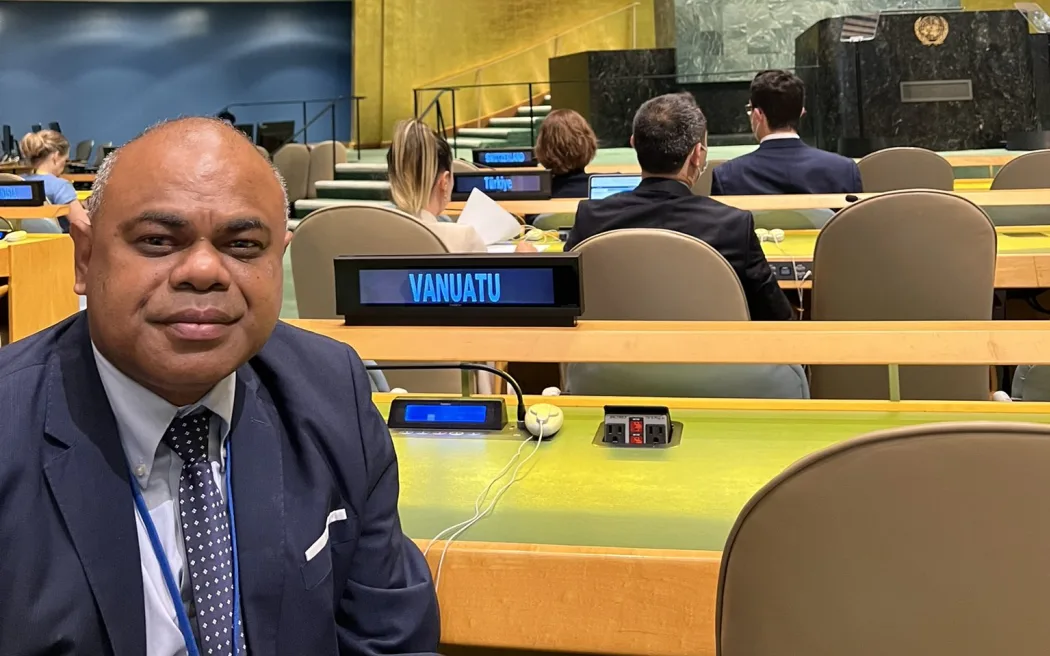
“This initiative reflects our enduring commitment to climate justice,” Ambassador Odo Tevi, Permanent Representative of Vanuatu to the United Nations said.

“The Advisory Opinion provides authoritative legal clarity. Our collective responsibility now is to ensure that this clarity strengthens global climate action and multilateral cooperation.”

Ambassador Odo Tevi, Permanent Representative of Vanuatu to the United Nations. Photo via RNZ Pacific

The zero draft has been shared with all UN Member States and will be discussed during informal consultations scheduled for 13 and 17 February in New York. These informals provide an inclusive and consultative space for Member States to exchange views, raise questions, and contribute to the development of a resolution that will garner broad support, necessary to cement the authority of the Court’s opinion.

Vanuatu highlighted its three overarching objectives for the zero draft:

• to fully and unreservedly welcome the ICJ’s Advisory Opinion.

• to strengthen climate action in line with clarified legal obligations; and

• to advance climate justice through mechanisms to drive the operationalisation of the Advisory Opinion.

During Friday’s panel presentation introducing the draft, Vanuatu and other Core Group members emphasised that the resolution is not about reopening or renegotiating the Court’s findings, but about respecting their authority and ensuring coherence between international law, climate action, and existing multilateral frameworks.

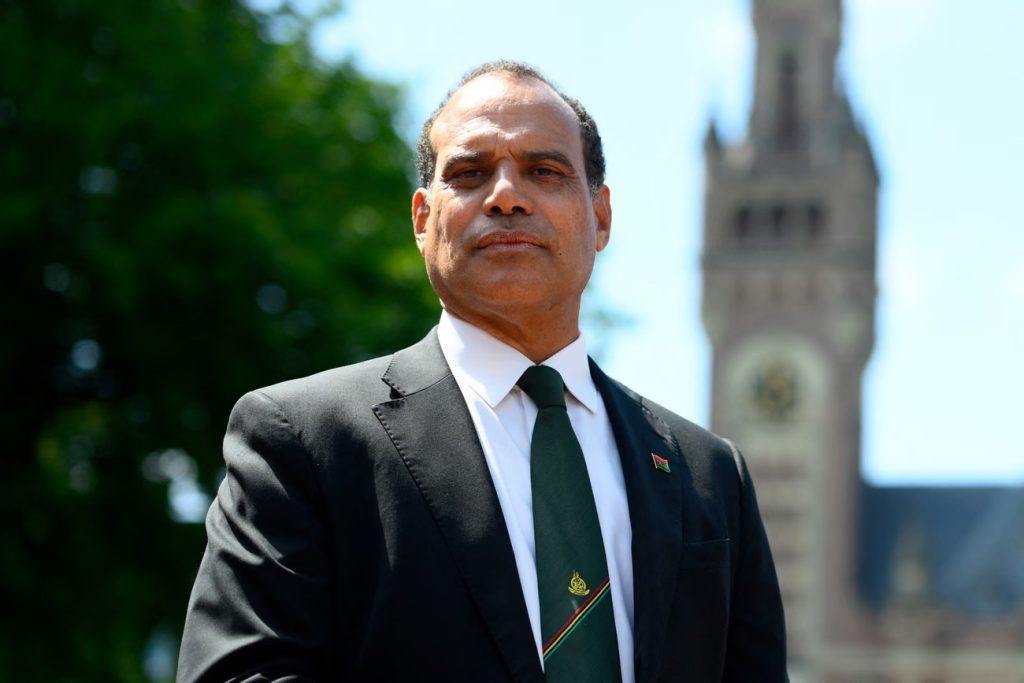
“In the current geopolitical context, sustained commitment to the rule of law is more important than ever,” noted Ralph Regenvanu, Minister of Climate Change of Vanuatu.

“Climate change is no exception. Upholding the Court’s clarification of existing obligations is essential for the credibility of the international system and for effective collective action.”

“At a time when respect for international law is under pressure globally, this initiative affirms the central role of the International Court of Justice and the importance of multilateral cooperation,” Minister Regenvanu added.

“Upholding the Court’s Advisory Opinion strengthens the credibility and predictability of the international system as a whole.”

Ralph Regenvanu, Vanuatu’s climate change minister. Photo: John Thys/AFP/Getty Images

The States involved expressed appreciation for the many Member States that have already engaged constructively and encouraged all delegations to participate actively in the upcoming informals.

The zero draft is offered in a spirit of openness, cooperation, and dialogue, with the aim of achieving a resolution that reinforces international law and supports a collective, just, and effective response to the climate crisis with a view to a vote by the end of March.

Billion-dollar drug trade tightens grip on Pacific

0

Fiji and the wider Pacific are increasingly being targeted by international drug syndicates, with multi-billion-dollar criminal networks exploiting the region as a transit hub and expanding local drug markets, a leading security expert has warned.

Associate Professor Jose Santos from the Pacific Regional Security Hub sounded the warning during the National Pastoral Response to Drugs workshop in Suva Monday, saying traffickers were taking advantage of the Pacific’s geographic isolation, limited maritime surveillance and weak local oversight.

“What we are dealing with is not a small issue, it’s a multi-billion-dollar business,” Professor Santos said.

“A kilogramme of cocaine costing US$50,000 in New York can sell for US$350,000 in Australia. That enormous profit margin is driving traffickers to use the Pacific as a route and now, increasingly, as a base to establish local markets.”

Professor Santos said the consequences were already being felt in Fijian communities, including rising intravenous drug use and the impact on children.

“I have seen 11- and 12-year-olds injecting drugs on the streets. Families, villages, and churches are being directly affected. Every month we wait, the problem becomes harder to control.”

He warned that drug syndicates were highly organised and profit-driven, often paying local facilitators in drugs rather than cash, allowing local drug markets to take root and grow.

“These are business operations. They are smart, connected, and one step ahead. Our response must be equally strategic and coordinated,” he said.

Minister for Policing and Communications Ioane Naivalurua said Fiji was strengthening both enforcement and community-based responses to the growing threat.

“We are combining intelligence, arrests, and border security with strong community engagement to prevent drug use and protect families,” he said.

The warnings come as Fiji continues to record increasing seizures of methamphetamine and other illicit drugs.
United Nations data shows methamphetamine remains the primary drug threat in the Pacific, with rising rates of injecting drug use contributing to serious public health challenges, including the spread of HIV.

Churches, traditional leaders, non-government organisations and local communities are now being urged to play a stronger role in prevention, early intervention and education efforts.

Professor Santos stressed that urgent action was needed.

“If we delay, we risk losing a generation. This is not just a crime issue, it’s a threat to the social, moral, and economic future of our region.”

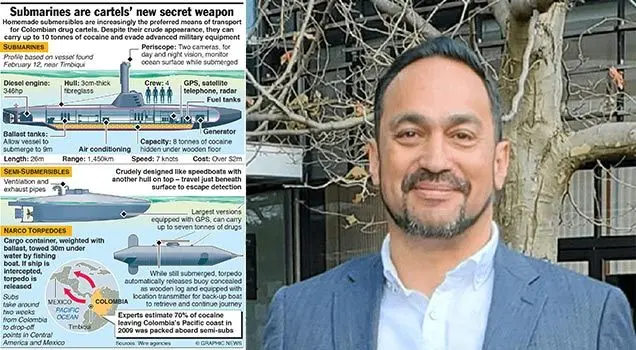
Meanwhile, Drug cartels deploying million-dollar narco-submarines can afford to corrupt Fiji’s law enforcement with what amounts to “pocket change”, a logistics expert has warned.

MSG Logistics chief executive Amit Chand made the comments during a counter-narcotics consultation hosted by the Ministry of Policing in Suva on Monday.

Chand said the biggest threat to Fiji’s counter-drug efforts was placing the wrong people in sensitive positions within the proposed Counter Narcotics Bureau.

“A small country like Fiji, where the cartels are deploying narco-subs that require millions of dollars to launch, corrupting a few key individuals in right places, which is pocket change for them,” Chand said.

He warned that a single compromised officer with access to intelligence could dismantle entire operations.

“When the first domino falls, it triggers a chain of reality. Operations fail, public trust collapses, honest officers’ work is neutralised, and cartels gain near impunity,” he said.

Chand, who has worked with intelligence agencies, called for mandatory random polygraph testing for all Counter Narcotics Bureau officers.

Other recommendations raised at the forum included lifestyle audits for intelligence officers to detect corruption, joint operations involving Customs, the Navy and military intelligence, reforms to make serious drug offences non-bailable, stronger international partnerships focused on anti-corruption capacity building, and independent oversight of narcotics operations.

“Unless the domino effect is prevented at source, no bills, no law is adequate enough to do what this country is facing,” Chand said.

The consultation continues today in Nausori.

Minister for Policing Ioane Naivalurua said the counter-narcotics bill is expected to be presented to Cabinet by March.

Stay connected

529FansLike
172FollowersFollow
156SubscribersSubscribe
- Advertisement -