

Home Blog Page 105

Winston Peters vows to change ‘disgraceful’ NZ visa rule, but the coalition’s not sure

0

NZ First leader Winston Peters is promising to make it easier for people to visit New Zealand from the Pacific, but his coalition partner says this isn’t a priority.

With a fiery show outside Parliament, politicians heard how “discriminatory” immigration rules mean Pacific Islanders are being blocked from attending funerals, graduations, and other important events in New Zealand.

Former National MP Arthur Anae arrived at Parliament on Wednesday, with a petition of 48,000 names and bus loads of supporters who had travelled from Auckland. They arrived with fire dancers and flags from across the Pacific, to urge the Government to let their families visit them without waiting weeks for visa processing.

Unlike travellers from more than 60 other nations, who can get online travel authority (NZeTAs), travellers from the Pacific face far more stringent paperwork to enter New Zealand.

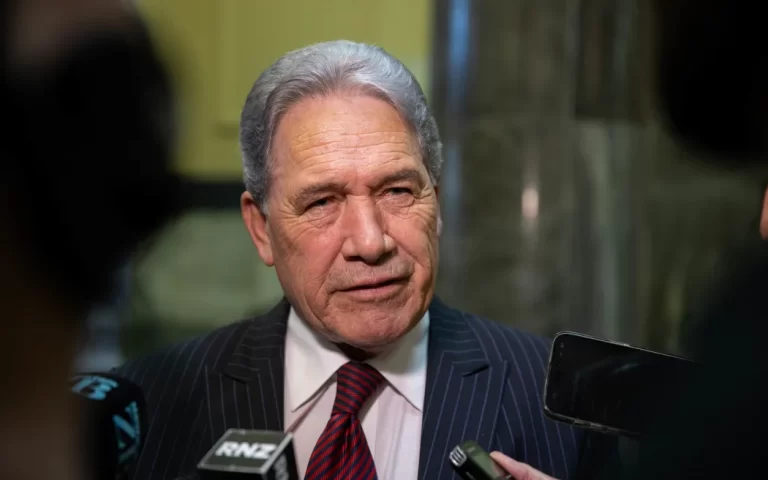
These rules have been a long-lasting barrier for families split across New Zealand and other Pacific islands. But it could soon change, with NZ First leader Winston Peters promising to try and change the rules by the end of the year.

That puts Peters at odds with his coalition government. Immigration Minister Erica Stanford said this was “not something that we’ve considered, nor is it on my agenda.”

Asked about this issue in March last year, Prime Minister Christopher Luxon told RNZ Pacific this was “not a priority for us in light of other priorities”. On Wednesday, he said he would wait to see what Parliament’s Petitions Committee recommended.

But Peters said he wanted these rules changed by November. He wasn’t worried by his colleagues’ comments indicating the Government wasn’t on board.

“People say a lot of things, and then they have time to reflect,” Peters said.

“All the Pacific people want is a fair go, according to what other nations are getting. And they’re not getting it,” Peters told reporters, outside Parliament on Wednesday.

He said it was “a disgrace” that New Zealand made it so hard for people to visit from the Pacific.

Anae said this was discrimination against Pacific people, following on from stigma in the 1970s targeting Pacific peoples for “overstaying”.

“I believe there is discrimination towards people of the Pacific which must end. I propose that Pacific people from Fiji, Samoa, Solomon Islands, Tonga, Tuvalu and Vanuatu be issued a visitor visa on arrival in NZ,” his petition said.

Stanford said the current settings were not stopping Pacific Islanders from getting to New Zealand to attend events such as funerals.

“Well, of course they can. I mean, currently our visa processing time is eight days for the Pacific. And if they have an emergency, then there is an escalation process do we do those more quickly,” Stanford said.

But outside, at the petition handover, people from Pacific communities and families told a very different story.

Nanai Muaau, a petition organiser who has family in Samoa, said it was a “daily, and weekly issue” for relatives trying to visit their family in New Zealand.

He said he knew, right now, that a 69-year-old woman in Samoa was wanting to visit New Zealand to celebrate her 70th birthday with family.

“She started the visa process six weeks ago, but she is still waiting to know if she can celebrate her 70th birthday with her children,” he said.

For funerals, he said he knew friends who had missed the chance to farewell loved ones.

“I know a lot of families that haven’t been able to come here to attend funerals,” he said, because of applications being declined – or delayed.

Labour leader Chris Hipkins said his party would likely support the bill’s introduction. The Greens and Te Pāti Māori both attended the rally outside Parliament, with NZ First, and promised their support to change these rules.

Hipkins said he was “very sympathetic” to the issue but would need to consider how immigration policy would need to change.

Without one of the major parties, either Labour or National, getting in behind the bill to fast-track its debate in Parliament, it could take months, or years, for anything to change.

PNG getting more ‘corrupt’, says TIPNG

0

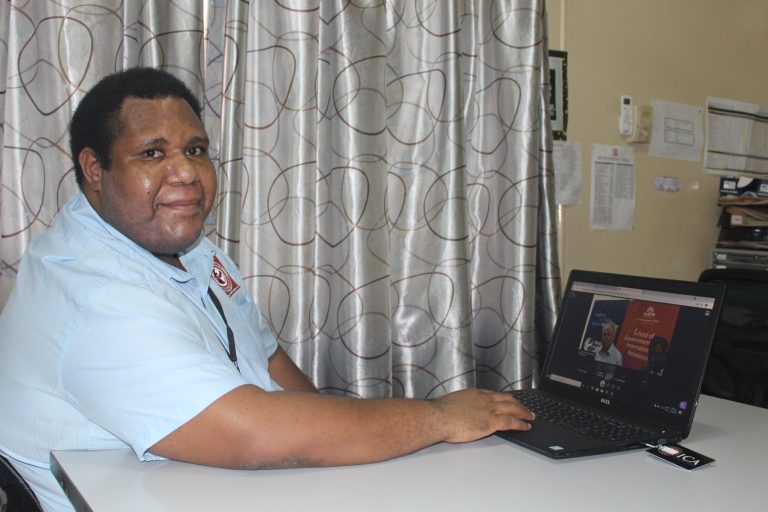
Papua New Guinea’s democracy is at risk, as the country is rated among the top 30 corrupt nations in the world, as it prepares for the 2027 General Election, according to Transparency International.

Transparency International Papua New Guinea (TIPNG) Tuesday released the 2025 Corruption Perceptions Index (CPI) which rated the country at 26 out of 100 – a drop of four points from 2024.

The CPI ranks 182 countries by their perceived levels of public sector corruption, with the results given on a scale of zero (highly corrupt) to 100 (very clean).

The CPI considers cases of bribery, diversion of public funds, nepotism, and the effectiveness of anti-corruption laws and legal protection for whistleblowers, journalists and investigators, when ranking countries.

TIPNG partnerships and policy adviser Yuambari Haihuie said the country’s score was 17 points lower than the global average of 42, and 19 points lower than the Asia Pacific average of 45.

“These are concerning statistics as it shows that we are falling back,” he said.

“The trend shows the change in the CPI score before an election year, and this trend can show what we can expect in 2027.

“The link between corruption and democracy is evident.”

Haihuie said the score indicated that much must be done to improve the country’s ranking, such as:

*Government must ensure the Electoral Commission is fully funded to independently fulfill its mandate;
*Inter- department elections Committee must regularly convene to facilitate inter-agency coordination;
*Parliament must adopt the findings of the Special Parliamentary Committee Report on General Election 2022 to address past systemic failure; and,
*Law enforcement agencies, including the Independent Commission Against Corruption, National Coordinating Committee, and police, must coordinate their plans to address election offences, including corruption.

TIPNG chief executive officer Arianne Kassman said: “The drop in PNG’s 2025 CPI score is not an isolated result; it demonstrates a multi-year trend linked with our electoral cycle.

“PNG’s scores show a pattern of slight improvement over five years, followed by a sharp decline during election year-a cycle that must be broken to ensure a fair 2027 election. What we do in 2026 will determine the integrity of our democracy in 2027, said Kassman.

Solomon Islands scores 44 in latest global corruption perceptions index

0

Solomon Islands remains mired in “significant corruption challenges”, Transparency Solomon Islands (TSI) warned today at the launch of the 2025 Corruption Perceptions Index (CPI).

This is despite the country recording a modest improvement in its global standing.

TSI chair Rodney Kingmele said Solomon Islands scored 44 out of 100, up one point from last year, and climbed three places to 73rd out of 180 countries — but cautioned that the result should not be mistaken for meaningful progress.

“A score of 44 means we are still perceived as having serious corruption problems that undermine our nation’s development,” Kingmele said.

The 2025 CPI carries the theme “The Integrity of Electoral Processes and Their Importance to the Integrity of Political Leadership,” which Kingmele described as a timely warning with national elections just two years away.

He said corruption has seeped into the electoral process, with voters trading ballots for constituency funds and candidates contesting elections primarily to access public resources.

“Votes are sold and bought with cash,” Kingmele said.

“Politicians monetise elections using public funds and foreign money, creating an uneven playing field,” he added.

“When there is no integrity in our electoral processes, there can be no integrity in political leadership — and therefore no genuine commitment to fighting corruption.”

Kingmele stressed that responsibility does not lie solely with politicians.

“We cannot continue to blame only our representatives — we are equally responsible for where our country is today,” he said, urging citizens to reject vote-buying and demand accountability.

While acknowledging the slight improvement in the CPI score, Kingmele pointed to a string of scandals that continue to damage public trust.

Among them are the multi-million-dollar health procurement scandal, allegations of police bribery in criminal investigations, the misuse of the Economic Stimulus Package, and persistent corruption risks in the logging and mining sectors.

He also warned that weak oversight of the controversial constituency development funds (CDF) continues to enable the misuse of public resources.

Particularly concerning, he said, is the “paralysis” of the Solomon Islands Independent Commission Against Corruption (SIICAC), which has long been seen as central to strengthening enforcement.

“The CPI is a call for action,” Kingmele said, urging the Government for National Unity and Transformation (GNUT) to resource the Electoral Commission and demonstrate stronger political commitment to integrity.

Within the Pacific, Solomon Islands sits in the middle of the pack.

Fiji scored 55, Vanuatu 47, while Papua New Guinea lagged at 26, highlighting both the country’s relative stability and the distance still to travel.

“A higher score signals stronger institutions and reduced corruption risks, making Solomon Islands more attractive to genuine investors,” Kingmele said, calling on businesses to refuse corrupt practices.

The CPI – widely regarded as the world’s leading gauge of perceived public sector corruption – ranks countries from 0 (highly corrupt) to 100 (very clean) using assessments from international institutions and risk analysts.

For years, Solomon Islands has hovered in the low-to-mid 40s, reflecting persistent governance concerns despite repeated reform pledges.

Analysts say structural issues – including heavy reliance on constituency funds, limited investigative capacity, political patronage, and resource-sector governance – continue to expose the country to corruption risks.

The delayed operational strengthening of SIICAC has also drawn criticism from civil society groups, who argue that without visible prosecutions and enforcement, deterrence remains weak.

Kingmele framed the latest index not as a verdict, but as a moment of choice.

“The question is not whether we can improve — our one-point gain proves we can,” he said.

“The question is: do we have the courage and commitment to do what is necessary?”

He added that integrity in elections is fundamental to restoring public confidence and ensuring leaders are genuinely committed to combating corruption.

“Today’s launch is about our collective commitment to build a Solomon Islands where integrity matters, where elections are free from corruption, and where our votes truly count,” said Kingmele.

‘This is the path’: Opetaia blazing Vegas trail to top

0

Jai Opetaia has always done things his own way, “so why stop now”, the Australian world champion asks ahead of an historic and controversial Las Vegas debut.

The 30-year-old IBF and The Ring cruiserweight world champion will introduce himself to America on 08 March when he faces Brandon Glanton at UFC’s intimate Meta Apex theatre in Nevada.

It’s the Gold Coast-based Opetaia’s (29-0) first show since joining UFC boss Dana White’s Zuffa Boxing.

The new stand-alone organisation will awards its own world title belts and won’t recognise traditional organisations the IBF, WBA, WBC or WBO.

Opetaia, the country’s youngest Olympic boxer at 17 at London’s 2012 Games, defied a badly broken jaw to claim his titles nearly four years ago.

He emphatically defended those belts three times last year but has struggled for recognition on home soil and failed to secure a fight with other divisional champions.

Becoming the face of White’s breakaway venture raised eyebrows, given Opetaia’s public and repeated ambitions to unify the cruiserweight division in the organisations White has declared he won’t recognise.

But the UFC supremo has given him his word those fights remain firmly on the table, with WBC champion Noel Mikaelian targeted later this year.

Gilberto Ramirez currently holds the WBA and WBO titles Opetaia especially savours.

But the Mexican has dodged the Australian for the last two years and instead will fight pound-for-pound star and light heavyweight champion David Benavidez in May.

Opetaia hopes American exposure will earn him more clout to secure the fights he truly desires.

“We’ve always had to do things differently, so why stop now,” Opetaia told AAP from his rental home on the edge of Las Vegas on Wednesday.

“This is the path to get to undisputed quickest and then after that, there’s so many options.

“Everyone’s going to want a piece of this cake. Whether it’s going up (to heavyweight) or fighting Benavidez.

“The goal is to win this fight in four weeks and keep stepping closer and closer to undisputed.

“WBC … it’s a credible belt, would be good to get that and then we move onto the WBO and WBA.”

Atlanta’s Glanton (21-3) boasts knockout power with a mouth to match, although he was forced to eat his words when beaten by former WBO cruiserweight champion Chris Billam-Smith last April.

At the final press conference before the fight, Glanton said: “I’ll give you brain damage, dog”.

He later apologised for the remark and, after a bounce-back win against former champion Marcus Brown in Nigeria last October, said he’d never engage verbally like that again.

“I’m expecting a pretty aggressive fight, for him to walk forward,” Opetaia said.

“Let’s see how tough he is … he’s known to be this and that, so let’s see.”

Opetaia’s manager Mick Francis expects his fighter’s forthrightness out of the ring and explosive power in it to “blow him up” in the States, and particularly on the west coast where there is a large Pacific Island contingent.

A nodding Opetaia, who proudly showcases his Samoan heritage at fight nights with performances, traditional dress and the national anthem, couldn’t resist a dig after years of relatively low recognition in Australia.

“I wish my own country would get behind me,” he laughed.

“It’s always been a dream to fight for a world title in Vegas.

“The venue’s not the biggest but its a stepping stone and being a part of this new Zuffa Boxing movement, it’s big.”

Opetaia has been in Las Vegas for a month and spent time with Oleksandr Usyk, who won gold at London 2012 and unified the cruiserweight division before moving up to dominate the heavyweight class.

“I don’t feel out of place … I’m just one of the fighters and they look at me like that as well,” he said of rubbing shoulders with the sport’s greats.

“That’s the biggest reward of the whole thing.

“And Dana, we’ve had a few meet-and-greets, but I’m not here to bore him.

“It doesn’t matter what I say or how nice the guy is. If I don’t win my fights, I’m on a plane back home,” he said.

Opposition leader Wale raises concern over lack of Polynesian representation in Solomon Islands Cabinet

0

Solomon Islands Opposition leader Matthew Wale has raised concerns about the absence of Polynesian representation in the country’s Cabinet following a recent ministerial reshuffle, warning that inclusivity and balanced governance should remain central to leadership decisions.

While congratulating the new ministers, the Opposition Leader said he hopes that the newly sworn in ministers will work collaboratively for the benefit of all citizens.

At the same time, Wale notes with quiet concern that Members of Parliament from the Polynesian community, a significant minority grouping within our country, are no longer represented in Cabinet.

He said while Cabinet appointments remain the prerogative of the Prime Minister, it must be based on sound judgement; inclusivity and balanced representation.

Wale said these are important principles that strengthen national unity and public confidence in government.

“This will be a deep dark stain on the record of the Prime Minister,” the Opposition Leader said.

Wale said Solomon Islands is built on diversity and Cabinet should reflect the rich cultural and regional make up of our people.

“Our nation’s diversity is one of its greatest strengths, and ensuring that different communities feel represented at the highest levels of decision-making contributes to cohesion, mutual respect, and shared ownership of national development,” Wale said.

The Opposition Leader encourages the Government to remain mindful of these principles as it moves forward and reaffirms its commitment to supporting policies and actions that promote unity, fairness, and inclusive governance for all.

Palau Senate rejects key President Whipps appointments, Deepening executive-legislative rift

0

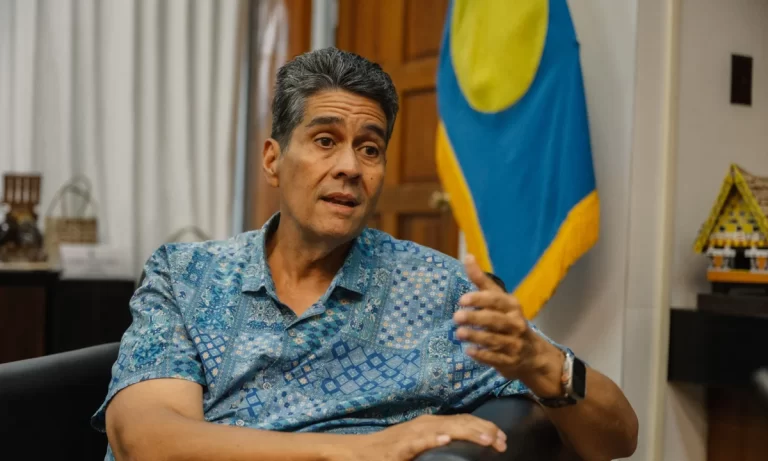
The Palau Senate has again declined to advance three key nominations by President Surangel Whipps Jr, deepening tensions between the executive and legislative branches over Cabinet appointments and confirmation procedures.

The Senate took action on the president’s nominees for minister of finance, minister of education and ambassador to the Republic of China (Taiwan), leaving two ministries without confirmed leadership.

President Whipps reappointed Kaleb Udui Jr for a third time to lead the Ministry of Finance. His first nomination expired after 90 days without Senate action. The second nomination also lapsed.

The third submission was reviewed by the Senate Standing Committee, which recommended that the nomination be tabled and that no action be taken on the resolution.

In its justification, the committee said the nominee failed to notarise written responses to Senate questions during previous nomination cycles. Senators said the lack of timely and notarised responses prevented them from completing a full interview before the review period expired.

President Whipps rejected the explanation, describing it as “excuses” and “inaction” and urging the Senate “to do their job already.”

The Senate responded that it was carrying out its constitutional duty and had increased scrutiny for the position, citing the finance minister’s authority over significant public funds and assets and oversight of agencies with critical responsibilities.

Former Minister of Education Dr. Dale Jenkins was nominated for a second time after his initial nomination was rejected. The Senate Standing Committee declined to reconsider the nomination, maintaining the chamber’s earlier decision.

The Senate also rejected the second nomination of former Ambassador to Taiwan Dave Orrukem. The chamber voted 8–5 against confirmation, reversing the previous vote in which he received 8 votes in favour and 5 against. Despite the earlier majority support, the prior vote did not meet the threshold required for confirmation.

Of Palau’s eight ministries, six now have Senate-approved leadership. The Ministry of Finance and the Ministry of Education remain without confirmed ministers.

The repeated lapses and rejections are causing growing friction between the executive branch, which has pressed for timely action on appointments, and the Senate, which has emphasised stricter review standards for senior positions.

U.S bars Palau Senate president, former Marshall Islands mayor from entry

0

The United States on Tuesday barred Palau Senate President Hokkons Baules and his family from entering the U.S, accusing him of corruption linked to China, as Washington pushes back on Beijing’s effort to boost its influence in the Pacific.

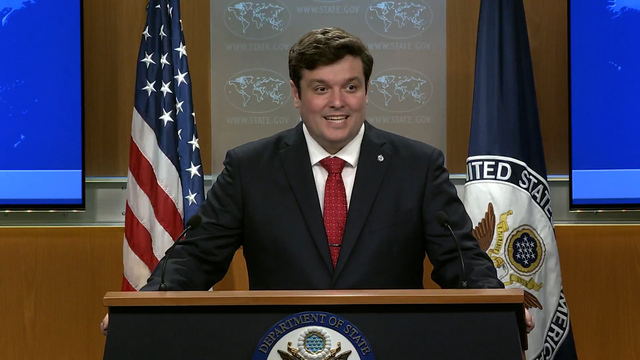
“Baules abused his public position by accepting bribes in exchange for providing advocacy and support for government, business, and criminal interests from China,” State Department spokesman Tommy Pigott said in a statement.

“His actions constituted significant corruption and adversely affected U.S interests in Palau,” Pigott said.

The department also designated Anderson Jibas, a former mayor from the Marshall Islands, who it said had been involved in “theft, misuse, and abuse of funds” from the U.S-provided Bikini Resettlement Trust intended to address the legacy of U.S nuclear bomb testing in the 1940s and 1950s.

The designations will bar the two men and their immediate family members from entering the United States.

The embassies of Palau and the Marshall Islands in Washington did not respond immediately to Reuters’ requests for comment. Reuters could not reach Baules or Jibas for comment.

Palau and the Marshall Islands, two strategically positioned U.S-allied Pacific Island nations, have in recent years become a focus in an intensifying geopolitical contest between Washington and Beijing.

Both countries receive economic support from the U.S through their Compacts of Free Association and in return Washington is responsible for their defence while gaining exclusive military access to strategic swathes of the Pacific.

But China, keen to make inroads in the region, has been wooing the financially strapped Pacific economies with development and economic opportunities.

Baules, who pleaded guilty to heroin trafficking in 1989, has been one of the island’s most vociferous advocates for China. Under his leadership, the senate has passed resolutions criticising U.S military activity in Palau, while he has personally advocated for expanded ties with China.

Corporate records reviewed by Reuters show that his family operates a local business called Fuji Restaurant, which Palauan authorities have linked to Chinese criminal activity.

“Corruption is an open door to advance its (China’s) agenda, especially in countries that recognise Taiwan and have critical U.S military bases,” said Cleo Paskal, an expert on the COFA states with the Foundation for Defence of Democracies think tank.

Palau and the Marshall Islands are among the few remaining states that maintain official diplomatic ties with Taiwan, the democratically governed island China claims as its territory.

In recent years, Palau officials have sought increased U.S. patrols of its waters after incursions by Chinese vessels into its exclusive economic zone. Palau also hosts American-controlled airstrips and the U.S military is building advanced radar stations there. Kwajalein Atoll in the Marshall Islands is home to a critical testing base for U.S missile defences.

Pacific visa petition tests NZ First as political tensions rise

0

Hundreds of supporters are expected at New Zealand Parliament’s forecourt on Wednesday as a long-running campaign for visa-free travel for some Pacific nationals reaches a political crossroads.

The petition, which calls for eligible Pacific visitors to be granted a three-month visitor visa on arrival in New Zealand, has gathered close to 50,000 signatures.

The petition will be formally presented to New Zealand First leader Winston Peters, who is expected to outline his party’s position shortly after receiving it.

Led by former National MP Anae Arthur Anae, the campaign argues current visa settings place unnecessary strain on Pacific families, particularly during funerals, medical emergencies, and key cultural events.

In an interview on Pacific Mornings, Anae said the system was no longer fit for purpose. “This can’t continue forever. It has to be fixed and I want to fix it now,” he said.

Wednesday’s presentation marks a key moment for the petition because it shifts the focus from public advocacy to a test of coalition politics.

As a key partner in the government, NZ First’s stance could determine whether the proposal gains traction or stalls.

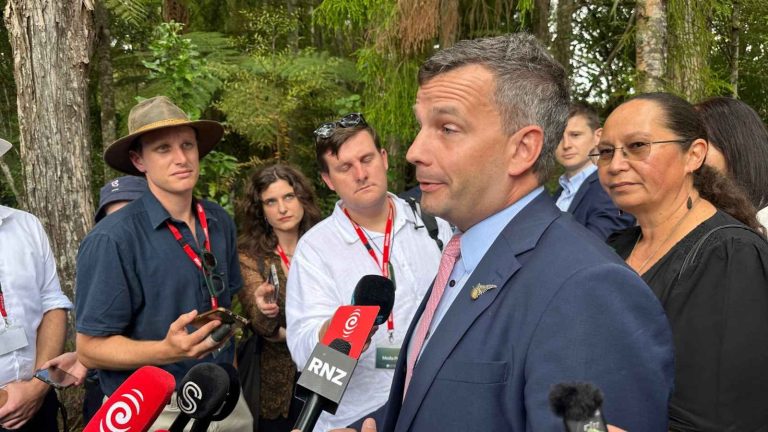
Coalition partners have so far sent mixed signals. ACT leader David Seymour says he is sympathetic to the argument, describing Pacific nations as New Zealand’s closest neighbours.

But Seymour framed visa-free access as a question of risk and compliance. Speaking to media at the Waitangi Treaty Grounds, he says any change would depend on visitors following the rules and returning home.

“We’ll always listen to him [Anae] but we are going to have to, as a government, make the same calculation as every other government makes and that the New Zealand government makes on every visa issue,” Seymour says.

He rejected claims Pacific people face unfair barriers and says Immigration New Zealand already prioritises urgent cases such as funerals and medical emergencies. But he acknowledged others may have had different experiences.

National has yet to formally consider the petition. But Prime Minister Christopher Luxon, also speaking at Waitangi, pointed to changes announced last April that made travel easier for some Pacific nationals.

This has been seen as a reluctance by the party to commit to further reform at this stage.

In opposition, Labour has taken a cautious but open position. In a statement, Pacific Peoples spokesperson Carmel Sepuloni says the party is “certainly open” to reviewing current visa settings.
“There’s ongoing work in this space and we’ll need to discuss it as a caucus before taking a formal position,” Sepuloni says.

The Greens are the only party to publicly offer full support for the petition. MP Teanau Tuiono says New Zealand’s visa settings are inconsistent with its identity as a Pacific nation.

In an interview on Pacific Mornings, Tuiono pointed to previous petitions including calls for an overstayers’ amnesty where select committee discussions identified visa-waiver access as a possible solution.

“Why is it that countries like Israel can get visa waiver access? I think Mexico as well, and yet people right next door can’t get in,” Tuiono says.

“It would show that we’re serious about being part of a family of Pacific nations and I think that’s important for us to support.”

The petition will be formally presented at Parliament’s forecourt at midday on 11 February. Whether it leads to policy change now rests on how far the government, and especially New Zealand First, is willing to go.

Fiji Independent Commission Against Corruption urges vigilance as CPI highlights corruption risks

0

The Fiji Independent Commission Against Corruption (FICAC) has noted the release of Transparency International’s 2025 Corruption Perceptions Index (CPI), in which Fiji recorded a score of 55, unchanged from previous years.

In a statement, the Commission said the CPI is a perceptions-based index compiled from multiple independent data sources and reflects views on public-sector corruption risk.

“The CPI does not constitute a finding of corruption, nor does it measure the outcome or effectiveness of any specific investigation or enforcement action,” the Commission said.

FICAC said it views the CPI as a broad indicator that highlights the continued importance of strong integrity systems, effective prevention measures and public confidence in accountability frameworks.

“The Commission regards the CPI as a broad indicator that reinforces the ongoing importance of strong integrity systems, effective prevention measures, and public confidence in accountability frameworks,” it said.

The Commission said that during the current quarter it has continued to strengthen corruption prevention efforts through targeted initiatives across the public sector.

“These include targeted integrity and governance engagement with public sector agencies, focusing on practical risk areas such as conflicts of interest, procurement integrity and decision-making safeguards,” FICAC said.

It added that public awareness and outreach activities have also been stepped up.

“Public awareness and outreach activities are aimed at improving understanding of corruption risks, reporting obligations and the role of institutional accountability in protecting public resources,” the statement said.

FICAC said these measures form part of its statutory mandate to prevent, deter and address corruption through a balanced approach.

“These initiatives reflect the Commission’s mandate to address corruption through a combination of enforcement, education and system-strengthening,” it said.

The Commission also encouraged members of the public to play their part in safeguarding integrity.
“The Commission encourages members of the public to report suspected corruption or misconduct through its authorised reporting channels,” it said.

Technology-facilitated threats are silencing Pacific journalists

0

By Amantha Perera

“We will burn down the Fiji Sun.” You sit down to start your workday and this is the first thing that flashes across your screen. Will you stay on and do your job as a reporter or consider fleeing?

The tone and the content have become familiar to Iva Nataro, a senior journalist at the Fiji Sun newspaper. “People go to the extent of saying we will burn down the Fiji Sun office including everyone in it. They actually post this online. For a couple of times, we had to inform the police that we have been receiving these kinds of threats.”

Nataro’s experience is not the exception. In fact, threats, abuse and other forms of harm communicated using online or digital interfaces have proliferated in the last decade. These hazards, grouped under the term technology-facilitated threats (TFTs), have increased in number and the content has worsened in severity since the COVID-19 lockdowns and the pivot to remote working.

My work at the Centre for Journalism and Trauma Asia Pacific (CJT) and Adelaide University provides me with a microscopic view of how these hazards are playing out and their telling impact on those who are exposed.

We have heard incidents of colleagues mocked online for what they wore while on camera or while live streaming on Facebook. Others have recounted how their names and other details were doxed, or posted online, after they investigated the release of intimate images of public figures. The investigations by the journalists ultimately proved some of the images were fake.

“Honestly, we are exposed every day because of the line of work that we do,” Nataro told me recently.

When they are exposed to TFTs, journalists often lack the skills and training to effectively assess them. They are caught unawares.

Often, the exposure takes place on platforms where they share professional content alongside personal engagements. Because of the way social media functions, exposure can be cyclical and take place whenever and wherever online connectivity is established.

Furthermore, those like Nataro and Irwin Angiki, the editor of The Island Sun newspaper in Solomon Islands say that the close-knit nature of their communities adds new layers of complexity to TFT exposure. The chances of journalists’ knowing the source of the threat is high, even where posts are anonymous. Their communities expect the journalists to act as gatekeepers. But the reactions they get can be divisive and, at times, hateful.

“Sometimes when you go to church on Sunday, you meet everybody, the politician, the police chief, the influencer … and they all expect you to be the journalist and nothing else,” a Vanuatu journalist said.

When exposed to a relentless cycle of online dangers without the skills to mitigate them, journalists are left feeling overwhelmed and unable to execute their professional duties effectively.

Angiki spoke of the persistence of the “bullet-proof” approach to journalism which was preventing journalists from addressing these concerns with transparency.

“Big majority of them – they are what we call thick-skinned. They don’t display that much of effect or hurt or pain from online abuse.”

When the exposure and impact becomes too hard to handle, exposed journalists resort to removing themselves from, or silencing themselves in, online spaces.

“I’ve had some really junior colleagues who have reached the extent of wanting to leave the media industry, they have experienced such online abuse or online bullying to the extent that they want to leave the Fiji Sun and stop being a journalist altogether,” Nataro said.

Even if they remain, their journalism can suffer. Angiki related the experience of a junior colleague whose work deteriorated due to online trolling. She wanted to “change beats”, or move away from the sector of the community allocated to her for reporting, when confronted with waves of abuse and threats. Angiki and other colleagues dissuaded her.

“She went back. But then you noticed her stories were briefer. We noticed details contained less character — the government said this, the government said that. More like parroting, which was safer than what attracted these online idiots. So, yeah, it affected the way she wrote her stories. It was just straight parroting,” he said.

Research shows that females and journalists from minority communities are exposed to higher levels of digital hazards.

CJT has been leading efforts in the region to provide skills to journalists in the Pacific region to tackle TFTs. Nataro and Angiki have taken part in the CJT AsPac Fellowship which provides introductory awareness training on trauma-informed journalism. They also played significant roles as fellows in the innovative 2024 fellowship on tackling Technology-Facilitated Gender Based Violence.

“Back here we associate trauma with serious stuff like death, serious accidents. [But] we’ve never associated our work, journalism, with trauma. When I brought back what I learned from Brisbane and shared with my reporters, it was a big shake-up, like we woke up,” Angiki said.

TFTs are dynamic and quickly adapt to socio-political trends. With the wide and easy use of AI technology, they can be scaled up, infused with fakes and misinformation which makes them hard to track. Newsroom leaders we have worked with from the Pacific talk of their own sense of vulnerability when they find it hard to deal with exposure in their newsrooms.

The threats are unlikely to ease any time soon. In fact, they could ramp up.

Meta has announced that it is considering expanding community notes outside of the US. The blueprint it plans to use is X’s own adoption of community notes in place of moderation. If Meta goes ahead with its plans without proper guardrails, Facebook, Instagram and Threads will soon turn into versions of X.

The proliferation of TFTs has shown us that the digital hazards to which journalists are exposed easily seep through generic interventions aimed at slowing them down. Threats have to be contextualised within the information space in which they manifest. The journalist who is facing the exposure has to be placed right at the core of any threat analysis and efforts at prevention.

Amantha Perera is a researcher, academic and writer currently based in Australia. He is in the final stages of a PhD candidature at University of South Australia and a director and consultant at the Centre for Journalism and Trauma Asia Pacific, formerly known as the Dart Centre Asia Pacific.

Stay connected

529FansLike
172FollowersFollow
156SubscribersSubscribe
- Advertisement -