Home Blog Page 104

Commonwealth citizens to benefit from stronger legal protections agreed by law ministers

0

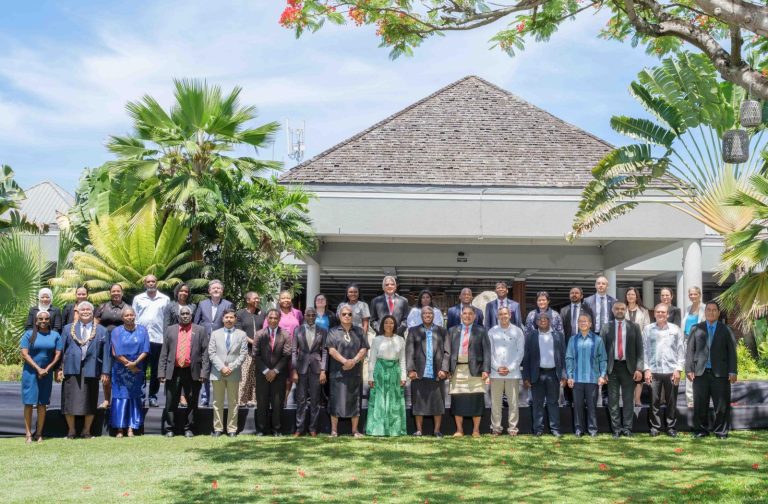
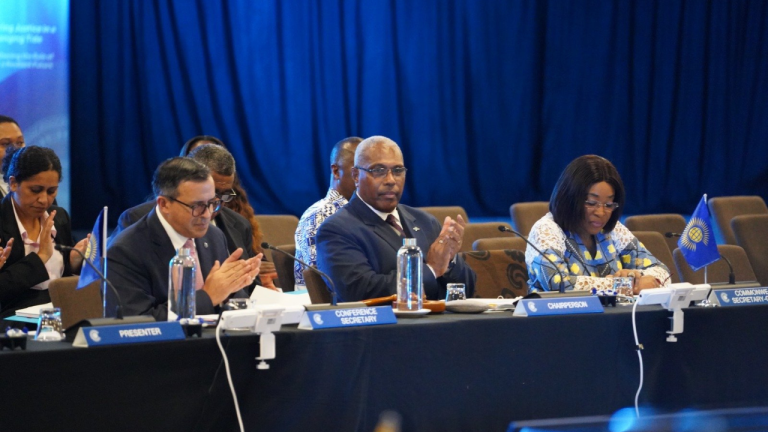
Commonwealth law ministers concluded their meeting in Fiji Wednesday by committing to new measures aimed at strengthening legal protections for people amid growing democratic, economic and climate pressures.

The commitments, set out in an outcome statement issued on 11 February 2026, follow three days of discussions among ministers, with input from diverse stakeholders, including disability rights advocates and legal innovators.

A central outcome was the adoption of the Nadi Declaration, which commits all Commonwealth countries to renewing democracy by strengthening the rule of law, protecting human rights and making it easier for people to take part in decisions that affect their lives. Ministers agreed to advance the declaration through cooperation, capacity-building and collective action.

They also pledged to combat misinformation and disinformation – including foreign interference in democracies – and to improve access to justice for vulnerable groups, especially women, young people and persons with disabilities.

Recognising the growing impacts of climate change, ministers reaffirmed that countries should retain their maritime zones, rights and entitlements even as rising sea levels alter coastlines.

Commonwealth Secretary-General Shirley Botchwey said the commitments are vital to upholding the rule of law at a time when it is under attack.

She added: “To continue along the current path would be to accept injustice and inequality as the new normal. For the Commonwealth, that is not an option.

“When the rule of law is weakened, the consequences are felt in people’s daily lives. Without it, peace turns to instability, fair pay to exploitation, and climate resilience to vulnerability.

“The rule of law is what holds that line. That is why we must defend it, actively and collectively. What we have agreed here is an important step in that direction. The task now is to work together to ensure our commitments deliver opportunity, dignity and prosperity for every Commonwealth citizen.”

The meeting took place against a backdrop of a steady global decline in the rule of law, with billions of people still lacking meaningful access to justice.

In their statement, ministers recognised the essential role of independent legal institutions in sustaining democratic governance and supported the Commonwealth Secretariat’s renewed focus on strengthening democracy through the rule of law.

Law ministers also welcomed new resources developed by the Secretariat, member countries, and partner organisations, including tools to reduce the cost of civil litigation, establish family courts and reform laws that criminalise poverty.

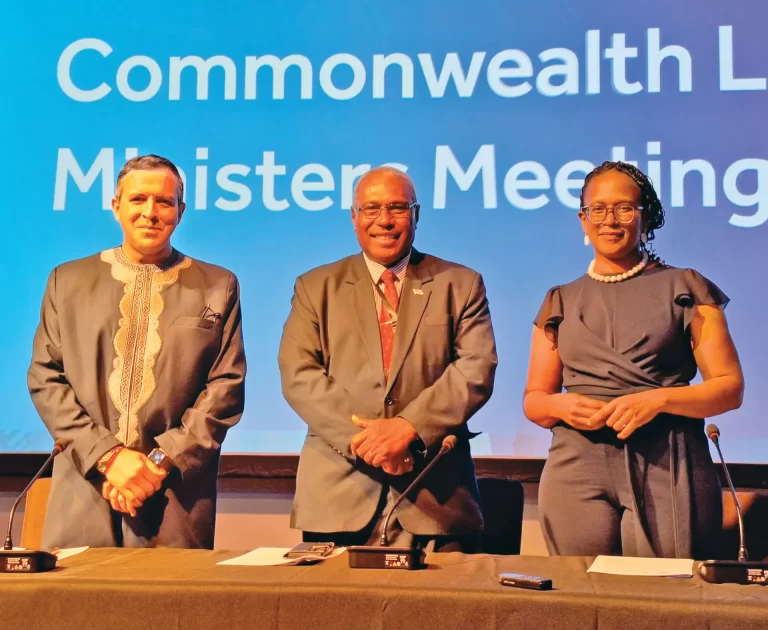
The meeting was chaired by Fiji’s Minister for Justice and Acting Attorney-General, Siromi Turaga, from 09 to 11 February 2026.

He said:“As we conclude this meeting, we do so with a renewed sense of purpose and partnership. We look forward to continuing our work together, building on the progress achieved, and translating our shared work into lasting impact for Commonwealth countries.”

New OACPS Bureau meets in Brussels ahead of 2026 Summit

0

The new Bureau of the OACPS Committee of Ambassadors for the February to July 2026 term has held its first meeting at OACPS headquarters in Brussels.

The meeting was presided over by Ambassador Pa Musa Jobarteh of The Gambia, in his capacity as Chair of the OACPS Committee of Ambassadors. The OACPS Secretary-General, Moussa Saleh Batraki, also attended.

The Bureau reviewed several agenda items, including the schedule for upcoming and future Committee of Ambassadors meetings, preparations for the 11th OACPS Heads of State and Government Summit in Malabo, Equatorial Guinea from 27–29March 2026, and other issues of strategic importance to Member States.

The OACPS Bureau is made up of ambassadors nominated by their regional peers to represent the organisation’s six regions.

For the February to July 2026 period, the Bureau comprises:

*Chair – The Gambia

*West Africa – Ghana

*Central Africa – (to be confirmed)

*East Africa – Maldives

*Southern Africa – Mozambique

*Caribbean – Guyana

*Pacific – Timor-Leste

The Bureau Troika includes the outgoing Committee of Ambassadors Chair, Solomon Islands (Pacific), along with The Gambia (West Africa) and Ethiopia (East Africa).

Sustainable fisheries can’t be built on exploited labour

0

By Alfred “Bubba” Cook

The connection between human welfare and ocean conservation is direct and unavoidable, a new op-ed argues, because lawlessness toward people often goes hand in hand with lawlessness toward the ocean.

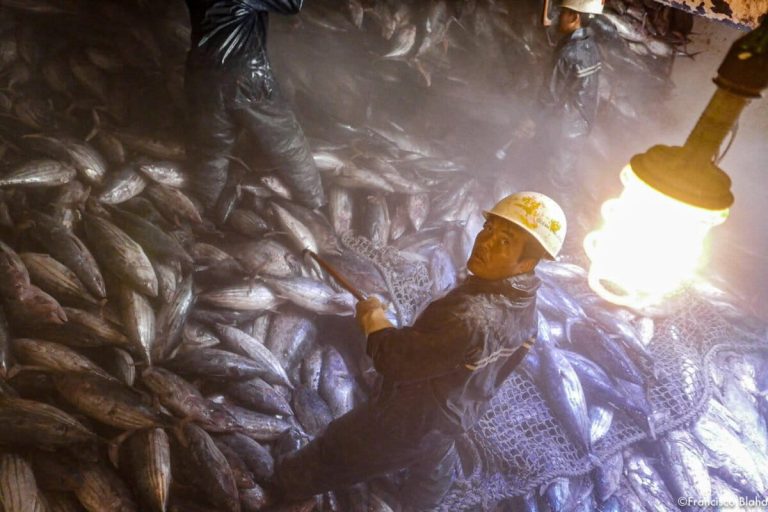
Although there is an international legal framework governing crew welfare on fishing vessels at sea, these protections remain uneven, weakly enforced, or entirely absent for too many fishing crews, particularly migrant workers deployed on distant-water fleets.

“We cannot reasonably expect crews to comply with complex fisheries regulations including logbooks, bycatch mitigation, finning bans, spatial closures and other requirements when they are overworked, underpaid, isolated and afraid,” the author writes.

For decades, the global fisheries conservation community has rightly focused on the health of fish stocks, the integrity of management systems, and the long-term sustainability of ocean resources. But there is a fundamental truth we can no longer afford to sidestep: fisheries management that fails to protect the people working at sea is neither credible nor sustainable.

Crew welfare starts with international law. In theory, the framework already exists. International maritime law, anchored in instruments such as the UN Convention on the Law of the Sea (UNCLOS), establishes the responsibilities of states over vessels flying their flag. Complementing this are labour-specific agreements like the International Labour Organisation’s (ILO) Work in Fishing Convention (C188), the Maritime Labour Convention, and safety instruments such as the Cape Town Agreement on fishing vessel safety.

In practice, however, these protections remain uneven, weakly enforced, or entirely absent for too many fishing crews, particularly migrant workers deployed on distant-water fleets. Ratification gaps persist. Oversight mechanisms are diffuse and fragmented, and accountability too often disappears once a vessel leaves port.

Under international law, flag states, those countries where a ship is registered and to whose jurisdiction it is subject, remain the primary authority responsible for ensuring the safety, welfare and labour conditions of crews on their vessels. This is not optional. It is a legal obligation that is explicit under UNCLOS Article 94, on duties of the flag state. Yet many flag states lack either the capacity or the political will to exercise effective control over labour conditions at sea. Others outsource critical responsibilities to private actors, such as crewing agencies, without adequate safeguards. The result is a regulatory vacuum in which abuse can flourish, hidden by distance, isolation, and unverified or unvalidated compliance consequence reporting.

This governance failure is not hypothetical. Documented cases of forced labour, debt bondage, excessive working hours, withheld wages, and physical abuse continue to surface across global fisheries. These are not outliers; rather, they are symptoms of a system that has prioritized production over protection.

Encouragingly, change is beginning to emerge in fisheries governance spaces traditionally focused only on fish. The Western and Central Pacific Fisheries Commission (WCPFC), one of the world’s most important Regional Fisheries Management Organisations (RFMOs), adopted a binding conservation and management measure specifically addressing crew labour standards in 2024, which contains specific provisions prohibiting forced labour and child labour, mandating decent living conditions, timely wage payments, medical care access, incident reporting for serious injuries and deaths, cooperation in search and rescue, and protection against retaliation for grievances. This is a meaningful step forward. It reflects growing recognition that human welfare is not separate from fisheries management, but integral to it.

Still, adoption alone is not enough. Implementation, compliance and enforcement will determine whether such measures improve conditions on deck or remain aspirational language on paper.

Additionally, there are operational aspects of the fishing industry that contribute to ongoing labour abuse. One of the most persistent and underaddressed challenges lies upstream of the vessel itself: the role of crewing agencies. In many fisheries, crew are recruited through third-party labour brokers operating across borders with limited oversight. Contracts are opaque, fees are charged to workers, and accountability is diffuse. When abuses occur, responsibility, and blame, is passed among vessel owners, recruiters and flag states, while crews are left without remedy.

If governments are serious about protecting workers, oversight of crewing agencies must become a core part of fisheries governance. That means licensing, transparency, joint liability, and enforceable standards, not voluntary codes and after-the-fact audits. Most importantly, flag states must acknowledge that “the buck stops with them” and that they are ultimately responsible for any human or labour rights violations that occur under their flags.

Furthermore, high seas transshipment enables fishing vessels to remain at sea for extended periods, sometimes longer than two years, without entering ports where crew may access authorities, disembark safely, or have their working conditions inspected. This prolonged isolation facilitates forced labour, human trafficking and other abuses by preventing crew from exercising their rights to leave, seek help or report violations.

Current reporting requirements for at-sea transshipment make it impossible to verify the identity of anyone boarding or disembarking, as well as the time and location of such actions. Without the regulatory oversight and access to support services that port calls provide, crew aboard transshipment vessels operate in a virtually unmonitored environment where labour rights violations can occur with impunity. In fact, the ILO has identified poorly monitored at-sea transshipment as a key enabler of “forced labour and trafficking in fisheries,” as it allows vessels to function as closed systems beyond effective scrutiny.

Notably, while large seafood markets and NGOs have leveraged market pressure to address seafood sourced from illegal, unreported and unregulated (IUU) fishing and food safety, a similar mechanism does not exist with respect to labour abuses. Whether the carrot that is the Marine Stewardship Council (MSC) market eco-certification or the stick that is the European Union (EU) IUU regulation and the U.S. Seafood Import Monitoring Programme SIMP), there is no effective market barrier to seafood that is a product of human misery.

Despite its limitations, the EU IUU regulation did mobilise improvements. Similarly, the MSC recently integrated some labour-related checks (reporting, prohibitions on egregious abuses, audits/self-assessments) within its certification process, but the requirements are narrow and fall short of comprehensive human rights and labour standards. A similar market-based approach to flag states’ responsibility over crewing conditions consistent with ILO C188 could be easily implemented.

Technology can also play a role, if deployed thoughtfully and ethically. Advances in electronic monitoring, connectivity and digital identity systems offer new opportunities to reduce isolation, improve oversight and amplify worker voice. The recent expansion of satellite-based Wi-Fi, for example, is not a luxury, but rather a lifeline. Access to communication enables crew to contact family, report grievances, manage finances and seek help when something goes wrong.

Recent pilot projects combining electronic monitoring with onboard connectivity have demonstrated that these tools can also support social responsibility. Cameras can document working conditions, accidents, and compliance with rest and safety requirements. Monitoring footage, when governed by clear privacy protections, can serve as impartial evidence in dispute resolution. Importantly, crew often view such systems as protective rather than punitive, provided they are paired with trusted grievance mechanisms and safeguards against misuse.

Other emerging tools, such as self-sovereign digital identity, biometrics for identity verification, and secure worker-voice platforms, could help address long-standing problems like document confiscation, contract substitution and lack of access to remedies. These technologies are not silver bullets. They cannot substitute for inspections, enforcement or strong laws. But they can help close some of the accountability gaps that have long plagued distant-water fisheries.

It’s also worth noting that these technologies and processes are ubiquitous requirements for foreign labour serving on land. People entering a country to work as seasonal or permanent workers within the country all go through an immigration process and are subject to legal requirements such as contracts and occupational safety and health, so why wouldn’t we expect the same for a vessel that is explicitly territory under a flag state? If we can maintain a “mass balance” for immigrants entering and leaving a country, why wouldn’t we apply it to vessels, with an additional proviso that if it does not occur the products from that vessel are barred entry to markets or subject to sanctions the same way the products of IUU are by the U.S SIMP and EU IUU framework?

None of this will matter, however, if the human dimension of fisheries remains siloed from conservation and management decisions. We cannot reasonably expect crews to comply with complex fisheries regulations including logbooks, bycatch mitigation, finning bans, spatial closures and other requirements when they are overworked, underpaid, isolated and afraid. A system that treats workers as disposable inputs should not be surprised when rules are ignored or evaded.

The connection between human welfare and ocean conservation is direct and unavoidable. Exploitation undermines compliance. Abuse erodes transparency. And lawlessness toward people often goes hand in hand with lawlessness toward the ocean and the resources we extract from it.

If we want fisheries that are legal, sustainable, accountable and resilient, we must build governance systems that value human dignity as much as biomass or economic targets. That means stronger flag state accountability, real oversight of labour recruiters, massive reform or prohibition of transshipment, meaningful RFMO action, and requirements for responsible use of technology to shine light where abuse has thrived in the dark.

Sustainable fisheries cannot be delivered on the backs of exploited workers. Until we fully accept that truth, and act on it, our claims of responsible ocean stewardship will remain fundamentally incomplete.

Alfred “Bubba” Cook is policy director for Sharks Pacific and has spent more than 22 years in fisheries conservation and management, supporting conservation at a national and regional level through policy improvements, market tools and technological innovation. He served a leading role in securing human rights at sea before the Western and Central Pacific Fisheries Commission (WCPFC) through championing and securing passage of a regulatory measure to ensure the safety and security of fisheries observers in 2016, which served as a catalyst for an additional regulatory measure addressing the welfare of fishing crew serving on fishing vessels in 2024.

Pacific Islands must act now on Fiji’s HIV lessons

0

Fiji now has the world’s fastest-growing HIV epidemic. Public education campaigns could stop it spreading across the region.

By Connor Graham

Fiji recorded 1,583 new HIV cases in 2024, an incidence of about 158 per 100,000 people. For comparison, Australia, a nation with around 27 times the population of Fiji, had just 757 new cases in 2024 (2.9 per 100,000 people).

Even more concerning is the trajectory. Fiji’s new HIV cases have exploded, increasing by 1,219 percent between 2019–24, showing no signs of slowing down, and contrasting global trends of a steady decline since the mid-1990s.

This staggering data awards Fiji the unenviable title of having the fastest-growing HIV epidemic in the world, and yet the figures likely underestimate the extent of Fiji’s HIV crisis due to poor testing rates. Only a third of people living with HIV in Fiji know their status and only about a quarter receive treatment.

Mirroring Fiji’s HIV crisis is increasing illicit drug use, particularly methamphetamine taken intravenously. Needle sharing has accelerated HIV spread in Fiji with conservative estimates reporting half of all new HIV cases stem from using contaminated syringes. The shocking act of “bluetoothing” – a practice documented in Fiji where drug users inject someone else’s blood to share their high – is perhaps the most efficient HIV transmission method imaginable.

Fiji’s HIV crisis may rapidly escalate from domestic concern to regional threat. Fiji is a hub for education and labour migration in the Pacific. What starts as a Fijian crisis won’t respect borders and poses direct health security concerns to already strained health systems in other Pacific Island nations, as well as Australia and New Zealand whose seasonal worker programmes (PALM and RSE) could introduce new transmission networks.

Continued expansion of regional networks targeting transnational crime, such as enhanced intelligence sharing, is needed to match increases in trafficking volume and ingenuity.

Pacific Island nations must take steps to insulate themselves, and the region, from additional HIV outbreaks, learning from Fiji’s experience. Many nations, including French Polynesia, Tonga, Samoa, Vanuatu and Solomon Islands are already seeing the warning signs of an increasing drug presence. It is via traffickers using the Pacific Islands’ quiet and largely unpatrolled borders as waystations that hard drugs have leaked into Fiji.

For Australia and New Zealand whose domestic drug markets drive the trafficking that fuels Fiji’s crisis, both moral obligations and direct health security concerns underpin the need for action.

Recently, major seizures in the Pacific seemingly occur every few days, reflecting the volume of trafficking taking place in the region. The burst of seizures is also indicative of regional security cooperation, with Pacific Island defence forces working alongside partner countries, such as Australia, to disrupt supply lines. Continued expansion of regional networks targeting transnational crime, such as enhanced intelligence sharing, is needed to match increases in trafficking volume and ingenuity.

Fiji’s HIV crisis was compounded by an initially sluggish public health response. Warning signs of a burgeoning crisis were present early, with the alarm definitively raised by UNAIDS in 2022. Regrettably, Fiji did not launch a national response plan to combat the HIV outbreak until 2025, and by then the window for early intervention had closed.

A recently published rapid assessment of Fiji’s HIV crisis revealed that some individuals who contracted HIV via unsafe injecting practices were still unaware of how HIV is spread, and the risks associated with contaminated blood. Others viewed the disease as untreatable or inevitable. Fundamental gaps in public knowledge of HIV in Fiji are likely to resonate around the Pacific.

AIDS virus

A simple step Pacific Island nations could take to build resilience to HIV outbreaks is an education campaign targeting public knowledge of HIV risk factors. Importantly, messaging must not be negative, or fear based as has previously been the case in Fiji, but include details of risk factors, promote safe sex, encourage testing and discourage needle sharing and other unsafe practices.

A more complex but crucial step toward building resilience to drug-related HIV outbreaks in the Pacific is destigmatisation. Both drug users and people living with HIV in Fiji report feeling judged and shunned by their communities, emotions that drive riskier behaviours and make them less likely to seek treatment or access support services. The value of removing stigma-based barriers to accessing testing and treatment, and enabling safe drug use, has been observed globally.

Ensuring the availability of sterile needles and syringes for drug users was the highest priority recommendation to combat Fiji’s HIV crisis per the previously mentioned rapid assessment. The “Fiji National HIV Surge Strategy”, developed by the Fijian government and launched in 2025, also notes the value of needle exchange programmes and supervised injection sites. The Fijian government’s progressive approach to tackling the HIV crisis is commendable, and will contribute to the erosion of stigma, enabling access to testing, treatment and support services. However, the delay in such action undoubtedly contributed to the extent of the crisis; a mistake other Pacific Island nations must not repeat.

Though some argue enabling safe use is akin to promoting drug use, this approach decreases stigma and disease transmission. There is little evidence that enabling safe drug use has ever resulted in increased drug use, and drug-related harms are invariably reduced.

The Pacific Islands face a choice; act now on proven harm reduction measures, or risk watching Fiji’s HIV crisis replicate across the region.

‘Keep the eyeballs on the game’: All Blacks legend backs Super Rugby shake-up

0

As Moana Pasifika get set to meet the Fijian Drua in the opening weekend of Super Rugby 2026, former All Black Mils Muliaina believes the competition’s new law changes could reward teams built on speed and instinct.

With the new season kicking off this weekend, Super Rugby has introduced five law innovations aimed at speeding up play, reducing stoppages, and keeping fans engaged.

Moana Pasifika and Fiji Drua will be among the first to test these rules.

Moana Pasifika travel to face the Drua on Saturday – a match that could offer an early glimpse into how the changes reshape the competition

Speaking with Pacific Mornings Muliaina said the Drua’s home advantage alone make them difficult to beat, and the new laws may amplify that edge.

“The sun’s out, you play at a time you are not used to,” he said. “It’s humid, it’s muggy but that’s really important.

“So it’s a hard place to go and win, but in saying that with the Drua and what they’ve produced, it’s also a great way to start the season.”

Known for their high-tempo, expansive style, the Drua in particular could benefit from laws designed to keep the ball in play and limit repeated scrums and stoppages.

In Muliaina’s view, the goal is simple: “It’s not to confuse people, but also to keep the eyeballs on the game rather than going, oh man another 30 seconds of scrums… and before you know it, [people] are turning to the other channels or leaving the stadium because it’s becoming stop-start.”

Among the five key innovations:

*Referees will no longer be required to automatically issue a yellow or red card when awarding a penalty try. Sanctions will now be at their discretion.

*Accidental offsides and delays at the ruck will result in free kicks, reducing stoppages.

*Once the referee calls “use it” at the ruck, no additional attacking players may join.

*Teams can now pass the ball back into their half before kicking a 50:22.

*Quick taps can be taken within one metre either side of the mark, or anywhere behind it within a two-metre channel.

The adjustments aim to increase continuity and tactical variation while reducing the number of set-piece resets.

With close to 90 yellow cards issued during the 2025 season, competition organisers hope the new approach will lead to fewer automatic send-offs and more 15 on 15 rugby.

All Black and Highlanders lock Fabian Holland also welcomed the changes, saying they would encourage smarter, faster play.

“It speeds up the game, it brings a different way of thinking around the way we play the game,” Holland told RNZ.

For Moana Pasifika and the Fiji Drua, teams that thrive on broken play, counter-attack and flair, the early rounds may reveal whether the rule tweaks truly favour attacking rugby.

Kickoff for Moana Pasifika vs Fiji Drua is 4.35pm (NZT) at Church hill Park, Lautoka Fiji.

Commonwealth Law Ministers back Nadi declaration on democracy and good governance

0

The Commonwealth Law Ministers Meeting in Nadi has adopted the Nadi Declaration on Democratic Resilience and Participation.

This was revealed during the Commonwealth Law Ministers Meeting (CLMM) at the Sheraton Fiji Golf and Beach Resort in Nadi.

Chaired by the Minister for Justice and acting Attorney-General Siromi Turaga, the CLMM agreed to recommend the declaration for consideration at the next Commonwealth Heads of Government Meeting.

It is a landmark framework aimed at strengthening the rule of law, human rights, and good governance across member states, including Fiji.

Turaga said the declaration is a timely and decisive response to growing global pressures on democratic systems.

“The Nadi Declaration reaffirms that the rule of law is the bedrock of democratic resilience,” he said.

“It provides a structured and practical framework for preventing democratic backsliding, strengthening institutions and ensuring our citizens remain at the centre of governance.”

It also calls for stronger legal literacy, improved access to justice, and the development of monitoring tools to assess commitment to democratic principles.

For Fiji and other Small Island Developing States (SIDS), the document recognises the disproportionate impacts of climate change and sea-level rise, linking resilience to good governance and stable development.

Turaga said democratic resilience was tied to peace, prosperity, and investor confidence.

“Strong institutions, ethical public administration, and respect for human rights create certainty. Certainty builds trust, and trust drives sustainable development.”

Law ministers are committed to strengthening anti-corruption initiatives, supporting independent and democratic parliament, and expanding avenues for meaningful public engagement.

The declaration aligns with the Commonwealth Secretariat Strategic Plan 2025–2030 and is expected to guide collaborative efforts among member states in reinforcing democratic standards and accountability mechanisms.

Fiji assures Commonwealth on democratic stability

0

The Fiji government has reaffirmed its commitment to upholding the rule of law and ensuring that democracy remains central to its leadership.

Minister for Justice and Chair of the Commonwealth Law Ministers Meeting, Siromi Turaga, made this clear when responding to questions about safeguarding Fiji’s position within the Commonwealth and preventing any future disruptions.

Fiji’s history with the Commonwealth has been turbulent, having been suspended three times following periods of political instability.

Military coups and the suspension of democratic processes were the reasons for Fiji’s past suspensions, and Turaga said the current government has pledged to uphold the rule of law.

“We came with a clear mandate, and I believe that we have delivered when compared to previous governments. Yes, there are areas that need to be improved. As I shared today, all Commonwealth countries go through that, but I think it’s when you get back, that’s what Fiji did years back, and it’s important that we continue that direction.”

To further uphold democracy, Turaga said preparations for the upcoming election demonstrate this commitment.

“The key deliverable for the coalition government is the election that is coming. It must be credible; it must be fair, with no qualms about how it is going to be held.”

The Commonwealth has acknowledged Fiji’s position and reiterated that the people remain at the heart of democracy.

The government said continued engagement with the Commonwealth and strong democratic institutions will be critical in ensuring Fiji does not repeat the mistakes of its political past.

Pacific transit of narcotics raises alarm after a massive shipment is seized

0

More than four tonnes of cocaine – worth as much as one and a half billion dollars on our streets – was destined for New Zealand before it was intercepted near French Polynesia earlier this month.

A New Zealand joint Intelligence, Customs and Defence operation dubbed “Kiwa” which has been monitoring suspicious activity in the Pacific worked with French and U.S authorities to intercept the 4.24 tonnes of cocaine.

Customs deputy chief executive of operations Jamie Bamford told 1News “good intelligence” indicated “the drugs were destined for New Zealand”.

Bamford said there were sizeable challenges for New Zealand as the amount of cocaine from central and south America to markets like New Zealand was increasing.

He said there was enough cocaine in the shipment to feed the New Zealand market for nine years – based on the wastewater levels of consumption across New Zealand.

“We really have to use good intelligence to understand what’s coming across our borders, what is slipping through, what is being consumed,” he said.

Trans-national crime expert, Jose Sousa-Santos from Canterbury University ‘s Pacific Regional Security Hub, said the huge amount was clearly too much for our market and that revealed a sobering reality: New Zealand is a major transit point in the Pacific drug trafficking highway.

“What the cartels have realised is we have shorelines which are not patrolled… [the shipment] would have come to New Zealand then be sent on to Australia where it would not be designated as coming from a high-risk country.”

Within a three-week period this year, more than 12 tonnes have been seized in Fiji and French Polynesia, but Sousa-Santos said there was much more getting through.

Meanwhile, the way the region previously worked together to deal with regional security has come under a new threat.

Two high seas seizures in the last few weeks near French Polynesia resulted in the French seizing and destroying the cocaine on board – but releasing the vessel and crew in a new strategy designed to avoid a costly legal and court process.

The ship carrying the drugs destined for New Zealand was headed back towards South America.

1News understands another of the vessels that was intercepted by the French – with 4.87 tonnes of cocaine destined for Australia – the MV Raider, was currently in New Zealand waters near the Kermadec Islands. The drug ship was last week in Rarotonga after making a distress call because of engine problems.

Minister of Foreign Affairs Winston Peters said New Zealand was not involved in this particular operation.

“New Zealand authorities immediately provided support to the Cook Islands to deny the vessel entry into the country and to make certain it left immediately once repairs were made,” he said.

Sousa-Santos said the French strategy sent the wrong message to cartels – syndicates in South America willing to run the gauntlet. The French approach also disrupted police efforts to track drugs on board vessels, he said.

“Its very reactive and, dare I say it, very selfish tactics being utilised by the French in the Pacific.”

The issue would likely continue to grow for the region as more cocaine – often in semi submersible crafts known as narco subs – flood through the Pacific.

American Bar Association backing Pacific territories’ fight against deep-sea mining

0

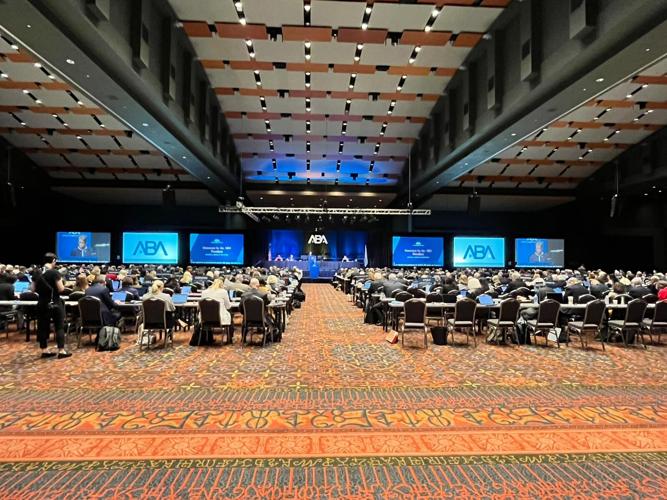
The American Bar Association threw its weight behind Pacific Island opposition to deep-sea mining Monday, passing a resolution that brings more than 400,000 lawyers into the fight against federal leasing plans.

The resolution, submitted by the Guam Bar Association and approved by the ABA’s House of Delegates at its midyear meeting in San Antonio, Texas, calls on the federal government to halt all leasing for seabed mining off Guam, the Commonwealth of the Northern Mariana Islands, and American Samoa.

Guam Bar Association President Jacqueline Terlaje, who presented the resolution, said the vote amplifies voices that federal authorities have largely ignored.

“The people of the Pacific have spoken with one voice on this issue,” Terlaje said in a phone interview from Texas with The Guam Daily Post. “And the one voice is that we want a moratorium in place until the issues are more fully understood.”

The resolution marks the first major policy statement the Guam Bar Association has brought before the national body since gaining representation in the House of Delegates last year. The ABA had previously excluded Pacific territories from its governing structure.

“Now we’re not just three lonely voices in the Pacific,” Terlaje said. “Now we are a body of more than 400,000 people, including those who submitted their commentaries, which I think exceeded 66,000, and all the organisations.”

Adi Martínez-Román, co-founder and co-director of Right to Democracy, called the approval significant for demonstrating institutional support.

“The American Bar Association is the biggest bar association of the United States,” Martínez-Román told the Post. “And they have been working for a long time.”

The resolution demands the Bureau of Ocean Energy Management stop issuing leases due to lack of statutory authority and insufficient scientific data. It also requires that no ocean industrialisation proceed in U.S territories without free, prior, and informed consent from indigenous populations.

Resolution 402 specifically asks the federal government to respect the moratorium issued by American Samoa’s governor and resolutions passed by the Guam and CNMI legislatures.

The vote comes as BOEM accelerates plans to open Pacific waters to commercial mining for critical minerals. The agency doubled the proposed mining zone for American Samoa while facing unanimous opposition from territorial governments.

Terlaje said getting the resolution approved required intensive coordination across multiple organisations, including Right to Democracy and Blue Ocean Law.

“This was a massive effort,” she said. “Before we even leave Guam, we’re already drafting the paperwork; we’ve got to review everything.”

She described five days of back-to-back meetings with different state delegations to build support for the resolution. The comment period with BOEM closed 12 January, making the quick ABA response particularly notable.

“”When you think about the effort it took to get the ABA support on this, it’s quite impressive that they listened so quickly,” Terlaje said.

The resolution argues that BOEM lacks legal authority to lease seabed minerals in the territories. While the Inflation Reduction Act expanded the definition of “state” under the Outer Continental Shelf Lands Act to include U.S territories, legal analysis suggests this expansion applied only to offshore wind leasing, not mineral extraction.

The document also highlights insufficient baseline data about deep-sea ecosystems. Less than 0.001 percent of the deep seafloor has been visually observed, according to research cited in the resolution, with only seven known observation points in the 35.5-million-acre area proposed for leasing in the Marianas.

Recent discoveries about polymetallic nodules producing oxygen through electrolysis add to environmental concerns, the resolution states. Removing these nodules could permanently eliminate oxygen sources that sustain deep-sea life.

Terlaje attended the ABA meeting with Jay Arriola, the Guam delegate, and Alicia Limtiaco. Terlaje sat as delegate for the Northern Mariana Islands under rules allowing her to represent the CNMI in its delegate’s absence.

EU backs PNG trade reforms, flags customs, tax and investment concerns at WTO review

The European Union has welcomed Papua New Guinea’s trade reform efforts while urging further action on customs procedures, fiscal transparency and digital trade systems during PNG’s fourth Trade Policy Review at the World Trade Organisation in Geneva.

Delivering the EU statement on Wednesday, EU Deputy Permanent Representative to the WTO Antonio Fernandez-Martos welcomed PNG’s delegation led by Ambassador Michelle Hau’ofa and acknowledged the country’s newly established mission in Geneva.

“On behalf of the European Union, I would like to welcome the Delegation of Papua New Guinea, led by Ambassador Michelle HAU’OFA, and thank her team in Geneva for their constructive engagement in this fourth Trade Policy Review,” he said.

“We welcome that Papua New Guinea has now established a mission in Geneva, and we look forward to closer cooperation on WTO matters that this step will enable.”

He said the review provided a timely opportunity to assess developments since PNG’s last review in 2019 and reaffirmed the EU’s long-standing partnership with PNG under the Cotonou Agreement, the Samoa Agreement and the EU–Pacific Economic Partnership Agreement.

“The EU welcomes Papua New Guinea’s continued efforts to integrate trade policy into its national development agenda, particularly its stated objective of promoting sustainable growth and diversifying the economy beyond its traditional reliance on the extractive sector,” he said.

The EU also commended PNG’s engagement in the multilateral trading system and its commitment to trade facilitation and regulatory transparency.

“We particularly welcome Papua New Guinea’s commitment to improving trade facilitation, enhancing regulatory transparency, and strengthening institutional capacity, key elements for fostering a predictable, rules-based, and inclusive trading environment,” Fernandez-Martos said.

He noted PNG’s role as a co-sponsor of the request to incorporate the Investment Facilitation for Development Agreement into the WTO framework and encouraged ratification of the WTO Agreement on Fisheries Subsidies.

However, the EU flagged three priority areas for further reform.

“First, regarding trade facilitation and customs procedures, we encourage Papua New Guinea to continue efforts to ensure consistent and uniform application of customs regulations across all ports of entry,” he said.

He pointed to implementation challenges and concerns over high and unpredictable port charges.

“Addressing these concerns would significantly improve trade competitiveness and reduce the cost of doing business.”

On fiscal reforms, the EU called for clarity around the Income Tax Act 2025.

“While we acknowledge Papua New Guinea’s objective of strengthening domestic revenue mobilization, it is essential that new measures, such as the application of Capital Gains Tax, particularly in the resource sector, are clearly defined, consistently applied, and accompanied by appropriate transitional arrangements,” he said.

“Legal certainty in this area is crucial for maintaining investor confidence.”

The EU also urged PNG to accelerate implementation of its National Electronic Single Window system.

“Once fully implemented, the Single Window will automate and streamline trade procedures, reduce administrative burdens, enhance transparency, and minimize opportunities for corruption by limiting physical paperwork and face-to-face interactions,” he said.

“Its effective deployment would significantly improve market access, trade efficiency, and Papua New Guinea’s integration into regional and global value chains.”

Fernandez-Martos also reaffirmed the EU’s support for PNG’s reform agenda.

“On behalf of the European Union, I wish Papua New Guinea every success in its fourth Trade Policy Review,” he said.

- Advertisement -