More than 60 years after the UN launched its formal decolonisation drive, Secretary-General António Guterres on Monday urged renewed commitment to completing the unfinished business of ending colonial rule.
Since 1945, more than 80 former colonies comprising some 750 million people have gained independence. However, 17 Non-Self-Governing Territories remain on the UN list, home to nearly two million people.
They range from Western Sahara in Africa to small island territories in the Caribbean and Pacific.
Opening the 2026 session of the Special Committee on Decolonisation – known as the C-24 – the Secretary-General, in remarks delivered by his Chef de Cabinet Courtenay Rattray, stressed that decolonisation has been a core objective of the Organisation “since its earliest days.”
“This Organisation was created as a place where nations could meet as equals, not as rulers and ruled,” he said.
Yet, Guterres cautioned that the legacy of colonialism continues to shape present-day realities.
“The legacy of colonialism has left profound scars through deeply rooted mechanisms of economic exploitation, as well as in the form of racism, inequality and persistent exclusion from the decision-making bodies,” he said.
The C-24 was established by the General Assembly in 1961 to monitor progress towards granting independence to territories that have not yet attained “a full measure of self-government,” as defined under Chapter XI of the UN Charter. Its mandate stems from the landmark 1960 Declaration on the Granting of Independence to Colonial Countries and Peoples.
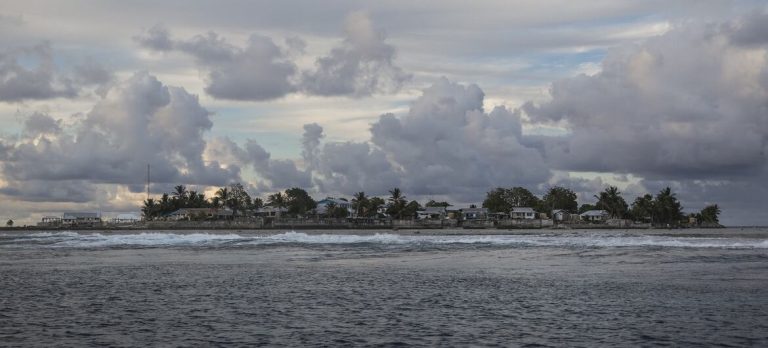
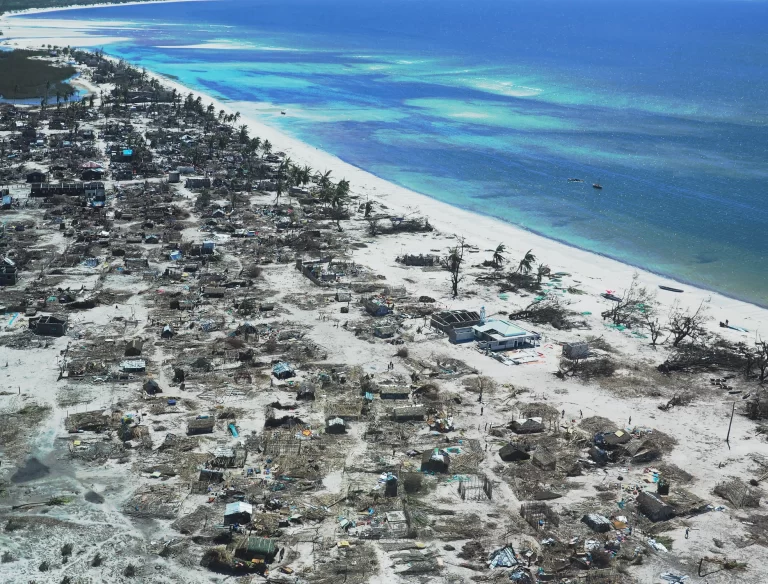
Many of the remaining territories are small islands facing intensifying climate threats.
Rising sea levels, coastal erosion and more frequent extreme weather events are damaging homes and infrastructure, undermining tourism and fisheries, and straining already limited public resources.
“The majority of the Territories are small islands,” he noted, urging the Special Committee to place “resilience and adaptation at the heart of your discussions.”
The Secretary-General outlined three priorities to guide the remaining decolonisation process.
First, he called for “inclusive dialogue among Non-Self-Governing Territories, administering Powers, Member States, and all stakeholders,” stressing that each case must be addressed individually and “in accordance with the UN Charter, the 1960 Declaration, and the relevant resolutions of the General Assembly.”
Second, he underscored “the central role of young people,” saying that “the vision and leadership of the next generation is vital to building a productive and inclusive future.”
Third, he highlighted the urgency of climate action, particularly for island territories confronting existential risks.
When Pacific Island students secured a historic advisory opinion from the world’s highest court last July, the legal victory was immediate.
What came next has been more complicated.
Across the Pacific, where rising seas, coastal erosion and saltwater intrusion are already reshaping daily life, climate advocates are now watching how governments respond after courts clarify their obligations. That question surfaced repeatedly during a recent international webinar that linked Pacific youth activists with European climate litigants and Irish environmental lawyers.
“Even when you win in court, it doesn’t always make anything happen,” said Isabelle Joerg, a Swiss climate advocate who addressed the session. Her warning resonated strongly with Pacific audiences familiar with slow-moving international commitments.
The July 2025 advisory opinion from the International Court of Justice affirmed that states have binding obligations under international law to protect the climate system and prevent foreseeable harm from greenhouse gas emissions. The case was driven by Pacific Islands Students Fighting Climate Change, a coalition founded by law students from climate-vulnerable island nations.
While the opinion is not legally binding, it carries significant legal weight and is already influencing climate litigation worldwide.
“Young generations, especially in the Pacific, have understood the urgency,” Joerg said. “They are pushing the legal system where politics has failed.”
The Pacific-led effort began in 2019, when students from island nations facing existential climate threats sought clarity under international law. Their campaign ultimately gained backing from Pacific governments and brought the issue to The Hague.
The ICJ opinion declared climate change an “existential problem of planetary proportions” and confirmed that human rights obligations apply to climate harm, a point Pacific advocates have emphasised for years as entire communities face displacement.
For many in the region, the ruling validated lived experience.
“Without our land, our bodies and memories are severed from the fundamental relationships that define who we are,” said Cynthia Houniuhi, a Pacific Islands Students Fighting Climate Change representative, during the ICJ hearings.
Yet the ruling also raised a familiar Pacific question: How does international law translate into real-world protection?
That uncertainty is playing out in Europe, offering both encouragement and caution for Pacific nations.
In April 2024, the European Court of Human Rights ruled that Switzerland failed to adequately protect its population from climate-related harm. The case was brought by KlimaSeniorinnen Schweiz, an association of women over 65 who argued that extreme heat posed a direct threat to their health.
Joerg said the group deliberately grounded its case in medical evidence.
“There is a considerably higher risk of fatality for elderly women during heat waves,” she said. “That was central to our claim.”
While the court largely ruled in their favour, Switzerland has yet to implement meaningful changes. The case now sits in an ongoing review process with the Council of Europe.
“So far, nothing has happened,” Joerg said. “The only real pressure is reputational.”
For Pacific advocates, the Swiss experience underscores a critical lesson.
“Courts can clarify responsibility,” Joerg said. “But enforcement remains the biggest challenge.”
That challenge is also unfolding in Ireland, where Friends of the Irish Environment is awaiting a Court of Appeal ruling challenging the government’s Climate Action Plan 2023.
Judy Osborne, a director of the group, said the case reflects a broader global pattern familiar to Pacific observers.
“We have strong laws on paper,” Osborne said. “But implementation is where things break down.”
Ireland’s climate minister recently acknowledged that current policies are insufficient to meet national targets. Osborne said that admission highlights the gap between legal obligation and political action.
“The problems don’t start with the courts,” she said. “They start with poor decisions that go uncorrected.”
Resource speakers have repeatedly returned to the Pacific as a moral and legal reference point.
Joerg cited Pacific island students when discussing the future of climate litigation.
“They went to the International Court of Justice because they had no other avenue left,” she said. “That should concern all of us.”
Pacific advocates have emphasised that climate harm is not theoretical. It is already reshaping coastlines, economies and cultural survival. Legal clarity, they argue, is essential not only for future cases but for strengthening claims for adaptation support and accountability.
Still, speakers cautioned against viewing litigation as a standalone solution.
“We should not feel personally responsible alone,” Joerg said. “Corporations, financial institutions and states must be held accountable.”
As 2026 approaches, Pacific activists are watching closely how international rulings are absorbed into national policy, if at all. The ICJ opinion has opened legal doors, but whether governments walk through them remains uncertain.
For now, Pacific voices continue to shape the global climate law conversation, not as observers, but as architects.
“What sustains us,” Joerg said, “is that younger generations, especially in the Pacific, are continuing this fight,” she said.
As trade officials and civil society groups prepare for the World Trade Organisation’s 14th Ministerial Conference, or MC14, Pacific island nations are watching closely, even if they are rarely at the centre of the headlines.
MC14, scheduled for late March in Cameroon, comes at a time when global trade rules are under strain and smaller economies are asking whether the system still works for them. That question framed a recent strategic webinar convened by Third World Network, where experts discussed what may be on the table and what it could mean for developing regions, including the Pacific.
“This is a strategy meeting, so we want to be able to speak openly and to brainstorm,” said Yoke Ling Chee of Third World Network, opening the session. She noted that MC14 is expected to take up issues such as WTO reform, e-commerce rules and the renewal of a moratorium on customs duties for electronic transmissions.
For Pacific island countries, the stakes are practical, not abstract. Many rely on tariff revenue as a stable source of government income. Unlike larger economies, they have limited capacity to replace lost tariffs with income or corporate taxes, especially where informal economies remain significant.
One issue drawing attention is the long-standing moratorium on customs duties on electronic transmissions, which prevents governments from taxing digital downloads such as movies, music and software. First adopted in 1998, the moratorium has been renewed repeatedly and is again up for decision at MC14.
Sanya Smith of Third World Network said the shift from physical goods to digital consumption has real consequences for developing economies.
“In the old days, governments collected tariffs on DVDs, books and software at the border,” she said. “Now those products are downloaded, and that revenue is disappearing.”
Smith cited estimates showing billions of dollars in annual tariff revenue losses for countries such as India, Thailand and Mexico. While Pacific island economies are smaller, similar dynamics apply, especially as digital services become more widespread.
The broader concern, raised by trade analyst Abhijit Das, is the direction of WTO reform itself. Das warned that proposals led by major powers, particularly the United States, could shift the organisation away from multilateral decision-making toward plurilateral agreements negotiated by smaller groups of countries.
“What is being pushed is a system where powerful countries move ahead in smaller clubs,” Das said. “That risks marginalizing weaker members and making development concerns secondary.”
For Pacific island nations, which already struggle to be heard in global forums, that shift could narrow their policy space even further. Issues such as food security, fisheries management and digital development are often priorities for island states but may receive less attention in plurilateral settings.
There are also questions about how bilateral trade deals outside the WTO could affect negotiations. Several Asia-Pacific countries have entered into trade frameworks with the United States that include commitments on digital trade. Observers at the webinar said these deals could weaken collective positions at MC14.
Jane Kelsey, a professor of law from New Zealand, cautioned that much of the real action may happen outside the formal agenda.
“What happens in the ministerial hall may be less important than what is being launched on the sidelines,” she said, pointing to possible initiatives on digital trade, environment or critical minerals.
For Pacific island countries, MC14 may not deliver dramatic breakthroughs. But the discussions leading up to it are shaping the rules that will govern trade, revenue and development options for years to come. As Chee put it, the challenge is ensuring that small economies are not left to adjust to decisions made without them.
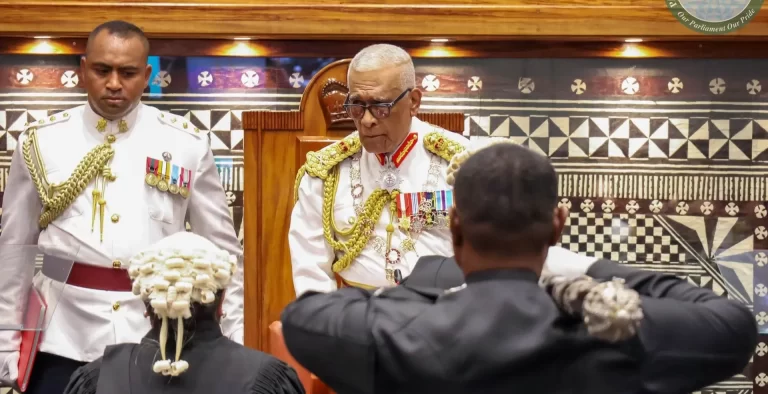
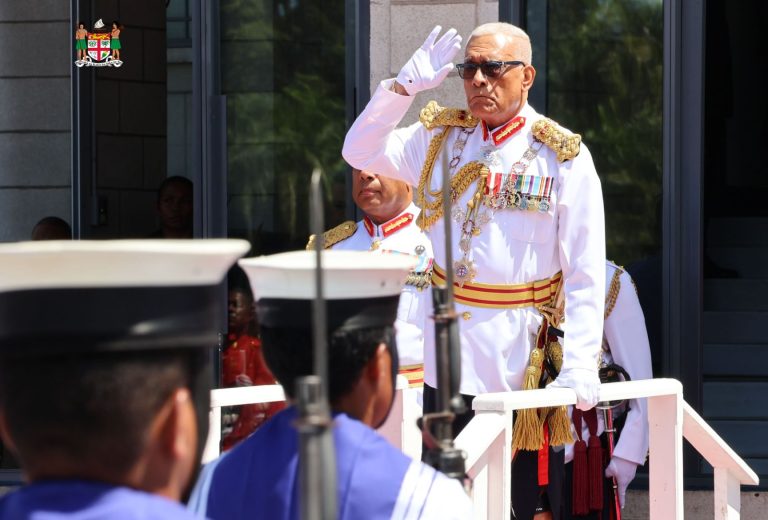
Fiji President and Commander-in-Chief Ratu Naiqama Lalabalavu says Government will decide this year on an invitation for Fijian peacekeepers to serve in Gaza.
Addressing Parliament on Monday, the President paid tribute to Fijian peacekeepers serving in missions around the world and highlighted the country’s long-standing contribution to global peacekeeping efforts.
“I also pay tribute to our peacekeepers serving in the various missions around the globe today.
For 48 years, our peacekeepers have flown our flag proudly across the world. This year, Government will decide on the invitation for peacekeeping in Gaza from the Israeli and U.S Government.”
Fiji has a long record of participation in international peacekeeping operations, earning a strong reputation within the global community.
“Fiji’s global reputation in peacekeeping has enabled our nation to figuratively punch above its weight and I am confident that our disciplined forces will rise to the challenge of new missions,” Ratu Naiqama said.
Meanwhile, Fiji is set to review its peacekeeping operations as part of a broader effort to align international deployments with the country’s domestic and regional security priorities.
The move follows recommendations from Fiji’s National Security and Defence Review, which called for a reassessment of Fiji’s long-standing peacekeeping commitments in light of an evolving global and regional security environment.
In response, the Fiji Government will develop a forward-looking National Peace Operations Strategy (NPS) to guide future decision-making.
The Ministry of Defence and Veterans Affairs is now looking for a consultant to carry out the review.
“Fiji has more than four decades of experience contributing to international peacekeeping missions, particularly under the United Nations,” states the tender document.
“However, authorities acknowledge there is currently no single national framework to guide future deployments, capability development, training priorities and resource allocation.”
The document adds the changing nature of global peacekeeping — including fewer large-scale missions, increased geopolitical competition and a shift toward modular, task-specific operations — has reinforced the need for a more structured national approach.
The proposed NPS will define Fiji’s strategic objectives in peace operations, outline priority areas of engagement and provide an implementation plan informed by available resources.
It will also consider Fiji’s regional leadership role, including the use of the Blackrock Peacekeeping and Humanitarian Disaster Response Camp as a regional hub.
The Ministry of Defence and Veterans Affairs will lead the process in collaboration with key agencies, with Government now seeking a consultant to support the strategy’s development.
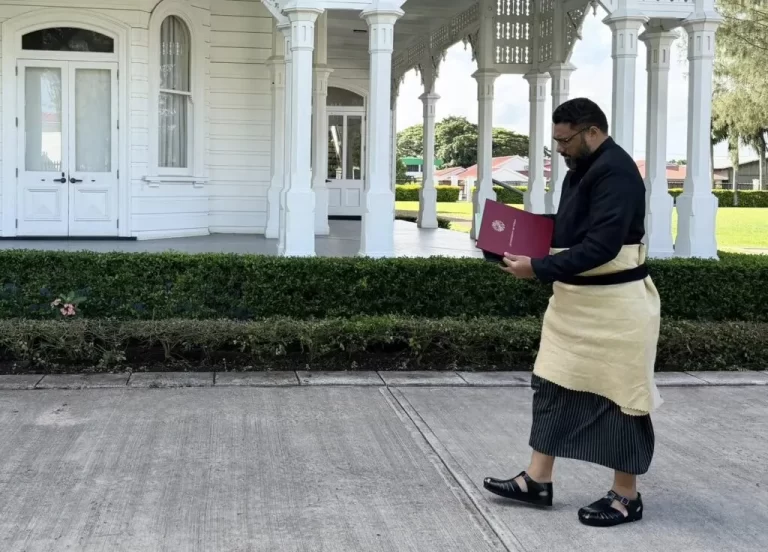
Tongan Prime Minister, Lord Fakafanua, has held his first formal audience with King Tupou VI at the Royal Palace last Friday, in what officials describe as the initial briefing required under Clause 50A(3) of the Constitution.
The meeting marks an early constitutional step following his recent appointment to lead the government.
Lord Fakafanua was elected prime minister in December 2025 after securing a parliamentary majority, becoming one of the youngest leaders in the kingdom’s modern political era.
He formally assumed office later that month, succeeding the previous administration during a period of political transition and institutional scrutiny.
In a statement, the Prime Minister’s Office said the government remains guided by the Constitution and is committed to working closely with the Crown to advance national wellbeing, stability and long-term development.
The emphasis on consultation reflects the constitutional partnership between the monarch and the elected government that underpins governance in Tonga.
Independent legal commentary has previously noted that effective government in the kingdom depends on cooperation between the King and the prime minister within constitutional limits.
The audience also comes amid broader constitutional reflection, with the monarchy highlighting the enduring importance of the 1875 constitutional framework to Tongan identity and governance in a changing global environment.
Further briefings between the government and the Palace are expected as the new administration advances policy priorities and consolidates its mandate in the months ahead.
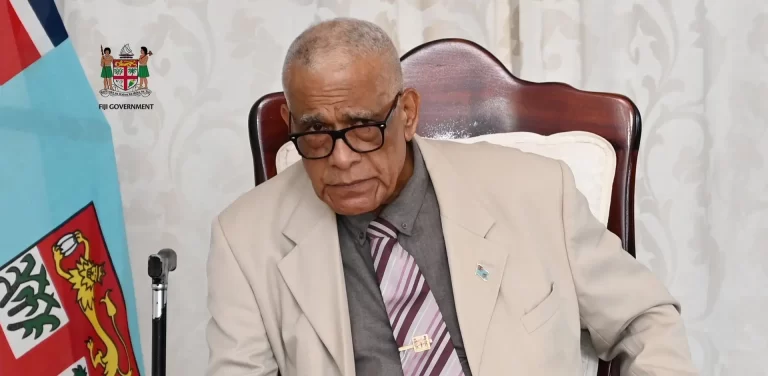
Fiji President Ratu Naiqama Lalabalavu has called on national leaders and citizens to actively support Fiji’s Truth and Reconciliation Commission(TRC), saying its work is central to healing and unity.
In his address at the opening of Parliament on Monday, the President stressed the importance of confronting Fiji’s past with honesty and courage.
“The Truth and Reconciliation Commission plays a vital role in promoting understanding, healing, and unity.
Its mandate reflects our commitment to confronting challenging chapters of our history with honesty, courage, and compassion,” Ratu Naiqama said.
He said the success of the process depends on transparency and broad participation.
“For the process to succeed, it must be inclusive, transparent, and grounded in truth, supported by community engagement and public awareness to ensure all voices are heard.
In this regard, may I encourage our national leaders, those of you here today, and those of you outside of this Chamber today, to participate in the Truth and Reconciliation Commission process.” said Ratu Naiqama.
President Naiqama made specific reference to those affected by past political upheavals.
“In particular, I encourage everyone who has lived through the turbulent events of 1987, 2000 and 2006, and their aftermath, to participate in this process.
They may choose to tell their story publicly or in camera, their participation will contribute to the truth and Reconciliation process.”
He said the Commission’s findings must be handled responsibly and used to guide practical action.
“The Commission’s findings and recommendations should be approached with maturity, guiding practical measures that strengthen reconciliation, institutional learning, and lasting social cohesion.
Building on this foundation, Government will continue initiatives that foster unity, inclusivity, and mutual understanding across all communities.”
The President’s remarks set the tone for parliamentary proceedings, placing national reconciliation and social cohesion at the centre of the Government’s agenda.
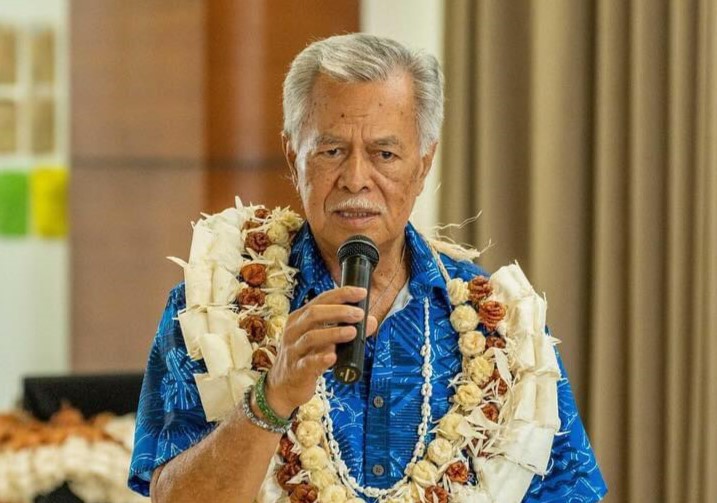
Former Cook Islands Prime Minister and Forum Secretary General Henry Puna has been appointed interim director of the Pacific Islands Development Programme (PIDP) at the East-West Centre, effective immediately.
According to a statement, the announcement was made by East-West Centre president Celeste Connors, who outlined a renewed and expanded strategic focus on Pacific economic security beginning in 2026.
“At the direction of our Board of Governors, the Centre will deepen and expand its longstanding work advancing economic security in the Pacific beginning in 2026 and beyond,” Connors said in her official announcement.
Puna, the first Cook Islander to serve as the secretary-general of the Pacific Islands Forum, achieved another milestone in 2024 as the first Cook Islander appointed to the East-West Centre Board of Governors in Honolulu, Hawaii.
Last year, he was elected president of the governing Cook Islands Party, having previously served as its leader from 2010 until his 2020 resignation to assume the top regional role at the Pacific Islands Forum.
Prime Minister and CIP leader Mark Brown said: “This is a terrific recognition of Henry’s regional statesmanship and a proud moment for the Cook Islands.”
“Our government looks forward to strengthening our relationship with the East West Centre.”
Puna’s appointment comes at a time of increasing global attention on the Pacific region and represents a significant milestone for the Cook Islands, “placing one of its most experienced leaders at the helm of a respected regional policy institution during a critical period of economic and strategic engagement”.
The expanded engagement will launch with the upcoming U.S. Investment Summit with Pacific Leaders, scheduled for February 22-24, hosted in partnership with the United States Department of State and United States Indo-Pacific Command (INDOPACOM).
The Summit, to be attended by PM Brown, is expected to strengthen U.S government and private sector engagement across the Pacific and marks a significant step in elevating the scope and impact of PIDP.
“This next chapter is about action and implementation,” East-West Centre president Connors emphasised.
“We are focused on creating new pathways for investment, collaboration and long-term resilience in the Pacific, grounded in respect and trusted partnership.”
Connors also confirmed that Makanani Salā has been appointed deputy director of PIDP. Salā brings significant experience in regional convenings and high-level policy engagement.
Board chair John Waiheʻe reinforced the strategic importance of the Pacific in the Centre’s future direction, noting that the region is central to the future of the Indo-Pacific.
Fiji President Ratu Naiqama Lalabalavu has called for a united national effort to address pressing social challenges, including the rise in HIV cases.
He also stressed the importance of advancing inclusive economic development and strengthening traditional leadership.
Opening the 2026 parliamentary session Monday, Ratu Naiqama highlighted the link between illicit drug use and the spread of HIV.
He commended collaboration between faith leaders, Police and community organisations in responding to the crisis.
“Our faith leaders, alongside law enforcement and community stakeholders, have demonstrated exemplary leadership in tackling drug abuse, which fuels the spread of HIV across our nation,” he said.
“The fight against HIV demands courage, compassion and the active participation of every Fijian.”
The President said efforts to address social and health challenges must go hand in hand with inclusive national development.
He stressed that economic growth must reach rural, maritime and interior communities, create decent jobs, improve household wellbeing and ensure equitable access to resources.
Traditional institutions, particularly the iTaukei system, were highlighted as vital partners in development.
Ratu Naiqama called for stronger collaboration between Government and traditional leaders to ensure sustainable land and resource use while preserving cultural identity.
“Our traditional leaders must provide vision and responsibility, mobilising communities to ensure that land and sea resources are utilised productively and sustainably,” he said.
“When aligned with national priorities, these resources form the foundation for resilience, dignity and shared prosperity.”
Ratu Naiqama also reiterated Government’s commitment to constitutional review, public participation and transparent governance, describing these initiatives as essential to fostering national unity, protecting human rights and reinforcing public trust in democratic institutions.
He concluded by urging lawmakers, faith leaders and citizens to act collectively to address social challenges, promote public health and ensure Fiji’s development is inclusive, sustainable and rooted in shared values.
A Solomon Islands climate negotiator says constantly adapting to climate change is a matter of survival for Pacific Island communities and “regional coordination” is key.
The climate crisis is rising temperatures, rising sea levels and causing increased cyclone activity which threaten the lives and livelihoods of people across the region.
Melissa Horokou is part of a team working on adaptation at the United Nations Framework Convention on Climate Change (UNFCCC) Conference of Parties (COP), the annual international climate change conference.
Adaptation is one of fourteen thematic priorities on the COP agenda.
“Adaptation has been a way of life for Pacific people for years, it has ensured our survival all this time,” Horokou said.
“The best we can do to pull through each year is to adapt to the changes. Our people, our ecosystems, our culture and all that make who we are as Pacific people revolve around evolving and living with the changes.”
In 2022, a group of Pacific leaders declared climate change to be the greatest single existential threat to the region.
As well as dealing with the impacts of climate change at home, regional leaders have the opportunity to initiate international action, at global climate change negotiations.
Pacific negotiators, like Horokou, work hard to present their case at UN climate talks. The moment the gavel drops at one COP, preparation begins for the next.
Preparation for a COP conference begins with reviewing the decision made at the previous event.
Pacific negotiators start with a Post-COP Analysis Workshop. Horokou said holding this in-depth review of the decisions of the preceding COP is important.
Horokou will be attending COP31 in Antalya, Türkiye, later his year. She said “getting national priorities correct is important and this involves a lot of coordination among our national stakeholders”.
“We also hold our own post-COP debriefs and COP briefings to prepare our team for negotiations. Regional coordination is a key aspect.
“This takes place over many events across the year in the lead up to COP. Understanding various national positions on different agenda items and finding common interest is instrumental in advancing those items.”
Horokou highlighted training as critical for negotiator preparation.
“I believe training opportunities for negotiators were rare in past, and our more seasoned negotiators had to learn as they go. We are fortunate to have many more capacity building opportunities, and I encourage those getting into this space to seize them.”
After the post-COP analysis workshop, several more coordination meetings take place. These sessions give Pacific negotiators a chance to plan, refine their strategies, and consider their positions based on the latest updates and progress on their priority agenda items.
These meetings take considerable collective efforts from a number of government officials and partners including the Strengthening Pacific Leadership in International Climate Change Engagement (SPLICE) project, a partnership between the Australian government and the Secretariat of the Pacific Regional Environment Programme (SPREP).
“SPLICE has provided support through development of policy briefs, ministerial packages, communications products and further fundraising. Capacity building and deep dives into negotiation threads are other important components for effective engagement at the negotiation tables,” project coordinator Ewan Cameron said.
The journey to COP is a significant logistical and financial undertaking for Pacific nations. The cost of participation is not cheap, as delegates must travel across the world to attend conferences.
SPLICE has helped bridge this gap by providing crucial funding support for Pacific negotiators to attend COP and its preparatory meetings.
Complementing the Pacific’s presence in negotiations is the Moana Blue Pacific Pavilion- intended to be a home away from home, for Pacific people at COP.
Through SPLICE, the Pacific has a dedicated space to showcase climate leadership through side events, and to facilitate coordination, collaboration, and networking throughout the conference.
Despite being smaller, and less well-resourced, than the countries they seek to influence, Pacific nations continue to demonstrate strong leadership in the international climate arena.
They consistently bring forward the priorities that will enable their communities to respond to and address the impacts of climate change.
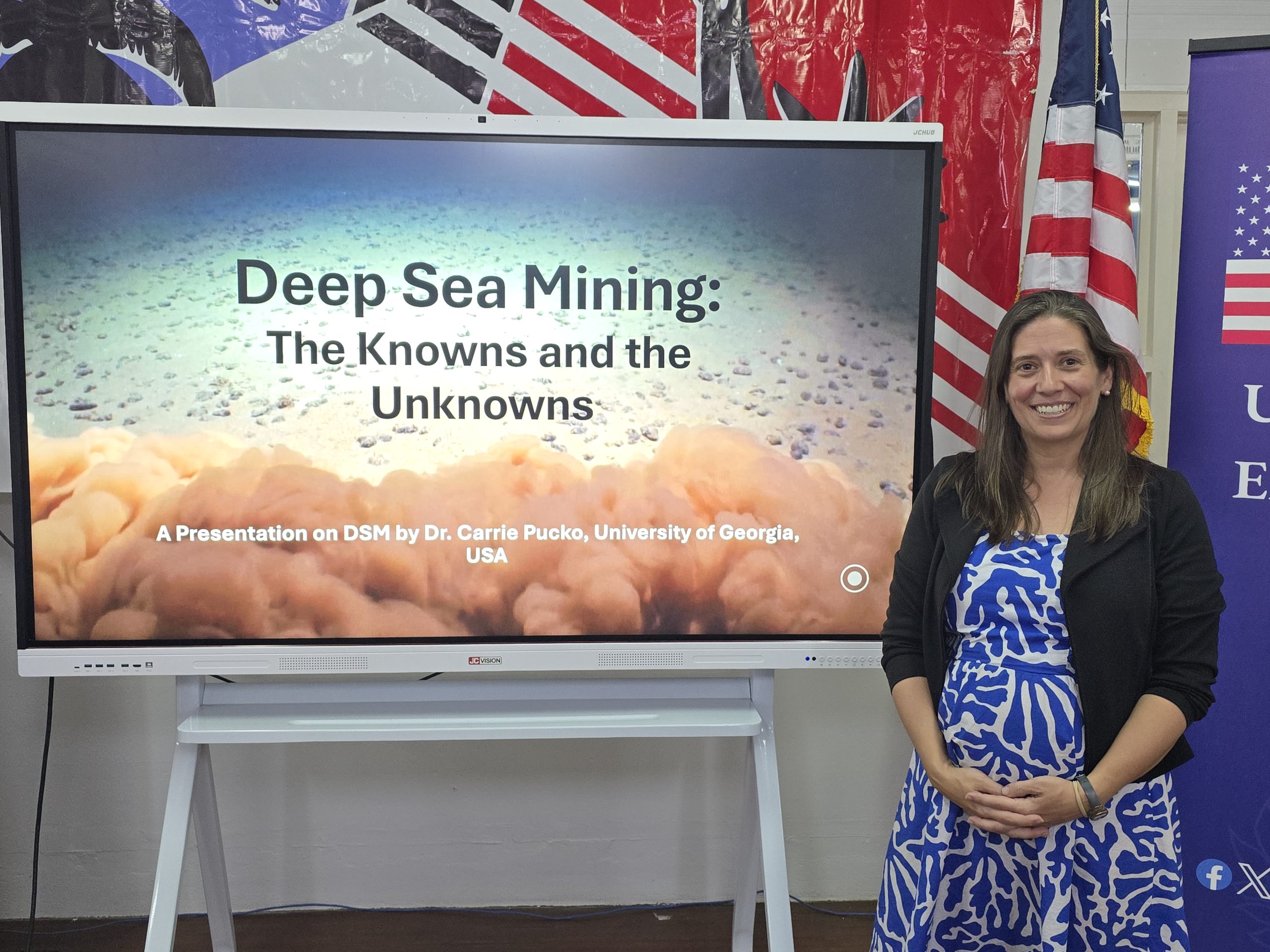
A U.S-based ecologist says deep-sea mining is edging closer to commercial reality as extraction technologies advance and demand for critical minerals rises, but scientific uncertainty and unfinished global regulations continue to shape a complex debate for Pacific Island governments and the international community.
Dr Carrie Pucko, who teaches biology at the University of Georgia and studies international policy, defines deep-sea mining as “any mining, any extraction that takes place below 200 meters below the surface of the ocean,” with current commercial focus on polymetallic nodules, a rock-like mineral deposit scattered across the seabed.
U.S Ecologist, Dr Carrie Pucko. Photo: Sanjeshni Kumar/Pasifika Environews
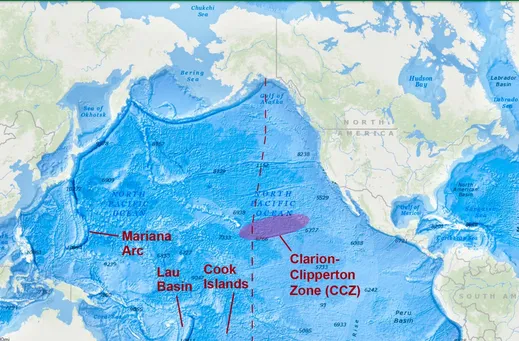
One of the main proposed starting points for large-scale nodule collection is the Clarion–Clipperton Zone (CCZ), a vast Pacific region considered to hold some of the world’s densest concentrations.
“It is an area as large as Europe,” Dr Pucko said, describing the CCZ as lying in international waters between Hawaii, Kiribati and Mexico. Because it falls outside national Exclusive Economic Zones (EEZ), she said the governance framework is complex.
Photo: Deep Sea Mining Inc.
“These aren’t waters that are traditionally part of the EEZ of any country, which makes the regulatory environment… very complicated.”
“Picking up nodules,” not blasting rock
Dr Pucko said deep-sea mining differs significantly from common images of land-based mining.
“Instead… what we’re doing as part of deep sea mining is really just picking up nodules off the bottom of the ocean,” she said.
Most proposals rely on subsea collector vehicles, “little autonomous vehicles”, operating at depths of “4,000 to 6,000 meters” to gather nodules and pump them to a surface vessel through riser pipes.
One widely discussed model involves tracked “crawler” collectors that use “high-powered water jets” to lift nodules before suctioning them upward. However, she cautioned that most environmental data comes from exploratory-scale machines.
“The commercial scale operation is likely to use crawlers that are two to three times larger than this,” she said, warning that scaling up could alter sediment plume behaviour and other impacts.
The process generates sediment plumes both at the seabed and when nodules are washed on surface vessels. The mixture of seawater and fine mud is discharged back into the ocean.
“This is one of the places where there’s the potential for some impact on mid-water ecosystems,” she said.
A “lighter-touch” concept guided by AI
Dr Pucko also highlighted an alternative design proposed by Impossible Metals, involving neutrally buoyant collectors that “glide across the bottom without touching the sediment,” using mechanical arms to retrieve nodules individually.
“They’re also saying that those little arms can pick up individual nodules that aren’t occupied by organisms,” she said.
When PACNEWS asked how machines would distinguish life-bearing nodules, she explained the system relies on image recognition: “This is using AI technology to image each nodule… to identify organisms that are attached.” However, she stressed that large-scale performance remains unproven.
“The level to which this technology works is still pretty up in the air,” she said. “There are a tremendous number of species down here that haven’t been identified, even big ones.”
Why now: minerals and market uncertainty
Interest in deep-sea mining is closely tied to demand for minerals used in clean energy systems. “As we think about moving towards a more electrified grid… it’s going to rely a lot more on batteries… that all require critical minerals,” she said, noting that some land-based reserves “are probably going to run out within the next 20 to 30 years” for certain minerals.
She said nodules contain manganese, nickel, cobalt and copper – metals aligned with many current battery designs.
“These things overlap really like incredibly well,” she said, describing nodules as “all of these things in one little package.”
Estimates suggest “21.1 billion tons” of nodules may be present in the CCZ.
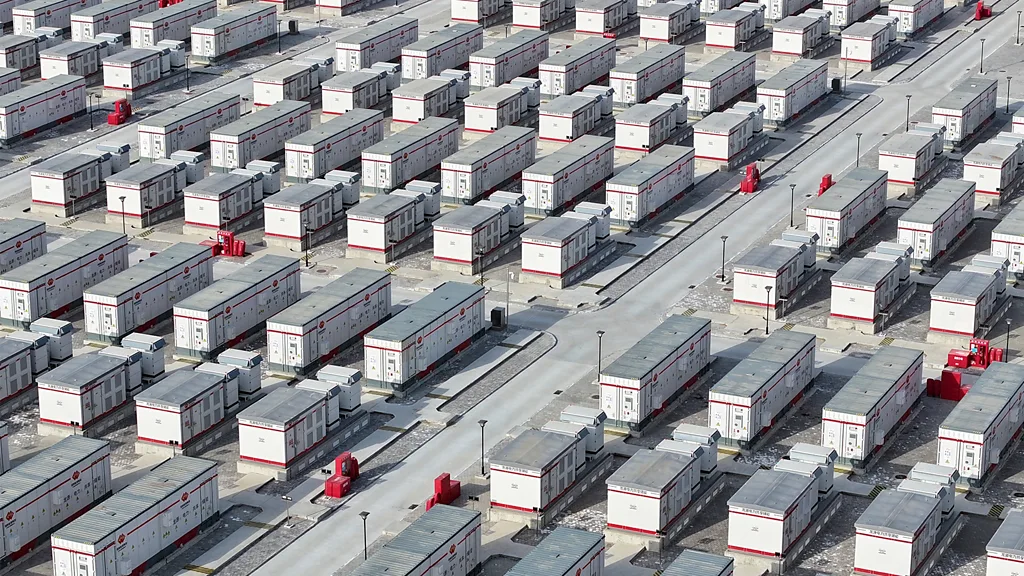
Energy storage stations are considered the main playground for the emerging sodium-ion technology. Photo: Getty Images via BBC
But she also warned that battery technologies are evolving. The emergence of sodium-ion batteries, particularly in China, could reduce demand for some nodule metals.
“A change in that market of those metals is going to mean a change in the market for these nodules,” she said. “So it may not be an economically viable venture forever.”
Dr Pucko said environmental concerns include direct seabed disturbance, sediment plumes, and broader ecosystem effects.
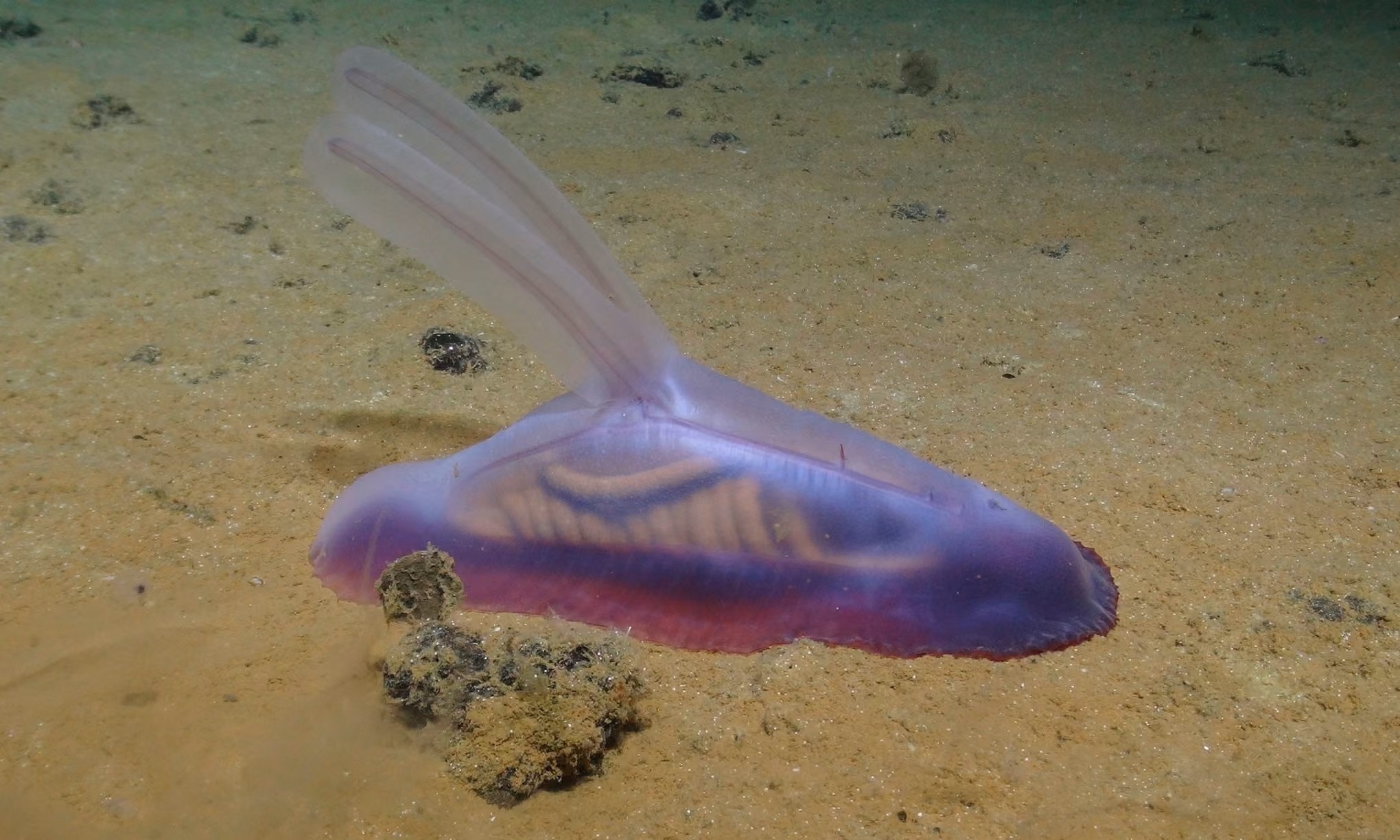
She described the CCZ seabed as “really flat,” “very old,” cold and dark, with relatively low visible animal density, “only about one and a half individuals per square meter”, but high biodiversity.
Surveys suggest “between 6,000 and 8,000 species” may occur there, yet “only about 5,000… have been actually described.”
A ‘gummy squirrel’, the nickname given to Psychropotes longicauda, one of the thousands of newly discovered creatures in the depths of the Pacific Ocean. Photo: Smartex Project/NERC via The Guardian
“Lots of organisms use those nodules to live on,” she said. Removing nodules, therefore, removes habitat.
“And when we take away those nodules, they’re not coming back,” she said, noting growth rates of “a couple of millimetres every million years.” “These aren’t a renewable source… removing them… means that wherever we take them from is permanently altered.”
Referring to seabed disturbance experiments dating back to the 1970s, she said: “You can still see the mining track down there really clearly. Where they remove the nodules, they don’t come back. The organisms that live there don’t come back.”
While some microbial recovery has been observed, she said full ecosystem recovery is unlikely within decades.
Sediment plumes: limited but uncertain at scale
Monitoring of exploratory crawlers suggests sediment disturbance may be more contained than initially feared.
“What scientists have found… is that there’s actually far less impact than we might have expected,” she said, explaining disturbed sediment rises “about five meters up” and that “98 percent falls within… 100 meters” of activity. However, she stressed commercial-scale machines could behave differently.
For midwater discharge, depth matters.
“It’s like finding a sweet spot of where you want to release sediment,” she said. “Below 1,500 meters is probably a good idea.”
Land mining comparison and human costs
Dr Pucko urged that ocean impacts be weighed against the environmental and social costs of land-based mining.
She cited copper pollution in Chile, nickel extraction in Indonesia involving “open-pit mines in the middle of a rainforest,” and cobalt mining in the Democratic Republic of Congo, where there are “extensive, documented examples of child labor.”
“It’s not just environmental harm that is a concern,” she said.
Regulation and legal uncertainty
The International Seabed Authority (ISA) has designated protected areas in the CCZ, with Dr Pucko noting it has “decided not to allocate about 30% of the CCZ to anyone” for conservation.
“Being strategic with regulation… is one of the main ways that we can really move forward with this and make the least amount of impact as possible,” she said. “There’s always going to be some impact… but to make the least impact as possible is maybe the goal.”
However, finalised international rules are still pending.
“Because the ISA has not come up with formal rules, there isn’t a UN-sanctioned regulatory structure for these companies to go in and start mining,” she said.
She described The Metals Company as “definitely the leader,” saying it is “utilising a U.S law… back in the 1980s to mine in international waters.”
On whether research is sufficient, she added: “Scientists are always going to say yes. We could always use more data. I think… these companies are going to move forward with or without that data.”
Pacific context and “dark oxygen”
On potential benefits for Pacific Island countries, she said agreements may include development funding, scholarships and scientific exchange.
“Some of these preliminary agreements, there’s money for development projects, there’s money for scholarships, there’s money for scientific exchange,” she said, though many figures “aren’t public.”
Polymetallic nodules form on the seafloor. Photo via Greenpeace
She also addressed the debated “dark oxygen” hypothesis.
“Dark oxygen is really interesting,” she said, but added that replication attempts “haven’t really been successful.” “It just feels too early to say for sure that that is what’s happening.” “There are conflicting results right now.”
A debate shaped by trade-offs
Dr Pucko concluded that both land and ocean mining carry consequences.
“Mining on land and in the ocean both have impacts that should be weighed against the environmental concerns, but also the human costs,” she said, describing the challenge as “trying to find a way to balance those ideas… with a world that needs minerals… to kind of advance cleaner, greener technology and limit climate change.”
Reflecting on her Pacific visit, she added: “I certainly learned as much from all the people I got to talk to as I hopefully got to share with them.”