
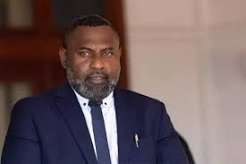
Papua New Guinea’s National Parliament owes Bougainvilleans an answer on their overwhelming vote for independence, Regional Member for Bougainville Peter Tsiamalili Jnr says, urging MPs to honour the Bougainville Peace Agreement and consider the referendum result in good faith.
Tsiamalili said Parliament must respect the democratic choice made by Bougainvilleans in the December 2019 referendum, in which 176,928 people voted for independence compared with 3,043 for greater autonomy.
“Papua New Guinea asked Bougainville to vote. Parliament owes the people an answer,” he said in a statement responding to commentators opposing acceptance of the referendum result.
He rejected arguments that accepting the result would reward rebellion, saying such claims undermined the equal right of every Bougainvillean to participate in the vote.
“No armed group could speak for every Bougainvillean. That is precisely why the referendum mattered,” Tsiamalili said.
He said former combatants, displaced families and young people who had never carried weapons all had an equal voice in determining Bougainville’s political future.
Tsiamalili said Papua New Guinea had committed to the referendum through the Bougainville Peace Agreement, signed on 30 August 2001, and subsequently given constitutional force.
Section 339(c) of the Constitution required the referendum to include the option of separate independence, while Section 342 provides for consultation between the two governments and consideration of the result by the National Parliament.
He said Parliament retained final decision-making authority under paragraph 311 of the Peace Agreement, but MPs had a responsibility to publicly explain their positions.
“A Member who believes independence serves lasting peace owes the House an explanation. So does a Member who favours continued autonomy,” he said.
Tsiamalili also rejected calls for MPs to resign over their intended positions on the referendum, saying such demands undermined the parliamentary judgment entrusted to them.
He defended Bougainville President Ishmael Toroama’s authority to advocate for independence, saying his mandate came from the people who elected him.
“Peacefully advocating a choice expressly provided for in our Constitution is, by itself, no basis for an accusation of sedition,” he said.
Addressing concerns that accepting Bougainville’s referendum result could encourage other provinces to pursue separation through violence, Tsiamalili said the constitutional process was specific to Bougainville.
“No other province acquires that process by taking up arms,” he said.
He argued that the greater test for Papua New Guinea was whether the Government would honour a peace agreement when the outcome was difficult for the State to accept.
Tsiamalili also questioned proposals for another 20 years of autonomy, asking what such an extension would resolve and what answer Parliament would give the people who voted in 2019.
He said the interests of both referendum groups must be recognised, but essential public services and development responsibilities remained regardless of Bougainville’s political future.
“Roads, schools, hospitals and the repair of Panguna remain public responsibilities under either arrangement,” he said.
“A mother waiting for medical care is entitled to it whichever box she marked.”
Tsiamalili called on Parliament to accept the referendum result, the Joint Consultation Report and the Melanesian Framework together.
He stressed that accepting the referendum result would formally acknowledge the people’s choice, while giving legal effect to independence would require further constitutional work.
The Melanesian Framework would provide a basis for the two governments to address outstanding issues, including citizenship, security, public finances and the rights of people with connections to both Bougainville and the rest of Papua New Guinea.
He said the process must provide clear answers and a timetable that both governments could explain to their people.
“The Bougainville Peace Agreement was our Melanesian way of bringing people who had fought one another back into the same room. Its purpose was lasting peace,” Tsiamalili said.
He urged Papua New Guineans, regardless of their position on independence, to respect the commitment made to Bougainvilleans when they were asked to participate in the referendum.
“They did. We owe them the good faith to hear their answer and the courage to act on it,” he said.