

Tuvalu has called for urgent global action to move away from fossil fuels, secure an ambitious plastics treaty and increase investment in renewable energy, warning that Pacific communities cannot afford further delays in addressing the climate crisis.
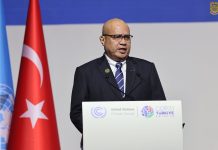
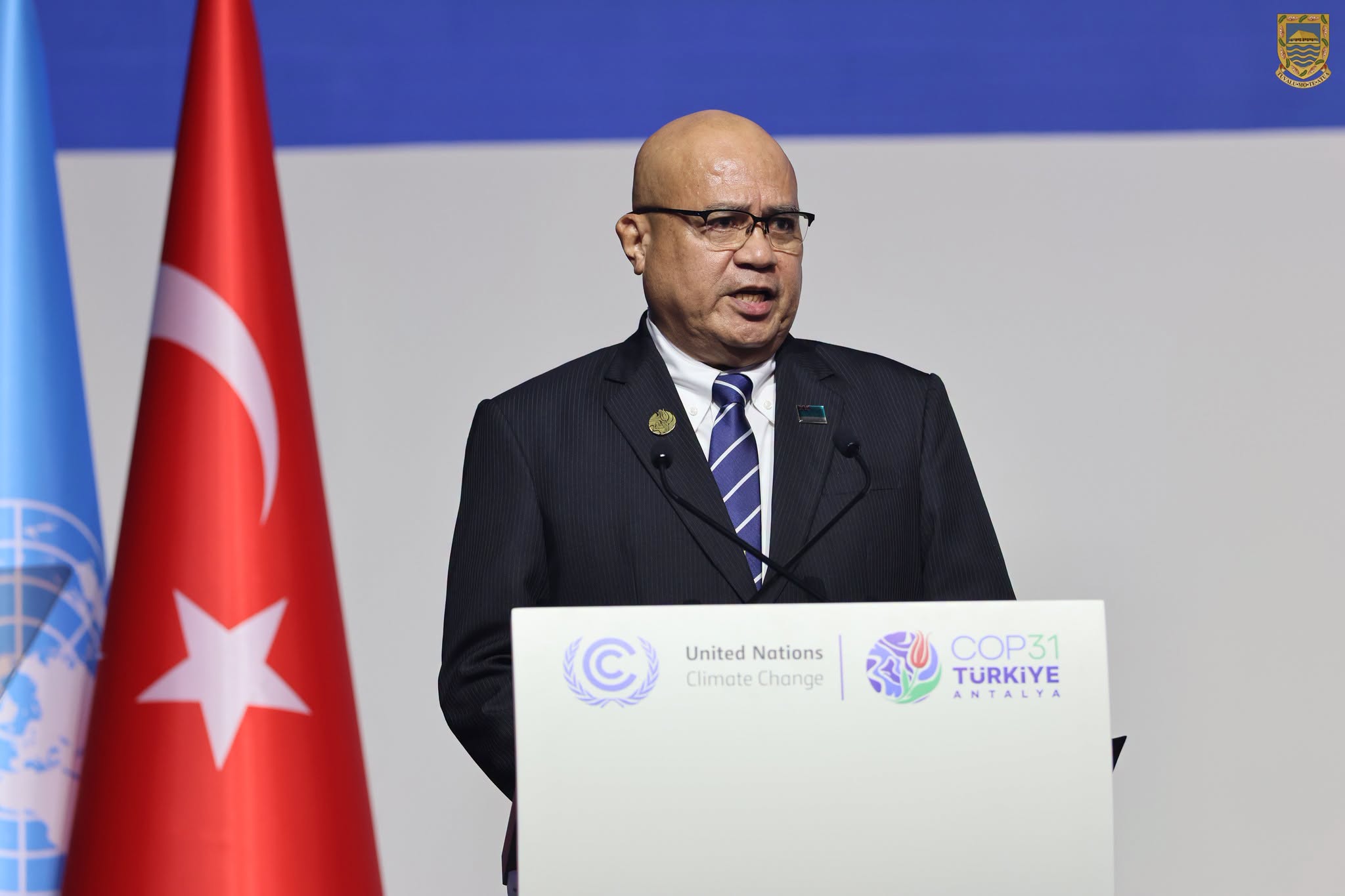
Tuvalu’s Minister for Climate Change Maina Vakafua Talia said Pacific Island countries were not attending COP31 to seek permission for climate action but to demonstrate what could be achieved through regional cooperation and a just transition.
Speaking at a COP31 side event on delivering the transition away from fossil fuels in Antalya, Türkiye, Talia joined representatives from Denmark, the Marshall Islands, Ireland and the Netherlands to discuss practical pathways for moving away from fossil fuels.
“The Pacific didn’t come to COP31 to ask for permission. We came to show what’s possible,” he said.
Talia said the transition must deliver benefits to communities already experiencing the impacts of climate change.
“For Tuvalu, this isn’t theory. It’s the water we drink, the land we stand on, the future we’re holding for our children,” he said.
“We want the Pacific to showcase that we can do all of these if we work together closely and make a transition away from fossil fuels.”
Talia also called for an ambitious and legally binding global plastics treaty, saying Pacific Island countries were disproportionately affected by plastic pollution despite contributing little to the problem.
Speaking at the Moana Blue Pacific Pavilion during a panel discussion on Pacific Leadership for an Ambitious Global Plastics Treaty, he said plastic pollution was affecting coastlines, coral reefs and marine food sources.
He said a treaty that failed to address plastic production at its source would not adequately protect Pacific communities.
“A treaty that does not bind, that does not cut production at the source, does not help us,” Talia said.
Tuvalu and the Pacific Small Island Developing States (PSIDS) maintained that negotiations must follow the mandate of United Nations Environment Assembly Resolution 5/14, covering the full life cycle of plastics.
This includes virgin polymer production, chemical additives, waste management and the remediation of existing pollution.
Talia said the adjournment of negotiations at the fifth session of the Intergovernmental Negotiating Committee (INC-5.2) without consensus should not be viewed as a defeat.
He said the pause provided an opportunity to build wider international support for an ambitious agreement rather than accept a weak compromise.
The Tuvalu minister also called for greater investment in renewable energy, saying Pacific countries must strengthen energy security while building resilience to climate change.
Speaking at a COP31 session on accelerating energy access and security in Small Island Developing States, Talia said renewable energy was essential to reducing dependence on imported fossil fuels and protecting critical services.
“We cannot choose between investing in climate resilience and investing in renewable energy. We must do both at the same time,” he said.
He said reliable energy was critical for powering homes, preserving medicines and ensuring water supplies reached communities across Tuvalu’s islands, particularly when fuel deliveries were disrupted or extreme weather affected transport.
However, he said small island developing states faced significant barriers to renewable energy investment, including high project preparation costs, limited land availability and complicated financing requirements.
Talia called for grant-based and concessional financing, support for feasibility studies and funding that covered the full life cycle of renewable energy projects.
He also stressed the need for investment in resilient energy storage systems and electricity grids capable of withstanding flooding and extreme weather.
He said international climate commitments must be matched with financing, technical assistance and implementation support to ensure Pacific communities could benefit from reliable and affordable renewable energy.
Talia’s interventions at COP31 reflect Tuvalu’s push for stronger international action on fossil fuels, plastic pollution and energy security, with the Pacific seeking outcomes that address the region’s immediate needs and long-term climate challenges.