

Pacific civil society organisations have condemned the European Union’s nickel agreement with the Government of Kanaky New Caledonia, warning that the deal risks deepening colonial exploitation by excluding Kanak people from decisions over their ancestral lands and resources.
The groups say the Memorandum of Understanding (MOU) on critical raw minerals, recently signed between the EU and the New Caledonian Government, raises serious questions about Indigenous self-determination, resource sovereignty and who benefits from the territory’s nickel industry.
They argue that while the EU is seeking to secure critical minerals for its industries, the Kanak people continue to face an unfinished decolonisation process under French rule.
In a joint statement, the organisations said any agreement involving Kanaky’s strategic resources must recognise the Kanak people’s right to determine their political and economic future.
They warned that without transparency, meaningful Indigenous participation and guarantees of equitable benefits, the agreement could reinforce existing inequalities and patterns of colonial extraction.
The groups cited findings from the Pacific People’s Mission to Kanaky New Caledonia in April 2025, which documented persistent social and economic inequalities affecting Kanak communities and customary landowners.
The mission highlighted concerns over the unequal distribution of nickel revenues and the marginalisation of communities seeking a fair share of the wealth generated by mining.
Thio, one of the territory’s historic nickel-mining communities, was cited as an example of the disparity between resource extraction and local development.
Despite more than a century of nickel mining, the groups said roads remain in poor condition, while customary landowners receive little of the wealth generated from resources extracted from their ancestral lands.
They said communities continue to face unemployment, poverty, inadequate infrastructure and unequal access to economic opportunities.
“These experiences raise serious concerns about a new agreement that seeks to expand access to Kanaky New Caledonia’s mineral resources without clear guarantees of local consent and control,” the statement said.
The organisations questioned whether the agreement would benefit Kanak communities or primarily serve external economic interests.
“Whose interests will Kanaky’s nickel serve?” they asked.
The groups are calling on the French Government, the EU and the Government of Kanaky New Caledonia to publish the full agreement, including its annexes and associated commitments, and commission an independent assessment of its economic, social, environmental and political implications.
They also want clear and verifiable commitments on investment, local processing, job protection, youth training, industry governance and the fair distribution of economic benefits.
The statement further calls for safeguards to ensure nickel resources support local industrial development and livelihoods rather than primarily meeting external demand.
It says Kanak political representatives and customary authorities must have a meaningful role in decisions concerning the implementation of the agreement and the future of their lands and resources.
“Kanaky New Caledonia’s nickel must not continue to serve as an instrument of colonial extraction and exploitation,” the organisations said.
They also called on Pacific leaders and regional institutions to ensure that regional commitments to decolonisation and self-determination translate into concrete action.
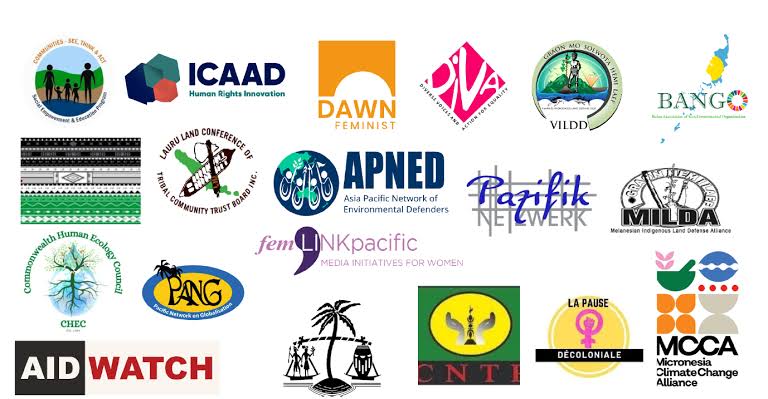
The statement was endorsed by 26 Pacific and international civil society organisations, including the Pacific Network on Globalisation, femLINK Pacific, the Melanesian Indigenous Land Defence Alliance, the Vanuatu Human Rights Coalition and the Belau Association of NGOs.
The organisations said the Kanak people must have the right to decide how their ancestral lands and resources are governed, developed and used, including determining their own economic future.