
By Stefan Armbruster and Ema Ganivatu
Pacific Island countries have rallied behind the Marshall Islands in its decades-long pursuit of justice over the United States’ nuclear weapons testing legacy, with a regional resolution adopted by consensus without a vote at the United Nations Human Rights Council.
The resolution, titled “Technical assistance and capacity-building to address the human rights implications of the nuclear legacy in the Marshall Islands”, was adopted on 07 October during the Council’s 63rd session in Geneva, Switzerland.
It requests continued United Nations technical assistance and capacity-building through the Office of the United Nations High Commissioner for Human Rights (OHCHR) to help the Republic of the Marshall Islands address the intergenerational human rights, health and environmental damage caused by nuclear testing.
Samoa presented the resolution on behalf of the Pacific Core Group, comprising the Federated States of Micronesia, Fiji, Kiribati, the Marshall Islands, Nauru, Papua New Guinea, Vanuatu and Samoa.
Introducing the draft resolution, Samoa’s Permanent Representative, Ambassador Nella Pepe Tavita-Levy, said the Marshallese people had never asked to be placed under United Nations trusteeship or to have their islands used as a nuclear weapons testing site.
“The Marshall Islands did not ask to be placed under the UN trusteeship. They did not ask for their islands to be used as a nuclear weapon test site,” she told the Council.
Tavita-Levy said that 80 years on, the issue remained before the Council as a reminder of the United Nations’ continuing duty to the Marshallese people.
The resolution supports five objectives in addressing the nuclear legacy: truth, justice, reparation, guarantees of non-recurrence and memorialisation.
It also seeks a coordinated United Nations response to help the Marshall Islands address the lasting consequences of nuclear testing and secure a better future for its people.
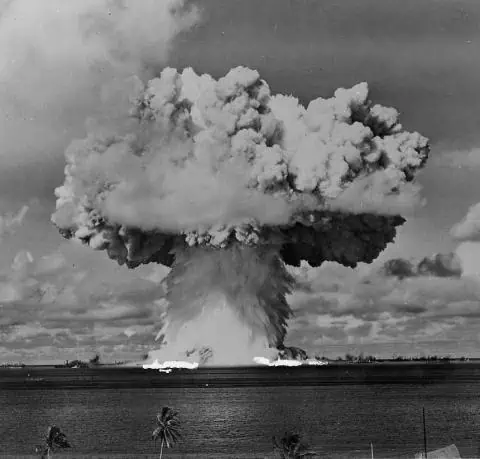
Between 1946 and 1958, while the Marshall Islands was under United Nations trusteeship, the United States conducted 67 known nuclear weapons tests in the country.
The Marshall Islands said the consequences continued to affect its people, with some communities still displaced from their ancestral lands and others living in contaminated environments, including near a nuclear waste site.
Its representative told the Council that the impacts extended across generations, with families continuing to lose loved ones to cancer and other illnesses.
“Those responsible for this legacy consider this matter settled. We, the people of the Marshall Islands are still suffering, and we continue to contest this view,” the representative said.
The Marshall Islands also argued that a settlement reached as part of its transition to independence could not be considered final without truth and full disclosure.
“Without truth, there can be no justice,” the representative said, adding that full disclosure was necessary for closure.
Several countries supported the resolution, with Indonesia expressing solidarity with the Marshallese people and backing continued technical assistance from OHCHR.
Indonesia said the intergenerational consequences of nuclear testing continued to threaten the lives, health and livelihoods of the Marshallese people.
“The tragedy endured by the Marshallese people must never be repeated,” its representative said.
Cuba called on the United States to declassify information relating to the nuclear tests and accept responsibility, including through full and effective reparations for victims.
It said the Human Rights Council and OHCHR should continue providing technical assistance to address the consequences of nuclear testing.
South Africa also supported the resolution, highlighting the work of the late Marshall Islands leader Tony deBrum, who witnessed the aftermath of nuclear testing as a child and later became a leading advocate for nuclear justice.
However, France and the United Kingdom, while joining the consensus on the resolution, said the issue should be addressed through bilateral negotiations between the United States and the Marshall Islands.
They also pointed to the role of specialist international bodies in providing technical advice on nuclear radiation and its environmental and health consequences.
Pakistan expressed solidarity with the Marshall Islands but questioned whether the Human Rights Council was the appropriate forum to address the issue, arguing that specialised agencies had the necessary technical expertise.
Despite the differing positions, no country requested a vote, allowing the resolution to be adopted by consensus.
The adoption marks another step in the Marshall Islands’ efforts to secure international support for addressing the consequences of nuclear testing, while keeping accountability and the rights of affected communities before the United Nations.
For the Pacific, the resolution also reflects regional solidarity in addressing a nuclear legacy that continues to affect communities’ generations after the tests ended.