

Pacific Island countries are facing a climate finance crisis, with current adaptation finance covering only 26 percent of their projected annual needs, Asian Development Bank (ADB) President Masato Kanda told Pacific leaders Tuesday.
Kanda said Pacific island states were not responsible for the climate crisis but were bearing some of its most serious impacts, while having to navigate complex financing requirements to access the resources needed to respond.
“Pacific island states are not responsible for their plight, yet their very survival is at stake.
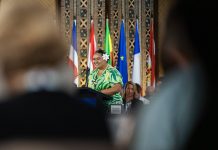
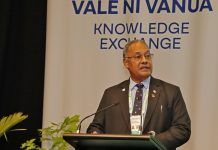
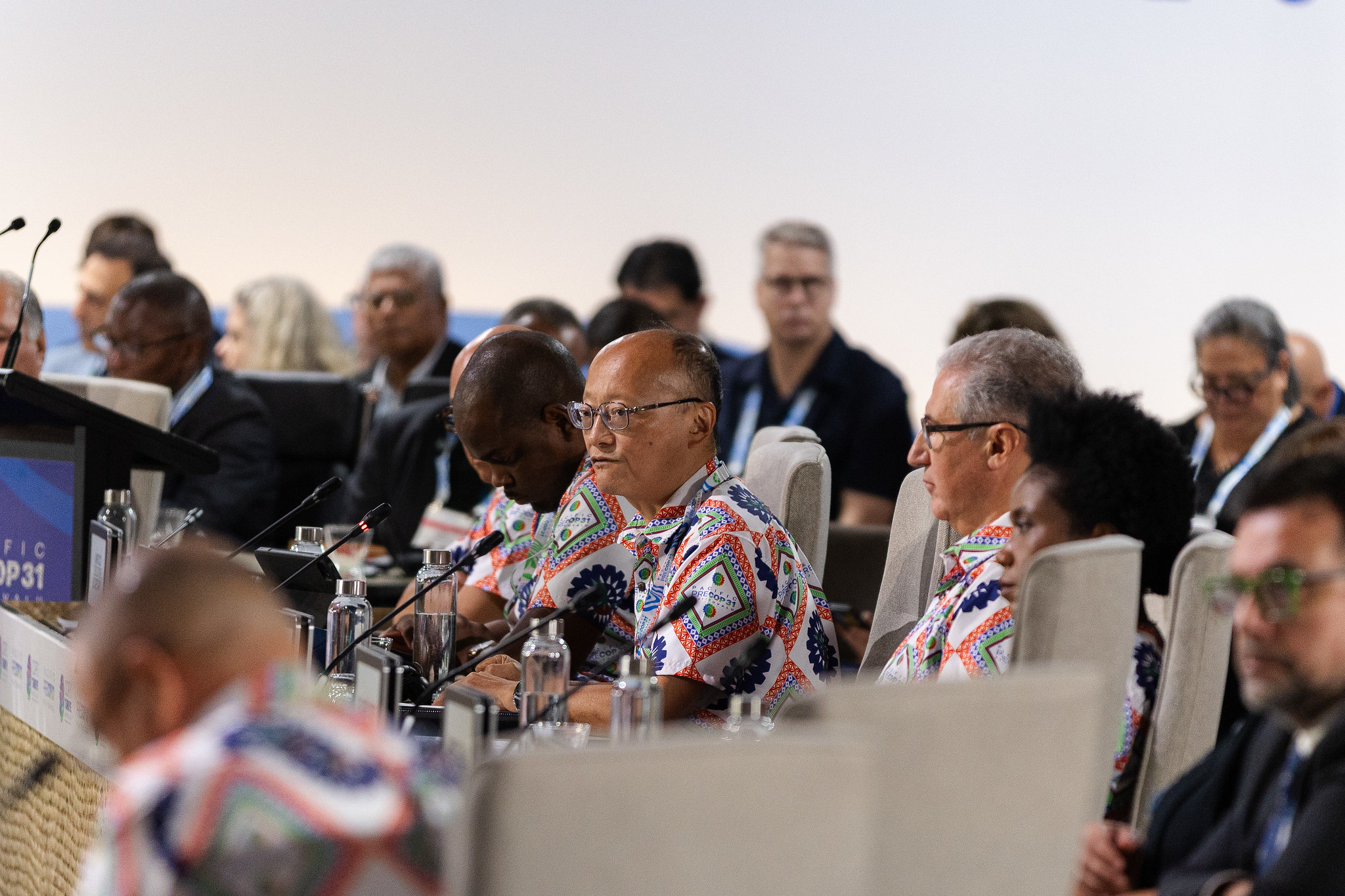
“That is the injustice of impact and this is the injustice of finance,” Kanda said at the Pacific PreCOP31 plenary in Denarau.
Kanda spoke after spending a day and a half in Tuvalu, where he said he witnessed first-hand the pressures facing communities as sea levels rise.
“I will never forget the warmth of its people nor the weight of their struggle.
“I saw a nation refusing to surrender its future. I stood with communities on land raised to protect them for generations and I saw the human reality of rising seas, families confronting hard decisions about their future and working together to defend their homes, their culture and their way of life,” he said.
Kanda said the scale and speed of the climate threat was outpacing the ability of finance to reach Pacific communities.
“Recent adaptation finance flows would meet only 26 percent of projected annual needs in the Pacific,” he said.
He said governments were also being forced to navigate “a maze of requirements” to secure the limited financing available.
“The seas are rising faster than finance can get at the door,” Kanda said.
The ADB president said the bank was committed to working with its 14 Pacific members and other vulnerable countries to implement their climate priorities.
He said resilience and sustainability were now central to the bank’s development mandate, noting that ADB delivered a record US$13.5 billion in climate finance last year.
Kanda said more than half of ADB’s total commitments remained on track to meet its 2030 climate finance goals.
“Across every project we finance, we are building stronger resilience, robust environment and social standards and higher quality procurement,” he said.
He said ADB was also working to mobilise additional resources to convert national adaptation plans into funded and implemented projects.
For more than two years, ADB has been working with its 14 Pacific members on a regional climate resilience programme.
Kanda said the programme would be submitted to the Green Climate Fund(GCF) at the end of October for US$250 million in financing, with the aim of leveraging ADB projects to deliver up to US$1 billion for adaptation.
He said ADB was also changing its financing and operations to better reflect the realities faced by Pacific island countries.
“We are taking this important action because your children and their children should be able to grow older in the countries their ancestors have called home for millennia,” Kanda said.
Kanda also referred to his participation in the Pacific Islands Forum Leaders’ Meeting in Palau last month, where he told leaders that ADB should be judged by results.
“I said we must be judged on results. You have my words,” he said.
“We will meet that standard. We will listen to Pacific voices, learn from your leadership and invest in your projects. We will deliver for you and with you.”
Pacific leaders are concluding their PreCOP31 discussions in Fiji after spending a day and a half in Tuvalu.
They are expected to sign the Taku Pakasoa Declaration, setting out Pacific priorities ahead of the UN climate change conference, COP31, in Türkiye.