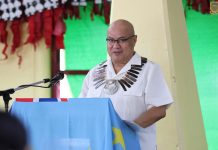

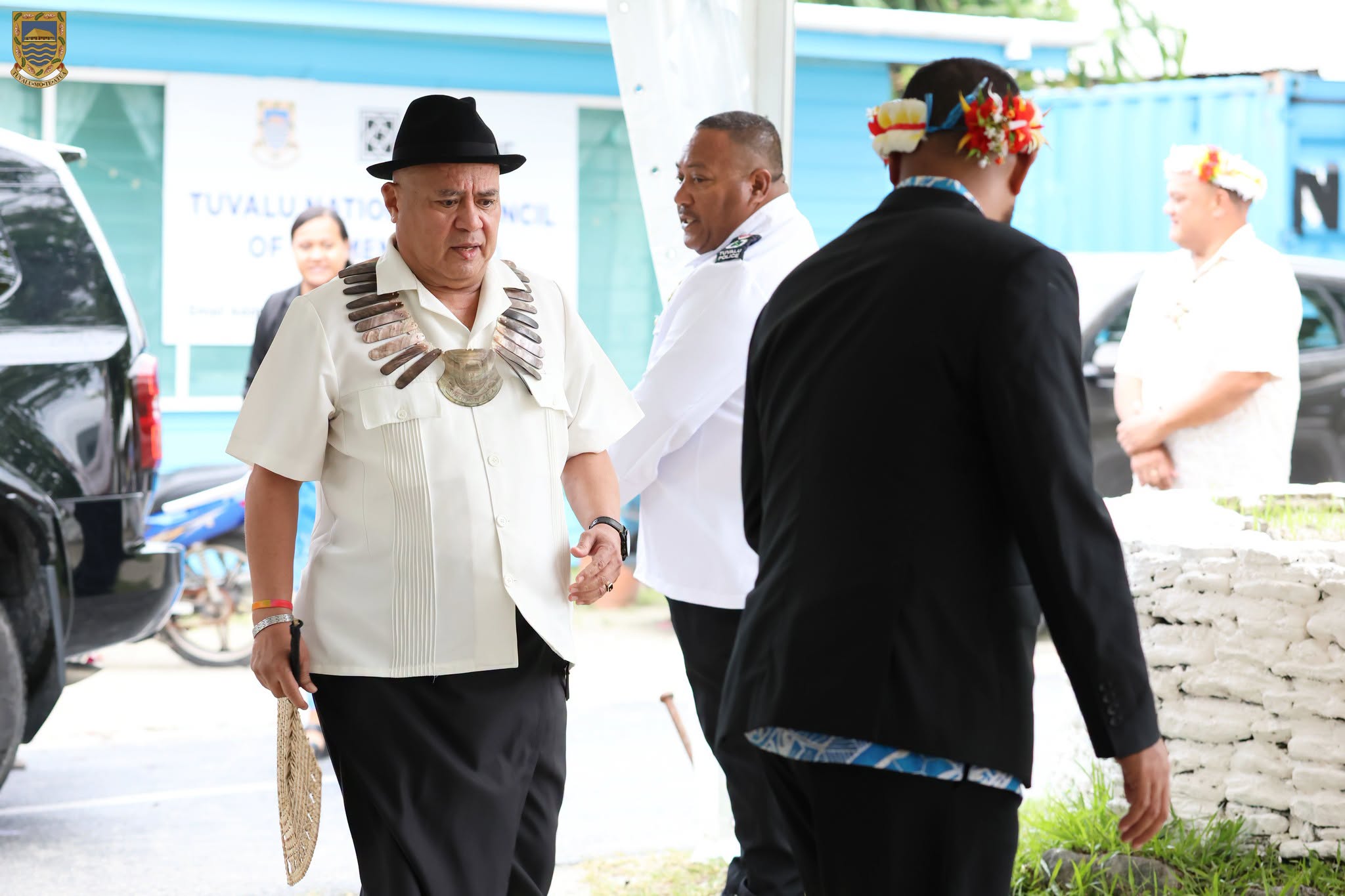
Tuvalu Prime Minister Feleti Teo says the country’s response to climate change must remain rooted in the “Tuvalu Way” as it works to protect its land, sovereignty and future from rising seas.
Delivering his 48th Independence Anniversary address, Teo said Tuvalu’s recent success in securing a United Nations declaration on sea-level rise demonstrated the value of its long-term approach to climate diplomacy.
“So, our efforts to build the resilience of Tuvalu against the impacts of climate change and other transformations must be rooted in the Tuvalu Way as we take our appropriate place in the world.
“Last week’s achievement in the adoption of the UN Declaration on Sea Level Rise demonstrated that the sustained approach Tuvalu took in that discourse was consistent with the theme of this independence anniversary,” Teo said.
Teo said climate change and sea-level rise remained the greatest threats to Tuvalu’s future security.
“They threaten not only the livelihood and future of our people, but also the integrity of Tuvalu’s land territory and the future sovereignty of Tuvalu as an independent state,” he said.
Teo said the UN General Assembly last week adopted by consensus a political declaration on sea-level rise, affirming the principles of continuity of statehood and permanence of maritime boundaries despite the impacts of rising seas.
The declaration also recognises the rights, dignity, culture, identity and heritage of people affected by sea-level rise.
“These are the very legal and political securities that Tuvalu has long fought for in contemplation of the impacts of sea level rise.
“Whatever impacts sea level rise may have on Tuvalu’s coastlines, Tuvalu’s statehood, sovereignty and maritime boundaries will not be affected,” Teo said.
Teo, who was invited to speak at the opening of the UN General Assembly high-level meeting that adopted the declaration, described the outcome as a major achievement for Tuvalu, the Pacific and other countries affected by sea-level rise.
But he said the declaration did not provide physical protection for Tuvalu’s land.
“A declaration does not provide physical protection to Tuvalu’s land territory.
“Tuvalu must take upon itself to protect the integrity of its land territory,” Teo said.
The Government is investing heavily in the Tuvalu Coastal Adaptation Project (TCAP), its flagship adaptation programme.
Completed phases of TCAP have provided about 1,300 metres of shoreline protection and created 15.5 hectares of reclaimed, elevated and flood-free land.
Teo said king tides and overtopping waves had repeatedly flooded low-lying areas and damaged roads along the lagoon side of Fogafale, Funafuti.
The Taiwan-Tuvalu Coastal Adaptation Project was completed in March and is designed to prevent overtopping and protect up to 500 metres of shoreline.
TCAP will be showcased to leaders attending the Pre-COP31 leaders’ segment in Tuvalu next week, which Tuvalu is hosting with Fiji and Australia.
Teo said the event would provide an opportunity for Tuvalu to demonstrate its vulnerability to sea-level rise while showcasing measures it is taking to protect its land and people.
“TCAP is more than just a coastal protection and land reclamation project, it is an expression of our determination to remain and thrive in our God given land,” he said.
Teo said TCAP required significant resources and the Government was continuing to secure support from development partners.
He acknowledged contributions from the Green Climate Fund, Australia, New Zealand, the Asian Development Bank and Taiwan.
Tuvalu has also secured US$7.9 million from the Global Environment Facility (GEF) for two climate mitigation and adaptation projects.
The Ministry of Climate Change and Environment has been approved as an accredited delivery partner of the Green Climate Fund (GCF), which Teo said should strengthen Tuvalu’s relationship with the fund.
The Tuvalu Survival Fund increased by 11.8 percent in 2025, reaching $12.47 million (U$8.62 million) by the end of the year.
Teo also highlighted improvements in weather observation, early-warning systems and disaster preparedness.
The adoption of the Tuvalu National Framework on Climate Mobility was another milestone, providing a structured, rights-based and nationally led approach to managing climate-related human mobility.
Energy security was also highlighted as a key part of Tuvalu’s resilience following a power supply crisis earlier this year.
The Government has committed $5 million (US$3.45 million) in the current financial year to upgrade the electricity grid and network.
Teo thanked development partners for their assistance following the declaration of a state of emergency during the power crisis.
“Our goal is to build an energy system that is reliable, affordable and sustainable for the future,” he said.