


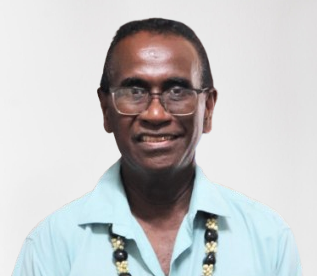
Public institutions in Solomon Islands must put merit, fairness and accountability ahead of personal connections if they are to earn public trust, Solomon Islands National University (SINU) Vice Chancellor Dr Transform Aqorau has told the Attorney-General’s Conference in Honiara.
Delivering the keynote address titled “Law at the Centre: Building Institutions Worthy of Public Trust last week in Honiara, Dr Aqorau said good governance was not only about laws and court decisions but how public power was exercised every day.
“It is about how public power is exercised every day: whether appointments are fair, public money is properly accounted for, decisions have clear reasons, and people can raise concerns without fear,” he said.
Dr Aqorau drew on his experience as a young legal officer who joined the Solomon Islands public service in 1988, his work helping build the Parties to the Nauru Agreement (PNA), and his current role strengthening SINU.
He said political leaders had a legitimate role in setting the country’s direction, but public servants must be able to work professionally and provide honest advice.
“When personal connections begin to determine appointments, we lose capable people, weaken institutions and, ultimately, let down the public,” Aqorau said.
Aqorau also addressed wantokism, saying traditional ties remain an important source of belonging, care and resilience but should not determine access to public positions, contracts or state resources.
“We should value them. But a public position, contract or resource is held on behalf of the whole country,” he said.
“Once we are entrusted with public power, every Solomon Islander becomes our wantok.”
He said merit and fairness must give young Solomon Islanders from every province a genuine opportunity to serve the country.
Aqorau highlighted the PNA as an example of Pacific countries using strong institutions and legal frameworks to turn national interests into practical economic benefits.
Pacific island countries sought a greater return from tuna resources in their waters, leading to the development of the Vessel Day Scheme, fishing access rules and systems to monitor and enforce those rules.
“That experience taught me that a good idea needs sound legal design, reliable information and people willing to stay the course.
“We did not get everything right at once. Members disagreed, some initiatives struggled, and we had to adjust. But we kept working around a shared purpose,” he said.
Dr Aqorau said law helped Pacific countries translate their sovereign rights over marine resources into benefits for their people.
He said institution building also required organisations to examine their own systems, including through audits, complaints and investigations.
“These must be handled fairly and with care. An allegation is not a finding, and every person affected deserves natural justice,” Dr Aqorau said.
But where reviews identify weaknesses, institutions must act on them.
“Receiving a report is only the beginning; its recommendations need owners, deadlines and follow-through,” Dr Aqorau said.
He also linked strong public institutions to national security, warning that organised criminal networks look for weaknesses in public systems.
“Organised criminal networks look for gaps in public systems: an appointment made through influence, a procurement process without proper records, or an officer who is afraid to speak honestly,” he said.
Dr Aqorau said competent and independent public officers, supported by proper records and fair processes, were part of the country’s protection against such risks.
He called on lawyers and public leaders to bring legal advice into decisions early, make merit visible in recruitment, maintain clear records, protect oversight bodies and support public officers who uphold standards.
Dr Aqorau said reform did not have to wait for a major programme.
“Each ministry, province, state-owned enterprise and public institution can begin with its next appointment, contract, investigation or board meeting,” he said.
Dr Aqorau said the test of public institutions was whether they could give young Solomon Islanders confidence that ability and integrity mattered.
“What kind of public service should welcome a young Solomon Islander walking through its doors today?” he asked.
“I hope it is one where ability is recognised, integrity is protected, and service to the public comes before personal connection.”
“Law must be at the centre because our people must be at the centre,” he said.