The United States says it will deepen its economic, energy and security engagement with Pacific island countries, with a focus on private sector investment, maritime security and reducing the region’s vulnerability to energy shocks.
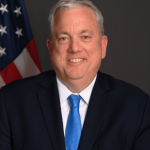
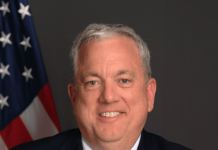
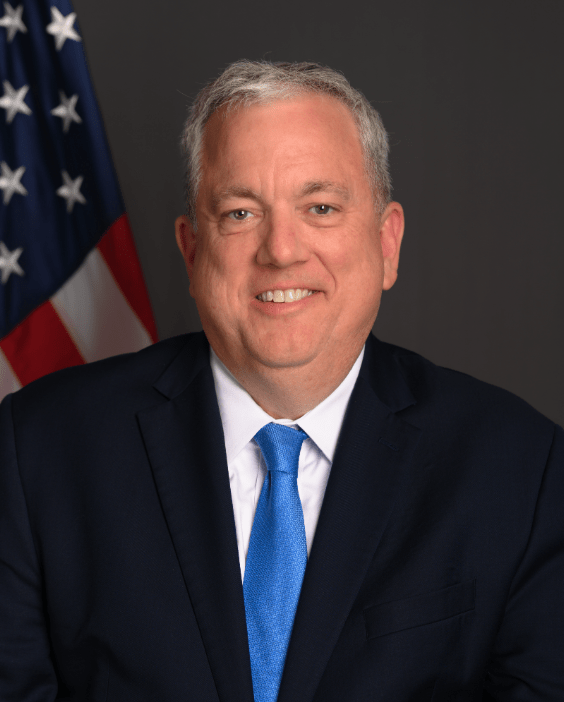
Deputy Assistant Secretary of State Matt Murray said the commitment was demonstrated during Deputy Secretary of State Christopher Landau’s recent visit to Palau for the Pacific Islands Forum Leaders’ Meeting, where the United States announced more than US$150 million in support for the Pacific.
Murray said the funding would support energy security, critical infrastructure, commercial diplomacy, trusted digital technology, law enforcement cooperation, maritime security and scientific and technical cooperation.
“The Pacific Islands are a priority for the United States, and we are backing up our commitment to the region with sustained senior-level engagement,” Murray said during a virtual press briefing.
Landau held 11 bilateral meetings with Pacific counterparts during the Forum and led a senior U.S delegation that included the Coast Guard Commandant, Admiral Kevin Lunday, PACOM Deputy Commander Lieutenant General Rowell and senior officials from several U.S. agencies.
Murray said Washington was shifting its approach to the Pacific towards private sector-led growth.
“As we do so, we will promote trade over aid,” he said.
He highlighted U.S cooperation with Australia, Japan, New Zealand and Taiwan to connect every Pacific Islands Forum country to a trusted undersea cable network.
The United States has also reaffirmed its commitment to the South Pacific Tuna Treaty, which Murray said has supported jobs and livelihoods in the United States and Pacific for nearly four decades.
Murray said a second U.S-Pacific Investment Summit would be held in early 2027 after the inaugural summit in Honolulu brought more than 80 American companies together with Pacific government leaders.
He said negotiations had since advanced with U.S geothermal companies in Vanuatu and Tonga, while satellite internet connectivity and undersea cable investments had also progressed.
Energy security was another major focus of the U.S engagement at the Forum.
Murray said Pacific countries had identified the impact of the global energy crisis, including rising fuel costs, as a priority.
“The region has not experienced a supply shortage to date, though we continue to monitor this closely along with our partners, Australia, Japan, and New Zealand,” he said.
He said high energy costs were placing pressure on Pacific government budgets, while limited fuel storage and grid stability were increasing the risk of blackouts.
Landau announced that, working with Congress, the State Department intends to provide US$60 million to help Pacific countries deal with short-term budget pressures caused by the global energy crisis and longer-term needs, including fuel storage and grid stability.
In Tonga, the U.S Trade and Development Agency, with State Department funding, plans to support a feasibility study covering port facilities, fuel storage, pipeline infrastructure and regulatory practices to strengthen fuel supply reliability.
Washington is also expanding cooperation with Pacific countries on law enforcement and maritime security, including efforts to combat illicit drugs and illegal, unreported and unregulated fishing.
Murray said U.S Coast Guard efforts to increase its Pacific presence and work with Pacific countries through shiprider agreements had been welcomed by Forum members.
The United States also announced the first U.S-Pacific Islands Conference of Police Ministers, or COPMIN, later this year, to be co-chaired with Palau.
The conference will focus on maritime security, drug trafficking, cybercrime and illicit finance.
A US$17 million Pacific Regional IUU Fishing Project was also announced to strengthen national laws, policies and regulations, develop training programmes and deploy technology to combat illegal fishing.
Landau’s Pacific trip continued after the Forum with visits to Chuuk in the Federated States of Micronesia, Honiara in Solomon Islands and Christmas Island in Kiribati.
In Chuuk, he surveyed recovery efforts following Typhoon Sinlaku and announced that the United States intends to provide more than US$100 million for disaster relief and reconstruction in the FSM under U.S commitments to the Compact of Free Association.
In Honiara, Landau signed a Peace Corps country agreement with Solomon Islands Foreign Minister Jeremiah Manele to facilitate the return of the Peace Corps after a 26-year absence.
In Kiribati, he attended the Kiribati Development Partners Forum at the invitation of President Taneti Maamau and reaffirmed U.S support for economic development under the country’s Kiribati 20-Year Vision.
Murray said Washington would continue to strengthen its relationship with Pacific island countries.
“Strong U.S ties with the Pacific make our country and the region safer, stronger, and more prosperous.
“The United States stands ready, willing, and eager to deepen our partnerships in the Pacific, and will continue to show up in the region,” he said.