New Zealand needs to rethink how it engages with its Pacific neighbours, focusing more on listening and partnership than pressure, University of Canterbury Professor Steven Ratuva says.
Speaking on Pacific Mornings, the Director of the Macmillan Brown Centre for Pacific Studies said New Zealand’s role in the region would face greater scrutiny as geopolitical competition increases and Pacific countries continue to assert their own priorities.
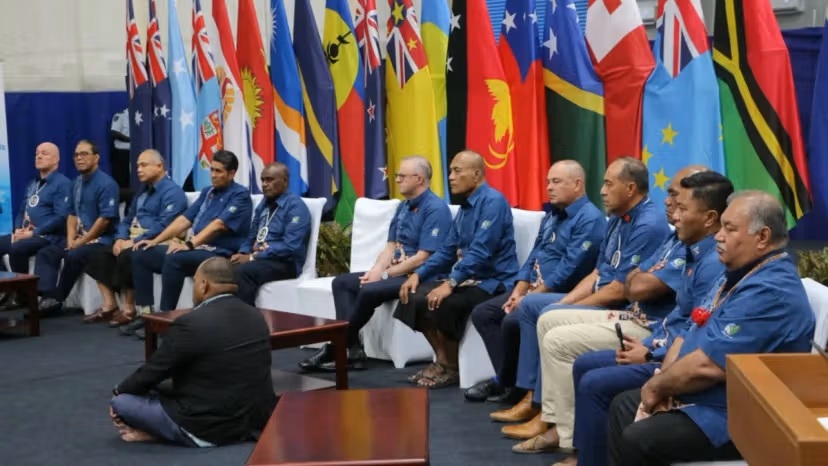
Ratuva’s comments come as Aotearoa prepares to host the Pacific Islands Forum Leaders Meeting next year with regional unity, sovereignty and relations with major powers expected to dominate discussions.
He said New Zealand’s approach in the Pacific had shifted over recent years, moving from the “reset” period focused on strategic competition to a greater emphasis on resilience and people-to-people relationships.
But he said Wellington needed to continue building trust with Pacific governments and communities.
“New Zealand through Winston Peters, the engagement with the Pacific needs to be more along the lines of the resilience philosophy, more engagement with the Pacific leaders, listen to them,” Ratuva said.
He said Pacific relationships could not be built through pressure or threats.
“Rather than using the American style threat as they did to the Cook Islands, that’s not how the Pacific consensus building should operate.”
Ratuva said recent tensions involving Pacific neighbours showed the importance of ensuring smaller island states felt respected and included in regional decision-making.
He said New Zealand needed to consider how its actions were viewed across the region.
“I think what New Zealand’s attitude towards Cook Islands in making those threats had reverberated all around the Pacific,” he said.
“If you can do Cook Islands and do it, well, you also did that to Kiribati, trying to threaten Kiribati to withdraw aid.”
Ratuva said the challenge for New Zealand was creating a more equal relationship with Pacific countries at a time when major powers were competing for influence.
He said Pacific nations were becoming increasingly cautious about being caught between larger countries such as China, the United States, Australia and New Zealand.
“It’s important for behavioural change from our side in New Zealand in terms of how we deal with Pacific neighbours,” he said.
Ratuva said Pacific countries wanted partnerships that respected their sovereignty and allowed them to make their own decisions.
“I think it’s important for that kind of equity inclusion space to be created in the geopolitics of our region.”
His comments come as Pacific leaders continue to push the message of Pacific ownership through initiatives such as the 2050 Strategy for the Blue Pacific Continent, which calls for regional solutions shaped by Pacific countries themselves.
Pacific Islands Forum Chair Matthew Wale has also stressed that the region’s future must be shaped by Pacific countries themselves, warning that growing international interest should not override Pacific priorities.
“Our success as a region and as a Pacific continent spread out in our vast ocean of peace lies not in the hands of others but in our very own, unless, of course, we do not take ownership of our destiny, our future, and hand it over to those outside of our region, whether willingly or otherwise,” Wale said in his inaugural address as Forum Chair at the PIF Secretariat in Suva earlier this month.
A spokesperson for Foreign Minister Winston Peters responded to criticism that New Zealand has relied on pressure rather than partnership in Pacific relationships, saying the Government has made the Pacific its top foreign policy priority.
The spokesperson said Peters had made face-to-face engagement and the Pacific concept of Talanoa central to New Zealand’s approach, becoming the first New Zealand foreign minister to visit all 17 other Pacific Islands Forum member countries since returning to office in 2024.
“Meeting face-to-face and listening respectfully has been at the core of Peters term as Foreign Minister.”
Responding to criticism over Aotearoa’s relationships with the Cook Islands and Kiribati, the spokesperson said both issues were resolved through diplomacy.
“Our disagreements with the Cook Islands and Kiribati were resolved amicably and through diplomacy. These disputes were not overcome in a rush – New Zealand took its time and always acted respectfully.”
The spokesperson also rejected claims New Zealand had used pressure or leverage in its dealings with Kiribati, saying the two countries reached a Statement of Partnership following discussions between their leaders.
With New Zealand set to host Pacific leaders next year, Ratuva said the country’s ability to listen and work alongside its neighbours would be critical.
“It’s important for behavioural change from our side in New Zealand in terms of how we deal with Pacific neighbours,” he said.
The 2026 Pacific Islands Forum Leaders Meeting will be held in Koror, Palau, from 30 August to 4 September. New Zealand will host the following Forum in Auckland in 2027.