The United States and its allies are “gradually losing” the contest against China’s campaign of military pressure and economic coercion in the Asia-Pacific, Australia’s Ambassador to Japan has warned.
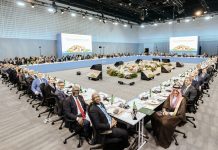
Andrew Shearer, a former Office of National Intelligence boss in Canberra, told an international conference in Tokyo that Western democracies were struggling to respond to China’s military build-up and soft-power influence across South-East Asia and the Pacific Islands, despite better co-operation and defence spending.
“We’re seeing increasingly concerted efforts to unpick the regional order, to strip it away, strip away its more liberal characteristics, and over time unpick the U.S alliance system … and replace it with a more illiberal, more hierarchical, and inherently more coercive order,” Shearer told a conference organised by the Japan Institute of International Affairs.
“I think that’s a very difficult problem set for us to respond to as Western liberal democracies. I think, if you’re objective, you would say we are sort of gradually losing some of that contest.”
Shearer’s warning comes a day after former Australian prime minister and U.S ambassador Kevin Rudd cautioned that Chinese President Xi Jinping could seek to seize Taiwan as early as 2028 if Beijing sees a lack of resolve by Washington to intervene militarily.
Rudd argued that a “bout of excessive self-confidence” by Xi, combined with US and Taiwanese elections in 2028, could create a dangerous window for miscalculation.
It also comes amid media reports that China is war-gaming such a move on Taiwan, and America’s possible response, using exact replicas of US warships and fighter jets in the remote Taklamakan Desert in the north-west of the country.
Chinese academic Da Wei told the conference that Beijing viewed reunification with Taiwan as inevitable and legitimate.
“China think ‘it’s my right’,” he said. “Without Taiwan, we do not feel peaceful. With Taiwan, with acceptable costs, we would have eventual peace.”
The U.S and its allies argue China’s military expansion and grey-zone tactics are undermining the post-war regional order, while Beijing insists it is pursuing legitimate security interests as a major regional power.
Former U.S under-secretary of defence Robert Wilkie told the Tokyo conference that Washington’s alliance network remained resilient despite concerns that President Donald Trump was pulling back. However, he said other countries in the region had to pull their weight.
“The war in Ukraine has told us that a smaller nation, without a navy, can sink a navy. A smaller nation without a strategic air force can destroy 40 per cent of the strategic air force of a stronger country,” he said.
“That’s what Ukraine is telling us. That’s what we have to do in order to restore that semblance of balance.”
Shearer said China’s expanding military footprint was becoming ever more visible.
He said the recent launch of an intercontinental ballistic missile from a submarine deep into the Pacific reflected a broader pattern of military expansion.
“We’re also, of course, seeing the increasing overuse of both conventional and, in a coercive sense, nuclear capability in the region,” Shearer said.
“But that’s part of a broader pattern, of course, of increasing [People’s Liberation Army] power projection deep into the Indian Ocean.
“And I think together these developments really are driving much of the uncertainty, the friction, and the increased miscalculation risk that we are experiencing at the moment.”
He said the launch was not an isolated event but part of a broader expansion of China’s military reach.
“Despite talk of strategic stability between the first and second most powerful countries in the world, I do not see a genuine move towards creating the sort of strategic stability that was in place for much of the Cold War.
“And also I think concerning [that] the threshold for conflict has come down in recent years, and that is something that should worry us all,” Shearer said.