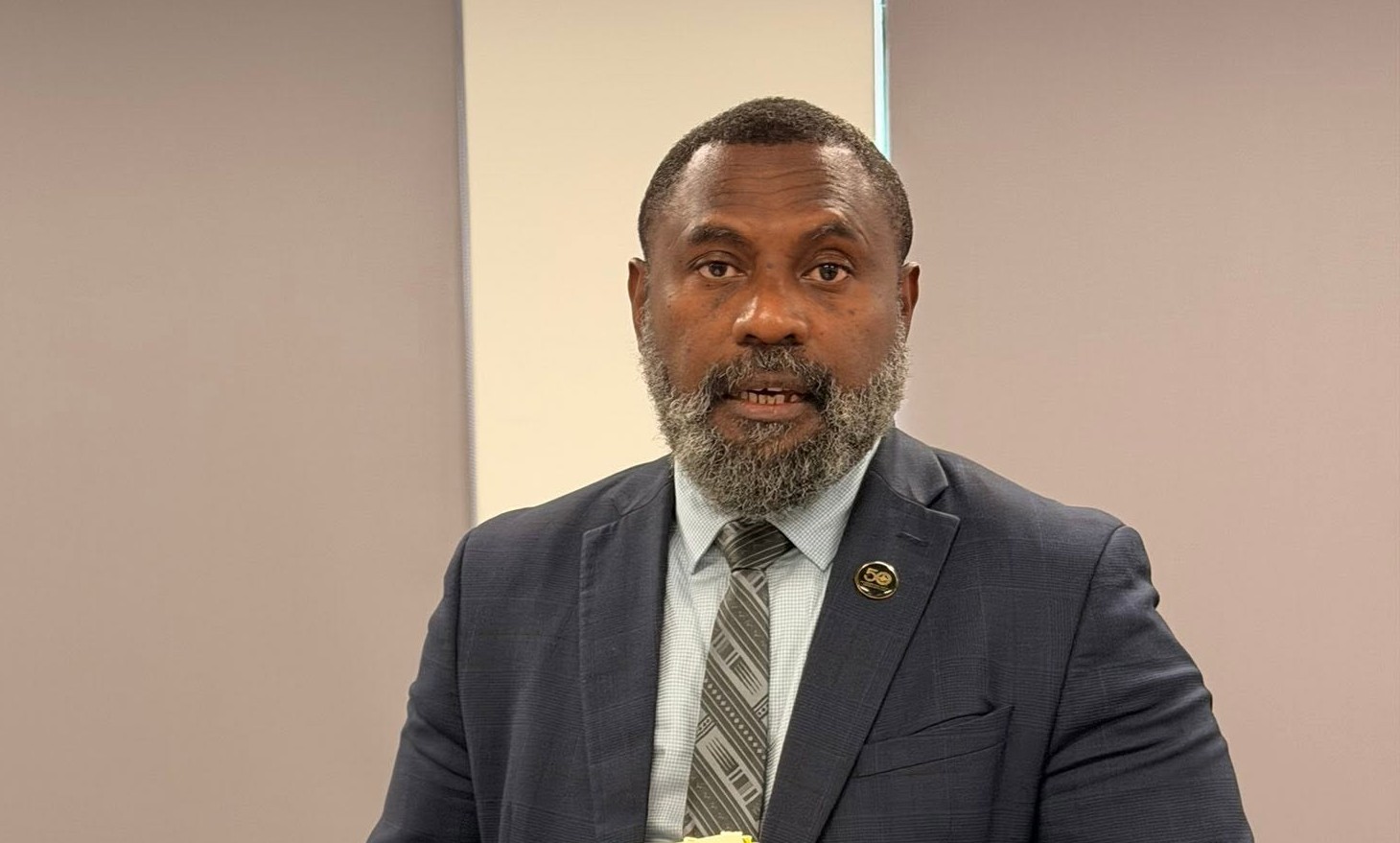
Bougainville Regional Member Peter Tsiamalili Jr has called for a carefully managed transition toward greater self-government and eventual independence for Bougainville, arguing that the future relationship between Bougainville and Papua New Guinea should be guided by Melanesian values and built on mutual respect, peace and stability.
In remarks titled “A Melanesian Vision for Bougainville’s Future,” Tsiamalili said the discussion on Bougainville’s political future should move beyond immediate debates and focus on the long-term relationship between the two peoples.
“As our Nation continues its important discussions on the future political status of Bougainville, I believe it is equally important that we lift our eyes beyond the immediate debates of today and begin to imagine the relationship we wish to build for future generations,” he said.
Tsiamalili said the Bougainville Peace Agreement, constitutional provisions, recent consensus among Bougainville leaders and the referendum result had already established a pathway forward.
“The challenge before us now is not simply a legal or political one. It is a question of vision,” he said.
He noted that discussions had often been framed as a choice between maintaining the status quo and complete separation, but said Melanesian traditions offered a different perspective.
“For many years, discussions have often been framed as a choice between remaining as we are or pursuing complete separation. Yet as Melanesian people, our history teaches us that relationships are rarely defined in such absolute terms.”
He said Melanesian societies had historically balanced self-governance with strong cultural, family, trading and spiritual connections across communities.
“For thousands of years, our communities governed themselves while maintaining deep cultural, family, trading and spiritual ties across islands, regions and language groups. We understood that identity and relationship could coexist. Self-government and unity were not contradictions
“The recent Bougainville leadership consultations reaffirmed our collective commitment to a peaceful and lawful pathway toward self-government and eventual independence, while recognising the importance of preserving peace, stability and respectful engagement with Papua New Guinea,” he stressed.
He said Bougainville should continue exploring arrangements that respect both the referendum outcome and the relationship with PNG.
“As Bougainville advances toward greater political responsibility, we must continue to explore solutions that honour both the democratic aspirations of our people and the enduring bonds that connect us to Papua New Guinea.”
Tsiamalili said his preferred approach was a gradual transition tied to progress in governance, economic development and institutional capacity.
“In my personal view, the future should be guided by a carefully managed and measured transition, where increasing levels of self-government are matched by demonstrated progress in governance, economic development, fiscal capacity, institution building, law and justice, revenue generation and public service readiness.”
“Such an approach would allow Bougainville and Papua New Guinea to continue building trust while creating the conditions necessary for a durable and peaceful settlement,” he said.
Tsiamalili said the objective should be a settlement that benefits both parties rather than creating winners and losers.
“The ultimate goal should not be victory for one side and defeat for the other.
Rather, it should be the creation of a new relationship founded on mutual respect, shared history and recognition of the aspirations of both peoples,” He explained.
He outlined the principles that should underpin any future settlement.
“A settlement that preserves peace. A settlement that respects the referendum mandate. A settlement that safeguards regional stability.
A settlement that strengthens the bonds between Bougainville and Papua New Guinea rather than weakens them,” he stressed.
Tsiamalili also highlighted support for what he described as a Melanesian-style political understanding between Bougainville and Papua New Guinea.
“The recent leadership discussions also recognised the importance of a Melanesian-style political understanding between Bougainville and Papua New Guinea — one that reflects our unique history, our shared sacrifices, and our common desire to see both peoples prosper in peace and dignity.”
“The future relationship between Bougainville and Papua New Guinea should therefore be shaped not only by constitutional provisions, but also by the values that have sustained Melanesian societies for generations: respect, consensus, reciprocity, kinship and unity,” he said.
Tsiamalili said future generations would judge leaders on how they managed the relationship between Bougainville and Papua New Guinea.
“History may ultimately judge us not by how firmly we held our positions, but by how wisely we transformed our relationship.”
“The task before us is therefore not simply to determine a political destination.
It is to build a future that allows both Bougainville and Papua New Guinea to walk forward together with dignity, confidence and peace,” he said.
Tsiamalili also called for a future based on partnership rather than division.
“If we succeed, future generations may look back and say that this was the moment when Bougainville and Papua New Guinea chose not division, but transformation; not uncertainty, but partnership; not conflict, but a new Melanesian covenant founded on mutual respect, peace and shared destiny,” he said.