

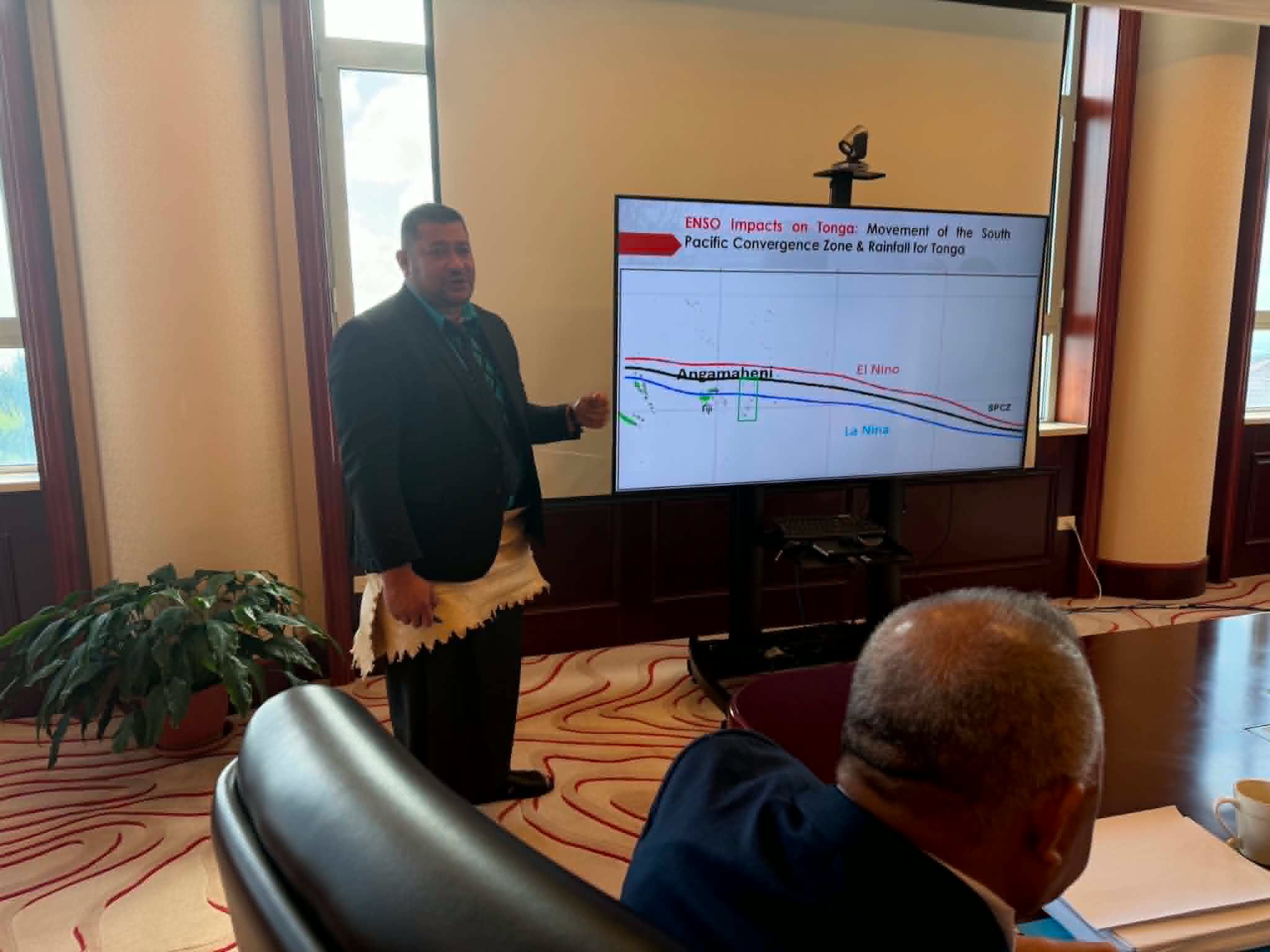
Tonga has declared that El Niño conditions are now in force, with meteorologists warning of increased drought risk, reduced rainfall and a potentially more active tropical cyclone season over the coming months.
The Tonga Meteorological Service (TMS), under the Ministry of MEIDECC, announced that sustained warming across the central and eastern Pacific Ocean has pushed sea surface temperatures above the threshold used to define an El Niño event.
According to TMS, the Niño 3.4 index reached +0.92°C during the week ending 14 June, exceeding the El Niño threshold of +0.80°C. Climate models indicate warming is likely to continue through at least January 2027.
Officials briefed Cabinet last Friday outlining the expected impacts for Tonga over the next three to six months.
These include below-average rainfall across all island groups, an increased likelihood of drought, marine heatwaves and coral bleaching, as well as heightened tropical cyclone activity during the 2026–27 cyclone season.
A drought warning is already in force for Ha’apai, while drought alerts have been issued for Niuafo’ou, Niuatoputapu, Vava’u, Tongatapu and ‘Eua.
TMS Director Laitia Fifita said El Niño is a natural climate cycle but can have significant consequences for island nations that depend heavily on rainfall for freshwater supplies.
“Early awareness and preparedness are essential,” he said, urging communities and government agencies to prepare for possible water shortages, extreme heat and severe weather events.
The meteorological service says Tonga typically experiences two to four tropical cyclones during El Niño years, with at least two potentially reaching severe Category 3 to 5 strength.
A special meeting of the National Disaster Risk Management Committee has been scheduled for this week to review preparedness measures and coordinate national response plans.