
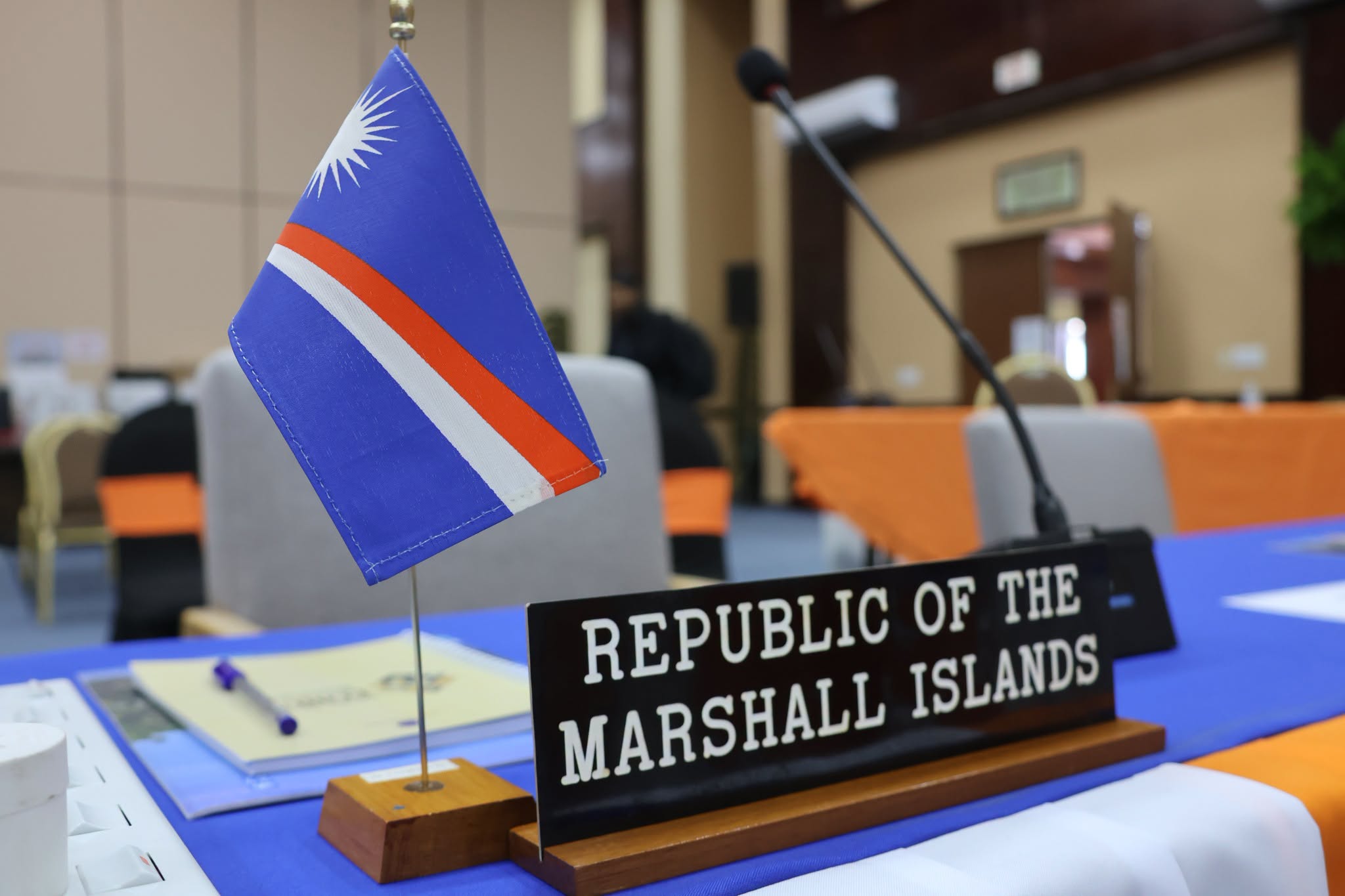
Finance and Economic Ministers from across the Pacific will gather in the Republic of the Marshall Islands (RMI) this week for the 2026 Forum Economic Ministers Meeting (FEMM), with the escalating crisis in the Middle East, regional economic resilience, and the launch of the Pacific Resilience Facility high on the agenda.
The annual meeting of Pacific Islands Forum (PIF) Finance and Economic Ministers comes at a time of growing global uncertainty, with leaders expected to assess the potential impacts of international developments on Pacific economies and agree on coordinated regional responses.
The 2026 FEMM will be chaired by David Paul, Minister of Finance, Banking and Postal Services of the Republic of the Marshall Islands.
Before ministers convene, senior finance and economic officials from Forum member countries will meet to deliberate on issues that will be presented for ministerial consideration and decision.
The meeting will also be attended by technical observers and representatives from agencies of the Council of Regional Organisations of the Pacific (CROP).
Forum Economic Ministers play a central role in shaping regional economic policy and strengthening cooperation among Pacific Island countries. Through FEMM, ministers help advance agreed regional economic priorities and provide advice to Forum Leaders on major economic development challenges affecting the region.
According to the Pacific Islands Forum, FEMM remains one of the region’s key decision-making platforms on economic and financial matters.
This year’s meeting will focus on strengthening regional economic resilience and preparedness as Pacific nations face mounting external pressures from geopolitical tensions, inflationary risks, climate-related challenges, and economic uncertainty.
A major area of discussion will be the evolving crisis in the Middle East and its potential consequences for Pacific economies.
Ministers will review the Regional Economic State of Play, including assessments of how instability in the Middle East could affect economic growth, inflation, remittance flows, development finance, and fuel security across Forum member countries.
The meeting will open with a high-level discussion on the crisis and its broader implications for the Pacific region.
Officials say the discussion will focus on potential impacts on fuel security, inflation, fiscal resilience, and overall economic stability as countries continue to navigate an increasingly uncertain global environment.
Economic integration will remain a key priority throughout the meeting, with ministers expected to examine ways to strengthen cooperation and improve the region’s collective ability to respond to external shocks.
Forum members will also reflect on the long-term goals of the 2050 Strategy for the Blue Pacific Continent while reviewing progress under the Pacific Roadmap for Economic Development (PRED), which guides regional efforts to strengthen economic resilience and promote sustainable development.
The roadmap aims to help Pacific countries cushion the effects of external economic shocks while supporting stability through regional cooperation and solidarity.
Ministers will consider a range of initiatives being implemented under PRED that are designed to deepen regional economic integration and enhance the capacity of Forum members to anticipate, withstand, and respond to global disruptions.
A significant milestone during the meeting will be the inaugural Pacific Resilience Facility (PRF) Council meeting.
The gathering marks a major step in operationalising the Pacific-owned regional financing mechanism, which was established to support resilience-building investments across the region.
The PRF Treaty entered into force on 06 May 2026 following the required ratifications by Forum member countries.
To date, ten Pacific Islands Forum members have ratified the treaty: Australia, Cook Islands, Fiji, Nauru, New Zealand, Niue, the Republic of the Marshall Islands, Solomon Islands, Tonga, and Tuvalu.
The inaugural council meeting is expected to lay the groundwork for the facility’s future operations and governance arrangements as Pacific leaders seek greater regional ownership of financing mechanisms aimed at strengthening resilience and reducing vulnerability to future shocks.
The outcomes of FEMM 2026 will help shape economic policy discussions ahead of future Pacific Islands Forum meetings and provide guidance to Forum Leaders on key economic challenges confronting the region.
With global instability continuing to affect markets, trade, energy supplies and development financing, ministers are expected to focus on practical measures that can strengthen regional cooperation and safeguard economic stability across the Blue Pacific.
The Forum Economic officials will meet on 22 June, followed by FEMM 23–24 June in Majuro.