


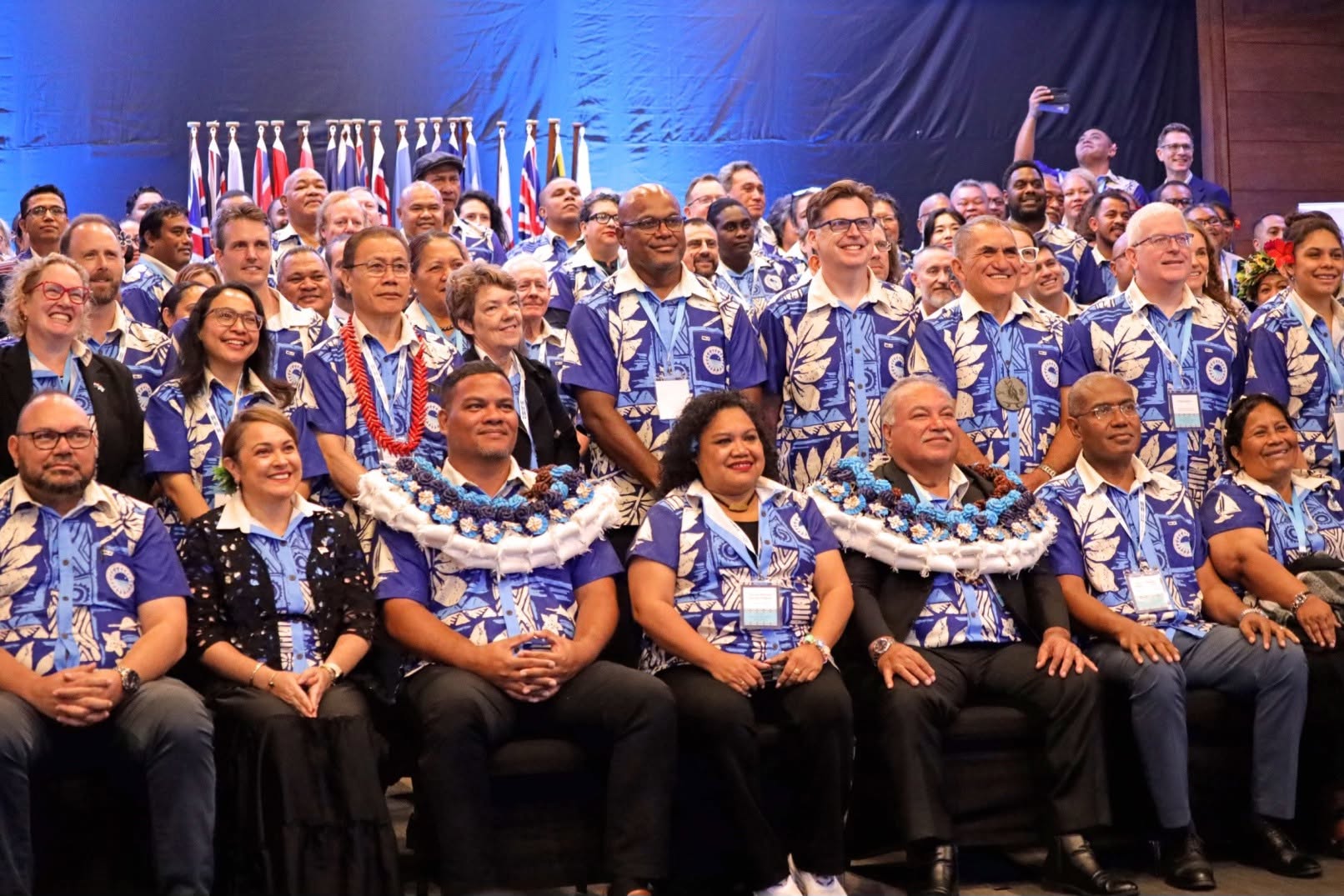
Pacific leaders and regional stakeholders have emphasised the importance of collective action, cooperation, and Pacific-led solutions in addressing the growing security challenges facing the Blue Pacific region.
This message was highlighted during the opening of the 2026 Pacific Peace and Security Dialogue, held in Suva, bringing together representatives from governments, regional organisations, security agencies, academia, civil society, and youth networks.
Delivering a keynote address, Simon Kofe, Minister for Transport, Energy, Communication and Innovation of Tuvalu, reflected on the need for Pacific countries to approach regional security challenges through shared values, cooperation, and collective responsibility.
Minister Kofe acknowledged the significance of the dialogue, noting that the discussions come at a time when Pacific communities are facing increasingly complex challenges, including climate change, transnational organised crime, technological disruption, and geopolitical pressures.
He said the region’s response must be guided by the values and principles that have shaped Pacific societies for generations.
“Our values are more than aspirations. They are the compass that guides our decisions and informs the systems that we build together,” Minister Kofe said.
Minister Kofe highlighted that the 2050 Strategy for the Blue Pacific Continent provides an important foundation for strengthening regional cooperation, placing people, culture, identity, and collective responsibility at the centre of development and security discussions.
He said security should not only be viewed through traditional approaches, but must also consider environmental protection, community wellbeing, governance, and the resilience of Pacific societies.
“Security is not an end in itself. It is part of the future we are deliberately shaping together, one grounded in our shared values, identity, wellbeing, and responsibility to future generations,” he said.
Minister Kofe also highlighted the success of regional cooperation through the Parties to the Nauru Agreement (PNA), noting that collective approaches can strengthen Pacific nations’ ability to protect shared resources and interests.
He said the lessons from regional cooperation in areas such as fisheries, maritime management, climate action, and security demonstrate that working together strengthens, rather than diminishes, national interests.
“Regionalism is not simply a political arrangement; it is the application of our values at a larger scale,” Minister Kofe said.
Also addressing participants, Pacific Islands Forum Secretary General Baron Waqa said the region is navigating a period of genuine uncertainty, with global conflicts, economic pressures, transnational organised crime, climate change, and increasing strategic competition shaping the regional security environment.
Secretary General Waqa reaffirmed that Pacific countries must continue to lead discussions on peace and security through Pacific-owned frameworks and priorities.
“The political will exists. The policy frameworks are in place. What we need now is action, delivery, and implementation,” Secretary General Waqa said.
He highlighted the importance of regional frameworks, including the Boe Declaration on Regional Security, which recognises that security in the Pacific extends beyond traditional threats and includes climate, human, economic, and transnational security challenges.
Secretary General Waqa said work is progressing on the Regional Peace and Security Action Plan 2026–2030, which aims to translate regional commitments into practical and coordinated action.
The Action Plan will support stronger regional cooperation in addressing issues such as transnational organised crime, climate-related security risks, human security, and the protection of Pacific communities.
The Pacific Peace and Security Dialogue provides an important platform for strengthening partnerships, sharing knowledge, and identifying practical solutions to support a peaceful, secure, and resilient Pacific region.
Fiji’s Ministry of Policing and Communications recognises the importance of regional cooperation and dialogue in strengthening collective efforts to address emerging challenges and ensuring the safety and security of Pacific communities.