
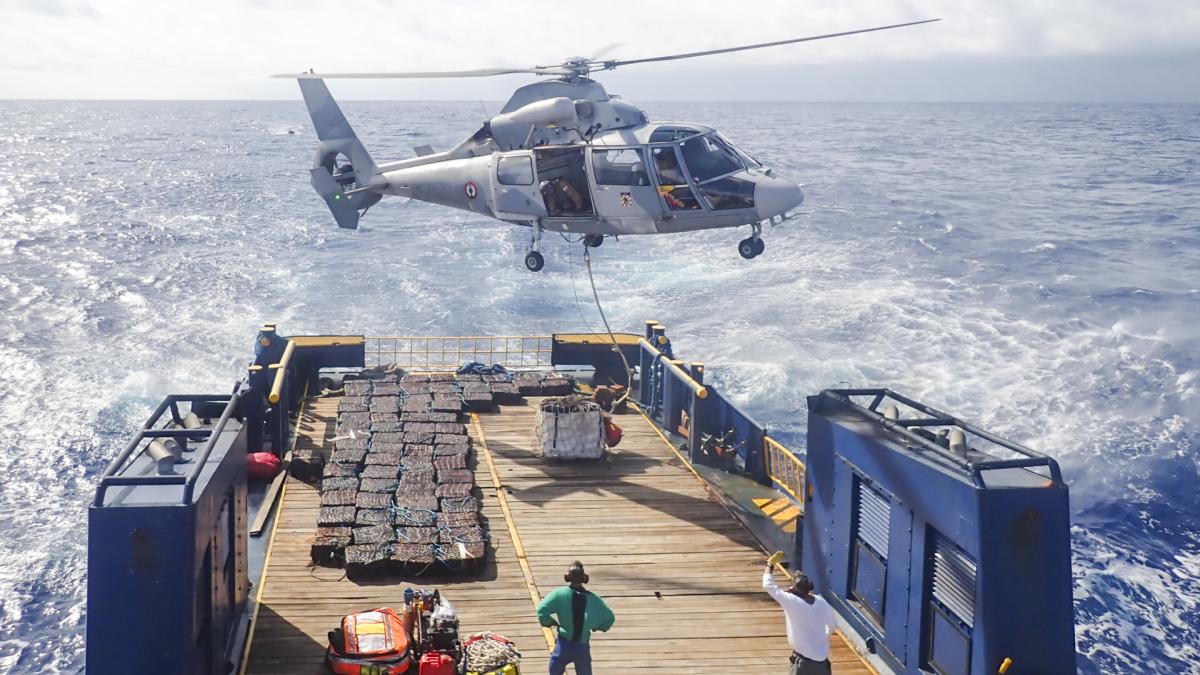
The Australian Federal Police (AFP) says the Pacific is facing an escalating national security threat from transnational drug trafficking after 17 tonnes of illicit drugs, mostly cocaine, were seized across the region in just the first months of 2026.
AFP Commissioner Krissy Barrett said the scale of trafficking through the Pacific had reached alarming levels, with organised crime groups increasingly using new methods, including semi-submersible vessels, to move drugs destined largely for Australia.
“The magnitude and endless maritime trafficking of illicit drugs to, and through the Pacific, has become a serious national security threat for the Pacific and Australia,” Commissioner Barrett said.
“It is a threat the AFP cannot ignore.”
The AFP said the 17 tonnes seized since January already far exceeds the 4.6 tonnes of illicit drugs seized during the whole of 2025.
Commissioner Barrett said “greedy and ruthless narco-gangs” were targeting the Pacific as they searched for new trafficking routes under pressure from law enforcement crackdowns in North America.
She said most of the drugs moving through the Pacific were intended for Australia, placing a direct responsibility on Australian authorities to act.
“Most of the illicit drugs being trafficked to, and through the Pacific, are destined for Australia, so we have a moral responsibility to act and a direct responsibility to the Australian public to stop these drugs from reaching our shores,” she said.
Commissioner Barrett also acknowledged Australia’s domestic drug demand as a major driver behind the trafficking networks.
“From the AFP’s perspective, there is no point mincing words – it is our nation’s shame that Australians consume too many illicit drugs and pay high prices for them,” she said.
“As police, we see every day the brutal reality of illegal drug use and serious organised criminals who direct their unlawful business to Australia.”
She warned that Pacific Island countries were now increasingly exposed to the devastating social impacts of illicit drugs.
“The illicit drug threat to the Pacific is exponentially increasing – corroding their health systems, their family structures, and their future – their next generation,” Barrett said.
“The effect on such small populations is devastating. It is a complete undermining of their faith, family structure and their proud culture.”
Commissioner Barrett praised Fiji Police Commissioner Rusiate Tudravu for pushing stronger regional cooperation against organised crime.
“Commissioner Tudravu wants the Australian public to know that Pacific communities have never been more at risk from the effects of illicit drugs,” she said.
The AFP said Pacific police leaders had called for stronger international intervention and better intelligence sharing to combat the growing threat.
This week, the Fiji Police Force and AFP will co-host the Pacific Transnational Crime Summit in Suva from 18 to 22 May.
The summit will bring together Pacific Police Ministers, senior operational law enforcement leaders and international partner agencies to strengthen cooperation against organised crime.
The summit is being held in partnership with the Pacific Transnational Crime Network, which includes crime units from 21 Pacific Island countries.
Commissioner Barrett said the AFP would work more aggressively with international partners to stop drugs before they reach the Pacific.
“We will do this with the Colombian Attorney General’s Office, the National Police of Colombia, Columbian Navy, Mexican authorities, U.S law enforcement authorities, New Zealand Police, INTERPOL and Pacific Chiefs to target and disrupt organised criminals,” she said.
She revealed AFP officers in Colombia had joined operations deep in remote jungle regions to destroy cocaine laboratories and support arrests linked to trafficking networks targeting Australia.
“Just this month, the AFP in Bogota supported Colombian law enforcement during the arrests of multiple people allegedly supporting drug trafficking networks operating in narco-terrorist controlled territories where cocaine is produced to send to Australia,” Barrett said.
The AFP said cooperation with Colombian authorities had resulted in more than 20 tonnes of cocaine being seized in recent years, including 5.5 tonnes found on a self-propelled semi-submersible vessel in the Pacific Ocean bound for Australia in October 2024.
Commissioner Barrett said Australia and New Zealand would now help fund an International Joint Investigations Team in Colombia to target drug shipments before they enter the Pacific region.
“Coming together with trusted partners is how we will target and frustrate the cartels and other organised criminals,” she said.
“And we must do this for the collective health, security and sovereignty of like-minded countries that embrace the rules-based order and democracy,” she said.