



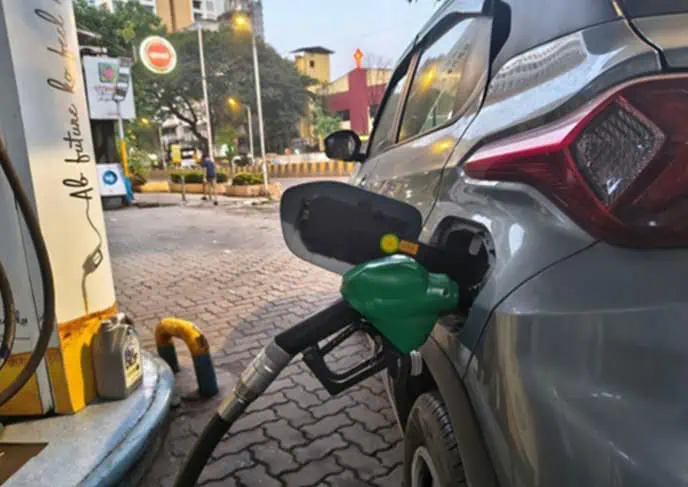
Pacific leaders have declared an emergency over the looming threat of fuel shortages, as fossil fuel dependence and global instability have placed many remote countries at a significant loss.
In addition to the short-term spike in oil prices, new research shows that the total cost of fossil fuels goes much deeper than the current energy crisis.
New research by 350.org shows that on top of soaring energy bills, fossil fuels cost households an additional US$12 trillion in taxpayer handouts, health impacts and extreme weather damage – equivalent to a US$23 million a minute “gift to Big Oil” that costs each person on Earth an additional US$1,400 a year.
That means that consumers worldwide are paying an estimated US$2.50 more per gallon of gasoline through taxes and out of pocket payments subsidising the “hidden costs” of fossil fuels.
In the report “Out of Pocket: How Fossil Fuels are Draining Households and Economies,” recalculated IMF estimates on direct and indirect fossil fuel subsidies. These hidden fossil fuel costs are “silently siphoning trillions away from household budgets and draining state coffers” while a handful of big corporations make windfall profits from the war in South West Asia.
The report highlights that:
*Fossil fuels cause at least US$9.3 trillion per year in extreme weather damage and air pollution deaths, higher than IMF estimates. These are social costs that the fossil fuel industry should be charged with but pay nothing for, and which the public shoulders instead.
*The US$12 trillion owed by the fossil fuel industry annually in avoided costs is more than 100 times total global climate finance — or the money the world has committed to help countries respond to the climate crisis.
*Carbon revenues – or what fossil fuel companies do pay – raised just over US$100 billion in 2024 or less than 2 percent of the US$4.1 trillion annual climate undervaluation in this analysis.
*In the first 50 days of the war, over US$150 billion has been siphoned from ordinary people to oil and gas companies due to soaring energy prices alone.
As decision-makers from over 50 countries gather for the first international conference on a fossil fuel phase-out in Santa Marta, Colombia this week, said that leaders have an unprecedented opportunity to put the world on the right path.
“Decades of delay have turned every oil price spike into a household emergency and every climate‑fuelled disaster into another withdrawal from the savings of the world’s poorest communities,” the group said.
350.org is calling on governments to introduce permanent windfall taxes on fossil fuel profits and other mechanisms to make polluters pay; replace fossil fuel subsidies with targeted support for the world’s poorest; and redirect public finance from fossil fuel expansion towards accelerating renewables for climate resilience and inclusive green industrialisation.
Fenton Lutunatabua, 350.org Pacific and Caribbean Team Lead said: “It has never been more clear that fossil fuels hurt us way more than they are worth. In the Pacific, they have cost us our shorelines, our coral reefs, our cultures and our livelihoods – now the rest of the world can see the hidden cost on their pockets. The war has shown us how fragile a system we’ve built by relying on these polluters to fuel our economies. It’s time we act on this information and shift to a fossil free Pacific.”
Bill McKibben, climate activist 350.org founder said: “A building El Niño means 2026 and 2027 will set new global temperature records, and that will offer yet more chaos, and yet more reminders that it is the poorest people on earth who must bear most of the cost of this ongoing tragedy. We have a narrow path out of these crises, and that path has been illuminated by the bombs from this misbegotten war. It would be a waste and a sin not to seize this moment.”
Anne Jellema, 350.org Chief Executive said: “The economic case for fossil fuels has not just weakened, it has collapsed. Climate chaos and volatile oil prices have pushed ordinary people to a breaking point: unable to afford food, transport, housing or healthcare. Leaders must acknowledge the real costs of fossil fuels and redirect public money where it belongs — into making clean energy a right, not a privilege.