
New Zealand Foreign Minister Winston Peters says it’s time for “cool heads” as the US President escalates his rhetoric on attacking Iran.
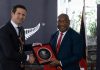
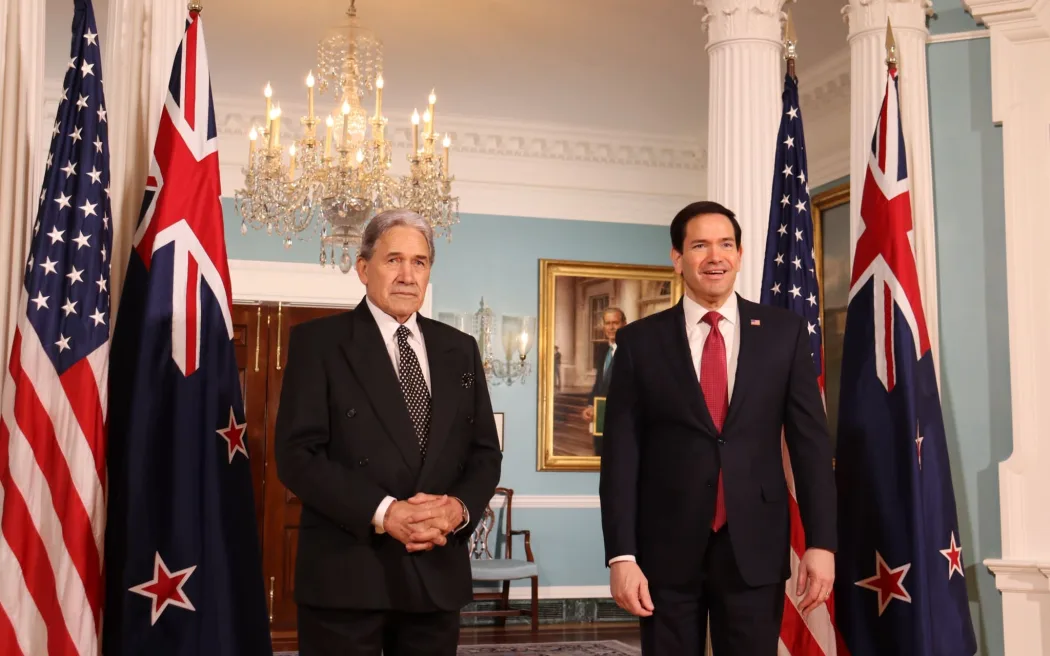
Peters met U.S Secretary of State Marco Rubio on Wednesday morning in Washington DC, where he expressed New Zealand’s desire to see dialogue and de-escalation over Iran.
He told his counterpart about the significant negative economic impacts the conflict was having on New Zealand and its Pacific neighbours.
Rubio outlined U.S progress towards ending the war.
Peters told RNZ he was given details by the U.S Secretary of State about work being done and conditions required for peace to break out, but indicated it would be premature to jump to any conclusion about how soon the war might end.
He said the pair had a “serious discussion” on how the U.S might help the Pacific in regards to fuel supply.
On the closure of the Strait of Hormuz, they both stressed the importance countries around the world attached to international law in regards to freedom of navigation.
The meeting took place just hours after U.S President Donald Trump posted that” a whole civilisation will die” in Iran if the country does not heed his cutoff time to open the Strait of Hormuz, as Tehran reported U.S-Israeli attacks on its infrastructure were already under way.
Speaking to Morning Report after the meeting, Peters said it would be wise for New Zealand to wait out the “timeline that has yet to be met.”
In the meantime, he said, he was there to make sure the U.S understood the cost to New Zealand and the Pacific in terms of the economy and fuel supplies.
“We left all that very clearly in their mind as concerns we had,” Peters told RNZ. He said he came to ensure New Zealand’s long term and immediate interests were looked after.
“We had a serious discussion about how they might help, how it might get some ancillary tankers ready and get them to New Zealand to spread it around the Pacific as fast as we possibly can,” said Peters.
He said the U.S gave “a very positive indication” it could support Pacific nations with access to additional fuel supplies if necessary.
He would not be drawn on Trump’s comments “which are not part of the conversation I was in.”
“People say a lot of things, in time we’ll see whether these things are relevant or correct.”
Asked to reassure New Zealanders who might be alarmed at the U.S president’s remarks, Peters said people would continue to be alarmed if “people keep on heightening the effect of a comment like that.”
He said there had been numerous comments in the past that have “changed dramatically” within one or 24 hours.
“So it’s time to be experienced. It’s time for cool heads and to not make a rush to judgment that we will regret. That’s what’s important now.”
Peters said there were no discussions of potential involvement by New Zealand in a maritime fleet to keep the Strait of Hormuz open, and that it wasn’t for him to determine what New Zealand would do.
“But the illegality of what’s happening there can’t go on, that’s what we do accept.”
Before the trip, which came at Rubio’s invitiation, Peters said the current global context was the most challenging New Zealand had faced in the past 80 years.
Waikato University Professor Al Gillespie also told RNZ ahead of the meeting that Peters would be trying improve a relationship with the US that had been challenged in recent times, “because of the unpredictability” of the US President. But he also acknowledged the countries were good friends.
During the meeting, Rubio and Peters also discussed the longstanding relationship between the U.S and New Zealand, including on defence and security and trade and economic matters. They talked about the issue of tariffs and continued discussions on critical minerals cooperation.
Peters later said no final agreements was reached in regards to critical minerals, but he told Rubio New Zealand was a “critical minerals wealthy country” and that work was ongoing.
Peters pointed to the Pacific Islands Forum next year, which New Zealand’s is hosting, and invited Rubio to attend. He encouraged the US to continue playing a fulsome role in the region.
They discussed matters in the Pacific, including energy supply chain issues and transnational organised crime. They also discussed shared strategic interests of the two nations in the Indo-Pacific region.
Ahead of the meeting, Rubio was asked for a message to other nations like New Zealand impacted by the war.
He responded by saying the whole world had been impacted “unfortunately” because Iran was violating “every law known” by striking commercial vessels in the Straits of Hormuz, “and it’s a big problem for the world.”
Peters also met with Rubio early last year, ahead of the Liberation Day tariffs. After that meeting, Peters said the pair had made “serious arrangements” to keep dialogue going in a meaningful way.
On Wednesday, Peters described his relationship with Rubio, and Deputy Secretary of State Chris Landau, as “excellent.”
“It’s born of the fact that we’re dealing with serious issues where they’ve got a huge interest in it as well, and they happen to respect a country called New Zealand when it comes to the Pacific and our influence in it,” he said.