
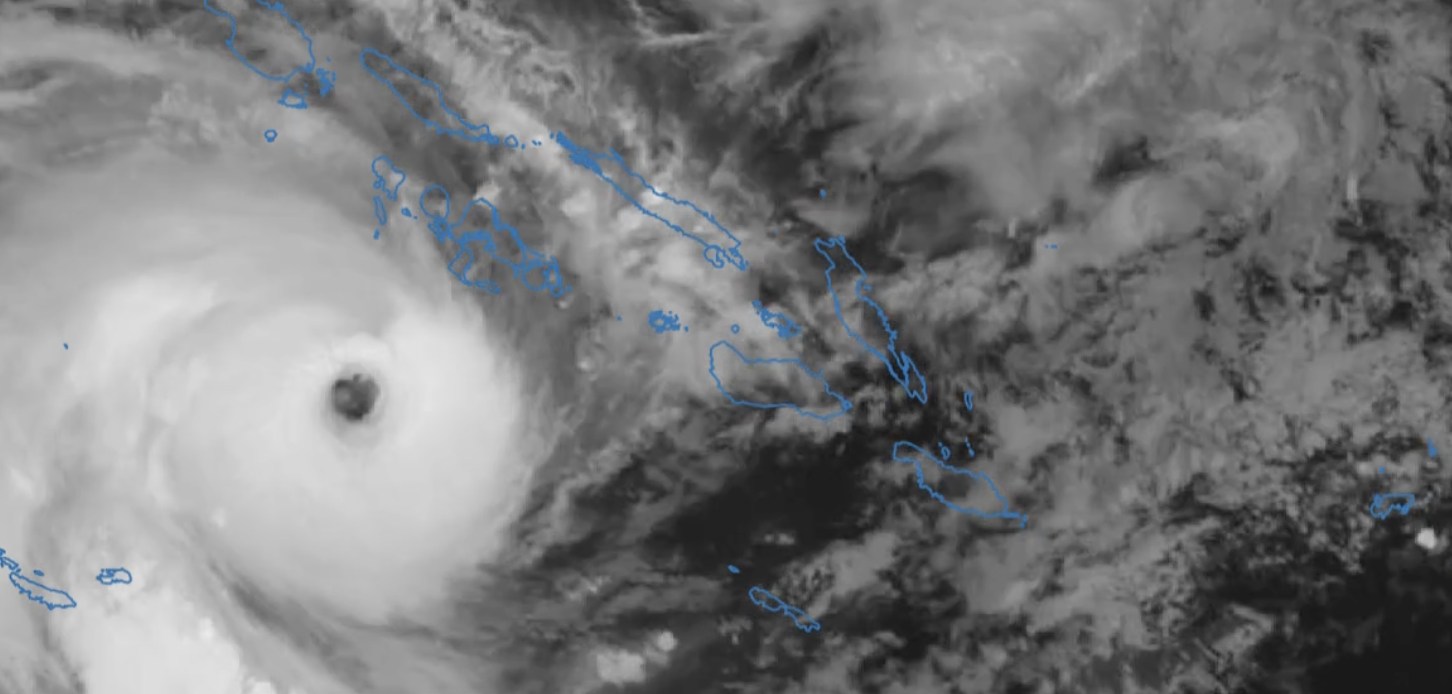
Severe Tropical Cyclone Maila has intensified into a Category 5 system in the Solomon Sea, the first of its kind recorded in the area under the Australian scale.
According to Pacific Tropical Cyclone Updates, Cyclone Maila (31P) continues to strengthen, bringing heavy rain, gusty winds, rough seas and coastal flooding to the western Solomon Islands. These conditions are expected to persist for the next one to two days before the system begins to move away.
The cyclone is forecast to track over Milne Bay Province in Papua New Guinea on Thursday. Although some weakening is expected, Maila is still likely to generate hurricane-force winds, intense rainfall, and dangerous surf and coastal flooding.
These impacts are expected to reach mainland Papua New Guinea, particularly the Alotau area, from late Friday into Saturday. Authorities say preparations to protect life and property should be completed urgently.
The Solomon Islands Meteorological Service said the cyclone was located about 165 kilometres southwest of Rendova Island, with a central pressure of 936 hectopascals. It is moving slowly northwest while continuing to intensify.
Gale force winds of between 63 and 87 kilometres per hour are forecast for Western Province, along with very rough seas and swells of up to six metres. Coastal flooding, heavy rain and thunderstorms are also expected.
Choiseul and Isabel provinces are likely to experience winds of up to 61 kilometres per hour, with moderate to rough seas and possible coastal flooding. Heavy rain and thunderstorms are forecast across the rest of the country.
Authorities warn that the severe weather could trigger flooding and landslides, particularly in low-lying and flood-prone areas. Sea travellers have been urged to take extra precautions, while motorists are advised to avoid flooded roads and river crossings.
Residents are being urged to take all necessary safety measures as the cyclone poses a serious threat to lives and property.
In Papua New Guinea, West New Britain Governor Sasindran Muthuvel said continuous heavy rain over the past four days has already caused significant damage.
“All the roads within Gloucester-Kandrian (district) are very badly affected. In fact, in our New Britain Highway, one bridge is almost like washed away, or it’s in a very bad shape.”
He said similar damage is being reported in East New Britain and Bougainville.
“I can see very similar damage, like, it’s just just high, I mean, high level of rain or heavy downpour that caused, because our drainage is already poor,” Muthuvel said.
“So most of our drainage has been filled and water is on the road, flowing on the road, and some water is like flowing on top of the bridge, and that’s when some of these main roads have been cut off.’
The Papua New Guinea Defence Force is preparing to deploy engineers from Lae for possible rescue and recovery operations.
Meanwhile, several people, including a critically injured patient, remain missing at sea after leaving Woodlark Island last week in a dinghy bound for Alotau General Hospital.
Muthuvel said the national government is expected to respond once damage assessments are completed.
“The PM (Prime Minister) also mentioned that once they receive all the reports, then cabinet can deliberate on it and see how they can they can support.
“Actually, the Department of Works has more of a role to play in terms of trying to help with fixing those roads or fixing those affected bridges and all those things, because most of these roads have hardly any maintenance – that’s one of the reason why some of these roads are badly affected,” he said.
Climate experts warn that shifting weather patterns linked to the climate crisis could extend the cyclone season beyond its usual November to April period.
Vinzealhar Nen, 350.org Papua New Guinea Coordinator said communities are already facing serious impacts.
“There are already heavy rains and floods in New Britain areas and expected for coastal communities in Milne Bay. The development of Cyclone Maila has already interrupted power supply in these local communities, due to strong winds and damaged the powerlines.
While the small communities are being asked to move to higher ground, it will be difficult to move at a time like this. With the cyclone, so much is at stake. Homes will be destroyed, lives could be taken, injuries might not be treated due to lack of basic health services nearby and livelihoods will be affected. Many of the people from these communities rely on subsistence farming and fishing to earn their income. These damages and trying to recover from them will cause many problems for the people from these communities once the cyclone passes through.”
Fenton Lutunatabua, 350.org Pacific and Caribbean Team Lead said multiple systems are now affecting the region.
“We’re currently seeing two severe tropical cyclones impacting the Solomon Islands, Papua New Guinea and Fiji, with our brothers and sisters in the North Pacific also monitoring a weather system that could develop into a third cyclone. At some point we need to ask ourselves, who should fit the cost of these climate disasters? The communities that bear the physical and emotional brunt, or the coal, oil and gas CEOs that fuel them? Our teachers, farmers, health workers and parents are bracing for a cyclone period that could extend well into May. That’s beyond our typical cyclone season. The climate crisis is shifting the goalposts of what our people have to endure, and those most responsible for this crisis should also be responsible for some form of relief.”