

By Erin Anderson
Climate change and gender inequality are two of the biggest challenges we face today. Yet they are too often treated as separate issues. This is a missed opportunity.
The evidence is clear: gender equality and climate resilience are mutually reinforcing. Women are among those most affected by climate impacts, but they are also critical agents of adaptation. Recognising how gender intersects with disability, age, ethnicity and other forms of social exclusion is essential to ensure climate action benefits all. Policies or programs that overlook either dimension risk falling short of their goals.
Drawing on recent analysis and learning from programs across Asia, the Pacific, Africa and the Middle East, this article explores what has worked in integrating gender equality and climate action, and why doing the two together delivers better, longer-term results.
Inclusion works when women shape the rules, not just follow them, and when diverse voices are part of the conversation from the outset. Gender equality can’t be retrofitted once implementation begins. When women are included at the design stage, helping define priorities and shape decisions, the resulting projects are more practical, more sustainable and more widely supported.
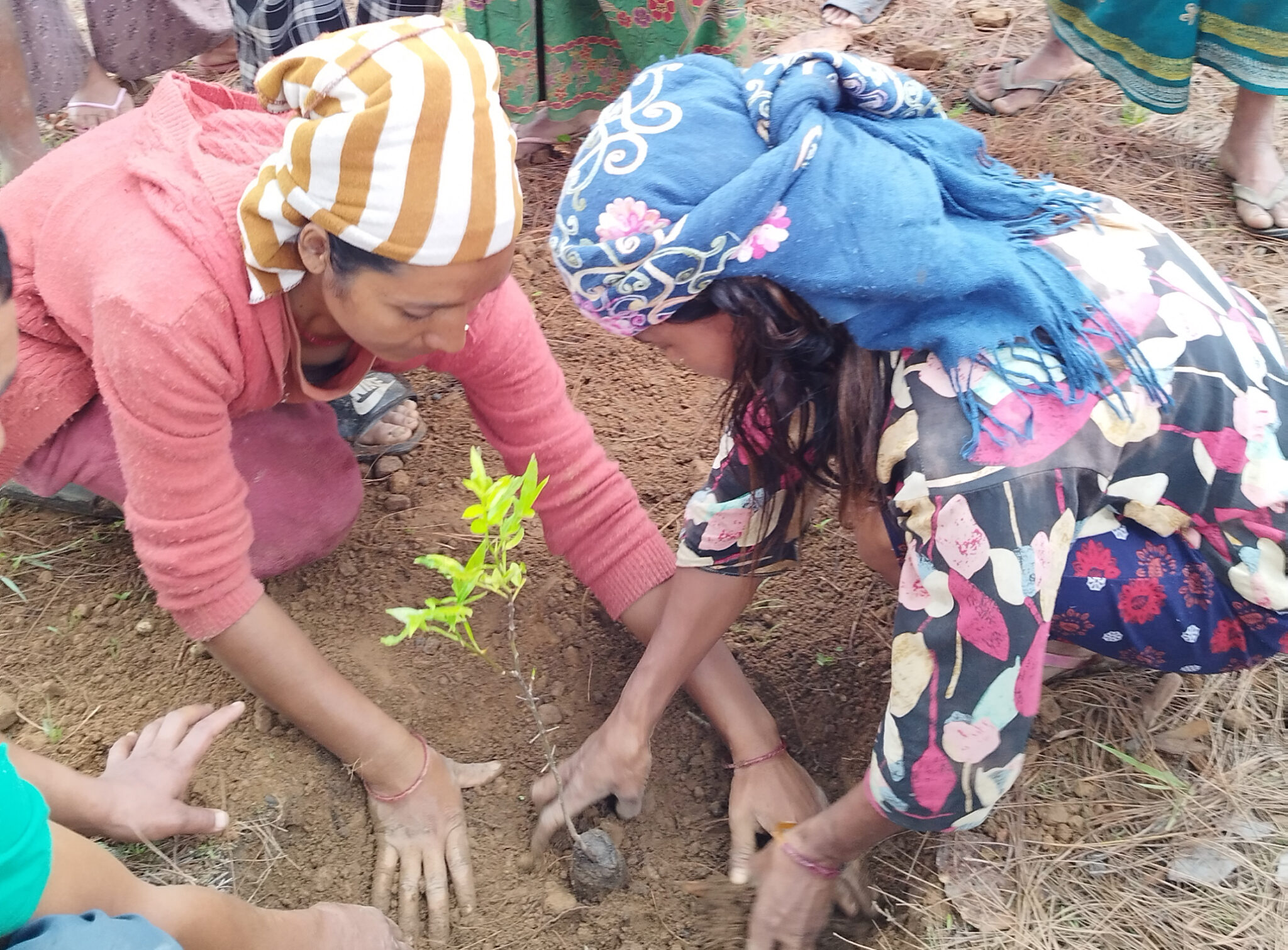
In Nepal’s Rural Village Water Resources Management Project (RVWRMP) and the Local Adaptation for Climate Change (LLAC) Project, both financed by Finland, EU and Nepal, women hold half of all committee positions, and Dalit (low caste) and ethnic minority groups are also proportionally represented. Women’s leadership helped determine the placement of water systems closer to homes, improving safety and freeing time for education and livelihoods. In Kiribati, a gender participation plan under the Asian Development Bank-funded South Tarawa Water Supply Project ensured women were directly involved in governance of desalination and water sanitation and hygiene systems, improving both technical outcomes and household uptake.
Climate projects succeed when they also expand women’s economic agency. Economic empowerment consistently emerges as the single strongest predictor of climate resilience. When women have income and assets, they have options: to adapt crops, invest in new technologies, relocate temporarily or recover faster from shocks.
Agriculture programs in Vietnam and Burkina Faso show this vividly. In northern Vietnam, women who gained access to climate-smart farming techniques under the DFAT-funded Gender-Responsive Equitable Agriculture and Tourism initiative reported average income increases of around 20 percent and greater household food security. In Burkina Faso’s Sahel region, women trained in water-efficient agriculture became local leaders in managing scarce resources amid prolonged drought.
Renewable energy programs show a similar link. In Jordan’s Sustainable Energy and Economic Development project funded by the Canadian government, women-owned energy startups benefited from targeted finance and training, contributing to projected lifetime savings of CA$100 million in local energy costs.
Gender-responsive budgeting isn’t only about fairness, it makes adaptation funds more effective and accountable. Global climate finance often fails to reach women because the systems that allocate and track spending rarely account for gender outcomes. Integrating gender-responsive budgeting into national and local climate plans can change this.
Ghana’s Strengthening Investments in Gender-Responsive Climate Adaptation programme provides one model. It supports local governments to allocate funds for women-led adaptation projects — such as community forestry and small-scale irrigation — and strengthens women’s organisations to monitor results. Early evidence shows increased participation of women in budget hearings and district planning processes. RVWRMP and LACC in Nepal are also training municipalities in gender and disability-responsive budgeting, ensuring that specific issues faced by women aren’t forgotten.
Strengthening women’s leadership in the spaces they already occupy amplifies both climate and social resilience, particularly when inclusion efforts recognise the diversity of women’s experiences and the different impacts they face. Across sectors, women are already the de facto managers of climate-sensitive resources: water, energy, food and community health. Projects that recognise and strengthen this existing leadership tend to produce faster, more durable change.
In Vanuatu, under the Greater Port Vila Urban Resilience Project, women’s groups played central roles in emergency planning and shelter design. The result: preparedness plans that addressed women’s safety, childcare and disability inclusion, factors often overlooked in conventional disaster management.
Gender data isn’t bureaucratic. It’s a form of climate adaptation, helping programs learn and adjust in real time. Too many climate programs report success without knowing who benefits. Collecting gender-disaggregated data and listening to women’s feedback have proved critical for course correction.
After RVWRMP consultations with women in Nepal revealed a strong preference for private connections in some villages, rather than traditional shared public taps, the project changed track. As an unexpected result, menstruation taboos declined dramatically in those locations with their own water supply and improved sanitation.
Each of these lessons points to a central truth: climate resilience and gender equality are not parallel challenges, they are interdependent. When women are excluded from adaptation planning, the sustainability of climate investments suffers. Conversely, gender programs that ignore climate realities risk reinforcing fragility rather than reducing it.
Applying an intersectional lens matters. Women’s experiences of climate impacts differ depending on disability, age, class and geography. Climate policy that ignores these differences risks deepening inequalities rather than reducing them.
Consider the link between water security, health and livelihoods. In drought-prone regions, water scarcity drives girls out of school and women into unsafe labour or migration. Without addressing the underlying resource stress, gender gains can quickly unravel. The same applies to climate-affected agriculture, where empowering women farmers without access to land, seeds or irrigation does little to change outcomes.
Doing gender and climate together means designing interventions that recognise these feedback loops, where environmental change shapes gender inequality, and gender inequality shapes environmental outcomes. It requires systems that plan across sectors rather than in silos, and funding mechanisms that value social as well as technical results.
The task for development partners is not to invent new frameworks but to deepen what already works:
• Start inclusion early. Build women and diverse groups participation into design and governance, not just implementation.
• Link empowerment with economic opportunity. Income is resilience.
• Reform finance systems. Make gender-responsive budgeting standard practice in climate spending.
• Invest in women’s leadership. Support the roles they already hold in managing resources and risks.
• Measure who benefits. Use gender-disaggregated data to drive adaptive management.
The evidence from implementation experience is consistent: where climate and gender are addressed together, development gains endure longer, recover faster and reach more people. Addressing one without the other is increasingly a false economy.
As global climate finance expands, success will depend not just on what is built, but on who has a voice in shaping it. Climate resilience, like gender equality, is fundamentally about power and shifting it toward those already leading the change.