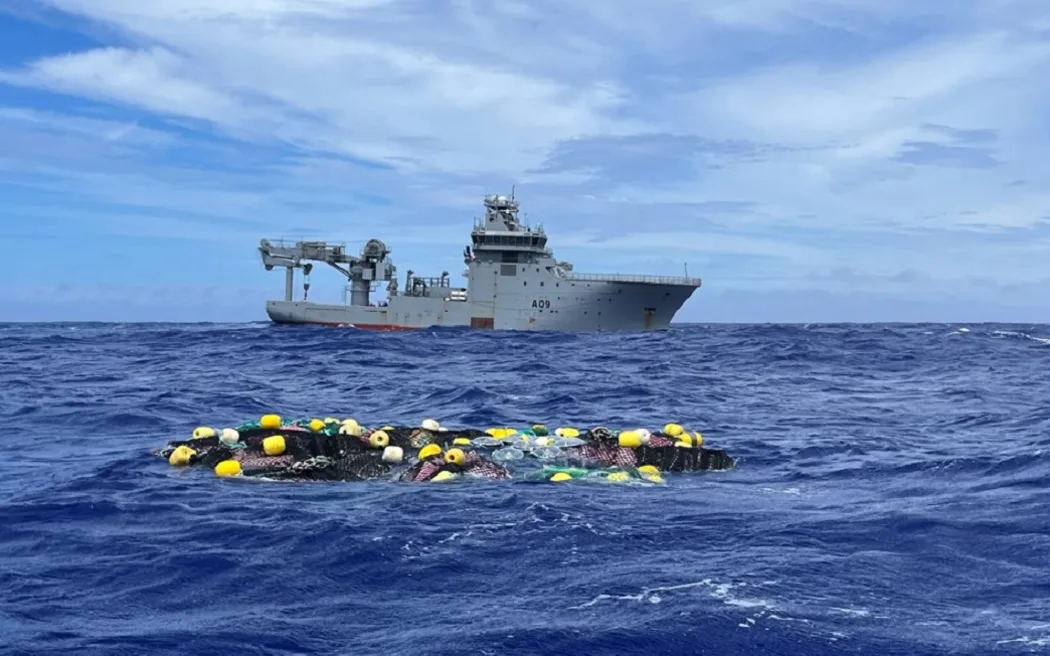
As transnational crime syndicates target our Pacific waters, the Oceania Customs Organisation is working with its 24 member countries to defend our vast ocean territories through intelligence sharing, community partnerships, and regional cooperation.
Opinion by Mohammed Ajaz, Customs Enforcement Advisor, Oceania Customs Organisation
The role of Customs has fundamentally changed.
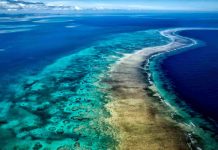
Our Customs officers are now frontline defenders against sophisticated criminal networks exploiting our geography. We are small island nations managing ocean territories that dwarf our land masses. For example, Solomon Islands oversees 1.35 million square kilometres of ocean with a population under 750,000. Kiribati’s maritime zone stretches across 3.5 million square kilometres.
This reality makes us targets.
Through the Oceania Customs Organisation, 24 Pacific nations from Australia to American Samoa are uniting against a threat no single country can face alone: transnational organised crime.
The urgency is clear. In January, the region intercepted 8.5 tonnes of cocaine, including simultaneous busts on January 15—Fiji’s 2.6 tonnes from a semi-submersible and French Polynesia’s 4.87 tonnes. These seizures prove criminal syndicates view our Blue Pacific as a billion-dollar transit route.
Why Criminals Target Our Waters
The numbers tell a brutal story. Cocaine increases in value tenfold between the United States and Australia, while methamphetamine prices soar as much as 80 times higher than source countries. This explains why traffickers invest millions in sophisticated narco-submarines to cross our waters—Solomon Islands authorities discovered three such vessels last year. Our geography has become their billion-dollar shortcut to lucrative markets.
The sophistication is escalating. Criminal syndicates are infiltrating legitimate supply chains, recruiting airport staff and logistics personnel as insider threats. Recent seizures reveal increasingly creative concealment methods- drugs hidden inside industrial machinery, frozen chicken shipments, refrigerated container motor compartments, even in construction equipment and baby wipes. The “rip on, rip off” methodology—where drugs are placed into legitimate trade containers—has become standard practice across trans-Pacific routes.
While maritime smuggling dominates, criminals are also exploiting postal and air cargo shipments as secondary routes.
How OCO Is Responding
This approach aligns with the 2018 Boe Declaration on Regional Security, where Pacific leaders identified transnational crime as a major threat requiring coordinated action.
We have established real-time intelligence networks. OCO Intel Contact Points connect officers across the region, while our Pacific Small Craft App enables Regional Coordinators to actively share information on small craft movements, fishing vessels, and cargo ships. We participate in World Customs Organisation (WCO) and International Narcotics Control Board led global operations targeting counterfeit medicines, new psychoactive substances, and scheduled drugs. Our coordination extends to Australian Federal Police, Australian Border Force, New Zealand Customs, U.S Drug Enforcement Administration, and Pacific Transnational Crime Network team leaders.
We are also deploying targeted technology. Papua New Guinea has begun deploying the World Customs Organisation Cargo Targeting System, training officers in data-driven risk management to identify high-risk consignments. Fiji also uses Cargo Targeting System capabilities. Tonga and Samoa are investing in Container Inspection Facilities with non-intrusive inspection technologies—sophisticated, faster modes of detecting illicit concealments. These investments allow our small teams to screen thousands of containers efficiently.
We are strengthening capacity through specialised training. OCO provides training in risk management, drug detection, trade data analysis, passenger targeting and profiling, supply chain integrity, and controls for scheduled chemicals and weapons moving through postal and courier channels. We are also enhancing maritime surveillance through specialised platforms—the Indian Ocean Regional Information Sharing platform (IORIS), SEAVISION developed by the Pacific Community for real-time vessel tracking and monitoring, SKYLIGHT’s satellite imagery and AI detection technology, and STARBORD—supported by the Pacific Fusion Centre’s integrated intelligence analysis and the United Nations Office on Drugs and Crime (UNODC).
We are also engaging our regional partners. OCO works with the Forum Fisheries Agency (FFA), Pacific
Islands Forum Secretariat (PIFS), Pacific Islands Commissioners of Police (PICP), Pacific Immigration Development Community (PIDP), and participates in Pacific Regional and National Security Conferences including the Joint Heads of Pacific Security (JHOPS) conference to discuss peace, security, and regional collaboration.
Why Communities Must Be Partners
Drug addiction doesn’t respect the boundaries of Pacific family structures—it exploits them. One user can drag down entire extended families. Community trust erodes. Kinship obligations become burdens. The social fabric that has held island nations together for centuries starts to tear.
Fiji’s Finance Minister Esrom Immanuel said at the country’s International Customs Day celebration last week that “Customs stands as the first and often last line of defence.”
He means “last line” literally. Apart from Australia and New Zealand, other countries lack rehabilitation centres, addiction specialists or mental health infrastructure to catch people who fall. When drugs penetrate our communities, we lack the rehabilitation facilities and support systems needed to help people recover.
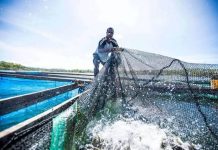
This is why every member of our communities must stay vigilant. When fishermen report strange vessels, when elders warn youth, when anyone shares intelligence with authorities, they are defending not just their nation but their own families. Prevention is our only option because we really have no capacity to cure.
Measuring Success Beyond Seizures
New Zealand’s 2025 results demonstrate what coordinated effort achieves: 2.3 tonnes of methamphetamine, over 800 kilograms of cocaine, and 297 kilograms of ecstasy stopped. But success isn’t measured in tonnage alone. It’s measured in youth who never encounter drugs, families never torn apart, and communities that remain strong.
OCO facilitates this through specialised training programmes in narco-submarine recognition, container inspection, and risk assessment. Several Pacific countries are reviewing national laws to align with international best practices in countering drug trafficking and financial crime. Fiji’s National Counter Narcotics Strategy exemplifies regional governments taking comprehensive steps to curb the rising drug trade.
We’re building capacity so every member nation, regardless of size, can defend its waters effectively.
The Path Forward
On 26 January, we marked International Customs Day under the theme “Customs protecting society through vigilance and commitment.” For Customs, this means vigilance across millions of ocean kilometres and commitment to communities.
OCO’s vision is clear: transform our geography from vulnerability into strength. Our ocean connections that criminals exploit can become intelligence networks they cannot penetrate. Our small populations that seem weak can become tight-knit communities where outsiders cannot operate unnoticed.
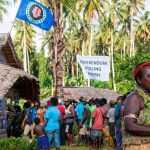
Everyone has a role to play. Fishermen can report unusual vessels in our waters. Village leaders can educate youth about recruitment tactics. Church groups can discuss addiction’s impact. When communities become partners in protection, we extend our surveillance across millions of square kilometres. This transforms every citizen into an observer, making our vast ocean territories a strength rather than a vulnerability.
The Blue Pacific will remain what it has always been for our peoples: a source of life, culture, and connection. Not a highway for poison.
Through OCO, we ensure this together.