The European Union has welcomed Papua New Guinea’s trade reform efforts while urging further action on customs procedures, fiscal transparency and digital trade systems during PNG’s fourth Trade Policy Review at the World Trade Organisation in Geneva.
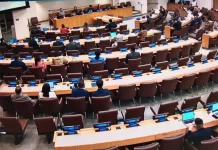
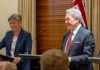
Delivering the EU statement on Wednesday, EU Deputy Permanent Representative to the WTO Antonio Fernandez-Martos welcomed PNG’s delegation led by Ambassador Michelle Hau’ofa and acknowledged the country’s newly established mission in Geneva.
“On behalf of the European Union, I would like to welcome the Delegation of Papua New Guinea, led by Ambassador Michelle HAU’OFA, and thank her team in Geneva for their constructive engagement in this fourth Trade Policy Review,” he said.
“We welcome that Papua New Guinea has now established a mission in Geneva, and we look forward to closer cooperation on WTO matters that this step will enable.”
He said the review provided a timely opportunity to assess developments since PNG’s last review in 2019 and reaffirmed the EU’s long-standing partnership with PNG under the Cotonou Agreement, the Samoa Agreement and the EU–Pacific Economic Partnership Agreement.
“The EU welcomes Papua New Guinea’s continued efforts to integrate trade policy into its national development agenda, particularly its stated objective of promoting sustainable growth and diversifying the economy beyond its traditional reliance on the extractive sector,” he said.
The EU also commended PNG’s engagement in the multilateral trading system and its commitment to trade facilitation and regulatory transparency.
“We particularly welcome Papua New Guinea’s commitment to improving trade facilitation, enhancing regulatory transparency, and strengthening institutional capacity, key elements for fostering a predictable, rules-based, and inclusive trading environment,” Fernandez-Martos said.
He noted PNG’s role as a co-sponsor of the request to incorporate the Investment Facilitation for Development Agreement into the WTO framework and encouraged ratification of the WTO Agreement on Fisheries Subsidies.
However, the EU flagged three priority areas for further reform.
“First, regarding trade facilitation and customs procedures, we encourage Papua New Guinea to continue efforts to ensure consistent and uniform application of customs regulations across all ports of entry,” he said.
He pointed to implementation challenges and concerns over high and unpredictable port charges.
“Addressing these concerns would significantly improve trade competitiveness and reduce the cost of doing business.”
On fiscal reforms, the EU called for clarity around the Income Tax Act 2025.
“While we acknowledge Papua New Guinea’s objective of strengthening domestic revenue mobilization, it is essential that new measures, such as the application of Capital Gains Tax, particularly in the resource sector, are clearly defined, consistently applied, and accompanied by appropriate transitional arrangements,” he said.
“Legal certainty in this area is crucial for maintaining investor confidence.”
The EU also urged PNG to accelerate implementation of its National Electronic Single Window system.
“Once fully implemented, the Single Window will automate and streamline trade procedures, reduce administrative burdens, enhance transparency, and minimize opportunities for corruption by limiting physical paperwork and face-to-face interactions,” he said.
“Its effective deployment would significantly improve market access, trade efficiency, and Papua New Guinea’s integration into regional and global value chains.”
Fernandez-Martos also reaffirmed the EU’s support for PNG’s reform agenda.
“On behalf of the European Union, I wish Papua New Guinea every success in its fourth Trade Policy Review,” he said.