

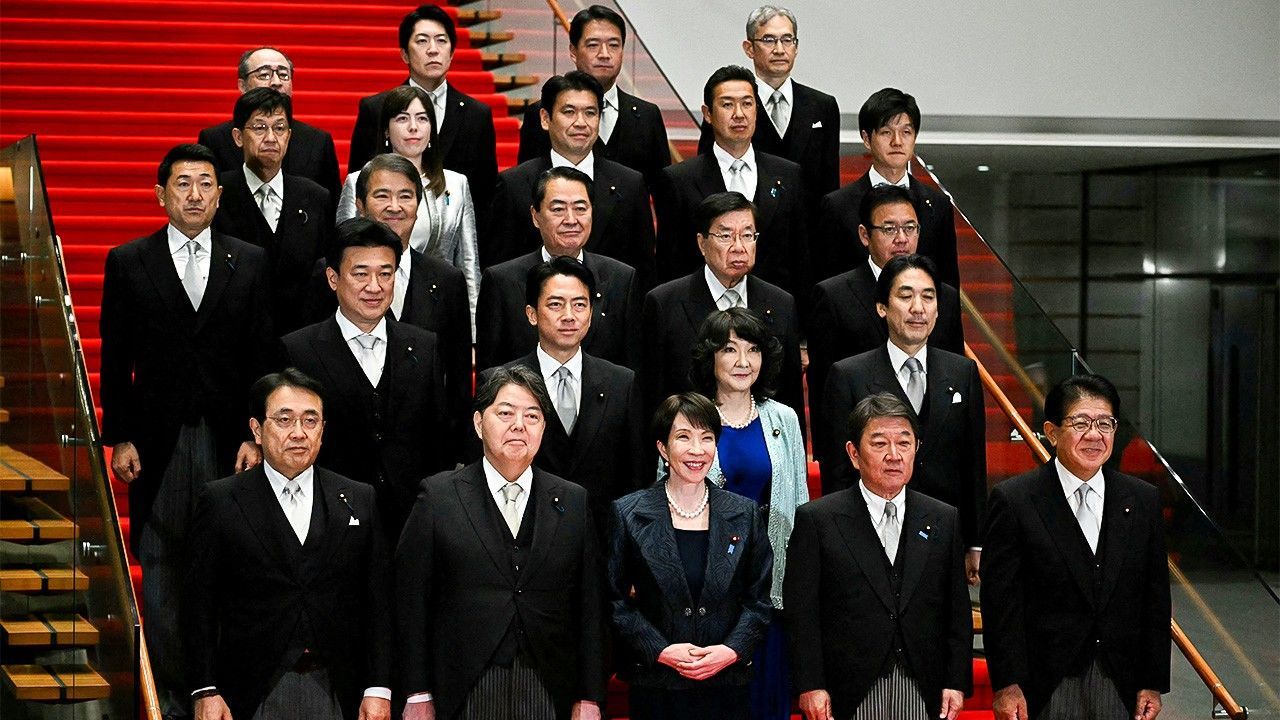
A landslide victory for Japanese Prime Minister Sanae Takaichi has put her ruling coalition in control of three-quarters of the lower house or Shūgiin.
Last weekend’s win has also given Japan’s first female leader unprecedented room to reshape Japan’s security and defence policies.
For Pacific nations closely tied to trade and regional stability, the results are significant.
The conservative Liberal Democratic Party, led by Takaichi, reportedly won 316 of 465 seats, its largest majority since 1955.
Its coalition partner, the Japan Innovation Party, added 36 seats, meaning the Prime Minister will control around 75 per cent of the House of Representatives.
Takaichi framed the win as a clear mandate. “This election involved major policy shifts,” she told reporters in Tokyo.
“Particularly a major shift in economic and fiscal policy, as well as strengthening security policy. These are policies that have drawn a great deal of opposition.
“If we have received the public’s support, then we truly must tackle these issues with all our strength.”
The Prime Minister has taken a much more assertive approach to China than her predecessors, especially regarding Taiwan.
Soon after taking office in late October, she warned in parliament: “I believe any action involving the use of force, such as China deploying naval ships, can only be described as a survival-threatening situation.”
The phrase sets the legal benchmark for Japan to respond militarily under current laws.
Beijing has responded with travel warnings against Japan, leading to an estimated 500,000 Chinese travellers cancelling trips.
Takaichi’s government had already planned to double defence spending to two per cent of GDP, and the new supermajority could allow her to push constitutional revisions, including Article 9, which limits Japan’s use of military force.
Analysts suggest her lower house supermajority makes it politically difficult for the upper house to block her ambitions.
Japan is not a member of the Pacific Islands Forum but engages closely as a dialogue partner, providing aid, trade, and security support to Pacific nations.
Pacific voices are watching closely. Solomon Islands PM Jeremiah Manele has emphasised the importance of Pacific unity and dialogue in leading the region forward.
He urged inclusive engagement among nations and partners.
Other planned reforms such as establishing a national intelligence agency, loosening restrictions on defence equipment exports, and reinforcing Japan’s commitment to a nuclear-free nation, signal a wide shift in Japan’s security posture.
Jake Thrupp, a communications adviser writing for the Australian Strategic Policy Institute, notes: “By pairing military and security capabilities with institutional reform, Japan is positioning itself as a central pillar of regional balancing.
“Recent deals with the United States, including on critical minerals, will benefit Japan’s defence industrial base while also assisting both countries’ efforts to diversify from China.”
Fiji’s Prime Minister, Sitiveni Rabuka, says the Ocean of Peace concept is aimed at seeking a region “in which strategic competition is managed.
“Where stability is the touchstone of regional relationships, and where coercion is eschewed.”
The election campaign in Japan largely focused on domestic issues like the cost of living, but Takaichi made clear her security ambitions. “We want to ask voters about a major turning point in Japan’s security policy.”
For Pacific nations, Takaichi’s supermajority may mean a more assertive Japan in regional security, increased defence spending, and a willingness to share the burden of deterring threats in the Indo-Pacific.
This is a change, experts say, comes with both opportunities and risks.